4 “Therefore I, the prisoner of the Lord, urge you to walk in a manner worthy of the calling with which you have been called, 2 with all humility and gentleness, with patience, bearing with one another in love, 3 being diligent to keep the UNITY OF THE SPIRIT in the bond of peace. 4 There is one body and one Spirit, just as you also were called in one hope of your calling; 5 ONE LORD, ONE FAITH, ONE BAPTISM, 6 one God and Father of all who is over all and through all and in all. 7 But to each one of us grace was given according to the measure of Christ’s gift. 8 Therefore it says, “When He ascended on high, He led captive the captives, And He gave gifts to people.” 9 Now this expression, “He ascended,” what does it mean except that HE ALSO HAD DESCENDED INTO THE LOWER PARTS OF THE EARTH? 10 He who descended is Himself also He who ascended far above all the heavens, so that He might fill all things. 11 And He gave some as apostles, some as prophets, some as evangelists, some as pastors and teachers, 12 for the equipping of the saints for the work of ministry, for the building up of the body of Christ; 13 until we all attain to the unity of the faith, and of the knowledge of the Son of God, to a mature man, to the measure of the stature which belongs to the fullness of Christ. 14 As a result, we are no longer to be children, tossed here and there by waves and carried about by every wind of doctrine, by the trickery of people, by craftiness in deceitful scheming; 15 but speaking the truth in love, we are to grow up in all aspects into Him who is the head, that is, Christ, 16 from whom the whole body, being fitted and held together by what every joint supplies, according to the proper working of each individual part, causes the growth of the body for the building up of itself in love”. [Eph4:1-16]
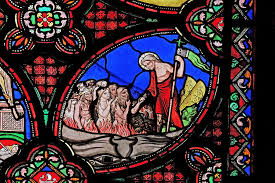
Continuing my chapter-by-chapter examination of the New Testament I would remind readers that I am not aiming to provide a commentary as such but am focussing on those aspects which impact upon the broader benign providence I have been outlining, set out in full in “The Little Book of Providence” accessible HERE. So here in Ephesians chapter four, my post heading “Christ’s descent into Hades” is not intended to reflect the central theme of Paul’s teaching. That statement is a mere aside (v9); Paul’s focus is unity – one Lord, one faith, one baptism, and the gifts the Spirit has given to the Church in order that she might grow and be “built up in love” (v16).
Nevertheless, Christ’s descent into “the lower parts of the earth” is referred to, and as most rightly understand, it is referring to the Saviour’s descent into the place of the dead (Hades) on Easter Saturday. This is derived from a verse in 1st Peter: “For this cause was the gospel preached also to them that are dead, that they might be judged according to men in the flesh but live according to God in the spirit”. [1Pet4:6]
Note that Peter opens the statement with “For this cause”. What cause is that? It pertains to the judgement God will make “of both the living and the dead” (previous verse). So, the Saviour of the world preached the Good News in Hades (including those being punished, for the context makes clear that those being addressed had been condemned because of how they had lived their lives in the flesh). This is affirmed in a related passage of Peter:
“Christ also suffered once for sins, the just for the unjust, that He might bring us to God, being put to death in the flesh but made alive by the Spirit, 19 by whom also He went and preached to the spirits in prison who had been disobedient as the Divine longsuffering waited in the days of Noah while the ark was being prepared” (1Pet3:18-20)
So what was this good news that Jesus preached to these imprisoned spirits – that they should rot in hell for the rest of eternity? Not according to Peter: “so that having been judged according to men in the flesh they should live according to God in the spirit”. And no doubt our Lord would have explained to them the grounds for such a gracious provision, being the death He had just experienced and His resurrection to follow. Such post-mortem munificence on God’s part is a problem for many Christians. It undermines the raison d’être of gospel salvation as they currently understand it. It should become more intelligible once the purpose of gospel salvation (cf. Rom7:24-25) and its context within God’s broader redemptive strategy for humanity (Rom8:19-23 cf. Rev10:4-7) has been properly understood.
Author’s Facebook page HERE
 The Little Book of Providence