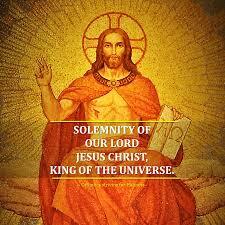
Masters, grant your slaves justice and fairness, knowing that you also have a Master in heaven. 2 Devote yourselves to prayer, keeping alert in it with an attitude of thanksgiving; 3 praying at the same time for us as well, that God will open up to us a door for the word, so that we may proclaim the mystery of Christ, for which I have also been imprisoned; 4 that I may make it clear in the way that I ought to proclaim it. 5 Conduct yourselves with wisdom toward outsiders, redeeming the time. 6 Your speech should be gracious, as though seasoned with salt, so that you will know how you should respond to each person (Col4:1-6).
Most of Colossians chapter four consists of final greetings, so I have just included the opening verses which contain some further instruction regarding how the Colossian believers should deal with those outside the church and especially that they should remember to support Paul in his ministry. He describes that here as “to proclaim the mystery of Christ” (v3), and that expression is what I will briefly focus on this post. I say “briefly” for volumes could be written on the subject, so I will just outline a few pointers, largely focussing on how the Apostle Paul depicted the Lord Jesus Christ.
For Paul, though he regarded himself as the least of all the apostles, was in a unique position vis-à-vis the twelve who had accompanied Jesus. Whilst never having known Jesus in the flesh he conversed with the resurrected Lord in a vision at his conversion. Therefore, what he learnt of Christ, he learnt from Christ as a deity who will have been fully enlightened concerning His Father’s purposes for Himself and the world. So, summarizing what Scripture informs us Jesus said about Himself, together with how He was described by Paul, the picture is as follows:
- Jesus is the Son of God (Rom1:9). [Angels and elect humans are also described as sons of God, but in Rom1:9 Paul refers to “the gospel of (God’s) Son”, indicating that LJC was the Son of His Father in a fuller, more literal sense].
- Paul, however, never refers to Jesus as “God”. Indeed, he affirms there is ONE GOD, and that is the Father, especially in 1Cor8:5-7: “There is only one God – the Father, from whom are all things, and we exist for Him; and one Lord, Jesus Christ, by whom are all things, and we exist through Him”
- Jesus is subordinate to the Father. The clue is in the name, or rather the title, “Christ”, meaning the Anointed One. [God the Father could not be anointed, He anoints]. Jesus, even having been glorified sits at the right hand of the Father. As a result of His role within human salvation, Logos (the Word) has literally become God’s right-hand Man.
- According to Paul, just as man is the head of woman, God is the Head of Christ (1Cor11:3). [Note: man and woman are equally human and consubstantial; likewise, God and His Son are equally divine and consubstantial, but One is the Head of the Other. More extraordinarily, Christ is the head of man, yet the Former regards the human elect as His own kith and kin: “For both He that sanctifies and they who are sanctified ARE ALL OF ONE: for which cause he is not ashamed to call them brethren (Heb2:11).
- Jesus is not omniscient, nor are all matters under His control – e.g. epoch staging and timing (Acts1:7); ordering of the elect with the Kingdom (Mk10:40); knowing when He shall return to earth (Mk13:32).
- Jesus is always described by Paul as Lord – i.e. master (cf. v1), boss, the appointed Head of all that has been created, representative and leader of such (aka “Firstborn of all creation” – Col1:15)
- Jesus (as Logos) was begotten of God – a profound mystery that we know occurred before anything was created. Hence, “before Abraham was, I AM”. No creature dare say that, nor that all things that have been created were made THROUGH Him and TO Him. Yet even having made the “I AM” statement, Jesus affirmed that My Father is greater than I”.
- Jesus also always referred to Himself as the Son of Man. This is at the heart of the “mystery of Christ” – what I have referred to as the cosmic Christ, through Whom ALL things were created; the “alpha and omega”; representative of all humanity, especially the poor and needy (Mt25:40); above all, the enlightener of every person entering the world (Jn1:9 strictly KJV**) through the faculty of conscience, by which (in J H Newman’s words) it provides “universal moral revelation” and becomes a “sufficient object of faith” by which all shall be judged. And guess by Whom? (Jn5:22).
Though I have meticulously stuck to Scripture, many will perceive the above as “subordinationist”. Such was how the post-Nicene Church regarded many of the earlier Fathers, even though they had received the gospel directly from the apostles or their immediate appointees. I make these points because a recognition of such ordering with the Godhead is necessary to grasp a central plank of my thesis. That concerns what Paul referred to as “the fellowship (or administration*) of the secret (plan) hidden in God (Eph3:9) which he reiterated in plainer language in Rom11 (vv11.12,15,30). It concerned the Gentile’s unforetold spiritual inheritance: “to whom God willed to make known what the wealth of the glory of this MYSTERY AMONG THE GENTILES is, the MYSTERY THAT IS CHRIST IN YOU, the hope of glory” (Col1:27). [It is surely no wonder Paul summarized the gospel in our passage as “the mystery of Christ”].
The mystery I’m disclosing (even though Paul has already done so but no one appears to have worked through its implications) is that “salvation” as we understand it was not envisaged (i.e. prophesied in OT Scripture) for Gentiles in the current age. It was a “secret hidden in God” that ostensibly came to pass due to the Jews’ failure to fulfil their intended mission as enlighteners and witnesses of the one true God to the Gentile nations (cf. Deut4:6-8; Rom11:30). The providential and dispensational (millennial) implications of the Eph3/Rom11 mystery being pieces of the jigsaw that unlock the related grander mystery of God’s broader benign providence that I am presenting, and I believe is being referred to in Revelation chapter ten.
*a textual variant in Eph3:9, likely due to the similarity of κοινωνία (fellowship) and οἰκονομία (administration); μυστήριον can be translated as mystery or secret
** The word order is more supportive of the KJV translation of Jn1:9, apart from which it is hardly likely that writing in the late first century John would be saying that Jesus as the light “is coming into the world” (some translations).
The LITTLE BOOK OF PROVIDENCE: a seven-part synopsis of the bible: – available as a paperback from Amazon or FREELY as a PDF file HERE.
 The Little Book of Providence