4 I solemnly exhort you (Timothy) in the presence of God and of Christ Jesus, who is about to judge the living and the dead, and by His appearing and His kingdom: 2 preach the word; be ready in season and out of season; correct, rebuke, and exhort, with great patience and instruction. 3 For the time will come when they will not tolerate sound doctrine; but wanting to have their ears tickled, they will accumulate for themselves teachers in accordance with their own desires, 4 and they will turn their ears away from the truth and will turn aside to myths. 5 But as for you, use self-restraint in all things, endure hardship, do the work of an evangelist, fulfil your ministry (2Tim4:1-5).
Mankind to be judged by a Man
In his opening exhortation to Timothy, Paul typically distinguishes between God and His anointed (“Christ”) Jesus, affirming also that it is the Man Christ Jesus who will be doing the judging – “For not even the Father judges anyone, but He has given all judgment to the Son” (Jn5:22). And as I have pointed out in the past, He will be applying criteria that are thoroughly intelligible to human reasoning (Mt7:2 & 25:40).
Itching ears
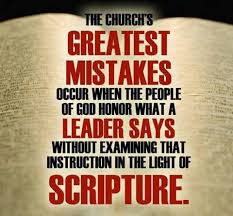
Paul continues to warn Timothy (and by extension ourselves) concerning future adverse church developments – this time with regards to doctrine and teaching. He knows there will be a tendency for people to reject sound doctrine and desire what is more pleasing to the ear. That in turn would lead to teachers becoming established within the churches who will happily pander to those needs. He describes it as ear tickling (Greek: κνηθόμενοι). In Paul and Timothy’s day, the solution was relatively straight forward – anything that departed from what the apostles and their immediate appointees (such as Timothy) had taught was likely to be suspect. That was especially the case if it made the Christian pilgrimage less arduous and demanding.
The problem today is more complex in view of the career of the churches in the 2000 years since Paul and Timothy. The divisions and fragmentations that have occurred mean that it is no longer the case that what one has heard and understood in one’s youth, unlike for Timothy, was of necessity the truth. I am clear that is true in my case. Similarly, if my writing appears to be presenting a very different account of the gospel to what you have previously understood, it doesn’t mean it is not the truth. The test to be applied is that which Paul indicates – how does it compare with what the Church understood to be the Truth at its outset? That is, how does it compare (allowing for non-systemic legitimate developments) with what the earliest Church writers understood to be gospel truth? For they had received such from the likes of Timothy, Philemon and Titus or their immediate appointees (which takes us into the early 2nd century).
Where to start?
But don’t start your comparison with this current nonentity (yours truly), start with 4th century Augustine and observe how some of what he taught goes beyond what could be regarded as authentic development, but turned key aspects of that earlier teaching on its head. As I have been outlining, that particularly pertains to the role of natural law, the depth of human depravity, rejecting the tripartite nature of man, soul creationism and premillennialism, narrowing the scope of God’s benign providence, denying mankind any effectual free will to do good, and redefining the role of Torah and the economy of grace.
Augustine did not initiate all the above novelties but did more than anyone to ensure the Church moved forward on such a basis. He is key because he is undoubtedly the greatest influencer of medieval Western theological developments as well as the darling of the Protestant Reformers – a doctor of the Church that Luther declared (at the influential Heidelberg Controversy) to be Paul’s most faithful interpreter of the first millennium. This is covered in earlier posts too numerous to mention and summarized in chapter one of the Little Book of Providence.
The ultimate test
So whereas Timothy will have been very clear how to proceed and what to expect after reading Paul’s exhortations, for Christians today it is more difficult. The earlier paragraph suggests a possible approach, which thanks to the internet is not impossibly arduous or expensive. Clearly, what I have been publishing for the last decade or so I believe to be the truth – certainly not infallible but prophetically inspired. The more I read and (I trust) come to understand the Apostle Paul, the less I am inclined to “tickle ears” with talk of simplistic believism, guaranteed perseverance or all-of-grace/all-of-God salvation.
But the ultimate test will be whether or not what I have presented is “owned of God”, such that more and more come to perceive it to be the truth – not entirely new revelation (which it could never be) but a clarification of what has already been revealed in the indisputably Spirit-breathed scripture of the Bible. And that is a process that as recent posts have indicated[1] I believe to have been foretold in the non-canonical but nevertheless sacred “words of the blessing of Enoch, by which he shall bless the elect and the righteous who will be living in the day of tribulation when all the wicked and godless are to be removed” (1Enoch1:1).
[1]: See also Enoch prophecy regarding current times
Author’s Facebook page HERE
 The Little Book of Providence