Cain and Abel – participants within a universal covenant
RE-FORMATION THESIS #39 of 95. "Justification" or acceptance before God within the inclusive Universal Covenant is by evincing a God-given quality (faith/faithfulness), manifested by the exercise of compassionate love
BIBLICAL REFERENCES
Gen4:7(Masoretic) – If you (Cain) do well, will you not be accepted? And if you do not do well, Sin lies at the door. And its desire is for you, but you should rule over it.”
Gal5:6 – For in Christ Jesus neither circumcision nor uncircumcision means anything, but faith working through love.
COMMENTS
It took a full chapter of my book to explain what this all about. I will quote a few paragraphs which summarize what is meant by the Universal Covenant and suggest reasons why it has been eluded by theologians.
“Theologians cannot rely on a single passage in Genesis but must compare Scripture with Scripture, and the concept of a Universal Covenant for fallen humanity implicit in the Cain and Abel story (explicit utilizing the Masoretic text) does not fit well with much else as it has been historically and universally interpreted ever since Christian doctrine was systematized. Moreover, the Greek Septuagint (LXX) renders the key verse about God’s warning to Cain differently and that is the version to which most of the apostles and the early Church referred. The Hebrew (Masoretic Text) is no less reliable but it was not utilized by the apostolic Church, the Greek language being lingua franca for the Roman Empire and therefore the Greco-Roman Church.
“It is therefore no surprise that the apostles do not make direct reference to Gen4:7 in this context whilst the early Fathers always quote from the LXX, which refers to Cain’s incorrect division of his offering and that he should “be at peace and rule over him”; the “him” or “it” presumably referring to the devil. Such obscurity will have been an intentional veiling on God’s part regarding an understanding of a Universal Covenant, yet it is not dependant on this verse alone but can be deduced from Cain’s punishment and curse in which he became excluded from the nature of the relationship with God that his brother, his fallen parents AND CAIN HIMSELF experienced before the fratricide (Gen4:11-14).
“But the main reason for what in a dual sense might be termed “the Lost Covenant” [It has been lost and concerns “the lost”] pertains to the nature of the Bible itself. This divinely inspired library of books was never intended to be a comprehensive account of God’s creation. For example, relatively little is disclosed about the angelic realm from which evil had sprung and with which mankind will one day participate. Scripture’s focus is the salvation history for the world centred on Christ and His peculiar peoples – the Jewish nation and the Church.
Hence Abraham is a vastly more significant figure than Abel. Both were representatives within covenants, but Abraham initiated the exclusive covenant by which God would work from within through an elect people to enlighten and reconcile the world to Himself. The inclusive covenant in which Abel was declared to be righteous and Cain defaulted does not have a direct role in that salvation story. That is firstly because it pertains to that which is intuitive, so is not dependant on special revelation, and secondly because individuals are not “saved” through it, i.e. they are not cleansed from sin and spiritually empowered to maintain in life the integrity of the intellectual vessel the soul currently inhabits (1Thes4:4).
“The Universal Covenant determines a person’s post-mortem fate, but also prior to that his involvement or otherwise with Satan as an agent within God’s mysterious providential role for evil (chapter six). That is why the type of those rejected from it being Cain was brand-marked and protected rather than destroyed. These issues are, as it were, the unilluminated side of the revelation globe, pertaining to the final Mystery of God.
“Consequently, biblical theologians have for ever been attempting to fit three square pegs (soteriological categories) into two round holes (soteriological outcomes). Hence the numerous, seemingly intractable tensions in Scripture typified by the “narrow way” leading to life that few will attain on the one hand and frequent intimations, not least by Paul, of God’s broader scale intentions to reconcile all redeemable humanity to Himself on the other.
“It is also to be observed that Adam had three sons as did our postdiluvian Patriarch Noah, and from these have sprung all humanity: Adam’s son Seth and Noah’s son Shem represent the elect line; Adam’s son Abel and Noah’s son Japheth the “righteous” within the Universal Covenant whilst Adam’s son Cain and Noah’s son Ham were the accursed defaulters albeit that only one of Ham’s sons was cursed (Canaan) as Ham had already received a blessing.
“Once we arrive at the Abrahamic Covenant, Isaac represents the elect line resulting in Israel whilst Abraham’s other son Ishmael who was also blessed by Godand remained in His favour and care was not elected to the exclusive Covenant of Promise. Yet such as he, representing most of humanity, remain within the inclusive Covenant of life from which Cain defaulted provided they do not follow in his way (Jude11).
“Such multi-dimensional effectual grace (innate and celestial) can only be distinguished and systemized within a sacramental and synergetic soteriological framework so it is no wonder that such a schema has yet to be established, for on the one hand it undermines some early (fourth/fifth century) Catholic biblical theological groundwork whilst on the other is incompatible with the Protestant conviction of total depravity, sola fide and sola gratia. The Reformed concept of “common grace” is not linked to the Atonement, does not pertain to the individual and is deemed ineffectual for forgiveness or the avoidance of perdition.
“Since Vatican II through the Spirit’s prompting the Catholic Church has effectively acknowledged a third soteriological category being the “people of good will” who do not find their way into the Church but will ultimately be accepted into God’s eternal Kingdom. What has been lacking for the last fifty years from the Catholic side is a workable biblical underpinning for such a proposition, for that cannot be provided without substantial doctrinal deconstruction involving contradicting earlier conciliar pronouncements that the Church deems to be immutable”.
[Excerpt from The Little Book of Providence – chapter two]
Thesis #38 of 95 - Regardless of race or creed everyone who fears God and seeks to do what is right is accepted by Him
BIBLE REFERENCES
Acts10:4 – Cornelius looked at (the angel) intently and he became terrified, and said, “What is it, lord?” And the angel said to him, “Your prayers and charitable gifts have ascended as a memorial offering before God”
Acts10:34-35 – Peter said, “I most certainly understand that God is not One to show partiality but in every nation whoever fears God and does what is right is acceptable to Him
Heb9:14 – How much more will the blood of Christ, who through the eternal Spirit offered Himself without blemish to God, cleanse your conscience from dead works in order to serve thelivingGod?
COMMENTS
This thesis is simply a restatement of Acts10:35 (above). The background to Peter’s proclamation was the revelation he had received concerning how God regarded the Gentiles that he recounts in Acts11:5-9. That had led to his meeting with the Roman centurion Cornelius. He and his household were described as devout, God-fearing, generous and prayerful. This Gentile non-Christian’s good works and prayers had been acknowledged by God (Acts10:4). Cornelius was already participating in the cause of God’s chosen people “giving generously to Jewish causes”.
The case of Cornelius is perhaps the clearest example in the New Testament of a non-Christian who feared God, acted virtuously and was accepted in God’s sight. It is an account that puts paid to the “Reformed” notion I long held that God is at best uninterested in human good works. On the contrary, God delights in human efforts to please Him, help others and do what is right, exemplified by Jesus’ acceptance of the Mt25 “sheep” who had shown kindness to those in need. As I showed when commenting on that passage, it is not the works themselves that justify a person before God but the “faith” from which they spring. And as demonstrated in the last few theses/posts, the very act of responding positively to the dictates of conscience is itself an act of faith – in view of that faculty’s spiritual nature (cf. Heb9:14), from Whom it is derived and the Law to which it witnesses.
Thesis #35 of 95 – In taking heed to conscience one is effectively responding to something or Someone superior to oneself
Thesis #36 of 95 – Conscience is therefore a sufficient object of faith, being man’s positive response to the divine revelation he has received
Thesis #37 of 95 – Those who defer to the dictates of their conscience are exercising a form of godly fear
BIBLICAL REFERENCES
Heb11:6 Without faith it is impossible to please Him, for the one who comes to God must believe that He exists, and that He proves to be One who rewards those who seek Him
Rom2:15 (Gentiles] demonstrate the work of the Law written in their hearts, their conscience testifying and their thoughts either accusing or else defending (a particular action)
Ps51:5 I was formed in iniquity and in sin did my mother conceived me
COMMENTS
Conscience is the eluded medium of effectual common grace and pertains to the human’s spirit, also largely eluded since the time of Augustine. Conscience pertains to natural law, and in the absence of a personal knowledge of Jesus Christ is “the impression of a divine Light within us, a participation of the eternal law in the rational creature” [ref#1]. As such, conscience as the universal revelation of God, anterior to the Gospel and supreme over all other human faculties provides everyone with “a clear and sufficient object of faith” [ref#2]. The quotations are from an earlier and far more scholarly Calvinist-turned-Catholic, John Henry Newman (pictured) – and he was right. For “faith” in its essence is man’s positive response to what has been revealed to him from God, be it innately through his spiritual faculties or religiously through a creed. Either way, one comes to discern the nature of right and wrong and senses a benefit in practicing the former to be at peace with oneself. As Newman also observed, the cardinal truth that conscience teaches is that God rewards the good and punishes the wayward; again, a facet of faith as the bible defines it (Heb11:6).
The faculty derives from the fact that the human spirit is created in God’s image and has been enlightened by Christ (Jn1:9KJV). In contrast, the vessel that temporarily houses our spiritual essence is drawn to worldly lust like a magnet. For unlike the God-given spirit it was conceived in sin and shaped in iniquity (Ps51:5). But by habitually taking heed to the dictates of conscience, the soul/spirit is responding to something greater than itself. Hence such a person is regarded as exercising faith in God and so is justified through the merits of Christ’s atonement. For by habitually taking heed to the dictates of conscience, the soul/spirit is effectively relating positively to something, ultimately to Someone superior to itself. Hence the person is regarded as exercising faith in God and so is justified through the merits of Christ’s faithfulness (Note#1).
#1 Greek: “ek pisteos Christou” – as in Rom3:22, Gal2:16; Gal3:22, where it is usually (wrongly) translated as if referring to a believer’s faith in Christ rather than Christ’s own faithfulness (to His redemptive mission).
Re-formation thesis#34 of 95 - The conscience reflects the light of the incarnate Word/Logos that is diffused within every soul that comes into the world
BIBLICAL REFERENCES
Jn1:9 (NKJV) – That was the true Light which gives light to every man coming into the world
Col1:16 – By Christ were all things were created, both in the heavens and on earth, visible and invisible, whether thrones, or dominions, or rulers, or authorities—all things have been created through Him and for Him.
COMMENTS
The previous theses affirmed that the human’s spirit is planted by God and will one day return to Him. It would therefore be surprising if it did not include A BLUEPRINT FOR HUMAN BEHAVIOUR. And so it does: the law of God written on the “heart” (Rom2:15). This divine blueprint manifests itself in the faculty of CONSCIENCE. It is also described (but often mistranslated) as the light of Christ that enlightens every man coming into the world (Jn1:9). That translation is indicated by the Greek word order; apart from which it is hardly likely that John writing in the late first century would be informing his readers that the Light (Christ) “is coming” into the world” (e.g. NIV NASB). As with certain translations of Rom2:14-15 regarding the innate working of conscience, it is an attempt to obscure any positive role Scripture might ascribe to “natural law”.
Particularly in this context, natural law is not alluding to “Mother Nature” but to the very law of Christ. For all things, INCLUDING NATURE HERSELF and the precious human soul/spirit were created by the pre-incarnate Christ as Logos, through Him and for Him (Col1:16). Amongst the earliest Church Fathers such as Justin Martyr and Clement of Alexandria, this principle was articulated in terms of the divine Logos (Word) whom they recognized had provided every age, race and each individual with seeds of divine truth – the “Logos spermatikos”, leading everyone to some knowledge of God and His law, however fragmentary. Origen specifically regarded the seed of reason provided to all men equipping them with a measure of wisdom and justice as the essence of Christ Himself, as did Justin Martyr (ref#1).
From such a perspective Christianity does not supersede natural law but rather builds on it. Even pagan literature, philosophy and mythology contain wisdom that could be regarded as a preparation for the gospel, and that is how the apostle Paul utilized it. For example, he drew upon a Greek poet Epimenides and a Greek philosopher Aratus in his sermon in Athens (Acts17:26-28). Such insights as they had in turn had sprung from the Light of Christ provided to all people. Whilst that light will have been fragmentary, in those who encounter Christ through the gospel it should fill the whole being and radiate out to the world.
Thesis #33 of 95 - The guiding principle or engrained law within the human's spirit is the conscience
BIBLICAL REFERENCES
Rom2:15 – (Gentiles) show the work of the Law written in their hearts, their conscience bearing witness and their thoughts either accusing or defending (their actions)
Rom7:23 – But I see a different law in the members of my body, waging war against the law of my mind and making me a prisoner of the law of sin which is in my members
Jn1:9 – (Christ) was the true Light which gives light to every man coming into the world (NKJV/KJV)
COMMENTS
Like Paul in Rom7 (vv15-25), this thesis is contrasting the law of the human spirit with what the apostle refers to as the “law of the bodily members”. Clearly, the latter law must pertain to the brain, for the bodily members in themselves cannot possess moral law. With that in mind, the language in Rom7:23 quoted above is particularly interesting. For Paul writes that the law in his body “wages war against the law of my mind”.What “mind” can he be referring to? It cannot be the brain – that gives rise to “the law of the bodily members” with which his mind is at enmity. What I mean is, a man’s eyes see a beautiful woman – he lusts after her. His eyes see desirable, luxurious objects – he craves them and envies those who possess them. But of course, it’s not really the eyes – it’s the brain that processes the images they capture.
This will appear to be stating the obvious, but bear with me, the implications have significance to what recent posts have been covering: the three rather than two components of man and the three rather than two soteriological categories of the soul. For answering my own question, it is the mind of the human spirit which Paul is saying is at war with the mind that controls the body. The “law” (or motivating principle) that governs the body is the brain; the “law” governing the spirit is the conscience. And it is God’s Law (Rom2:15 above), to which even those who do not know the Creator in a religious sense nevertheless defer. Their consciences either approve or accuse them with respect to a particular action (Rom2:15b). And as the previous verse affirms, they often do by nature the things contained in God’s Law. They often suppress the urge to lust after another woman and remain faithful to their wives; they may observe luxuries they do not possess but remain content and thankful for what they have. As a result, they are at peace with themselves. However, when they knowingly transgress, they develop “a guilty conscience”. However, as considered in the previous post, there is a category of person who does not possess such a guiding principle, for their spirit is dead and their conscience fails to function. For like Cain they are not “of God” (1Jn3:12; cf. Rev10:7). But as Paul affirms, especially in Rom2 and Rom7, that is not man by nature, Christian or otherwise. Hence there are three soteriological categories with distinct moral characteristics and divergent eternal destinies.
The mind of the spirit
Subsequent posts/theses will focus on the conscience itself – what I am principally drawing attention to in this post concerns the two minds within man that Paul alludes to in Romans7. But so in effect does Jesus in His teaching on the subject. The self-mutilation passages recorded in Matthew5:28-30 and Mark9:43-48 are referring to the need to control the bodily members so that the soul or “heart” is not polluted. It is clearly allegorical for it is obvious that cutting off an arm does not make someone a better person: they will still find a way to steal if that is their inclination. Jesus is highlighting the need for a disciple to keep his bodily members under tight control otherwise the whole person (soul) will be damaged and require post-mortem purification (i.e., salting). However, the key point I am making regarding Jesus’ teaching pertains to His use of reflexive pronouns: “If your eye offends you pluck it out; if your arm ensnares you hack it off” etc. As with the apostle’s teaching, this pertains to the disparate moral dispositions of spirit/heart and body. The “you” that is offended, ensnared or led into sin is the spirit/soul/heart, being that which is from God and survives physical death; the offenders or ensnarers are your bodily members driven by the physical senses processed through the brain pertaining to the temporary earthly tent or vessel.
Again, it may appear inanely obvious to mention it, but it is something that eluded my thinking prior to the revelations I received. That is that the brain, being part of the mortal body is buried or incinerated at physical death – yet that part of us that continues into eternity clearly has a mind of its own, even before any resurrection. For it is the body including the brain that Paul and Peter refer to as our vessel or tent. And what usually is more important in everyday life – the vessel or what it contains? In anthropological terms, the precious content of the earthly vessel is the eternal soul and spirit. In terms of our time on the current earth, what differentiates the Christian from everyone else is that the believer has been provided with the spiritual resources to “possess his own vessel in sanctity and honour” (1Thes4:4). And by cooperating with divine grace the Christian is enabled to “put to death the deeds of the body” (Rom8:13). That is so as to Live, love and serve the living God even whilst in mortal flesh – and to have souls ready prepared for something still more unspeakably glorious in the ages to come (Rev3:21).
Thesis #29 of 95 – The human’s spirit (not to be confused with the human spirit) is often mistaken for the Holy Spirit when interpreting the Pauline epistles
Thesis #30 of 95 – The fruits of the spirit pertain to man’s spirit, for those currently devoid of the Holy Spirit also produce good fruit
Thesis #31 of 95 – The inner conflict described by Paul in Romans 7 arises from conflicting motivations derived from the processing of the brain on the one hand and the conscience-directed spirit of the “inner man” on the other
Thesis #32 of 95 – Such an inner conflict is not restricted to the Christian, but to everyone with a functioning conscience
BIBLE REFERENCES
Rom8:6 For the mindset of the flesh is death, but the mindset of the Spirit (sic) is life and peace
Gal5:22-23: But the fruit of the Spirit (sic) is love, joy, peace, patience, kindness, goodness, faithfulness, gentleness, self-control; against such things there is no law
Rom7:23 But I see a different law in the members of my body, waging war against the law of my mind and making me a prisoner of the law of sin which is in my members
COMMENTS
The above related theses again pertain to a fundamental flaw in the Augustinian derived biblical theology the Western Church has relied upon for the last 1600 years or so. It is one of his several “twos-for-threes” for those familiar with my ditty [note #1]. In this case, contrary to the teaching of Paul and the writer to the Hebrews, he insisted man consisted of body and soul alone rather than body, soul and spirit (cf. 1Thes5:23; Gal6:18; Rom8:16; Heb4:12). He also came to reject soul creationism – i.e., that the spiritual part of man (that which returns to God after physical death) is directly planted by God into the embryo (what Paul and Peter sometime refer to as our tent or vessel).
For Augustine well knew its implications, whereas many creationists, including within his own Church have either failed to think it through or are content “to hold in tension” the notion that God would condemn a person for the soul/spirit He has just provided to them; indeed, that He would plant what was morally deficient within them in the first place.
The resulting denigration of both divine and human nature is resolved when what has been taken as read – that a human soul is either “saved” or “damned” is demonstrated from scripture to be a fallacy. Indeed, few souls proportionately speaking are in either category [note#2] in the context of what the bible actually means by salvation. And those (starting with Cain) who are reprobate/cursed/damned/children of the devil are an eluded sub-category that has been lumped together with “the unsaved”.
In terms of the Church’s evangelical mission such a misclassification has not essentially mattered (which is why God has permitted it for so long – cf. Rev10:9). For the Church must preach the Good News of Jesus as Lord and Saviour, practice justice and offer compassion to all in the world, regardless of how deserving or otherwise the recipients may be.
But it does matter in terms of human perspectives on God’s providential care, mercy and justice – whether such is munificent or draconian. And it does matter in terms of our understanding of human nature and how we perceive our fellow man. Is it sinful in its entirety as Augustine and the Protestant Reformers assert? Is it liable to corruption yet capable of maintaining its integrity through a self-discipline verging on ascetism – as Pelagius allegedly taught? Or is human nature basically sound – at worst neutral and capable of living a life that is pleasing to God without any enabling grace on His part?
It is in fact none of the above. Fallen human beings are indeed sinful by nature in view of the flesh. “The flesh” can be taken absolutely literally – from a creationist perspective it is the procreated material part of us: the body and brain. “Flesh” is not referring to our “sinful nature” as some bible translation infer (e.g. NIV in Rom7). For our nature is sinful, but not (normally) in its entirety: “For I know that no good whatsoever dwells within me,that is, IN MY FLESH” (Rom7:18a).And how does he complete the statement? “For the willing (to do good) is present in me, but the capacity to do the good is not (18b). In other words, human nature is dualistic.
Why? Because its component parts although ultimately derived from God arrive in in the embryo from two different immediate sources: God plants the spirit whilst the corrupted intellectual vessel (body and brain) is procreated via the wondrous but entirely material processes of human childbirth.
Hence the psalmist’s lament: “Behold, I was shaped in iniquity, and in sin did my mother conceive me” (Ps51:5). But she did not provide his eternal soul – that had been God’s domain. What has been materially procreated results in what Paul describes as “the body of this death” (Rom7:24YLT). “This death” for he is referring to what he had been describing in that passage – the willingness to do good and adhere to the spirit of God’s law on the one hand; the inability consistently to practice it in view of “the law in the bodily members” on the other.
The resulting transgression results in a defilement of the conscience leading to “death”, being a disruption in the access to the One who is the source of “life” – that abundance of spiritual Life that Jesus came to give (Jn10:10 cf. Rom8:13). And through the Saviour’s death He has provided pardon for the many, and also what was needed for those His Father has chosen for His Son (Jn6:44): even “the blood of Christ, who through the eternal Spirit offered Himself without blemish to God to cleanse your conscience from dead works so as to serve the living God” (Heb9:14).
Applying the above to our theses, in terms of #29 (interpreting “spirit” as “Spirit”) I have already cited a verse in which the human spirit is understood by most bible translators to be the Holy Spirit. That is Rom8:13 and there are two others quoted above under “Bible References”. The one pertaining to the fruit of the spirit (thesis #30) is particularly important and is one I find especially irksome – for two reasons. Firstly, it is both observable and biblical that those who are not Christian are well able to produce good fruit. For acts of compassion, courage, bravery, endurance and the like are good fruit. To imply even indirectly that man by nature is incapable of such is abhorrent. I know from personal experience that such teaching can poison the soul – in my case regarding my attitude and behaviour in my Calvinist days towards my loving, caring but non-Christian parents.
Secondly, even in the case of the Christian, it is not the Spirit’s good fruit, it is the believer’s – the efflux of his or her own human spirit. Clearly, God the Holy Spirit’s fruit would be good, perfect in fact. Man’s rarely is – but it is his own and can be a blessing to others. In which case God delights in it and shall reward it as if it were performed to succour Christ Himself (Mt25:37-40). [The Mt25 “sheep” were actually justified by “faith” which I have explained elsewhere]. What Paul is contrasting in Gal5 is the fruit of the human spirit contrasted with that of the flesh (thesis #31). As for Jesus’ own teaching, “let your light should shine before people in such a way that they may see your good works and glorify your Father who is in heaven” (Mt5:16).
“Glorify the Father” indeed, for though you or I may perform good works, it is a result of the grace given us to do it. But we, of ourselves and in accordance with our own will, perform the good. Likewise, when Jesus speaks of “trees” producing good or bad fruit, it is clearly people he is referring to, not God or the power of God within them (e.g., Mt7:17-19).
A cause for boasting? By no means. “What do you possess that you have not already received? And if you receive it, why would you boast as if you had not received it? (1Cor4:7). What has been received? The light of Christ in the spirit God gives to all at birth and that returns to Him at physical death (Eccles12:7; Jn1:9KJV). For unlike lesser creatures, “God formed man of the dust of the ground and breathed into his nostrils the breath of life and man became a living soul” (Gen2:7).
But the main point being made here is that grace (in this context being the benevolent enabling of God) is not restricted to the Christian but is present in measure in all who have a functioning spirit (thesis#32). However, not all do possess a functioning spirit or a working conscience (theses#6-10), hence the three soteriological categories being outlined.
In terms of category threes in the context of Rom7, there can be no inner tension for the twice dead (Jude1:12), merely a scary serenity – spirit and flesh have become united in evil. For the flesh like everyone by nature is “dead in trespasses and sins” whilst the spirit and its faculty of conscience has been rendered insensitive (Greek: κεκαυστηριασμένων -1Tim4:2). The seed of their humanity no longer remains (1Jn3:9); God’s image has been obliterated. And though they may not believe in such a being, they have, like Cain, joined the devil’s party (1Jn3:12). This scripturally subliminal mystery of evil actually works to humanity’s advantage (for our Sovereign God has superintended it). Why that is the case would take considerably more explaining. The Little Book of Providence and some later theses will expand on the matter, but here’s a pointer from Scripture: Heb2:10 😲.
NOTES
Note#1 – Come, listen to my ditty:
“A snake and trees,
Aug’s twos for threes,
Disaster now at last shall please”
יִצְחָ֔ק
Note#2 – In terms of the bulk of humanity being neither elect nor cursed, this has effectively been the case since the Flood. One of the sixteen postdiluvian ancestral lines was cursed, stemming from the lastborn son (Canaan) of Ham who had exposed his father’s nakedness; one was the elect patriarchal line stemming from the firstborn son of Noah’s firstborn son leading down through a line of firstborns to Abraham; whilst the remaining fourteen of the sixteen postdiluvian national patriarchs retained the blessing imparted to Noah and his family on leaving the ark but were not the elective lineof firstborns from which Abraham was drawn. God takes no pleasure in destroying anyone (Ezek18:23); He wishes rather to redeem all that can be redeemed within humanity but does not intend that all should go on to marry His Son. That is a role for which proportionately few are being prepared, still less shall be found worthy, having “overcome” (Rev3:4 & 19:7).
Thesis #27 of 95. Man is composed of body, soul and spirit. The human’s spirit is also referred to in Scripture as the heart or inner man
BIBLE REFERENCES
1Thes5:23 – Now may the God of peace Himself sanctify you entirely; and may your spirit and soul and body be preserved complete, without blame at the coming of our Lord Jesus Christ
Rom8:16 – The Spirit Himself testifies with our spirit that we are children of God
Rom7:22-23 – I joyfully concur with the law of God in the inner manbut I perceive a different law in my bodily members warring with the law in my mind and bringing me into captivity to the sinful law that is in my bodily members
COMMENTS
There is considerable overlap with this thesis and the ones covered in recent posts. Again, the key point is that contrary to Augustine’s teaching upon which so much theology has been based, the human being comprises body, soul and spirit – one of “Aug’s twos-for-threes” referred to in my recent ditty. For especially after his fracas with Pelagius, the fearsome bishop was insistent that God had failed to provide mankind with any effectual enlightening or enabling spiritual faculties following the Fall. Consequently, he believed every soul to be doomed to perdition, apart from an act of sovereign grace reserved for the minority: “Many more are to be left under punishment than are delivered from it in order that it may thus be shown what was due to all”. By “punishment”, Augustine was referring to eternal torment of the soul. Surely a delight to the Adversary’s ears, for such teaching maligns the Creator’s character as much as it demonizes humanity. It profoundly disfigures God’s providential care of the world that His Son suffered so agonizingly to save, turning the Christmas angels’ message of “good news of great joy for all people” into a cosmic catastrophe.
Such was the consequence of this sainted churchman’s rejection of any positive role for natural law (innate spiritual enlightenment/enablement) combined with his bipartite anthropology. The latter also had the effect of confounding Paul’s teaching on human nature, especially the critical passage in Romans 7 concerning the conflict of flesh and spirit within man, impacting upon the very nature and process of salvation itself. For example, where Paul writes in Rom8:13 that “if you live in accordance with the instincts of the flesh you shall die, but if by the spirit [note#2] you put to death the deeds of the body, you will live”. Clearly, the Holy Spirit once present in an individual does not thereafter act independently, effectively becoming a human faculty, otherwise it would follow that every Christian would attain an equal and perfected state of sanctification. Rather He is the divine Enabler with whom the believer must cooperate. Indeed, the God-given human spirit (whose existence Augustine had denied) has been provided to all men to enlighten them such that they possess effectual free will to act with integrity and compassion, even at times altruism, but not to attain what the bible means by “salvation”.
So, Pelagius went too far and compromised the gospel if he actually taught that man had an innate ability to avoid sin altogether, being effectively able to master his own flesh (Paul’s “body of this death”) through a life of asceticism. For Paul makes clear that as a result of the Fall, a personal relationship with Jesus Christ is required to overcome the malign moral influence of the procreated intellectual vessel (body and brain) with which the eternal soul/spirit are temporarily associated (Rom7:24-25). Whilst innate spiritual faculties may enable a person to fulfil the spirit of God’s Law (Gal5:14; Rom2:14) and be finally accepted as a citizen of God’s Kingdom through the exercise of compassionate love towards their fellow man (cf. Mt25:34-40), common grace/natural law cannot provide what is necessary to experience a two-way living relationship with God whilst in mortal flesh. Celestial grace and the spiritual resources of the gospel are required to “possess one’s own vessel in sanctification and honour” (1Thes4:4). Such who do shall attain a scarcely imaginable degree of glory, providing they persevere in the Faith and gain victory over the morally malign intellectual vessel their soul currently inhabits: “He who overcomes, I will grant to him to sit with Me on My throne, as I also overcame and sat with My Father on His throne” (Rev3:21).
So much for Pelagius’s overly optimistic assessment of fallen human nature and its innate spiritual potentialities, yet virtually all Augustine’s distinctive teachings [note#2] need to be deconstructed if the munificence of God’s providential intentions towards those He created in His own image is to be perceived. Such has been an irksome (for many) but necessary facet of my book, in which I commented: “A bible-based articulation of God’s munificent providence will taste as sweet as honey in the mouth of every child of God, whilst in the gut there will be a bitterness and an urge to be rid of what had historically been understood concerning the harshness of God’s justice and the limited nature of His salvific intentions [cf. Rev10:10]. The true scope of God’s plan of loving goodness will redound even more to His glory, for it is entirely dependent on the atoning death of the Son He adores, the length, breadth and height of whose love passes all knowledge”. [Excerpt from The Little Book of Providence chapter one].
NOTES
Note#1 – Likewise Rom8:4 – “The requirement of the law is fulfilled in us who do not walk according to the flesh but according to the spirit”. The early scribes who penned the Textus Receptus knew Paul to be referring to the human spirit not the Holy Spirit, hence πνεῦμα, not Πνεύμα [Rom8:4 Greek]
Note#2 – I emphasize “distinctive teaching” for as a Catholic, the Bishop of Hippo taught much that was faithful to the written and verbal tradition of the Apostolic Fathers, not least his reaffirmation of the sacerdotal nature of the Church, the Eucharistic sacrifice and the substantial presence of Christ’s body and blood at the altar [https://stpaulcenter.com/st-augustines-theology-of-the-eucharist/].
Thesis #25 of 95. Since the soul and spirit are immortal the human psyche cannot be confined to the physical brain
Thesis #26 of 95. For the soul/spirit that leaves the human body when the brain dies is itself an intellectual entity with a memory of its bodily existence
BIBLE REFERENCES
Luke16:25 – Abraham said (to the rich man in Hades), Child, REMEMBER that during your life you received your good things, and likewise Lazarus bad things; consequently [νῦν] he is being comforted here whilst you are in agony
Rom7:22-23 – I joyfully concur with the law of God in the inner manbut I perceive a different law in my bodily members warring with the law in my mind and bringing me into captivity to the sinful law that is in my bodily members
COMMENTS
It may be stating the obvious to some, but if one believes in an afterlife then our motivations whilst in human flesh potentially derive from two sources: the brain (that wondrous organ in our head that is nevertheless heading for the grave) and the internal “psyche” or whatever you wish to call the intellectual, memory-retaining spiritual entity that leaves the body after death – for it is itself an intellectual memory retaining entity (Lk16:25). So, within fallen man there are two psychological motivating forces in tension as Paul teaches in Romans chapter 7. They have opposing laws or governing principles: “For I am gratified by the law of God in my inner man, but I perceive a different law in my bodily members warring with the law in my mind and bringing me into captivity to the sinful law that is in my bodily members” (Rom7:23). Clearly our “bodily members” are not laws to themselves – Paul is referring to the bodily senses as they are processed through the brain.
The point the apostle is making which few have grasped is that our sinful inclinations derive from the procreated intellectual vessel, not the eternal spirit, “inner man” or “heart” as it is elsewhere described. As creationists better understand, the spirit/soul has been provided by God and is governed by the spiritual faculty we know of as conscience. I say “spiritual” for it is not identifiable within the brain itself; indeed, it has only relatively recently been clearly ascertained which part of that organ is responsible for processing the conscience’s responses [note#1].
A spiritual faculty indeed, for as Paul himself affirms in Rom2:14-15 (NIV/NASB not the KJV), the conscience witnesses to the Law that God has placed in the “heart”/inner man/spirit, enabling many who are devoid of a particular creed to do by nature what God’s Law would wish them to. [The KJV amongst others obscures that facet of natural law in Rom2:14 – the Greek will not permit it]. But as a result of the Fall, the instincts of the brain itself no longer accord with God’s law as reflected in the conscience. The fleshly organ’s instincts have become concupiscent, i.e., lustful for the things pertaining to this currently disordered world (1Jn2:16).
I refer to this issue a lot for it pertains to what the Christian is being saved from (Rom7:24). As for what such salvation is for, it is in order that as the first fruits of God’s new created order (Jam1:18) we might, through an interest in the Saviour’s blood and a purified conscience, serve the living God even whilst in human flesh (Heb9:14). That in turn is so that those predestined to the role become conformed to the image of God’s Son (Rom8:29), with souls ready to be incorruptibly reclothed and maritally associated with Him in the ages to come (Rev19:6-7).
NOTE
Note #1 – The “lateral frontal pole prefrontal cortex” appears to be responsible for the processing of moral decisions and empathetic responses. Amongst mammals, only humans possess this feature which is not the conscience itself (for that is spirit) but the area of the brain in which its promptings are processed. It is an area of the brain that has been found to be clearly and visually underdeveloped in the case of certain psychopaths that have been studied, for in their case there is less to process.
As a British citizen born just a few days after Princess Elizabeth became HM Queen Elizabeth II, I have spent much of today observing BBC’s coverage of the state funeral of the late queen. There is much I COULD say regarding this royal transition, not least in the context of my usual subject matter. For now, I will briefly comment on the service, Archbishop Welby’s sermon, the pageantry and the broadcast:
Thesis #22 of 95 - The intellectual vessel that the soul/spirit inhabits is innately corrupt, governed by a triple concupiscence
Thesis #23 of 95 - Paul refers to the intellectual vessel that the soul/spirit inhabits whilst on Earth as "the body of THIS death", referring to its current spiritual status
Thesis #24 of 95. Paul's "law within his members" or "flesh" pertain to the governing principles adopted by the human brain as it processes the senses of the body
BIBLE REFERENCES
1Jn2:16 – All that is in the world, the lust of the flesh and the lust of the eyes and the boastful pride of life, is not from the Father but is from the world
Rom7:23 – For I see a different law in the members of my body, waging war against the law of my mind and making me a prisoner of the law of sin which is in my members
Rom7:24 – Wretched man that I am! Who will set me free from the body of this death?
1Thes4:4 – That each of you know how to possess his own vessel in sanctification and honor
COMMENTS
In commenting on each thesis, I endeavour to place it and any related biblical citations in their broader context. As a result, I have already covered most issues pertaining to these three related theses in earlier posts. But to reiterate the main points:
By “procreated intellectual vessel” I am referring to what comes out of a mother’s womb minus the spiritual element that (as creationists recognize) is placed there by God and later returns to Him (Eccles12:7). Paul and Peter both refer to this fleshly component as a vessel, tent or tabernacle. Of course, a vital part of that temporary fleshly vessel is the brain, hence my reference to it being intellectual. For it tends to be forgotten that the spiritual component that all Christians acknowledge leaves the body after brain-death is itself an intellectual entity – rational and memory retaining (Lk16:25). It follows therefore that whilst in mortal flesh there are two distinct intellectual entities within man. They are not in union but oppose each other morally and spiritually. The fleshly component is “dead” in terms of its spiritual relationship with God, whilst that which God has planted is unsurprisingly alive in that respect. That is, in most cases but not all, for the devil’s children are twice dead. For in such, like Cain (Jude11-12), flesh and spirit no longer are in tension. And it is a scary prospect; the spiritual and fleshly parts of these human devils (Jn6:70) have both died to God and become united in evil, devoid of a functioning conscience, being a faculty of the spirit, whose very existence Augustine and consequently much subsequent theology rejects.
Not so the apostle Paul on either count. He knows a human being to comprise body, soul and spirit (1Thes5:23). He also knows and has articulated in Romans chapter seven that the instincts of the flesh (i.e. the bodily senses as they are process by the brain – thesis #24) are at odds with the instincts of the spirit perceived in the promptings of the conscience, being God’s law written on the heart. Paul cannot be referring to himself as a Christian within that passage (Rom7:14-24) as even Augustine initially acknowledged as it was the consensus of the earliest church. He later changed his mind on the subject in line with later commentators. In so doing they contradict what Paul goes on to outline in the very next chapter (8:12-16). For the Christian is not a slave to the flesh whereas man by nature is. It prevents him consistently practicing what he knows in his heart to be right and just. Not so the Christian who is enabled in Paul’s words “to possess his own vessel with sanctification and honour”. For he has become one spirit with Christ and is further empowered by the Holy Spirit to overcome the deceitful enticements of this world (1Jn2:16).
The latter is what thesis #22 is referring to – the triple concupiscence which has governed the brain since the Fall, exacerbated by the influence of he who is still the prince of this world. Paul refers to our earthly vessel as the body of this death (thesis #23). The “this” (v24 – τούτου), often subtly omitted or misplaced within the translation, is important for it shows that the death to which he refers is not “a state of damnation” but what he is describing in the passage – the inability to overcome the desires of the flesh as long as the soul resides in mortal flesh (cf. 1Pet4:6). That in turn results in a breach of God’s laws that are referenced by the conscience (Rom2:15) such that even those who have a sense of right and wrong and seek to practice the former are currently innately unable to serve the living God (Heb9:14). [They are nevertheless justified by “faith” evinced by love through the merits of Christ’s faithfulness, but that is for a later thesis]. As Paul concluded, for those called to divine service and spiritual worship whilst still in mortal flesh so as to be fitted for yet more glorious service in the ages to come, there is only one solution – a personal relationship with Jesus Christ (Rom7:25).
Even then, the matter is not finally resolved until the body itself is redeemed and replaced with that which is equally material yet incorruptible, having a brain spiritually attuned to God and the things of God. Note carefully, that is the eventuality Paul refers to as the Christian’s point of adoption (Rom8:23) – not the day of his conversion or when the soul goes to heaven but when he finally receives a resurrection body. For man is incomplete (“asleep”) without a body – and it was the temporary version that had been the source of his problem with sin. As Peter affirmed, the lusts of the flesh war against the soul – not within it for they do not derive from it (1Pet2:11). Nevertheless, such a soul can potentially be damaged (corrupted) to the point of requiring the painful remedy (salting) Jesus spoke of in Mk9:45-50. That is one of the more troublesome passages of Scripture for many Christians. It was considered in some detail in the previous post.
Periodically I issue this post for any who stumble upon one of my blogs for the first time and wonder what it’s all about. The full picture is set out in The Little Book of Providence and I’m currently explaining the 95 theses that summarize the main points. I am not a scholar but someone who has received a prophetic insight concerning how the bible should be interpreted. The results are as follows:
THE MUNIFICENCE OF DIVINE PROVIDENCE
1.1 God’s benign providence and the global benefits of Christ’s saving work are vastly broader than traditionally understood
1.2 In terms of a theodicy, the evil and sufferings in this world are in fact the necessary preparation for those God had created from dust for them to fulfil a destiny superior to that of the angels – such a reordering arising from the incarnation of the Word of God as a Man – cf. Heb1:4; Heb2:7-11; Rom8:20)
THE MYSTERY OF EVIL
2.1 Satan and his people (1Jn3:12) paradoxically have fulfilled a role in helping to bring this about through the suffering, adversity and challenges they have caused to mankind – such suffering being the grist for glory (cf. Heb2:10).
AUGUSTINIAN THEOLOGY REVISITED
3.1 Augustinian-derived narrow dualisms are deconstructed and replaced by a coherent synopsis of the bible, the outworking of which accords with God’s self-described compassionate nature and munificent providence
3.2 Augustine (not exclusively but above all others) shown to have led churches into error, especially in the West. Revered by many for he also taught much that was good, yet his distinctive teachings on human nature, original sin and the economy of grace barbarize God’s nature and disfigure His providence. He taught that it is Christ’s intention (Jn5:22) that the bulk of people who have ever lived should endure pain and misery through eternity: “Many more are to be left under punishment than are delivered from it, in order that it may thus be shown what had been due to all” (“City of God” Book XXI chap. 12). This is in stark contrast to the Christmas angels’ message of “Good News of great joy that shall be to all people” (Lk2:10)
THE RE-FORMATION
4.1 As was the case throughout the first millennium of the Christian era, there should be one united, catholic, apostolic Church in which the sacrificial, re-presentational and sanctifying role of the Eucharist offered up by the Church as priesthood for the world is affirmed and participated in by all true followers of Christ.
4.2 Only then can the world receive a coherent account of God’s Good News of the Kingdom at the point Christ returns. He Himself has affirmed it, such a gospel shall be preached “as a testimony to all nations, then the end shall come” (Mt24:14). That can only occur if the churches are re-formed or (more realistically) affiliated.
4.3 Paradoxical as it may seem, the idealprecondition for a reunion to occur is if all traditions can be shown to have been substantially in error (cf. Rom11:32).
IDENTIFYING THE SOURCE OF SINFULNESS WITHIN MAN
5.1 The key error has been to misunderstand what the bible means by “salvation” – what it is FROM and what it is FOR. Regarding the former, that it is the procreated intellectual vessel rather than the God-given soul or spirit that is the source of human sinfulness (cf. Rom7:21-24). In terms of what gospel salvation is FOR, it is not directly related to whether the soul goes to heaven; rather, it is to partake of the divine nature whilst still in mortal flesh (proto-theosis) so that those God has chosen for the role can be fitted to participate in Christ’s governmental plans for the age to come (note #1). The related key error being that religious faith or the lack of it does not determine the destination of the soul immediately after death. That pertains to –
NATURAL LAW AND LOVE
6.1 To recognize that natural law is effectual and normative – not for what the bible means by salvation (above) but for humane living and final acceptance with God. In particular, those who genuinely care for the needy are regarded and rewarded as having served Christ Himself (Mt25:40). In so doing they demonstrate that they are “of God” (1Jn4:7 cf. 3:12) and fulfil the ultimate purpose of God’s Law which is defined by Paul in one word: LOVE (Rom13:9; Gal5:14). Hence the joyful news that many more souls are to be reunited with those they have loved and lost in life and finally be received into God’s eternal Kingdom.
HELL – A DIVINELY ORDERED ESTABLISHMENT
7. I commented on this in a recent post from which I quote:
7.2 “It is insightful to refer to Jesus’ teaching in Mt5:22, carefully noting the gradations. “I say to you that everyone who is angry with his brother shall be answerable to the court; and whoever says to his brother, ‘You good-for-nothing,’ shall be answerable to the Sanhedrin, whilst whoever says, ‘You fool,’ shall be guilty enough to experience hell fire”. This shows the absurdity of traditional Western teaching on hell: It could never be “all or nothing”. Nevertheless, for those whose misuse of their bodily members and senses has compromised the integrity of their soul (Mt5:29-30), Jesus affirms directly in the context of hell’s punishments that such must “be salted with fire, salt being good. However, if the salt becomes unsaltable, “how will you make it salty again? Better to have salt in yourselves and be at peace with one another” (Mk9:49-50).
7.3 Neither is hell administered by demons with pitchforks as depicted in some medieval paintings, but by God, His saints and angels (cf. Lk16:25 – that is strictly Hades and note the overseer – Abraham). For, Jesus had insisted, everyone is to be salted, if not in this life, then in the next (cf. Lk6:24-25). My book explains why this must be (ch.7). The churches have largely failed to grasp this mystery, which pertains to para 1.2 above.
7.4 Hell incorporates an element of punishment (for sure) and is best avoided by having salt in yourself. But for most attendees it is primarily a place of learning (the hard way), self-enlightenment, moral correction, purification and preparation for eventual participation within God’s heavenly Kingdom. For there is no distinction between the fires of hell and “purgatory” either in the bible or the writings of those who had received the Faith directly from the apostle. And whilst we have a pardoning God, pardon per se is not sufficient for souls that have been poisoned or corrupted. Pardon is one thing, fittedness for divine service is another. Purging or “salting” will be necessary for some; neither will it necessarily be devoid of suffering – sensual or mental. Yet even that shall not avail for all.
7.5 For in the worst cases, in view of what some individuals have become in life (lawless, hateful and irredeemably corrupted), they could never exist within “new heavens and a new earth where righteousness dwells” that Peter sought after. In Jesus’ words it were better they had never been born – and better both for themselves and everyone else that after due punishment they cease to exist. For they are unsaltable, good for nothing, to be cast out and trodden under foot (cf. Mt5:13). These are those who may have gained much in the world but lose their soul in the process (Mt16:26).
7.6 God’s hatred of evil, proportional punishment and redistributive/compensatory justice are the OUTWORKING OF HIS LOVE, as all who possess the mind of Christ should discern. In the starkest contrast to Augustine, such was third century Origen’s perspective on God’s justice: “God confers benefits justly and punishes with kindness; since neither goodness without justice nor justice without goodness can display the real dignity of the divine nature” (Origen de Principiis Book II chap5 para 3).
GOD’S SECRET PLAN [Eph3:9-11)
8.1 “To turn the hearts of fathers back to their children, and the disobedient to the good sense of the righteous, to make ready a people prepared for the Lord”. Such had been foretold of John the Baptist’s mission. He did not fulfil it – he was beheaded, whilst the One he heralded was also rejected by those expected to be “the children of the Kingdom” (Mt8:12). This pertains to the most remarkable and eluded mystery of all, even though Paul refers to it in Ephesians 3 and Romans 11. Namely, in terms of Old Testament Scripture, the current age is effectively an inserted epoch . Many OT prophesies have been deferred to the age to come (e.g. Is11:4-9 which like most can only relate to earth not heaven). It reaffirms the reality of a further terrestrial age (note #1)
THE SYNERGISTIC NATURE OF SALVATION
9.1 As well as turning the heart of the fathers back to their children, John’s other task, that in view of para 8 will have been deferred to the conclusion of the current age, was “to turn the disobedient to the good sense of the righteous, to make ready a people prepared for the Lord”. That is, to inculcate a right understanding of what is required on the believer’s part in the process of sanctification – required of those who, as Paul affirms, are to be re-formed into Christ’s likeness whilst still in mortal flesh (Rom8:29). So shall the children of promise who are alive at Christ’s return be suitably prepared for their role in the age to come.
THE NATURE OF THIS DISCLOSURE
10.1 That these disclosures are perceived for what they are – not entirely new revelation, which they could never be, but new insights as to how the bible should be interpreted.
10.2 A recognition that such a disclosure as this was foretold in Scripture, to be set out in writing and made universally and freely available, and that it simply could not have happened until now. For God foreknew that the preparation, free and universal propagation and verification of such writing would require the research resources and digital printing facilities of the internet.
10.3 I have come to understand that such a process as this was symbolically alluded to in Revelation chapter ten and more explicitly referred to in the Book of Enoch (93:10 & 104:11-14 Charles Version).
——————————————
NOTE #1 – As Wikipedia affirms under the heading “Premillennialism”, such was the prevailing understanding of the early Church. The first recorded opposition was from Marcion, a heretic who rejected the incarnation of Christ and the canonicity of the Old Testament. More significantly, third century Origen came openly to oppose the doctrine, having an over-spiritualized perspective on events relating to the second coming of Christ. Still more influential was Augustine’s change of mind on the subject. That typically ensured the doctrine was dropped by the Church thereafter. For as a leading Anglican scholar in the wiki article rightly observed, all medieval theology is essentially Augustinian – and the Protestant Reformers built on it. [If Augustine got it wrong, we are all in trouble, so here we all are]. Apart from the witness of those early premillennialists who had most immediately received the Faith from the apostles, my point concerning God’s secret plan (the inserted epoch) reinforces the rationale for a terrestrial age to follow the current one.
Thesis #19 of 95 - The God-given soul and spirit of man is innocent but pliable (liable to corruption)
Thesis #20 of 95 - Apart from gospel grace or infantile death the soul is bound to experience a measure of corruption
 Theses #21 0f 95 - The soul/spirit of man is not intrinsically corrupt having come from God, unlike the procreated vessel into which it is planted at birth
BIBLICAL REFERENCES
Eccles12:7 – Then the dust will return to the earth as it was, and the spirit will return to God who gave it
1Thes5:23 – Now may the God of peace Himself sanctify you entirely; and may your SPIRIT AND SOUL AND BODY be kept complete, without blame at the coming of our Lord Jesus Christ.
Rom7:22-24 – For I joyfully agree with the law of God in the inner man I see a different law in the parts of my body waging war against the law of my mind, making me a prisoner of the law of sin, the law which is in my body’s parts. Wretched man that I am! Who will set me free from the body of this death? Thanks be to God, it is through Jesus Christ our Lord!
Gen6:3 – God said “My spirit shall not perpetually strive with man for he is flesh, so his days shall be (reduced to) 120 years [Note: this cannot be referring to the Holy Spirit, for fallen man by nature neither encounters nor possesses the Holy Spirit. Rather, he possesses a spirit from God which is constantly at enmity with his fleshly parts (body and brain) – so God does man a favour by reducing his time in the flesh].
1Pet4:6 – Therefore the gospel has been preached even to those who have died, so that though they have been judged in the flesh as people, they may live in the spirit in accordance with the will of God.
COMMENTS
Three theses have been lumped together in this post as they are closely related, and each one hopefully helps explain the other two.
The biblical references are firstly to confirm that Paul (together with the writer to the Hebrews and the witness of the early Church) asserts that a human being consists of flesh, soul and spirit. As all Christians will agree, the spiritual essence of man is eternal, but the reference from Ecclesiastes affirms its origins as well as its destination. Man’s spirit came from God and shall return to Him when the body is laid to rest. Many Christians (“traducians”) effectively believe that the eternal soul/spirit is somehow derived through human procreation. Others (creationists) believe the spiritual essence of man is directly created by God and planted into the human embryo at some point before birth. These theses affirm the latter.
Creationism is the official teaching of the Catholic Church, although in practice many (not least Augustine himself) have struggled with it in view of incompatibility with his distinctive teaching on original sin that the Western Church (alone) adopted. For it would imply that the God who is love personified implants a morally degenerated soul within man and then condemns him for possessing it. The traducian notion is equally illogical and irrational, for how can that which is spiritual and eternal be generated from what is mortal and material? – apart from which, as already indicated the notion is unbiblical.
The matter is resolved by Paul’s teaching in Romans chapter seven, that is when taken literally. The spiritual essence of man (which Paul refers to here as the “inner man” – elsewhere to the heart or spirit) is not the source of mankind’s problem with sin, for it instinctively loves what is good and in accordance with God’s law (7:22). The problem stems from what the apostle refers to as law in the body parts, by which he must mean the bodily senses as processed through the brain. It might appear blindingly obvious but I for one did not previously think the matter through – at death, the brain returns to the ground with the rest of the body. What goes into eternity, being the invisible spiritual essence planted by God is itself an intellectual entity, rational and memory-retaining.
The parable of Lazarus and rich man confirms as much (Lk16:25 – note also from that verse why the rich man and Lazarus were experiencing what they were – to be covered in later theses). It is the moral tension between the fleshly and spiritual intellectual entities within man that Paul is describing in Romans 7, prompting him to ask, “Who shall deliver me from thebody of this death?” All Christians know Jesus Christ to be the answer, and Paul confirms it (v25). But what of the question? It pertains to the very purpose and nature of what the bible means by “salvation” – what it is from and what it is for (previous thesis).
The innocence of the soul
It is not the God-given soul and spirit but the procreated intellectual vessel they inhabit that prevents man by nature rightly relating to God in the present. Only the Christian is provided with the spiritual resources to “possess his own vessel in sanctity and honour” (1Thes4:4). That is so that his soul can be fitted for immediate divine service in the world to come. In the meantime, the Christian is to present his mortal body to God as a living sacrifice.That, says Paul, is his reasonable service (Rom12:1). But it is not what the apostle regards as the ultimate purpose of salvation, neither is “going to heaven when you die” which the bible (including Paul) describes as “falling asleep” (Acts7:60; 1Cor15:6). No, here is the focus and cosmic outworking of Paul’s gospel and it is line with the message of the Christmas angels: Good news/great joy/all people (Lk2:10) –
“The creation was subjected to futility, not of its own choice but because of Him who subjected it, in the hope that the creation itself also will be set free from its slavery to corruption into the freedom of the glory of the children of God. That whole creation groans and suffers the pains of childbirth together until now. And not only they, but we also who have the first fruits of the Spirit – we also groan within ourselves waiting eagerly for our adoption, being the redemption of our body” (Rom8:20-23)
This is not my gospel, it is Paul’s. Some of his teaching was new revelation; none of mine is, nor can it be. Rather, it is new interpretation that will appear alien to many. That is to be expected – for the Roman Church has long regarded Augustine as their preeminent doctor whilst the founder of the Protestant Church’s introductory statement for his 95 theses at Heidelberg declared Augustine to have been “Paul’s most trustworthy interpreter”. The Spirit has shown me something very much to the contrary, the supernatural aspect of the revelation testified to in a number of earlier posts. The resulting synopsis has been set out in The Little Book of Providence, made freely available to all as a PDF. What is more, I believe that such a course of events was foretold in Scripture – cryptically so in Revelation chapter ten, more overtly so in the non-canonical yet inspired and biblically quoted Book of Enoch.
Thesis #18 of 95 - The eternal soul/spirit of man, being that which returns to God is not procreated but directly created by God
BIBLICAL REFERENCES
Eccles12:7 – Then the dust will return to the earth as it was, and the spirit will return to God who gave it
Heb4:12 – For the word of God is living and active, and sharper than any two-edged sword, even penetrating as far as the division of soul and spirit, of both joints and marrow, and able to judge the thoughts and intentions of the heart
1Thes5:23 – Now may the God of peace Himself sanctify you entirely; and may your spirit and soul and body be kept complete, without blame at the coming of our Lord Jesus Christ.
Rom8:16 – The Spirit Himself testifies with ourspirit that we are children of God
Gal6:18 – The grace of our Lord Jesus Christ be with yourspirit, brothers and sisters. Amen.
COMMENTS
I comment a number of times on soul creationism and the tripartite nature of man in my book. Here is one such reference:
Primarily through Augustine’s influence and his prosecution of the Pelagian controversy, the post-Nicene Church defected from the orthodox tripartite understanding of most earlier Fathers who believed man to be comprised of body, soul and spirit [note#1]; the latter being provided directly from God and the means by which one receives sound reason and a pure conscience, the Light of Christ by which little children cannot but “believe” in Jesus the Word (Mt18:6). This has exacerbated difficulties when interpreting Paul’s epistles; the “spirit” not being conceived by most readers to be a separate entity (a component of human nature) distinct from the Holy Spirit. Paul refers more frequently than others to the human spirit because of his substantial handling of the inner struggle concept. On one occasion he refers to body, spirit and soul together (1Thes5:23) in terms of sanctification. Likewise, the writer to the Hebrews speaks of the word of God penetrating between soul and spirit as it does between the joints and marrow (Heb4:12). The latter two materials of the body are closely related yet distinct, as are the soul and spirit.
In terms of the witness of the Apostolic Church, Justin Martyr spoke of the soul housing the spirit just as the body houses the soul (ref#2) the latter being a kind of ethereal interface formed in the outline of the body enclosing the spirit – invisible when it leaves the body at death yet clearly visible in the realm it inhabits prior to resurrection (cf. Lk16:23). Irenaeus concurred: the soul possessing the figure of the body in which it dwells (ref#3) whilst “the complete man is composed of flesh, soul and spirit. One of these does indeed preserve and fashion the man – this is the spirit; whilst as to another it is united and formed – that is the flesh; then comes that which is between the two – that is the soul which sometimes when it follows the spirit is raised up by it but sometimes it sympathises with the flesh and falls into carnal lust“(ref#4). In the New Testament the Greek word for soul (psuche) is often translated as “life” for it more often relates to the physical: “Take no thought for your “psuche” what you shall eat or what you shall drink” (Mt6:25).
[Quote from The Little Book of Providence chapter two]
–
As a bishop in the 4th/5th century Catholic Church, Augustine will not have been a total maverick, but without doubt he was the most influential voice (and pen) the Church possessed during its most formative period in terms of doctrinal development and biblical interpretation. Most of his distinctive teachings were accepted by the Catholic Church of his day and built upon later by the Protestant Reformers. Denying the existence of the human’s spirit was such an example, even though I have just demonstrated from Scripture and the testimony of earlier Church Fathers that it was initially well understood that man consisted of body, soul and spirit (the ditty in thesis#13 refers). For Augustine, the idea that fallen man possessed any spiritual enlightening or enabling faculties didn’t fit with his interpretation of original sin, namely that through Adam’s disobedience, every soul was doomed to perdition apart from an act of sovereign grace, reserved for the minority. Such seemingly inexplicable justice, undermining as it does God’s munificence and self-declared salvific intentions, stemmed in part from a misunderstanding of what the bible actually means by “salvation” – i.e., what it is from and what it is for.
These early theses are focussing on the former: what man by nature must be delivered from, not to avoid perdition but to relate to God whilst in human flesh. Later theses shall touch upon the especially glorious destiny awaiting those who do embark upon such a relationship through a divinely orchestrated encounter with Jesus Christ so as to be sanctified in body, soul and spirit (Jn6:44; Rom8:29; 1Thes5:23). In the meantime, note Paul’s closing benediction to God’s chosen people in Galatia: “May the grace of our Lord Jesus Christ be with your spirit, brothers and sisters. Amen” (Gal6:18).
Thesis #16 of 95 - Infants do not experience spiritual death until in Paul's language "the law comes" being a clear sense of right and wrong; for where there is no law sin is not imputed and the conscience is not defiled
Thesis #17 of 95 - Adam and Eve's offspring do not inherit their parents' guilt but through procreation inherit an intellectual vessel that has been "shaped in iniquity" acting as a malign influence on the soul
BIBLICAL REFERENCES
Rom5:13 – Until the Law sin was in the world, but sin is not imputed when there is no law
1Cor15:56 – The sting of death is sin, and the power of sin is the Law
Eccles12:7 Then the dust will return to the earth that it was, and the spirit will return to God who gave it
COMMENTS
I commented in thesis #12 on Augustine’s teaching that infants who died unbaptized must experience mild sensual pain through eternity. Thankfully this is one of his teachings the Catholic Church did not fully endorse, instead teaching the more palatable notion that such souls would be in a state of limbo – happy and at peace but not fit to experience heaven itself. But as the Church readily acknowledges such a concept had “no clear foundation in revelation”. Their 1992 catechism progressed to the position that “infants who die without baptism are entrusted by the Church to the mercy of God”. Still more recently, in 2007 the Church’s International Theological Commission concluded that in light of historical cultural and religious formation, we might “hope that infants who die without baptism may be saved and brought into eternal happiness even if there is not an explicit teaching on this question found in revelation.”
These two related theses demonstrate that the whole matter should never have been an issue in the first place, causing as it has, unnecessary distress for many of the faithful through the centuries, not to mention incredulity from many outside the Catholic Church. The problem largely arose from the Western Church’s interpretation of original sin which deemed that not only Adam’s corrupted nature but his personal guiltwas imputed to his offspring, resulting in spiritual death and alienation from the light of Christ from birth. As explained in recent posts/theses, not only was Adam’s sin not imputed but the corrupted nature that has been passed on to his offspring pertains to the procreated intellectual vessel (fleshly body and brain) that the soul inhabits, not the spiritual essence itself, i.e., that part of us that returns to God at physical death (Eccles12:7). As the same verse affirms, that spiritual essence was given to us by God – it is innately pure. But it is also pliable, i.e. liable to corruption – from the morally degraded fleshly intellectual components with which it is temporarily associated. Hence the need for gospel salvation for those God elects to relate to Himself in Christ and become conformed to His image whilst in mortal flesh (Rom8:29; Jn6:44). But in terms of infant baptism, substantive corruption of the spirit cannot occur before a person attains the age of reason. For in Paul’s language, sin is not imputed when there is no law, in this case an infant’s sense of right and wrong. As Paul also wrote concerning the progression of his own life: “There was once a time when I was alive without the law, then the commandment came, sin came to life and so I died” (Rom7:9).
Once these principles are grasped, infants dying unbaptized cease to be an issue. And the fact that the temporary body/brain rather than the eternal soul/spirit is the source of mankind’s problem with sin (covered in the previous thesis) is a truth that has broader and yet more favourable implications for human destiny that we shall continue to unravel.
Thesis #15 of 95: Death results from sin but Paul indicates sin is itself a result of "death" arising from the corrupted intellectual vessel in which the human soul temporarily resides
BIBLICAL REFERENCES
Ps51:5 – Behold, I was shaped in iniquity; and in sin did my mother conceive me.
1Cor15:54-56 – When this corruptible puts on the incorruptible and this mortal puts on immortality, then will come about the saying that is written: “Death has been swallowed up in victory. Where, O Death, is your victory? Where, O Death, is your sting?” The sting of death is sin, and the power of sin is the Law
Rom8:23 – Even we who have the first fruits of the Spirit groan within ourselves, waiting eagerly for our adoption as sons, being THE REDEMPTION OF OUR BODY!!!
COMMENTS
One needs to observe carefully what the apostle writes concerning spiritual death: “The sting of death is sin and the strength of sin is the law”. The converse idea, namely that the sting of sin is death is better understood and Paul quotes as much from Hosea. But once again the apostle intends exactly what he writes. It confirms among other things that when Paul speaks of death it is not a reference to a state of damnation for in this case sin results fromdeath, not leads to it. Something being spiritually dead has resulted in sin, that something being the mortal body and brain. In responding to the body’s natural inclinations, the soul rebels against the divine light of conscience and so disrupts the relationship with the Source of its spiritual life. For what had been conceived in sin (Ps51:5) has “died” leading in turn to sin that destroys Life once the “law” (a sense of right and wrong) is perceived and inevitably breached (Rom7:9).
Hence the need for heavenly grace by which one can be spiritually purified, receiving ongoing cleansing of the soul so that those predestined to it may serve God whilst in mortal flesh. The apostle had further asserted that “death will be swallowed up in victory”, yet even celestial grace does not fully resolve the problem of mortal embodiment. God intends to save our soul and body, but He does not do so simultaneously. So even the Christian is tempted to sin whilst in mortal flesh which is why it is his body that is to be offered as a living sacrifice “so that the righteousness of the law might be fulfilled in us who do not walk after the flesh but after the spirit” (Rom8:4). For it is the spirit that having been supplied by God loves His law and wishes to serve righteousness. Not until “this corruptible” (body) has been transformed at resurrection will death (physical and spiritual) finally be swallowed up in victory when the body itself is redeemed (Rom8:23). [Note – to Paul, salvation’s apotheosis is not the soul going to heaven but bodily resurrection]. The soul’s vessel in its current degenerative state is the cause of the human problem being the outworking of original sin; the final solution will not be for the soul to lose a body altogether and be eternally at rest in the spiritual realm (a spurious dualism), but to be re-clothed in a new body which is fromheaven(2Cor5:2) and to be united to the Man who is God and actively participate within His realm; that will be joy unspeakable and full of glory.
conscience – witness to God’s law written on the heart
Thesis #14 of 95: Spiritual death arises as soon as the conscience is defiled, for that faculty has a spiritual dimension
BIBLICAL REFERENCES
Rom2:14-15 (New Jerusalem Bible) When Gentiles, not having the Law, still through their own innate sense behave as the Law commands, even though they have no Law, they are a law for themselves. They can demonstrate the effect of the law engraved on their hearts, to which their own conscience bears witness; since they are aware of various considerations, some of which accuse them, while others provide them with a defence
Rom13:8-10 Owe nothing to anyone except to love one another; for the one who loves his neighbor has fulfilled the Law. For this, “You shall not commit adultery, You shall not murder, You shall not steal, You shall not covet,” and if there is any other commandment, it is summed up in this saying, “You shall love your neighbor as yourself.” Love does no wrong to a neighbor; therefore love is the fulfillment of the Law.
Heb9:14 How much more will the blood of Christ, who through the eternal Spirit offered Himself without blemish to God, cleanse your conscience from dead works to serve the living God?
COMMENTS
The three references above cover the essential meaning of this thesis. Paul’s teaching pertains to humanity as a whole and to natural law. The New Jerusalem Bible translation of Rom2 is amongst the more accurate. In terms of Protestant bibles, NASB for example is fine, whereas KJV/NJKV are not so – they amongst others imply Paul is being condemnatory towards the Gentles’ response to conscience whereas it is quite the contrary – they “behave as the Law demands”. Indeed, with the exception of the children of the devil featured in earlier theses, the rest of humanity possess a working conscience and often act upon it. Quoting Paul “through their own innate sense (Gentiles) behave as the Law commands, even though they have no Law, they are a law for themselves”. Anyone who shows compassion to another does just that – fulfilling the spirit of the Law (Rom13:8-10; Mt25:40; 1Jn4:7).
Note, the previous paragraph already covers two spiritual/soteriological categories – those who defer to the faculty of the human spirit we know of as conscience, and those who do not. That correlates with those for whom truth, compassion and integrity matter (albeit they do not consistently practice it) and those who are narcissistic psychopaths. This in turn correlates with those who retain something of God’s image and those who have entirely lost it (1Jn3:8-10). Secular society may apply different language, but they generally recognize such a distinction. Regrettably many Christians are less inclined to, thanks to the binary theology referred to in the previous thesis’ ditty. According to their understanding (and mine in the past), whilst they may acknowledge degrees of punishment, all who do not respond to the gospel (as the various denominations interpret it) are deemed to be bound for perdition.
Repudiating such a notion is central to this work; for it is an offence to God’s nature and providential care, being a misrepresentation of humanity’s standing before God. Nevertheless, what is true about the above two categories of people is that neither is saved in the gospel sense. But what is such salvation from and what is it for? The “from” was covered in the last few theses: it is to be delivered from what Paul refers to as the body of this death. For whilst through the faculty of conscience working within their spirit, the first category may “joyfully agree with the law of God in the inmost being, they are aware of a different law (principle) in the bodily senses waging war against the law of the mind, making them a prisoner of the law of sin within the bodily members” (Rom7:23-24). The second category on the other hand knows nothing of such inner moral turmoil, nor any guilt or shame for their sin. Their whole being is united in evil – they are quite different from the rest, for they are not “of God” (1Jn3:10).
But thanks be to God, there is a third category who are being saved. And what are they being saved for? The Hebrews text I have quoted refers: “How much more will the blood of Christ, who through the eternal Spirit offered Himself without blemish to God, cleanse your conscience from dead works to serve the living God?” Such are to be the servants of God on earth – they need to know Him, love Him and serve Him now whilst in mortal flesh, and be fashioned for still nobler service in the future, i.e., immediately Christ returns in glory. For such honourable service they need to be cleansed in Christ’s blood. Peter describes them as “the elect according to the foreknowledge of God the Father through a hallowing of the spirit leading to obedience and the sprinkling of the blood of Jesus” (1Pet1:2 – to be clarified in later theses). As Hebrews affirms, that is so that their consciences may be cleansed from the works that result in death (as previously defined). Again, this is indicative of the spiritual nature and origin of the faculty of conscience – being as Paul stated, the witness to the Law of God written on the heart. A more substantial post on the role of the conscience is HERE.
[These posts pertain to an expansive revelation concerning divine providence. It was the result of a prophetic insight received by the author, who believes the process he is involved with is itself a fulfilment of scriptural prophecy, both canonical and extra-canonical - more particularly Revelation chapter ten and two related passages from the Book of Enoch (ch93:8-10 and ch104:11-13 Charles edition numbering). The full picture is set out in “The Little Book of Providence” and summarized in 95 theses HERE ]
Thesis #13 of 95: Our first parents "died" immediately they ate the forbidden fruit
BIBLICAL REFERENCES
From the tree of the knowledge of good and evil you shall not eat, for in the day that you eat from it you will surely die (Gen2:17)
For the creation was subjected to futility, not of its own free will, but because of Him who subjected it, in the certain hope that creation itself also will be set free from its slavery to corruption into the freedom of the glory of the children of God (Rom8:20-21).
In the days of the voice of the seventh messenger, when he starts sounding off, then the mystery of God will be completed, as has been announced to His servants the prophets (Rev10:7).
COMMENTS
Humanly speaking, the Little Book of Providence and these theses related to it arose from applying a highly literal (some might say pedantic) approach to scriptural interpretation. Every word, including how it is parsed in its original language has been taken into consideration. Usually, such a literal approach results in seeming contradictions with other passages, indeed many passages of the bible. But that is not the case with The Little Book; interpreted in the way that I have been shown the bible should be results in total coherence, at least to the author’s satisfaction.
So here is an example: “In the day you eatfrom ityou shall surely die”(Gen2:17). Eating the forbidden fruit did not result in our first parents merely becoming mortal and liable for punishment, they died on the day the fruit was eaten [Heb: אֲכָלְךָ֥ בְּי֛וֹם]. What they experienced that very day is what Paul was referring to in my earlier thesis with regard to his reference to individuals by nature being “dead” in trespasses and sins – a defiled conscience resulting in a disruption in their relationship with their Creator.
For as we know, Adam went on to live for centuries, and as the earliest Church fathers rightly testify, he was neither cursed nor damned. The first man to experience that fate was Adam’s firstborn son Cain (Gen4:11). As a consequence of his parents’ folly, Cain’s soul like everyone else’s must inhabit a corrupted intellectual vessel (body and brain) with instincts alien and opposed to God’s law (Rom7:23-24). But in Cain’s case he was also dead in spirit, i.e., twice dead (Jude1:12). Body, soul and mind had become united in evil, hateful towards God and humanity. He had succumbed to the Evil One (Gen4:7); become a child of the devil (1Jn3:12) and the archetype of a theologically eluded third soteriological category of humanity. Counterintuitively, this is great news for all of us, as is the related Rom9 passage considered in thesis#10. If you’re not yet acquainted with The Little Book of Providence, this is likely to appear🤣. So, it’s time for a ditty:
Thesis #12 of 95: Original sin is a reality and the "death" described in the previous thesis is its result
BIBLICAL REFERENCES
Rom5:14 – Death reigned from Adam until Moses, even over those who had not sinned in the likeness of the violation committed by Adam, who is a type of Him who was to come.
Rom7:23-24 – I see a different law in the parts of my body waging war against the law of my mind, and making me a prisoner of the law of sin, the law which is in my body’s parts. Wretched man that I am! Who will set me free from the body of this death? Thanks be to God, it is through Jesus Christ our Lord!
Rom8:23 – We who have the first fruits of the Spirit, even we groan within ourselves, waiting for the adoption, to wit, the redemption of our body!
COMMENTS
By “original sin” I mean that the effect of Adam’s sin has been passed on to his offspring (i.e. all humanity) through procreation, that effect being “death” as described in the previous thesis/post. This is assuredly not “original sin” as Augustine defined it in which, partly through a mistranslation of biblical Greek, he believed that all humanity was deemed to have sinned inAdam and that his guilt had been imputed to all. Augustine’s misreading of Paul is no longer such a matter of controversy and is perhaps most clearly contradicted in Paul’s statement that “death reigned from Adam to Moses even over those who had not sinned in the manner of Adam.” (Rom5:14). The father of Western theology’s error here, as with so many of his distinctives, disfigures divine providence and depicts human nature as innately abhorrent . It resulted in his assertion that God’s intention for those made in His image was that “many more are to be left under punishment than are delivered from it, in order that it may thus be shown what was due to all” (De Civitates Dei XXI chap. 12). Even little children who died unbaptized must endure “mild sensual pain” for all eternity (New Advent Catholic Encyclopaedia -“Unbaptized infants – teaching of Augustine”).
Such misrepresentations of divine providence and the underlying goodness of the human spirit will have delighted Satan’s heart, especially as it has impacted upon the presentation of the gospel to this day. The reality is so very different: God IS love and He created the universe and especially those creatures made in His image so that He might lavish His love upon them; ultimately to unite them to Himself starting with those He chooses to become associated with His Son whilst still in mortal flesh.
Theological resolution occurs when the source of mankind’s problem with sin has been rightly ascertained. It is not the God-given soul/spirit but the procreated intellectual vessel (body and brain) that temporarily houses it, referred to by Paul and Peter as our tent or vessel (2Cor5:1-4; 2Pet1:13-14). The outworking of original sin is in fact what Paul is depicting in Romans7, as this quote from The Little Book of Providence explains:
As a result of original sin, the divinely created human spirit finds itself within a morally sickly environment. Expressed another way the soul/spirit is required to operate through an impure medium – the procreated body of death. Physiologically the physical and spiritual entities (body and soul/spirit) are in union, yet they have opposing moral impulses.
Paul exemplifies this in Romans chapter seven: the material (fleshly) and spiritual components of man have opposing moral inclinations as a result of which the human mind becomes a battleground, receiving conflicting advice or motivations from each: the selfish creaturely inclinations derived from the bodily members processed through the brain on the one hand; the more idealistic sometimes altruistic impulses arising from the conscience that governs the God-planted spirit on the other. It is not that the immaterial part of man (the soul and spirit) is in any Platonic sense generically superior or purer than the material housing or “vessel” (the body) because the former happens to be immaterial. The dualism in the form of moral antagonism arises from the immediate source of the component parts; the spiritual components are pure not because they are immaterial but because they are from God; the body is impure not because it is material but because it originates from the loins of fallen Adam and carries the contagion of sin. Paul explains how precisely that affects human morality and how for Christians the matter is partially remedied by gospel salvation, yet not wholly so for anybody until resurrection. Such anthropological duality was recognized by the very early Christian writers. In the epistle to Diognetus (c. AD130), Mathetes, the anonymous disciple likens the soul’s relationship to the body to that of the Church to the world: the latter (equating to the flesh) wars against the former (the soul) and hates it because it is perceived to restrict its worldly enjoyment, whereas the Church (the soul) loves the body (the world) and seeks to preserve and sanctify it. Likewise, Cyprian (A.D.200-258) recognized the body to be of the earth and the human’s spirit to be from heaven and that through the Fall they have opposing natures. He affirms that Paul’s references to the spirit being opposed to the flesh are not (as many translations infer) referring to the Holy Spirit but the human’s spirit; similarly, the fruits of the spirit.
The consequence of original sin is that the physical component’s latent instincts as they are processed within the brain are intrinsically corrupting, tending to concupiscence (disordered desire), and will inevitably gain the upper hand over the divinely planted spirit unless aided by divine grace. The inner struggle is not between human nature in its entirety and the Holy Spirit as most have come to understand Paul in Romans 7, for it applies equally to those who do not possess the Spirit. Rather it is a conflict between the inclination of the bodily members (Paul and Peter’s temporary vessel or tent) and the influence of the human’s spirit; the one governed by concupiscence, the other by conscience; the one having been created after God’s own nature, the other created originally from God’s good earth but degenerated through the Fall and procreated therefrom. “O wretched man that I am; who can deliver me from the body of this death? I thank God it is through Jesus Christ our Lord”. Truly, this is the essence of Christian salvation, for in the believer that battle is aided and can be turned into victory by becoming one spirit with Christ.
Excerpt from The Little Book of Providence – chapter two
Thesis#11 of 95: When Paul speaks of non-Christians being "dead" he is not referring to damnation but to the disruption of the incarnate soul's communion with the Source of its spiritual life
BIBLICAL REFERENCES
Eph2:1-2: “And you were dead in trespasses and sins, in which you previously walked according to the pattern of this world”
Rom7:24: “Wretched man that I am! Who will set me free from the body of this death? [Greek: ἐκ τοῦ σώματος τοῦ θανάτου τούτου]
Col3:2-5 Set your minds on the things that are above, not on the things that are on earth.For you have died, and your life is hidden with Christ in God.When Christ, who is our life, is revealed, then you also will be revealed with Him in glory.Therefore, treat the parts of your earthly body as dead to sexual immorality, impurity, passion, evil desire, and greed, which is effectively idolatry
Jn6:53: “Jesus said to them, “Truly, truly, I say to you, unless you eat the flesh of the Son of Man and drink His blood, you havenolife in yourselves
COMMENTS
Regarding what Paul actually means by death in the context of the gospel, in Romans 7 he describes the temporary vessel our souls inhabit as “the body of this death”. Regrettably, “Somatos tou thanatou toutou” is often inadequately translated, for example in the New Jerusalem Bible utilized by Catholics where it is “the body doomed to death”. That is not what the Greek relays and entirely misses the point. The apostle is not referring to the human body’s fate but its current condition that he had outlined in the previous verses. Hence his reference to the body of this death, as the KJV, NASB and Greek literal translation among others rightly relay “τοῦ σώματος τοῦ θανάτου τούτου” . The effect of that condition is summarized in his earlier statement: “Whilst I joyfully agree with the law of God in the inner man, I am aware of a different law in my bodily members waging war against the law of my mind, making me a prisoner of the law of sin, the law which is in my bodily members” (vv22-24). For Paul is affirming that it is the degenerative procreated intellectual vessel that leads the divinely planted soul into death (i.e. disruption in divine communion).
Such deprivation is what the apostle means by “this death”. It is not damnation or total depravity, which would pertain to the soul or whole person. The mortal body is indeed “doomed to die”, an obvious fact but not the point Paul was making; for that issue can and will be resolved at resurrection. The body of this death on the other hand requires a more immediate remedy for those chosen to relate to God whilst still in it – so that their soul may be fashioned for a still greater destiny.
That remedy is participation with Christ – but note from the Col3 reference Paul states “For you (Christians) have died, and your life is hidden with Christ in God”. The Christian is (or should be) “dead” in terms of his worldly allegiances and aspirations, just as he was previously dead to things pertaining to the Spirit, the gospel and the world to come. That is the sense in which Paul utilizes the term “death” (and Jesus “life” – Jn6:53) in the context of the gospel, and the next few theses will elaborate further.
Thesis #10 of 95 - Children of the devil are alluded to by Paul in Romans 9 as vessels of wrath created and prepared by God for destruction. They were not planted by the Father, neither retain His seed, so no longer bear a reflection of His moral image. In that sense they cease to be fully human but exist to fulfil God’s purposes set out in theses 92 and 93 (regarding the providential role of evil and suffering)
BIBLICAL REFERENCES
Rom9:22 – What if God, willing to demonstrate His wrath and to make His authority known, endured with much patience vessels of wrath designed for destruction?
Mt15:13 – Jesus answered and said, “Every plant which My heavenly Father did not plant shall be uprooted”
1Jn3:9 – No one who is born of God (continually practices) sin, because his seed REMAINS in him; and he cannot continually practice sin, because he is born of God
COMMENTS
In Rom9 Paul refers to vessels of wrath and vessels of God’s mercy, making clear the latter refers to elect Jews and Christians (v24). It is therefore assumed there are two groups whereas in fact there are three. The third are the bulk of humanity who are neither destined to be co-inheritors with Christ, nor those Paul defines as having been fashioned/designed/adjusted (Greek: καταρτίζω) for ultimate destruction. Like their archetype Cain, these “vessels of wrath” (σκεύη ὀργῆς) were souls created by God (the Potter) but not planted by Him (Mt15:13). They were destined for satanic use to fulfil God’s wondrous purposes, such as having His own Son betrayed and executed for the salvation of mankind and the ultimate defeat of His archenemy. This is typified in the example Paul himself provides in Romans9 regarding the exaltation, hardening of heart and final humiliation of the Egyptian Pharaoh to display JHWE’s power to save and deliver His people from their oppressors.
It would surely be an affront, both to divine providence and humanity as a whole if Paul were identifying such hateful, accursed vessels with the souls of everyone who would fail to respond to the gospel. For the Potter analogy is indicating that these people were specifically fashioned (καταρτίζω) so they would act in a God-grieving way resulting in their eternal ruin. Yet such a dire providential perspective is unavoidable applying the Augustinian derived binary soteriology that these theses are vehemently repudiating. The Potter illustration becomes still more unpalatable once Paul, Jesus and John are taken at their word regarding election, namely that those who are chosen for Christ are appointed to gospel salvation by unmerited grace and that no one of their own resources is able to attain to it. Again, The Little Book’s tripartite soteriology resolves the matter entirely.
Even then, it will still be problematical for many that a God who the bible defines as love personified would create such hateful beings for any purpose. But there is a hint to the solution in the Romans 9 passage itself: “He did so to make known the riches of His glory upon the objects of mercy, which He is ready-preparing for glory (v24). But that’s only a part of the story. The writer to the Hebrews elucidates further when to the astonishment of many he writes: “For it was fitting for (Christ) for whom are all things, and through whom are all things in bringing many sons to glory to perfect the Originator of their salvation THROUGH SUFFERING” (Heb2:10). This pertains to the ultimate, long sustained mystery of divine providence and God’s extraordinary Plan for humanity (Rev10:7). More light is shed on this mystery in the final (seventh) chapter of The Little Book of Providence.
Thesis#9 of 95. Children of the devil are distinguishable by their lack of conscience and their inability to empathise or show compassion to others. They also have a total disregard for the truth.
BIBLICAL REFERENCES
“Then He will also say to those on the left hand, ‘Depart from Me, you cursed, into the everlasting fire prepared for the devil and his agents (Greek: ἀγγέλοις); for I was hungry and you gave Me no food; I was thirsty and you gave Me no drink; I was a stranger and you did not take Me in, naked and you did not clothe Me, sick and in prison and you did not visit Me.’ “Then they also will answer Him saying, ‘Lord, when did we see You hungry or thirsty or a stranger or naked or sick or in prison, and did not minister to You?’ Then He will answer them, saying, ‘Assuredly, I say to you, inasmuch as you did not do it to one of the least of these, you did not do it to Me.’ And these will go away into age-enduring punishment, but the righteous into life eternal.” (Mt25:41-46)
“You are of your father the devil, and the desires of your father you want to do. He was a murderer from the beginning, and does not stand in the truth, because there is no truth in him. When he speaks a lie, he speaks from his own resources, for he is a liar and the father of it.” (Jn8:44)
“By this the children of God and the children of the devil may be identified: anyone who does not live uprightly (ποιῶν δικαιοσύνην) is not of God, nor the one who does not love his brother” (1Jn3:10)
COMMENTS
My thesis #9 is really another way of expressing 1Jn3:10 in combination with the teaching of Jesus regarding lies and the truth. In the providential context, it is as much concerned with who the children of the devil are notas with who they are. Scripture is not referring to the unsaved or non-Christians. That is a notion derived from the Augustinian dualism on which Western theology has so long relied. In the definitive passage on final judgement (Mt25) quoted above, religion or religious practice is not the issue (it is not even mentioned). Rather, it is compassionate love or the lack of it that determines who are “sheep” or “goats” together with their respective post-mortem fate.
St John concurs – those who fail to love are “not of God”. What? – those who fail to love perfectly? No, we all fall into that category – Christian or otherwise. It is not a question of degrees: certain people cannot love at all in the agape sense. For “love is from God and everyone who loves is a child of God and knows God; whoever fails to love does not know God because God is love” (1Jn4:7-8). Likewise, such people never do what is right – they no longer possess any inclination , for the light of conscience has been extinguished. Of course, such may give a fortune to charity or the like, but it will never be out of compassion, duty or reparation. It will only be to impress others and enhance their own reputation so they might attain their heart’s desire.
Jesus pointed out that such people are also devoid of truth (Jn8:44). They are compulsive liars, being the sons and daughters of their spiritual father, the Father of Lies. So (as ever), there are three categories in this regard at the human level, and three-in-one at the divine.
children of the devil, who have no interest whatsoever in telling the truth – they will say whatever suits their narcissistic purposes
man by nature, who has an inclination to lie but will never feel entirely comfortable about it. That is in view of a functioning conscience (a faculty of the spirit – a prompting from “the inner man” – cf. Rom7:23)
the elect of God who avoid lying like the plague – even an exaggeration is abhorrent to them (for they are governed by the Spirit of Christ)
Father, Son and Holy Spirit – who are incapable of lying. That is the best news the universe has to offer, in view of the promises God has made to those who love Him.
More shall be said regarding the children of the devil in the next thesis, a misrepresentation of which has allowed the mystery of God’s munificent providence to be sustained to this day (Rev10:7).
Thesis #8 of 95. “Those who go in the way of Cain are described in the New Testament as children of the devil”
BIBLICAL REFERENCES
Woe to them! For they have gone in the way of Cain, have run greedily in the error of Balaam for profit, and perished in the rebellion of Korah (Jude11)
You are of your father the devil, and the desires of your father you want to do (Jn8:44a)
COMMENTS
It’s that man again! In theological terms, Cain is as significant as Adam and Abraham, but this has been eluded just as the covenant in which he was a participant was eluded (thesis #2). The Little Book of Providence elucidates:
Those who go in the way of Cain are in effect an inverted image of that other vocational group called out from the world to go in the way of Christ. Like Christians, the devil’s children are also no longer their own; they are in the ownership and service of another[1]; they too are spiritually directed and empowered by the effectual working of their lord[2]; they too are no longer one of the lost: the “sheep without a shepherd” upon whom Christ will have compassion[3]. These are not lost for they have found their herdsman or rather he has found them. He had been prowling around seeking whom he may devour[4]; he had crouched at the portal of their souls desiring to possess them. It looked promising, and so he had sifted them as wheat to see if there be any underlying faith within them[5]. Such an analysis will appear obscure and arcane to many: but it is scripturally based and pertains to the mystery of evil; by far the most intriguing aspect of divine providence required to unlock the Mystery of God.
Thesis #7 of 95: Adam is mankind’s federal head and the type of those Paul describes as “dead” (in trespasses and sins) due to the malign influence of the procreated vessel inhabited by the soul whose moral instincts oppose that of the God-given spirit. Cain is effectively the type of the twice dead in whom both flesh and spirit have died to God so as to be united in evil
BIBLICAL REFERENCE
“These are spots in your love feasts, while they feast with you without fear, serving only themselves. They are clouds without water, carried about[a] by the winds; late autumn trees without fruit, twice dead, pulled up by the roots” (Jude1:12)
COMMENTS
A key motif running through The Little Book of Providence and therefore apparent within these 95 theses is affirming trichotomy against duality (3 not 2). That starts with the Godhead as most Christians would agree, but equally applies to soteriology/spirituality (see below), anthropology (body, soul and spirit) and the ongoing witness to God’s saving work on earth (Spirit, water and blood – 1Jn5:8). In Romans7, Paul speaks of an inner tension between the moral impulses of the flesh (“the body of this death”) and the spirit or inner man. Only those who come to know Christ as Saviour, being empowered by the Spirit are able to overcome this so as to experience spiritual Life even whilst in mortal flesh (Rom7:25; Jn6:53). However (and as ever), there is a third category: the twice dead. Such, like Cain, have given in to evil and the Evil One. Their flesh like everyone else’s is dead (in the Pauline sense) but their spirit (encompassing conscience) is also dead or non-functional such that the material and spiritual components of the person are no longer in tension. Dead (flesh) versus dead (spirit) results in a chilling serenity in which the soul is unhindered in its response to the instincts of the flesh.
Such a soul may satisfy its worldly, carnal appetite by any means. Unlike all who are to be liberated as the children of God (Rom8:19-23), these desolate ones have no Pauline “inner struggle” for what is dead cannot struggle. They therefore may be cool, calm and at peace with themselves as they pursue evil. This is death of the soul; this is total depravity, and these are the children of hell (Mt23:15). They are the wicked and godless who must be despatched at the renaissance, for they were not planted by God but by His enemy (Mt13:25 & 15:13). This pertains to the mystery of providential evil, considered more fully in chapters six and seven of The Little Book…
Thesis #6 of 95: Cain rather than Adam is the type of the damned or reprobate who is later described in the New Testament as derived from the Evil One (Greek: ek tou ponerou)
BIBLICAL REFERENCE
Be not as Cain, who was of the evil one and slew his brother. And for what reason did he slay him? Because his deeds were evil, and his brother’s deeds were righteous (1Jn3:12)
COMMENTS
These first few theses focus on Genesis, and it should already be evident that Cain features as much as his father Adam. Cain’s parent Adam is several times referred to in Paul’s epistles. For at the human level it is through Adam and his partner Eve that sin came into the world. “For as in Adam all die, so also in Christ all will be made alive” (1Cor15:22). Adam is our federal head; his fate is our fate – but that is the point being made in this thesis. We are in Adam, not Cain.Quoting from The Little Book of Providence on the subject:
The historical error of mainstream Christian theology since its systemization in Late Antiquity has been a failure to distinguish between disobedient Adam and his psychopathic eldest son. That was not the case amongst the earliest Fathers such as Irenaeus [ref1] and Origen [ref2] who classified fallen Adam with righteous Abel not Cain. Adam was the first man to be created; Cain the first to be born of woman; the one was the federal head of humanity and the progenitor of “the body of this death”, the other was the type of the damned, being those who through an act of free will leave the intuitive path of sound reason and deference to God’s still small voice speaking through the conscience “to walk in the way of darkness, and rejoice in evil and delight in the waywardness of the wicked, whose ways are perverse and devious” (Prov2:13-15).
Sound reason, even the spiritual faculty of conscience will not instruct a man how to be a disciple of Christ – His demands go well beyond such faculties. They require special revelation, spiritual empowerment and the means of sanctifying grace. However, innate human reason, informed by conscience is effectual and normative regarding what is to be pursued and what is to be avoided in the cause of being humane, and that is the basis upon which everyman is judged, being without excuse if he has opposed and rejected the light that he has received (Mt25:31-46). Cain did just that, killing his innocent brother in cold blood and so was cursed, whilst Adam had never received such a curse. Cain became alienated from such light, Adam did not. Cain came under Satan’s mastery, Adam did not. Cain was a plant of the devil, Adam a lost child of God: for whom Christ came to die – providing pardon for the many and fulness of salvation for those destined to partake in His life (Rom5:10; Rom8:29; Jn6:53-54).
From: The Little Book of Providence chapter two
Ref1: Irenaeus against heresies Book III chap. 23 (5)
Ref2: Origen de Principiis Preface (4) 194 Mt25:31-46
Re – Cain and Abel: mankind’s representatives within the eluded universal covenant
#3 of 95 Abel was not “saved” by anticipating Calvary when he sacrificed an animal (Gen4), he remained justified within a de facto covenant for fallen humanity by exercising faith/faithfulness, offering the best of his produce with a good conscience
#4 of 95. Cain defaulted from this Universal Covenant after killing his brother
#5 of 95. Such an inclusive covenant is indicated by the fact that Cain was neither entirely alienated from God nor cursed by Him until after his fratricide
Biblical references
Cain said to the Lord, “My punishment is too great to bear! 14 Behold, You have driven me THIS DAY from the face of the ground; and from Your face I will be hidden, and I will be a vagrant and a wanderer on the earth, and whoever finds me will kill me.” 15 So the Lord said to him, “Therefore whoever kills Cain, vengeance will be taken on him sevenfold.” And the Lord appointed a sign for Cain, so that no one finding him would slay him. 16 Then Cain went out from the presence of the Lord, and settled in the land of Nod, east of Eden (Gen4:13-16)
Comments
As explained in thesis #2, whilst there may be a prophetic connotation to Christ’s Passion, the idea that Cain and Abel were expected to anticipate a future Sacrifice for sin by killing an animal is unsustainable; cultic sacrifices were not clearly established as a religious system until the Law of Moses. Even Jesus’ own disciples had no idea that their Master and Saviour of the world was to die and become a Sacrifice for sin, still less would the immediate descendants of our first parents have such an understanding. Apart from which, no one in the Old Testament is declared to be justified based on offering an animal sacrifice, so Abel cannot be an exception.
Abel exercised faith and produced fruit in the form of good works. Abel didn’t “get saved”, he remained accepted (justified) and was acknowledged as righteous within the Universal Covenant. Cain reprobated (became rejected) and was brand-marked for Satan, and as a warning to those who would cross him. That was not at the point he failed to offer his first-fruit in sacrifice, for although God was not pleased with his offering, He still held out an olive branch. Rather he was called to account immediately he had killed his brother, showing himself to be psychopathic: devoid of conscience or compassion – a child of the devil (1Jn3:12).
THESIS#2 0F 95 – “Cain and Abel as the first humans to be born of woman were representatives within a de facto universal covenant that has been eluded by theologians”
BIBLICAL REFERENCE: If thou doest well, shalt thou not be accepted? and if thou doest not well, Sin lieth at the door. And unto thee shall be his desire, and thou shalt rule over him (Gen4:7 Masoretic – King James Version)
COMMENTS: “Will you not be accepted?” might also be translated “will your countenance not be lifted?” which is utilized by some versions of the Bible. The King James Version quoted above rightly understands “sin” to be referring to a person (the Sinful One), for he is lying or crouching (Hebrew: rabats) at the door and has a desire to control Cain. Sin per se could hardly be at the door in Cain’s case, it’s already in Cain’s heart and about to wreak havoc. Cain is described elsewhere as “of the evil one”, confirming that the Sinful One was indeed at the portal of his soul and was able to master Cain and thereby control him, in fact own him. From the human perspective, that would not have been so if Cain had responded differently to the challenge JHWE presented to him in Gen4:7, so the verse effectively reflects a Universal Covenant for fallen humanity; for Abel was fallen but he was accepted. The focus of the Cain and Abel story which is drawn upon in the New Testament is not concerning Abel’s salvation but Cain’s reprobation (rejection), indicated by the vital yet typically glossed references to “this day” and “now” regarding the elder brother’s fate.
Whilst there may be a prophetic connotation to Calvary, the idea that Cain and Abel were expected to anticipate a future Sacrifice for sin by killing an animal is unsustainable; cultic sacrifices were not clearly established as a religious system until the Law of Moses. Paul, James and the writer to the Hebrews make it clear why Abraham had been counted as righteous, being a belief in the God he had encountered evidenced by obedience, in his case that he would be rewarded with a great family. No one in the Old Testament is declared to be justified based on offering an animal sacrifice, so Abel cannot be an exception. Abel exercised faith and produced fruit in the form of good works. Abel didn’t “get saved”, he remained accepted (justified) and was acknowledged as righteous within the Universal Covenant; Cain reprobated (became rejected) and was brand-marked for Satan, and as a warning to those who would cross him, but that was not at the point he failed to offer his first-fruit in sacrifice, for although God was not pleased with his offering, He still held out an olive branch. Rather he was called to account immediately he had killed his brother. The issue was never the brothers’ religious observance per se for as always God delights in compassion more than religious offerings as Jesus Himself affirmed. This historically eluded universal covenant is fundamental to the misrepresentation of divine providence within Western theology.
The next series of posts will set out and briefly comment on each of the 95 theses that summarize key outcomes from The Little Book of Providence.
THESIS#1 0F 95 – “Human beings were made in the image of God and even after the fall are to be regarded as such”
BIBLICAL REFERENCE
Gen9:6: Whoever sheds man’s blood, by man his blood shall be shed; For in the image of God He made man
COMMENTS
Given that God is invisible, the image referred to in Genesis cannot be God’s appearance but His NATURE. That nature has been besmirched by the fall, but as Gen 9 indicates, by no means obliterated. Every virtue that man is still capable of exhibiting such as compassion, mercy, a sense of fairness and justice, humour, tolerance and the desire for the wellbeing of others, is derived from God. The point is, God possesses ALL of the above, and to a superlative degree. Any theology that infers through its eschatological outworking that God’s nature is alien to that of man when he is at his best (as perfectly portrayed by Jesus, even whilst in human flesh – Jn14:9) needs to be revisited.
It is nine years ago almost to the day (Pentecost Sunday 2013) that I started writing my book, having given up driving London buses a few months earlier, mainly for health reasons. About six weeks into the writing, I had the second of two extraordinary encounters with the Holy Spirit. The first had been 14 years earlier whilst I was at bible college training for the Evangelical ministry, as a result of which within a couple of years I had converted to Catholicism. Regarding the second encounter, my ten-year electronic diary indicates that it was in December of that year that I received the first “vocal phenomenon” voicemail message. It consisted of little more than agitated banging and scraping noises. I thought at the time, “if someone is trying to scare me, they could surely do better than this?” Then, after a few more of the same, it struck me that these were not direct messages from an individual but were themselves recordings – from a place with limited facilities. In those early days such messages were left on my BT phone, later migrating to my mobile, quite often superimposed over messages from my closest friend. She was not aware of them until I played the voicemail recording back to her. They progressed over the following months and years to recordings of voices, not always saying much that was intelligible but sounding angry, mocking, and hateful.
As previously explained, these phenomena began before I had published anything, even a blog or tweet concerning the nature of what I was writing, so it cannot be put down to aggrieved readers, rather (dare I say) to an enraged establishment. In the latest more sophisticated multi-layered recording, the first and only I have published, not only my detractors but those I understand to be their captors (the compilers of the recordings) can be heard, more particularly a cheery “Hello there, Charton”. Taking the series of recordings as a whole (the earliest of which were lost/destroyed when I had a nervous breakdown in 2016) I have become more convinced of their other-worldly origins. Especially so after the one recently published, containing as it does what I believe to be the voice of a deceased person known to both me and the aforementioned close friend. In view of what I wrote in the previous post concerning the nature and purpose of the establishment in question and the manner of his greeting, this does not unduly distress me. In terms of publishing such a recording, I certainly hesitated, realizing it effectively proves nothing apart from for myself. For, after all, it could have been something I had constructed. I know I didn’t but those who hear it don’t. Likewise, my whole testimony could be a web of deceit whereas it’s the God’s honest truth, but how to prove it? In terms of my testimonial post I have filled out some of the details of times and places so that at least those who have known me in the past can verify that.
The need to test
As previously stated, I believe the litmus test for the validity and prophetic nature of the biblical synopsis I’ve set out in The Little Book of Providence is its ability to reconcile Scripture. But that has to be for others to determine, requiring patient scrutiny, some analytical skill and, above all, the rare ability to put aside all preconceptions. But there is a further test that can be applied which Jesus, no less, recommended.
“Beware of false prophets, which come to you in sheep’s clothing, but inwardly they are ravening wolves. Ye shall know them by their fruits. Do men gather grapes of thorns, or figs of thistles? Even so every good tree brings forth good fruit; but a corrupt tree brings forth evil fruit” (Mt7:15-17).
I do not primarily regard myself as a prophet. I thought that might be the case in view of what I appeared to be involved with, but then came the names. You might consider at this point, if I were deluded myself or intended to deceive others, why would I have demonstrated from this mysterious recording that I have been addressed by two new names: Charton (=coachman/busman) and more frequently יִצְחָ֔ק aka Yitshak aka Isaac” (= he who laughs), neither of which one would associate with end-time prophecy? Nevertheless, I am claiming to have received prophetic insights, which if acted upon would require substantial numbers to put at least as much trust in me as many did in the likes of Augustine and Luther in the past. And whilst they at that point were already ecclesiological colossi, I am a retired busman (earlier a civil servant). Not that such things count for much with God, who determined that the first people to receive a heavenly announcement concerning the Good News of Christ’s birth were not the ecclesiological establishment but shepherds on a hillside. Such can be the divine protocol (Mt11:25).
Given that most who read this will not be acquainted with my character, one might consider instead what is likely to be the fruitof my labours should they fulfil their intended aims. Even in the case of the One who came to save the world from sin and the devil, He acknowledged His intended mission would have its downside:
“Do not think that I came to bring peace on the earth; I did not come to bring peace, but a sword. It will turn a man against his father, and a daughter against her mother, and a daughter-in-law against her mother-in-law; and a person’s enemies will be the members of his household [Mt10:34-36].
Likewise, a lesser ecclesiological mission would certainly divide opinions within Christian families. Yet the aim is to reconcile the children of the Reformation with their ecclesiological fathers, hence my surprise concerning the names (Mal4:5-6). [Note, in view of Jesus’s statement quoted above, Malachi could hardly be referring to the heralding messenger’s reconciliatory task as “inculcating happy families”. The “fathers and children” must have a prophetic meaning and Christendom as it has panned out fits the bill perfectly].
Means to an end
As was the case with Jesus’ mission, what ultimately matters is the outcome, however much upheaval (and in His case suffering) might be brought about achieving it. As I have been outlining, the Saviour’s task was not just to provide pardon for human sin but a means of ongoing sanctification for those God would give Him as “a chosen people, a royal priesthood, a holy nation, a people for God’s own possession, to proclaim the excellencies of Him who has called you out of darkness into His marvellous light (1Pet2:9). Such were to be the first fruit of God’s new created order (Jam1:18). They, and in due course the rest of redeemable humanity, were not only to be restored to Adamic innocence but raised to the divine; something which could not come to fruition without Christ’s suffering and that of His people (cf. Heb2:9; Rom8:17).
For here is another mystery – suffering appears to be a necessary or at the least a beneficial ingredient within the process of perfection and glorification, even for One who was without sin (Heb2:10). Such grist for glory would not have existed if all had been sweetness and light on planet earth. It wasn’t, largely as a result of what ostensibly appeared to be extraordinary victories by Satan at Eden and then at Calvary. The reality was he had fallen for God’s trap on both counts, unwittingly facilitating the process that had so aggrieved him and lesser fallen angels in the first place. That was God’s stupendous plan to raise children of dust to the heights of glory (Heb2:5-9). Such an elevation became inexorable through the incarnation of God’s Word. For it would be a Man, not an angel who would be incorporated into the Godhead. Consequently, the Most High Jesus Christ already regards His human disciples as His own kith and kin (Heb2:11). Yet His incarnation had been necessitated by Satan’s apparent victory at Eden. So shall the Prince of Darkness be shown for what he really is – the ultimate loser and unwitting lackey of God.
Preparing the way
Satan might also be considered the ultimate “mountain” within Isaiah’s prophecy concerning he who would prepare the world for the Messiah’s rule on earth. They thought it would be John the Baptist – it wasn’t in view of God’s secret plan for the Gentiles in the current age (previous post):
The voice of him that cries in the wilderness, “Prepare the way of the Lord, make straight in the desert a highway for our God”. Every valley shall be exalted, and every mountain and hill shall be made low: and the crooked shall be made straight, and the rough places plain. Then the glory of the Lord shall be revealed, and all flesh shall see it together: for the mouth of the Lord has spoken it. (Is40:3-5).
Certainly, I believe that what I am trying to bring about with respect to the churches is a necessary preparation for the coming of the Lord in glory. That is so that as one united body speaking with one voice, the Church can go on to prepare the world. For God would surely wish such a witness to be provided – it is only right and just, not to mention a biblical promise (Mt24:14). Such would require the churches to have a united sense of what message is to be presented. It should be evident by now that a meaningful re-affiliation will never be achieved via denominational apologetics or ecumenical dialogue, certainly whilst Evangelicalism is in the mix (final paragraph). The only way the healing of Christ’s Body on earth can be accomplished is if ALL churches are shown to be in substantial error in their understanding of the bible. At the same time the right interpretation must have been provided, not through human ingenuity or painstaking scholarship but by prophetic insight through a revelation of the Spirit.
Assessing the fruit
What then would be the fruits of my labours if such mission were to succeed?
A re-affiliated Church, humbled and truly reformed
At last, a coherent interpretation of the bible – already provided but in need of refinement by the ecclesiological/theological/literary erudite
Such would enable a coherent message to be preached to a world already captivated by the developments they perceived within Christendom (cf. Jn13:35)
That all sincere Christians regardless of their current denominational allegiance are provided with the necessary teaching and sacramental provision required for their sanctification and “attain to the prize of the high calling of God” (Phi3:10-14)
That the rest of the world is made aware of the imminent judgement to come and advised to act accordingly (cf. Lk3:11-14)
Rejoicing, that the many who have died and had previously been understood by unbelievers to be gone forever or by many believers to be “in perdition” will in fact be shown to have benefitted (forensically) from Christ’s Passion anticipating a blessed reunion with loved ones in the age to come (cf. Rev21:4)
That God will be seen to be what He truly is – in a word, munificent
That Christ’s Atonement will no longer be regarded by any as “limited”; rather it will be understood to be bifold (forensic and participatory); pardoning all people of good will whilst also sanctifying those who worthily participate in its pure re-presentation at the Eucharist (cf. Mal1:11-12)
That the mystery of God shall have been completed (Rev10:7).
The contrast with Augustine and Luther
Finally and briefly, contrast such a potential orchard with the thorns and thistles these two gentlemen cultivated. For as most would agree, these were the two most influential men in ecclesiological history. What would the Church now be like if Augustine had never been born or had not converted, given that as has been observed by others, all medieval theology utilized by the Roman Church (pre-Vat2) and built upon by the Protestant Reformers is essentially Augustinian? Logically, the Church would have developed a biblical theology that is more faithful to that of the earliest Church Fathers who had received the Faith in written and verbal form from the apostles and the likes of Timothy, Titus and Philemon. That, as I have been demonstrating, is also much closer to what has been set out in The Little Book of Providence.
And what of Luther’s Reformation? Global upheaval and warfare, ecclesiological fragmentation, mutual hatred between Christians; Catholics and Protestants initially burning and torturing each other believing they were doing their opponents’ souls a favour. That, as well as all the doctrinal errors I have been identifying, especially the undermining of the Eucharist as the source and summit of the Christian life, not so much by Luther himself but by his later followers. As for “Reformed theology”, in its purest form such as I adhered to for 28 years as a Calvinist, Holy Scripture as pruned, translated and interpreted by the Reformers portrays a God who from any reasoned human perspective appears incomprehensibly harsh and unjust. He is the antithesis of love personified (1Jn4:8), unless “agape” means something quite different when applied to God than it does applied to man. In the watered-down Arminian guise that the majority of Evangelicals adopt, the anticipated cosmic outcomes are no better in view of the historical religious and cultural formation that the Creator has (at the least) overseen. The resulting disfigurement of divine providence, albeit cryptically, was foretold in Scripture, and I have alluded to it in the opening chapter of the Little Book of Providence. I also did so cryptically, for what was revealed to me regarding Daniel, Jesus and Paul’s foresight on the matter literally had me screaming at the time and would be too much for some to bear (let the reader understand).
Yet that there is undoubtedly much that is admirable and God-pleasing in the practice and beliefs of many Protestant churches. For the record, I was an Anglican during my transition from Evangelicalism and still often attend mass at an Anglican Ecumenical cathedral. For surely God delights in all who seek to serve His Son in their daily lives and church activity – He is less interested in creeds per se, especially given that since the time of Luther, most Christians are in a particular denomination in view of their parentage, geography or channel of conversion. Likewise, there are many worthy Christians who despise creeds and denominations altogether. They regard themselves as simply “Christian”, behaving and practicing in a way they believe their Lord and Saviour would wish them to. Others again will not be remotely interested in the kind of detailed, seemingly pedantic interpretation of the bible with its attention to the Greek/Hebrew text that I have employed. Yet such is the one cult I have carried over from my Calvinist days which I believe God has utilized so that the truth might be attained. Some believers have virtually given up on the bible altogether: “biblical Christianity” as they have encountered it appears counter-intuitive to the loving God and Christ they sense and know in their hearts. Frankly that is no surprise given usual interpretations; and such biblically liberal Christians are well capable of bearing good fruit and imparting the light of Christ to the world.
Why it has to change
So, to each their own and everything is hunky dory? But feed in the timeline and the computer says “NO”. The nature of the times means that such an autonomous approach can no longer be sustained in view of the final witness required for the world. Apart from which, God’s wish for the current age has always been that “in every place there be a sacrifice and a clean oblation offered to My name” (Malachi 1:11). Yet the Holy Eucharist as practiced by Roman Catholics and Eastern Orthodox is an anathema to most Evangelicals. Whilst such a movement exists the Church cannot possibly preach a coherent gospel, neither can Christians in the separated churches avail themselves of what is required for Life and ongoing cleansing from sin (Jn6:53; 1Jn1:7) [Note 1].
Yet I believe a joyful resolution to the current ecclesiological chaos and distorted presentations of divine providence has been foretold – again cryptically, for the mystery has had to be sustained (Rev10:7). Enoch, written to be a blessing to the final generation of Christians is more explicit concerning how matters are finally to be resolved [En93:10 & 104:10-14 Charles Version]. So, all in all I am confident of a fruitful outcome. So, whilst I have sluggishly and feebly planted, others with more fortitude may water once they become convinced that I relay the truth. Then it shall be for God to bring forth the increase.
NOTE 1
Many like myself in the past understand that a believers’ sins were not only pardoned but purged at Calvary. That arises in part from a misunderstanding of Heb1:3 which is wrongly translated in many Protestant bibles. I will quote from my book on the subject:
Through the shedding of His blood at Calvary, Christ had provided a purification through Himself (Heb1:3 Greek: di heautou katharismon poiesamenos). This verse deceives through mistranslation in many versions, implying that the sins of the believer were purged at Calvary, stating like the KJV, “when… He had purged our sins…” But “Katharismon (purification or cleansing) is a noun, not a verb. The New International Version more accurately translates the verse as “(Christ) provided purification for sins”. For we have to avail ourselves of it – the blood must be applied. The writer to the Hebrews refers to the blood of the New Covenant as “the blood of sprinkling” (Heb12:24) referring to the repeated act of sprinkling the blood of bulls on the people of Israel to seal God’s covenant with them. Peter refers to the same concept in the context of something that, like the believer’s obedience is ongoing: “To the elect according to the foreknowledge of God the Father through a hallowing of the spirit leading to obedience and the sprinkling of the blood of Jesus” (1Pet1:2) whereas the once-for-all-time shedding of Christ’s blood at Calvary is referred to by Paul in the context of attaining universal reconciliation: “Having made peace through the blood of His cross, God would reconcile all things to Himself by Christ, whether they be things on earth or things in heaven” (Col1:20).
[Excerpt from Fellowship of the Secret chapter three]
I continue to wait and pray for the breakthrough needed to take matters forward. How and why I believe that can happen is likely to be the subject of subsequent post(s). In the meantime, I will summarize the main points regarding biblical interpretation that has been the primary focus of my writing.
God’s secret plan
The catalyst for the reinterpretations was an understanding of why Paul had unexpectedly been appointed as thirteenth faithful apostle [Matthias had replaced Judas as #12]. It was in order “to preach to the Gentiles the unfathomable riches of Christ, and to enlighten all people regarding the secret plan which had been hidden in God from previous ages (Eph3:8-9). But that secret plan is something that no one appears to have appreciated regarding both its providential and dispensational implications. For effectively it means that the current age is not a spiritualized fulfilment of Old Testament prophecy, but in terms of the salvation history outlined in the Law and Prophets is an inserted epoch. Paul tells us this came about to provoke God’s disbelieving chosen race to envy – by enlisting members of the Gentile nations into the messianic community (Rom11 vv11,12,15,30).
It had long been prophesied that a coming Jewish Messiah would bring salvation to the world, but the supporting cast who themselves had a salvificrole to enact(Ex19:6; Deut4:6) had failed to fulfil God’s purposes for them. They were therefore to be replaced, or rather enhanced, which radically altered the the timing for the establishment of God’s rule on earth. Observe how Paul subverts the OT prophecy concerning that rule: the feet are still beautiful but there is no longer a mention of God’s earthly rule which had been the apotheosis of Isaiah’s proclamation [Rom10:15 vis-à-vis Is52:7]. Likewise, John the Baptist had warned of the wrath to come, and it is clear he meant pretty darn soon, for he believed it would impact the scribes and pharisees that he had scolded. And (more problematically for some), Jesus’s Olivet prophecies, especially Mt10:23 but all of them in reality: the Son of Man would not be returning in glory for a very long time. For God the Father, under whose personal authority such matters of timing are placed (Acts1:7), will have known the Jews would fail their mission, but also that in technological and intercommunicative terms the world was nowhere near ready 2000 years ago for what needed to be enacted in preparation for Christ’s rule on earth. As the Romans11 references affirm (which in view of how the rest of the New Testament has been interpreted are problematical when taken as read), it had not been anticipated (i.e. prophesied in the Old Testament) that non-Jews could be saved in the sense of being raised to eternal life in the current age, hence Peter and others’ surprise and confusion when they were (Acts11:17-18; 26:18).
Once this dispensational shift is comprehended, it really is a revelation as sweet as honey, for the providential implications are glorious, especially with respect to the prospects for the many who do not (and unless spiritually aided cannot) encounter the grace of Christ through the gospel. For let there be no dissembling: Jesus, Paul, John and Luke (in Acts) affirm that fallen man is incapable of coming to salvation in Christ unless divinely enabled to do so (Jn1:13 & 6:44; Rom8:29; Acts13:48). For it is the Church, like Isaac who are the children of promise (Gal4:28). Ishmael, Isaac’s half-brother, though blessed by both God and Abraham was excluded. Likewise now, for those who have been cleansed and regenerated through infant baptism, it will have been a matter of grace and election. Even for adult converts, faith in Christ “is not of yourself, it is a gift of God” (Eph2:8 cf. Acts13:48). Nor can these references be referring to God foreknowing who would accept the gospel, for such would still be election based on merit. For nothing can be more meritorious than being prepared to give up everything to serve Christ. But Paul is adamant that election is not based on merit, either actual or foreseen. God gives to some the ears to hear and the eyes to see Jesus and proclaim with Peter, “You are the Christ, the Son of the living God”. If that has had happened to you then “Blessed are you, for flesh and blood has not revealed this to you, but the Father who is in heaven”, says Jesus (Mt16:17); “God has saved us and called us to a holy calling, NOT on the basis of our works but according to His own purposes and the grace that was given to us in Christ Jesus before the times of the ages”, says Paul (2Tim1:9).
Attaining the prize of final salvation and the rewards that go with it is another matter (e.g.1Cor9:24), for to remain within the covenant of promise requires personal cooperation and active participation in the life of Christ (Rom5:10). One must suffer with Him in order to be glorified with Him (Rom8:17). But election/predestination does not determine who shall become the children of God (cf. Rom8:21) but who shall be the firstborn of God’s human family. That is why the Church is described as “the assembly of the firstborn” (Heb12:23: “πρωτοτόκων” being plural – it is not referring to Christ but His people): the royal priesthood of God (1Pet2:9). And as just shown, these must be prepared to give up everything in this life for the privilege (Mt16:24-25), affirming once again God’s sublime equity. That is something which can only be achieved applying a dual perspective interpretation on salvation (next paragraph). Otherwise. one either rejects the bible’s teaching on the matter altogether, or goes along with the Protestant Reformers’ maxim, “Let God be God”, i.e. He may appear unjust and cruel to us but that is His prerogative. It is but He isn’t, and Paul has affirmed it – God is no respecter of persons but is fair and just to all (Rom2:6-16). That is a passage I once regarded as anomalous, but now I delight in it (it’s the rest of Romans I had failed to understand). It affirms the Creator’s thoroughly intelligible justice as Someone we can not only fear but adore.
Clarifying Matthew 25
Once the bifold nature of salvation has been identified, Paul can be taken at his word (especially in Romans 11). That is that Gentiles would not have “been saved” in the current age if Israel had not failed its mission. But that would not have meant they would have all faced perdition. The soul going to heaven or otherwise is rarely if ever what Paul is referring to, whereas Jesus clearly was referring to such a distinction in His parable of the sheep and goats (Mt25). It is a passage where religion is not mentioned or even implied , merely that the “sheep” had exercised compassion and that Jesus regarded their help of the poor as service to Himself (v40). For the Lord, as is sometimes the case with the Apostle John, is here distinguishing between those who are of God and those who are the children of the devil (1Jn3:10). Gospel salvation on the other hand relates to spiritual cleansing and empowering to relate to the Godhead whilst still in human flesh. Such is necessary for those who are to be most closely associated with Christ in the age to come. Such faithful disciples are also described as God’s elect: the firstborn of God’s human family and a kind of first fruit of the created order (James1:18). The rest (i.e. man by nature) Paul describes as being “dead in trespasses and sins” (Eph2:1). But the “death” to which Paul refers pertains not to the soul but to the procreated intellectual vessel that the spiritual/eternal part of us currently inhabits, preventing the soul from experiencing a cognisant relationship with God, our conscience becoming defiled by “dead works” (Heb9:14). Such a relationship is what the bible means by eternal life (Jn17:3 cf. 1Jn3:15 – note the present tense).
The inner conflict
Relatedly, in one of the most crucial yet misunderstood passages in the New Testament, the apostle describes the vessel inhabited by the soul as “the body of this death” (Rom7:24 check Greek), for he is referring to the condition he had been describing in the preceding passage. That pertained to the inner conflict between the bodily senses processed through the brain (resulting in the aforementioned “dead works” and defiled conscience) and the nobler instincts of the inner man or spirit: “For I joyfully agree with the law of God in the inner man but I see a different law in the members of my body waging war against the law of my (spiritual) mind, making me a prisoner of the law of sin – that law which is in my body’s parts (Rom7:22-23). That is affirming that it is not the God-given soul per se that is the source of mankind’s problem with sin but the procreated intellectual vessel (body and brain) with which it is associated whilst in mortal flesh. This is more good news – for it is something which is temporal that prevents mankind from rightly relating to God and falling into sin, not that which is eternal (1Pet4:6 & 3:19-20; cf. Gen6:3 strictly YLT). Note from the Genesis verse, God’s reference to “My spirit” cannot be the Holy Spirit for the latter is not possessed by all men whereas a God-given spirit is (1Thes5:23), albeit the post-Augustinian Church teaches otherwise. God did mankind a favour by shortening his lifespan as recorded in Genesis, knowing that the spirit He provided would always contend and fail against the flesh (body and brain) as long as they were co-existent. At least that is the case for the many who would not come to partake of Christ’s body and blood and be raised to eternal life (Jn6:53).
Heaven and the need for the other place
The events of Eden did not change God’s ultimate intentions towards those He had made in His image. He wanted them to “become like one of Us” (Gen3:22) – but not before they were ready. Satan persuaded Eve and Adam there was no need to wait. As a result of the fallout, it became necessary that man become re-accustomed to God and the things of God; likewise, the Word of God condescended to become accustomed to man through His incarnation. For the Christian, such divine pedagogy commences during earthly life through a living relationship with that same incarnate Word. But such a familiarization shall be required for all who are to play a positive role in the new heavens and earth where righteousness prevails, so for many the refamiliarization must continue after physical death (cf. 1Pet4:6). Depending on what one’s soul has become, the transformation required may be difficult and painful, but infinitely worth it, whilst for a few it will prove to be impossible. These are the unsaltables (below).
As a palliative to what I will write shortly concerning the true Church, those who in their lifetime delight in worshipping Christ and seek to serve Him, regardless of their denominational allegiance will clearly be at an advantage in respect of this transition. As, no doubt, will all who have feared the god of their understanding and have served such in the way they understand they should. Indeed, such will have been the only right and proper response to their conscience. It will have been a preparation for the worship and service of the true God, Son and Spirit. Likewise, everyone regardless of any religious faith at all, who in the language of second century Irenaeus, “attend to moral discipline[1], paying heed to the natural precepts of the law by which man can be justified[2]. Regrettably for those of my former ilk, “imputed righteousness” will not play a role. It is our soul that enters eternity in the state it is at death, or else it would not be our life. For “righteousness” or the lack of it is what we are or have become. It is our true self that God ultimately wishes to unite to Himself; He already relates to His Son.
Hell – a divinely ordered establishment
At this point it is helpful to refer to Jesus’ teaching in Mt5:22, carefully noting the gradations. “I say to you that everyone who is angry with his brother shall be answerable to the court; and whoever says to his brother, ‘You good-for-nothing,’ shall be answerable to the Sanhedrin, whilst whoever says, ‘You fool,’ shall be guilty enough to go into hell fire”. This reflects the absurdity of traditional Western teaching on hell: It is never “all or nothing”. Nevertheless, for those whose misuse of their bodily members and senses has compromised the integrity of their soul (Mt5:29-30), Jesus affirms directly in the context of hell’s punishments that such must “be salted with fire, salt being good. However, if the salt becomes unsaltable, how will you make it salty again? Better to have salt in yourselves and be at peace with one another” (Mk9:49-50).
Neither is hell administered by demons with pitchforks as depicted in some medieval paintings, but by God, His saints and angels (cf. Lk16:25 – it is strictly Hades, but note the administrator and why Lazarus is being comforted – it has nothing to do with religion or having lived a sinless life). For, Jesus insists, everyone must be salted, if not in this life, then in the next (cf. Lk6:24-25). My book explains why this must be (ch.7). Your Church is unlikely to, for most have yet to grasp this mystery, yet it’s potentially the most wonderful news of all😂. Hell incorporates an element of punishment (for sure) and is best avoided. But for most attendees it is primarily a place of learning (the hard way), moral correction, preparation and purification. There is no distinction between the fires of hell and “purgatory” either in the bible or the writings of those who had received the Faith directly from the apostle.
In the worst cases, in view of what a few individuals have become in life (irredeemably vile), they could never exist within “new heavens and a new earth where righteousness dwells” that Peter sought after. It is best for such creatures and everyone else that after due punishment they cease to exist. For they are “unsaltable, good for nothing, to be cast out and trodden under foot” (Mt5:13). God’s hatred of evil, proportional punishment and redistributive/compensatory justice are the outworking of His love, as all who possess the mind of Christ should discern. Such was third century Origen: “God confers benefits justly and punishes with kindness; since neither goodness without justice nor justice without goodness can display the real dignity of the divine nature” (Origen de Principiis Book II chap5 para 3).
Heaven’s requirement
As already intimated, the souls of all people of good will (who already have salt in themselves), regardless of their faults and failings or religious faith shall ultimately be accepted into God’s kingdom and have the joy of being reunited with those they have loved and lost. The Son of Man teaches that heaven’s requirement is simply to have possessed and practiced “agape”, being the essence of God Himself (Mt25:40; 1Jn4:8). In other words (and this will confuse many but is explained HERE), the Mt25 “sheep” were justified by faith working through love (Gal5:6). However, Christian faith, obedience to the laws of Christ and attendance to the sacraments of Holy Church are required to be “saved to the uttermost”. That is to be fitted to become the corporate bride of Christ, even to share His throne (Rev3:21). This is for the proportionally few who are called, chosen and faithful. Like Paul, they “press toward the mark for the prize of the high calling of God in Christ Jesus” (Phi3:14). 😲What? “Did you not know that those who run in a race all run, but only one receives the prize? Run in such a way that you may win” (1Cor9:24). Yet God has made it clear that He sent His Son to save the world and desires that all men be soul-healed and come to a knowledge of the truth. He does not achieve that by despatching the bulk of humanity to a lost eternity for failing to do what we have already proven from Scripture they were incapable of doing. Being, like Paul, an athlete for Christ to attain to God is one thing; avoiding perdition by showing oneself to be truly human (Mt25) is another. Everything fits into place once this salvific distinction has been apprehended – and God is shown to be what He truly is: comprehensively and comprehensibly adorable.
What else?
But there are more interpretative errors that God has determined should be sustained until these very last days: an eluded covenant (Gen4); misunderstanding aspects of faith and justification; failure to distinguish “children of the devil” from the unsaved; the non-imputation of Adam’s guilt to his offspring… I could go on (and on). In terms of summarized points, my 95 theses refer. Regarding traditional systematized Western biblical theology, what I have effectively been saying is “rip it up and start again”. Except there is no need – the task has already been completed and set out in The Little Book of Providence, albeit with about as much erudition as this retired London bus driver (“Charton”)3 would be expected to muster. Yet the book’s ability to enable scripture to cohere is I believe unprecedented, being ultimately the work of God and itself the fulfilment of prophecy. That has especially but not exclusively been set out in the Book of Enoch – extra-canonical scripture written to be a blessing to the final generation of Christians (its opening verse).
Less radical than Luther
I sense what you might be thinking (🤣 or 😒) but what Luther and the Reformers proposed and implemented 500 years ago was far more radical than this. Their “rip it up and start again” applied not only to essential doctrine but to the very body of Christ. Not only that, but in view of the traditional dualistic interpretation of biblical salvation they shared with the Catholic Church, Protestants were effectively saying that what was required of men and women to escape eternal torment had been largely unknown and untaught by the churches for the previous thousand or more years. And for the first 28 years of my Christian life I, albeit unwittingly, went along with this travesty. I now know it to be an extraordinary affront on our loving Heavenly Father’s providential care of humanity and Christ’s stewardship of His people through the centuries. Yet I in the past and Evangelicals today are typically oblivious to the implications of their founders’ assertions. For many are not au fait with the earliest Fathers’ writings, nor aware of Luther’s preposterous proposal that these men, some of whom had been directly tutored by the apostles, could uniformly have been in darkness concerning the essentials of saving faith.
I on the other hand have made it clear throughout that a true Church has always existed, albeit divided for the last 1000 years into East (Orthodox) and West (Catholic). Each has provided everything necessary (and more besides) for fulness of salvation. What has been lacking, more particularly in the West (apart from the vital contribution of the many sincere believers in Christ who became Evangelical) is nevertheless radical, indeed almost laughable “(יִצְחָ֔ק)”3. That is a right understanding of what humanity is intended to be saved FROM: not the pollution of an intrinsically corrupted soul but the moral degeneracy of the temporary intellectual vessel it inhabits (cf. Rom7:24). And what salvation is FOR: not to escape a wrathful God’s predisposition to condemn imperfect souls to hell, but to partake of the divine nature whilst still in mortal flesh (proto-theosis). That is so that those predestined to the role are fitted for immediate participation in Christ’s rule in the age to come. As Wikipedia affirms, such a premillennial perspective was the prevailing understanding of the early Church. The first “Christian?” opposition was from Marcion, a heretic who rejected the incarnation of Christ and the canonicity of the Old Testament. More significantly, third century Origen came openly to oppose the doctrine, having an over-spiritualized perspective on events relating to the second coming of Christ. Still more influential was Augustine’s change of mind on the subject. That typically ensured the doctrine was dropped by the Church thereafter. For as a leading Anglican scholar in the wiki article rightly observed, all medieval theology is essentially Augustinian – and the Protestant Reformers built on it. [If Augustine got it wrong we are all in trouble, so here we all are]. Apart from the witness of those early premillennialists who had most immediately received the Faith from the apostles, my opening point concerning God’s secret plan (the inserted epoch) reinforces the rationale for a terrestrial age to follow the current one.
Unlike the separated assemblies, the true Church (East and West) has not been guilty of trashing Christ’s historical care and oversight of the very people He regards as His own flesh and bones (Eph5:30KJV). But largely in view of her incomplete understanding of salvation’s nature and purpose, the Apostolic Church since the time the biblical canon was finalized and its doctrine systematized around the 4th/5th century, has (to put it mildly) failed to do justice to God’s munificence. Hence “The Little Book” – sweet to the taste but likely to create bitterness in the abdomen (Greek: koilos) through that which had previously been assimilated, once God’s magnanimous providence has been ingested (Rev10:10). For in terms of the Catholic Church, it was not until the 1960s Vatican II’s “Lumen Gentium” that God’s broader benign providence towards “people of good will” was articulated at the conciliar level. But in this former Evangelical’s estimation, such broader benign providence has not been adequately underpinned from Scripture. Nor could it be without deconstructing much Augustinian-derived theology – a matter I have been attending to since I was made aware of these truths.
Waiting and praying – for the Catholic Church
Having begun my 50+ year Christian journey from a very different position, it became clear after my first spiritual encounter which (inconveniently) occurred whilst I was at college training for the Baptist ministry (1998) that the Church at Rome is the assembly whose bishop is intended to have oversight of the whole Church militant, and with whom every Christian assembly should ideally be incorporated or affiliated – “for the perfecting of the saints, for the work of the ministry, for the edifying of the body of Christ when we all come in the unity of the faith, and of the knowledge of the Son of God, to a perfect man, unto the measure of the stature of the fulness of Christ, henceforth no longer tossed to and fro and carried about with every wind of doctrine by the sleight of men and cunning craftiness of those who lie in wait to deceive” (Eph4:12-14).
But as I have been intimating, that cannot happen until all assemblies, Rome included (and to a lesser extent the Greek Church) acknowledge substantial doctrinal error – summarized in my 95 theses and set out in full in The Little Book of Providence. Clearly such an acknowledgement would only be forthcoming if it became widely recognized that I, though a spiritual and intellectual pygmy, am nevertheless in accordance with God’s good humour, an instrument for this purpose (Mt11:25; cf. Rev10:7). That is why I earnestly pray for YOU, the reader. For if and when the Spirit affirms in your mind and conscience that I write the truth, you could have a pivotal role to play in taking the matter forward, especially if you have any personal influence yourself as a priest/pastor/leader/writer or have an association with those who do.
[3] Two of the three names by which I was addressed in “the acoustic mystery“. יִצְחָ֔ק (Yitshak) aka Isaac, denotes he who laughs (or is laughed about), whilst “Charton” is an obscure surname denoting a carter or coachman (in modern times a busman). According to sources I have identified on internet, the Hebrew and English names are linked. The third address I received on the recording is still more extraordinary, being my usual name “Richard”, for the one who I am sure uttered it is no longer with us. The linked post identifies where on the recording these utterances occur.
Download a free PDF of e-book suitable for desktop computers HERE[updated September 2023]
There has been quite a delay since my previous post as the intention of the current one was to set out the practical implications of what I believe has been revealed to me by the Spirit. But frankly it all appears so audacious I can scarcely bring myself to do it. What presumption! What audacity! – “You’re having a laugh, aren’t you?” No, but others are – and unless my ears deceive me, they are not of this earthly realm. And they have given me a name (several in fact as you will have heard if you listened to the recording I have published). And it is not of a prophet as I might have wished or vaingloriously anticipated but pertains to my previous secular occupation: the now virtually obsolete “Charton” – coachman/ bus driver, but also the tenuously related יִצְחָ֔ק which pertains to laughter and to election (cf. Gen17:17; Gal4:28). I have written it in Hebrew for it is always quoted as such (“Yitshak”🤣). The latest recording that I received (shortly to be published with some elaborations regarding earlier recordings) also repeats that name. By whom is it uttered? By demons I suspect – but such do tend to know who’s who (Acts19:15), apart from which it cannot be they (imprisoned spirits) who have compiled the recordings. More to the point, if it were intended as a deception, why provide a name that no one would expect or associate with what I understand myself to be doing (Mal4:5-6)?
A prophet of such standing would expect to receive clear, concise, divinely or angelically provided instructions. That has NOT happened in my case – the disclosure has been curious, cryptic and protracted, progressing over a nine-year period (to date). Yet scripturally speaking, that is not so surprising (cf. Dan12; Mal4 Rev10; Enoch93&104Charles). [I do not equate Enoch with canonical scripture, but as its opening verse intimates and most early Church fathers acknowledged, it is inspired writing, quoted as it is in Jude. It was not written for the benefit of the Church through her history but as its opening verse affirms, for “the elect and righteous” who would be living in the final days of the current epoch. Its author miraculously foresaw that the writing and the prophecies it contained would be virtually lost to the Church and the world for a prolonged period, then later rediscovered and translated into many languages – exactly as happened through what was discovered at Qumran in the mid-20th century].
Scoffers and doubters can take comfort that I currently claim to have no divine, still less ecclesiological standing whatsoever. But then, if I were the Pope or the greatest Evangelical evangelist there has ever been, could I now unite the churches in preparation for Christ’s return? You will surely appreciate there is not the remotest chance, given where we all are. Truly, there could be no individual, speaking under the authority and auspices of any particular church denomination that could do that right now or indeed since the time of Luther. Hence the voice of one crying in the spiritual wilderness – “prepare the way of the Lord; make His paths straight”.
If the children of the Reformation are to be reunited with their spiritual forefathers so all may “come in the unity of the faith and of the knowledge of the Son of God , perfected to the measure of the stature of the fulness of Christ (Eph4:13), duly equipped in time to preach a coherent gospel as a final witness to the world (Mt24:14), it could only ever take place from the predisposition that all denominations, doctrinally and for many liturgically, have been substantially in error. That is most definitively in respect to their understanding of the context of the church and gospel within God’s providential intentions towards His creation as a whole (cf. Enoch93:10Charles].
That in turn pertains to God’s secret plan for the Gentile nations (effectively resulting in an inserted epoch 🤣 in the context of Old Testament prophecy and salvation history), revealed by Paul but seemingly not wholly understood by anyone (Eph3:2-11 cf. Rom11:11,12,15,30) – for the apostle’s teaching taken (as I now do) at face value cannot be squared with traditional interpretations of what the bible actually means by gospel salvation.
Notwithstanding these cautionary caveats, be in no doubt that I am clear that I have received divinely provided insights concerning – i) how the bible should be interpreted – in the process enabling it to become intrinsically coherent; ii) in broad terms how God is going to exercise judgement and take forward His plans for his earthly creation, and iii) most pertinently for those who are likely to be reading this, what is required of those who shall be the “saints” who live to see the return of Christ in glory. The matter has already been set out in the Little Book of Providence, supplemented by posts on this website and Facebook book page. I continue to pray earnestly that I will receive more substantiating affirmation, ideally of the kind that could be verified by others – at which point my approach and demeanour would be less tentative, more akin to that of Ezekiel chapter three.
Download a free PDF of e-book suitable for desktop computers HERE[updated September 2023]
My post’s title is intentionally tongue-in-cheek – but not entirely so. Sometimes what appears to be a preposterous proposition can turn out to be the truth. But academically speaking, it is contentious to believe that Noah’s great-grandfather Enoch was the real author of the Book of Enoch. But what is virtually universally accepted is that it was written at least 2000 years ago. Yet the implication of the quoted prophecy (which may not be visible on mobiles unless you click the picture) is that certain books were to be freely and universally distributed. The full text reads:
“After they have written down truthfully all my words in their languages, not erring from my words but writing them down truthfully, then I know another mystery. Books are to be given to the righteous and the wise to become a cause of joy and uprightness and much wisdom. To them shall the BOOKS BE GIVEN, and they shall BELIEVE IN THEM AND REJOICE OVER THEM, and then shall all the righteous who have learnt from them the TRUE paths of righteousness be recompensed” [En104:10-14 – my highlighting]
The idea of books being widely distributed was humanly speaking an alien concept prior to the mid-2nd millennium invention of the printing press. That was the primary means by which the Protestant Reformation gained traction in the 16th century. [As referred to in arecent post, I believe the author of Enoch alludes to that distant future event when he wrote in the same chapter (104): “they will alter and pervert the words of righteousness in many ways, and will speak wicked words, and lie, and practise great deceitsand write books concerning their teachings”].
But now Enoch is referring to books being given(i.e. by implication freely distributed). And to whom? – a specific grouping, sect or nation? No, “to the righteous and the wise” who clearly would be scattered throughout the world. And how could these “righteous and wise” obtain this writing? Clearly, they must have the ability to access, examine and thereby discern that the writing in question was profitable for wisdom; then freely to acquire it for themselves. I cannot envisage such a scenario being feasible until the invention of the internet and portable document format files (PDFs), themselves an invention of the early 1990s, at least two thousand years after the prophecy.
Remember, the Book of Enoch is quoted in New Testament Jude and acknowledged by many early Fathers to be divinely inspired – even by those such as Augustine who did most to ensure it was rejected from the canon of Scripture. And it has been shown to be prophecy indeed – discerning that the Book of Enoch would be lost to the Church and the world for centuries and then (in the caves of Qumran in the 1940s) rediscovered and translated into many languages, just as foretold.
As for the “other books” that were to be freely distributed, that cannot refer to the supplementary books of Enoch or indeed anything discovered at Qumran. They of themselves could never be a source of joy, wisdom and righteousness for the generation “who would be living at the time of tribulations when the wicked and godless are to be removed” (Enoch’s opening verse). Why? Because as with the canonical Old Testament, they do not contain or adequately reflect the teaching of the Lord Jesus Christ and the apostles set out in the New Testament.
So, either the books being referred to are entirely new revelation for the last days of the current age OR they are a clarification of earlier revelation that had been widely misinterpreted. It can only be the latter – for everything the world and the church are intended to know and practice in the current age has already been provided in the New Testament and cannot be supplemented. What is more, unlike the scarcely credible assertions of the Protestant Reformers, I am affirming that all that is necessary for gospel salvation is and always has been taught and provided for within the Catholic/Orthodox churches that can trace their sacerdotal lineage back to the apostles. The issue being addressed is whether the bible as a whole has been properly understood? Indeed, was it intended rightly to be interpreted until the very last days, especially concerning the sovereign Creator’s providential purposes and His rationale with respect to evil and suffering? Revelation chapter ten hints otherwise:
“(The angel) had in his hand a little book which was open. He placed his right foot on the sea and his left on the land and he cried out with a loud voice, as when a lion roars; and when he had cried out, the seven peals of thunder uttered their voices. When the seven peals of thunder had spoken, I was about to write; and I heard a voice from heaven, saying, “Seal up the things which the seven peals of thunder have spoken, and DO NOT WRITE THEM” (Rev10:2-4).
Yet its opening verse had declared Revelation to be “the disclosure of Jesus Christ, which God gave Him to show to His servants (the Church) the things which must soon take place” (Rev1:1). For sure, that disclosure was often presented in symbolic terms, but nevertheless John wrote down everything he saw and heard as a testimony to the churches. Yet there was one unique exception: the contents of the little book referred to in chapter ten. We are (literally) only given a flavour of what that might contain: sweet as honey to the taste buds but creating bitterness in the abdomen (Greek: κοιλία) , in view (I believe) of what had previously been ingested. “For in the days of the voice of the seventh messenger, when he is about to sound off, then the mystery of God shall be completed, as He announced to His servants the prophets” (10:7).
Nevertheless, Revelation is mightily cryptic and open to various interpretations – less so in the Book of Enoch for those who can receive it. For in addition to the aforementioned reference to books being given to the wise and righteous, we saw in the previous post concerning the Apocalypse of Weeks that immediately before the wicked were removed from the earth and the dead in Christ raised: “at the close (of the seventh week) shall be chosen the elect righteous (ones) of the eternal plant of righteousness to receive a sevenfold instruction concerning all of God’s creation”. As affirmed a few paragraphs ago, such could neither contradict nor substantively add to what has already been revealed in the biblical canon, merely clarify or remedy its interpretation. For example, explaining how the benefits of Christ’s Passion applied to those outside the Covenants of Promise, i.e., the bulk of humanity – regarded by many Christians as mere collateral damage within God’s redemptive plans for planet Earth. Such an amelioration would surely be sweet as honey in the mouth, replacing the much narrower perspectives that subsequently become ripe for expulsion.
Conviction assured; verification awaited
If you are accessing this post on Facebook, you will notice that the featured picture for my book page is that of this post, an Enoch scroll containing the reference to the mystery of the “other books” quoted in En104. That is because for some years now (but crucially for testimonial purposes, not at the outset of writing The Little Book of Providence) I believe I have a personal interest in this prophecy. That has become clearer and more certain in recent months, especially following the events and communications to which I referred in my 70th birthday testimonial post. But I need to convince others that such is the case, and this will be attempted in subsequent posts.
Download a free PDF of e-book suitable for desktop computers HERE[updated September 2023]
THE RIGHTEOUS SHALL ARISE FROM THEIR SLEEP, and wisdom shall arise and be given unto them. And after that the roots of unrighteousness shall be cut off, and the sinners shall be destroyed by the sword ... shall be cut off from the blasphemers in every place, and those who plan violence and those who commit blasphemy shall perish by the sword.  And after that there shall be another, THE EIGHTH WEEK, that of righteousness, and a sword shall be given to it that a righteous judgement may be executed on the oppressors, and sinners shall be delivered into the hands of the righteous.
 And at its close they shall acquire houses through their righteousness, and a house shall be built for the Great King in glory for evermore.  And after that, in the NINTH WEEK, the righteous judgement shall be revealed to the whole world, and all the works of the godless shall vanish from all the earth, and the world shall be written down for destruction. And all mankind shall look to the path of uprightness.  And after this, in the TENTH WEEK in the seventh part, there shall be the great eternal judgement in which He will execute vengeance amongst the angels.  And the first heaven shall depart and pass away, and a new heaven shall appear, and all the powers of the heavens shall give sevenfold light. And after that there will be MANY WEEKS WITHOUT NUMBER FOR EVER, and all shall be in goodness and righteousness, and sin shall no more be mentioned for ever. [Enoch 91:10 -17 - R H Charles’ translation]
Weeks 1-7 of Enoch’s prophecy (previous post) closed with the statement that a seven part “instruction” concerning God’s intentions towards all creation would be provided for the elect and righteous alive during the time of tribulation (En91:10 Charles translation). I linked this to the patriarch’s still more remarkable prediction that “books will be given to the righteous and the wise to become a cause of joy and uprightness and much wisdom – they shall believe in them and rejoice over them, and then shall all the righteous who have learnt from them all the paths of uprightness be recompensed” [En104:12-14].
THE AGE TO COME
That is immediately followed by the passage quoted above, which as is well known is out of sequence within the Book of Enoch as compiled. It concerns weeks 8-10 which commence with the resurrection of the righteous followed by a culling of the wicked. As in canonical Revelation (ch20), the earth then continues for a period of time after the righteous have been resurrected, before (in Enoch’s language) being “written down for destruction” to make way for a new heaven and new earth. This is thought-provoking in itself – that the book of Revelation written towards the end of the first century AD should corroborate Enoch’s premillennial perspective (the earth continuing after the resurrection of the righteous and judgement of the wicked), given that the latter was certainly composed BC, I believe by Enoch himself.
In comparing the two accounts, Enoch gives more detail of events in the age to come but notably makes no clear reference to the return, ongoing presence or role of the Lord Jesus Christ. But again, in view of when it was written that is not so surprising. For references to the Lord and Saviour of mankind were relatively rare and heavily veiled in the canonical Old Testament. Yet He is referred to Enoch, where the author wrote:
And at that hour that Son of Man was called near the Lord of the spirits, and his name before the Head of days. And before the sun and the signs were created, before the stars of heaven were made, his name was called before the Lord of the spirits. He will be a staff to the just and the holy, upon which they will support themselves and not fall, and he will be the light of the nations, and he will be the hope of those who are sick in their hearts. All who live upon the earth will fall down before him and bend the knee to him, and will bless and praise him and will sing psalms to the name of the Lord of the spirits. For this purpose he was chosen and hidden before him before the world was created, and he will be before him to eternity. And the wisdom of the Lord of the spirits has revealed him to the holy and the just, for he preserves the portion of the just, because they have hated and despised this world of injustice, and have hated all its deeds and ways in the name of the Lord of the spirits; for in his name they will be saved, and he will be the revenger of their lives [En48:2-7 Schodde translation – my highlighting].
The age to come is likely to spring some surprises in terms of what was foretold in the New Testament. That was certainly the case when the Old Testament age gave way to the New. And not only concerning Jesus, but also what Paul twice referred to as “my gospel” – his revelation that the Messianic community would no longer be exclusively Jewish – God’s secret plan that Paul outlines in Ephesians chapter three. Jesus had hinted along those lines in some of His parables, but the Old Testament prophets had understood that the Jews would continue to be “the children of the kingdom” even after the coming of the Messiah. They alone were God’s elect, His priesthood for the world. Gentiles would be enlightened by them and pardoned if they came to acknowledge the Lord – but it was not envisaged they would be granted “the same gift of salvation” as the Jews resulting in eternal life or have “an inheritance with those being sanctified” (Acts11:17-18 & 26:18). Note from Acts11, this was something of a surprise even to Peter, whereas the risen Lord had made the matter much clearer to Paul (see also Rom11:11,12,15).
Such unforetold developments are one reason I have no intention of trying to throw light on what either Enoch or John in Revelation indicate shall occur in the earthly age that follows this one. It is not my territory, by which I mean I have no insights on the matter. Such prophetic insights as I have received (which turned much of my earlier understanding on its head) concern God’s providential intentions for the current age and indeed for the Gentile peoples of Old Testament times. That has enabled me to demonstrate from Scripture that divine benevolence is not restricted to the Jews and the Church but to all redeemable creation, and I have set the case out in The Little Book of Providence. Some recent testimonial posts have indicated why, after many years of uncertainty, I believe I am intended such a role. Also, that such a provision is in accordance with prophetic expectations, more especially that of Enoch.
The resulting seven-part synopsis resolves many longstanding biblical tensions and doctrinal conundrums, resulting in a presentation (albeit written in an unscholarly manner) that I am convinced is unprecedentedly coherent, consistent with God’s nature as revealed in Scripture and in line with how the Church and the world has actually panned out to date. If the Lord chooses to own such a work, readers of sufficient number and influence will in due time come to share that view so that the matter can be taken forward.
———————————–
Download a free PDF of e-book suitable for desktop computers HERE[updated September 2023]
Enoch’s Apocalypse of weeks is believed to be the earliest apocalypse of the Jewish tradition. Although excluded from the Hebrew canon, the Book of Enoch was nevertheless effectively treated as canonical by the very early Church. Early fathers including Clement of Alexandria, Irenaeus and Tertullian believed it to be inspired and written by Enoch himself. Even those such as Augustine who were instrumental in ensuring it was ultimately rejected by most of Christendom acknowledged it to be divinely inspired, principally in view of its citing in New Testament Jude.
As I have been recently testifying, the Old Testament cannot be rightly interpreted without reference to the Book of Enoch, especially regarding the activity and influence of the fallen watchers that resulted in the universal flood and the need for ethnic cleansing within the Canaanite territories. More importantly it contains prophecies of events that may be happening right now. For as the opening verse affirms, it was written to be a blessing, not to the Church through her history, but to “the elect and the righteous who would be living at the time of tribulations when the wicked and godless are to be removed”.
The scholarly consensus is that it was written in the 1st or 2nd century BC rather than originating from the Patriarch himself. But taking this prophecy to be what it claims to be, and that it has, like many within the Old Testament, a dual (Temple/Church) perspective, my interpretation of the first seven weeks is as follows:
“I (Enoch) was born the seventh in the FIRST WEEK, while judgement and righteousness still endured”.
Calculating from the genealogy in Gen5, Enoch was born around 600 years after Adam’s creation, yet he records that “righteousness still endured”. This is supported by Gen4:26 that stated that after the birth of Adam’s grandson Enosh, “at that time men began to call on the Lord”. But all was about to change, yet canonical Scripture only makes a fleeting reference to it (Gen6:1-2); not so the Book of Enoch which goes into the greatest of detail.
“And after me there shall arise in the SECOND WEEK great wickedness, and deceit shall have sprung up; and in it there shall be the first end. And in it a man shall be saved; and after it is ended unrighteousness shall grow up and a law shall be made for the sinners”.
The fallen watchers briefly referred to in Gen6 were intended to be a guiding and restraining influence for fallen humanity. But they rejected their designated function, sexually uniting themselves to women, creating monstrous hybrids (giants) in the process and leading humanity into ever deeper depravity. [Such giants are several times referred to in the Old Testament e.g. Num13:33KJV and Deut3:11KJV plus other references obscured in some bible versions by the translation from the Hebrew]. At this time, God saw that “the inclination of the thoughts of man’s hearts was only evil all the time” (Gen6:5). I say again for the sake of the many who have been deluded by the teaching of Augustine and the Protestant Reformers, that was not the case from the time Adam fell till the fall of the watchers, any more than it is for the postdiluvian world.
Yet it is the case for some – the offspring of Satan (cf. 1Jn3:11-12), whom the Book of Enoch’s opening verse affirms are shortly to be despatched from the earth. Clearly the “first end” refers to the Flood. Other versions of Enoch make it clearer that after Noah and his family left the ark, unrighteousness grew progressively, after which “a law was made for the sinners”. I don’t believe this to be relating to God’s covenant with Noah for that was immediately after the flood (Gen9). It would therefore be referring to the Torah, especially the ten commandments, which although ostensibly provided to the Jews, was ultimately intended to be a light to the whole world as Moses indicated in Deut:4:5-6.
And after that in the THIRD WEEK at its close a man shall be elected as the plant of righteous judgement, and his posterity shall become the plant of righteousness for evermore.
I am clear this is referring to Jesus Christ, the Man at the centre of history who otherwise would not have received a mention. Others believe it to be Abraham or Elijah but surely only Christ could be “the plant of righteousness for all time”. Of course, if it is Christ, that affirms the later weeks must be referring to the New Testament period, i.e. to the Church.
And after that in the FOURTH WEEK, at its close, visions of the holy and righteous shall be seen and a law for all generations and an enclosure (or court) shall be made for them
Identifying the “visions of the holy and righteous” is difficult however the weeks are interpreted. It could refer to those saints raised at Jesus’ resurrection, who were seen in Jerusalem (Mt27:52-53). Given the timescale (i.e. the New Testament period), the “law for all generations” would be Christ’s teaching. The apostles’ commission had been to go to every nation and “teach them to observe everything I (Jesus) have commanded you (Mt28:19-20).
And after that in the FIFTH week, at its close, the house of glory and dominion shall be built for ever
Jesus had told one of His disciples, “You are Peter (Πέτρος) and on this rock (πέτρᾳ) I will build my Church and the gates of hades shall never prevail against it (Mt16:18). The early Church both in the east and west generally accepted that the bishopric of Rome (where Peter had been buried) had pre-eminence. The controversy that continues to this day pertains to whether Rome’s bishop should have jurisdiction over the rest (a subject for another occasion). Particularly In view of the “week” that follows, I take the house of dominion to be referring to the Church established at Rome.
And after that in the SIXTH week all who live in (the house of dominion) shall be blinded, and their hearts shall godlessly forsake wisdom. And in it a man shall ascend. And at its close the house of dominion shall be burnt with fire, and the whole race of the chosen root shall be dispersed.
It follows from what I have consistently been attesting, that the “blinding” and “forsaking of wisdom” occurred around the 4th/5th century, its chief contributor being Augustine. The man referred to who later arose to prominence within the Church (“in it a man shall arise”) would be a 16th century Augustinian monk. He legitimately challenged aspects of the Roman Church’s moral integrity and theology (especially regarding “indulgencies”) but went on to dispute her very credentials as the true Church. Through the support Luther gained for his rebellion, the Roman church was severely damaged (“burnt with fire”) and many of the faithful (“shall be dispersed”) into separate, independent denominations, reliant on Scripture alone whilst rejecting the Eucharistic sacrifice which the Church in East and West had historically regarded as sacrosanct.
And after that in the SEVENTH week shall an apostate generation arise, and many shall be its deeds and all its deeds shall be apostate. And at its close shall be elected the elect righteous of the eternal plant of righteousness to receive sevenfold instruction concerning all His creation.
I have just inferred to whom I believe the “apostate generation” applies. It is referred to again a few chapters later (104) where Enoch wrote, “they will alter and pervert the words of righteousness in many ways, and will speak wicked words, and lie, and practise great deceitsand write books concerning their teachings”. By implication such books would need to be widely distributed if they were to make an impact and furnish an “apostate generation” – which rather implies the availability of the printing press. At the close of this period (which I’m clear is the present), a seven-part instruction concerning God’s providential intentions towards His whole creation would be provided.
Such would not in any way subvert canonical Scripture; it would elaborate upon those aspects which had been intentionally veiled and much misunderstood. That especially concerns God’s providential intentions towards the earthly creation as a whole. Those who received it and acted upon it would be “the elect righteous of the eternal plant of righteousness” – the generation of saints who would live to see Christ’s return. As to how this would come about:
“After they have written down truthfully all my words in their languages, not erring from my words but writing them down truthfully, then I know another mystery. Books are to be given to the righteous and the wise to become a cause of joy and uprightness and much wisdom. To them shall the books be GIVEN, and they shall believe in them and rejoice over them, and then shall all the righteous who have learnt from them the true paths of righteousness be recompensed” [En104:10-14]
Note, this would not occur until just after Enoch’s writings had been faithfully set out and made available to many peoples in their own languages. Again, it affirms th e Book of Enoch to be prophecy indeed – for his writings were concealed for centuries and only recently discovered and widely translated. As for the “other books” setting out God’s intentions towards wider creation, if the prophecy is to be taken literally, such were to be “given” – by implication made universally and freely available. That would only be possible via the likes of PDF downloads or digital printing through the internet, a very recent development and a thoroughly alien concept to the human relater of the Apocalypse.
CONCLUDING REMARKS
My analysis may not perfectly fit Enoch’s Apocalypse of Weeks 1-7, but it appears far less fudged than others I have seen which restrict those middle weeks to the Old Testament/Temple period. That results in a lack of any direct reference to the Lord Jesus Christ within salvation history, whereas such a figure is referred to elsewhere in the Book of Enoch [note 2].
But consider also the reference to books in week7. That “apostate generation” who wrote books concerning their doctrines. Still more so the book(s) regarding God’s providence towards wider creation, that would be distributed to the Elect of God throughout the world. How could that possibly be referring to Old Testament times – either in terms of practicality, there being no printing press, never mind internet? But also in terms of historicity – the OT period is completed and no such events occurred, or indeed could have occurred.
Most Christians would of course be reluctant to delineate the weeks as I have, for it indicates that ALL churches have experienced substantial doctrinal error, whilst those who later severed themselves from the Apostolic lineage (the dispersal week 6) become the apostate generation referred to in week 7.
Given the broader benign providence at the heart of my disclosure, this is not as drastic as it might appear. Every deceased soul that has loved Christ or indeed loved “Christ” (Mt25:37-40 cf. Mt18:6) currently reposes in heaven. What is more, mutual ecclesiological error is the ideal, possibly only predisposition for re-uniting the fractured Body of Christ so that a unified gospel may be proclaimed to the world before His coming (Mt24:14).
In view of when these prophecies were made, even if it were just a few centuries BC, the fact that they can be made to resemble any version of Church history is remarkable. All the more so given that the concept of a universal Church was unknown to the Old Testament prophets of the bible, being a secret “hidden in the Father” – until Paul clarified the situation (for some) in the New Testament (Eph3:2-11).
An analysis of weeks 8 to 10 may follow shortly, in which case it will be much briefer given that I claim to have no insights whatsoever concerning how the millennial age shall pan out, merely that it shall be initiated at Christ coming “when the wicked and godless [note 1] are to be removed” and the dead in Christ raised, so that a period of righteousness may ensue upon the earth.
NOTE 1 - The "wicked and godless" aka "children of the devil" are systematically defined from Scripture in chapter six of The Little Book of Providence. They are the defaulters from the eluded universal covenant of life of whom Cain was the archetype (Gen4:7 King James Version). Morally, such people are devoid of conscience, compassion, empathy or any compulsion to speak the truth. For they lack that quality which is the essence of God Himself, being LOVE (1Jn3:10-12 & 4:7-8)

NOTE 2 - Citation alluding to Jesus Christ:  Book of Enoch (Charles version) chap LXIX vv26-27
*The LITTLE BOOK OF PROVIDENCE: a seven-part synopsis of the bible: Download a free PDF of e-book suitable for desktop computers HERE[updated September 2023] or a Large-print version for mobiles HERE [565 pages]
“For nation will rise against nation, and kingdom against kingdom, and there will be famines and earthquakes in various places. But all these things are the beginning of the BIRTH PAINS.” (Matthew24).
Spot the good news in Jesus’s prophecy: it’s in capitals. Paul speaks similarly affirming that it is not just Christians who shall benefit from the regeneration that is to follow the birth pains:
“We know the whole creation suffers birth pains together until now; yet creation itself IS TO BE SET FREE FROM ITS SLAVERY TO CORRUPTION into the glory and freedom of the children of God” (Rom8:22&21)
But why such pain and suffering in the meantime? The Little Book of Providence explains the Rationale, more especially in chapters six and seven.
Download a free PDF of e-book suitable for desktop computers HERE[updated September 2023]
Since 2014 I have been writing (2 books), blogging and occasionally tweeting on biblical interpretation and historical Church perspectives on divine providence. Recently there has been more of a focus on the Book of Enoch and (regrettably) myself, for reasons that may already be becoming apparent. The most recent blogs/tweets have referred to an extraordinary recording that some who follow me will have heard, which those who are not of a nervous disposition can access below:
It contains much that is barely audible or comprehensible, but about a third of the way through [at the 5minute mark played at normal speed], an individual set apart from the rest (the compiler) clearly calls out, “Hello there, Charton”.
Spiers and Surenne’s French and English Pronouncing Dictionary (among others) affirms that the name “Charton” is a shortened version of the French word “charretier” meaning “CARTER” or coachman – in modern settings, a busman. Such was I for seven years before retiring from fulltime employment in 2013 [note#1]. So, for the virtually obsolete “Charton” one could also read “Carter”.
Sources on the internet HERE indicate the related name “Carter” is derived from Yitzhak (sometimes spelt Yitzchak), biblical Isaac’s Hebrew name meaning “He laughs” 🤣. For Abraham had laughed when God said his geriatric wife would bare him a son whilst Sarah laughed for joy when she did. Likewise, when the Holy Spirit gave me a radical new understanding of the apostle Paul’s teaching, I at the same time wept, rejoiced but above all laughed – how COULD we all have got it so wrong? And when I published my findings, some liked it, some hated it, but no doubt the majority simply laughed: “You CANNOT be serious!” Oh, but I am, so was Paul in Rom 11 and Eph3, the providential and dispensational implications appear to have eluded everyone.
Whilst I find the aforementioned English/Hebrew connection between Charton/Carter and Yitzhak to be tenuous, it is what these sources indicate, and it ties up with what is repeatedly heard on the recording. If I were to say exactly what I believe to be the source, origin and nature of that cacophony, many would think me entirely crazy🤣, so I will not disclose it for the present [but see recent addendum at Note #3]. There are more substantive matters concerning divine providence I would wish to impart whilst retaining as many followers as possible (on Facebook). Individual listeners should make up their own mind about the recording. Be aware, it is multi-layered – different sounds, words and names (especially “Yitzhak”) can be detected at very different speeds. [Something occurs around 4m 35s played at the very slowest speed concerning which I won’t elaborate at present (but see recent addendum at NOTE #5). It proves to me this cannot be a human mock-up, and I although I don’t personally need it, is proof of the afterlife]. Be aware also that this is far from the first such recording I have received, and they started before ANY of my writing was published in any form or on any platform, so it cannot be put down to aggrieved readers.
The method of delivery is equally strange. The recording came from my friend’s i-phone whilst riding in another bus to meet me. The bus’s onboard i-bus system can be heard announcing its route and bus stops (I’m familiar with it, I once drove that route), but there is no passenger or traffic noise whatsoever. This can be verified when the recording is played at a very slow speed (see NOTE #4) – total silence when those that are ranting briefly cease to rant. That seems to imply the recording is coming via the bus’s radio system itself – but how could THAT be explained? I do not invite replies, I couldn’t handle them emotionally or have time to respond to them. But feel free to share what you hear with others, especially if they can provide spiritual or indeed technical/acoustical insights regarding what is going on. And if you still have an open mind or are simply intrigued, continue to watch this space.
NOTE #1 - FOR THE RECORD, I was a London bus driver for seven years [Arriva Garston 2005-7; Metroline Cricklewood then Edgware 2007-2013] having previously been a civil servant: Meteorological Office (Bracknell 1972-74); Ministry of Defence (Whitehall 1974-1977); Health and Safety Executive (Cricklewood then Bootle 1977-1990); Office for National Statistics (London then Newport 1990-1996). Theological student (Bridgend 1996-1998) Student Pastor (Bethel Baptist Church Bassaleg Newport 1998-1999); self employed/private study 2000-2004; bus driving (as above) 2005-2013; writing/blogging 2013 to date
NOTE #2 The two names by which I was addressed in the recording (and in the case of Yitzhak, also in other recordings) is typical of the cryptic nature of the revelations I’ve received. .
NOTE #3 For the credible -I am referring to the זַמְזֻמִּֽים׃ (H2157) and the הָֽאֵימִ֔ים (H368) [Hebrew Interlinear] and others of their kind (hence Yitzhak, not Isaac)
NOTE #4 For fuller analysis, best to play recording on a mobile and copy to a sound recorder app on a PC that can play back at half and quarter speed. Can't emphasize enough, different things are detectable at different speeds. The recording on the post is itself at half speed, yet some (in fact most) intelligible communication is detectable at 0.25 speed, i.e. 1/8th original speed, apart from the i-bus radio female announcer ("32 to Kilburn Park" etc) who is at 1.0 speed, i.e. half original speed.
NOTE #5 It is highly distorted/barely detectable, being mixed with other sounds. It can only be heard at 0.25 speed at around 4mins 35secs: "Hello there, Richard (short pause) Richard". A female voice is also detectable calling my birth name around 0.51secs and 11.50secs, again at the slowest speed.
The LITTLE BOOK OF PROVIDENCE: a prophetic re-interpretation of the bible:
3By revelation there was made known to me a MYSTERY, as I wrote before in brief. 4Reading this, you should become aware of my insight into the MYSTERY of Christ, 5 which in other generations was not made known to the sons of men, as it has now been revealed to His holy apostles and prophets in the Spirit; 6the MYSTERY being that the Gentiles are fellow heirs and fellow members of the body, and fellow partakers of the promises in Christ Jesus through the gospel, 7 of which I was made a minister, according to the gift of God’s grace which was given to me according to the working of His power. 8Although I am the most inferior of all the saints, grace has been granted that I should preach among the nations the unsearchable riches of Christ 9to enlighten all regarding THE FELLOWSHIP OF THE SECRET hidden in God through the ages, who created all things through Jesus Christ, 10that through the Church should now be made known to the sovereignties and authorities in the heavens, the multi-faceted nature of God’s wisdom 11according to the purpose of the ages made in Christ Jesus our Lord (Eph3:3-11)
And so we arrive at the passage of Scripture which gave rise to the title of my first book: “Fellowship of the Secret”. That was taken from verse 9 which could equally be translated “administration of the secret (plan)”. For as sometimes happens there is a textual variant in the bible manuscripts, probably due in this case to the similarity of οἰκονομία (administration) and κοινωνία (fellowship). In context either will do, for Paul is referring to the Church, being a fellowship of believers but also an administration for the propagation and application of the gospel. Similarly, “secret” could be translated “mystery” (as in KJV), being the same word in Greek – a secret of God is assuredly a mystery to man. And as I have highlighted, this short passage has several references to a mystery or secret, being the revelation of the Gentiles’ unexpected inheritance that had now been “made known to the apostles and prophets”. That must refer to prophets of the apostolic age (cf. Acts13:1; 1Cor12:28) for this mystery had only been revealed “now” (v5). Even the heavenly authorities were kept in the dark concerning it, as is confirmed by the sometimes mistranslated and rarely comprehended verses 8-11.
What Paul is disclosing is that it was not until the establishment of the Church, indeed by its establishment, that this mystery concerning the Gentiles’ portion, salvific inheritance and the nature of the dispensation pertaining to it was revealed by God even to the principalities and powers of Heaven. It had been “hidden in God” (i.e. the Father) from earlier ages. That is why none of the Old Testament prophesies depict the gospel age or Church in the form it has taken. For it was never envisaged (or disclosed) that the Gentiles would be included amongst Christ’s consecrated band of enlighteners, rather that they would become enlightened through association with the Jews, God’s elect people. But now according to Paul’s Good News, the Gentiles could themselves be made holy and incorporated within that consecrated fellowship and inherit all its privileges (Acts26:18). God’s secret plan had been accomplished through Christ’s Passion and the breaking down the wall of division between Jew and Gentile through the abolishment of Torah as considered in the previous post.
However, the providential implications of what Paul is saying here has remained a mystery to the post-apostolic Church. Paul’s teaching is actually reinforced in Rom11 (vv11,12,15 & 30) – if only those verses were taken as read, but as I pointed out in an earlier post, they rarely are. I have however discovered at least one early commentator (St John Chrysostom AD347-407) who came in part to an understanding of what Paul is disclosing in Eph3. That is that the dispensation of grace to the Gentiles resulting in eternal life and a glorious inheritance was unknown to the Old Testament prophets as well as the celestial principalities and powers before it was revealed through Paul. This mysterious (or secret) dispensation Chrysostom recognized had not “come to pass” but had been “manifested” through the establishment of the Church. He went on to write in his commentary:
“For this is the gospel: ‘It is Jesus that shall save His people’ – but (note) not a word about the Gentiles. That which concerns the Gentiles the Spirit reveals; that they were called indeed the angels knew, but that it was the same privileges as Israel, yea, even to sit upon the throne of God, who would ever have expected this? Who would ever have believed it? – (for it had) been hid in God” [Chrysostom Homily VI and VII on Ephesians covering (Eph3:5-11); cf. Homily V on Colossians covering (Col1:26-28)]
He also affirms my translation from the Greek, i.e. that that the mystery was revealed now (not in the Old Testament), through (not “to”) the Church, to (not “by”) the celestial authorities. The fourth century Catholic saint and scholar does not work through the providential implications (which would have challenged the then teaching of his Church). But at least he had grasped the gist of what Paul was intimating, which is more than most interpreters had done, including myself until revealed by the Spirit.
I acknowledge that most other early Fathers, unless they had clearly understood Paul’s reference to this mystery, would regard God’s secret plan as a “strange doctrine” for I found it somewhat peculiar myself. Yet it must be presented, for not only was it directed to my mind during what I know to have been an encounter with the Holy Spirit, it also reconciles a great deal concerning the context of the Church and gospel within a yet more glorious plan of loving goodness; one in which the majority of human tongues will one day willingly confess that Jesus is Lord to the glory of God the Father (cf. Phi2:11). Although I am the most inferior of all the saints, grace has been granted that I should enlighten all regarding the secret plan that had been hidden in God, even from the Church.
Download a free PDF of e-book suitable for desktop computers HERE[updated September 2023]
13 But now in Christ Jesus you who previously were far away have been brought near by the blood of Christ. 14 For He Himself is our peace, who made both groups into one and broke down the barrier of the dividing wall, 15 by abolishing in His flesh the hostility, which is the Law composed of commandments expressed in ordinances, so that in Himself He might make the two one new person, in this way establishing peace; 16 and that He might reconcile them both in one body to God through the cross, by it having put to death the hostility. [Eph2:13-16]
At a first glance this passage might appear to be describing how Christ’s shedding of blood at Calvary has broken down the dividing wall that existed between man and God since the Fall. That is a wonderful truth but is not what Paul is referring to here. This barrier is vertical, not horizontal. It refers to a division between one nation and others because of the Law (Torah), not between God and humanity because of their sin. The peace being established here is between disparate peoples so that they might become “one new person”. Both groups are to be united such that as one body they can be reconciled to God. That is by abolishing what had previously separated Jew from Gentile – Torah, being “the Law composed of commandments expressed in ordinances” (v15). Paul refers to this same issue in Colossians where he writes “(God) blotted out the handwriting of the ordinances that were against us, that were hostile to us; taking it out of the way and nailing it to the cross” (Col2:14).
This is more good news in the context of the broader benign providence I have been outlining. God’s laws and decrees set out in Torah, which as fallen human beings we invariably fail to keep, have themselves been nailed to the cross – the benefit of which cannot meaningfully be applied to a specific grouping (i.e. a “limited atonement”). The requirement to keep this Law has been annulled; period. But the same applies to sin. This is how Scripture presents Christ’s Passion with regard to sin: Christ became sin for us (2Cor5:21); He suffered once for sins (1Pet3:18); the iniquity of us all was laid upon Him (Is53:6). Jesus had come in the likeness of sinful flesh so that all sin in the flesh should be condemned (Rom8:3). Not your sin, not my sin, not His chosen people’s sin – simply SIN! That is why John could write: “Christ Himself is the atoning sacrifice for our sins, and not only for ours, but also for those of the whole world” (1Jn2:2).
Having read the above, if you have been following these posts or have read my book, you will not immediately go on to challenge along the lines, “Then why be a Christian at all?” or “Wherefore the gospel?” Even the previous post should have made the reasons abundantly clear. Those outside “the covenant of promise” are, according to Paul, dead to God and without hope whilst in this world. For it is only God’s chosen people who can be set free from the domination and bondage of sin by sharing in Christ’s life (Rom5:10), overcoming the encumbrances of Paul’s body of this death (Rom7:24-25). Only such can be “alive to God” in the present or be fitted for their glorious inheritance as the corporate bride of Christ. And with the nearer future in mind, only such shall be resurrected or, if still alive, raptured, at the point that Christ comes with His saints to judge the earth (Jn6:54; 1Thes3:13; Jud1:14-15). At such a time, a certain category of people that Jude (quoting from the Book of Enoch) referred to shall be ignominiously removed from the earth. But these are not all who have failed to keep Torah or indeed failed to follow (or even know about) Jesus Christ. It shall be those who like their archetype Cain have entirely failed to keep the spirit of Torah and indeed every law God has provided for man: “For the whole Law is fulfilled in one wordwithin thestatement, ‘You shall LOVE your neighbour as yourself’” (Gal5:14). For this, “You shall not commit adultery, You shall not murder, You shall not steal, You shall not covet,” and if there is ANY OTHER COMMANDMENT, IT IS SUMMED UP IN THIS SAYING, “You shall love your neighbour as yourself.” Rom13:9
It is no wonder that Paul had been so exasperated with the Judaizing infiltrators of the Roman and Galatian churches. They were seeking to rebuild the dividing wall that Christ’s work at Calvary had broken down. And they had failed to grasp that “it is not the hearers of the Law who are righteous before God, but the doers of the Law who will be justified (Rom2:13). Yet at the same time “by the works of the Law no flesh will be justified in His sight; for through the Law comes knowledge of sin” (Rom3:20). Those seemingly contradictory statements of Paul make perfect sense once a distinction is made between outwardly observing “commandments expressed in ordinances” vis-à-vis fulfilling the spirit of the Law. The former has been abolished for everybody; the latter is required for all if they are to avoid the fate of the Mt25 “goats”. As Paul has just indicated in Gal5:14, such fulfilment in spirit pertains to love. That is a quality that all who are truly human possess and demonstrate to a degree (1Jn3:12: Mt25:40), whilst God’s elect who act as the Body of Christ in the world are to be perfected in love (1Jn4:17-18).
Download a free PDF of e-book suitable for desktop computers HERE[updated September 2023]
11 Therefore remember that previously you, the Gentiles in the flesh, who are called “Uncircumcision” by the so-called “Circumcision” which is performed in the flesh by human hands— 12 remember that you were at that time separate from Christ, excluded from the people of Israel, and strangers to the covenants of the promise, having no hope and without God in the world. 13 But now in Christ Jesus you who previouslywere far away have been brought near by the blood of Christ {Eph2:11-13)
Paul is here reminding his Gentile readers in Ephesus of their spiritual condition before their conversion. This, then, must be true of everyone by nature, for all can be said to be “strangers to the covenants of promise”. By Paul’s reckoning, all outside that covenant are “separate from Christ”, “excluded from the Israel of God”, “without hope and without God in the world”. It sounds bleak and harsh, almost Augustinian – but pause for a moment.
Who was the first man to be excluded from the covenant of promise? It was a certain “Ishmael”. He was Abraham’s first-born son no less – for whom the father of faith pleaded to God in prayer, “Oh that Ishmael might prosper before You!” (Gen17:18). Abraham’s prayer was answered, well sort of: “And God said to Abraham: Sarah your wife shall bear you a son, and you shall call his name Isaac, and I will establish my covenant with him for a perpetual covenant, and with his seed after him. As for Ishmael I have also heard you. Behold, I will bless him, and increase, and multiply him exceedingly: he shall beget twelve chiefs, and I will make him a great nation. But my covenant I will establish with Isaac, whom Sarah shall bring forth this time next year”.
God’s redemptive plan for the world was undoubtedly to be focused around Christ. However, chronologically speaking, the first stage was to establish a people with whom the Creator would especially relate, and that was initiated by the call of Abraham. Such people would still be in sinful flesh, so they were to be provided with laws “to deter offences” and so that they might live, behave and worship in accordance with God’s will. But what of the rest of humanity? Moses later provided a clue: “Look, as JHWE my God commanded me, I have taught you laws and customs for you to observe in the country in which you are to take possession. Keep them and put them into practice and other peoples will admire your wisdom and prudence. Once they know what all these laws are, they will exclaim “No other people are as wise and prudent as this great nation Israel” (Deut4:5,6).
So the children of promise were intended to be a light and bridgehead of salvation to the rest of the world. In God’s own words Isaac’s seed were “My own special treasure among all the peoples, for all the earth is Mine – you shall be to Me a kingdom of priests and a holy nation” (Ex19:5-6). That is the context of the “children of promise” in both the Old and New Testaments (cf. 1Pet2:9). But those of the Old Testament would be the seed of Abraham’s second son Isaac rather than Ishmael. Similarly for the New Covenant in Christ’s blood, “You, (Galatian Christians), like Isaac, are the children of promise (Gal4:28).
This again affirms the privileged and exclusivenature of the covenants of promise, both in the Old and New Testaments. Those such as Ishmael did not exclude themselves by their actions (unlike Cain with respect to the eluded Universal Covenant of life). Ishmael and the other families of the earth had been excluded by divine decree. Likewise, those included such as baby Isaac, followed by children born and baptized by their Christian parents, or adults given the gift of faith to trust in Christ as Saviour (Eph2:8; Jn6:44) will have done nothing to deserve the privilege of becoming “the children of promise”.
Yet that is what they are, and as I have been emphasizing in recent posts their election is by grace alone. What a monstrous travesty of justice and providential oversight it would be if the one group were to be assured of eternal bliss in heaven whilst the souls of those God had wilfully overlooked faced eternal misery. Yet that is what I (in the past) and so many Christians still believe to be the Good News of God, the fruit of Christ’s suffering, the scope of His saving work, the constraints of compassion from the God who is Love. It’s an outrageous maligning of divine providence, and largely the consequence of Augustine’s dire misreading of aspects of St Paul’s teaching, carried forward by the Protestant Reformers in their theology of sovereign grace. Yet as with the broader mystery of evil, it is a misconception which God intended should not be brought to light until the end of the age. [The relevant prophecies in Revelation and the Book of Enoch were highlighted inthe previous post].
Notwithstanding such misconceptions of divine benevolence, those outside the covenant of promise were, according to Paul, “devoid of hope and without God in the world” (v12). But Paul was not saying there was no hope for them, rather that they did not personally possess “ἐλπίδα”, i.e. hope, expectation, or assurance regarding the future – for example, that they would ever see those they had loved and lost again, let alone have a joyous relationship with God through eternity.
As for being “without God in the world”, that is referring to the breakdown in the relationship that Adam and Eve had enjoyed with God before their disobedience. It is the “death” that Paul spoke of in Romans7 brought about by “the body of this death” concerning which I have already written much in these posts. For note, they were without God in the world. That is a temporary situation pertaining to their soul’s inhabitation of “the body of this death” within a world order (κόσμος) still under the influence of Satan. Both encumbrances shall cease at physical death or when Christ returns, whichever is the sooner. The prince of this world’s final demise and “the redemption of the body” (Rom8:23) will transform the situation, ultimately for all true humanity (Rom8:21).
Download a free PDF of e-book suitable for desktop computers HERE[updated September 2023]
4 But God, being rich in mercy, because of His great love with which He loved us, 5 even when we were dead in our wrongdoings, made us alive together with Christ (by grace you have been saved), 6 and raised us up with Him, and seated us with Him in the heavenly places in Christ Jesus, 7 so that in the ages to come He might show the boundless riches of His grace in kindness toward us in Christ Jesus. 8 For by grace you have been saved through faith; and this is not of yourselves, it is the gift of God; 9 not a result of works, so that no one may boast. 10 For we are His workmanship, created in Christ Jesus for good works, which God prepared beforehand so that we would walk in them. [Eph2:4-10]
A favourite passage for many Christians and the last two verses were the text of my very first sermon during a brief period as a Baptist minister in the late 1990s. As to my subsequent spiritual journey, I referred to it in a recent post concerning the number fourteen. For that number has been particularly significant in my life, especially in the faith context. And it was fourteen years between two extraordinary spiritual encounters that transformed my theological understanding. Its outworking will be evident in these posts in which I am slowly progressing through the New Testament, whilst the full picture has already been set out in The Little Book of Providence, a seven-part biblical synopsis freely available as a PDF download.
I say, “a favourite passage”, perhaps especially for Evangelicals given that Paul twice in these verses states, “by grace you have been saved”. The problem for many Evangelicals (and others) is what Paul goes on to write in verse 8, although it was also implicit in verse 5. We are “saved by faith” (that’s fine), but such faith is “not of oneself it is a gift of God”. Not for the first time, Paul is affirming that whether one is a Christian is a matter of God’s choice – man by nature is incapable of responding positively to the gospel unless divinely enabled to do so. That is not to be determined from this passage alone, it is the consistent teaching of Paul in his several references to predestination (e.g. Rom8:29-30; Eph1:5&11). And as the Ephesians passage under consideration makes clear, such predestination cannot be referring to God “foreseeing who would come to believe”, for that would be election based on merit. For surely, denying oneself, taking up the cross and following Christ is a virtuous thing to do, whereas whether or not we come to faith is “a gift of God, not a result of works, so that no one may boast” (v9). And the apostle was no maverick – he is affirming Jesus’ own teaching (Jn6:44) and that of the apostle John (1:13).
So, am I returning to my Calvinistic roots? By no means – for whether an Evangelical is Calvinist or Arminian, the eschatology that results from their respective interpretations of the bible has providential implications far removed from that to which Paul alludes. That is summarized in Rom8:18-23 in which he identifies a rationale for “the Fall” (v20), the current state of affairs for creation as a whole (vv22-23) and an expectation of its final deliverance (v21).
Dealing firstly with Calvinism, the God who Apostle John describes as love personified and who “so loved the world that He sent His own Son” to rescue it is deemed wilfully to withhold the saving remedy from the bulk of the world’s inhabitants. Myriads of precious souls are to be regarded as collateral damage within God’s redemptive purposes in Christ. These are formularies that I meticulously adhered to for 28 years, believing that virtually everyone I had known outside my church circle, including all my known family, were destined for “a lost eternity”. That, I understood, was to pay for Adam’s disobedience and the depraved nature inherited from him. According to the “Institutes of Religion” that I at one time esteemed, it resulted in “all men’s thoughts, inclinations and efforts being corrupt and viscous”, whilst young infants according to Calvin were “odious and an abomination to God; their very natures being a seed-bed of sin” [Ref#1].
Moving on to Arminius, his theological proposals are perhaps more erudite and logically persuasive than I as a former Calvinist once gave him credit for. Nevertheless, they are still flawed and result in the same cosmic catastrophe, as well as more obviously doing violence to Paul’s teaching on election. Examining Wikipedia’s helpful analysis, Arminius’ solution to the free will/predestination conundrum is perhaps best summarized by the statement “that sinners who hear the gospel have the free will to accept or reject God’s offer of saving grace and that nobody is excluded by God from the possibility of salvation except those who freely exclude themselves”. I have highlighted where the problem lies on the providential front. Even if such an interpretation could be squared with Jn6:44 in particular, the more obvious point is that the very possibility of attaining salvation is restricted to those who hear the gospel, and a faithful account of it at that.
Calvin’s incomprehensibly harsh cosmic Chess Master has been replaced by a seemingly incompetent, uncaring Overseer. For clearly, God has (at the least) permitted cultural and religious developments to proliferate in such a way that most Asian/Eastern people rarely have had the opportunity to hear such a gospel through the centuries. That it is not to mention the rest of the world prior to the 16th century Protestant Reformation, whose protagonists rightly affirmed that the means of salvation they were insisting upon were virtually unknown to the Catholic/Orthodox churches for the previous thousand years or more.
I cannot speak for others, but during my 28 years as an Evangelical I scarcely gave these historical realities any thought, which retrospectively appears extraordinary. Such doctrines, designed to provide peace and assurance for the individual, are thoroughly demeaning to our loving Creator’s providential care. And the notion that human beings are innately depraved, common to both Calvinism and Arminianism, distorts the true and observable nature of the human condition. For even in their fallen state, men and women are clearly capable of exercising kindness, compassion, charity and a measure of integrity. And as both Paul and John several times affirm, acts of compassion and kindness were central to the purpose of God’s laws for humanity.
According to Paul, anyone who loves another has fulfilled the law (Rom13:10). Indeed, every commandment God has made for man can be summarized in one command – to LOVE your neighbour as yourself (Gal5:14). That accords with John: “Love is of God and everyone who exercises love is born of God and knows God, for God is love” (1Jn4:7). Yet no one is “saved” in the gospel sense unless they are born againof Spirit and water, whilst there is a third category who were never “born of God” in the first place (1Jn3:12; Acts13:10). Such are devoid of conscience and incapable of love in the ἀγάπη sense. They are serial liars and psychopaths, but not always in a criminal sense, some far from it (2Cor11:13-15).
In ecclesiological terms, a measure of doctrinal error (“the forsaking of wisdom”) and Spirit-grieving corruption has existed in the past, even within the true Apostolic Church; particularly so in the West during the Middle Ages. That resulted in a rebellion (“a man shall ascend”), a fragmentation (“the whole race of the chosen root shall be dispersed“), a break away movement established (“an apostate generation shall arise”). I believe this is alluded to in 2Thes2, but my quotes in brackets pertain to an extraordinary prophecy in the Book of Enoch – “The Apocalypse of Weeks” – setting out the chronology, albeit in symbolic terms [Enoch93:7-10]. It is all somewhat cryptic and is intended to be so, for whilst much was revealed (albeit symbolically) to John in Revelation regarding the Church’s future, there was one mystery that he was not permitted to write about. It is referred to in chapter ten, verses 4-7.
Regarding biblical hermeneutics, it largely boils down to the simple fact that what the bible means by salvation is not to be equated to the soul being saved from perdition. The soul’s immediate fate in the afterlife and when God’s Kingdom is fully realized at Christ’s coming is determined by the criterion Jesus sets out in in Mt25:31-46, a passage in which neither religion nor religious faith is mentioned. [I highlight “religious” for the sheep/goat parable does pertain to a form of faith as an earlier post explains]. Salvation, on the other hand, is the process which begins when those God chooses for His Son are cleansed from past sins in baptism, at the same time being delivered from the ravages of what Paul describes as “the body of this death”, thereby becoming free to serve the living God whilst in mortal flesh (cf. Rom6:4-6).
And there is a related point that Paul raises in this passage that is usually turned on its head. He writes that the Ephesians had been saved by faith and not a result of works (v9). So Paul is referring to what had already happened to them – all will have been baptized, cleansed from their sin and spiritually empowered, but he well knows that not all shall persevere in the Faith. That process is by no means all of grace, it is dependent on the believer’s cooperation with grace, his effort and self-discipline.
This has been covered in many of my earlier Pauline posts and will become still more apparent in Hebrews, James and Revelation. “All of grace” applies to election, not to the process by which we “work out our own salvation with fear and trembling”. And as Jesus constantly alludes to in Revelation, final glory depends on whether or not one “overcomes” (Rev2:7;2:11;2:17;2:26;3:5;3:12;3:21;21:7). He makes it clear that many, even within in the churches, shall not be found worthy to inherit the promises of Christ (Rev3:4).
Such ineffable privileges pertain to “the elect” who shall be corporately married to the Lamb and come to share His throne, not to the many more who demonstrate they are “of God” by evincing love as described above. Both categories shall receive infinitely better than they deserve. That will certainly be the result of grace, especially the fruit of Christ’s Passion which I have been showing avails at two levels: the forensic and participatory. Whilst the sins of the many are pardoned and propitiated (1Jn2:2), those who through obedience to the Faith participate in Christ’s Life and partake of His blood can have their consciences “cleansed from dead works to serve the living God” (Heb9:14; Rom5:10). As Paul intimates in this Ephesians passage, the Christian, in a mystical sense, is already “raised up with God and seated with Him in the heavenly places inChrist Jesus so that in the ages to come He might show the boundless riches of His grace in kindnesstoward us in Christ” (v7).
So, whilst God in Christ has elected a chosen people, a royal priesthood, a holy nation, a people for God’s own possession, to proclaim the excellencies of Him who are called out of darkness into His marvellous light (1Pet2:9), “the boundless riches of His grace and kindness” Paul is writing about here are just that – boundless. Such magnanimity pertains to His very nature. This joyful vista will become more apparent once God’s providential purposes towards His whole creation have been apprehended.
Ref#1: Calvin: Institutes of the Christian Religion – Second Book chap. 1 para 8
Download a free PDF of e-book suitable for desktop computers HERE[updated September 2023]
[These posts pertain to an expansive revelation concerning divine providence. It was the result of a prophetic insight received by the author, who in view of recent personal phenomena has come to understand the process he is involved with is itself a fulfilment of scriptural prophecy, both canonical and extra-canonical, more particularly Revelation chapter ten and two related passages from the Book of Enoch (ch93:8-10 and ch104:11-13 Charles edition numbering). The full picture is set out in “The Little Book of Providence” and summarized in 95 theses HERE]
1 You were at one time dead in your offences and sins, 2 in which you previously walked in accordance with the world order (pertaining to) the current age and of the prince of the power of the air, the spirit currently working in the sons of disobedience. 3 Among them we too all previously lived in the lusts of our flesh, indulging the desires of the flesh and of its thoughts, and were by nature children of wrath, just as the rest. 4But God…! [Eph2:1-4]
What Paul means by “dead”
If you have been following my posts, you will know what I believe Paul to mean by non-Christians being DEAD in their sins. It is not referring to “damnation”, which pertains to those dead in both flesh and spirit such that they are devoid of love (Jude1:12 cf. 1Jn3:12; 1Jn4:7). Rather, it relates to what the apostle had written in Rom7 regarding “the body of this death” that resulted in a conflict between the spiritual essence (“spirit”, “heart”, “inner man”) implanted by God at birth and what Paul and Peter both describe as our earthly “vessel” or “tent”, being the intellectual entity (body and brain) procreated from our parents, ultimately from fallen Adam that the soul/spirit temporarily inhabits. By nature, the instincts of the latter overpower the former, and the “dead works” that result defile the conscience. That leads to an inability rightly to relate to or serve the living God, being man’s true purpose and destiny (Heb9:14). As that verse also affirms, the only solution to the predicament is the application of the blood of Christ.
The mind of the flesh
In reviewing the Ephesians’ former lives Paul refers to the flesh and its thoughts (v3); not as many bibles translate it “the flesh and the mind” – for διανοιῶν is plural [see parsing]. “The mind” [Greek: νόησις] would anyway be ambiguous for we have two minds, the one pertaining to the flesh that Paul is referring to here (i.e. the brain) and the mind of the spirit/inner man/heart, being that memory-retaining intellectual spiritual entity that departs the body at physical death (cf. Lk16:25). It is a point in which I am necessarily pedantic and repetitive for it is crucial to understanding Paul, especially the much misunderstood second half of Rom7. “Crucial” because it pertains to the nature and consequences of “original sin” and the very purpose of gospel salvation (cf. Rom7:24-25).
Jesus expressed the same concept more starkly (albeit metaphorically) in terms of physical dismemberment. The telling phrase in His sermon on the mount being “if your right arm/eye offends YOU, hack it off / pluck it out” (Mt5:29-30). The “you” is the true/inner/spiritual self; the offending eye and hand are the instincts of the bodily members as processed through the brain. Peter was more succinct: “Abstain from fleshly lusts that war against the soul” (1Pet2:11). Note the fleshly lusts oppose the soul, they are not derived from it.
Satan’s temporary domain
Paul also refers here to the current age and the world order pertaining to it. “Prince of the power of the air” is simply referring to Satan and the physical atmospheric realm (air) in which human beings subsist – as opposed to Jesus’ current locale being “the heavenly places” (previous post). The extraordinary current state of affairs, concerning which I expounded in an earlier post is that Satan rather than Jesus is “ὁ ἄρχων τοῦ κόσμου” (literally, chief of the world system). Through His Passion, the Latter has already assured the former’s demise (Jn12:31), but the final solution has yet to be implemented, involving as it does not only Jesus but His people (1Thes3:13), some of whom have yet to be recruited.
Children of wrath
In terms of final judgement, we can be assured God will take account of man’s hostile, satanically influenced environment and the inherited weakness of His flesh, for it is the Son of Man who will be doing the judging (Jn5:22). The Creator is nevertheless angered and aggrieved at the sight of human self-indulgence, violence, and immorality (v3). Given that man has an immortal soul, being by nature “the children of wrath” would not appear to bode well for humanity’s eternal prospects given that proportionally few have been delivered from this predicament.
Thankfully, Paul’s extraordinary statement in Rom8:20-21 [Ref#1] indicates otherwise, presenting the Fall, its consequences, and especially its originsand purpose in a different light. Frankly, Paul’s assertion here is likely to confound many, but hopefully it should make a lot more sense after a reading of The Little Book of Providence. Paul of course was well acquainted with these matters and so is quickly able to dispel the gloom. He does so in the passage immediately following. It is introduced by two of the most propitious words in the bible: “BUT GOD….”! (v4 – next post).
Ref#1: “For the creation was subjected to futility, not willingly, but because of Him who subjected it, in hope that the creation itself also will be set free from its slavery to corruption into the freedom of the glory of the children of God. [Rom8:20-21NASB]
Download a free PDF of e-book suitable for desktop computers HERE[updated September 2023]
God raised Christ from the dead and seated Him at His right hand in the heavenly places, far above all rule and authority and power and dominion, and every name that is named, not only in this age but also in the one to come. And He put all things in subjection under His feet and made Him head over all things for the church, which is His body, the fullness of Him who fills all in all (Eph1:20-23)
So, writes Paul, Christ has been seated at the right hand of God, far above all rule, authority power and dominion – not only in the current age but in the one that shall succeed it. No surprise there – what is staggering and scarcely thought through by many, is the implication to the church’s destiny, both in view of what Paul is writing here and how she is described in Revelation. The apostle describes the church as “the body of Christ”, or on one occasion precisely in this context, simply as “Christ” (1Cor12:12). In Revelation the church is Christ’s corporate bride or “wife” (19:7 &21:9) whom Christ Himself informs us shall share His throne (3:21).
I am not primarily emphasizing these matters to glorify the church, though it is an inescapable fact that someone chosen to wed a king must attain glory, how much more the body of women and men chosen to act as consort to the King of Kings? Rather, my priority, as ever, is to magnify the scope of God’s benign providence. For whilst it must always be the case that Christ presides over His Church, that is not the point Paul is making in these verses. Rather, the apostle is indicating that Christ is Head over all things for or to the Church (v22). ἐκκλησίᾳ (church) is dative not genitive. And it is what is known as a dative of advantage; the rule and authority Paul is describing Christ as having is not so much over the church but is on her behalf.
In view of Who Christ is and What He is – the One by Whom and for Whom all things were created, He would scarcely need the help of anyone to preside over His creation. But He, or rather His Father, has determined that His beloved Son should not reign alone. God has given some of His own children over to Christ (Jn17:6 – note wording very carefully). The Father has chosen a bride for His Son, and Paul here depicts her as His body, “the fullness of Him who fills all in all”(v23).
So, in terms of the providential context, it should be obvious that Christ with His church/bride/body must have something and someone to rule over in the age to come – they cannot “all be in hell” as I once believed as an amillennialistic Evangelical. [I have been systematically adducing from Scripture that there are not two but three soteriological categories – the most recent post in the context of the age to come is HERE.] As for subsequent ages: “Things that the eye has not seen nor the ear heard nor have not entered the human heart have been prepared for those who love Him” (1Cor2:9). But what can be deduced from what Scripture has already disclosed is that the heavens and the earth shall one day be filled with the glory of God – and that Christ with His “bride” shall take precedence within the arrangements. For “those who are to receive royal authority are the saints of the Most High, and their kingship will be for ever and ever and ever” (Dan7:18). Head and body like Husband and wife cannot be separated as long as they both shall live – likewise their domain.
Such munificent providence cannot be asserted from these observations alone – the matter needs to be determined from Scripture as a whole. I believe this to have been achieved in “The Little Book of Providence”. Such writing was not intended (or in my case barely capable) of being an academic work. Whilst scholarship is undoubtedly useful in determining biblical truth, theological insight pertains as much to the heart as it does to the brain. Hence Paul’s prayer for the Ephesians just a few verses earlier and precisely in this context (previous post): “that the eyes of your heart might be enlightened to understand the nature of the hope of God’s calling and the riches of the glory of His inheritance in the saints (v18).
Download a free PDF of e-book suitable for desktop computers HERE[updated September 2023]
Firstly, note the seemingly strange language of Paul’s prayer – that the “eyes of your heart” might be enlightened (v18). Why does Paul not simply pray that God would enlighten their mind? Although this is seemingly only a passing comment on Paul’s part it reaffirms what I have been indicating – that man possesses two minds. The one pertains to the flesh, the other of the spirit. The one survives physical death as an intellectual memory-retaining entity (cf. Lk16:25), the other is the physical brain that is to be buried or incinerated. Such psychological duality should be obvious to all who believe in an after-life but for many Christians, including myself in the past, that reality does not tend to register. Not so Paul: “For I see another law in my members, warring against the law of my mind, and bringing me into captivity to the law of sin which is in my members” (Rom7:23). As the passage as a whole makes clear, Paul is contrasting the law or guiding principles of the inner man, “heart” or spirit with that of the physical brain that processes the bodily senses. Such duality is not generic (i.e. spirit good, material bad) but pertains to the immediate source of the God-given soul/spirit on the one hand and the procreated vessel it inhabits on the other. It pertains to the Fall and its anthropological consequences.
Here in Ephesians the apostle is aware that the brain per se does not readily receive divine enlightenment; such Life-giving wisdom is processed by the mind or “eyes” of the heart or spirit, which in the case of the Christian (and only the Christian) has been quickened such that it can relate to and communicate with God, even whilst inhabiting Paul’s “body of this death” (Rom7:24). More fundamentally this has application to whether or not one can apprehend the gospel. It is why only those who have been divinely enabled are drawn to Christ (Jn6:44) – for even having heard the gospel, our brains (the mind of the flesh) will not rightly perceive such spiritual matters.
Paul’s prayer for the Ephesian Christians is that “the eyes of your heart may be enlightened, so that you will know what is the hope of His calling, what are the riches of the glory of His inheritance in the saints and what is the boundless greatness of His power toward us who believe” (vv18-19). In terms of the gospel, the recipients of his letter’s spiritual eyes had been enlightened – they were already Christians. But there is much more for the believer to discover during his earthly pilgrimage, especially concerning the extraordinary privileges and responsibilities that he has inherited and the glories awaiting him providing he perseveres in the Faith.
But regrettably there is a more fundamental dimension to spiritual enlightenment. It will not so much have applied to the original recipients of Paul’s letter but is very much an issue today. That is whether the gospel we have received and acted upon is the truth or whether it has been perverted through heresy or apostacy. For myself I have been shown that what I understood to be the gospel for the first 28 years of my Christian life, whilst containingtruth was far from “the whole truth and nothing but the truth”. As I have explained in recent posts, the interpretation of the bible I am setting out in these Facebook blogs formalized in The Little Book of Providence is the result of two extraordinary spiritual encounters that turned my earlier (Calvinist Evangelical) understanding on its head.
Whilst humanly speaking such enlightenment was facilitated by the opportunity I had at the time to study the bible full time whilst training for Christian ministry, I know such a seismic shift in my understanding could not have occurred without supernatural intervention. I am clear that such intervention was from the Holy Spirit in view of the extraordinary phenomena with which it was associated. The blessed and holy nature of its Source was affirmed to me by the nature of its immediate consequences: my adoration of God, His Christ and my love for broader humanity were vastly enlarged – overwhelmingly and tearfully so during the period of the encounter. More objectively, the new interpretation of the bible I came to resolved what had previously been intractable tensions or seeming contradictions. Scripture became thoroughly coherent: the New Testament could be reconciled with the Old, whilst Paul no longer contradicted Jesus, James or himself for that matter.
My prayer for those reading these posts and especially any who have downloaded or purchased my book is that the eyes of your heart might be enlightened – to discern the nature of this writing. Is it wilful deception, personal delusion or the fulfilment of prophecy concerning what Scripture foretold should be disclosed in the very last days? The references to such a disclosure are cryptically alluded to in canonical Scripture (e.g. Rev10) and more overtly so in the Book of Enoch. As previously considered, that was an inspired book quoted in the bible (Jude 14&15), containing teaching that was never intended for the Church throughout her earthly pilgrimage. Rather, as its opening verse suggests, it was written to “bless the elect and the righteous who will be living in the day of tribulation when all the wicked and godless are to be removed”.
13 After listening to the message of truth, the gospel of your salvation, having also believed, you were sealed in (Christ) with the Holy Spirit of the promise, 14 who is a first instalment of our inheritance with respect to the redemption of the acquired possession, to the praise of His glory (Eph1:13-14)
Peter had affirmed in his first epistle that the Church is “a chosen people, a royal priesthood, a holy nation, a people for God’s own possession” (1Pet2:9)”. Paul is saying much the same here: God is in the process of establishing a people for Himself. These are those who having had the opportunity to hear the gospel, believe and act upon it and are accordingly sealed with the Holy Spirit (v13). Yet mysteriously the language that follows (v14) pertains more to a business agreement than a theological statement!
Theology or Accountancy?
The Holy Spirit is described as a “deposit” or first instalment “with respect to the redemption (or full ransom payment) for the acquired possession”. As to what the final instalment might be, Paul referred to it earlier when he wrote about human suffering, at the same time strongly hinting that God’s benign providential purposes are far broader: “The creation itself is to be set free from its slavery to corruptioninto the freedom of the glory of the children of God.All creation is currently suffering the pains of childbirth; and not only they butwe who have the first fruits of the Spirit, even we groan within ourselves waiting eagerly for our adoption as God’s children, being. the redemption of our body (Rom8:21-23). As I have been outlining, the source of man’s problem with sin is not the God-given soul but the temporary procreated intellectual vessel it inhabits (cf. Rom7:24). Only when that has been replaced by a heavenly body shall our salvation have achieved its apotheosis.
The mysterious transactional nature of Paul’s language in Ephesians and elsewhere pertains to the Fall and Satan’s role in it. A related mystery is the fact that Satan was seemingly rewarded for his treachery by being given authority over the kingdoms of the earth (Lk4:6). And just as Christ gained a people for Himself (Jn17:6), Satan was granted facility to harvest human souls, a mystery we have been considering in recent posts (cf. Mt15:13; 1Jn3:12; cf. Gen3:15). It should be obvious such arrangements could only be at God’s behest (cf. Rom8:20-21). They relate to the fact that the purpose of gospel salvation and God’s plans for broader humanity is not to restore humanity to Edenic innocence but to raise it to divinity.
Indeed, Christians, being those whom James describes as the first fruits of God’s creation (1:18) already partake of the divine nature and are to be adopted into the bosom of God’s family as corporate Bride to His Son. This in turn relates to the fact that Satan’s treacherous behaviour and impious rule resulted in the need for God’s Word to be incarnated, suffer, die and be resurrected.Both players (Christ and Satan) have a vital part in this extraordinary plan which was motivated by God’s love and gracious intentions towards humanity. For human beings had been created “a little lower than the angels” but following the Word’s incarnation as a Man, that shall no longer be the case.
Evidence for this hierarchical re-ordering is provided in Heb2:7-9 whilst a clue to the rationale behind it is the succeeding verse (10): “It was appropriate for Him for Whom are all things and through Whom are all things, in bringing many sons to gloryto perfect the Originator of their salvation through sufferings”. Those who can grasp the implications of what the writer to the Hebrews is intimating here regarding suffering in the context of the Fall and Gospel are close to apprehending the final mystery of God, the ultimate theodicy (cf. Rev10vv4&7).
Thanks to a personal revelation from the Holy Spirit, further insights have been provided in “The Little Book of Providence”. It is a seven-part biblical synopsis that, as should be evident from this series of posts, involves a radical reworking of much traditional Western theology. If you have followed through the (Enoch) links in the previous post, you will see why I believe such an interpretive amelioration to be itself a fulfilment of prophecy.
Download a free PDF of e-book suitable for desktop computers HERE[updated September 2023]
7 In Christ we have redemption through His blood, the forgiveness of our wrongdoings, according to the riches of His grace 8 which He superabundantly provided to us. Through wisdom and insight 9 He made known to us the mystery of His will, according to His good pleasure which He set forth in Him, 10 regarding an administration pertaining to the fullness of the times in which all things would be brought together into Christ, things in the heavens and things on the earth.11 In Him we also have obtained an inheritance, having been predestined according to the purpose of Him who works all things in accordance with the plan of His will, 12 to the end that we being the first to hope in Christ would be to the praise of His glory. (Eph1:7-12)
The theological content of this passage might be summed up in one word: Wow! THIS is the “Good news of great joy that shall be to all people” that I quoted from Luke’s Gospel in the previous post. If only it were understood. Not that I claim to be aware of the detailof how all this is to come about. By “all this coming about” I am referring to Paul’s assertion that at the end of the current age all things in heaven and earth are to be brought under Christ’s administration (Greek: οἰκονομίαν). Verse 10 is not referring to those currently “in Christ” as some translations imply (e.g. KJV) but the fact that all things in heaven and earth shall be brought under Christ’s headship (e.g. AMPC bible). Such an interpretation both does justice to the Greek text but also to Paul’s broader teaching of Christ being “the firstborn of all creation by Whom all things were created,both in the heavens and on earth, visible and invisible, whether thrones, or dominions, or rulers, or authorities—all things have been created through Him AND FOR HIM” (Col1:15-16)
Thus, the Word of God who became incarnate through the Virgin Mary might aptly be described as the Cosmic Christ. As just stated, the detail pertaining to how precisely this shall be enacted in the age to come has not been disclosed. What has been made clear to me in this context is the following outline.
In terms of humanity, whilst all shall be brought under Christ’s headship, not all shall have the same status or destiny. It is one thing to be under Christ’s rule, another to be His corporate Bride (Rev19:7) sharing His throne (Rev3:21). Such privileges are for those who have prepared for them whilst in mortal flesh. Paul refers to them in this passage: “those who have obtained an inheritance having been predestined according to the purpose of Him who works all things in accordance with the plan of His will to the end that being the first to hope in Christ we would be to the praise of His glory (vv11-12). Note how Paul refers to the elect as “the first to hope in Christ” (Greek: τοὺς προηλπικότας). The implications should be obvious, many more shall eventually do so, but not all. For some, the first effect of “coming under the administration of Christ” shall be to be their ignominious removal from the earth [note 1]. These are the “wicked and godless” (Is11:4; cf. Enoch1:1), the “ἐκ τοῦ πονηροῦ” (1Jn3:12), the seed of Satan (Mt13:38). In terms of the last reference (wheat and tares parable), Jesus affirms the field is the world, not the Church as many try to make out – the tares therefore cannot be referring to “the unconverted” but those who like Cain were “of the Evil One” from birth. Tares cannot become wheat; rather, some of the soiled wheat is being salvaged (“saved”) for immediate utility come harvest time.
In the context of those who shall be living at the Parousia: “Christ shall be glorified in His saints and be marvelled at by those that believe on that day, just as our testimony among you was believed (2Thes1:10). But again, some shall not marvel or believe, nor be prepared to mourn and repent for their sins and disbelief (Rev 1:7). Rather, they shall raise their fists to God and refuse to bow the knee to His Son. For He is the summation of all that is good, whereas they, unlike the bulk of humanity, are unable to admire what is noble and praiseworthy but take delight in what is hateful, evil and perverse. (You should know perfectly well that is not the case for most non-Christians). To remain true to themselves these individuals could never play any positive role in “a new heaven and new earth where righteousness dwells” (2Pet3:13). Refusing to repent they shall be appropriately and proportionally punished for their crimes against God and humanity.
The fate of such reprobates in the age to come is graphically depicted in the closing verses of Isaiah: “For just as the new heavens and the new earth which I shall make, will endure before Me,” declares the Lord, “so will My peoples’ descendants and your name endure. And from Sabbath to Sabbath, all flesh will come to bow down before Me,” says the Lord. Then they will go out and look at the corpses of the people who have rebelled against Me. For their worm will not die and their fire will not be extinguished; and they will be an abhorrence to all flesh”. (Is66:23-24). It could hardly be the case that God’s elect would be summoned each Sabbath to bow down to God, they shall be forever with Him, serving Him gladly. This is referring to the rest of humanity (“all flesh”). But as ever there is a sub-category, who in the age to come shall be openly punished and exhibited – “an abhorrence to all flesh”.
Such is mirrored in Revelation (chapter 21). God’s elect shall form the new Jerusalem, “like a bride adorned for her Husband” (v2). But then note verse 24: “The nations shall walk by its light and the kings of the earth will bring the glory and honouring of the nations into it”. But once again there is a third group who are to be entirely excluded: “Nothing unclean, and no one who practices abomination and lying, shall ever come into it, but only those whose names are written in the Lamb’s book of life (v27). The “unclean” shall need to be “placed into the lake of fire”, partly for punishment but potentially for purification. For as third century Origen suggested: “The fury of God’s vengeance is profitable for the purgation of souls. That the punishment also which is said to be by fire is understood to be applied with the object of healing is taught by Isaiah: The Lord will wash away the filth of the sons or daughters of Zion and shall purge away the blood from the midst of them by the spirit of judgement and the spirit of burning…The Lord will sanctify in a burning fire. [Origen de Principiis Book II chap. 10]. The lake of fire is “the second death” and (to put it mildly) is best avoided.
We can be assured (from Scripture) that every being that can ultimately be redeemed shall be so, but for the more obnoxious it shall be a long and painful process. If the Book of Enoch is to be believed [note 2] those undergoing such punishment shall have opportunity to repent once they have paid the price for their sins, whilst those who still refuse to do so shall be annihilated. For everything that remains is to be subject to the administration of Christ referred to in our featured passage. Then what? “He must reign till all enemies have been placed under His feet” (1Cor15:25), the final enemy to be destroyed is death” (v26). What – first death? second death? No, DEATH! Ultimately even the Lord shall subject Himself and His Kingdom to the Father, who only once His enemies have either repented or been entirely obliterated could God truly be said to be “all in all” (v28).
—————————————-
Note#1 – Confusion as to who remains on earth after the Parousia can arise in view of the “rapture” (Mt24:40-41; 1Thes4:17). Prior to Christ’s coming the elect shall be temporarily removed from the earth to be spared from the climax of tribulations that the rest of the world must endure. Christ then comes with His saints (living and resurrected) to judge and rule the world (1Thes3:13). It is the wicked who are to be removed from the earth when God (in Christ) comes to reign. “The righteous shall never be removed: it is the wicked who shall not inhabit the earth (Prov10:30). That shall be the case once God comes to reign: “I John saw the holy city, new Jerusalem, coming down from God out of heaven, prepared as a bride adorned for her husband. And I heard a great voice out of heaven saying, Behold, the tabernacle of God is to be with men, and He will dwell with them, and they shall be His people, and God Himself shall be with them, and be their God” (Rev21:2-3).
Note#2The Book of Enoch is ex-canonical scripture that was nevertheless regarded as inspired and a genuine work of the Patriarch by some early Church Fathers such as Clement, Irenaeus, Origen, Augustine and Tertullian. This is hardly surprising since it is directly quoted in the New Testament (Jude14,15). The opening verse suggests it was never intended for the Church throughout her history, but for the current time: “The words of the blessing of Enoch, wherewith he blessed the elect and the righteous who will be living in the day of tribulation when all the wicked and godless are to be removed” (Enoch1 ch1 v1)
Download a free PDF of e-book suitable for desktop computers HERE[updated September 2023]
1 Paul, an apostle of Christ Jesus by the will of God, To the holy ones who are at Ephesus and are faithful in Christ Jesus: 2 Grace to you and peace from God our Father and the Lord Jesus Christ. 3 Blessed be the God and Father of our Lord Jesus Christ, who has blessed us with every spiritual blessing in the heavenly realms in Christ, 4 just as He elected us in Him before the foundation of the world, that we would be holy and faultless before Him in love. 5 He predestined us to adoption as sons to Himself through Jesus Christ, according to the good pleasure of His will, 6 to the praise of the glory of His grace, with which He favored us in the Beloved (Eph1:1-6)
After a few weeks researching and writing on Academia.edu, I return to Paul’s letters, moving on to Ephesians. Firstly, note how Paul describes his addressees (v1): “ἁγίοις” – saints, holy ones, those who have been set apart from the world. This is in line with how God had addressed the Jewish Nation under the Old Covenant: “You shall be a special treasure to Me above all other people, for all the earth is Mine” (Ex19:5). These descriptions allude to the heart of what I am endeavouring to impart – that although God loves the world as a whole (Jn3:16) and all the earth is His (Ex19:5), from the time of Abraham He has chosen a special people for Himself to be “a kingdom of priests and a holy nation” (Ex19:6).
Under the New Covenant the Church has similarly become “a chosen people, a royal priesthood, a holy nation, a people for God’s own possession” (1Pet2:9)”. And to hell with everybody else? It should be evident from these descriptions that cannot be the case, yet it is what I reluctantly believed as an Evangelical for the first 28 years of my Christian life. I now know such a depiction to be a travesty of what had been heralded as “the Good News of great joy that shall be to all people” (Lk2:10), and the time has come for that to be systematically adduced from Scripture. צְחָ֔ק
God’s broader benign providence
Such a conviction of broader benign providence derived from two spiritual encounters, fourteen years apart that I briefly outlined in anearlier post. The second of these focussed on a passage shortly to be considered in Ephesians: God’s secret plan, revealed not directly through Jesus or His twelve disciples but through Paul (Eph3:3-11). But the joyful vista being outlined is not dependent on a particular passage of Scripture or one biblical author, it is, as it must be, a coherent re-interpretation of the whole bible. Nor is there any need to wait for me to plod through the rest of the New Testament; the matter has already been set out in The Little Book of Providence, a PDF of which is freely available through the link supplied.
Returning to Paul’s opening statement, and it’s more of the same. His addressees had been “elected in Christ before the foundation of the world, to be holy and faultless before Him in love – having been predestined to adoption as the very sons of God through Jesus Christ (vv4-5). Again, it should be evident that Paul is not referring to the “world and his wife” but to Christ and His intended (Rev19:7 & 21:9). As for the rest, their post-mortem destiny is determined along the lines of Mt25:31-46. For like the Gentiles of the Old Testament, not having been elected to the exclusive Covenant of Promise from which Ishmael, though blessed by God and Abraham was excluded, he and they function within an over-arching (theologically eluded) Universal Covenant from which Cain defaulted (Gen4), as shall all who follow in his way (Jud1:11) having demonstrated by their inhumanity they have souls derived or planted by the Evil One (Mt15:13; 1Jn3:12). Exactly how the three soteriological categories resulting from these two covenants are integrated with the rest of Scripture is what my book and these posts are primarily about.
Download a free PDF of e-book suitable for desktop computers HERE[updated September 2023]
11 See with what large letters I have written to you with my own hand!12 All who want to make a good showing in the flesh try to compel you to be circumcised, simply so that they will not be persecuted for the cross of Christ. 13 For those who are circumcised do not even keep the Law themselves, but they want to have you circumcised so that they may boast in your flesh. 14 But far be it from me to boast, except in the cross of our Lord Jesus Christ, through which the world has been crucified to me, and I to the world. 15 For neither is circumcision anything, nor uncircumcision, but a new creation. 16 And all who will follow this rule, peace and mercy be upon them, and upon the Israel of God. 17 From now on let no one cause trouble for me, for I bear on my body the marks of Jesus. 18 The grace of our Lord Jesus Christ be with your spirit, brothers. Amen [Gal6:11-18]
Do not love the world
Paul’s remarks in verse 11 confirm this passage to be Paul’s concluding statement in his letter to the Galatian Church. The summary also affirms that his overriding theme has been the activity of the Judaizing infiltrators who urged Christians to be circumcised and be subject to the “works of the Law”, i.e. the Torah rather than to place their faith in a crucified Messiah. That had been the context of much of the apostle’s supposed anti-law rhetoric. Paul, in starkest contrast to these infiltrators, whom he pointed out failed to keep the Law themselves (v13), positively boasted in Christ and His cross “through which the world has been crucified to me, and I to the world” (v14). In the same vein, the Apostle John had written:
Do not love the world nor the things in the world. If anyone loves the world, the love of the Father is not in him. For all that is in the world, the lust of the flesh and the lust of the eyes and the boastful pride of life, is not from the Father, but is from the world (1Jn2:15-16)
In the English language, the world and the earth can virtually be synonymous. Less so in biblical Greek. Κόσμος can refer to the earth in a positive sense as part of God’s creation (e.g. Jn1:10). It can also refer to the earth’s inhabitants whom Jesus was not sent to condemn but to rescue (Jn3:17). But more often κόσμος indicates a system or orderly arrangement, and as a result of the Fall, not one that is directly overseen or approved of by God – au contraire (Jn14:30; Mt4:8-9). That is the negative sense in which Paul and John are referring to κόσμος in the above texts. These apostles are not saying we should not love and care for God’s good earth and its inhabitants. Indeed, in the final judgement referred to in Revelation, those to be utterly condemned are described as “those who are ruining the earth” (11:18). But Κόσμος has been crucified to Paul and Paul to Κόσμος because itpertains to the flesh – John’s “lust of the flesh and the lust of the eyes and the boastful pride of life”.
As Paul affirmed in the previous chapter those who belong to Christ Jesus have extinguished the flesh with its passions and desires (5:24), and that should profoundly affect their relationship with the world – they are to be in it but not of it. In Paul’s words, Christians have become a new creation (v15); in Jesus’ words “born again” of water and the Spirit (Jn3:5). The water refers to baptism – What? “Didn’t you realize that we who have been baptized into Christ Jesus have been baptized into his death? Our old self was crucified with him in order that our body of sin might be disempowered such that we would no longer be under its sinful dominion” (Rom6:6). The inter-relationship between the soul, flesh and spirit has been re-orientated such that the Christian is free to serve the living God, even whilst in mortal flesh.
Redemption of the body
However, as Paul has also indicated, the Christian’s ultimate destiny which is to be adopted into the immediate family of God, is consummated at the point at which the body is redeemed(Rom8:23). For few if any appear to have grasped the wondrous Pauline truth that it is not the human soul that is the source [note 1] of man’s problem with sin but the temporary procreated intellectual vessel into which the eternal spiritual component of man is diffused – “the body of this death”, “the body of sin” or “flesh” as Paul variously describes it. And it is only the Christian who is enabled, by applying the means of grace provided to him, “to possess his own vessel in sanctity and honour” (1Thes4:4). For in accordance with God’s secret plan cryptically alluded to in Rev10, it appears to have been His intention that for most of the Christian era gospel salvation should be understood as the sole means by which anyone can be delivered from perdition. That is, as opposed to what it actually is – the calling, cleansing and sanctifying of a people who need to be made ready for a glorious marital-like association with Christ in the age to come (Rev19:7).
The eluded covenant
As mentioned in some recent posts, what happens to everyone else is determined by whether they remain or default from theeluded inclusivecovenant depicted in Gen4. Abel remained whilst Cain defaulted, for which reason he declared “My punishment is too much to bear – from this day I am to be hidden from your presence” (Gen4:14), indicating of course that before his fratricide such total alienation was not the case. The Sinful One was crouching at the portal of his soul (Gen4:7KJV) – Cain by his hateful actions made him welcome and accordingly came under new management (1Jn3:12). It is a covenant that operates through natural law (fair to all because it is known by all). Such is not a basic law of mother nature but pertains to divine precepts for human conduct apprehended via the conscience, having been provided by the One through Whom and for Whom all things were created. That is Christ, with whose Passion such law is associated in regard to the propitiation and pardon for the sin of all who demonstrate they are of God (Mt15:13; 1Jn3:10 & 4:7). Its eschatological outworking is to be seen in Jesus’ processing of the “sheep” and “goats” in Mt25 – love rather than religious faith being the key determinant. That is why religion does not so much as receive a mention within the New Testament’s definitive passage on final judgement.
The mystery of Augustine
Finally, note Paul’s benediction: “The grace of our Lord Jesus Christ be with your spirit, brothers. Amen”. Truly, Paul cannot be rightly interpreted (or even rightly translated in terms of spirit/Spirit) unless we acknowledge his tripartite theology – i.e. that the human being comprises a body, soul and spirit (1Thes5:23). The earliest Christians largely understood as much, but as the Wikipedia analysis I have linked observes, it was once again Augustine who rejected that earlier consensus and through his extraordinary influence ensured that the Western Church followed suit. But then, the distinctives of that bishop’s theology (relished by the Protestant Reformers) always tend towards vilifying humanity and mystifying if not positively barbarizing God’s nature, typified by his insistence that even the souls of little children are so odious to Christ (Jn5:22) that any who die unbaptized must experience sensual pain through eternity [note 2]. He more than any other historical figure has ensured that the aforementioned mystery of God concerning the true munificence of divine providence be sustained until the appointed time, so in that sense this sainted churchman has fulfilled the will of God for the church and the world.
Anticipating Ephesians
When rightly understood and as his concluding statement indicates, the thematic focus of Paul’s letter to the Galatians is somewhat narrower than many have taken (or wished) it to be – so I have taken the opportunity in this post to summarize the essentials of what I believe the Spirit has revealed to me (book link below). Ephesians is much grander in scope, the great apostle outlining God’s ultimate purpose for the world and the church. Not to mention the disclosure that got me writing in the first place – God the Father’s secret plan for the Gentile nations in the current age (ch.3), the wondrous providential implications of which once again appear to have eluded virtually everyone.
———————————–
Note 1: The soul will however receive collateral moral damage from the vessel it inhabits. Hence Peter writes “Abstain from fleshly lusts which war against the soul” (1Pet2:11). Note, the fleshly lusts war against the soul, they are not derived from it. Given how Paul is usually interpreted one might have expected Peter to be writing that lusts of the flesh war against the Holy Spirit! (cf. Gal5:17). They do, but that is not the point either Peter or Paul are making.
Note 2: Latin: paena sensus (cf. New Advent: Catholic Encyclopaedia under headings “Unbaptised infants”, “Limbo” and the “Teaching of St Augustine”).
The LITTLE BOOK OF PROVIDENCE: a seven-part synopsis of the bible
free PDF of e-book suitable for desktop computers HERE[updated September 2023]
2 Bear one another’s burdens, and thereby fulfil the law of Christ. 3 For if anyone thinks that he is something when he is nothing, he deceives himself. 4 But each one must examine his own work, and then he may be able to boast with respect to himself, but not (by comparing with) others. 5 For each one will bear his own load. 6 The one who is taught the word is to share all good things with the one who teaches him. 7 Do not be deceived, God is not mocked; for what a person sows, such he will reap. 8 For the one who sows to his own flesh will reap destruction from the flesh, but the one who sows to the Spirit will reap eternal life from the Spirit. 9 Let’s not become discouraged in doing good, for in due time we will reap providing we do not become weary. (Gal6:2-9)
Fulfilling the law of Christ
Unsurprisingly in view of the context of Paul’s letter to the Galatians, recent posts have focussed on the Law (Torah) and God’s law in general, examining which of the following applies:
i) God’s law is not really an issue for the Christian – he is saved by grace/faith alone (Luther’s law versus gospel paradigm);
ii) the Torah has become redundant, but God’s law is to be fulfilled in spirit;
iii) Christians must continue to fulfil the Torah to the letter as the Galatian Judaizers were insisting.
I have been showing that Paul’s teaching accords with the middle case (ii). An example of what I mean is the opening verse of our passage: “Bear one another’s burdens, and thereby fulfil the law of Christ”. James expresses a similar idea when he writes: “If you are fulfilling the royallaw of ‘love your neighbor as yourself’, you are doing well” (2:8), remembering that in the previous chapter Paul had written: “the whole law is fulfilled in one word, in the statement, “You shall love your neighbor as yourself” (5:14).
Similarly, James’ assertion that faith without works is dead (2:26) accords with Paul’s comment from the previous chapter that “in Christ Jesus neither circumcision nor uncircumcision means anything, but faith working through love” (5:6). That statement had been aimed at the Judaizers insisting on Christians being circumcised, but taken with Paul’s and James’ other statements above it also challenges Luther’s notion that God’s law and the gospel (incorporating the teaching of Jesus) are in any sense antithetical.
However, Torah observance and the gospel are at odds now that Christ has “cancelled the written code with its regulations that was against us and that stood opposed to us; he took it away, nailing it to the cross” (Col2:14NIV). That has been the focus of Paul’s anti-Law rhetoric in Galatians. But he also continues to make the broader point that it is the quality we know of as faith rather than works or law keeping that justifies a person before God. But that saving quality (πίστις = faith/faithfulness) by its very nature cannot be devoid of works, more especially ἀγάπη (compassionate love) which is effectively faith’s efflux (Gal5:6).
You reap what you sow
Many people in the world give credence to the expression: “what goes around comes around”. Some will confine such a maxim to paybacks during a person’s lifetime; those with a semblance of religious faith may also apply it to what is likely to happen thereafter. Contrary to what I believed for many years as an Evangelical Christian, the world broadly has it right in this regard. Paul affirms as much here (and especially Rom2:6-11) whilst Christ is still more adamant, especially regarding the post-mortem dimension. I had believed such a maxim to be inappropriate from a Christian perspective, but that was because I had misconceived the nature of grace and faith and what the bible (especially Paul) really means by those terms.
That is an ongoing theme of these posts, but confining ourselves to this short Galatian passage, Paul uses a farming analogy, easily understood by his contemporaries but also suitably timeless: “What a person sows, such he will reap – the one who sows to his own flesh will reap destruction from the flesh, but the one who sows to the Spirit will reap eternal life from the Spirit” (vv7b-8).
The translation here could equally well be “spirit” rather than “Spirit”, the former referring to Paul’s “inner man” that delights in God’s law and everything that is pleasing to Him (Rom7:22). In the Christian that inner man is renewed and daily invigorated by the Holy Spirit (2Cor4:16). For many more, such as those Paul depicts in that passage, the inner man or spirit is present and active (delighting in what is good) but is incapacitated by the flesh, creating a moral dichotomy (Rom7:23). But then there is a third category in which the spirit/inner man is quite dead – these are the “twice dead” (in flesh and spirit – Jude1:12). They are the offspring of the Evil One (1Jn3:12), the children of Hell (Mt23:15).
The theological error has been to lump the second and third categories together as “the unsaved”. They are unsaved in the gospel sense, but with radically different natures and destinies. This pertains to an eluded universal covenantand the role of evil within divine providence, the sustaining of which mystery was foretold and divinely intended. Its end-time resolution is cryptically alluded to in canonical Scripture, more overtly so in the Book of Enoch.
In terms of sowing and reaping, Paul has just shown why pursuing the desires of the flesh results in rotten fruit and spiritual death (previous post). The apostle concludes the passage touching upon another recurring theme within these posts: that whilst election to the Covenant of Promise is unconditional and unmerited, final salvation is dependant on human effort as well as grace: “Let’s not become discouraged in doing good, for in due time we will reap providing we do not become weary”. No doubt to the bewilderment of many readers, Paul elsewhere likens the Christian pilgrimage to competitors in a stadium. Many embark upon the race but few shall attain the prize (1Cor9:24-27) – that prize being an intimate and eternal association with God’s Son, sharing His throne, no less (Rev3:21; 19:7).
The fact that proportionately few, even amongst those who have been baptized (Rev3:4) shall be counted worthy to attain such an honour will be better understood in the context of the vastly broader benign providence outlined in my book. For, “God has made known to us the mystery of His will, according to His good pleasure which He set forth in Christ regarding His plan to be put into effect in the fullness of the times, to bring all things together into Christ, things in the heavens and things on the earth” (Eph1:9-10).
Download a free PDF of e-book suitable for desktop computers HERE[updated September 2023]
13 For you were called to freedom brothers; only do not turn your freedom into an opportunity for the flesh, but serve one another through love. 14 For the whole Law is fulfilled in one word, in the statement, “You shall love your neighbor as yourself.” 15 But if you harm and devour one another, take care that you are not destroyed by one another. 16 But I say, walk by the spirit, and you will not carry out the desire of the flesh. 17 For the desire of the flesh is against the spirit, and the spirit against the flesh; for these are in opposition to one another, in order to keep you from doing whatever you desire.18 But if you are led by the spirit, you are not under the Law. 19 Now the deeds of the flesh are evident, which are: sexual immorality, impurity, indecent behavior, 20 idolatry, witchcraft, hostilities, strife, jealousy, outbursts of anger, selfish ambition, dissensions, factions, 21 envy, drunkenness, carousing, and things like these. I forewarn you before and I will warn you again that those who practice such things will not inherit the kingdom of God.22 But the fruit of the spirit is love, joy, peace, patience, kindness, goodness, faithfulness, 23 gentleness, self-control; against such things there is no law. 24 Now those who belong to Christ Jesus have extinguished the flesh with its passions and desires. [Gal5:13-24]
Spirit or spirit?
Firstly, a point about translation. This is the first occasion in the New Testament where I have not followed the casing of Spirit/spirit (Πνεύμα/ πνεῦμα) as it is set out in the Textus Receptus (Nestle 1904 version) utilized by Bible Hub. As previously explained, there was neither casing nor punctuation in the original Greek text of the New Testament. So whether Paul intended “spirit” or “Spirit” was at the discretion of the early monk-scribes who copied the texts for posterity. Their selection of Πνεύμα rather than πνεῦμα throughout Gal5 is surprising given how Rom8 had earlier been translated. That rightly affirmed that when Paul referred to the spirit he was generally referring to the human spirit as in the crucial verse Rom8:4 which the Textus Receptus rightly relays as “ἵνα τὸ δικαίωμα τοῦ νόμου πληρωθῇ ἐν ἡμῖν τοῖς μὴ κατὰ σάρκα περιπατοῦσιν ἀλλὰ κατὰ πνεῦμα” = “the righteousness of the law is fulfilled in those who do not walk after the flesh but after the spirit”.
In terms of Gal5, the strongest evidence that Paul intends “spirit” (i.e. human spirit) rather than “Spirit” (Holy Spirit) is verse 17: “For the desire of the flesh is against the spirit, and the spirit against the flesh; for these are in opposition to one another, in order to keep you from doing whatever you desire”. This is similar to what he writes in Rom7:18-23 where he refers to the spirit as the inner-man that delights in God’s law versus the “flesh” which opposes it. He is comparing the fleshly part of man with the spiritual component (inner man), the former being that which was procreated from our human parents, the latter being that which was planted by God at birth and returns to Him when body and brain are buried or incinerated (Eccles12:7; cf. 1Thes5:23). Through the goodness of God and as a form of common grace, man has been provided with such spiritual faculties in order, as Paul writes in the same verse, to keep him from fulfilling everything the flesh might desire, none of which is likely to be good. “For I recognize that there is no good whatsoever within me, that is in my flesh, for the willingness to do goodis indeed present but the ability to fully accomplish it is lacking” (Rom7:18). That verse should be kept in mind when considering what Paul is about to write concerning the respective fruit of flesh and spirit.
Freedom to love
Before that, Paul concludes his teaching on freedom, cautioning against it giving opportunity to the flesh; rather the Galatians should serve one another in love, being the purpose and summary of the law (v14). In so doing Paul is indicating that the Christian is not to ignore, still less oppose God’s law, he is to fulfil its ultimate purpose and intention. To avoid confusion with the Law (Torah) one might refer to it as Christ’s law as indeed Paul does next chapter (6:2) or in James’ language, the royal law of love for neighbour (2:8). Either way, the Christian must fulfil it as both verses state and Paul is about to re-affirm. Failure to do so could lead to the Galatian Christians he is addressing destroying one another (v15) as would their fulfilling the desires of the flesh (v16). If they walk after the spirit, God’s law will hold nothing against them (v23) – not so if they continue to be under the domination of the flesh (v18).
Fruit of the spirit and flesh
But then examine the fruits of the spirit and flesh that Paul outlines (vv19-23). Note every fruit of the flesh is degenerate, rotten, destructive, hateful, impure or evil. Yet I for one believed for the first 28 years of my Christian life that such was man by nature – devoid of spirit and therefore the ability to produce any of the sublime qualities Paul defines as fruit of the spirit. Augustine and some of his 4th/5th century contemporaries, more especially Jerome upended the earlier Church’s consistent teaching by asserting that man did not possess a spirit, merely a body and soul – rotten from birth. Hence Augustine’s dire assertion that human beings can do “absolutely no good thing, whether in thought or will, affection or in action” except they “had fled to the grace of Christ” [“On Rebuke and Grace”]. Such a denigration of human morality, apart from delighting man’s satanic Adversary, was the catalyst to what would one day result in “the theology of sovereign grace” that I am determinedly deconstructing. And I am more than happy to do so utilizing the teaching of the apostle who was supposed to have been its authenticator.
The “fruit of the spirit or Spirit” must refer to what the spirit or Spirit directly produces, which for the reasons I am indicating pertains to man when he is at his best:love, joy, peace, patience, kindness, goodness, faithfulness ,gentleness, self-control (vv22-23). If one cannot discern that a non-Christian is perfectly capable of all these qualities and exercises them to a degree in his or her personal relationships, one is either profoundly deluded or as in my former case, doctrinally soul-poisoned. Whilst I was aware that many of my fellow Evangelicals held more congenial assessments of their unconverted fellows, I claimed then as I claim now that such were not being faithful to the Augustinian derived Reformed theology that was foundational to our movement. Still more to the point, a more nuanced perspective watered down Scripture as we had been taught to interpret it.
If it were indeed the case that man had no God-planted spirit but was in his totality what I have elsewhere described as a procreated intellectual vessel (cf. 1Thes4:4) provided with a soul rotten from birth, such depravity would indeed have been the reality. So would the end-times cosmic horror show that I perplexedly had understood to be its logical outcome: the bulk of humanity to be doomed to eternal misery at Christ’s behest (cf. Col1:16; Jn5:22). Thankfully, what I believed for so long was no Gospel at all but a travesty. Truly, the theology of sovereign grace is brilliantly conceived because it is capable of being couched in such pious terms. But by Whom had we actually been deceived? (2Thes2:11-12).
The twice dead
Paradoxically, the point I am making concerning the reality of the human spirit is strengthened by the fact that there are some who are indeed devoid of any good fruit. They are like their archetype Cain: “ἐκ τοῦ πονηροῦ”, derived from the Evil One, category three, children of the devil (1Jn3 vv10+12). How else does Scripture describe them? – “trees without fruit, twice dead, plucked up by the roots” (Jude1:12). “Twice dead” for they are dead in flesh and spirit whereas man by nature is not. He isdead “in trespasses and sins” due to the body of this death. But that is his flesh (vessel) not his spirit (Paul’s “inner man”). As quoted above, the latter delights in God’s law and its outworking: love, joy, peace, patience, kindness, etc. but is unable consistently to live up to these qualities. Why? “For I see another law in my bodily members warring against the law of my (spiritual) mind bringing me into captivity to the sinful law that is in my body” (Rom7:23)
Disempowering the body of sin
But that is not to be the case for the Christian. For completing Rom7: “Wretched man that I am – who shall deliver me from the body of this death? I thank God it is through Jesus Christ”. In what sense, Paul? “Don’t you realize that we who have been baptized into Christ Jesus have been baptized into His death? “Our old self was crucified with Him in order that our body of sin might be disempowered such that we would no longer be under its sinful dominion” (Rom6:6). But as the apostle indicates in this Galatian passage it is by no means a fait accompli. If it were “all of the Spirit” that would be the case, but it is because our own spirit and will are involved that Paul must issue a warning. “I forewarned you (Galatian Christians) before and I will warn you again that those who practice such (works of the flesh) will not inherit the kingdom of God”(v21).
It should be becoming increasingly evident that “sola fide” and “sola gratia” don’t cut the mustard with Paul’s teaching anymore than they do with Christ’s. For sure, faith and grace are indispensable, but final salvation concerns what we do, our lives and legacy; punishment and rewards likewise (Rom2:6-11; Mt25:31-46; Rev20:12). Paul likens the Christian journey to a race in which only a few shall win a prize (1Cor9:24-27) whilst Jesus refers eight times in Revelation to the rewards that await those “who overcome”. And what do they overcome? It is surely the passions and desires of the flesh. Concluding the passage: Now those who belong to Christ Jesus have extinguished the flesh with its passions and desires (v24). The “flesh” has been extinguished. That cannot be a forensic act; an imputation of Another’s righteousness – for the overriding passions and desires themselves need to be extinguished by the believer (v24). By “passions and desires”, Paul does not exclusively have sexual misdemeanours in mind but the full range of “flesh-fruits” he has mentioned.
The fact that Christians have been given wondrous incentives and the SPIRITUAL RESOURCES to overcome the sinful tendencies of the body is absolutely a work of grace; a result of divine teaching, the Holy Spirit’s enabling and above all the faithfulness of Christ even unto death. But self-control and personal discipline have always been central to Paul’s message as Governor Felix discovered and trembled at its hearing (Acts24:25). Paul is insistent that not only faith but a devotion to Christ and His teaching along with self-discipline are required for so great a salvation which the believer himself is very much involved in accomplishing (Phi2:12).
It was for freedom that Christ set us free; therefore, keep standing firm and do not be subject again to a yoke of slavery. 2 Look! I, Paul, tell you that if you have yourselves circumcised, Christ will be of no benefit to you.3 And I testify again to every man who has himself circumcised, that he is obligated to keep the whole Law. 4 You have been severed from Christ, you who seek to be justified by law; you have fallen from grace. 5 For we, through the spirit, by faith, are waiting for the hope of righteousness. 6 For in Christ Jesus neither circumcision nor uncircumcision means anything, but faith working through love.[Gal5:1-6]
Freedom from what?
Paul opens his remarks with the statement: “It was for freedom that Christ set us free”. In view of what many currently understand to be the gospel, they would assume such freedom must relate to deliverance from God’s punishment for human sin. But that is not the case, either in Paul’s reference here or in Jesus’s statement recorded in the Gospels that “if the Son shall set you free you shall be free indeed” (Jn8:36). In the apostle’s case he is referring to the Torah, its regulations and the Christian’s exemption from its requirements. In Jesus’ statement it pertains to deliverance from the dominating power of sin, and that is a recurring theme of Paul as should be becoming evident. This passage also makes it abundantly clear that what might appear to be Paul’s anti-law rhetoric in Galatians is directed at those wishing to reinstate Torah: “I, Paul, tell you that if you have yourselves circumcised, Christ will be of no benefit to you” (v2). Why? Because “every man who has himself circumcised is obligated to keep the whole Law (v3). This is not a tirade against law itself, for to the chagrin of many Western theologians, even an unregenerate Paul had delighted in God’s law in his inner man (i.e. his spirit). The problem Paul had identified in the passage to which I have to keep referring (Rom7) was the degenerate condition of the “vessel” that the eternal spirit of man temporarily inhabits. Paul variously describes it as “the flesh”, “the body of sin” or “body of this death” (vv22-24). But as that apostle exultantly declares when concluding that passage, the matter has been resolved for the Christian by the life, death and resurrection of Jesus Christ (v25). For through baptism, “Our old self has been crucified with Christ in order that our body of sin might be nullified such that we might no longer be under its sinful dominion (Rom6:6). For what purpose? “So that the requirement of the law might be fulfilled in us who no longer act in accordance with the instincts of the flesh but with the spirit” (Rom8:4)
Love actually
So, far from despising the law, the Christian is intended to fulfil its requirements! As to what Paul means by “the requirement of the law”, he specifies that later in the chapter: “the whole Law is fulfilled in one word, in the statement, “You shall LOVE your neighbor as yourself” (v14). For after all, “You shall not commit adultery, you shall not murder, you shall not steal, you shall not covet,” and if there is any other commandment, it is summed up in this saying, “You shall love your neighbor as yourself” (Rom13:9). It will astonish many that duty to God is not directly mentioned in Paul’s summary of the Law – it all pertains to our relations with other human beings. Likewise in Jesus’ definitive passage on final judgement, there is no mention of service to God (or indeed religious faith), only one’s response to one’s fellows. Hence, “When did we help You Lord when you were so in need?” “Truly I tell you in as much as you helped the least of these whom I regard as My own kindred, you did it to Me” (cf. Mt25:40). This mystery pertains to the vastly broader benign providence I have been outlining which I won’t expand upon here. However, for the Christian, unlike the Mt25 “sheep”, a personal knowledge of Christ is essential as is dutiful service to God. It is why we were recreated (2Cor5:17) – to relate more fully to God even whilst in mortal flesh so that in turn we might fulfil still greater expectations in the ages to come (Rev3:21 &19:7).
Falling from grace
As for those, like myself in the past, who understood it to be impossible to fall from grace, the people Paul was addressing had done just that (v4). They had nullified what their Lord, Master and Saviour had achieved for them through His Passion. Apart from acting as a universal propitiation for sin (1Jn2:2), Jesus had “cancelled the written code with its regulations that was against us and that stood opposed to us; He took it away, nailing it to the cross” (Col2:14NIV). That “written code with its regulations” was of course the Torah. As decreed by angels (Gal3:19), the Law had been established for the people of God – those chosen to be a holy nation and priesthood for the world (cf. Ex19:6; 1Pet2:9). The Law was to act as their guardian and instructor until Messiah should come. But now He had come and so had the Holy Spirit after His ascension. As prophesied in the Old Testament God’s law was to be written in His peoples’ hearts by the Spirit (Heb8:10). And as Paul has just indicated, Christians have been empowered and spiritually provisioned to fulfil the requirement of God’s Law themselves, not through divine proxy (Rom8:4; James2:8).
Faith working through love
So, walk according to the spirit rather than the flesh and fulfil the heart and purpose of the law. But forget the Law: For in Christ Jesus neither circumcision nor uncircumcision means anything, but faith working through love (v6). Much as some might wish to dissemble, “πίστις δι’ ἀγάπης ἐνεργουμένη” can mean nothing other than “faith working through love”. And when that concept has been apprehended, what I have been explaining above, especially regarding Christ’s teaching on final judgement, together with the vastly broader benign providence being outlined will more readily fall into place.
The LITTLE BOOK OF PROVIDENCE: a seven-part synopsis of the bible: Download a free PDF of e-book suitable for desktop computers HERE[updated September 2023] Large-print version for mobiles HERE [565 pages]
Tell me, you who want to be under law, do you not listen to the Law?For it is written that Abraham had two sons, one by the slave woman and one by the free woman. But the son by the slave woman was born according to the flesh, and the son by the free woman through the promise. This is speaking allegorically, for these women are two covenants: one coming from Mount Sinai giving birth to children who are to be slaves; she is Hagar. Now this Hagar is Mount Sinai in Arabia and corresponds to the present Jerusalem, for she is enslaved with her children. But the Jerusalem above is free; she is our mother. For it is written: “Rejoice, infertile one, you who do not give birth; Break forth and shout, you who are not in labor; for the children of the desolate one are more numerous than those of the one who has a husband.” And you, brothers, like Isaac, are children of promise.But as at that time he who was born according to the flesh persecuted the one born according to the Spirit, so it is even now. But what does the Scripture say? “Drive out the slave woman and her son, for the son of the slave woman shall not be an heir with the son of the free woman.” So then, brothers, we are not children of a slave woman, but of the free woman [Gal4:21-31].
“The Law” Paul is referring to in the opening verse is the Pentateuch, being the first five books of the Hebrew Bible. For he is quoting from Genesis. Hagar was the servant-girl Abraham (then Abram) took to himself encouraged by his wife to conceive an heir. As we know, Abraham later miraculously conceived a son Isaac through his elderly wife Sarah in accordance with God’s promise. This led to rivalries between Sarah and Hagar and between the two young boys. The Scripture Paul quotes regarding “driving out” the slave woman and her son was a retort of Sarah. As was the case with his description of the Law’s purpose, Paul doesn’t always present the full picture but is making a particular pastoral point. For Abraham had felt very differently about the matter to his wife regarding Ishmael and Hagar. Indeed, Abraham called upon God to bless Ishmael and the Lord obliged (Gen17:20). Ishmael was also circumcised by his father and was sent away having received Abraham’s personal blessing. Yet as Genesis and Paul indicate, it was certainly the case that God had chosen Sarah’s son whom He insisted be called Isaac (“He Laughs”) in view of his parents’ bemused tittering (Gen17:17 &18:15). It was to be his seed rather than Ishmael’s that would be the members of God’s elective (i.e. exclusive) covenant.
Yet as stated above, Ishmael was not only blessed by his father but by Father God. That was not to condemn him and his seed “to a lost eternity”. That would have been no sort of a blessing for a human soul who was also the fruit of Abraham’s loins. Yet Ishmael’s seed, like the vast majority who have occupied the planet were not to be the children of promise. The covenant with Isaac was exclusive as is its replacement sealed with Christ’s blood that Paul refers to in the passage under consideration (Gal4:28). That is a matter of God’s elective choice, it is not the covenant that determines the eternal destination of the soul. That pertains to who is of God and who is of the devil (1Jn3:10). That in turn is determined through the theologically eluded covenant referred to back in Genesis 4:7(strictly KJV), the participants appropriately being the first two human beings to born of woman, Cain and Abel. Abel didn’t “get saved”, Cain reprobated having shown himself to be “ek tou ponerou” – derived from the Evil One (1Jn3:12). Whilst that was not the covenant Paul was alluding to in this passage, the apostle’s reference to Isaac and Ishmael impinges upon the subject that is always closest to my heart: the breadth of God’s benign providence. For that in turn pertains to the Creator’s intelligible goodness and equitable justice, including towards the Arab people of which many believe Ishmael to be patriarch. I commented on the matter in my book with which excerpt I will close:
“Just as Cain and Abel being the first siblings to be born of woman were representative players in the Universal Covenant, Ishmael and Isaac are such for the new embedded elective covenant established through Abraham. The difference here is that unlike Cain, Ishmael was not disqualified by his actions, he just wasn’t selected in the first place, whereas within an inclusive covenant all are admitted but some default. Ishmael had been circumcised by his father Abraham and blessed by God [Gen17:20] but Sarah’s son Isaac was elected to inherit the promises given to his Father Abraham. However, God continued to relate favourably to Ishmael [Gen21:20]. He was still accepted within the Universal Covenant of life as potentially were his descendants. Others outside or preceding the Abrahamic Covenant specifically referred to as righteous in the Old Testament include Abel, Enoch, Noah, Lot and Job. As for the Christian:
You brethren, like Isaac, are children of promise [Gal4:28]
And you sisters and brethren, if baptized, are in the elective covenant that replaced Abraham’s and you are there by grace alone. Others like Ishmael are loved by God but not elected to that exclusive family predestined before the foundation of the world to form the community in which the education and spiritual resources are provided for individuals to become holy and faultless in love before God through Jesus Christ [Eph1:4-5]. That is the Church, priesthood for the world, brought forth by God’s will to be the first fruit of a restored universe”.[Excerpt from “The Little Book of Providence” – chapter 3]
🤣
The LITTLE BOOK OF PROVIDENCE: a seven-part synopsis of the bible: Download a free PDF of e-book suitable for desktop computers HERE[updated September 2023] Large-print version for mobiles HERE [565 pages]
“I (the Lord) said you are gods: you are children of the Most High” – Ps82:6
Whilst an heir is a child, he does not differ at all from a slave, although he is to be owner of everything, 2 but he is under guardians and managers until the date set by the father. 3 So we too, when we were children were held in bondage under the elementary principles of the world. 4 But when the fullness of the time came, God sent His Son, born of a woman, born under law, 5 so that He might redeem those who were under law, that we might receive the adoption as sons. 6 Because you are sons, God has sent the Spirit of His Son into our hearts, crying out, “Abba! Father!” 7 Therefore you are no longer a slave, but a son; and if a son, then an heir through God.8 However at that time, when you did not know God, you were slaves to those which by nature are not gods. 9 But now that you have come to know God, or rather to be known by God, how is it that you turn back again to the weak and worthless elementary principles, to which you want to be enslaved all over again? 10 You meticulously observe days and months and seasons and years. 11 I fear for you, that perhaps I have labored over you in vain [Gal4:1-11]
The illustration Paul uses in the opening verses concerning a child being under guardians and managers suggest he has a wealthy Roman rather than Jewish family in mind. Until the father deemed his son ready to be formally adopted as his heir, the latter would have been under the guardianship of a non-family member such as a senior slave or servant. That had been the meaning of παιδαγωγὸς in the previous chapter (v24) regarding the role of the Mosaic Law acting as a guardian up to the coming of Christ. But, writes Paul in this passage, when the time was right God sent His Son to redeem “those under law” which he also describes as “the elementary principles of the world”. To whom is the apostle referring? God’s elect? – certainly it will include those, but the context here is surely broader. For in his opening statement Paul writes simply that Jesus had been sent to redeem those under law. Only Jews and proselytes were “under the Law” as such, whereas the whole human race was under “the elementary principles of the world”. That is until in the fulness of time God sent His Son so that all in due course might come to be adopted as God’s children. I say “all in due course” for Paul elsewhere and slightly less cryptically than here in Galatians indicates that God intends that all true humanity (1Jn3:12) shall one day enjoy the liberty and privileges of the children of God. I have two passages in mind, the first is in Romans:
19For creation eagerly waits for the revealing of the sons of God. 20For the creation was subjected to futility, not willingly, but because of Him who subjected it, in hope 21 that the creation itself also will be set free from its slavery to corruptioninto the freedom of the glory of the children of God. 22 For we know that the whole creation groans and suffers the pains of childbirth together until now. 23 And not only they, but also we who have received the first fruits of the Spirit, even we ourselves groan within ourselves, waiting eagerly for our adoption as sons, i.e. the redemption of our body (Rom8:19-23).
The highlighted text is surely indicative of a broader salvific strategy. For God’s elect will have already been delivered from “slavery to corruption”, not so the rest of creation (v21). And note verse 23: “not only they, but also we ourselves who have received the first fruits of the Spirit await adoptions as children of God. And the following passage from Ephesians provides insights into the context of God’s elect within such broader benign providence:
“God predestined us to adoption as sons through Jesus Christ to Himself, according to the good pleasure of His will, 6 to the praise of the glory of His grace, with which He has endued us in the Beloved… 9 He made known to us the mystery of His will 10 regarding an administration for the fullness of the times, to bring all things together in Christ, things in the heavens and things on the earth.11 In Him we have obtained an inheritance, having been predestined according to the purpose of Him who works all things in accordance with the plan of His will, 12 to the end that we being those whotrusted in advance in Christ would be to the praise of His glory.” [Eph1:5-12]
Paul describes God’s elect as those who have trusted or hoped in advance of Christ’s coming [“προηλπικότας”] . They will be specially favoured when He does come having been suitably prepared. For even whilst in mortal flesh they have become God’s children, possessing the Spirit by which they cry “Abba, Father”. That is why Paul is flabbergasted that some Galatian Christians were now turning back to the “weak and beggarly elements” of the world. In their case it pertained to Torah or the “deeds of the Law” – being circumcised and “meticulously observing days, months, seasons and years” (v10). As Paul will go on to explain in the next chapter, those who chose to be circumcised obligated themselves to keeping the whole Jewish Law whereas “in Christ Jesus neither circumcision nor uncircumcision means anything, but faith working through love” (v6).
That profound utterance concerning the nature and outworking of faithtogether with related statements in the same passage (ch5 vv5-24) will continue to affirm that Paul’s teaching on grace, law and gospel is not the doctrinal outlier that Luther and the Reformers took it to be. It is in line with every other contributor to the New Testament. And surely that has to be so, especially in Jesus’ case. For the risen Lord’s commission to His disciples had been to “Go and make disciples of all the nations, baptizing them in the name of the Father and the Son and the Holy Spirit, teaching them to observe all that I (Jesus) commanded you (Mt28:18-20). If we understand the 13th apostle to have turned Jesus’ teaching regarding faith, works, law and judgement on its head then Paul would be an apostate – a false apostle. But contrary to the unwitting assertions of many, he did nothing of the sort as I shall continue to demonstrate.
The LITTLE BOOK OF PROVIDENCE: a seven-part synopsis of the bible: Download a free PDF of e-book suitable for desktop computers HERE[updated September 2023] Large-print version for mobiles HERE [565 pages]
17 What I am saying is this: the Law which came 430 years later, does not invalidate a covenant previously ratified by God, nullifying the promise. 18 For if the inheritance is based on law, it is no longer based on a promise; but God has granted it to Abraham by means of a promise. 19 So what is the purpose of the Law? It was added on account of the violations, having been ordered through angels at the hand of a mediator, until the Seed would come to whom the promise had been made. 20 Now a mediator is not for one party only; but God is only one. 21 Is the Law then contrary to the promises of God? Far from it! For if a law had been given that was able to impart Life, then righteousness would indeed have been based on law. 22 But the Scripture has confined everyone under sin, so that the promise through Jesus Christ’s faithfulness [ἐκ πίστεως Ἰησοῦ Χριστοῦ] might be given to those who believe. 23 But before faith came, we were guarded by the Law, being confined for the faith that was yet to be revealed. 24 Therefore the Law has become our guardian to Christ so that we may be justified by faith. 25 But now that faith has come, we are no longer under a guardian. 26 For you are all sons and daughters of God through faith in Christ Jesus [διὰ τῆς πίστεως ἐν Χριστῷ Ἰησοῦ]. [Gal3:17-26]
Frankly it is no wonder that Paul has so often been misunderstood. Every word of the passage we have arrived at in Galatians 3 is truth, but it focusses on certain aspects concerning the Law whilst omitting others. I have pointed out before, that is because Paul is not writing a theological treatise but attending to particular pastoral issues. In this case it is to repudiate the teaching of the Judaizing heretics that had infiltrated the Galatian churches. They had taught that Torah observance was essential for Christians and implied that observing the Law could be grounds for righteousness in the eyes of God. Paul therefore sets out the context of the Law as a temporary measure. In particular, he makes the point that its introduction could never invalidate the promise made to Abraham which had been based on faith, not compliance with law.
The true purpose of the Law
Paul also writes here that the purpose of the Law was to deal with violations (v19), i.e. to restrain sin and expose it when it occurred. What Paul doesn’t mention (for it is not essential to the pastoral point he is making) is that whilst justification had never been on the basis of keeping the Law, nor could it impart Life (v21), the covenantal requirements that God made with Israel via the intermediaries of Moses and angels were entirely do-able. Says who? Says God, through His servant Moses:
“For this commandment which I am commanding you today is not too difficult for you, nor is it far away. It is not in heaven that you could say, ‘Who will go up to heaven for us and get it for us, and proclaim it to us, so that we may perform it?’ Nor is it beyond the sea, that you could say, ‘Who will cross the sea for us and get it for us and proclaim it to us, so that we may perform it?’ On the contrary, the Word is very near you, in your mouth and in your heart, that you may perform it. (Deut30:11-14)
This actually pertains to natural law but I won’t develop that idea further in this particular context (see note 1). For the other key point concerning the purpose of the Law was alluded to by Moses. It is that God’s chosen race and their Laws were to be a witness to the rest of the world concerning the wisdom of the statutes themselves and the prudence of those who adhered to them:
“Look, as JHWE my God commanded me (Moses), I have taught you laws and customs for you to observe in the country in which you are to take possession. Keep them and put them into practice and other nations will admire your wisdom and prudence. Once they know what all these laws are, they will exclaim “No other people is as wise and prudent as this great nation Israel” (Deut4:5,6).
Augustine’s misreading of the Law
So, it is absolutely not the case that the Law was given to God’s people with a view to them “acknowledging their inability to act in obedience, give up their own efforts to be righteous and trust in God’s mercy”. Still less, to put their trust in a future Saviour, “believing in the incarnation, Passion and resurrection of Christ as a future event” as Augustine outrageously suggested in his anti-Pelagian writing (Book III chapter11). That whole notion, which I as a former Calvinist Evangelical was taught to believe, is a non-runner for three key reasons:
i) It is nowhere suggested in the Old Testament itself; quite the opposite as Moses’ statement affirmed;
ii) In terms of trusting in a future Saviour, Christ’s own disciples were clueless concerning Jesus’ future death, let alone the purpose of it, even having been at His side for three years (Lk18:33-34);
iii) Paul here in Gal3 affirms that justification through faith in a Saviour was not known to those within the Mosaic Covenant: “Before faith came, we were guarded by the Law, being confined for the faith that had yet to be revealed” (v23).
Augustine’s assertions built upon by the Protestant Reformers largely came about in view of his rejection of natural law [note 1] – principles that the likes of Irenaeus and Eusebius indicate had been universally accepted within the 2nd century Church. Augustine’s position was also an overreaction to the teachings of Pelagius. But primarily it was a misreading of Paul’s teaching. No great surprise there, for his fellow apostle Peter acknowledged Paul’s writings were prone to be misunderstood even in his own day, sometimes with fatal consequences (2Pet3:16). The result in this case: a tendency to antinomianism and the repugnant doctrine usually referred to as “the theology of sovereign grace”. I malign it as I do because it distorts God’s kindly providential care towards humanity as a whole. It belittles the scope and efficacy of Christ’s saving work (note 1) and presents those created in God’s image as innately depraved rather than people whose spirits temporarily inhabit a corrupted intellectual vessel – Paul’s “body of this death” (Rom7:24-25). Sovereign grace theology deems our entire spiritual essence to be corrupt in itself. As a result, according to Augustine, man by nature can do “absolutely no good thing, whether in thought or will, affection or in action” (Rebuke and Grace chap.3). Whilst in my former hero Calvin’s words: “All men’s thoughts, inclinations and efforts are corrupt and viscous”, even young infants being “odious and an abomination to God; their very natures being a seed-bed of sin” [Institutes of Christian Religion – Second Book chap. 1 para 8].
Such sentiments are piously packaged and presented as a doctrine that claims to exalt God’s grace whilst “trouncing man’s arrogant determination to in some way contribute to his own salvation”. Yet it is a doctrine that must delight Satan’s heart in view of what it implies about both divine and human nature. That is no doubt why his party has shown such displeasure that such an ingenious fabrication is being systematically dismantled by yours truly.
But regrettably many sincere Christians shall also take offence. For whilst, even within this post, I have alluded to doctrinal errors within the Roman Church, for those who separated from her 500 years ago my denouncements are foundational to their movement’s raison d’être. Yet the purpose of this exercise is not primarily to point out error or “deconstruct”. Many could do that and make a more convincing case than mine. But only with the Holy Spirit’s help could a coherent biblical synopsis be provided in its place. In view of its intrinsic coherence and the phenomena I have alluded to in my earlier testimony, I believe such has happened with regard to The Little Book of Providence. It is for those who are sufficiently theologically literate and (far rarer) faction-free to determine whether that is the case. But frankly, a virtually unprecedented movement of the Spirit would be needed to bring about what I understand must occur prior to Christ’s return (cf. Jn17:11; Mt24:14).
********************************
Note 1 – “Natural Law” – In the words of 3rd century Church historian Eusebius: “The Creator has impressed a natural law upon the soul as an assistant and ally in man’s conduct. It points out to him the right way by this law; but endowed by a free liberty, man makes the choice of what is best worthy of praise and acceptance; because he has acted rightly from his own free-will, when he had it in his power to act otherwise”. As I have outlined in earlier posts, by positively responding to these innate spiritual faculties the majority (those who are of God – 1Jn3:12) benefit from the forensic (guilt remedying) fruits of Christ Passion whereas the participatory (sanctifying /empowering) benefits are restricted to those in whom Christ dwells and who dwell in Him (Jn6:56)
The LITTLE BOOK OF PROVIDENCE: a seven-part synopsis of the bible: Download a free PDF of e-book suitable for desktop computers HERE[updated September 2023] Large-print version for mobiles HERE [565 pages]
3 O foolish Galatians, who has bewitched you, before whose eyes Jesus Christ was publicly portrayed as crucified? 2 This is the only thing I want to find out from you: did you receive the Spirit by works of the Law, or by hearing with faith? 3 Are you so foolish? Having begun by the Spirit, are you now being perfected by the flesh? 4 Did you suffer so many things in vain—if indeed it was in vain? 5 So then, does He who provides you with the Spirit and works miracles among you, do it by works of the Law, or by hearing with faith? 6 Just as Abraham believed God, and it was credited to him as righteousness. 7 Therefore, recognize that it is those who are of faith who are sons of Abraham. 8 The Scripture, foreseeing that God would justify the Gentiles by faith, preached the gospel beforehand to Abraham, saying, “All the nations will be blessed in you.” 9 So then, those who are of faith are blessed with Abraham, the believer. 10 For all who are of works of the Law are under a curse; for it is written: “Cursed is everyone who does not abide by all the things written in the book of the Law, to do them.” 11 Now, that no one is justified by the Law before God is evident; for, “the righteous one will live by faith.” 12However, the Law is not of faith; on the contrary, “The person who performs them will live by them.”(Gal3:1-12)
For some such as Luther, this will have been a favourite passage of Scripture. Less so for me, not because I don’t agree and delight in every word of it but because I know this whole area of Paul’s teaching has been misunderstood, for some fatally so. Everything is fine, providing one understands the context of Paul’s anti-Law tirade. It is the Torah, or rather the perverted idea that righteousness before God can be obtained by keeping it. That notion is perverted because it fails to recognize that man by nature is incapable of keeping the letter of God’s Law in view of the flesh – or as Paul aptly refers to our earthly vessel, the body of this death. Still worse, says Paul, it implies that Christ had had a wasted death (v21).
“Works of the Law” = Torah
That Paul is referring here to the Torah is indisputable. He describes it as “the Book of the Law” (v10), that is why it needed to be kept to the letter. And later in the chapter, when referring to the promise given to Abraham Paul states that “the Law which came 430 years later, cannot invalidate a covenant previously ratified by God”. That covenant promised that all nations would be blessed through Abraham, as would all those who “believed” (v9). But as ever, Abraham’s own faith was attested and his righteousness affirmed by what he did (Heb11:8). Faith invariably results in doing what God would wish us to do . That is effectively to respond to God’s law (with a small “l”). “Faith alone” is therefore a meaningless concept – as James indicated, faith that is alone is dead (2:17). And as affirmed in the previous post, James in his epistle just like Paul was referring to faith that justifies before God (2:24). Indeed, good works are so intrinsic to saving faith that Jesus does not even mention the latter at all in his definitive passage on final judgement (Mt25). Yet as I also explained last time, the “sheep” were justified by faith that prompted their acts of kindness, not the perfection of the deeds themselves. They were incapable of being performed to perfection in view of the flesh.
Love for neighbour – Paul’s summary of the law (Gal5:14)
The latter point leads us to consider what Paul really thought about God’s law: “I delight in God’s law in my inner man but I see another law in my bodily members warring against the law of my mind bringing me into captivity to the sinful law that is in my body” (Rom7:22,23). Such delighting [συνήδομαι] is not so surprising when one grasps that the spirit and intention of God’s law can be summed up in one phrase: love for one’s fellows (Gal5:14). If that is entirely absent, one is not truly human. It in turn explains Christ’s favour towards the Mt25 sheep, who by their acts of kindness (however incomplete and inadequate) had fulfilled the spirit of the law. And such is true of all people by nature, providing they are not the seed of Satan (Mt13:38; Mt15:13; Mt25:41*; 1Jn3:12). For the person Paul depicted in Rom7 had yet to be delivered (“saved”) from the “body of this death” – the “this” referring to the inner conflict he was describing which disrupted his relationship with God), which is what Paul means by “die” and “death” in this context.
But if like Saul of Tarsus one does go on to encounter the grace of the gospel: “Don’t you know that we who have been baptized into Christ Jesus have been baptized into His death? Our old self was crucified with Him in order that our body of sin might be disempowered such that we would no longer be under its sinful dominion. For what purpose? “So that the requirement of the law might be fulfilled in us who no longer walk according to the flesh but according to the spirit” (Rom8:4)
Torah abolished by the Cross
The bible is essential, but unlike our Jewish forefathers the Christian no longer needs to refer to the book of Law; it is written in the heart. “For this is the covenant which I will make with the house of Israel after those days, declares the Lord: I will put My laws into their minds and write them on their hearts (Heb8:10). As for the Book of Law: Thank you Jesus: “Having cancelled the written code with its regulations that was against us and that stood opposed to us; he took it away, nailing it to the cross” (Col2:14NIV). But God’s law itself is to be delighted in. Those like King and Psalmist David who were after God’s own heart have always done so: “Blessed is the man that does not walk in the counsel of the ungodly or stand in the way of sinners but his delight is in the law of the Lord; and in his law does he meditate day and night” (Ps1:1-2). Back to Galatians and Paul declares that the Law (Torah) is not of faith (v12) yet the law that he spoke of in Rom7 he declared to be spiritual (v14).
Paul’s tripartite anthropology
Regrettably, some of Paul’s teaching in this area has been distorted by mistaking the human spirit for the Holy Spirit, perhaps the most important passage being (Rom8:1-17 interlinear). If you examine every reference to spirit (πνεῦμα) and observe the English translation as to whether it is spirit or Spirit, you will see it always infers the Holy Spirit (“Spirit”). Then examine the Greek and it is a very different story, and consequently has a different meaning, especially and critically verse 13. For writing to Christians, Paul declares “If you live in accord with the flesh you are about to die; but if by the spirit you are putting to death the deeds of the body, then you will live”. Actually in this case (no pun intended), even if Paul were referring to the Holy Spirit it is still the “you” that has to mortify the flesh aided by the Spirit. In most occasions in that Rom8 passage the Greek specifies πνεῦμα (implicating the human spirit) rather than Πνεύμα (Holy Spirit or Spirit of Christ) except in the case of vv9&11 which is clearly referring to the divine personage.
The Greek text in question derives from the earliest Byzantium manuscripts, crucially drafted before the likes of 4th / 5th century Augustine and Jerome denied the tripartite nature of humanity that had been accepted by the earliest Church. Jerome was primarily responsible for the Latin Vulgate bible utilized by the Roman Catholic Church. Some later Catholic versions I have seen (e.g. New American Bible) rightly differentiate spirit from Spirit in this passage – not so, the New Jerusalem Bible. The 16th century Protestant Reformers utilized the aforementioned Greek Textus Receptus but they disregarded the early scribes’ casing of πνεῦμα/ Πνεύμα. That was to suit their own theology having, like Augustine and Jerome, rejected the Ancient Church’s (not to mention Paul’s) tripartite anthropology (e.g. 1Thes5:23).
The mystery of lawlessness
I have certainly mentioned this before and shall no doubt have to do so again as we proceed through the Pauline epistles. For it entirely changes the meaning of his teaching, affirming the believer to be very much involved and responsible for (in Paul’s language) working out his own salvation with fear and trembling – not believing it will invariably be accomplished by the Holy Spirit. In the process it brings Paul in line with every other contributor to Scripture (including Jesus and James) rather than making him out to be the extraordinary maverick that the long-held historical renderings infer.
As the late-called apostle to the Gentiles, there are legitimate distinctives to Paul’s teaching that he on two occasions refers to as “my gospel”. These pertain to the Gentiles’ unforetold spiritual inheritance and the consequential breaking down of divisions by abolishing the Torah (Eph2:13-15), a passage referring to reconciling Jews with Gentiles, not the sinner with God. Such is the context of the apostle’s anti-Law (rather than anti-law) rhetoric here in Galatians as we shall continue to discover – and with some trepidation weigh up the fuller implications of this extraordinary yet fore-ordained mystery of lawlessness.
[*Mt25:41 For “angels” in this context read human agents or messengers – Greek: ἀγγέλοιςG32 ]
The LITTLE BOOK OF PROVIDENCE: a seven-part synopsis of the bible: Download a free PDF of e-book suitable for desktop computers HERE[updated September 2023] Large-print version for mobiles HERE [565 pages]
11 When Cephas came to Antioch, I opposed him to his face, because he stood condemned. 12 For prior to the coming of some men from James, he would eat with the Gentiles; but when they came, he began to withdraw and separate himself, fearing those of the circumcision. 13 The rest of the Jews joined him in hypocrisy, with the result that even Barnabas was carried away by their hypocrisy. 14 But when I saw that they were not straightforward about the truth of the gospel, I said to Cephas in the presence of all, “If you, being a Jew, live like the Gentiles and not like the Jews, how is it that you compel the Gentiles to live like Jews? 15 “We are Jews by nature and not sinners from the Gentiles; 16εἰδότες δὲ ὅτι οὐ δικαιοῦται ἄνθρωπος ἐξ ἔργων νόμου ἐὰν μὴ διὰ πίστεως Ἰησοῦ Χριστοῦ, καὶ ἡμεῖς εἰς Χριστὸν Ἰησοῦν ἐπιστεύσαμεν, ἵνα δικαιωθῶμεν ἐκ πίστεως Χριστοῦκαὶ οὐκ ἐξ ἔργων νόμου, ὅτι ἐξ ἔργων νόμου οὐ δικαιωθήσεται ⸃ πᾶσα σάρξ [Gal2:11-16]
Paul’s rebuke of Peter
The first part of the passage is relatively straightforward. Paul is confronting Peter and other Jewish believers because they stopped socializing and eating with Gentiles for fear of some who had come into the Church insisting that non-Jews be circumcised and followed other requirements of the Torah. So, whilst Peter and the like excused themselves from such requirements (i.e. lived like Gentiles), they were effectively expecting Gentile converts to live like Jews. That, as Paul rightly called it, was hypocrisy.
Then the fun begins, and it starts with the translation. In the quoted passage I have retained the Greek for verse 16 (i.e. what Paul actually wrote) as a reference point for those with some familiarity with biblical Greek. [Given the availability of interlinear translations, all that is needed to verify most of the points I raise is a good grasp of English grammar and some awareness of how, say, the genitive case was utilized in biblical Greek, discoverable on the internet].
Gal2:16 & the faithfulness of Christ
And so to the translation, but as ever there are options (i.e. ambiguities) concerning exactly how verse 16 should be translated. The translation utilized by most bible versions results in a double tautology, i.e. Paul would appear to be saying the same thing three times in the same verse – viz. “believe in Christ” (x3). “ἡμεῖς εἰς Χριστὸν Ἰησοῦν ἐπιστεύσαμεν” can only be referring to the believer’s faith in Christ. Not so, “διὰ πίστεως Ἰησοῦ Χριστοῦ” or “ἐκ πίστεως Χριστοῦ” which more commentators are coming to recognize should be treated as a subjective genitive. That is, it is not referring to a believer’s faith in Christ but to Christ’s own faithfulness in fulfilling His mission to rescue humanity. [You can see some typical discussion on the subject HERE]. Then there is the conjunction ἐὰν μὴmeaning “if not” i.e. unless or except, which has almost uniformly been disregarded in English translations [commented on HERE]. Taking these points on board, Gal2:16 should in fact read along the lines: “But knowing that a person is not justified by works of the Law except (or apart from) Jesus Christ’s faithfulness, so we have believed in Jesus Christ in order that we might be justified by Christ’s faithfulness and not by works of the Law – for no flesh can be justified by the works of law”.
Paul not to contradict Jesus’ teaching on final judgement
The yardstick I am applying throughout this process is that Paul’s teaching on faith and justification must cohere with that of Jesus, as well as every other apostle for that matter. If there appears to be a conflict, as there usually is with regard to the definitive Mt25 (sheep and goats) passage on final judgement, then either Paul (as some dare to say) is a false apostle or his teaching has been substantially misunderstood. I am affirming it is the latter. So when theἐὰν μὴ conjunction is included in v16 [which it should be – Paul wrote it, it is a part of Scripture], the inference is that works can justify in view of Christ’s saving work. But then surely that accords with Jesus’ teaching in Mt25 – the only reason provided for the “sheep” being accepted into God’s Kingdom was their acts of kindness to those in need, whom Christ as Son of Man Himself represents (Mt25:40).
But can works in themselves justify a man? By no means! “For no flesh is to be justified by works of law” (v16b). At first sight that appears to contradict what Paul has just stated in v16a. But note the change of subject from “man” (ἄνθρωπος) to “flesh” (σάρξ). Of course, σάρξ can and does sometimes represent incarnate man as a whole (e.g. Phi1:22) but more often with Paul “flesh” is referring to what I have described as the procreated intellectual vessel (i.e. body plus brain minus spirit). Paul and Peter also refer to this entity as our earthly tent or vessel (2Cor5:1; 1Thes4:4; 2Pet1:13-14) – i.e. that which is left behind when the spiritual part of us returns to God (Eccles12:7). Unlike the whole person, that fleshly part of us is morally bankrupt: “For I recognize that there is no good whatsoever within me, that is in my flesh, for the willingness to do goodis indeed present but the ability to fully accomplish it (κατεργάζεσθαι) is lacking” (Rom7:18).
Paul and James concur at last
This in turn reconciles Paul with James and the writer to the Hebrews, both of whom more obviously challenge Luther’s notion of faith as primarily a trust/reliance/assurance regarding the saving work of Christ. For James writes: “Someone may well say, “You have faith and I have works; show me your faith without the works, and I will show you my faith by my works.” (2:18). If James is to be believed (of course Luther didn’t believe him) it affirms that faith cannot be as Evangelicals usually define it. For how can one demonstrate the fact that one is “relying on Christ’s merits” or “ceasing from one’s own efforts to be righteous and looking to Christ’s finished work on the Cross” or suchlike by one’s works?Such a substantiation could equally suggest the contrary. Ah, say some, Paul and James are speaking of faith in different contexts. But clearly Paul is writing concerning faith that saves or justifies a man before God, but so is James (2:14). Likewise, the writer to the Hebrews makes clear that faith is a virtue (11:4-40) and that it pertains to seeking a reward from God (especially v6). On the face of it, it may appear that Jesus (in Mt25) and James (ch2) are suggesting that justification is on the basis of works, but that is absolutely not the case as I shall explain.
Justification by faith nothing new
Paul affirms it, justification is and always has been based on “πίστις” – faith or faithfulness. “For as it is written ‘the righteous shall live by faith’” (Rom1:17). But where is it written? In the prophecy of Habakkuk: “Behold, as for the one who is puffed up, his soul is not right within him; but one who is righteous will live by his faithfulness” (Hab2:4). “אֱמוּנָה” means firmness, fidelity or faithfulness as I have translated it. As can be examined HERE, of the 48 occurrences of the word in the NASB , only once has it been translated as faith and that is here in Hab2:4! You will observe from the other references that it is a quality that God Himself possesses so it is most assuredly a virtue. By relating justifying faith to this verse in Habakkuk Paul is affirming that a person is justified before God in view of a virtue he or she possesses, viz. אֱמוּנָה / πίστις / faith / faithfulness. However, unlike the Deity, humans only possess it to a degree, never to perfection. But I know a Man who does, and it is on the basis of His faithfulness that a person who exercises their own faith or faithfulness is ultimately/meritoriously justified before God [ἐκ πίστεως Χριστοῦ]. Hence “a person is not justified by works of the Law except (or apart from) Jesus Christ’s faithfulness” (Gal2:16a).
Works of themselves cannot justify
And contrary to what Jesus and James might appear to be saying, man is not justified by the works themselves. For the Mt25 sheep cannot have perfectly fulfilled God’s law of love for neighbour to its letter, but they had fulfilled the spirit of the law, as indeed must all those who are to avoid perdition (Gal5:14; Rom13:8; Rom2:13; Mt25:45). If the “sheep” had been justified by works, perfection would have been required. But (we might all agree), fallen man is incapable of such perfection in view of the flesh – hence “No flesh can be justified by works of law (Gal2:16b). That is why by the grace of God, at the universal/historical level man is justified simply by exercising a quality he possesses by nature: faith or faithfulness to the light provided to him in his spirit. It functions through the conscience such that “WhenGentiles who do not have the Law instinctively perform the requirements of the Law, these, though not having the Law, are a law for themselves in that they show the work of the Law written in their hearts, their conscience testifying such that their thoughts either accuse or defend their actions (Rom2:14-15). That is why the “sheep” did what they did – however imperfectly, they demonstrated love/compassion (Greek: ἀγάπη) because their “hearts” (inner man) and consciences prompted them to do so (Rom7:22).
So that is faith and justification in the historical and universal context. And as Mt25 indicates it determines whether or not one is finally accepted into God’s Kingdom. As I am more widely adducing, whether or not one is in the Covenant of Promise determines in what capacity one enters the Kingdom (cf. Rev19:7). In terms of those who through God’s elective choice are in that exclusive covenant, the criteria has changed. Their justifying marker had previously been the Law – circumcision and observance of Torah, but now it is by faith in Christ. The Law had been provided as a schoolmaster to prepare for the faith that was to come (Gal3:24). But some were not content – they had no desire to be marked out as a child of God through the merits of an accursed crucified Messiah, thank you very much. They would sooner be identified as God’s chosen people through circumcision and their own Torah observance – “the deeds of the Law”.
The context of Paul’s anti-law rhetoric
So notwithstanding what was affirmed above concerning justification being by faith not works, it is this scenario of Torah observance usurping faith in Christ as the marker for covenantal justification that is the context of Paul’s apparent anti-law rhetoric in Galatians. This is clearer later in the letter where he asks “How is it that you turn back again to the weak and worthless elementary principles, to which you want to be enslaved all over again? Foryou meticulously observe days and months and seasons and years” (4:9-10). As I stated in the previous post, the Law (Torah) has become redundant – not so the law, the spirit of which must be fulfilled. And so it shall be wherever πίστις is present and active. Paul’s problem was that some in the Galatian church had failed to grasp that “in Christ Jesus neither circumcision nor uncircumcision means anything, but faith working through love” (Gal5:6NASB). Many Christians today “get” the former point, less appreciate the latter. Nor do they discern that “being justified in Christ” is far from the end of the story (vv17-21 next post).
The LITTLE BOOK OF PROVIDENCE: a seven-part synopsis of the bible: Download a free PDF of e-book suitable for desktop computers HERE[updated September 2023] Large-print version for mobiles HERE [565 pages]
2 After an interval of fourteen years I went up again to Jerusalem with Barnabas, taking Titus along also. 2It was because of a revelation that I went up; and I submitted to them the gospel which I preach among the Gentiles, but I did so in private to those who were of reputation, for fear I might be running or had run, in vain. 3 But not even Titus, who was with me, though he was a Greek, was compelled to be circumcised. 4 Yet it was a concern because of the false brothers secretly brought in, who had sneaked in to spy on our freedom which we have in Christ Jesus, in order to enslave us. 5 But we did not yield in subjection to them, even for an hour, so that the truth of the gospel would remain with you. 6 But from those who were of considerable repute (what they were makes no difference to me; God shows no favoritism)—well, those who were of repute contributed nothing to me. 7 But on the contrary, seeing that I had been entrusted with the gospel to the uncircumcised, just as Peter had been to the circumcised 8 (for He who was at work for Peter in his apostleship to the circumcised was at work for me also regarding the Gentiles), 9 and recognizing the grace that had been given to me, James and Cephas and John, who were reputed to be pillars, gave to me and Barnabas the right hand of fellowship, so that we mightgo to the Gentiles, and they to the circumcised. 10 They only asked us to remember the poor—the very thing I also was eager to do. [Gal2:1-10]
As a result of the revelation Paul had referred to earlier (2Cor12:2), the apostle returned to Jerusalem with Barnabas and Titus. At the time Jerusalem was effectively Church Headquarters. That later transferred to Rome which as the Book of Acts indicates in its final chapter had always been God’s intention for the Church. For He knew what was to take place in Jerusalem in AD70, as foretold by Jesus. Such a siege would have impeded the Church’s work and evangelism for decades if not centuries. We know also that Peter died in Rome.
Paul effectively affirms Peter (Cephas – note 1) to have been Christ’s chosen leader of the twelve apostles a few verses later where he writes “(the God) who was at work for Peter in his apostleship to the circumcised was at work for me also regarding the Gentiles”. For the subsequent calling of Paul to be an apostle to the Gentiles was a part of the secret plan hidden in the Father that Paul was in the process of revealing (Eph3:9) – a grasp of which is key to understanding the context of the Church and gospel salvation within broader benign providence to which I referred at the end of the previous post.
Paul verifies his understanding of the gospel
Paul writes that he verified the gospel he had been preaching to the other apostles “for fear I might be running or had run, in vain” (v2). That seemingly odd phraseology harks back to what I quoted from in the previous post concerning Paul’s depiction of the Christian pilgrimage as a race to be run and a prize to be attained (1Cor9:24). Such a description will appear particularly strange to those who, like myself in the past, understood the Christian’s position to be far removed from “running and competing in a race for a prize”. For me it was “standing in the grace of God, and resting in the Saviour’s merits, trusting in His completion of the course on my behalf”.
Such psychological semantics are of themselves futile as I will continue to demonstrate. Jesus’ teaching should already make that clear, providing it is not regarded as simply “a preparation for the gospel of Paul”. So, to be on the safe side I shall demonstrate the point from the teaching of Paul. Then shall Jesus, Paul, James, Peter, and the gospel writers be at one with each other. And when that is demonstrably the case, we shall know we are in receipt of the fulness of truth.
This early part of the letter hints at what Paul’s epistle to the Galatians shall primarily concern: the distortion of the gospel by “false brethren” who had “sneaked in to spy on the freedom we have in Christ” (v4). Freedom from what? From the law? – no, from the Law [cf. Rom2:13; Rom8:4 Textus Receptus (“spirit” not “Spirit”); Gal5:14; James2:8]. [Proof texting has its limitations and is potentially dangerous; the four texts I have just quoted are mere clues or pointers – proof would be a fully coherent biblical synopsis and I believe such has now been provided].
The clue from the Galatian 2 passage is Paul’s reference to Titus who as a Greek had not been circumcised and (Paul asserts) was not required to be circumcised (v3; note Gal4:9-10 – that affirms more clearly that Paul is referring to the Torah, not God’s law in general as having no role in gospel salvation).
Light has also been shed on this matter by the discovery of Dead Sea Scrolls in the mid-twentieth century. It provides insights to the nature of first century Judaism (and more to the point the predisposition of the Judaisers Paul was dealing with). It clarifies what Paul meant by “faith” and enlightens concerning Paul’s reference on a number of occasions to the faith of Christ usually translated as faith in Christ (except the KJV). As earlier indicated, it is a distinction that is important in perceiving the broader benign providence being outlined. But as ever, I will primarily be relying on Scripture to interpret itself.
——————————–
Note 1 “Cephas” is Aramaic for “rock”, not stone as many bibles translate the name – [see Biblehub]. Likewise, the Greek form – Peter (Πέτρος) means a boulder, rock or piece of a rock larger than a stone, a stone being “λίθος”. Peter’s name could hardly have been translated into the Greek as πέτρα (a substantial rock) for that is a feminine noun. Λίθος (stone) on the other hand is masculine so if it were intended that Peter be distinguished as a stone rather than a rock the New Testament writers would have translated his name as λίθος (stone).
The LITTLE BOOK OF PROVIDENCE: a seven-part synopsis of the bible: Download a free PDF of e-book suitable for desktop computers HERE[updated September 2023] Large-print version for mobiles HERE [565 pages]
13 You will have heard of my former way of life in Judaism, how I used to persecute the church of God beyond measure and tried to destroy it; 14 and I was advancing in Judaism beyond many of my contemporaries among my countrymen, being more extremely zealous for my ancestral traditions. 15 But when He who had set me apart even from my mother’s womb and called me through His grace was pleased 16 to reveal His Son in me so that I might preach Him among the Gentiles, I did not immediately consult with flesh and blood, 17 nor did I go up to Jerusalem to those who were apostles before me; but I went away to Arabia, and returned once more to Damascus. 18 Then three years later I went up to Jerusalem to become acquainted with Cephas and stayed with him for fifteen days. 19 But I did not see another one of the apostles except James, the Lord’s brother. 20 (Now in what I am writing to you, I assure you before God that I am not lying.) (Gal1:13-20)
Called through God’s grace
Paul was conscious that God had set him apart at birth to be “ἀπόστολος” – a delegate or messenger of God, and that message was the Gospel or “Good News”. Paul does not speak of being called to God’s grace but through God’s grace (v15). He knows his election was entirely unmerited – he had persecuted the church and had wished to destroy it (v13). But having been elected, that is where the “all of grace” paradigm ceases. As I highlighted from Paul’s previous epistle, the Christian is set a course to run which is not dependent on grace alone but requires personal discipline and effort. What? ” Did you not know that those who run in a race all run, but only one receives the prize? Run in such a way that you may win!” (1Cor9:24).
Luther’s notion that salvation consists of “being certain of God’s favour” can hardly be squared with Paul’s teaching and still more obviously diverges from that of Jesus (e.g. Mt 5:28-30). Jesus makes clear that personal effort and discipline is required to keep the procreated intellectual vessel (body and brain) in check. But so does Paul: “I keep a tight control on my body, and bring it into subjection: so that having preached to others, I myself should not be disqualified”. (1Cor9:27).
In terms of being certain of God’s favour, Paul had no assurance of future glory until he was virtually on his deathbed, knowing at that point that he had completed his course (2Tim4:7-8). In the meantime: “Brothers and sisters, I do not regard myself as having taken hold of it yet; but one thing I do: forgetting what lies behind and reaching forward to what lies ahead, I press on toward the goal for the prize of the high calling of God in Christ Jesus. Likewise, all who have been perfected should have such an attitude; if in any respect you have a different attitude, may God reveal that to you as well” (Phil3:13-15).
In terms of what had been disclosed to the apostle, God had not only revealed His Son to Paul but in Paul (ἐν ἐμοὶ v16). That was reflected in the fact that Christ was evident in every facet of his life and behaviour. For Paul was no longer “the chief of sinners”; the context makes clear that had pertained to his previous activity as Saul of Tarsus (1Tim1vv13&15). As Paul he had told the Corinthian churches regarding himself and his fellow workers “our exalting is in the testimony of our conscience that in godly sincerity and purity, not in fleshly wisdom but in the grace of God we have conducted ourselves in the world” (2Cor1:12).
Paul’s personal testimony
Paul could claim to be as valid an apostle as those Jesus had appointed during His earthly ministry. But as the thirteenth faithful apostle there was a greater spiritual/supernatural element both to his appointment and tutelage. For he had been commissioned by the risen and glorified Lord on the road to Damascus. We are told he then spent time in Arabia, the details concerning which have not been provided but no doubt would have involved further revelations. As a result, he did not need to “consult with flesh and blood” (v16) concerning the message he was to preach. Remarkably, it was a further three years before he acquainted himself with Cephas (“the Rock”, i.e. Peter – v18) and to a lesser extent with James. As we shall see, there are aspects of the Gospel that even Peter had not fully appreciated which led to Paul needing to reprove him (chapter two).
Dire consequences of misreading Paul
More fundamentally for Christians today, there are aspects of Paul’s teaching in Galatians, especially the whole area of what he meant by “being justified by faith rather than through the deeds of Law”, a misreading of which has resulted in profound doctrinal errors being incorporated into Western theology. The leading protagonist had been Catholic Bishop Augustine of Hippo. Regarded by the later Protestant Reformers and consequently by many Evangelicals today as Paul’s most faithful interpreter of the first millennium, the African Bishop’s misreading of Paul’s teaching on law and grace, shaped by over-reactions to the errors of Pelagius [note 1] obscured the bi-fold nature of God’s economy of grace and the vastly more benevolent providence that flows from it. The angel’s message of joy for the world (Lk2:10) had, in terms of providential outcomes, been turned into a cosmic horror show.
It was primarily through Augustine’s influence that the existence of the human spirit and the natural law related to it, largely accepted by the pre-Nicene Church, came to be rejected by the mid-first millennium, certainly in the more dogmatic formularies of the Latin Church. Augustine concluded it was God’s wish that the bulk of humanity remain under condemnation, destined for eternal torment “in order that it might be shown what had been due to all” (De Civitates Dei XXI chap. 12). For he had got right the fact that Scripture indicates that proportionally few would come to a saving knowledge of Christ whilst in mortal flesh. Paul’s language throughout, including references alluded to above indicate that to be the case. Such is borne out by the subsequent course of cultural and religious history. Hence the vital need at this time to set out the context of gospel salvation within overall providence. With God’s help I believe such has been provided in The Little Book of Providence. (Now in what I am writing to you, I assure you before God that I am not lying.)
————————————————
Note#1: I am in the process of demonstrating that both Pelagius and Augustine were flawed in their respective assertions regarding free will and original sin. Fallen human nature is inherently corrupt as Augustine asserted but it is not the God-given soul that is the SOURCE of the problem but the temporary procreated intellectual vessel (body and brain – cf. Rom7:22-23). Such is the nature and consequence of original sin – not the imputation of Adam’s guilt to every soul such that even infants who die unbaptized must share the misery of the damned: “experiencing sensual pain through eternity, albeit to a mild degree”(Augustine again). In terms of free will, Pelagius was right to assert that man by nature is perfectly capable of choosing to perform actions that are righteous and pleasing to God (cf. Mt25:40). That is in view of his spirit-derived faculties, especially the conscience (cf. Rom2:14,15). However, as Paul also observed in Rom7, the spirit (or inner-man) is ever inclined to give in to the flesh (“the body of this death”) unless empowered by the Spirit of Christ. Therefore only the Christian is enabled “to possess his vessel in sanctity and honour” (1Thes4:4). And only the Christian can be saved (Rom5:10 & 7:23-24) – free to serve the living God even whilst in mortal flesh, during which time he/she can be fitted for eternal glory.
The LITTLE BOOK OF PROVIDENCE: a seven-part synopsis of the bible: Download a free PDF of e-book suitable for desktop computers HERE[updated September 2023] Large-print version for mobiles HERE [565 pages]
1 Paul, an apostle (not sent from men nor through human agency but through Jesus Christ and God the Father who raised Him from the dead) 2 and all the brothers who are with me. To the churches of Galatia: 3 Grace to you and peace from God the Father and our Lord Jesus Christ, 4 who gave Himself for our sins so that He might rescue us from this present evil age,according to the will of our God and Father, 5 to whom be the glory forevermore. Amen.
6 I am amazed that you are so quickly deserting Him who called you by the grace of Christ, for a different gospel, 7 which is not (a gospel). For there are some who are disturbing you and want to distort the gospel of Christ. 8 But even if we or a messenger from heaven should preach to you a gospel contrary to what we have preached to you, he is to be accursed! 9 I say again: if anyone is preaching to you a gospel contrary to what you received, he is to be accursed! 10 Am I to seek the favour of God or am I striving to please people? If I were still trying to please people I would surely not be a servant of Christ. [Gal1:1-10]
Quest for the true gospel
Delving into Galatians, we come straight away to the heart of the matter – the true gospel and how it was perverted by some within the Galatian churches. The key issue is to identify the precise nature of the subversion that Paul was addressing (posts to follow). For he is shocked and disturbed (“amazed” v6) by what he has discovered so he addresses the issue from the outset. But firstly, I will comment on his opening greeting.
The two-tier benefits of the Atonement
In verse 4 he refers to Jesus Christ as the One “who gave Himself for our sins so that He might rescue us from this present evil age”. Reflecting on that – if Christ’s death was exclusively to pardon sin, in what sense would that rescue the believer from the current evil age? It might rescue him or her from future punishment at God’s hands but that is not what Paul has just stated. As considered in a recent post, Christ’s atonement was unlimited, providing pardon and propitiation for all true humanity (1Jn2:2 & 3:12 ). What is limited is the number who are “saved” by participating in the life of Christ (Rom5:10).
They and only they can be delivered from the power and malign influence of the current age and its structures (κόσμος) over which the Evil One still holds sway (1Jn5:19NASB). What is more, those experiencing the participatory benefits of the Atonement, being enabled by the Holy Spirit are empowered to order their lives as God would wish them to whilst still in mortal flesh – Paul’s “body of this death” (Rom7:24-25). Hence: “He died for all so that those who live would no longer live for themselves, but for Him who died and rose on their behalf” (2Cor5:15).
Paul’s extraordinary repetition
I have made the point previously that Paul is not inclined to waste his words. That is why a verse we shall come across in the next chapter (2:16) is demonstrably mistranslated in many English versions of the bible. The translators have failed to differentiate between “διὰ πίστεως Ἰησοῦ Χριστοῦ” referring to the faithfulness of Christ” and “εἰς Χριστὸν Ἰησοῦν ἐπιστεύσαμεν” referring to the Christian’s faith in Christ. Most translations effectively make Paul out to be saying the same thing three times over in that one verse. More importantly it obscures a lexical distinction that is vital to understanding Paul in the context of the broader benign providence I have been outlining.
But here in the opening chapter of Galatians Paul is repeating himself and blatantly so: “If we or an angel from heaven should preach to you a gospel contrary to what we have preached to YOU, he is to be accursed!” [repeat]. But why have I highlighted “you”? From Paul’s perspective the key word would have been “we” (Paul and his fellow workers). Not so today – for it refers to the gospel the Galatian churches will have heard from Paul. Regrettably that is not necessarily the gospel you or I may have heard from those who first evangelized us. Indeed, I know that to be so in my case – the Spirit has revealed it to me. And He repeated Himself fourteen years later as I disclosed a few posts ago, albeit revealing new facets of the error and its originators.
A gospel subverted
For many, my presentation of the gospel will be in Paul’s words “contrary to what you have received”. But I say again, the “you” Paul refers to pertains to the first century Christians to whom he was writing. So in the present day context I would say: If I should proclaim a gospel contrary in nature and tenor to that which I firmly believe the Galatian churches heard from Paul, let me be accursed. And if I present a message that the churches of the late first and second century would fail to recognize as the Gospel, likewise [note#1].
Of course, what the Galatians, Ephesians, Romans and every other late first century church first heard from Paul is the point of contention. For it is dependent on the interpretation of his writing. If that is sometimes abstruse (which it undoubtedly is), it is because Paul was writing pastoral letters, not constructing an orderly comprehensive theological treatise.
But what thesecond century church unitedly understood by the gospel has been more comprehensively and intelligibly recorded by the likes of 2nd century Irenaeus and 3rd century Church historian Eusebius. It is available on internet for anyone to examine. I delight in such writing, for it affirms God’s intelligible goodness and universal justice. It acknowledges effectual free will (to do good and perform that which is pleasing to God, not to be saved in the gospel sense). It affirms a tripartite theology resulting in a positive role for natural law (which I have recently shown is not unconnected to the Atonement for it is Christ’s law – Jn1:3). Most significantly in the context of the process in hand, it portrays a sacerdotal church, hierarchal in structure, administering sacred mysteries that were understood to be indispensable for salvation.
For thanks to the internet and the availability of digital printing, there is no longer anywhere for intransigent defenders of any particular tradition to hide. Nor is it as easy for the Christian laity (ordinary believers) to be shielded from historical realities that challenge their pastoral overseers’ assertions.
No easy path to reunification
But as a first step it is surely right and just that the hearts of the fathers be turned towards the children. And half a century ago, the Roman Catholic Church from which the children of the Reformation had departed, pleasingly and seemingly without precedent acknowledged a measure of error: “We humbly beg pardon of God and of our separated brothers and sisters, just as we forgive them that trespass against us” [Unitatis Redintegratio21st Nov 1964 – para 7]. But she surely needs to go much further and acknowledge the historical fallibility of the Roman Catholic Church regarding matters of substantial importance, albeit not directly pertaining to gospel salvation (in the inclusive sense – note 2). Such errors include much pre-Conciliar teaching on God’s perceived intentions towards those outside the Catholic Church. That had profoundly detracted from God’s intelligible goodness, His loving nature and providential care.
For let us be frank, the Catholic Church’s earlier narrow Augustinian-derived providential perspective had been subverted at Vatican II and necessarily so. Yet precisely how “all people of good will” are justified in God’s sight was not underpinned or integrated with the rest of Scripture, nor could it be without substantial deconstruction. In its present form, the Church’s more benevolent teaching will also be perceived by many as detracting from the essentiality of gospel, church and sacrament. But not, I humbly submit, as reformulated within the Little Book of Providence. Regarding the Eastern Orthodox Church, in a very positive sense she is the proverbial elephant in the room within these considerations, indeed within the whole Reformation debate.
As for yours truly – “Am I to seek the favour of God or am I striving to please people? If I were still trying to please people I would surely not be a servant of Christ”.
***************************
Note#1 There would be aspects the 2nd century church would not be familiar with partly in view of authentic development/insights through the centuries and partly because Scripture indicates there are concepts that were never intended to be grasped until the very end. But fundamentals such as divine and human nature, saving faith, free will, the role of natural law and the sacraments cannot have been turned on their head.
Note #2. All that was necessary for salvation has been provided but not all deemed to be necessary is in fact necessary.
The LITTLE BOOK OF PROVIDENCE: a seven-part synopsis of the bible: Download a free PDF of e-book suitable for desktop computers HERE[updated September 2023] Large-print version for mobiles HERE [565 pages]
13 This is the third time that I am coming to you. On the testimony of two or three witnesses every matter shall be confirmed. 2 I have previously said when I was present the second time, and though now absent I say in advance to those who have sinned in the past and to all the rest as well, that if I come again I will not spare anyone…5 Test yourselves to see if you are in the faith; examine yourselves! Or do you not recognize this about yourselves, that Jesus Christ is in you—unless that is you fail the test? 6 But I expect that you will realize that we ourselves do not fail the test. 7 Now we pray to God that you do nothing that is evil; not so that we ourselves may be shown to have been right, rather that you do what is virtuous so that we will appear to have been in error (concerning you). 8 For we cannot do anything against the truth, but only for the truth. 9 For we rejoice when we ourselves are weak, but you are strong; this we also pray for, that you become mature. 10 For this reason I am writing these things while absent, so that when present I need not use severity, in accordance with the authority which the Lord gave me for building up and not for tearing down. 11 Finally, brothers, rejoice, mend your ways, be comforted, be like-minded, live in peace; and the God of love and peace will be with you. 12 Greet one another with a holy kiss. 13 All the saints greet you. 14 The grace of the Lord Jesus Christ, and the love of God, and the fellowship of the Holy Spirit, be with you all. Amen. (2Cor13:1-2;5-14)
Regrettably Paul must end his second letter to the Corinthian church on a stern note. He urges them to mend their ways, to mature, and above all, live in peace with each other so that “the God of love and peace shall be with them” (v11). As I mentioned a few posts ago, we have evidence to show that such is unfortunately not how things turned out [Letter from Clement, Bishop of Rome c. AD96]. At the same time Clement (almost certainly the fellow worker Paul had referred to in Phil4:3) made it clear at the start of his letter that this was the result of a minority party within the church who nevertheless managed to wreak havoc.
Examine yourselves regarding the Faith
Paul had urged individual members of Corinthian church to “Test yourself as to whether you are in the faith – for don’t you realize Christ is in you, unless of course you fail the test” (v5). So how were they to test themselves – by questioning themselves along the lines of whether they were truly “looking to Christ’s finished work at Calvary and resting in the merits He had accrued on their behalf”? As we shall see, that cannot be the case. Still less, “boldly trusting in God’s grace, so certain of God’s favour that it would risk death a thousand times trusting in it” (à la Luther). If you have read carefully through this epistle and certainly if you have taken any note of my comments on it, it is evident that cannot be what Paul will have had in mind.
Cooperating with grace
Such psychologically focussed analysis opposes the whole tenor of his teaching and evangelism. That had emphasized righteous living and self-control in the light of the judgement to come as a trembling Governor Felix had discovered (Acts24:25). And it was Paul’s emphasis with respect to his own salvation and ministry: “That is why I strictly discipline my body and make it my slave so that after I have preached to others I myself will not be disqualified” (1Cor9:27NASB). His pastoral dilemma with the Corinthians had not been their failure to rely on God’s grace but their behaviour: “strife, jealousy, bad tempers , selfishness, slanders, gossip, arrogance, disturbances, impurity, sexual immorality and indecent behaviour” – and that was just the previous chapter (12:20-21).
Christ in you – the hope of glory
It is why the apostle goes on to challenge them: “Don’t you realize that Jesus Christ is in you, if indeed you pass the test of being in the Faith?” (v5). Christ being in someone means they become like Christ and behave more as He would do. It is not a question of being able to say or sing: “Here in the grace of God I stand” – it concerns what one does and what one is. Or rather, it pertains to what one has become through the grace of God. For, don’t misunderstand me, apart from God’s enabling grace, the Holy Spirit’s energies and participating in the means of grace there is not a chance that anyone could be “presented faultless before the presence of His glory with exceeding joy” (Jude1:24). But it is a case of cooperating with God’s grace, not merely resting in it. For as that same apostle had also written to fellow-worker Titus: “the grace of God resulting in salvation has appeared to all men, teaching us to deny ungodliness and worldly lusts and to live soberly, righteously, and godly in the present age, looking for the blessed hope and glorious appearing of our great God and Saviour Jesus Christ (Tit2:11-13). Hence the benediction: “the grace of the Lord Jesus Christ, and the love of God, and the fellowship of the Holy Spirit, be with you all. Amen” (v14).
The LITTLE BOOK OF PROVIDENCE: a seven-part synopsis of the bible: Download a free PDF of e-book suitable for desktop computers HERE[updated September 2023] Large-print version for mobiles HERE [565 pages]
The number fourteen – its significance in the bible and in my own life
The number fourteen in the Bible is symbolic of salvation or rescue. It happens to be twice seven, a number which itself represents divine power and perfecting in the sense of making complete. Thanks to the internet tools at our disposal, we can easily analyse how and when fourteen (or any number) occurs in Scripture. What is important is not so much frequency but context. For example, in the NASB, “fourteen” or “fourteenth” occurs 45 times whilst “fifteen” of “fifteenth” occurs 37 times, but the key is the context of each occurrence. Fourteen more frequently has the more obvious symbolism. Bible gateway lists every occurrence HERE.
Defeating Satan’s seed
The first reference to fourteen years (Gen14:5) concerns the defeat of certain satanic hybrids (Rephaim, Zuzim and Emim) that occupied the territories that would eventually become the promised land. These hybrids/giants originated from the union of the fallen watchers with women referred to in the opening verses of Gen6, and that union was the ultimate reason for the universal flood. Such a drastic remedy had been needed to rid humanity of these hybrids’ corrupting influence. But, as God well knew and intended, they resurfaced again through the seed of Ham (who had uncovered his father Noah’s nakedness) transmitted through his accursed son Canaan. For whilst Noah, his wife and children will have been genetically pure, at least one of the sons’ wives was not.
As referenced in the previous post this is another example of God utilizing Satan and his seed (Gen3:15) for His own ends. This time it would be so that the territories (i.e. the promised land) He had reserved for His chosen people could legitimately be ethnically cleansed. Bible narrative affirms that God had insisted that all men, women and children of these territories be destroyed in His peoples’ battles with the Canaanites. Cruel and Harsh? No, quite essential, not only for the destiny of His chosen people and to protect the familial lineage of the Messiah, but for the rest of humanity. [The Book of Enoch elucidates – see below]. These hybrids and the people they contaminated were also behind the activities of Sodom and Gomorrah – again through the seed of Ham whose territories included Babel.
God so loved the world that He would later send His Son to redeem it. However, for the best of reasons He does not love Satan and his seed – they have never benefitted from His redeeming purposes for the world, for their patriarch wishes to ruin it and its inhabitants. Consequently, Christ’s Passion does not avail for such as these. That only benefits (at two levels) those who are of God, having been created in His image; people who are demonstrably human (Mt25:40; 1Jn4:7). I have focussed on this first reference in the bible to fourteen for a failure to grasp the reality of the satanic strain within humanity (who are no longer in the form of giants) distorts the perception both of divine and human nature. And that is exactly what has happened within Western theology. For, on various fronts, what in reality is three has been diminished to two (cf. 1Thes5:23; 1Jn5:6-8; 1Jn2:2). Arithmeticians may take the point.
The Passover
Skimming through the other references to fourteen in the bible, undoubtedly the most significant one in the Old Testament is the Passover (Ex12:18). It commemorates the Jews’ deliverance from the bondage of Egypt and is celebrated on the fourteenth day of the first month. That in turn was a foreshadowing of the Christian Pasch when through the sacrifice of the Lamb of God and the application of the merits of His blood, a way was made for humanity to be freed from the bondage of sin.
Regarding the animals involved in the various Jewish sacrifices, the seven-day Feast of Tabernacles is noteworthy in the numerical context. On each day the number of male lambs to be sacrificed remains at fourteen whilst the number of other animals varied by the day. In the aptly entitled Book of Numbers we read in the 29th chapter that on the first day of the seven-day feast, 13 bulls, 2rams and 14 lambs were to be offered. On day two it was to be 12 bulls, 2 rams and 14 lambs. On day3 it was (you’ve guessed it) 11 bulls, 2 rams and 14 lambs and likewise down to day seven when 7 bulls 2 rams and 14 lambs were sacrificed. The bulls, usually representing peace/reconciliation with God reduced day by day but the number of the day plus the number of bulls is always 14, likewise the number of lambs representing atonement for sin.
New Testament
In the opening chapter of the New Testament, the genealogy concerning “the generations of Jesus Christ”, focusses on the number fourteen. In summary Matthew records: “So all the generations from Abraham to David are fourteen generations; from David to the deportation to Babylon, fourteen generations; and from the deportation to Babylon to the Messiah, fourteen generations”.
In the most detailed account in Acts of one of Paul’s shipwrecks, the apostle recounts that their deliverance came on the fourteenth day, the whole ship’s company being spared (27:33-35). And in my previous post Paul recounted that it was fourteen years since he had had his revelation from God.
Why fourteen?
Returning to the Old Testament there is a verse which perhaps most clearly affirms the significance of the number fourteen: “Solomon held the feast at that time, and all Israel with him, a great assembly from the entrance of Hamath to the brook of Egypt, before the Lord our God, for seven days and seven more days, that is, fourteen days” (1Kings8:65). Note the longwinded account of the period being “seven days and seven days more, that is fourteen days”. It is surely to affirm that fourteen is significant because it is twice seven. The perfecting work of God symbolized by the number seven is doubly enforced.
Personal significance
If you read my brief testimony in the previous post you may have noticed that fourteen years (or its multiples) has been significant in my spiritual journey, in fact on reflection since the day I was born. That was the day after my father’s 42nd (3×14) birthday. Like his, my birth was on the last day of February which would normally be the 28th (2×14) but in my case it was the 29th, 1952 being a leap year. In non-leap years I celebrate my birthday on the 28th for, after all, I was born in February, not March. On the spiritual front I was converted in 1970 and remained at the church of my conversion for fourteen years before relocating for work purposes from London to Liverpool (late 1984). That was not especially significant in terms of my spiritual development although my home church had been strictly conservative Evangelical whereas the assembly I moved to in North West England was more Pentecostal (dancing in the isles and the like). My perspective was certainly broadened at that point.
Far more significant was what happened fourteen years after that – Christmas Day 1998. That was the first spiritual encounter I referred to in the last post resulting in my conversion a year later to the Catholic faith. Rounded to the nearest whole year it was then a further fourteen years (Spring 2013) that the second more powerful spiritual experience occurred. That did not affect my denominational allegiance, but it did mean I could no longer support all the Roman Church’s teachings. That especially (hopefully exclusively) applied to those distinctive doctrines that had resulted from Augustine’s substantial input back in the fifth century. In virtually all cases, the doctrines I no longer supported had historically been rejected by the Eastern Orthodox Church. What is more, the harshest of these had effectively been rescinded at Vatican II [concerning the eternal fate of those outside the Catholic Church and unbaptized infants].
That second spiritual encounter occurred almost immediately after I had started writing my first book. At that point I changed its title from “The Gospel of the Kingdom” to “The Fellowship of the Secret” (quoting Eph3:9KJV – mystery/secret same word in biblical Greek). For I came to understand that what Paul was indicating in Ephesians 3 and Romans 11 had wondrous implications to divine providence and also the nature of the age to come; implications that previously I and seemingly everyone else appear to have been unaware of.
So what?
The reason for this seemingly self-indulgent supplementary testimony was prompted by the previous post concerning Paul’s vision and his reference to fourteen years. For unlike the prophets and apostles of the bible I have had not been given cast-iron assurance that what I am seeking to impart through my book and in these posts is from God and is what Heintends the churches to hear at this time. Consequently, I had to look for signs and affirmations, including what some Christians would describe as God-incidencies. But having done so I am convinced that what I have been shown is genuinely prophetic. That does not rest on this observation that 7/14/28 have been extraordinarily significant numbers in my life. My primary conviction arises from the two experiences with the Holy Spirit I have mentioned and to a lesser extent the numerous supernatural (likely demonic) audio-messages that have been opposing or seeking to mock what I am doing [Example below].
The litmus test
But as previously intimated, the litmus test for any biblical insight, especially one as expansive as mine is its ability or otherwise to provide a coherent synopsis of the whole bible. Better still if in the process it helps to explain or throw light on the ultimate mystery of the universe. That from a Christian perspective is surely the context of evil and suffering within the providence of a God who the bible declares to be love personified. If you have read “The Little Book of Providence” (freely available as a PDF) and are convinced in your mind and conscience that it fails to achieve such coherence, it may safely be ignored. Otherwise continue to watch this space.
And if, as appears to be the case for more Christians today, you are open to examining the end-time prophecies of the Book of Enoch, then do so. That literature was revered as inspired by the early fathers of the Church yet it was rightly excluded from the biblical canon in view of the degree of variations in manuscripts. But note the opening verse: “The words of blessing from Enoch by which he shall bless the elect and the righteous who will be alive at the time of tribulation when all the wicked and godless are to be removed (from the Earth)” (Enoch1 ch1 v1). The book throws considerable light on matters referred to at the start of this post concerning the fallen angels’ interactions with humanity (not to mention this process). As indicated in its opening verse, the book claims to be especially relevant to the generation of Christians who shall live to see the Parousia – on account of what shall be revealed to them .
“32 to Kilburn Park” – a route I once drove when a busman (2005-2013)
The most recent such message is linked below. It was relayed from a London bus (a 32 to Kilburn Park, the announcement and bus stops for which can incongruously be detected in the background). The really intriguing content concerns utterances of the Hebrew version of my “new name” 🤣. This (and other matters) are more easily observed when played at half or quarter speed. Be aware, this is not suitable listening for anyone of a nervous disposition, but it is typical of what I have been experiencing, almost from the point I started writing my book, i.e. before anyone knew the precise nature of my endeavours. That is one reason I am certain these messages (more often a compilation of recordings, multi-layered at different speeds) are not of natural origin; the other is technological, pertaining to the precise method and circumstances of their delivery which I won’t expand upon here for it involves another individual.
In relation to references to Charton aka Carter aka Yitzhak aka Isaac, the following links may be helpful:
The LITTLE BOOK OF PROVIDENCE: a seven-part synopsis of the bible: Download a free PDF of e-book suitable for desktop computers HERE[updated September 2023] Large-print version for mobiles HERE [565 pages]
12 I will now go on to visions and revelations of the Lord. 2 I know a man in Christ, who fourteen years ago—whether in the body or out of the body I do not know, God knows—who was caught up to the third heaven. 3 And I know how such a man 4was caught up into Paradise and heard unutterable words, which a man is not permitted to speak…
7 In view of the extraordinary nature of the revelations and to keep me from exalting myself, I was given a thorn in the flesh, an agent of Satan to torment me. 8 Concerning this I pleaded with the Lord three times that it might leave me. 9 And He has said to me, “My grace is sufficient for you, for power is perfected in weakness.” Most gladly, therefore, I will rather boast about my weaknesses, so that the power of Christ may dwell in me. 10 Therefore I delight in weaknesses, in insults, in distresses, in persecutions, in difficulties, in behalf of Christ; for when I am weak, then I am strong. [2Cor12:1-4;7-10]
Paul’s vision and the “third heaven”
Although Paul refers to the individual in the third person, it is clear that he is the man who had been caught up into heaven. That follows from the fact that a “thorn in the flesh” was given to Paul in view of the visions and revelations he had received. In terms of the apostle’s reference to “the third heaven”, that is most likely simply a point of clarification. For as well as referring to the realm in which God dwells with His angels and the souls of the departed, “heaven” in the bible can also refer to the earthly atmosphere (as in Gen8:2) and the stars and planets beyond it (Gen22:17). So, Paul is unlikely to be referring to a particular department or hierarchy within God’s heavenly habitation.
But that is not to say that that realm is in any sense egalitarian. For angels and human souls once resurrected are material entities occupying a particular space. They cannot all be proximate to the divinity. There is already a hierarchy (in terms of proximity and involvement with the Godhead) within the angelic realm (e.g. Lk1:19). Jesus is adamant that such will be the case with redeemed humanity, and, after all, He should know (Mt19:28-30; Mk10:40; Rev3:4).
A thorn from whom?
The thorn in the flesh Paul received will have been a physical ailment or discomfort that he experienced, in his own words “to keep me from exalting myself”. That was in view of the revelations he received which I’ll come to in a moment. But notice God’s economy here – it is symptomatic of the much bigger picture I have been disclosing. It was an agent of Satan who provided this physical misery for Paul and no doubt had a great time doing it. But at who’s instigation? Clearly it was God, for Satan would have been delighted if Paul had exalted himself with pride at what had been disclosed to him. The Lord and His faithful apostle knew better: “I delight in weaknesses, in insults, in distresses, in persecutions, in difficulties on behalf of Christ; for when I am weak, then I am strong” (v10).
Satan to be humiliated
The main point I am making is that Satan, not for the first time, effectively acts as God’s unwitting lackey. For as is the case here, the discomfort he or one of his minions is causing is at God’s behest. Old Testament Job was a more substantial example of this extraordinary arrangement (and it is an arrangement – note the dialogue between God and Satan in Job1:6-12). Moving to the global level Satan’s malign activity and the temporary authority he has been given is also at God’s behest (Lk4:6; Jn12:31), fulfilling as it does His purposes for humanity. It is through this mystery that mere children of dust shall come to fulfil a wondrous destiny. It is a destiny that Lucifer and many of his associates simply were not willing to tolerate (cf. Heb2:5-9) whilst other angels who remained faithful are nevertheless intrigued (1Pet1:12).
Mankind’s adversary falls for the bait
The devil’s offensive against God’s humanity project started at Eden resulting in “the Fall”. It was completed at Calvary resulting in the Jewish Messiah being crucified at the insistence of His own people. These appeared to be diabolical victories, yet they will result in Satan and his party’s calamitous humiliation. For, by his successful beguiling of Eve and its dire consequences both for the human race and the One who would be required to redeem it, mankind’s Adversary has unwittingly played right into God’s hands. He has ensured that the One who after the Father had occupied the highest place that heaven affords be incarnated as a Man and become most intimately associated with human beings rather than angels. At the same time, through the evil he released and the suffering that comes with it, the devil has provided the necessary grist (cf. Rom8:17) by which mere children of dust should ultimately come to achieve apotheosis.
Once that mystery has been apprehended, the ultimate mystery of the universe can itself be resolved (cf. Rev10:7). For it becomes evident why the God who is love personified permitted (or as Paul intimates in Rom8:20, facilitated) the process by which evil and its resultant suffering should enter and continue in the world to this day. For God loves humanity so much that He intends that some to whom He provides the necessary means of grace become fitted to be His Son’s corporate Bride (Rev19:7). Rom8:20-21 and more particularly Heb2:10 provide more biblical evidence for what is being presented here – a fuller explanation is set out in the final (seventh) chapter of The Little Book of Providence.
My spiritual encounter
For I too claim to have received a revelation from the Holy Spirit (two in fact, coincidently(?) 14 years apart). I also received some angry emanations from a very different spiritual source which I have only discussed with one other person, being my closest non-Christian friend. (I had no choice – she personally witnessed it). Such words that were intelligible (i.e. human and in English) were cryptic but I believe I got the gist [An example of their rantings is to be heard HERE – commented on in my testimonial page]. But then as Paul wrote, there are words and revelations from the spiritual realm that “should not be spoken of by any man”, and by implication to any man (v3). That is for the sake of faith, intended to be the substance of things hoped for, the evidence of things that are not currently seen (Heb11:1).
In terms of exegetical insights which I believe were received under the influence of the Holy Spirit, I am in the process of imparting them. It is essentially an extensive reinterpretation of the bible, especially as it has been understood in the Western Church. That particularly applies to the Protestant Evangelical theology I adhered to for the first 28 years of my Christian life. As you may have noticed, the way I have come to understand matters turns the distinctive teachings of the Reformers on their head. The resulting synopsis has been set out in the aforementioned book. It is radical for sure, and no doubt poorly written in view of my non-academic background . However, in my own estimation it is entirely coherent. That is surely the litmus test for any claimed new biblical insights, but one that others need to assess. As I have frequently pointed out and hopefully demonstrated from their writings, my interpretations would have appeared far less radical to fifth century Augustine’s Christian antecedents.
Hopefully that will also be the case for more open-minded Christians today, perhaps most especially those within Eastern Orthodoxy. They will already be familiar with the notion of mankind’s deific destiny. And although still officially recognized as a Saint, their Church rejected much of Augustine’s distinctive teaching on law, grace and original sin with its resultant dire prognosis for humanity as a whole. And they are still further removed from the theology and church polity of Protestant Evangelicalism.
“Gospel” means Good News
In contrast to the latter party’s various depictions of what is intended to be Good News, what Paul heard and witnessed within the confines of the third heaven will certainly have been in line with the message of the Christmas angels to the shepherds: glad tidings / great joy / all people (Lk2:10). For what was revealed to Paul clearly filled him with joy, so much so that he needed a satanically imparted physical affliction to keep him from bursting. Nearly 2000 years later we are much closer to knowing more of the nature of that revelation. And it is likely to be worth the wait, for as the same apostle had written earlier: “Eye has not seen, nor ear heard, neither have entered the heart of man, the things which God has prepared for those that love Him” (1Cor2:9).
And many more may come to love Him once a certain prophecy has been fulfilled. Namely that the proportional few who currently praise God for what they understand to be His gracious dealings exclusively towards themselves shall be enhanced by many more who come to adore the Creator for what He is (cf. Ps119:7). For such will have been enlightened concerning His munificent providence, His intelligible goodness and gracious intentions towards all people of good will.
The LITTLE BOOK OF PROVIDENCE: a seven-part synopsis of the bible: Download a free PDF of e-book suitable for desktop computers HERE[updated September 2023] Large-print version for mobiles HERE [565 pages]
Addendum (Feb 2023) The two names by which I was addressed in the recording (and in the case of Yitzhak, also in other recordings) is typical of the cryptic nature of the revelations I’ve received. I therefore have to look for seeming coincidences (some call them God-incidences), such as the 14 year cycles that have shaped my life [testimonial post].
12 What I am doing I must continue to do, so that I may eliminate theopportunity for (such men) to be regarded just as we (apostles) are in the matter about which they are boasting. 13 For such men are false apostles, deceitful workers, disguising themselves as apostles of Christ. 14 No wonder, for even Satan disguises himself as an angel of light. 15 Therefore it is not surprising if his servants also disguise themselves as servants of righteousness. Their end will be according to their deeds. (2Cor11:12-15)
Re chapters 8-10
My previous post concerned 2Cor7. I have skipped through to chapter 11 for the intervening chapters contained little pure theological content. Applied theology for sure; they provided insights into Paul’s pastoral oversight of the fledgling churches. The apostle was pleased at hearing the report from Titus; in particular that the Corinthian church had repented in response to his letter of rebuke. He also urged the church to follow through their commitment to contribute to a collection for the suffering Christians in Jerusalem. Chapter ten continues the pattern of Paul’s letter, as he deals with various matters. He also tackles a personal charge against himself; that he is too unimpressive in person to be a true apostle of Christ. But he was a true apostle, unlike some who should follow him.
Chapter 11
Coming to chapter 11 it is evident that Paul still has concerns about the Church at Corinth.
“I betrothed you to one husband, to present you as a pure virgin to Christ. But I am afraid that, as the serpent deceived Eve by his trickery, your minds will be led astray from sincere and pure devotion to Christ. For if one should come and preach another Jesus whom we have not preached, or you receive a different spirit which you have not received, or a different gospel which you have not accepted, you would tolerate it very well!” (vv2-4)
Paul warns of false apostles
Two things concerned Paul; firstly, that false teachers would come along and preach a false gospel; secondly, that the Corinthian Church would fall for it. Consequently, they would be “led astray from sincere and pure devotion to Christ”. Regrettably, history proved Paul to be right on both counts regarding the Church at Corinth. That is affirmed by the letter of Clement, Bishop of Rome to the Corinthians, thought to be penned around 96AD. That re-iterated some of Paul’s concerns and referred to sedition against the established Church leaders.
The letter is almost certainly authentic and offers valuable evidence about the state of the ministry in the early church. But it also provides insights into matters theological. So on a personal note, in spite of its somewhat admonishing tone, Clement’s letter fills me with delight. For it is further reassurance that the understanding I have come to regarding faith, salvation and providence is the truth from God. That is not least because the Augustinian-derived “theology of sovereign grace” built on and reinforced by the Protestant Reformers is nowhere to be found. Indeed I propose that it is barely detectable in any of the writings of the pre-Nicene Church Fathers. That is all the more significant given that the likes of Irenaeus and Eusebius testified to the unity of doctrine in the churches of the second century.
Seeming servants of righteousness
In terms of the 2Cor passage, Christians of all traditions are likely to agree with Paul’s statement concerning “false apostles, deceitful workers, disguising themselves as apostles of Christ”. The issues of course are who they are, when they arrived (or shall arrive) and how they should be identified (v13). It is certainly not by their outward manner or seemingly pious teaching. “For even Satan disguises himself as an angel of light so it is hardly surprising if his servants disguise themselves as servants of righteousness. Their end shall be according to their deeds” (vv14,15). In terms of historical figures, for “deeds” read “legacy”; i.e. their impact on the Faith, the Church and the world. As for possible current and future candidates, one should consider motives, manner and above all what is likely to be their impact should they succeed in their endeavours.
What of “yours truly”?
So, should someone writing as I do fall under suspicion? Absolutely, without a doubt, no question about it, especially if he or she begins to receive more attention. So, I had better briefly restate my motives and intentions. It is to reveal the thoroughly intelligible nature of God’s goodness and justice; also the magnanimity of His providence towards humanity as a whole. Regrettably, that involves revisiting and deconstructing some established biblical interpretations and doctrines. I have concluded that especially applies to those distinctive doctrines of Augustine that were built upon and reinforced by the Protestant Reformers. The resulting biblical synopsis has been set out in “The Little Book of Providence”.
Related to that task is a quest to heal and re-unite the Church. Surely a worthy end in itself but it is also the only way that a coherent gospel could be presented to the World (Mt24:14). Such will not be achieved by a particular tradition being able to say “Told you so”. There needs to be an acknowledgement of error from all sides, more especially on the western front. No doubt that is because Eastern Orthodoxy has been less influenced by Augustine whilst her own theology is less systematized, less dogmatic and more accepting of mystery.
Errors fatal to the gospel
Some errors have been fatal to the gospel and so frankly are unsustainable. For example, Christian unity and coherent gospel evangelism cannot possibly be achieved whilst there are such fundamentally divergent perspectives on the Eucharist. Are the closely related Roman Catholic Mass and Divine Liturgy of the Eastern Orthodox Church divinely ordained pure re-presentations of Christ’s once-for-all sacrifice at Calvary or are they age-enduring ceremonies of blasphemy? Are the bread and wine merely symbolic or do they actually become for the believer the body and blood of the Lord, essential for ongoing forgiveness and eternal Life?
Reasons to be hopeful
Biblical interpretation alone has not and will not resolve that matter – we have also to examine Church history.I am well aware that the potential implications of doing so will be too drastic for some even to contemplate. Yet I believe a resolution will occur, especially in view of Mt24:14 and Mal4:5-6. In terms of the broader benign providence I have been outlining, Rev10:9-10 and (more speculatively) Enoch93:8-10 and 104:11-13 suggest it is appropriate to expect such a joyous disclosure.
My involvement came about as a result of what I am clear were (two) encounters with the Holy Spirit. So like Paul I must say “What I am doing I must continue to do” (v12). Thanks to the internet, verifying (or disproving) unexpected new perspectives becomes a practical option for the many. But as the end of the age approaches, the false apostles and deceitful workers Paul warns us about are all the more likely to abound. Again, thanks to the internet, devious “servants of the devil” or more likely the simply deluded will struggle to make much headway. But neither shall intransigent traditionists be able to defend the indefensible for very much longer.
The LITTLE BOOK OF PROVIDENCE: a seven-part synopsis of the bible: Download a free PDF of e-book suitable for desktop computers HERE[updated September 2023] Large-print version for mobiles HERE [565 pages]
14 Do not be unequally yoked with unbelievers. FOR WHAT DO RIGHTEOUSNESS AND LAWLESSNESS SHARE TOGETHER, or what does light have in common with darkness? 15 Or what harmony does Christ have with Belial, or what does a believer share with an unbeliever? 16 Or what agreement does the temple of God have with idols?
For we are the temple of the living God; just as God said, “I will dwell among them and walk among them; And I will be their God, and they shall be My people. 17 Therefore, come out from their midst and be separate,” says the Lord. And do not touch what is unclean; And I will welcome you. 18 And I will be a father to you. You shall be sons and daughters to Me,” says the Lord Almighty. 7 1Therefore, having these promises, beloved, LET US CLEANSE OURSELVES FROM ALL DEFILEMENT OF FLESH AND SPIRIT perfecting holiness in the fear of God (2Cor6:14-7:1).
Righteousness unequally yoked with lawlessness
Returning to 2Cor it is interesting in the context of my recent posts that when warning Christians against being “unequally yoked” [Greek: ἑτεροζυγοῦντες] , i.e. partnered with non-believers, the first contrast Paul highlights is between righteousness and lawlessness [Greek: ἀνομίᾳ] (v14). For as recently considered regarding Luther’s Heidelberg theses, the Christian must actually fulfil the spirit of God’s Law. “The requirement of the Law is fulfilled in us who do not walk according to the flesh but according to the spirit”(Rom8:4). And unlike many later bible translators, the early scribes who penned the Textus Receptus knew Paul to be referring to the human spirit not the Holy Spirit, hence πνεῦμα, not Πνεύμα [Rom8:4 Greek – note#1].
Flesh versus spirit
It goes back to Romans chapter 7 where Paul contrasted the instincts of the flesh and the human spirit. For Christians, who Paul reminds us here have collectively become the temple of the living God (v16), there is also a conflict between the flesh and the Holy Spirit.
But that is not what Paul was referring to in Romans 7. For he wrote: “I find a principle that evil is in me, theone who wants to do good. I joyfully agree with God’s law in the inner personbut see a different law in my body. It wages war against the law of my mind. It makes me a prisoner of the law of sin, the law which is in my body’s parts” (vv21-23). Clearly, Paul cannot have been referring to the Holy Spirit but his true inner self when he wrote “I joyfully agree with the law of God in the inner person”.
The problem for the non-believer with whom Paul is saying the Christian should not be partnered is that they have not been provided with the spiritual resources to overcome the instincts of their procreated intellectual vessel (1Thes4:4). That is why Paul in that same passage wrote “Who can deliver me from the body of this death? – I thank God it is through Jesus Christ”. How does Christ deliver (i.e. save) Paul and other true disciples from being “a prisoner to the law of sin that is in the body”? It is by participating in Christ’s life: “For if, when we were enemies, we were reconciled to God by Christ’s death, now being reconciled we shall be saved by His life”. (Rom5:10). As to what such participation with Christ is saving us from it is indeed that “body of this death” and the lawlessness that results from it.
Working out one’s own salvation
All of which brings us back to the opening verse. “Do not be unequally yoked with unbelievers; for what do righteousness and lawlessness share together, or what does light have in common with darkness”? (v14). Rather, “having these promises, beloved, let us cleanse ourselves from all defilement of flesh and spirit; perfecting holiness in the fear of God (concluding verse). Or as Paul says elsewhere: “Work out your own salvation with fear and trembling” (Phil2:12).
The course that those who are to be the saints of God has been set is an arduous one. And although dependent on grace it requires personal cooperation with the work of the Holy Spirit as well as self-discipline. We have to cleanse ourselves of all defilements of the flesh and spirit; perfecting holiness in the fear of God (closing verse). That latter phrase makes it clear Paul is not speaking merely of an act of faith but a personal engagement in the process of sanctification.
No “easy believism” with Paul
Luther had been renowned for saying “Let your sins be strong [or sin boldly] but let your trust in Christ be stronger still”. That is about as valid a piece of advice for the Christian as his redefinition of faith: “A living, bold trust in God’s grace, so certain of God’s favour that it would risk death a thousand times trusting in it”.
If saving faith were merely the possession of the state of mind of being sure of God’s favour; or indeed anything along the lines of “looking to the finished work of Christ and appropriating it to myself”, or “believing in my heart that Jesus had died for me“, much of Christ’s own teaching becomes irrelevant and Paul would not have gone on to write what he did. In particular, “I strictly discipline my body and make it my slave, so that, after I have preached to others, I myself will not be disqualified” (1Cor9:27). Similarly, “Brothers, I do not regard myself as having attained to it yet; but one thing I do: forgetting what lies behind and reaching forward to what lies ahead, I press on toward the goal for the prize of the high calling of God in Christ Jesus” (Phi3:13-15).
And what a prize it is for those who complete the course! (2Tim4:7). To be joint heirs with Christ, destined for honours concerning which I hardly dare speak (Rev3:21 &19:7). But then did you not know that those who run in a race all run but only one receives the prize? Run in such a way that you may win! (cf. 1Cor9:24).
———————————–
Notes
Note#1 The Biblehub I use to verify the Greek text utilizes the highly regarded “Nestle 1904” version of the Textus Receptus. The Protestant Reformers generally followed this when translating the English Authorized Version of the Bible. However in the case of Paul’s epistles they often overturned the casing of Spirit/spirit (Πνεύμα/ πνεῦμα). That was in accordance with their all-of-grace theological perspective. Neither would most have accepted the biblical teaching that man consists of body, soul and spirit (1Thes5:23; Heb4:1).
The LITTLE BOOK OF PROVIDENCE: a seven-part synopsis of the bible: Download a free PDF of e-book suitable for desktop computers HERE[updated September 2023] Large-print version for mobiles HERE [565 pages]
A seven-part biblical synopsis concerning God’s providence towards His whole creation
CHAPTER 1 – GOD’S SECRET PLAN
A plan which the apostle Paul alludes to but few have comprehended; the fact that salvation as we understand it was not originally intended for the Gentile nations in the current epoch but resulted from the failure of the Jews (cf. Rom11:11-15), the providential implications of which have been quite eluded. The chapter also examines the extraordinary influence of Augustine of Hippo (AD354-430) on the development of Western theology. It shows how his innovative interpretation of the Pauline epistles shaped by over-reactions to the Pelagian and Manichean heresies resulted in doctrines that deformed both divine and human nature.
These infected the Catholic Church of his day whilst the Protestant Reformers built upon and reinforced them a thousand years later. I outline how the latter’s doctrinal position in particular contrasts with that of the 2nd and 3rd century Church. As a result, the Ancient Church’s perspectives on grace, free will, natural law and the millennium are much closer to what is being presented here. Although disruptive and disturbing for many, such deconstruction is necessary if the munificent providence being outlined in this document is to be affirmed.
CHAPTER 2 – THE LOST COVENANT
Most will be familiar with the theological significance of Adam and Eve, less will be so with Cain and Abel. Yet Cain was the firstborn human and “type” of the reprobate. That is why as the first humans to be born of woman Cain and Abel were players within an inclusiveUniversal Covenant (cf. Gen4:7KJV). Again, that has eluded virtually everyone . Also adduced in this chapter – the fact that the contagion of sin resulting from the Fall pertains to the procreated intellectual vessel (Paul’s “body of this death”), not the God-given soul as a whole – another longstanding misconception with radical and wondrous providential implications.
CHAPTER 3 – FAITH AND JUSTIFICATION
What the Bible means by “faith” and “justification”. What will be a new interpretation to many resolves numerous biblical and doctrinal tensions. That includes showing that the blessings of the Atonement apply at two levels: forensic and participatory. The chapter also outlines how such a bi-fold economy of grace and faith was testified to by the earliest (pre-Augustinian) Church fathers. Far from diminishing God’s grace these particular aspects of natural law have a direct link with Christ’s Passion. Consequently they benefit the many, not just the proportional few destined to be the bride of Christ. This therefore forms a central tenet of The Little Book of Providence.
CHAPTER 4 – THE UNIVERSAL RESTORATION
A short chapter examining what little the Bible tells us about the Parousia. At which point Christ “shall be glorified in His saints and admired by those that believe on that day”. I affirm with Paul that Christian salvation’s apotheosis is not the repose of the soul in heaven but the redemption of the body within a restored universe (Rom8:19-23).
CHAPTER 5 – PROGRESSIVE REVELATION
God’s chosen method of enlightenment for the Church and world. In terms of the Church, the chapter considers how the gospel was disseminated by the apostles and their immediate successors, observing with second century Irenaeus that the churches at that time were remarkably united in their interpretation of the gospel – an interpretation that many Christians today would scarcely recognize.
CHAPTER 6 – CHILDREN OF THE DEVIL
The mystery of evil and the role and ignominious destiny of human defaulters from the eluded Universal Covenant. These are individuals that Jesus, Paul and John refer to as “children of the devil”. They may be defined as those devoid of love, truth or conscience.
CHAPTER 7 – THE THEODICY
Why a God Scripture defines as Love personified permits the continuance of evil and the suffering that results from it; a key to the solution being Christ’s earthly experience (Heb2:10). It was a prelude to His glorious inheritance – and that of His faithful followers.
Obtain FREE PDF of the Little Book of Providence HERE
Kinder and paperback versions available from Amazon.uk HERE or Amazon.com HERE
He made Him who knew no sin to be sin in our behalf, so that we might BECOME the righteousness of God in Him (2Cor5:21)
I have highlighted “become” (Greek: γίνομαι) because it is one of several indicators that Paul does not mean what many understand him to mean – that the Christian receives God’s own righteousness in Christ in exchange for His act of atonement for human sin. If Paul meant that, he is more likely to express the matter in terms ofpossessing God’s righteousness. As a first step, observe how the phrase δικαιοσύνην θεοῦ is utilized elsewhere in the New Testament, especially by Paul:
Rom1:17 For in (the gospel) the righteousness of God is revealed from Faith to faith; as it is written: “But the righteous one will live by faith.”
Rom3:5 But if our unrighteousness demonstrates the righteousness of God, what shall we say? The God who inflicts wrath is not unrighteous, is He?
Rom3:21,22 But now apart from the Law the righteousness of God has been revealed, witnessed by the Law and the Prophets.22 It is the righteousness of God through the faithfulness of Jesus Christ for all those who believe; for there is no distinction
Rom10:3 For not knowing about God’s righteousness and seeking to establish their own, they did not subject themselves to the righteousness of God
James1:20 A man’s anger does not bring about the righteousness of God.
2Pet1:1 To those who have received a faith of the same kind as ours, by the righteousness of our God and Savior, Jesus Christ
[The above translations can be affirmed HERE (NASB) except Rom3:22 where NASB has “faith in Jesus Christ” whereas the Greek reads “faith(fulness) of Jesus Christ”
************************
Is there a particular phrase or meaning to “righteousness of God” that works in each case? Here is one: “the righteousness of which God approves” except where the righteousness referred to is unambiguously subjective (i.e. pertaining to God rather than the believer) such as Rom3:5 and 2Pet1:1. In these cases it can pertain to God’s righteous judgement (Romans) or His saving activity in Christ (2Pet). In our featured text (2Cor5:21) where the believer becomes the righteousness of God, the Christian certainly possesses a righteousness of which God approves (through their faith in Christ). But there is also the subjective sense in which the Christian becomes God’s righteousness by acting out His saving purposes in the world. That includes what Paul has just been writing about in the previous verse regarding becoming ambassadors for Christ, seeking on Christ’s behalf to reconcile the world to God.
Different contexts – different meanings
So the term can mean different things in different contexts, but what I am saying that it can never mean is that the believer (or anybody) comes to possess God or Christ’s personal justice. That would make a nonsense of much of the rest of the New Testament teaching especially that of Christ Himself. But also that of Paul and his emphasis on the essentiality (not merely the desirability) of moral rectitude. In particular “putting to death the deeds of the body” in order to obtain eternal life (Rom8:13). He also describes God’s thoroughly intelligible justice in Romans chapter 2 where he writes:
God will render to every man according to his works:To them who by patient continuance in well doing seek for glory and honour and immortality, eternal life: But unto them that are contentious, and do not obey the truth, but obey unrighteousness – indignation and wrath.Tribulation and anguish, upon every soul of man that does what is evil, of the Jew first, and also of the Gentile but glory, honour, and peace, to every man that does what is good, to the Jew first, and also to the Gentile (Rom2:6-10).
This is Paul’s definitive passage on final judgement and it indicates people are to be judged on the basis of what they have done, not what Christ has done on their behalf (likewise Jesus in Mt25:31-46). However, as considered in a recent post, because of what Christ has done on their behalf, no one (Christian or otherwise) is to be judged against the perfect standards of God’s Law, which itself has been nailed to the Cross along with human sin (Col2:14). Nevertheless (indeed one might say consequentially), all who shall finally be accepted by God must have fulfilled God’s Law (Rom2:13-15), the heart and summary of which is love for neighbour (Gal5:14). Why? – because they can, not to the letter of the law but in accordance with its spirit/heart/intention. Neither is such a fulfilment of God’s law required to be perfect in execution (nor can it be), simply that their actions are motivated by faith. As explained in the previous post, that is either faith towards Christ Himself (in the case of those to whom the Father has revealed Him – Jn6:44), or it is a response to the Light He has provided to every man’s conscience (cf. Jn1:9KJV; Rom2:15). For as I also demonstrated from Paul’s teaching, a positive response to conscience is itself an act of faith (Rom14:23 – the lack of faith in this case pertaining to defying the dictates of conscience concerning what is eaten, not to religious faith).
The objective righteousness of God
This principle is more clearly demonstrated in the M25 passage (where religious faith is neither mentioned nor implied). Indeed, no other interpretation works if Jesus’ teaching is to be reconciled with Paul’s on a matter that could hardly be more important – the basis upon which a person is justified before God. If Jesus and Paul’s teaching on that subject cannot be reconciled, we are in dire trouble – but it can be and has been. Indeed, the understanding of faith I am presenting, defined in an earlier post as a God-given “virtuous quality that furnishes a guiding principle resulting in endeavour”, works (i.e. functions coherently) throughout the Bible. And it applies not just to those within the Covenant of Promise (Gal4:28) but all who respond positively to the light of Christ in the conscience. For it is that innate spiritual faculty which will have motivated the Mt25 “sheep” to act compassionately towards their fellows, unwittingly serving the Son of Man Himself in the process (v40).
As for the Christian, God wishes to have a relationship with them – or rather the people they become through their relationship with Christ. That is not to “receive His righteousness” in any forensic sense, rather Christ’s righteousness is imparted as a person becomes ever more conformed to His Master’s image through progressive sanctification (Rom8:29). Likewise, Christ’s wisdom could only ever be imparted not imputed, yet those advocating “alien righteousness” try to utilize 1Cor1:30 for that purpose where it states that Christ has become for us righteousness and wisdom. The whole concept is absurd when one thinks carefully about it, for our righteousness or lack of it is ultimately what we are. God already relates to His Son – He wishes in due course to relate more intimately to us, albeit in a glorified body, just as Jesus did with His disciples whilst both were in mortal flesh. As Jesus had to remind Philip, even whilst in human flesh the Saviour perfectly reflected His Father’s nature and attitudes (Jn14:9). [It is worth thinking through the implications of this in terms of future divine-human relationships].
Personal righteousness through the aeons
In terms of eternity, the problem will be resolved by the aforementioned glorified body replacing that which had been the source of our problem with sin. That was Paul’s “body of this death” – the consequence of the Fall. In the meantime, as Jesus told His disciples, “You are clean through the word I have spoken to you” (Jn15:3). Communing with Christ, encountering Him in sacrament (Jn6:56) and paying heed to His teaching is what fits the believer for a relationship with God even whilst in mortal flesh – with the prospect of almost unspeakable glories to follow, once Christian salvation has achieved its apotheosis – not the repose of the soul in heaven but the redemption of the body (Rom8:23; Rev3:21 & 19:7).
The LITTLE BOOK OF PROVIDENCE: a seven-part synopsis of the bible: Download a free PDF of e-book suitable for desktop computers HERE[updated September 2023] Large-print version for mobiles HERE [565 pages]
17 Therefore if anyone is in Christ, this person is a new creation; the old things passed away; behold, new things have come.18 Now all these things are from God, who reconciled us to Himself through Christ and gave us the ministry of reconciliation, 19 namely, that God was in Christ reconciling the world to Himself, not counting their wrongdoings against them, and He has committed to us the word of reconciliation.20 Therefore, we are ambassadors for Christ, as though God were making an appeal through us; we beg you on behalf of Christ, be reconciled to God. 21He made Him who knew no sin to be sin in our behalf, so that we might BECOME the righteousness of God in Him (2Cor5:17-21)
A key observation from my last post was that whenever Paul refers to Christ’s death on the cross, he speaks of Christ dying for sin, in fact that He became sin. Clearly it is for the benefit of sinners, but Christ is not presented as a representative sinner (which might more lend itself to the idea of substitutionary or limited atonement), rather He represented sin itself: He “became sin” (2Cor5:21) and “gave Himself for our sin” (Gal1:4).
Likewise, Peter: “He suffered once for sins (1Pet3:18)” or as foretold in Isaiah: the iniquity of us all was laid upon Him (Is53:6). “God was in Christ reconciling the world to Himself (v19), not just the people whom God had chosen for Christ (“those whom You gave Me out of the world; they were Yours and You gave them to Me – Jn17:6). The atonement was for the sin of the world, not a particular party of sinners, albeit a particular party of sinners benefit from it in ways that others do not – by participating in Christ’s resurrected Life by which they can “be saved” (Rom5:10).
So, everything is hunky-dory for everyone then? By no means – “As Christ’s ambassadors, we beg you on behalf of Christ, be reconciled to God!” (v20). Why? – because those who are outside Christ are currently alienated from the Life of God. They may have been excused for falling short of what as a result of the Fall becomes the impossible demand to keep God’s Law to the letter, but they will have not been cleansed from their sin. The unsaved are not empowered by the Holy Spirit and an indwelling Christ to live the kind of life that is pleasing to God; rather His anger against their sinful activity has been propitiated (1Jn2:2). They do not have access to the means of grace required to be holy so as to “inherit the blessings of those who are being sanctified” (Acts26:18). Neither shall they be delivered (raptured) prior to the approaching awesome Day of the Lord when those the bible defines as the children of the devil are to be ignominiously removed (Mt24:40-41; Mt13:49; 1Jn3:10). [Note from the Matthew references that it is only God’s elect who are to be raptured, for Christ shall be coming with His saints to judge the rest of world and sort the wheat from the chaff / the sheep from the goats (1Thes3:13)].
As I have also been explaining (Paul had already had done so but no one appears to have listened), human sin derives from the procreated intellectual vessel temporarily inhabited by the God-given soul, not the soul itself, being the spiritual essence of our true, eternal self (Rom7:20-23; cf. 1Thes4:4). The sinful vessel the soul inhabits can nevertheless damage the soul (1Pet2:11: Rom7:24; Eccles12:7) and such damage can potentially be irreparable (Mt16:26). So whilst Paul’s “body of this death” can and will be replaced by a resurrection body, repairing or purging the soul (being the person we truly are or have become at the end of our life) cannot be an entirely forensic matter. Pardon for sin is one thing, cleansing and rectifying its effects quite another. Potentially more drastic post-mortem action shall be required for some, and in the worst cases shall be of no avail, merely acting as retributional punishment. “For everyone is to be salted with fire, whilst every sacrifice shall be salted with salt [note 1]. Salt is good, but if the salt has entirely lost its saltiness, how shall it then be seasoned? Be sure you have salt in yourselves” (Mk9:49-50).
Thanks to the Atonement, where not only universal sin but the “the handwriting of the ordinances that were against us and were hostile to us” were nailed to the cross (Col2:14), no one is to be punished for what is innately impossible for them to achieve – perfectly keeping the letter of God’s Law or responding to a gospel that has either been misrepresented or in the case of many has not been heard at all. Yet everyone is required to keep the spirit of God’s law by faith, a law which Paul summarizes in one word: “to LOVE your neighbour as yourself” (Gal5:14). As just indicated, even that cannot be achieved with anything like perfection so that is where “faith” comes in. For truly, anyone who loves at all has demonstrated a measure of faith and fulfilled the spirit of the Law (Rom13:8&10).
The one cannot exist without the other. Love is the efflux of faith, faith must be present for that love to flow out from it; love and faith being quite inseparable, faith being the agent of love and love being the product of faith. That is why there are three human qualities that shall endure: faith, hope and love, and the greatest of these is love (1Cor13:13). As Paul also wrote – in Christ, what matters is not circumcision and the like (works of the Law) but faithworking through love(πίστις δι’ ἀγάπης ἐνεργουμένη – Gal5:6).
Did I say a human quality? Correction: “Everyone who loves is born of God and knows God for God is love” (1Jn4:7). Is it any surprise that God delights in and rewards the practice of human love? Jesus’ teaching on final judgement in Mt25 confirms what love (Greek: ἀγάπη) really is – in this context it has nothing to do with romance or the act of delighting in something or someone (a devil can do that) but is compassion and empathy for the needs of one’s fellows. The “sheep” who practiced it were justified and accepted into God’s Kingdom – but not by the actions themselves. That would have been justification by works, which many reluctantly conclude that passage to be teaching. That is because they don’t understand the nature of justifying faith. The “sheep” were justified by the faith that had motivated their acts of kindness.
Faith is digital – it is either demonstrably present or entirely absent whereas “works” are analogue, so worryingly uncertain. Are they good enough, pure enough, consistent enough, frequent enough? In Paul’s language, works are a wage, faith is a gift of God – all we have to do is exercise it. I described faith in an earlier post as “a virtuous quality that furnishes a guiding principle resulting in endeavour”. If you prefer to stick with biblical definitions, refer to Hebrews chapter 11.
Faith is derived from God and provided by God so can be nothing to boast about. On the contrary, the reason God condescends to justify us by faith is because our standard and consistency of good works simply wouldn’t hack it – in other words it is an act of grace on God’s part to justify us simply for being rightly motivated. I know it appears absurdly generous but that is what God is like towards everyone, and the point is it demonstrates that someone is of God and not a child of the devil (1Jn3:10-12). Defined in such way, faith can never be apart from works: “For as the body without the spirit is dead, so faith without works is dead also” (Jam2:26).
Paul would wholeheartedly agree with James; not so Luther, who defined faith as “a living, bold trust in God’s grace, so certain of God’s favour that it would risk death a thousand times trusting in it”. That is simply a lie (read carefully through the evangelism in Acts; that identifies what is required for salvation and what is not). Irksome as it is for many, it is necessary (in view of Mt24:14) to show that every distinctive feature of Luther’s theology was in error. That largely stemmed from his understanding of the nature of justifying faith. For “justification by faith” was not an innovation of Paul’s. It has applied throughout the ages: “For as it is written, “the just shall live by faith” (Rom1:17; Hab2:4).
The Christian – a new creation in Christ
The object of faith in terms of gospel salvation is not in question – it is Christ and Him crucified. But saving faith is assuredly not an act of “trusting that God has favoured you with his grace” or anything like it; it is obedience tothe Faith (Acts15:9 strictly Greek – note 2). As can be demonstrated by examining every sermon in Acts, it starts with baptism, being “that which saves you, not as the removal of dirt from the body, but the appeal of a good conscience toward God, through the resurrection of Jesus Christ” (1Pet3:21). It is again necessary to be wary of the translations, for some such as the NASB try to make it out to be an appeal for a good conscience rather than the appeal of a good conscience, which is quite different: (συνειδήσεως (Genitive) ἀγαθῆς ἐπερώτημα).
Christ’s death pardons whilst participation in His Life saves (Rom5:10). Note also how the spiritual faculty of conscience has a role in Christian conversion. And it is paramount in the forensic justification of those outside the covenant of promise, determining who is of God and who is not (1Jn3:12; Gen4:7KJV). For everything that is not of faith is sin (Rom14:23). But as previously explained, the “faith” in that context did not pertain to believing in Christ or ascertaining the truth but the dictates of conscience, being a sufficient object of faith for justification within the universal covenant. However, salvation requires that one be a new creation in Christ (v17) such that one becomes the righteousness of God in Him (final verse/next post).
NOTE 1 – The latter phrase omitted from some manuscripts/bible versions – the “sacrifices” to be salted with salt must be referring to the elect – they have already gone through the sanctifying “fire” (Rom8:17) as have the many who (like Lazarus) have suffered in this life (Lk16:25). This necessary process (which Christ Himself endured, mainly for us but also for His own perfection – Heb2:10) will be better understood and accepted when the wondrous vista of what lies ahead in the ages to come is further revealed (1Cor2:9). It should also be evident from another passage in which Jesus refers to hell that he could hardly be referring to eternal punishment: “But I say unto you that whosoever is angry with their brother without a cause will be liable to judgement; and whosoever shall say to his brother Raca! [vain fellow] shall be in danger of the Sanhedrin; but whoever shall say Moros! [idiot or moron] shall be in DANGER OF HELL FIRE” [Mt5:22]. The idea that calling one’s brother vain, a Jew may still go on to enjoy eternal bliss after a hearing with the Sanhedrin, whereas calling one’s brother stupid or foolish may result in eternal torment is clearly absurd. Given the gradation of insults outlined in the passage and the fact that Jesus is adamant about the reality of punitive fire, it is indicating the need for final purification for those who grossly insult and belittle a fellow Jew. Even where hell or punishment is specified to be eternal in the Latin Vulgate or English translations, the Greek text reads “aionian”, referring to an age – and there are to be numerous ages.
NOTE 2 – Acts15:9: what was written was not “He purified their hearts by faith” but “their hearts having been purified by the Faith” [τῇ πίστει καθαρίσας τὰς καρδίας αὐτῶν]. If you check through Acts and also Paul’s epistles you will see that whenever the definite article precedes “faith”, it is always referring to “the Faith”, i.e. the Christian or Jewish Faith rather than faith as a quality or possession. What Peter was reported as saying in Acts 15 is that as a result of believing Gentiles being given the Holy Spirit, God made no distinction between their hearts and those of believing Jews – both had been purified through the spiritual provisions of the Faith (cf. 1Pet3:21; Jn6:53-57)
*****************************
The LITTLE BOOK OF PROVIDENCE: a seven-part synopsis of the bible: Download a free PDF of e-book suitable for desktop computers HERE[updated September 2023] Large-print version for mobiles HERE [565 pages]
11 Therefore, knowing the fear of the Lord, we persuade people, but we are well known to God; and I hope that we are also well known in your consciences. 12 We are not commending ourselves to you again, but are giving you an opportunity to be proud of us, so that you will have an answer for those who boast in appearance and not in the heart. 13 For if we have lost our minds, it is for God; if we are of sound mind, it is for you. 14 For the love of Christ controls us, having concluded this, that one died for all, therefore all died; 15 AND HE DIED FOR ALL SO THAT THOSE WHO LIVE WOULD NO LONGER LIVE FOR THEMSELVES but for Him who died and rose on their behalf (2Cor5:11-15)
Limited empowerment
Paul does not teach limited atonement (aka particular redemption) as such, albeit its benefits do not apply equally to all. But in terms of scope, Paul is insistent and consistent: all were dead so the One died for all and atoned for all (v14). However, “He died for all… that those which live…”. He died for all but not all shall “live”. For what is limited is those who will be delivered from the guilt AND POWER of sin by coming to participate in Christ’s resurrected LIFE (Rom5:10; Jn6:53).
Note also from these verses that “those that live should no longer live for themselves butfor Christ”. It is and always has been a minority who no longer harbour worldly ambitions for themselves and their families but have given their lives over to Christ: “For whoever will save his life shall lose it: and whosoever will lose his life for My sake shall find it” (Mt16:25). However, the Cross of Christ has a vastly broader, indeed universal significance: “It was the Father’s good pleasure for all the fullness to dwell in Christ, and through Him to reconcile all things to Himself whether things on earth or things in the heavens, having made peace through the blood of His cross” (Col1:19-20). Such a statement cannot possibly be expounded in a single post, pertaining as it does to the raison d’être for the universe!
The Cross of Christ – the central event of history
Paul’s statement does affirm that those such as Luther who regard the cross of Christ as the central event within the history of the universe are right to do so. The issue is how the fruits of Christ’s Passion avail for the individual, given that Paul and the bible as a whole make it clear that no one is to be exempted from final rebuke, potential punishment as well as rewards for how they have lived their lives (cf. recent post on the Judgement Seat of Christ together with Rom2:6-10; Mt13:49; Mt16:27 Mt25:31-46; Heb6:4-8 and the like). So, restricting ourselves within this post to the scope of the atonement:
**************************
Christ gave Himself as a ransom FOR ALL; (a fact) to be verified in due time” (1Tim2:6)
For He Himself is the atoning sacrifice for our sins, and not only for ours, but also for THOSE OF THE WHOLE WORLD (1Jn2:2).
**************************
This is supported by the passage under consideration where Paul writes that Christ was MADE sin for us [Greek: ἁμαρτίαν ἐποίησεν – v21]. If Christ was made or became sin, it must be human sin in its totality. It cannot be an act of substitutionary atonement for select individuals or groupings.
The letter of God’s Law disannulled at Calvary
For there is something else that was nailed to the cross apart from our sin in Christ. “Having blotted out the handwriting of the ordinancies that were against us, that were hostile to us; taking it out of the way and nailing it to the cross” (Col2:14). The letter of God’s laws and decrees set out in Torah, which as fallen human beings we invariably fail to keep, have themselves been nailed to the cross – the benefit of which cannot meaningfully be applied to a specific grouping for their requirements no longer apply for anyone (in letter I say, not in spirit – earlier post).
Think about this also – Col2:14 challenges the starting point of many a sermon; namely that natural man is condemned by his inability to keep the letter of God’s Law. On the contrary, it is the latter (legal requirement) that has been condemned! It has been nailed to the cross with Christ and the sin of the world. So whether I currently know, hope or firmly believe that “Jesus has died for me” is of itself an irrelevance. For universal sin and the legal requirements of God’s Law have both been annulled whether I know it or not.
What is needed for salvation
What does matter (if in Paul’s words one is to attain the prize of the high calling of God) is that one is cleansed from sin and empowered to live a holy life. That starts with baptism (Rom6:4); thereafter it is a case of “if we walk in the light, as He is in the light, we have communion one with another, and the blood of Jesus Christ His Son cleanses us from all sin” (1Jn1:7; cf. Jn6:54-57; Heb1:3 Greek – see note 1). Clearly, none will pursue such a course unless they believe that Jesus is Christ and has atoned for their sin. But an easy believism counts for nothing and the evangelism that advocates it is worse than useless.
As for sin per se, this is how Scripture presents the matter: He became sin for us (2Cor5:21); He gave Himself for our sin (Gal1:4); Christ bore our sins in His own body on the tree (1Pet2:24); He suffered once for sins (1Pet3:18); the iniquity of us all was laid upon Him (Is53:6). Jesus had come in the likeness of sinful flesh so that all sin in the flesh should be condemned (Rom8:3). Not your sin, not my sin, not His chosen people’s sin – SIN! However, only His chosen people can be set free from the domination and bondage of sin whilst in mortal flesh.
The sense in which Christ’s atonement is limited
For only God’s elect shall share in Christ’s life (Rom5:10). It is by such means of grace that they overcome the encumbrances of Paul’s body of this death (Rom7:24-25). “If the Son shall make you free then you shall be free indeed” (Jn8:36). So for the many, including those living before its historical occurrence (Rom3:25) the benefit of the atonement is expiatory; for the few (proportionately speaking) it is both expiatory and cathartic through sacramental participation. It cleanses from sin’s guilt and power by purifying the soul and uniting it with the life of Christ.
The purpose of the Church
Reflecting on the Heidelberg theses and their supporting statements recently examined, it is not evident to me that Luther understood or at least acknowledged any of the scriptural truths I am briefly outlining in the current paragraph. They pertain to the immediate purpose of salvation and the role of the Church in the world. Namely, that Jesus came to save His own people from their sins, not merely from the punishment for sinning (Mt1:21). I.e. they are to be cleansed from sin, not just the guilt of sin. Christ offered Himself “to ransom us from our faults and purify a people to be His very own, eager to do good works” (Tit2:14).
Through such good works, the Church as the mystical Body of Christ on earth and God’s instrument of salvation declares His saving intentions for the whole world. That is through its message and personal witness, “abounding in love towards each other and all men (1Thes3:12). Thereby the Church fulfils its commission to “announce the Good News to every creature under heaven” (Col1:23); for when men and women acknowledge the rule of Christ (i.e. obey the gospel) they themselves become faithful stewards; caring for the welfare of all that is set under them, being, for the present, the natural world.
Note 1 –Heb1:3 is mistranslated in many versions, implying that the sins of the believer were purged at Calvary. “Katharismon” (purification or cleansing) is a noun, not a verb. The New International Version more accurately translates the verse as “(Christ) provided purification for sins”. More strictly it is “Christ made a purification for sin”. We must avail ourselves of it – the blood must be applied.
**********************************
The LITTLE BOOK OF PROVIDENCE: a seven-part synopsis of the bible: Download a free PDF of e-book suitable for desktop computers HERE[updated September 2023] Large-print version for mobiles HERE [565 pages]
Ex-canonical for the reasons stated below yet there is no argument that the Book of Enoch was penned at least 2000 years ago. Yet it effectively envisages digital printing (a 1990s invention), for how else could “books be freely distributed to the righteous” other than via free e-book / pdf downloads? It makes you think – so does Enoch93:8-10 in view of the history of the Church and the process in hand.
The Book of Enoch prophecy
The Book of Enoch is ex-canonical scripture that was nevertheless regarded as inspired and a genuine work of the Patriarch by a number of the early Church Fathers such as Clement, Irenaeus, Origen, Augustine and Tertullian. This is hardly surprising since it is directly quoted in the New Testament (Jude14,15). Tertullian specifically regarded Enoch as falling within the remit of 2Tim3:16 concerning “all scripture” being inspired and useful.
It was excluded from the Old Testament cannon (apart from that formulated by the Coptic Orthodox Church) and for valid reasons; perhaps most significantly there was an unacceptable degree of variation in the manuscript copies available to the early Church councils that determined the composition of the Biblical Canon.
Apart from being directly quoted in the Bible, this scripture clarifies some otherwise obscure verses which themselves are quite important and cannot be properly understood by comparing canonical scripture with scripture. None more so than Genesis 6; explaining in great detail the context of vv1-3, necessary for a rounded understanding of God’s nature and modus operandi, together with the respective culpability of the human and celestial agencies that contributed to the Fall and the Flood.
The latter was another reason The Book of Enoch was more conclusively rejected by the later Fathers who believed it did not place sufficient emphasis on man’s culpability for those particular cosmic disasters, especially having endorsed Augustine’s austere take on the matter. This extra-biblical literature also clarifies less important but nevertheless intriguing issues such as “the blood that speaks better things than Abel” (Heb12:24), Enoch’s walk with God (in great detail) and the ethnicity of Adam, Eve and their offspring (hinted at in Genesis5:3).
With the aforementioned early fathers, I have no doubt the Book of Enoch is inspired and needs to be consulted in order to aid completion of the biblical jigsaw. In the context of “The Little Book of Providence” it also contains certain prophecies regarding God’s final providential mystery (cf. Rev10:4-7) that might not have remained a mystery had Enoch1 been received within the canon and historically focused upon within the churches.
But there is another reason to believe the Book of Enoch was not intended for the Church throughout its history yet is relevant for today as profitable reading – that is the very opening verse:
“The words of the blessing of Enoch, wherewith he blessed the elect and the righteous who will be living in the day of tribulation when all the wicked and godless are to be removed” (Enoch1 ch1 v1)
And at the end of the Book of Enoch there is a prophecy concerning the book itself and other books:
“But when they write down truthfully all my words in their languages, and do not change or diminish anything from my words but write them all down truthfully – all that I first testified concerning them; then I know ANOTHER MYSTERY, that books WILL BE GIVEN to the righteous and the wise to become a cause of joy and uprightness and much wisdom. and to them shall the BOOKS BE GIVEN, and they shall believe in them and rejoice over them, and then shall all the righteous who have learnt therefrom all the paths of uprightness be recompensed”(Enoch104:11-13).
The idea of books or scrolls being made widely available for distribution is a concept nowhere to be found in the canon of Scripture and was beyond human envisaging before the invention of the printing press. The Book of Enoch prophecy cannot be referring to the propagation of the Protestant Bible in the Middle Ages, for the Reformers like the Catholic Church did not regard Enoch as canonical, apart from which Enoch’s prophecy pertains to the generation living at the time “when the wicked are to be removed from the earth” (opening verse) – i.e. the generation that lives to see Christ come again. And as referred to in the introduction the concept of books being freely and universally distributed would in practice require digital printing via the internet, not available until the 1990s!
“The Little Book of Providence” – a prophetically inspired seven-part synopsis of the Bible
The “transition” simply refers to the fact that I am moving back to the main purpose of this website: to go chapter by chapter through the New Testament drawing out evidence to support what has been set out in “The Little Book of Providence”. For the last month or so I have been delving into Luther’s theses that formed the basis of what became known as the Heidelberg Disputation. I believe that self-imposed side-tracking was itself providential, for a lot of the issues covered in the previous posts were pivotal to the matters raised by Luther. A quarter of the way through that process (thesis#7 of 28) I gave up through exasperation – but not I trust before a point was made. Luther’s insights were often irrational and unsupported by Scripture, especially once the references he cited were examined in context. Also, his repeated appeal in his supporting evidence to the teaching of 5th century Catholic Bishop Augustine was also a pointer to where a number of doctrinal distortions in the Western Church originated. Indeed the mystery of lawlessness goes back further still (2Thes2:7 – Greek) and misinterpreting Paul’s writing was always the catalyst (2Pet3:15-16).
So now I return to the relative rationality of the Apostle Paul. I say “relative”, for during my 28 years as an Evangelical I was far from alone in making little sense of what the apostle appeared to be writing in Rom2 (vv6-16), Rom7 (vv14-25), Rom8 (vv12-13 and vv19-23), Rom11 (vv11,12,15 &30) – and that’s just Romans! Having converted to Catholicism in 2000, Rom2 may have been resolved but mysteries remained concerning the rest. It was not until the extraordinary spiritual experience I encountered in 2013 resulting in the writing of “The Fellowship of the Secret” – revised and systematized last year to form The Little Book of Providence** that Paul’s writings and Scripture as a whole came to make perfect sense. How that revelation impacts upon scriptural interpretation and the wondrous implications of the new interpretations to divine providence is what this website and posts are all about.
My lack of engagement
It will be evident from my post settings that I presently don’t engage with others. I simply do not have the time and above all the mental resilience to cope with doing so, knowing that what I write will unavoidably disturb many, especially those of my former ilk. Nevertheless, I thank those who “like” or “follow” my Facebook Page (currently 48k+) albeit it is the followers that are the key. For it is the response of those who currently least like what I write that shall collectively determine whether Christ’s prayer for unity can be fulfilled before His return (Jn17:11). Only if such a reaffiliation occurs will it be possible for a coherent witness to be provided to the nations before we all face that awesome event (Mt24:14).
** The LITTLE BOOK OF PROVIDENCE: a seven-part synopsis of the bible: Download a free PDF of e-book suitable for desktop computers HERE[updated September 2023] Large-print version for mobiles HERE [565 pages]
The works of the righteous would be mortal sins if they would not be feared as mortal sins by the righteous themselves out of pious fear of God.
[Luther – Heidelberg Thesis #7 of 28]
*****************************************
LUTHER’S SUPPORTING STATEMENT
This is clear from Thesis 4. To trust in works, which one ought to do in fear, is equivalent to giving oneself the honor and taking it from God, to whom fear is due in connection with every work. But this is completely wrong, namely to please oneself, to enjoy oneself in one’s works, and to adore oneself as an idol. He who is self-confident and without fear of God, however, acts entirely in this manner. For if he had fear he would not be self-confident, and for this reason he would not be pleased with himself, but he would be pleased with God. In the second place, it is clear from the words of the Psalmist (Ps. 143:2), “Enter not into judgment with thy servant”, and Ps. 32:5, “I said: I will confess my transgressions to the Lord.” etc. But that these are not venial sins is clear because these passages state that confession and repentance are not necessary for venial sins. If, therefore, they are mortal sins and “all the saints intercede for them”, as it is stated in the same place, then the works of the saints are mortal sins. But the works of the saints are good works, wherefore they are meritorious for them only through the fear of their humble confession. In the third place, it is clear from the Lord’s Prayer, “Forgive us our trespasses” (Matt. 6:12). This is a prayer of the saints, therefore those trespasses are good works for which they pray. But that these are mortal sins is clear from the following verse, “If you do not forgive men their trespasses, neither will your father forgive your trespasses” (Matt. 6:15). Note that these trespasses are such that, if unforgiven, they would condemn them, unless they pray this prayer sincerely and forgive others. In the fourth place, it is clear from Rev. 21:27, “Nothing unclean shall enter into it” (the kingdom of heaven). But everything that hinders entrance into the kingdom of heaven is mortal sin (or it would be necessary to interpret the concept of “mortal sin” in another way). Venial sin, however, hinders because it makes the soul unclean and has no place in the kingdom of heaven.
MY COMMENTS on “Works of the righteous mortal sins unless feared as such”
The LITTLE BOOK OF PROVIDENCE: a seven-part synopsis of the bible: Download a free PDF of e-book suitable for desktop computers HERE[updated September 2023] Large-print version for mobiles HERE [565 pages]
The works of God (we speak of those which he does through man) are thus not merits, as though they were sinless. [Luther – Heidelberg Thesis #6 of 28]
*****************************************
LUTHER’S SUPPORTING STATEMENT (my highlighting)
In Eccles. 7:20, we read, “Surely there is not a righteous man on earth who does good and never sins.” In this connection, however, SOME PEOPLE SAY THAT THE RIGHTEOUS MAN INDEED SINS, BUT NOT WHEN HE DOES GOOD. THEY MAY BE REFUTED in the following manner: If that is what this verse wants to say, why waste so many words? Or does the Holy Spirit like to indulge in loquacious and foolish babble? For this meaning would then be adequately expressed by the following: “There is not a righteous man on earth who does not sin.” Why does he add “who does good,” as if another person were righteous who did evil? For no one except a righteous man does good. Where, however, he speaks of sins outside the realm of good works he speaks thus (Prov. 24:16), “The righteous man falls seven times a day.” Here he does not say: A righteous man falls seven times a day when he does good. This is a comparison: If someone cuts with a rusty and rough hatchet, even though the worker is a good craftsman, the hatchet leaves bad, jagged, and ugly gashes. So it is when God works through us.
MY COMMENTS ON THE RIGHTEOUS SIN IN DOING GOOD
Luther has had to resort to Ecclesiastes for his main supporting narrative here, a book concerning the vanity of life. A few verses earlier its writer (probably Solomon) advised: “Don’t be too virtuous, and don’t be too wise. Why make yourself miserable? (v17 God’s Word Translation). Yet it is true that those God regards as righteous are never entirely free of sin. What is not the case is that when the righteous do what is right, God regards them as sinning. For as demonstrated in the previous posts, it is everything that is not of faith that is sin (Rom14:14-23) – the context of that passage not being religious faith but whether one is being faithful to the dictates of conscience. And when the righteous do good, they do so in accordance with the promptings of conscience; delighting in their inner man (i.e. their spirit) in fulfilling God’s Law focussed as it is on love for neighbour. If religious they also seek to be faithful in their service to God -though Paul doesn’t mention that here, just love for neighbour (Rom7:22; Gal5:14).
One of the more emphatic examples of the latter in the New Testament are John the Baptist’s parents, Zacharias and Elizabeth. Luke reported that “Both of them were righteous in the sight of God, observing all the Lord’s commands and decrees blamelessly” (Lk1:6). In terms of the unconverted, we have the example of Centurion Cornelius. He and his household were described as devout, God-fearing, generous and prayerful. This Gentile non-Christian’s good works and prayers had been acknowledged by God (Acts10:4). The case of Cornelius is the clearest example in the New Testament of a non-Christian who feared God, acted virtuously, and was accepted in God’s sight (Acts10:35).
If you have been following these posts it should be obvious by now that Luther’s paradoxical theses oppose sound reason and the teaching of Christ. The Latter sometimes went beyond reason (e.g. love your enemies) but never against it. For, after all, He is the incarnate Logos – the Word of God and principle of divine reason. But I am in the process of showing that Luther also seriously misunderstood Paul, as to a lesser extent did Augustine. Especially so in the areas of God’s Law, natural law (innate spiritual faculties), free will and the economy of grace. Both those theological collossi failed to distinguish between spirit (as a component of man), the spirit as opposed to letter of the Law and the Holy Spirit in the writings of Paul. Most crucially for Luther and his followers is their failure to recognize that the Holy Spirit is the Prompter and Facilitator but not the direct Agent in a vital component of Christian salvation – mortifying the deeds of the body so as to fulfil the spirit of God’s Law and be raised to eternal Life (Rom8 vv4&13). That requires the cooperation and self-discipline of believers themselves.
Both in this example and throughout Paul’s writings, my interpretation of this key issue of whether the apostle is referring to “spirit” (i.e. the human’s spirit referred to in Rom1:9; Rom8:16; 1Thes5:23; Heb4:12) or “Spirit” (Holy Spirit) always agrees with the casing of πνεῦμα/Πνεῦμα as it appears in the Textus Receptus [note 1], whereas that is rarely the case in Protestant translations. This can be verified in “Biblehub” Greek interlinear text – ignore the English translation “Spirit” or “spirit”, observe the Greek, whether it is πνεῦμα or Πνεῦμα. Romans chapters 7 and 8 are two key chapters. This can be summarized in two consecutive verses (Rom8:13-14). Again, ignore the Protestant translator’s English, observe the Textus Receptus Greek: The Holy Spirit leads (Πνεύματι v14); but it is our spirit that is actively involved in putting to death the deeds of the body (πνεύματι v13).
Note 1: It should be pointed out that the original New Testament text was written entirely in capital letters with no spaces or punctuation. So, whether the Greek word for spirit was a capital or lower case Pi is a scribe-based rather than genuinely textually based issue. But the point is that in all cases my interpretation is in line with the original Greek of the Received Text relied upon by the Protestant Reformers in their vernacular translations with regard to whether Paul is referring to the Holy Spirit, the human spirit or in some cases the spirit in the sense of fulfilling an aim or purpose (i.e. the spirit of the law).
The LITTLE BOOK OF PROVIDENCE: a seven-part synopsis of the bible: Download a free PDF of e-book suitable for desktop computers HERE[updated September 2023] Large-print version for mobiles HERE [565 pages]
For this second post on Luther and lawlessness, let’s adhere to Luther’s plea and stick to Romans:
CHAPTER TWO
vv6-11: “God will repay each person according to his works; 7 to those who by perseverance in doing good seek glory, honor, and immortality, He will give eternal life; 8 but to those who are self-serving and do not obey the truth, but obey unrighteousness, He will give wrath and indignation. 9 There will be tribulation and distress for every soul of mankind who practices evil, for the Jew first and also for the Greek, 10 but glory, honor, and peace to everyone who practices what is good, to the Jew first and also to the Greek. 11 For there is no partiality with God (Rom2:6-11)
& CHAPTER SEVEN
vv21-25: I find then the principle that evil is present in me, the one who wants to do good. 22 For I joyfully agree with the law of God in the inner person, 23 but I see a different law in the parts of my body waging war against the law of my mind, and making me a prisoner of the law of sin which is in my body’s parts. 24 Wretched man that I am! Who will set me free from the body of this death? 25 Thanks be to God, it is through Jesus Christ our Lord! So then, on the one hand I myself with my mind am serving the law of God, but on the other, with my flesh the law of sin.
& CHAPTER EIGHT
Vv3b-4: “(Jesus) condemned sin in the flesh, so that the requirement of the Law might be fulfilled in us who do not walk according to the flesh but according to the spirit” (not “Spirit” – see Textus Receptus – link below)
v9: “However, you are not in the flesh but in the spirit (not “Spirit” – see Textus Receptus), if indeed the Spirit of God dwells in you. But if anyone does not have the Spirit of Christ, he does not belong to Him”
Notes on “Luther and Lawlessness”
Textus Receptus (Rom8) – note distinction between πνεῦμα (i.e. the human spirit e.g. vv4+5) and Πνεῦμα (i.e. the Holy Spirit e.g. v9). It should be pointed out that the original New Testament text was written entirely in capital letters with no spaces or punctuation. So, whether the Greek word for spirit was a capital or lower case Pi is a scribe-based rather than genuinely textually based issue. But the point is that in ALL cases throughout the New Testament my interpretation is in line with that of the earliest scribes with regard to whether Paul is referring to the Holy Spirit, the human spirit or the spirit in the sense of fulfilling an aim or purpose (i.e. the spirit of the law).
The Little Book of Providence:
Unlike most Protestant bible translations (KJV sometimes excepted), always faithful to the Textus Receptus’ distinction between the Holy Spirit, the human spirit or the spirit of the Law – crucial for a right understanding of Paul’s writings, the true nature of the human condition, the role of God’s Law, natural law and the scope of God’s benign providence:
The LITTLE BOOK OF PROVIDENCE: a seven-part synopsis of the bible: Download a free PDF of e-book suitable for desktop computers HERE[updated September 2023] Large-print version for mobiles HERE [565 pages]
“Stay in Romans, my friend” – and avoid the teaching of Christ in the gospels???:
“Many will say to Me on that day, ‘Lord, Lord, did we not prophesy in Your name, and in Your name cast out demons, and in Your name perform many miracles?’ 23 And then I will declare to them, ‘I never knew you; leave Me, you who practice LAWLESSNESS.’ 24 “Therefore, everyone who hears THESE WORDS OF MINE , and acts on them, will be like a wise man who built his house on the rock”. (Mt7:22-24NASB)
“Stay in Romans, my friend” – avoid Paul’s other epistles”???:
For the grace of God has appeared, bringing salvation to all people, instructing us to deny ungodliness and worldly desires and to LIVE SENSIBLY, RIGHTEOUSLY, AND IN A GODLY MANNER in the present age, looking for the blessed hope and the appearing of the shekinah of our great God and Savior Christ Jesus, who gave Himself for us to REDEEM US FROM EVERY LAWLESS DEED, AND TO PURIFY FOR HIMSELF A SPECIALLY CHOSEN PEOPLE, ZEALOUS FOR GOOD WORKS (Titus2:11-14)
The Little Book of Providence – not restricted to Romans or indeed the New Testament:
The LITTLE BOOK OF PROVIDENCE: a seven-part synopsis of the bible: Download a free PDF of e-book suitable for desktop computers HERE[updated September 2023] Large-print version for mobiles HERE [565 pages]
The works of men are thus not mortal sins (we speak of works which are apparently good), as though they were crimes. [Luther – Heidelberg Thesis #5 of 28]
**********************************
LUTHER’S SUPPORTING STATEMENT (my underlining)
For crimes are such acts which can also be condemned before men, such as adultery, theft, homicide, slander, etc. Mortal sins, on the other hand, are those which seem good yet are essentially fruits of a bad root and a bad tree. Augustine states this in the fourth book of “Against Julian” (Contra Julianum).
MY OBSERVATIONS re: Good Works More Sinful than Homicide
My post heading itself appears almost Lutheran – paradoxical and seemingly turning sound reason and the teaching of Jesus on its head. But it is effectively what Luther is saying when taken with his later thesis #12 “In the sight of God sins are then truly venial when they are feared by men to be mortal”. I’ll repeat the point I made in the previous post, partly because I added it in after many will have read it: “Whilst these theses are nowhere near the polished articles of the Protestant Faith, the latter stands or falls on Luther’s initial insights – whether they are rational and above all whether they are scriptural”. Referring to Luther’s unusually brief supporting statement, I have underlined the three words that are the most shocking, being “on the other hand”. Read in context it affirms that the criminal acts he cites “theft and homicide” are not regarded by him as mortal sins whereas performing that which is in accordance with God’s law, focussed on love and respect for one’s fellows (Gal5:14) is itself hell-deserving unless regarded as such by the doer.
Counter-intuitive or what? Imagine for one moment that Luther were right. What would be the providential implications for the vast proportion of souls who, unless they are acquainted with such contorted rhetoric would have no chance of discerning the matter? For apart from its irrationality, it turns received wisdom on its head. It also diametrically opposes the principles of natural law, i.e. the way the God-given conscience functions in man. For when one does what one senses is right, one has a measure of peace about it. That is not “evil pride” or “satanic self-reliance”, it is effectively the outworking of an innate godly fear. This can be demonstrated by the fact that there are some (children of the devil) in which that spiritual faculty simply does not function. If they lie, hurt, hate, cheat and kill, they do not feel chastened, more likely elated. They have no God-given incentive to do what is right – it gives them no peace or satisfaction whatsoever, for they have no working conscience. But for the majority, regardless of whether they have been spiritually regenerated, doing what they know they should matters – for their own peace of mind, not to mention the wellbeing of everyone else. That is because they are of God and have been enlightened by Christ. That is the case for all (Jn1:9KJV: Rom2:15), but for those who go in the way of Cain (Jude1:11) that Light has been extinguished. By their own free will they have morally demeaned themselves to the extent that their souls have been fatally compromised and given over to Satan (Gen4:7; Luk22:31; 1Pet5:8).
Good works can indeed be sinful
In terms of Luther’s reference to Augustine’s teaching, I have read the relevant sections. Luther and Augustine’s point that it is possible for seemingly good fruit (i.e. works) to be produced from a bad tree is a valid one. It pertains to Jesus’ teaching: “Either make the tree good, and his fruit good; or else make the tree corrupt, and his fruit corrupt: for the tree is known by his fruit” (Mt12:33). So, whilst an apple tree generally produces apples and a good person does what is good, it is an observable reality that a thoroughly bad person can also do what appears to be virtuous. The issue is why they did it. The apostle Paul hits the nail on the head in his statement “Everything that is not of faith is sin” (Rom14:23a). Amen, say Augustine and Luther; Amen, say I – yet we are not by any means in agreement on the matter. For (as ever), look very carefully at the context of Paul’s teaching – even within the verse itself “But the one who doubts is utterly condemned if he eats, because his eating is not from faith; and everything that is not of faith is sin”. Then examine the broader context: whether a Christian should eat meat that had been offered to idols. Paul deals with the same issue in 1Cor8 which is expressed more pertinently to the matter under consideration:
If someone sees you, the one who has knowledge, dining in an idol’s temple, will his conscience, if he is weak, not be strengthened to eat things sacrificed to idols? 11 For through your knowledge the one who is weak is ruined, the brother for whose sake Christ died. 12 And so, by sinning against the brothers and wounding their conscience when it is weak, you sin against Christ. (1Cor8:10-13)
It pertains again to conscience and how at the personal level it is supreme over everything, even religious faith and biblical truth. Truly, that is what Paul is effectively saying here. The weaker brother Paul sites believes that he should not eat meat that has been sacrificed to idols. The truth is that this individual is wrong about the matter as Paul explained at the opening of the chapter. But what matters is not whether it is right or wrong, even whether it is biblically true or false, but what the person in question’s CONSCIENCE dictates on the matter. So, going back to Rom14:23, the context of everything “not of faith being sin” pertains not to religious faith but the dictates of conscience, i.e. natural law. God regards a positive response to conscience as faith, opposing it or doubting it as a lack of faith = sin. No surprise really, for as I commented a few posts ago, in terms of its origin, source and efficacy, natural law is Christ, Christ and Christ – the Cosmic Christ.
Conscience is universal, innate revelation whereas the Gospel of Jesus Christ (by which I mean the true Gospel – Mt24:14) is special revelation pertaining to what is required for “salvation”. That is to be empowered to “possess one’s own vessel in sanctity and honour” (1Thes4:4), to partake of the divine nature even whilst the eternal spirit operates within such a sin-soiled vessel; to have a living relationship with God, Christ and Holy Spirit (aka “eternal Life” Jn17:3); to become conformed to the image of Christ so as to be in a marital relationship and reign with Him through eternity. None of the above can be attained through natural law, yet it plays an essential, but up till now largely obscured role within divine providence, ensuring that everything that can be redeemed and restored shall be so to the Glory of the Father., Son and Spirit:
For He has made known to us the mystery of his will according to his good pleasure, which He purposed in Christ, to be put into effect when the times reach their fulfilment—to bring unity to all things in heaven and on earth under Christ (Eph1:9-10NIV).
The LITTLE BOOK OF PROVIDENCE: a seven-part synopsis of the bible: Download a free PDF of e-book suitable for desktop computers HERE[updated September 2023] Large-print version for mobiles HERE [565 pages]
Although the works of God are always unattractive and appear evil, they are nevertheless really eternal merits [Luther – Heidelberg Thesis #4 of 28]
*******************************
LUTHER’S SUPPORTING STATEMENT [verifiable HERE (note 1)]
That the works of God are unattractive is clear from what is said in Isa. 53:2, “He had no form of comeliness”, and in 1 Sam. 2:6, “The Lord kills and brings to life; he brings down to Sheol and raises up.” This is understood to mean that the Lord humbles and frightens us by means of the law and the sight of our sins so that we seem in the eyes of men, as in our own, as nothing, foolish, and wicked, for we are in truth that. Insofar as we acknowledge and confess this, there is “no form or beauty” in us, but our life is hidden in God (i.e. in the bare confidence in his mercy), finding in ourselves nothing but sin, foolishness, death, and hell, according to that verse of the Apostle in 2 Cor. 6:9-10, “As sorrowful, yet always rejoicing; as dying, and behold we live.” And that it is which Isa. 28:21 calls the “alien work” of God “that he may do his work” (that is, he humbles us thoroughly, making us despair, so that he may exalt us in his mercy, giving us hope), just as Hab. 3:2 states, “In wrath remember mercy.” Such a man therefore is displeased with all his works; he sees no beauty, but only his depravity. Indeed, he also does those things which appear foolish and disgusting to others. This depravity, however, comes into being in us either when God punishes us or when we accuse ourselves, as 1 Cor. 11:31 says, “If we judged ourselves truly, we should not be judged by the Lord”. Deut. 32:36 also states, “The Lord will vindicate his people and have compassion on his servants.” In this way, consequently, the unattractive works which God does in us, that is, those which are humble and devout, are really eternal, for humility and fear of God are our entire merit.
MY OBSERVATIONS re: GOD’S WORKS APPEAR EVIL
For the supporting statement I have included a link for verification. You will see Luther really did write this – asserting that God’s actions always appear unattractive and evil to people. Once again, we are up against some extraordinarily inept biblical hermeneutics. Whilst these theses are nowhere near the polished articles of the Protestant Faith, the latter stands or falls on Luther’s initial insights – whether they are remotely rational and above all scriptural . So, do God’s actions ever appear evil and unattractive from a human perspective? – Absolutely, having His own Son crucified will appear worse than foolish to the unenlightened. Having become enlightened it becomes an act of love almost beyond human imagining. But to imply that all God’s actions appear evil to man is an insult to God’s intelligible goodness and the dignity of those made in His image. Luther cites Isaiah 53 which is undoubtedly referring to the coming Messiah – that He had no form of comeliness. But reading through the gospels it becomes evident that many ordinary people delighted in the Saviour’s actions of compassion, healing and forgiveness. The previous post/thesis referred to certain religious leaders who Jesus referred to as whited sepulchres (Mt23:27), but note this observation from Luke, contrasting such leaders from the rest of the people:
Every day Jesus was teaching at the temple. But the chief priests, the teachers of the Law and the leaders among the people were trying to kill Him. Yet they could not find any way to do it because all the people hung on His words (Lk19:47-48)
In the ministry and life of Jesus, people saw “the acts of God” and most found them neither unattractive nor evil. It was the religious leaders referred to above who ingeniously turned the people against their Messiah resulting in His crucifixion, which all reading this are likely to recognize was predetermined and essential to God’s plans.
DISTINGUISHING GOD’S WAYS FROM HIS NATURE
The reality is that some works of God do appear evil and unattractive: that is because God’s ways are not our ways (Rom11:33-34). But when it comes to God’s nature, that is intelligibly and gloriously good from an enlightened human perspective, such as that of the psalmist:
1 SHOUT FOR JOY TO THE LORD, ALL THE EARTH. 2 Worship the Lord with gladness; come before Him with joyful songs. 3 Know that the Lord is God. It is He Who made us, and we are His; we are His people, the sheep of His pasture.
4 Enter His gates with thanksgiving and His courts with praise; give thanks to Him and praise His Name. 5 FOR THE LORD IS GOOD and His love endures forever; His faithfulness continues through all generations (Psalm100:1-5)
Then there is the preaching of Paul addressing a pagan audience in Lycaonia:
We have come with Good News to make you turn from these empty idols to the living God who made sky and the earth and the sea and all that they hold. In the past He allowed all the nations to go their own way; but even then He did not leave you without evidence of Himself in the GOOD THINGS HE DOES FOR YOU: He sends rain from heaven and seasons of fruitfulness; He fills you with food and FILLS YOUR HEART WITH MERRIMENT (Acts14:15-17)
Such benign providence towards humanity as a whole are “the works of God” and Paul is confident they shall appear neither evil nor unattractive, even to Pagans.
THE HUMAN CONDITION
Speaking of man by nature, Luther comments “finding in ourselves nothing but sin, foolishness, death, and hell, according to that verse of the Apostle in 2 Cor. 6:9-10, “As sorrowful, yet always rejoicing; as dying, and behold we live.” Firstly, how in any meaningful way does that passage from Corinthians support his statement? Paul is writing about his experience as an apostle, not the human condition. Secondly, if all one does find within oneself is sin and foolishness, then one is likely to be satanic – a child of hell. What of the workings of conscience? What of sound reason and compassion for others? These natural precepts are not restricted to the spiritually regenerate but have been provided to all true humanity. Paul affirms as much when speaking of man by nature he writes: “I joyfully agree with the law of God in the inner person but I see a different law in the parts of my body waging war against the law of my mind, and making me a prisoner of the law of sin which is in my body’s parts. 24 Wretched man that I am! Who will set me free from the body of this death? (Rom7:22-24) That assuredly is not the Christian as some try to assert. The Christian is no longer “a prisoner to the law of sin which is in the body” or, “fleshly, sold into bondage to sin, unable to practice what I wish to do, but the very thing I hate” (vv14-15). But neither is it the man who in Luther’s words “finds in himself nothing but sin, foolishness, death, and hell”. That is indeed true for some – the children of the devil. It is not man by nature, who inwardly admires what is good and virtuous but fails consistently to practice it because of the body/brain’s sinful tendencies. This is what Paul meant by “the body of THIS death [τοῦ σώματος τοῦ θανάτου τούτου] , being the inner conflict between the inner man (“spirit”/”heart” – the God-given intellectual spiritual entity which leaves the body after death) versus the instincts of the humanly procreated intellectual vessel (flesh/body/brain).
As for Luther’s assertion that the truly godly “do those things which appear foolish and disgusting to others”, Jesus teaches contrariwise: “Let your light so shine before men, that they may see your good works and glorify your Father which is in heaven (Mt5:16). Note, Jesus says “your Father”, not “their Father” – He is speaking of those who cannot currently call God their Father – they have yet to be adopted into God’s family. Yet, providing they are not Satan’s seed (1Jn3:12), they are perfectly capable of discerning and praising goodness when they come across it. And they shall do so again when He who is the Source and Summation of everything that is holy and thoroughly attractive is revealed to all. “God’s works always appear unattractive and evil”? – to some, may be, but not to those who are of God (1Jn3:10).
The LITTLE BOOK OF PROVIDENCE: a seven-part synopsis of the bible: Download a free PDF of e-book suitable for desktop computers HERE[updated September 2023] Large-print version for mobiles HERE [565 pages]
Although the works of man always seem attractive and good, they are nevertheless likely to be mortal sins. [Luther – Heidelberg Thesis #3 of 28]
*****************************************
LUTHER’S SUPPORTING STATEMENT
Human works appear attractive outwardly, but within they are filthy, as Christ says concerning the Pharisees in Matt. 23:27. For they appear to the doer and others good and beautiful, yet God does not judge according to appearances but searches “the minds and hearts” (Ps. 7:9). For without grace and faith it is impossible to have a pure heart. Acts 15:9: “He cleansed their hearts by faith.” The thesis is proven in the following way: If the works of righteous men are sins, as Thesis 7 of this disputation states, this is much more the case concerning the works of those who are not righteous. But the just speak in behalf of their works in the following way: “Do not enter into judgment with thy servant, Lord, for no man living is righteous before thee” (Ps. 143:2). The Apostle speaks likewise in Gal. 3:10, “All who rely on the works of the law are under the curse.” But the works of men are the works of the law, and the curse will not be placed upon venial sins. Therefore they are mortal sins. In the third place, Rom. 2:21 states, “You who teach others not to steal, do you steal?” St. Augustine interprets this to mean that men are thieves according to their guilty consciences even if they publicly judge or reprimand other thieves.
MY OBSERVATIONS RE: WORKS OF MAN BEING MORTAL SINS
In terms of the thesis itself, by “works” Luther is referring to actions that at least have the appearance of being virtuous, for clearly acts that are blatantly sinful will not appear attractive to others. In his supporting statement Luther is effectively saying that acts of kindness and compassion towards others are likely in themselves to be worthy of damnation if not repented of before death (i.e. a “mortal sin”). He infers that Jesus Christ as Judge of humanity regards acts of human kindness as inwardly filthy. To do so he utilizes Jesus’ rebuke of the Pharisees’ in Mt23. But as ever, we need to examine the context.
23 “Woe to you, scribes and Pharisees, hypocrites! For you tithe mint and dill and cumin, and have NEGLECTED THE WEIGHTIER PROVISIONS OF THE LAW: JUSTICE AND MERCY AND FAITHFULNESS; but these are the things you should have done without neglecting the others. 24 You blind guides, who strain out a gnat and swallow a camel! 25 “Woe to you, scribes and Pharisees, hypocrites! For you clean the outside of the cup and of the dish, but INSIDE YOU ARE FULL OF ROBBERY AND SELF-INDULGENCE… 28 Outwardly you appear righteous to people, but INWARDLY YOU ARE FULL OF HYPOCRISY AND LAWLESSNESS. (Mt23:23-25&28NASB)
What is the first thing for which Jesus rebukes these religious leaders? For attending to God’s Law rather than relinquishing their efforts to be righteous and trusting in the mercy of God? Hardly – “You have neglected the weightier provisions of the law: justice and mercy and faithfulness; but these are the things you should have done”. It was not so much their works that were inwardly filthy, they were as people. “Neglectful of the Law (v23), hypocrites (v24), self-indulgent (v25), legalistic about trivialities yet lawless in terms of the weightier matters of the Law” (v28). That is the context – Jesus is not rebuking them for attending diligently to God’s Law and works of service towards their people but their failure on both counts. Not for their good works but for the lack of them. Nor is this the way Jesus generally responded to human frailty. It is in view of who these people were – the intended guardians of the Faith and examples to God’s chosen people.
Moving on to Luther’s quote from Acts15:9, what Paul actually wrote was not “He purified their hearts by faith” but “their hearts having been purified by the Faith” [τῇ πίστει καθαρίσας τὰς καρδίας αὐτῶν]. If you check through Acts and also Paul’s writings[ref 1] you will see that whenever the definite article precedes “faith”, it is always referring to “the Faith”, i.e. the Christian or Jewish Faith rather than faith as a quality or possession. What Peter was reported as saying in Acts 15 is that as a result of believing Gentiles being given the Holy Spirit, God made no distinction between their hearts and those of believing Jews – both had been purified by the Faith.
In terms of his quote from Ps143, the psalmist and Luther are quite right to say that no living person is justified before God in their own right. Why? – because we have inherited a sinful nature. But like so many creationist Christians, in the past I had unwittingly inferred that God had given me a polluted soul at birth. Now, still a creationist, I know it was the intellectual vessel procreated from my father, ultimately from Adam that is the source of my problem with sin, not my God-given soul (cf. Rom7:23-25; 1Pet2:11). For once I have agreed with Luther regarding justification and for once he would agree with me when I add “but we are justified in God’s presence by faith”. But that is where the agreement will end for as explained in the previous post what he and I mean by faith/faithfulness (Greek: πίστις) is substantially different. My interpretation is in line with Hebrews chapter 11 and Hab2:4 – Luther’s is something else: “Faith is a living, bold trust in God’s grace, so certain of God’s favour that it would risk death a thousand times trusting in it”. This is the faith of Luther and many of his followers – it is not faith as the Bible defines it. Not for the first time, a 2nd century theologian can do better: “Faith is that which of itself and from its own resources always chooses what is best” [Ref 2]. The 1st century is of course safer still – compare with Hebrews chapter 11, being the definitive chapter on faith, just as Mt25 is the definitive chapter on final judgement, whilst Rom2&7 and Jn6 are arguably the 3 most definitive (but least understood and most disputed) chapters in the bible concerning the human condition and how it is to be remedied.
Finally, regarding Luther’s comments that “the Apostle speaks likewise in Gal. 3:10, ‘All who rely on the works of the law are under the curse’”, many, not least within Protestant scholarly circles, aided by the discovery of the Dead Sea Scrolls’ insights into first century Judaism, recognize that both Augustine and the Reformers had misunderstood Paul in this area[Ref 3]. I explained this in the context of broader divine providence in my first book, the following quote from which might be helpful, covering as it does a number of issues that have arisen in the last few posts:
***************************
Often when Paul is referring to the Law, he is referring to the Torah, God’s Covenant Charter for His people, for in Philippians3:6 he declares that in terms of righteousness based on the Law he was “faultless”. He was not being ironic or saying he never sinned but claiming that he had perfectly observed all the physical requirements to be marked out as a Jew, such as circumcision, dietary restrictions and the like, that some Galatian converts were saying were essential for Christians to observe to be justified before God. No, said the apostle, we are justified by faith in Christ, not the works of the Law (Torah). If righteousness came through the Torah then Christ had died in vain (Gal2:21). The Jews also, he said, had approached the Law in the wrong way. It is not that they should not have personally striven to keep the Torah (God help us all, yet that is what many believe Paul to be saying), rather that they had sought to be regarded as righteous “as it were by works rather than faith” (Rom9:32), by which he meant they relied on “the deeds of the Law” – the fact they were circumcised and observed dietary and sacral regulations (cf. Gal4:9,10) to be marked out as the genuine children of Abraham and heirs to the Promise as opposed to being circumcised of heart, being those who deny the disordered desires of the body so as to serve God (cf. Col2:11). For the letter of the Law kills but the spirit (of the Law) brings life (2Cor3:6):
But now we are freed from the Law (Torah) that being dead wherein we were held that we should serve in newness of spirit and not the oldness of the letter (Rom7:6 King James Version)The spirit of the Law focusses on love for our fellow man:
For the entire Law is fulfilled in keeping this one command “Love your neighbour as yourself” (Gal5:14 New International Version; see also Rom13:8)
This re-affirmed Jesus’s teaching that at the heart of the Old Testament Law and Prophets was the inculcation of kindness and treating others as one would wish them to treat us; that is the Teacher’s own summary of the Law and the prophets (cf. Mt7:12) with which Paul concurs. God’s Law was something about which the psalmists frequently eulogised (especially Ps119, by far the longest) for true human living expressed in fear of God and concern for fellow man was at its heart. Paul’s critique was never aimed at those Jews like King David who delighted in the Torah and had earnestly sought to keep it, but those individuals, especially leaders who were bogged down in the minutiae of rules, regulation and liturgy (and indeed had added to them), laying impossible burdens upon their fellows, whilst entirely neglecting the weightier matters of social justice, mercy and love. Nevertheless, to keep the Law perfectly in letter and spirit was impossible for anyone and had never been the basis of justification. If acceptance before God were on such a basis, then the Law would indeed be something to fear and hate for it would condemn us all. The point that Paul wished to make in the context of the gospel was that the Torah had now become redundant for “in Christ Jesus neither circumcision nor non-circumcision avails anything but faith operating by love” (Gal5:6 King James Version).
[Excerpt from “Fellowship of the Secret” chapter 3 re: Justification and the Faithfulness of Christ]
***************************
Truly, once Paul’s statement “faith operating by love” is grasped alongside a proper understanding of “justification by faith”, then Jesus and John’s teaching (in particular) along with much of what I have been writing about should fall into place. The works of man when they are motivated by love, far from being mortal sins are evidence of an underlying, justifying faith – which explains the Matthew25 “sheep”.
Notes
Ref1: An easy way to check is in Bible Gateway, searching for “the faith” in Acts and Paul’s letters using the Youngs Literal Translation – it takes less than 2 minutes. Just as the intransigent and doctrinally polluted monolith that the Roman Church had become in the middle ages failed to defend herself effectively against Luther’s attacks once the printing press had been invented, neither shall those whose very raison d’être depends on whether Martin Luther’s insights were sound, rational and above all, biblical, be able to defend the indefensible for very much longer thanks to the internet. Not to mention some even more extraordinary pre-Christian prophecy concerning digital printing (Enoch104 vv12-13)
The LITTLE BOOK OF PROVIDENCE: a seven-part synopsis of the bible: Download a free PDF of e-book suitable for desktop computers HERE[updated September 2023] Large-print version for mobiles HERE [565 pages]
Much less can human works, which are done over and over again with the aid of natural precepts, so to speak, lead to that end. [Heidelberg Thesis #2 of 28]
************************************
LUTHER’S SUPPORTING STATEMENT
Since the law of God, which is holy and unstained, true, just, etc., is given man by God as an aid beyond his natural powers to enlighten him and move him to do the good, and nevertheless the opposite takes place, namely, that he becomes more wicked, how can he, left to his own power and without such aid, be induced to do good? If a person does not do good with help from without, he will do even less by his own strength. Therefore the Apostle, in Rom. 3:10-12, calls all persons corrupt and impotent who neither understand nor seek God, for all, he says, have gone astray.
MY OBSERVATIONS ON LUTHER’S TAKE ON NATURAL PRECEPTS
In terms of the thesis itself, the “end” Luther mentions refers back to thesis#1 – concerning making progress in righteous living. But what does Luther mean by “natural precepts”? In his 1535 Commentary on St. Paul’s Epistle to the Galatians, he said the following:
“For albeit that all men have a certain natural knowledge implanted in their minds (Rom. ii. 14), whereby they naturally perceive that they ought to do unto others as they would have others do unto them (and this and other such opinions, which we call the natural law, are the foundation of human right and of all good works); yet notwithstanding man’s reason is so corrupt and blind through the malice of the devil, that it understands not this knowledge wherewith it is born; or else, being admonished by the Word of God, it understands it, and yet (such is the power of Satan) knowingly neglects and contemns it”.
Whilst taking issue with the latter part of that statement (to follow) Luther’s perspective on the role of natural precepts stated above is not dissimilar to that of my own, reflecting the teaching of the Apostle Paul. Unlike the more usual modern Protestant perspectives, Luther recognized that God has not left fallen humanity entirely in the dark but has planted in man’s spirit (or as Paul also refers to it “the heart” – Rom2:15) the principles of His law, borne witness to by the conscience. In Luther’s words it was intended to be “the foundation of human right and of all good works”. But whereas I would regard such a resource as a gracious provision on God’s behalf and a means of common grace, Luther concludes it to be useless in view of the depth of fallen man’s depravity. I totally disagree with that and so does the Apostle Paul – for in that same passage he observes that Gentiles ignorant of Torah (God’s written Law) nevertheless often practice by naturewhat is central to it, especially to exercise justice, generosity and show compassion towards their fellows. Of course they also sin and fail, for that is man’s nature (thanks to the procreated vessel the soul currently inhabits), but the spirit of the law is nevertheless fulfilled by all who heed the promptings of their conscience and show kindness to their fellow man (Gal5:14, Rom13:8).
Heresy? – not to the 2nd century Church who had recently received the Faith from the apostles or their close successors. As Irenaeus and historian Eusebius testified, they universally and unitedly accepted such a positive role for natural law [see my recent post]. As two of the principal theologians of the time testified: “God is present with allwho attend to moral discipline, paying heed to the natural precepts of the law by which man can be justified” [“Irenaeus against heresies” Book IV chap 13 para 1] whilst Justin Martyr spoke of God’s benevolence towards those who walk uprightly and in accordance with right reason ; “a God who accepts those who imitate His own qualities of temperance, fairness and philanthropy and who exercise their free will in choosing what is pleasing to Him” [first apology of Justin chaps. 43 & 46].
So, did the 2nd century Church (and the later Pelagius) believe that natural precepts were sufficient for gospel salvation? I trust not – I certainly do not. Indeed, if Luther’s thesis was slightly reworded to read, “Human works, which are done over and over again with the aid of natural precepts, so to speak, cannot of themselves enable a person to be saved”, I would say Amen. The issue of course pertains to what is to be understood by “being saved”. This was covered in the previous post, but to re-iterate: biblical salvation, indeed religious faith and practice are not directly concerned with who does or does not go to heaven when they die. That should be evident from the key New Testament passages on the subject – primarily M25 (sheep and goats) where religion is not so much as mentioned. Likewise the passage on the rich man and Lazarus – no reason is given why Lazarus was blissfully “resting in Abraham’s bosom” other than he had had a hard life (thus had he been salted – Mk9:49KJV). The rich man, who it is to be noted, deferred to Abraham as father and had an altruistic concern for his family’s eternal welfare, was experience suffering (salting) because he had lived wantonly. As a Jew he had failed to fulfil the spirit of Torah (love for neighbour – Gal5:14), rejecting the needs of Lazarus and his kind. But he did not need the Torah to tell him to have done that – it was God’s law written in his heart witnessed to by the conscience (Rom2:15). It was natural precepts, our response to which, as indicated by Irenaeus and illustrated by Jesus, determines the destination of the soul at death. And it is not the quality or quantity of the work itself but what the earliest Fathers referred to as “natural faith”, the object of which is that which God has universally provided for our enlightenment, which as I will shortly demonstrate is not unrelated to Christ, the incarnate Word.
Salvation on the hand pertains to partaking of the divine nature whilst in mortal flesh – receiving the spiritual resources to override the instincts of what Paul refers to in Rom7-23-25 as the body of this death such that we are enabled “to possess our vessel in sanctity and honour” (1Thes4:4). That is in preparation for the yet more glorious prospects that await those “predestined to be conformed to Christ’s image” in the current age (Rom8:29) so that they might be in a corporate marital relationship with Him in the next.
Briefly, a reflection on Luther’s supporting statement. What does he believe to be the effect of the knowledge of right reason and humane living that God has implanted in the heart of every man and woman? Not the valid observation that it has the effect of increasing guilt if one entirely disregards or opposes it – that would be true and it is why Hell is by no means empty. No, says he, such innate knowledge has the effect of making us act all the more wickedly. By such statements I know with whom I am ultimately contending.
“Natural precepts” – a misnomer
Finally, natural precepts or “natural law” is something of a misnomer in this context. It is natural in the sense of being provided to all such that “Gentiles not having the Law do by nature that which it contains”, etc. But in terms of its origin, source and efficacy, it is Christ, Christ and Christ – the Cosmic Christ. For all things were created through Christ and for Christ and that includes nature and its laws. These are not creatures of a lesser god – everything that is good and holy derives from Him – Christ is their source and summation. In terms of spiritual faculties, it is the light of Christ provided to all men (Jn1:9KJV), the Logos Spermatikos or scattered Word of reason, some of the earliest Fathers believing it to be the very essence of Christ (so, Justin Martyr and Origen). As for natural law’s efficacy and any merit accruing from observing it, that again is down to Christ – His Passion to deal with human sin and the pardon it provides for those who “believe”. In the universal case that is to heed (i.e. be faithful) to the promptings of conscience, effectively exercising a form of godly fear (cf. Acts10:35).
Of course, much of the above was knocked on its head by the 4th/5th century, especially through the influence of Augustine in accordance with his particular interpretation of Scripture, reinforced by his contentions with Pelagius. But as I keep repeating, the 2nd century Church had not been dependent on Scripture alone to discern the truth. They had received the essentials of the Faith from the apostles or their near appointees – they cannot universally and unitedly have been in error on so profound an issue.
As hinted at in Scripture (later posts), a fuller understanding of the Creator’s bountiful providence has been reserved for the very last days. This final revelation of the mystery of God shall redound to His glory and to the One whose condescending incarnation and passion made it all possible. The Same shall be glorified in His saints and admired by all those who willingly submit and defer to Him once the Son of Man, the Saviour of the world has been made known to all (cf. 2Thes1:10).
The LITTLE BOOK OF PROVIDENCE: a seven-part synopsis of the bible: Download a free PDF of e-book suitable for desktop computers HERE[updated September 2023] Large-print version for mobiles HERE [565 pages]
John Baptist’s parents: “Both were righteous in the sight of God, observing all the Lord’s commands and decrees blamelessly” (Lk1:6)
“
*********************************
THE LAW OF GOD, THE MOST SALUTARY DOCTRINE OF LIFE, CANNOT ADVANCE MAN ON HIS WAY TO RIGHTEOUSNESS, BUT RATHER HINDERS HIM. [Thesis #1 of 28 Heidelberg]
*********************************
LUTHER’S SUPPORTING STATEMENT
“This is made clear by the Apostle in his letter to the Romans (3:21): “But now the righteousness of God has been manifested apart from the law.” St. Augustine interprets this in his book “The Spirit and the Letter” (De Spiritu et Littera): “Without the law, that is, without its support.” In Rom. 5:20 the Apostle states, “Law intervened, to increase the trespass”, and in Rom. 7:9 he adds, “But when the commandment came, sin revived.” For this reason he calls the law “a law of death” and “a law of sin” in Rom. 8:2. Indeed, in 2 Cor. 3:6 he says, “the written code kills”, which St. Augustine throughout his book “The Spirit and the Letter” understands as applying to every law, even the holiest law of God”.
MY OBSERVATIONS
It is difficult to conceive that anything Paul declares to be “holy, just and good” (Rom7:12) can hinder a person’s endeavours to live a righteous life, let alone “kill”. When the bible describes someone as “righteous” it is not inferring they attain to God’s holiness. It is saying they act uprightly in accordance with such divine light as they possess. For the majority that will be perceived through natural precepts. “Gentileswithout the Law yet doing by nature the things contained in the Law,so becoming a law for themselves. Their consciences bear witness such that a particular action is either condemned or condoned” (Rom2:14-15).
The religious may be further enlightened by what has been revealed in sacred text. A biblical example of the latter case was John the Baptist’s parents, Zacharias and Elizabeth. “Both of them were righteous in the sight of God, observing all the Lord’s commands and decrees blamelessly” (Lk1:6). The Law (Torah) did not appear to be hindering this pair.
Role of conscience
For most, the faculty of conscience witnesses to God’s law written in the heart, i.e. in the human spirit. Augustine and Luther denied the spirit’s existence. Not so the earlier Fathers and not so Paul (Rom2:15; 1Thes5:23). It is after all the intellectual spiritual entity that departs the body when body and brain are dead and buried. Clearly, those who take heed to conscience are less likely to commit evil than those who do not. In terms of instruction (i.e. law): what shall set a child on the right track in life? One whose parents have taught him the difference between right and wrong or one who has not received such instruction? Law/instruction/guidance on how God wishes us to live our lives can only be a good influence.
Yet Luther quotes Augustine saying that ALL LAW is detrimental to progress in righteousness, i.e. it is worse than useless. Luther concedes elsewhere that civil law is necessary and beneficial for society. So why should that not apply at the moral level?. When Luther refers to Paul’s statement that “law increased the trespass”, he is right. But that was in the sense of magnifying an awareness of that trespass. If carried out it would be more sinful than if the law had not been known. Hence, “what shall we say then? Is the Law sin? IN NO WAY! On the contrary, I would not have come to know sin except through the Law; for I would not have known about coveting if the Law had not said, “You shall not covet.” (Rom7:7).
Opposing laws within man
But here is an example of where Luther has misunderstood his favourite apostle entirely. When Paul refers to “the law of sin and death” in Rom8:2, he is referring back to what he had said earlier.(7:23). That concerned another law (i.e. a governing principle) within his mortal body, or more precisely the brain by which it is governed:
“For in my inner being I delight in God’s law. But I see another law at work in me, waging war against the law of my (spiritual) mind making me a prisoner of the law of sin at work within me . Who then shall deliver me from the body of this death? – I thank God it is through Jesus Christ” (Rom7:22-24).
It is in this context that Paul writes “the law is spiritual, but I am carnal” (Rom7:14). And that spiritual law is witnessed by that which is also spiritual. That isthe God-given conscience, functioning (for most but not all) within the God-given spirit. This is the very heart and purpose of gospel salvation: “that the law is fulfilled by us who do not live according to the flesh but according to the spirit. (Rom8:4). As can be verified at HERE my use of “spirit” (as a component of man -1Thes5:23) rather than “Spirit” (inferring Holy Spirit) is in accordance with the Textus Receptus – i.e. whether the original Greek for spirit had been transcribed as “πνεῦμα” or “Πνεῦμα”.
Luther’s law-gospel dichotomy
Concerning Luther’s reference to “the written code kills” – what Paul was saying in 2Cor3:6 is that whilst slavishly observing the letter of the Law may kill, fulfilling its intention in spirit brings life. Again, many Protestant bibles (with the worthy exception of the KJV) disregard the Textus Receptus casing, translating πνεῦμα as Spirit rather than spirit. Paul is not referring to the Holy Spirit but in this case the spirit (i.e. intention) of the law. When the earliest scribes understood Paul to be referring to the Holy Spirit, the Textus Receptus reads “Πνεῦμα” as it does in 2Cor3:3.
Finally, when Paul writes (to the astonishment of many): “For it is not those who hear the law who are righteous in God’s sight, but it is those who obey the law who will be declared righteous (Rom2:13), he is affirming that the Christian must indeed fulfil the law, not in letter but in spirit. Likewise, James: “If you fulfil the royallaw according to the Scripture, ‘you shall love your neighbor as yourself’ you are doing well” (Jam2:8).
As ever Paul when rightly understood concurs with James: “For the whole Law is fulfilled in one word, in the statement, “you shall love your neighbor as yourself” (Gal5:14). Thus, says Paul, “everyone who loves another person has fulfilled the law” (Rom13:8). They fulfilled the Law, not in letter but in spirit; the practitioners have been justified not by the acts of love themselves (i.e. works) but by the underlying faith that prompted them (like the Mt25 “sheep”). I explained this principle in my earlier post on Conscience and the Comic Christ
Slow progress
I had intended to cover the first seven theses in this post. There is no chance – not if virtually every facet of Luther’s alleged insights are to be shown to be biblically dubious. And as Luther acknowledges in his introduction to the theses, they are paradoxical and therefore counter-intuitive. But that throws dire aspersions on God’s providential care for humanity and Christ’s oversight of His Church through the centuries.
For God will have known that very few could come to hear the gospel presented as Luther interpreted it, no one before the 16th century even having had the opportunity. For unlike the principles of right living and compassionate humanity prompted through the working of conscience, Luther’s law-gospel dichotomy is thoroughly counter-intuitive. Consequently, no one could instinctively know what God required of them unless they had received his version of the Gospel. But pre-16th century that would have been impossible – for Augustine’s much earlier distinctive teaching on law, grace and the virtual bondage of the will was not accepted in full by the Catholic Church, and further contradicted at Vatican II (1960s).
The elephant in the room: Eastern Orthodoxy
Such concepts are equally alien to the Eastern Orthodox Church. Her permanency and sacerdotal nature is a further challenge to the validity of the movement Luther initiated. Whilst avoiding dogmatic terms such as transubstantiation, they acknowledge the real presence of Christ in bread and wine. They describe the Divine Liturgy (their Eucharist) as “the awesome sacrifice entrusted to the Church, to be re-enacted and given to the faithful for the nourishment of their faith and forgiveness of their sins”. So, if Luther were right, from the 2nd to 16th century no historically traceable church understood or preached the substantive means by which a person could escape an eternity in Hell. Nor could anyone have determined the matter given the counter-intuitive nature of what Luther believed was necessary.
A plea from the heart
Luther’s take on the gospel undoubtedly provided peace for his soul as it has done for millions since. My plea to today’s children of the Reformation is to think through what I have just written concerning their founder’s assertions. What does his analysis imply about God’s nature and providential care for humanity? What became of Christ’s oversight of His Church through the centuries? And what is he saying about people? If the God whose nature was perfectly reflected in the life of the historical Jesus (Jn14:9) hates natural man that much, the latter must be odious indeed. “Odious and an abomination to God” wrote Calvin – and that was just the children (ref#1).
Having been a Calvinist for 28 years I am grateful the Holy Spirit has shown me that what I had been convinced was biblical truth was in fact something else. It was a revelation as sweet as honey in the mouth but bitter in the gut. That was in view of what I had earlier believed concerning God and the people (including my parents) I had known and loved but were not Christian.
The context of “salvation”
For the context of biblical salvation was never “who gets to heaven when they die”. It was who shall partake of the divine nature even whilst in mortal flesh (2Pet1:4)? Who shall become “conformed to the image of God’s Son” and be raised to the sublimity of the divine? Having been pre-prepared, those resurrected in the age to come (Jn6:54) shall receive an extraordinary affiliation with Christ (Rev21:9). They shall have unimaginable privileges (Rev3:21) and awesome responsibility (Rev2:27-28). Suitable preparation requires access to “the exceedingly abundant grace which is in Christ Jesus” (1Tim1:14). The means for which had been explained by the apostles in both written and verbal form (2Thes2:15). The sacred mysteries were then handed down, faithfully preserved and dispensed within the Apostolic Churches in East and West. But regrettably not within many of the churches that severed from Rome.
Holy Scripture: catalyst for error; arbiter for truth
Back to Luther and his alleged exegetical prowess. If you continue to follow these posts it should become evident that he was textually selective. He also misconstrued context – here not recognizing Rom8:2 in the context of Rom7:23. It is the law of the flesh that brings sin and death, NOT the Law of God). Most tellingly, he was unable to reconcile his interpretation of Paul with the rest of Scripture. That is one reason he wished that James, Hebrews, Jude and Revelation were removed from the bible. His greater problem was actually the teaching of Jesus (especially Mt25) and the evangelism of Acts, but that would have been pushing it.
The bible is anything but perspicuous and has consequently been a catalyst for error. According to Paul it is the Church that is the pillar and ground of the Truth (1Tim3:15). The bible is nevertheless the final arbiter for truth. So, if a fully COHERENT biblical synopsis could be provided it certainly would need to be taken seriously, that is why I am endeavouring to show that Reformed theology simply does not achieve that. [It fails to meet many of the ten points I set out in the previous post on assessing the validity of biblical insights and synopses]. Why such an assault? – because Reformed theology barbarizes God’s character and denigrates His providential care. It also undermines Christ and the Spirit’s oversight of the churches through the centuries. It over-maligns the human condition and jeopardizes any hope of re-uniting the Body of Christ.
The painful path to unity
My motives in all this? First and foremost a defence of God’s intelligible goodness, His equitable justice and providential care. Secondly, to make a stand for the many outside the Church. Those showing by their humanity and deference to the God-given faculty of conscience they are not “children if the devil”. They are beloved of God (cf. 1Jn3:12; 1Jn4:7; Mt25:40) and benefit at a forensic (guilt-removing) level from Christ’s Passion (1Tim2:6). Thirdly, it is for the healing of the Body of Christ. That is a sublime prospect in itself, and essential if what Jesus referred to as “this gospel of the kingdom” is to be preached coherently before His return in glory (Mt24:14).
The world needs to hear such a message and Christians need to know how to prepare for their Master’s return. It is only fair on both counts. For the world has long endured conflicting, confusing, sometimes cringeworthy accounts of the Gospel. Most Christians find themselves in a particular Christian denomination because that is the tradition through which they were converted . Only in a few cases are theological acumen or spiritual devotedness the determining factor.
Will it happen?
Such a restoration will occur if God so determines it. That will be by His owning and prospering the work of those who seek to bring it about. If that is to be so, and Scripture suggests that it will (Mal4:5-6), it cannot but be a painful process. For such could never occur from a particular party being able to boast “Told you so”. It requires an acknowledgement of error on all sides. That especially applies to churches in the West. That is primarily due to the influence of an Augustinian monk and his patriarchal head. But it is also because the Eastern Orthodox Church’s theology has been less systematized and dogmatized. The more impenetrable truths have been held in mystery.
I aim to process the remaining theses more quickly. I felt prompted to communicate a little more concerning my background, spiritual encounter and motives in this particular post.
**********************
NOTE
Ref#1 “Children are odious and an abomination to God; their very natures being a seed-bed of sin” John Calvin: Institutes of the Christian Religion – Second Book chap. 1 para 8
The LITTLE BOOK OF PROVIDENCE: a seven-part synopsis of the bible: Download a free PDF of e-book suitable for desktop computers HERE[updated September 2023] Large-print version for mobiles HERE [565 pages]
Continuing from the previous post concerning the theology of sovereign grace developed by 4th/5th century Augustine of Hippo, reinforced and further radicalized by Martin Luther, the 28 theses formed the basis of what came to be known as the Heidelberg disputation.
Historical background to the Heidelberg disputation
On Halloween 1517 the instigator of the Protestant Reformation posted 95 theses on the church door at Wittenberg in the context of a proposed theological debate he wished to organize. It is thought to be around this time that Martin Luder changed his name to Luther, ostensibly so that it might resemble the Greek word for freedom (elutherius), probably also in view of what his original family name meant in his native tongue. The 95 theses had focussed on the practice of clergy selling indulgences, being certificates believed to reduce the temporal punishment in “purgatory” for sins committed by the purchasers or their loved ones. I won’t expand on that here but in an earlier post I showed that although the burning away of dross for the purpose of purification and punishment is a biblical concept, it cannot be measured in earthly time or degree. The practice of believers doing penance or contributing money to alleviate post-mortem suffering cannot be traced back beyond the beginning of the 2nd millennium.
By the middle ages it had become a profitable business: “As soon as the coin in the coffer rings, the soul from purgatory springs”, a saying attributed to Johann Tetzel, papal seller of such indulgences having been tasked with raising money for rebuilding St. Peter’s Basilica in Rome. Such practices and their doctrinal/biblical basis were clearly open to question. Dr Luther, by that time a highly regarded monk who had risen to become Professor of moral theology at Wittenberg university believed that at the very least the matter should be debated. What further aspirations he had at that point of challenging the authority and teaching of the Catholic Church or breaking away from her are also a matter for debate, but the following year the theological scope of his enquiry was broadened, and that is where the 28 theses come in.
These are set out below (my highlighting) and can be verified HERE , for some may not entirely believe what they are reading:
The 28 THEOLOGICAL THESES pertaining to the Heidelberg disputation – presented by Martin Luther and Leonhard Beyer to a meeting of the Augustinian order at Heidelberg on 26th April 1518:
Introductory Statement: “Distrusting completely our own wisdom, according to that counsel of the Holy Spirit, “Do not rely on your own insight” (Prov. 3:5), we humbly present to the judgment of all those who wish to be here these theological paradoxes, so that it may become clear whether they have been deduced well or poorly from St. Paul, the especially chosen vessel and instrument of Christ, and also from St. Augustine, his most trustworthy interpreter”.
1 The law of God, the most salutary doctrine of life, cannot advance man on his way to righteousness, but rather hinders him.
2 Much less can human works, which are done over and over again with the aid of natural precepts, so to speak, lead to that end.
3 Although the works of man always seem attractive and good, they are nevertheless likely to be mortal sins.
4 Although the works of God are always unattractive and appear evil, they are nevertheless really eternal merits.
5 The works of men are thus not mortal sins (we speak of works which are apparently good), as though they were crimes.
6 The works of God (we speak of those which he does through man) are thus not merits, as though they were sinless.
7 The works of the righteous would be mortal sins if they would not be feared as mortal sins by the righteous themselves out of pious fear of God.
8 By so much more are the works of man mortal sins when they are done without fear and in unadulterated, evil self-security.
9 To say that works without Christ are dead, but not mortal, appears to constitute a perilous surrender of the fear of God.
10 Indeed, it is very difficult to see how a work can be dead and at the same time not a harmful and mortal sin.
11 Arrogance cannot be avoided or true hope be present unless the judgment of condemnation is feared in every work.
12 In the sight of God sins are then truly venial when they are feared by men to be mortal.
13 Free will, after the fall, exists in name only, and as long as it does what it is able to do, it commits a mortal sin.
14 Free will, after the fall, has power to do good only in a passive capacity, but it can always do evil in an active capacity.
15 Nor could free will remain in a state of innocence, much less do good, in an active capacity, but only in its passive capacity.
16 The person who believes that he can obtain grace by doing what is in him adds sin to sin so that he becomes doubly guilty.
17 Nor does speaking in this manner give cause for despair, but for arousing the desire to humble oneself and seek the grace of Christ.
18 It is certain that man must utterly despair of his own ability before he is prepared to receive the grace of Christ.
19 That person does not deserve to be called a theologian who looks upon the invisible things of God as though they were clearly perceptible in those things which have actually happened (Rom. 1:20; cf. 1 Cor 1:21-25),
20 He deserves to be called a theologian, however, who comprehends the visible and manifest things of God seen through suffering and the cross.
21 A theology of glory calls evil good and good evil. A theology of the cross calls the thing what it actually is.
22 That wisdom which sees the invisible things of God in works as perceived by man is completely puffed up, blinded, and hardened.
23 The law brings the wrath of God (Rom. 4:15), kills, reviles, accuses, judges, and condemns everything that is not in Christ.
24 Yet that wisdom is not of itself evil, nor is the law to be evaded; but without the theology of the cross man misuses the best in the worst manner.
25 He is not righteous who does much, but he who, without work, believes much in Christ.
26 The law says, do this, and it is never done. Grace says, believe in this, and everything is already done.
27 Actually one should call the work of Christ an acting work (operans) and our work an accomplished work (operatum), and thus an accomplished work pleasing to God by the grace of the acting work.
28 The love of God does not find, but creates, that which is pleasing to it. The love of man comes into being through that which is pleasing to it
Context of this post
Before delving into the maelstrom I should explain that the current and previous post are subtitled “supplementary” for they don’t follow the normal pattern of going sequentially through the New Testament making observations concerning the matters set out in my book on divine providence. The subject under consideration here (sovereign grace as Augustine and Luther interpreted it) is nevertheless a spin-off from those recent studies and pertains to matters central to the book’s primary thesis. That is that once God’s providence has been rightly understood the Creator is seen to be comprehensively and comprehensibly admirable to men and women of reason who (after all) were created in His image. So unusually for this post I provide a short testimony concerning the background to this writing.
A brief testimony
There are twenty-eight theses under consideration at the Heidelberg Disputation and I happened to be an Evangelical for twenty-eight years (1970-1998) but in my case knew nothing of these. If I had, I am not sure what I would have made of them, for as a result of (effectively) two spiritual encounters 14 years apart, my theological perspective has been transformed. The first revelation came in late 1998 and resulted in my joining the Roman Catholic Church. Given that I had just that year completed training for the Baptist ministry, that was a shock for many, and I lost a lot of friends. That particularly was the case with those like myself who had been hard-line Calvinists whereas some more liberal, open-minded Evangelicals I had come to know during my time in Wales (1994-2000) still accepted me as a Christian, even welcoming me along to their house prayer meetings and bible studies.
The second encounter that I am equally clear involved the Holy Spirit occurred early in 2013 just after retiring from my job as a London bus driver (having earlier taken voluntary redundancy as a civil servant). That was more emotionally powerful than the first experience resulting in much joy, not primarily for myself but for humanity as a whole. I came to perceive the breadth of God’s benign providence – His loving intentions towards all redeemable humanity [note 1]. With both experiences, the joy was tempered with sorrow, at times anger and on one occasion sheer horror with regard to what I believed the Spirit was revealing to me. 1998 had focussed on Luther, 2013 more on Augustine, in both cases concerning their interpretation of the Apostle Paul’s teachings upon which so much of Western churches’ theology has been based. As is evident from the Heidelberg disputation theses and their supporting evidence (next post), the Augustinian monk Luther relied heavily upon his patriarch’s interpretations to support his own case. That has been an uncomfortable reality for many post-medieval Catholic theologians but is an indisputable fact.
Testing prophetic insights
In terms of the joy I experienced through those two spiritual encounters – I simply want to share it. Regarding details relating to some of the more dreadful disclosures, I remain either silent or cryptic – unless and until the validity of these endeavours has been authenticated, either to myself at the spiritual level or by popular affirmation. But as is always the case, even if such an affirmation were forthcoming, that of itself would not ensure that what is being presented is the Truth. However, if the following principles/outcomes can be shown to apply, it almost certainly will be the truth, a genuine prophetic insight and indicative that certain prophetic scriptures are also about to be fulfilled. For no one in history including the two men under consideration in this post have come close to meeting many, let alone all of the following criteria:
Any new interpretation must be faithful to a highly literal rather than ultra-allegorical reading of the Hebrew/Greek biblical text.
Paul’s teachings as re-interpreted must not fundamentally contradict the New Testament writings of other apostles.
Paul’s teaching itself should become more coherent, e.g. Romans 2 can be reconciled with the rest of his epistle.
Paul’s doctrines should not turn Jesus’ moral or juridical teaching on its head such that the Saviour’s teaching can only be understood in the context of being “a preparation for the gospel of Paul”
God’s providential care for humanity as a whole and the eschatological outcomes should accord with what one would expect from a God defined as love personified (1Jn4:8)
The theology presented must accord with the fact that as Jesus declared to disciple Philip, His nature was a perfect reflection of His Father’s even during His earthly ministry (Jn14:9).
What is proposed should not be entirely opposed to reason, such as the Protestant Reformers’ implication that for much of the Christian era, the Church as a whole was ignorant of the essentials of gospel salvation.
The proposed theology and ecclesiology should bare some resemblance to that of the very early Church, many of whose leaders had received the Faith from the apostles or their near successors. Whilst allowing for legitimate doctrinal development and revelatory insights, later interpretations if genuine would not have the effect of turning the theology and polity of the churches that had recently received the Faith from the apostles on its head.
The Eucharist/Mass/Divine Liturgy would be central to the life of the Church, just as it has been in all those churches (East and West) that can trace their origins and sacerdotal lineage back to the Apostles. It will be shown to be essential for gospel salvation being the awesome sacrifice entrusted to the Church to be re-enacted and given to the faithful for the nourishment of their faith and forgiveness of their sins.
The Cross of Christ will be revered as the victory of God over evil (Jn12:31), the provision of pardon and propitiation for the sins of the world whilst also providing sanctification and spiritual nourishment for those worthily participating in its sacramental re-enactment (cf., Jn6:53).
I am clear that my new interpretations accord with all the above whereas the distinctive theology of Augustine and Luther’s insights assuredly do not; nor would Luther have believed that they should for he regarded the earliest Christian writers as being in utter darkness concerning faith [note 2].
The next few posts will take a closer look at the Heidelberg Disputation theses and the supporting evidence Luther provided. Whilst temporarily interrupting my sequential observations of the New Testament, it will be observed that many of the points raised in the theses relate to matters covered quite recently in the Romans/Corinthians postings.
**********************************
Note#1 – The devil’s seed (cf., Gen3:15)
As considered in an earlier post and chapter six of the Little Book of Providence, not all human beings are redeemable or in a sense fully human. They do not reflect God’s image but that of the one who planted them (Mt13:39 & 15:13). The first such was Cain “who was of the evil one and murdered his brother. And why did he murder him? Because his own deeds were evil, but his brother’s were righteous” (1Jn3:12)
Note#2 – Luther’s extraordinary assertion that ALL the known early Fathers of the Church were in darkness concerning faith:
“OF THE FATHERS OF THE CHURCH”
“Behold what great darkness is in the books of the Fathers concerning faith; yet if the article of justification be darkened it is impossible to smother the grossest error of mankind… Augustine wrote nothing to the purpose concerning faith until he was roused up and made a man by the Pelagians, in striving against them. I can find no exposition upon the Epistles to the Romans or Galatians where anything is taught pure and aright. Oh what a happy time have we now in regard to the purity of the doctrine, but alas we little esteem it”. [Martin Luther Table Talk # DXXX Marshall Montgomery Collection – translated William Hazlitt].
A primary purpose of The Little Book of Providence is to demonstrate the thoroughly intelligible nature of God’s justice and His generous providence towards humanity as a whole. I wish such a task could be undertaken in an ambience of sweetness and light but regrettably controversy is unavoidable. For to show God for what He truly is , many traditional biblical interpretations and doctrines must be revisited.
That especially applies to those of Augustine and therefore also the Protestant Reformers who believed that the 4th/5th century Bishop of Hippo had been Paul’s most faithful interpreter. Given that God is indeed sovereign it is also necessary in this context to explain the existence of evil and suffering. I show in my book, which I have made freely available as a PDF to everyone on internet, how even those satanically induced maladies serve a purpose within God’s Plan of Loving Goodness. It is a Plan to raise the sons of earth beyond Adamic innocence to partakers of the divine nature.
THE “DOCTOR OF GRACE”
Polemic will have been evident in earlier posts touching upon St. Augustine’s theology of sovereign grace. Vatican II (1960s) had surreptitiously rescinded the Catholic “Doctor of Grace’s” more draconian doctrines regarding the dire prospects for anyone outside the Catholic Church and the souls of unbaptized infants. The vastly broader benign providence of “Lumen Gentium” was a substantial doctrinal development. The 19th century Evangelical turned Catholic Cardinal John Henry Newman in particular had influenced the Church’s thinking, and humanly speaking he was the greatest influence in my own spiritual journey.
Whilst other (albeit non-fatal) errors remain within Roman Catholic theology, it is not possible for them to underpin such broader providence from Scripture and so their solution is unlikely to gain much traction with Evangelicals. The latter tradition are also entitled to adapt and refine their founders’ earlier doctrines. Nevertheless, another purpose of this post is to challenge Evangelicals to review Luther’s 28 theses upon which that tradition has been founded. And as you will see below, Augustine and his theology of sovereign grace were at the heart of the matter.
THE HEIDELBERG THESES
The Heidelberg Theses are not the articles of the Reformed faith or Protestant Church. They are however, as Luther affirmed in his introduction, what he believed Augustine’s theology of sovereign grace to be intimating. And in view of his legitimate “distrust of human wisdom” they reflect what Luther believed the Holy Spirit had imparted to him concerning how the apostle Paul should be interpreted. But his interpretations need to be capable of integration with the rest of the New Testament. Otherwise, Paul effectively becomes the inventor of Christianity. He assuredly is not – that notion results from a misinterpretation of his epistles, especially Romans.
THE DISTINCTIVES OF PAUL’S GOSPEL
However, following the 13th apostle’s late conversion and to what the resurrected ascended Jesus and the Holy Spirit imparted to him, he did have some new revelation which on a couple of occasions led him to speak of “my gospel”. But that was not to overturn the moral and juridical teaching of Jesus and the twelve. It pertained to the constitution of the people of God – “the MYSTERY which had been hidden from the past ages and generations, but NOW has been revealed to His saints, to whom God willed to make known what the wealth of the glory of this MYSTERY among the Gentiles, that is Christ in you, the hope of glory” (Col1:26-27).
That passage along with Ephesians 3 vv3-11 and Romans 11 (vv11,12,15,30) were the catalyst for what I have been disclosing. The providential implications are wondrous indeed yet have been quite eluded. In the case of the Western Church (Catholic and Protestant) that was through a misinterpretation of other aspects of Paul’s teaching. The theology of the Eastern Church has always been less systematized and dogmatic, more accepting of mystery, of which there is plenty in the bible as that earlier statement of Paul indicated.
However, Luther’s pronouncements are dogmatic and so they do need to be assessed in themselves and reconciled with the rest of the New Testament, if that were possible. It isn’t: the teaching of James, the writer to the Hebrews and Jesus Himself are the most troublesome flies in his ointment. Not least, the Judge of the Earth’s own teaching on final judgement (Mt25:31-46). But for this post I am focusing on Paul’s teaching and what Luther made of it.
WHY I AM DOING THIS
This is bound to be irksome for many, so I restate my motives another way. It is to demonstrate God’s goodness, love and justice in terms of how human beings understand such qualities. That involves a role for natural law, especially the faculty of conscience and the exercise of human reason. Also, by observing how Scripture defines such qualities as love, goodness and justice. Most especially in the case of love, being the essence of God and the outworking of faith.
MADE IN GOD’S IMAGE
Given that humans were made in the image of an invisible God, that image must pertain to His nature. And in the case of the One whom Luther aptly described as “the Proper Man”, was also without sin. Although His glory was veiled, Jesus’s instincts and inclinations were a perfect reflection of His Father’s. What is more, that applied even during His earthly ministry (Jn14:9). Philip had wanted to know what God was really like; “Show us the Father, that will suffice us”. “But how long have I been with you, Philip? If you have seen Me, you have seen the Father”.
Jesus’ reply challenges fundamental assumptions about both divine and human nature, in particular how the Former regards the latter. The fact that the Lord’s glory was veiled does not affect His nature or His attitude to people. He just appeared far less scary than He will at Final Judgement. Truly, the historical Jesus was not the compassionate face of God, He was His express image (Heb1:3).
HOW JESUS RELATED TO HIS DISCIPLES
But then think of how Jesus dealt with His disciples and their sinful frailties. There are only two references to the matter – Peter was more concerned about his own deficiencies than the Lord was (Lk5:8) whilst Jesus described joker Nathanael as a man without guile (Jn1:47). Such has nothing to do with the imputed or imparted righteousness of Christ or indeed the defilement of Adam’s guilt. It is the Son of Man’s tolerance of human weakness resulting from Adam’s misdemeanour that Jesus responds to. So, was it always “Gentle Jesus, meek and mild?” By no means. At times He vents His righteous fury when confronted with genuine evil, hypocrisy and lies, warning of punishment in Hell.
In other words, the One who is to judge the Earth acts like man at his best. He is loving, compassionate and tolerant of human weakness. But One who shall come crashing down on hateful, hurtful compassionless liars. Failure to do so would not be an act of love but injustice and indifference to the suffering of others. Our Creator’s intention is that all of Adam’s seed that are genuinely human (1Jn3:12) shall come to adore Him and serve Him. That is not merely “to thank God for His great glory”, it is to LOVE HIM for His intelligible goodness and the wonders of His providence.
GRACE ALONE?
Returning to the theology of sovereign grace – to Luther and how he regarded the Creator. For the former monk it was more a case of “we are here, God is there; we are this, God is that”. Love and justice mean something different to God than they do to man. Such might be the case if Luther’s teaching could be reconciled with God’s own assessment of Himself(Exodus34:6-7). It cannot, hence the paradoxical implication that what the bible might mean by love, kindness and goodness and the like, mean something different when applied to God.
The eschatological outworking of Augustine’s two-pot sovereign grace theology reinforced by the Protestant Reformers is a cosmic catastrophe. It is on a scale no fictional horror writer could even contemplate. The Arminian Evangelicalism more prevalent today fares little better. An inexplicably harsh Cosmic Chess Master re-emerges as an incompetent, uncaring Overseer. It is also based on a false premise, the seemingly reasonable assumption that a loving God would wish as many people as possible to come to Christ as Saviour and that He had given us the innate capacity to do so. The bible refutes that well meaning aspiration on both counts (Rom8:29 & Jn6:44 inter alia). Arminianism unavoidably infers that God had overseen cultural, religious and ecclesiastical developments that He knew would result in vast swathes of humanity having no opportunity to hear a faithful account of the gospel to which they could respond to avoid perdition.
BIBLICAL SALVATION IN CONTEXT
Resolution occurs once one understands the true nature and purpose of salvation. Firstly, that the source of man’s problem is not his God-given eternal soul. It is the temporary vessel (or tent) it inhabits whilst in mortal flesh (Rom7:24-25). Secondly, “the saved” are not the totality of souls who “go to heaven when they die”. They are those being sanctified in the present so that they may serve the living God whilst in human flesh. As for their future – “Rejoice, for the Wife has made herself ready” for marriage to the Lamb (Rev19:7). Far from detracting from God’s adorable grace, such a perspective enhances it. For clearly no one apart from Jesus Himself could innately merit such honour.
As for the bulk of the humanity, remaining sinful in nature they could never attain to God’s eternal Kingdom. Nor could they have innately merited the joy of re-uniting with those they had loved and lost. Yet such shall be the case, at least for all who in the language of second century Christian writers “attend to moral discipline, paying heed to the natural precepts of the law by which man can be justified” [“Irenaeus against heresies” Book IV chap 13 para 1]. The Creator being “a God who accepts those who imitate His own qualities of temperance, fairness and philanthropy and who exercise their free will in choosing what is pleasing to Him” [first apology of Justin chaps. 43 & 46]. Such was the language of those who had received the faith from the Apostles or their near successors.
WITNESS OF THE 2ND CENTURY CHURCH
The witness of Church historian Eusebius affirm that the very early Church understood a role for such natural precepts within the gospel presentation. (See my earlier post on the unity of doctrine within the 2nd century Church. Such is how the forensic (pardoning) dimension to Christ’s Passion avails for the many. The participatory (sanctifying) benefits are the preserve of those who worthily partake of His body and blood.
Only when such a pre-Augustinian perspective on free will is reinstated, and the Christ-related dimension of natural law understood (for it is Christ’s internal enlightenment and has reference to His Passion) shall God’s caring providence towards humanity as a whole be vindicated and the scope and efficacy of Christ’s saving work appreciated.
Many will perceive this to be what Luther & Co disparagingly described as a “theology of glory”. But it is one predicated on a theology of the Cross: a divine Saviour’s suffering to deal with human sin. Suffering in which those who shall one day be His Escort and come to share His throne will worthily have participated (Rev3:21; Rom8:17; Heb2:10).
And then we have the 28 paradoxical statements of Luther which I comment on briefly in another post. You can peruse them HERE
6 Be of good courage, knowing that while we are at home in the body, we are absent from the Lord— 7 for we walk by faith, not by sight. 8 We are of good courage and would prefer rather to be absent from the body and at home with the Lord 9 Therefore we also have as our ambition, whether at home or absent, to be pleasing to Him. 10 For everything about us will be revealed before the judgment seat of Christ, so that each one may receive compensation for the things done through the body in accordance with what he has done whether good or bad (2Cor5:6-10).
The Judgement Seat of Christ
Paul continues the theme of the soul’s existence in the body, this time the context being the Judgement Seat of Christ. Whist resurrection in a glorified body is the ultimate aim, he would much sooner be in spirit with the Lord in heaven than be at home in the body and away from Him. For those with no belief in a soul or the afterlife, this will be a meaningless concept. But going back to my previous post (for I am struggling to the get the subject out of my mind) even as a Christian and speaking personally, I used to consider the mind as synonymous with the brain. Now I realize that simply cannot be the case. For what departs the body at death is itself a conscious entity with a mind and memory of its own (Lk16:25).
So, whilst in “our earthly tent” as the apostles Paul and Peter describe the soul’s mortal existence, we effectively possess two minds – one pertaining to the spirit, the other to the flesh, the latter being the brain. The former entity Paul describes as the spirit, inner man or sometimes simply “the mind” (Rom7:23), the latter being “the flesh”.
This is crucial to understanding the inner conflict of the human psyche that Paul refers to in Rom7 and what he means by “the body of this death” (v24). Crucial because that pertains to the very nature of gospel salvation: its context and purpose (v25), impacting in turn on one’s appearance before the Judgement Seat of Christ. The historical misunderstanding that has occurred in this area will be piously couched in terms of “exalting the grace of God”. Yet in the form it has taken it demeans God’s perceived providential care for humanity as a whole, diminishes the scope and efficacy of Christ’s saving work at Calvary and portrays human nature as virtually depraved. As for any who dare challenge it, they may readily be dismissed as “humanistic detractors from the grace of Christ”.
It must surely have delighted Satan’s heart to see the divine economy presented in such a way by the architects of biblical theology: An incomprehensibly harsh Creator and selective Savior presiding over a humanity punished for ancestral sin such that it becomes innately incapable of any good. The bulk of human souls deemed as collateral damage within God’s wish to demonstrate “the wonders of His grace” towards the proportional few. For “many more are to be left under punishment than are delivered from it, in order that it may thus be shown what was due to all” (Augustine’s De Civitates Dei XXI chap. 12).
Here is the Good News: God is the loving Father whose nature His Son precisely mirrored even whilst in mortal flesh (carefully examine Jesus’ reply to Philip in Jn14:9). Jesus’ response affirms that YHWE is comprehensibly and adorably GOOD, even from a human perspective . He is fair to all and has wondrous plans to raise the sons of earth – plans that required the agonizing death of His only begotten Son.
As for human suffering, Eden was God’s master stroke and Satan fell for it (cf. Rom8:20). For mankind’s destiny is not merely to return to Adamic innocence but to partake of the divine nature. That starts with Christ’s little flock who with their Savior become the heirs of God (Rom8:17) . YHWE knew what additional ingredients were required for such an elevation and Satan with his seed have unwittingly provided them (cf. Heb2:10).
Augustine’s legacy
How could such munificent providence have become so disfigured? Well, the following extraordinary exegesis regarding Paul’s inner conflict passage by that same Augustine of Hippo, principal architect of Western theology will not have helped. [He is the man Luther regarded as Paul’s most faithful interpreter and HERE is the result]. Writing in his “Confessions” (Book VII ch.21), Augustine rightly acknowledged the apostle Paul to be indicating in Rom7 that man by nature has opposing instincts, the one hating God’s law, the other delighting in it though often failing to keep it. He then proceeds to infer from this that mankind’s will now reflected that of Satan’s. [His brief analysis is outlined in this earlier post].
His perspective is consolidated in a more formal treatise later when he wrote HERE that man by nature is able to do “absolutely no good thing, whether in thought or will, affection or in action” except they “had fled to the grace of Christ”. This is an observable absurdity; and as for who is the heretic here, equating man’s will to that of Satan’s contradicted both the tenor and teaching of the recorded writings of virtually all his predecessors, the earliest of whom had received the Faith from the apostles and their immediate successors. Such men were therefore less reliant on having the ability to fathom the sometimes abstruse writings of the Apostle Paul (see my earlier post on the unity of doctrine within the 2nd century Church).
As for Augustine’s analysis of Rom7, it is extraordinary given that contrary to many later commentators he (at that point) rightly took Paul to be referring to man by nature, not to the Christian [he later changed his mind on that subject]. But he fails to discern that it is those who donot have such a conflict within their nature who reflect the mind and will of Satan, and such people exist. They with their devilish master instinctively delight in and practice what is evil, and they are without restraint. For this thankfully small minority, the inner voice of conscience has been permanently muted. These are the reprobate children of the devil – devoid of compassion or empathy for their fellows and with no instinct whatsoever for the truth (Mt25:45; Jn8:44).
But as Paul had indicated both in Rom7 and a few chapters earlier, that is not man by nature. Many possess an inward admiration for God’s law (focused on love for neighbor – Gal5:14). In Paul’s words the many “do by nature that which is in the law, so becoming a law for themselves” (Rom2:14). Then there is the Christian – having been provided with the spiritual resources by which he or she (should) both delight in and practice what is pleasing in God’s sight. Hence the three soteriological categories I have been outlining.
And with regards to the Christian: “Have as your ambition, whether at home or absent, to be pleasing to Him. For everything about us will be revealed before the Judgment Seat of Christ, so that each one may receive compensation for the things done through the body in accordance with what he has done whether good or bad” (vv9,10). It is to be observed that in referring to the Judgement Seat of Christ or in any biblical passage concerning final judgement, neither Adam’s guilt nor Christ’s personal justice are ever a factor.
How prophetic were the words of St John: “Little children, let no one deceive you – he that practices righteousness is righteous, just as He is righteous” (1Jn3:7). Everyone shall be judged on the basis of what they have done “through the body” (v11). But it is only those privileged to have known Christ as personal Saviour, suffered with Him in life and had the Holy Spirit as their Enabler that can anticipate being presented “faultless before the presence of His glory with exceeding joy” (Jude1:24). There will be awe a plenty but also joy to be had at the Judgement Seat of Christ for those found worthy to receive an extraordinary inheritance, having as we have seen, become joint heirs with the Judge Himself (Rom8:17).
For a fuller picture:
The LITTLE BOOK OF PROVIDENCE: a seven-part synopsis of the bible: Download a free PDF of e-book suitable for desktop computers HERE[updated September 2023] Large-print version for mobiles HERE [565 pages]
We know if our earthly tent which is our house is torn down, we have a building from God; a house not made by hands, eternal in the heavens. 2 For indeed, in this tent we groan, longing to be clothed with our dwelling FROM heaven.3 In fact after putting it on, we will not be found naked. 4 For indeed, we who are in this tent groan, being burdened. That is because we do not want to be unclothed but to be clothed. Then, what is mortal will be swallowed up by life. 5 Now He who prepared us for this very purpose is God, who gave us the Spirit as a pledge. (2Cor5:1-5)
What Paul means by our earthly tent
“Our earthly tent” is how Paul describes the body in which the God-given soul resides. So also does Peter (2Pet1:13-14). But it is of course not just the body but the brain also. Both were procreated from our earthly parents and both shall return to dust . The human spirit on the other hand “shall return to the God who gave it” (Eccles12:7). And that spirit/soul is itself a memory-retaining intellectual entity. As Scripture affirms, the rich man wondering why he must experience suffering in Hades was told by Abraham to “remember that in your lifetime you received good things and likewise Lazarus evil things, so now he is comforted and you are tormented“ (Lk16:25). That is an interesting statement in itself which we won’t deal with here.
Inner conflict
It may be stating the obvious to some, but it follows from the above that as earth-bound human beings our thoughts and actions derive from two sources: the brain and the internal “psyche” or whatever you wish to call the intellectual, memory-retaining spiritual entity that leaves the body after death.
And these sources conflict with each other as Paul teaches in Romans chapter 7. They have opposing laws or governing principles. “For I am gratified by the law of God in my inner man.But I perceive a different law in my bodily members warring with the law in my mind; bringing me into captivity to the sinful law that is in my bodily members (Rom7:23). The “law in my bodily members” refers of course to the bodily senses as they are processed through the brain. Truly, it is our earthly tent and the brain in particular that is the SOURCE of mankind’s problem, not his God-given soul/spirit.
The problem is therefore temporary, not eternal. However, whilst the soul is pure, it is also pliant, i.e. liable to corruption. That has consequences extending beyond our earthly life which Jesus refers to in the context of salting with fire (earlier post). Only the Christian is given the spiritual resources “to possess his own vessel (tent) in sanctity and honor” (1Thes4:4). That is what effectively the apostle (and bible) means by being saved: “O wretched man that I am; who can deliver me from the body of this death? I thank God it is through Jesus Christ our Lord” (Rom7:24-25).
Conundrums resolved
Once the above is understood, many theological conundrums are resolved, not least Augustine’s unsavory teaching that infants who die unbaptized “must endure sensual pain throughout eternity, albeit to a mild degree” – either to pay for Adam’s sin or the depravity of their own God-given souls [ref# 1]. Such was watered down to an extent by the Catholic Church but they still effectively taught (until Vatican II) that Jesus Christ would not tolerate the souls of any unbaptized infants in Heaven (characteristics somewhat at odds with the Gospels’ accounts of the Savior’s dealings with children).
Also, the dilemma for many creationist Christians who rightly discern that the spirit/soul is not derived from sperm or ovaries but is planted by God at birth – unavoidably implying in the context of Augustinian/Reformed theology that aGod-given entity is corrupt and itself hell-deserving. Absolutely not, the source of the problem is man not God. My sin-infested intellectual vessel (earthly tent) was derived from my earthly father, ultimately from Adam. That which God supplied was pure, albeit liable to corruption (1Pet2:11) once one is of an age to discern good from evil.
Original sin
THAT is the true nature of original sin – not a soul corrupted at birth or Adam’s guilt imputed to everyone’s account, but God-given souls operating within their temporary housing that was conceived in sin (Ps51:5). This is not to deny that mankind is indeed paying a price for Adam’s sin through the corrupted vessel/tent we have inherited. But as hinted at in my recent posts even this is an act of supreme love on God’s part, especially in view of the implications to His Son in remedying the situation. God’s mysterious strategy was in the context of mankind’s glorious destiny and how it should best be accomplished and perfected (Heb2:10 cf. Rev10:7).
Re-clothing the soul
So, returning to the featured passage it is no wonder Paul writes “In this tent we groan, longing to be clothed with our dwelling that is from heaven, since in fact after putting it on, we will not be found naked” (vv2-3). This affirms the related truth concerning the Christian’s destiny. It is not fulfilled when his or her spirit enters heaven, which Paul here describes as being naked and elsewhere as being asleep, but when one is re-clothed in that which is FROM heaven.
This is not so as to be spiritual entities at rest in their heavenly home. It is for the soul to reside in a glorious resurrection body. And unlike the situation in Romans 7, material and spiritual shall co-exist in perfect union. Then one can truly be united to the Man who is God and actively participate within His realm. That will be joy unspeakable and full of glory. How the above is reconciled with Scripture as a whole is set out in:
The LITTLE BOOK OF PROVIDENCE: a seven-part synopsis of the bible: Download a free PDF of e-book suitable for desktop computers HERE[updated September 2023] Large-print version for mobiles HERE [565 pages]
Ref #1: Latin: paena sensus . (cf. New Advent: Catholic Encyclopaedia under headings “Unbaptized infants”, “Limbo” and the “Teaching of St Augustine”).
4 The god of this age has blinded the minds of the unbelieving so that they will not see the light of the gospel of the glory of Christ, who is the image of God. 5 For we do not preach ourselves, but Christ Jesus as Lord, and ourselves as your bond-servants on account of Jesus. 6 For God, who said, “Light shall shine out of darkness,” is the One who has shone in our hearts to give the Light of the knowledge of the glory of God in the face of Christ. 7 But we have this treasure in earthen containers, so that the extraordinary greatness of the power will be of God and not from ourselves… 17 For our momentary, light affliction is producing for us an eternal weight of glory far beyond all comparison (2Cor4:4-7;17)
Firstly, a point about translation. Many bible versions have “god of this world” (v4) whereas the Greek is as translated above. The god of planet Earth is God – He created it, sustains it and shall one day renew it (cf. 2Pet3:13; Rev21:1-3). It is true to say that Satan is the prince of this world order (Greek: archon tou kosmou) for that is how Jesus refers to him in Jn12:31. But both Paul and Jesus were referring to the situation in the current age (Greek: aionos) and that is the word Paul uses in verse 4.
For, extraordinary as it appears, God has permitted his archenemy to have an ongoing controlling influence in the world. The current epoch is not really the “age of Christ” as some describe it, that has yet to come, in spite of the fact that the resurrected Jesus declared “all authority has now been given to Me”. It has been, but it is not being exercised in the usual executive sense on planet Earth. Rather, Christ’s Kingdom here is being inaugurated through the Church, Currently they alone acknowledge Him as Lord or observe His royal charter. It is why the leaders of this world are not all men and women “after God’s own heart”, some far from it. It is why Satan is able to blind people’s minds concerning “the light of the gospel of the glory of Christ, who is the image of God (v4). The Apostle John also affirmed that the whole world is currently under the sway of the Wicked One (1Jn5:19) and that only the Christian can be entirely delivered from its controlling influence through the power of the Holy Spirit.
It follows from the above and is more explicitly affirmed elsewhere by the doctrine of election that those who do respond to the Gospel do not do so through any wisdom or virtue on their part. Quoting Paul again, gospel salvation is a result of the “One who has shone in our heartsto give the Light of the knowledge of the glory of God in the face of Christ” (v6). The apostle, formerly known as Saul of Tarsus, arch-persecutor of Christians will have known that very well. Now as a leader in the work of God’s Kingdom, he was experiencing persecution: “We are constantly being delivered to death for Jesus’ sake so that His life might be manifest in our mortal flesh” (v11). And more generally the apostle has stated that Christians must expect to suffer with Christ in the present so that they may reign with Him in the future (cf. 2Tim2:12), to which Paul now adds, “For our momentary, light affliction is producing for us an eternal weight of glory far beyond all comparison” (v17).
Such is God’s thoroughly intelligible goodness and justice towards all people: towards His elect who bear affliction for Christ’s sake to attain the aforementioned “eternal weight of glory far beyond all comparison”. But also towards people of good will who have not received “the Light of the knowledge of the glory of God in the face of Christ” but respond positively to the divine light they have received engrained within the spiritual faculty we know of as conscience (cf. Jn1:9 King James Version; Rom2:15). As explained in a recent post, such are justified by an underlying faith that works through love and shall also be accepted into God’s Kingdom (Mt25:40).
As for the rest, it should be evident that a God who is Love would never act cruelly or mercilessly towards anyone. But it is surely right and just that those depicted in Matthew’s gospel as “goats” devoid of any compassionate concern for the needy with whom the Son of Man personally identifies should go on to receive post-mortem punishment (Mt25:45). As to why the devil and his agents have a continuing role within God’s extraordinary plan to raise the sons of earth, a clue may be Heb2:10 – a detailed biblical synopsis being provided in The LITTLE BOOK OF PROVIDENCE: a seven-part synopsis of the bible: Download a free PDF of e-book suitable for desktop computers HERE[updated September 2023] Large-print version for mobiles HERE [565 pages]
Augustine’s treatise with which I can no longer concur
2 You are our epistle, written in our hearts, known and read by all people, 3 revealing yourselves, that you are an epistle of Christ, delivered by us, written not with ink but with the Spirit of the living God, not on tablets of stone but on tablets of human hearts. 4 Such is the confidence we have toward God through Christ. 5 Not that we are adequate in ourselves so as to consider anything as having come from ourselves, but our adequacy is from God, 6 who also made us adequate as servants of a new covenant, not of the letter but of the spirit; for the letter kills, but the spirit gives life. (2Cor3:2-6)
For all their faults, Paul is here depicting the Corinthian Church as “an epistle of Christ”. He is saying that their lives reflect the teaching of Christ that the apostle and his fellow workers had imparted to them. That pertained not only to their service to God but was something that could be observed by the world: “an epistle known and read by all people” (v2). But the key point I am drawing out from this passage concerns the relationship between the spirit and the letter, misunderstood amongst others by the ultra-influential Augustine of Hippo.
God’s Law imparted through Moses had been inscribed on tablets of stone but now such had been inscribed on believers’ hearts by the Holy Spirit (v3). However, contrary to the translations in many versions of the bible, Paul’s later reference in v6 to the letter killing and the spirit giving life is not referring to the Holy Spirit. If you examine the Greek interlinear translation of 2Cor 3 in the Bible Hub (available HERE), you will note that in verse 6 πνεῦμα (=“spirit” in the nominative case) has been translated “Spirit” (by implication the Holy Spirit) in many versions (e.g. NASB), whereas in verse 3 which is indeed referring to the Holy Spirit Πνεύματι (“Spirit” in the dative case) has a capital Pi “Π” rather than a lower case Pi “π”.
The Bible Hub Greek text is utilized by the Berean Interlinear and literal Bible. It is the highly regarded “Nestle 1904” version and corresponds exactly in this regard to the Textus Receptus followed by the Reformers translating the English Authorized Version of the Bible (note 1). Yet most Protestant bibles translate πνεῦμα as “Spirit” (i.e. the Holy Spirit) rather than “spirit” so as to support their particular theological understanding (referred to below). Of course, the Holy Spirit does “give Life” but that is not what Paul is alluding to in 2Cor3:6. Rather, he is contrasting the letter of the Law with the spirit of the Law – comparing a slavish observance of dead ordinances on the one hand with heart-felt obedience that fulfils the spirit (i.e. ultimate intention) of the Law on the other.
The reason I make the point about the Holy Spirit (apart from the fact that my interpretation is supported by the Textus Receptus) is that those who are not privileged to possess the divine Spirit’s presence (i.e. virtually everybody in Old Testament times and proportionally speaking the vast majority in the current age) are, contrary to the teaching of Augustine and the Reformers, well able to fulfil the spirit of God’s law, the heart of which is a love for humanity: “For the entire law is fulfilled in keeping this one command “Love your neighbor as yourself” (Gal5:14).
Such were the “sheep” in Mt25:31-46, being the definitive New Testament passage on final judgement – a passage in which religious faith or a personal knowledge of Christ as Savior are not so much as mentioned. For as I have been outlining, what Scripture refers to as “salvation” does not itself determine “who goes to Heaven when they die”. Neither is the possession of the Holy Spirit essential for that purpose.
However, the Spirit’s presence, His energies and a personal knowledge of Jesus as Lord and Savior are essential for those who are to be “saved”, i.e. delivered from the overriding influence of what Paul describes as “the body of this death” (Rom7:24-25). By that he is referring to the sin-polluted intellectual vessel (body and brain) procreated from our parents that the soul inhabits and utilizes during its earthly existence (cf. Eccles12:7; 1Thes4:4; Rom7:23). Those of God ‘s children chosen for His Son (note very carefully the wording of Jn17:6) need to be cleansed of their sin and receive ongoing sanctification so that they may become “free indeed” to serve the living God whilst in mortal flesh. As Paul has just affirmed to the Corinthian Church, they then become “a (living) epistle of Christ, written not with ink but with the Spirit of the living God, not on tablets of stone but on tablets of human hearts” (v3).
Also depicted as the Body of Christ, these people have been called out from the world to be prepared for unimaginable glory in the ages to come – corporately to be betrothed to Christ and even to share His throne (Rev3:21 & 19:7). As for their precise activity it is not currently lawful for anyone to state it (2Cor12:4), but we are offered clues (cf. 1Jn3:2; Rev2:26-29; Gen15:5). It is a destiny for which those who do not come to know Christ as Savior or gain possession of an indwelling Holy Spirit cannot possibly attain, at least in the age that follows this one.
Such sublime providence could never be substantiated from mere philosophical reasoning, a few passages of the bible, still less from wishful thinking. A re-synopsis of the whole bible is what is needed, one that could be verified or otherwise by its intrinsic coherence. Albeit shabbily presented, such has now been provided in The LITTLE BOOK OF PROVIDENCE: a seven-part synopsis of the bible: Download a free PDF of e-book suitable for desktop computers HERE[updated September 2023] Large-print version for mobiles HERE [565 pages]
Note 1: It should be pointed out that the original New Testament text was written entirely in capital letters with no spaces or punctuation. So, whether the Greek word for spirit was a capital or lower case Pi is a scribe-based rather than genuinely textually based issue. But the point is that in all cases my interpretation is in line with that of the scribes with regard to whether Paul is referring to the Holy Spirit, the human spirit. or as in this case the spirit in the sense of fulfilling an aim or purpose (i.e. the spirit of the law) .
5 As the sufferings of Christ are ours in abundance, so also our comfort is abundant through Christ. 6 But if we are afflicted, it is for your comfort and salvation; or if we are comforted, it is for your comfort, which is effective in the patient enduring of the same sufferings which we also suffer; 7 and our hope for you is firmly grounded, knowing that as you are partners in our sufferings, so also you are in our comfort… …12 Our exalting is in the testimony of our conscience,that in holiness and godly sincerity, not in fleshly wisdom but in the grace of God, we have conducted ourselves in the world, and especially toward you. (2Cor1:5-7;12)
Many Christians understand Paul to have regarded himself as “the chief of sinners”, but that statement should be understood in context. For every account of Paul’s post-conversion life and ministry shows him to be a thoroughly spiritual man who had “lived in all good conscience before God up to this day” (Acts23:1). He was someone whose behavior set a pattern for his converts to follow (1Cor11:1). Speaking of himself and his fellow workers in this passage he writes “our exalting is in the testimony of our conscience that in godly sincerity and purity, not in fleshly wisdom but in the grace of God we have conducted ourselves in the world” (v12). That is hardly the testimony of one who still regarded himself as the “chief of sinners”(1Tim1:15). That description had been in the context of what he had referred to just two verses earlier concerning his pre-conversion attempt to tear apart the infant Church of Jesus Christ.
“Chief of sinners” pertained to the past, but the conversion and subsequent apostleship of the fanatical Christ-hating Saul of Tarsus reminds us again that God’s elective choice is entirely a matter of grace. As for those who are chosen, it is not so that they might join “an assembly of justified sinners”. As Paul would tell Titus: “Christ gave Himself for us to redeem us from all sinful activity and purify unto Himself a peculiar people filled with zeal to do good works” (Tit2:14). And in terms of the Corinthian Church to whom he was writing, he regarded them as “partners in the apostles’ sufferings” (v7). Such they needed to be if they (or indeed we) are to become “the heirs of God and joint-heirs with Christ; providing we suffer with Him so that we may also be also glorified with Him” (Rom8:17).
The Protestant Reformers had insisted on emphasizing “the theology of the Cross” and it is certainly the case that apart from Christ’s Passion there would be no salvation for anybody. But Christ’s suffering and ours (if we are truly His disciples) are not ends in themselves but the means to an end, and that end is glory: “because it was fitting for (Christ) for whom are all things and through whom are all things, in bringing many sons to glory to perfect the Originator of their salvation through suffering” (Heb2:10).
All is worked out in detail and reconciled with Scripture as a whole in :
The LITTLE BOOK OF PROVIDENCE: a seven-part synopsis of the bible: Download a free PDF of e-book suitable for desktop computers HERE[updated September 2023] Large-print version for mobiles HERE [565 pages]
51 Behold, I tell you a mystery; we shall not all sleep, but we shall be changed, 52 in a moment, in the twinkling of an eye, at the last trumpet. The trumpet shall sound, and the dead shall be raised, incorruptible – and we shall be changed. 53 For this corruptible must put on what is incorruptible, and this mortal must put on immortality. 54 But when this corruptible puts on that which is incorruptible and this mortal puts on immortality, then will come about the saying that is written: “Death has been swallowed up in victory. 55 Where, O Death, is your victory? Where, O Death, is your sting?” 56 The sting of death is sin, and the power of sin is the Law; 57 but thanks be to God, who gives us the victory through our Lord Jesus Christ.(1Cor15:51-57)
The sting of death is sin
Still in 1Cor15, the featured text includes one of my favorite passages from Handel’s famous Christmas oratorio “Messiah”. That is because, with Paul I regard resurrection as the apotheosis of Christian salvation, rather than the spirit’s temporary abode in the spiritual realm when the body dies, which Paul again here refers to as being asleep (v51).
But the main point of this post is to observe carefully what the apostle writes concerning sin and death vv54-56: “The sting of death is sin and the strength of sin is the law”. The converse idea, namely that the sting of sin is death is better understood and Paul quotes as much from Hosea (25:8). But as I have often intimated, the apostle generally intends exactly what he writes (even in Rom11:11,12 & 15!) Here he is confirming among other things that when speaking of death it is not referring to a state of damnation for in Paul’s recapitulation of Hosea’s teaching, sin results from death as well as leading to it. Something being already spiritually dead has resulted in sin, that something being the mortal body and brain which Paul has elsewhere referred to as our vessel (1Thes4:4), tent (2Cor5:1+4) and most pointedly “the body of this death (Rom7:24).
For in responding to the body’s natural inclinations, the soul rebels against the divine light of conscience and so disrupts the relationship with the Source of its spiritual life. For what had been conceived in sin (Ps51:5) has “died” leading in turn to sin that destroys Life once the “law” (a sense of right and wrong) is perceived and invariably breached (Rom7:9). Hence “the sting of death is sin and the strength of sin is the law“. Hence also, the need for heavenly grace by which one can be spiritually purified, receiving ongoing cleansing of the soul so that those God has chosen for His Son (Jn17:6) may serve Him whilst in mortal flesh in preparation for their eternal Courtship (Rev19:7).
The apostle had further asserted that “death will be swallowed up in victory” (v54), yet even celestial grace does not fully resolve the problem of mortal embodiment. God intends to save our soul and body, but He does not do so simultaneously. So even the Christian is tempted to sin whilst in mortal flesh which is why it is his body that is to be offered as a living sacrifice “so that the righteousness of the law might be fulfilled in us who do not walk after the flesh but after the spirit” (Rom8:4); for it is the spirit that having been supplied by God loves His law and wishes to serve righteousness.
Not until “this corruptible” (body) has been transformed at resurrection will death (physical and spiritual) finally be swallowed up in victory when the body itself is redeemed (Rom8:23). The soul’s vessel in its current degenerative state is the cause of the human problem being the outworking of original sin – sin being the result of that death (Paul’s point). The final solution will not be for the soul to lose a body altogether and be eternally at rest in the spiritual realm (a spurious dualism), but to be re-clothed in a new body which is from heaven (2Cor5:2) and to be united to the Man who is God and actively participate within His realm; that will be joy unspeakable and full of glory.
All this and how it fits in with the rest of Scripture is worked out in detail in “The Little Book of Providence”:
The LITTLE BOOK OF PROVIDENCE: a seven-part synopsis of the bible: Download a free PDF of e-book suitable for desktop computers HERE[updated September 2023] Large-print version for mobiles HERE [565 pages]
Now if Christ is preached, that He has been raised from the dead, how do some among you say that there is no resurrection of the dead? 13 But if there is no resurrection of the dead, then not even Christ has been raised; 14 and if Christ has not been raised, then our preaching is in vain, your faith also is in vain. 15 Moreover, we are even found to be false witnesses of God, because we testified against God that He raised Christ, whom He did not raise, if in fact the dead are not raised. 16 For if the dead are not raised, then not even Christ has been raised; 17 and if Christ has not been raised, your faith is worthless; you are still in your sins. 18 Then also those who have fallen asleep in Christ have perished. 19 If we have hoped in Christ only in this life, we are of all people most to be pitied. 20 However, Christ has been raised from the dead, the first fruits of those who are asleep. 21 For since by a man death came, by a Man also came the resurrection of the dead. 22 For as in Adam all die, so also in Christ all will be made alive. 23 But each in his own class: Christ the first fruits, after that those who are Christ’s at His coming, 24 then comes the end, when He hands over the kingdom to our God and Father, when He has abolished all rule and all authority and power. (1Cor15:20-24)
Unusually, I did not provide a post for 1Cor14 which concerned speaking in tongues and the role of women in the Church, for unlike virtually every chapter of the New Testament covered so far it has little direct relevance to the subject matter in hand, being the scope of God’s benign providence. But there is more to focus on in 1Cor15 although I shall only do so here briefly for it is likely to become a recurring theme. Paul is dealing with those in the Church who questioned whether or not there was to be a resurrection of the dead. No doubt they believed that if you were a Christian your soul will go to heaven when you died, so, thought they (as do some today), isn’t that salvation done and dusted? On the contrary, it is just the beginning: disembodied spirits reposing in heaven is an interim, albeit blissful state that Paul here describes as being asleep (v20).
An influence in the early stages of my spiritual journey, Prof. Tom Wright* would sometimes quip, there is life after life-after-death. Paul points such doubters of the resurrection to Jesus, who died for our sin, was buried, raised on the third day, ascended into heaven, being “the One whom heaven must receive until the period of restoration of all things” (Acts3:21). But to Paul the vital aspect was the Lord’s resurrection by which God had vindicated everything Jesus had done, most vitally the accomplishment of human salvation: “for if Christ has not been raised, your faith is worthless; you are still in your sins” (v17).
But Christ is risen, Hallelujah! And “as in Adam all die, so also in Christ shall all be made alive”. However, as Paul goes on to say there is to be an order in terms of who are to be made alive and when: “everyone in his own class (Greek: hekastos de en to idio tagmata):Christ the first fruits, afterwards, those who are Christ’s at His coming (v22-23). Later he writes to the Thessalonians along similar lines concerning the Lord’s return: “Christ shall be glorified in His saints and be marvelled at by those that believe on that day, just as our testimony among you was believed (2Thes1:10).
The key to understanding the providential implications to this is exactly what Paul meant by “Christ the first fruits”. Is it Jesus or His people? I have become clear it is the latter, particularly in view of what else has been brought to light. In terms of the Corinthian passage, I made the following observation in my later book from which I will quote to close:
Christ the first fruits
“Christ the first fruits” refers to the Church, which a couple of chapters ago Paul had simply referred to as Christ (12:12) for it is, after all, His mystical body on earth. Christians are the first fruits of creation (Jam1:18). Jesus is also described as first fruits (of them that sleep) but He was never “dead in Adam” in the Pauline sense being Himself the Second Adam; and He cannot be a “class of those in Christ” for He is the Christ.
Moreover, Paul is referring to those who would be made alive in the future which cannot include Christ Himself but refers to Christ’s elect and those who believe at His coming. This aligns with Old Testament prophecy that all who shall call on the name of the Lord will be delivered from perdition. Logically the same principle applies to those who have died having never had the opportunity to know the Saviour, and that is substantiated on two occasions in the first epistle of Peter (3:18-20 and 4:6). On the other hand, those alive at His coming who are not of God and refuse to obey the gospel of Christ will in Paul’s language be set ablaze (2Thes1:8), removed from God’s presence and everyone else’s. By “not obeying the gospel” is meant refusing to acknowledge the Lordship of Christ even after His identity has been manifested. For one can only obey or refuse to obey what has been clearly presented and understood.
So, when Christ re-appears on earth and indeed wherever He has presented Himself in person there can be no excuse for those who reject Him. Likewise, if a universally agreed announcement of the coming Kingdom of Christ were provided to the world from a re-unified Church it would be a clarion call that would seriously need to be heeded (Mt24:14). And such would be the roll call: Who is on the Lord’s side; who will serve the King? [Extract from “The Little Book of Providence” chapter seven]
If I were dependent on a passage like this to prove that God’s kindly intentions extend far beyond Israel and the Church, it would be flimsy evidence indeed. But no, the Little Book of Providence** utilizes the bible from cover to cover to explicate such munificent providence, adducing in the process that the fruits of Christ’s Passion avail, albeit at a two-fold degree, for all true humanity.
* N.T. Wright – former Anglican Bishop of Durham (England); Professor of New Testament and Early Christianity St Andrews University (Scotland); Senior Research Fellow at Oxford University
4 Love is patient, love is kind, it is not jealous; love does not brag, it is not arrogant. 5 It does not act disgracefully, it does not seek its own benefit; it is not provoked, does not keep an account of a wrong suffered, 6 it does not rejoice in unrighteousness, but rejoices with the truth; 7 it keeps every confidence, it believes all things, hopes all things, endures all things. 8 Love never fails. (1Cor13:4-8a)
The previous post focused on love as being the supreme human quality (13:13); here we affirm its divine origins and consider whether God’s love is the same in nature as our own. The Apostle John wrote eloquently about the subject in his epistles, especially his statement that “Love is OF GOD, and everyone who loves is born of God and has knowledge of God whereas he that does not love does not know God, for God IS love” (1Jn4:7,8). It also needs to be affirmed that human love is the same IN NATURE to that which God possesses, having been displayed to perfection in the earthly ministry of Christ.
When asked by disciple Philip to “show us the Father and it will satisfy us”, Jesus’ replied, “Have I BEEN WITH YOU ALL THIS TIME and yet you have not known Me, Philip? He who has seen Me has seen the Father ?” (Jn14:9). This affirms that even during His earthly ministry, Jesus was the exact image of His Father (Heb1:3). And that image related to nature, not appearance – “being the image of THE INVISIBLE GOD” (Col1:15). Likewise, when God created man “in His own image”, that must also relate to nature. Of course, in man’s case that image has become tarnished by sin, but in the Christian at least it is being restored. For following Jesus’s retort to Philip, the Lord went on to say in the next verse, “For I am in the Father and the Father is in Me”. But the Christian can say, “I am in Christ and Christ is in me”. And if something of Christ’s nature is not already reflected in our lives and behavior, we are none of His.
The nature of God’s love
The quality Paul describes when he writes “Love is patient, love is kind” etc. (v4) whether human or divine, cannot by its very nature be selective or exclusive. A loving earthly father may have a special affection for his wife and family but will show kindness and tolerance towards all, FOR THAT IS HIS NATURE; likewise our Father in heaven. Equally, the instincts that a Christ-like person should possess concerning what he or she knows to be right and just are not mere human reasoning but the outworking of a God-given human spirit. And instinctively, all right-minded people know in their hearts that it would be cruel and hateful to punish a living creature for not doing what it is innately incapable of doing, let alone banish its soul to eternal misery.
Yet traditional (Augustinian-derived) Western theology implies just that concerning the Creator’s intentions towards much of humanity – the only explanation offered being that the divine nature is entirely beyond human comprehension and comparison. But as we have just shown, that contradicts the teaching of Christ concerning Himself as God-incarnate, and His beloved apostle John’s teaching concerning the nature and origin of love. Apart from which, if you do not already partake of the divine nature YOURSELF, you cannot be a Christian (2Pet1:4). For it is not God’s nature but His WAYS that are currently incomprehensible (Rom11:33-34).
It is therefore no surprise that anyone reviewing human history and perceiving the world around them poses the question: “How could a loving God possibly allow such suffering and injustice to prevail so extensively and enduringly?” Well, Paul and the writer to the Hebrews in particular have dropped clues (Rom8:20-21; Heb2:10), whilst the book that these posts are promoting fills them out in more detail according to what I understand the Spirit to have revealed to me on the subject.
In terms of doctrine, satanic agencies that hate God and resent his plans for humanity know that it is virtually impossible to love, delight and whole-heartedly worship One whose nature appears to oppose the noblest instincts of one’s own. The best one can do is to offer praise to such a Being for electing to be merciful TO ME, even if, as in my case, the majority of people I have ever loved and known must face a lost eternity “to satisfy God’s perfect justice” or “in view of God’s holiness” as if that holiness did not primarily comprise the sublime quality we have been considering. It is no wonder such a perspective has been rejected or watered down by so many.
Aware of God’s loving nature, especially as it has been revealed in Jesus, many mistakenly assume that human beings have the innate capability of responding to the Gospel and that God wishes as many as possible to do so. In both respects, this is a contradiction of the teaching of Jesus (Jn6:44), Luke (Acts13:48), John (Jn1:13) and more comprehensively, the epistles of Paul. As was the case with God’s choice of Israel in the Old Testament, Christian salvation has been prepared for those appointed to it and God’s sovereign choice in the matter is on the basis of unmerited grace. That is virtually impossible to reconcile with the equitable and loving nature of the Divinity presented in the bible in the context of the traditional Western binary all-of-grace soteriological model. Hence the prevalence of Arminian dilution or liberal wholesale rejection of the bible’s irrefutable teaching on election. But all makes perfect sense within the broader providential context I have been outlining, affirming Paul’s own description of God’s elect as those “redeemed from all iniquity, purified to be CHRIST’S OWN SPECIAL PEOPLE, filled with a zeal to do good works” (Tit2:14). As such they become the agents of God’s loving purposes for the world, not the sole beneficiaries.
However extraordinary God’s strategy may appear, especially the seemingly avoidable admittance of sin and suffering into the world, God’s will, whether perfect or permissive, is bound to be motivated BY LOVE. As hinted at in the two cryptic verses referred to earlier, human sin and its resultant suffering have actually been a positive, providing the grist required to raise mere children of dust to a glory that is likely to transcend the angels (previous post). Allowing Satan his victory at Eden was actually the ultimate expression of divine love in view of God’s foreknowledge of the cost to Himself and His Son in remedying the situation. It also paved the way for the humiliating defeat of His enemy, who having lost his exalted place in heaven through his resentment of God’s plans for humanity has actually facilitated their development through the suffering he has inflicted upon them (Heb2:10 again).
The remedy needed required God’s Word to take on HUMAN flesh – by Whom the world could be redeemed and individuals sanctified to become “heirs of God and joint-heirs with Christ, suffering with Him in the present in order to be glorified with Him in the future” (Rom8:17). Albeit feebly and inadequately, “The Little Book of Providence” goes on to expound God’s kindly intentions towards every member of the human race who can demonstrate by their love that they are in John’s words born of God (1Jn4:7), and by their acts of compassion that they already serve “Christ” (Mt25:37-40). I am careful to differentiate such “sheep” from those just referred to above who according to Christ “shall sit with Me in My throne, even as I also overcame and am set down with My Father in His throne (Rev3:21). Such unspeakable glory could hardly be reserved for the proverbial “world and his wife”, but it is for Christ and His (Rev19:7).
Why should there be such a disclosure at this time? I believe it is hinted at in Revelation (chapter 10), and more explicitly in the ex-canonical book of Enoch (Charles edition ch93:10 & ch104:11-13). An earlier post explained how that writing was regarded as inspired by many in the early Church and how its opening verse suggests it was never intended as a reference source for the Church throughout her history but for Christians living in the last days, hence its exclusion from the biblical canon.
I would not dare presume that I or my writing directly pertain to these references, for prophets are generally clear that they are what they are, whilst I have received no such assurances. Yet if the venture is of God and genuinely Spirit-inspired it will prosper in due course. Alternatively, it may pave the way for someone clearly anointed to the task who can communicate effectively and with divine authority – a true “Elijah” that shall restore all things (Mt17:11), “turning the hearts of the fathers to the children, and the disobedient to the wisdom of the just; to make ready a people prepared for the Lord” (Lk1:17). That is to complete the task that John Baptist could never fulfil through no fault of his own. It was simply not his time in view of the Father’s secret plan for the Gentile nations that Paul outlined in Eph3:1-11 and referred to again in Rom11:11-12, the dispensational and providential implications of which have not been grasped (the focus of my first book, but reiterated in condensed form in the second, available at the link below).
But why should such a prophet be needed in anticipation of Christ’s SECOND coming, and how could polemical writing like mine, finding as it does error in every quarter, contribute to a united Church or the unified gospel presentation the world needs to hear prior to Christ’s return? Mt24:14(NASB) may offer a clue, the key phrase being “this gospel”, i.e. the demands and rewards of heirship to God’s Kingdom that Jesus and His disciples had been heralding. Also, some final thoughts from my first book:
“Reconciliation (of the churches) could never be accomplished from a one-sided position of “Told you so” but rather by the acknowledgement of ERROR BY ALL PARTIES. Such would be an effectual predisposition for the separated children in the churches to be reconciled with their Catholic/Orthodox fathers in the Faith, whilst the Jewish Fathers of the Faith may be reconciled with their Gentile children of the Kingdom who had been grafted in to provoke them to jealousy (Rom11). Prevarication may prolong what the Church and the world have to endure (Mal4:6b) so woe to any who would engender it by their failure to acknowledge error, frustrating the process of reconciliation. With such a warning were the Scriptures of the Old Testament dispensation concluded” – [Extract from “Fellowship of the Secret” – chapter 7] ***********************************************************
The LITTLE BOOK OF PROVIDENCE: a seven-part synopsis of the bible: Download a free PDF of e-book suitable for desktop computers HERE[updated September 2023] Large-print version for mobiles HERE [565 pages]
If I speak with the tongues of mankind and of angels, but do not have love, I have become a noisy gong or a clanging cymbal. 2 If I have the gift of prophecy and know all mysteries and all knowledge, and if I have all faith so as to remove mountains, but do not have love, I am nothing. 3 And if I give away all my possessions to charity, and if I surrender my body so that I may glory, but do not have love, it does me no good. 4 Love is patient, love is kind, it is not jealous; love does not brag, it is not arrogant. 5 It does not act disgracefully, it does not seek its own benefit; it is not provoked, does not keep an account of a wrong suffered, 6 it does not rejoice in unrighteousness, but rejoices with the truth; 7 it keeps every confidence, it believes all things, hopes all things, endures all things. 8 Love never fails; but if there are gifts of prophecy, they will be done away with; if there are tongues, they will cease; if there is knowledge, it will be done away with. 9 For we know in part and prophesy in part; 10 but when the perfect comes, the partial will be done away with. 11 When I was a child, I used to speak like a child, think like a child, reason like a child; when I became a man, I did away with childish things. 12 For now we see in a mirror dimly, but then face to face; now I know in part, but then I will know fully, just as I also have been fully known. 13 But now faith, hope, and love remain, these three; but the greatest of these is love (1Cor13:1-13)
It may surprise many that Paul teaches that genuine spiritual gifts such as prophecy and speaking in tongues are of no value to the practitioner if they are not accompanied by love. Likewise, seemingly selfless spiritual acts such as charitable giving, even a willingness to give oneself to martyrdom will do the individual no good unless the action has been motivated by love (v3). Yet this is entirely in accordance with what I have been testifying, namely the supremacy of love over everything else, even our faith and hope for the future (v13). And whilst some of the distinctly spiritual gifts Paul has been outlining are exclusive to the Christian, love as he describes it here (vv4-7) assuredly is not.
All (bar a certain category of human – see below) possess this Quality to a degree. And wherever true charity and love are to be found, God is there. All who love are born of God, know Him and are responding positively to that knowledge (cf. 1Jn4:7; Jn1:9KJV). God and His Son before whom they shall be judged delight in their acts of kindness and shall receive them into His Kingdom (Mt25:40). All who love and show compassion to others are justified in God’s sight – not in view of the works themselves which, as in the case of the Mt25 “sheep” are bound to be inconsistent and incomplete, but because of the “faith” from which they spring. For faith works through love (Greek;: πίστις δι’ ἀγάπης ἐνεργουμένη – Gal5:6). Love stems from faith; there cannot be the one without the other.
At the universal level, utilizing the language of second century Clement of Alexandria “it is that COMMON FAITH which lies beneath as a foundation that is built upon and consummated in those who come to faith in Christ”[note 1]. Such concepts of natural law were later set aside by the Catholic Church [note 2], especially through the influence of 5th century Augustine, and rejected altogether by the 16th century Protestant Reformers. Thereby has the breadth of God’s benign providence and the scope of Christ’s saving work been diminished.
For as I have frequently pointed out, “natural law” is something of a misnomer for it pertains to innate spiritual faculties and to Christ’s identity as Logos and His activity as Saviour of the world. [No doubt to the displeasure of some readers, I have frequently had to return to this subject for it is an essential piece of the providential jigsaw].
The supremacy of love
But I make no apology for returning to the subject of “ἀγάπη” – the supremacy of love and the essence of God (1Jn4:8); the defining marker for the bulk of humanity who have retained His image in their hearts – and the relative few who have not, being devoid of a functioning conscience to prompt or motivate them, they lack any caring compassion or empathy towards the rest of humanity – especially the weakest, aka Christ (Mt25:37-40).
As for the equally substantial distinction between the many (Mt25 “sheep”) who through their acts of compassion show that they are born of God, and the proportional few (children of promise) incorporated into the body of Christ (previous post), it is only the latter who can receive the necessary preparation for betrothal to the Lord of Glory and share His domain through eternity (Rev19:7).
Prophecy and words of knowledge, including any I have proffered, shall pass away. For they are at best incomplete: “For now we see in a mirror dimly, but then face to face; now I know in part, but then I will know fully, just as I also have been fully known” (v12). What remains and endures at the individual level is faith, hope and love; but the greatest of these is love.
2] The Catholic Church has subsequently and formally incorporated dogma regarding God’s gracious dealings with those outside the Church at its Second Vatican Council (1960s). The constitutions were framed in such a way as to try to avoid conflicting with earlier conciliar pronouncements, especially those which had warned of the perilous state of those outside the Catholic Church, Christian or otherwise. Though much to be welcomed, the about-face presents something of a problem for the Church whilst she continues to insist upon the immutability or infallibility of all earlier conciliar/papal decrees. And in the context of this exercise, statements such as “Divine providence shall not deny the assistance necessary for salvation to those who without any fault of theirs have not yet arrived at an explicit knowledge of God and who, not without grace, strive to lead a good life[Lumen Gentium 16]” will cut little ice with Evangelicals who rightly demand such decrees be clearly underpinned from Scripture. Regrettably, this cannot be achieved without some substantial deconstruction – particularly with respect to some of 5th century Augustine’s distinctive biblical interpretations, many of which became foundational to Western theology. Hence “The Little Book of Providence” and the measure of vexation it must unavoidably cause to some Christian traditions if God’s intelligible goodness and boundless benevolence is to be proclaimed and explained by the Church to the world – especially in anticipation of the imminent return of the One “whom heaven has received until the period of the restoration of all things” (Acts3:21).
27 Now you are the body of Christ, and individually parts of it. 28 And God has appointed in the church, first apostles, second prophets, third teachers, then miracles, then gifts of healings, helps, administrations, and various kinds of tongues. 29 All are not apostles, are they? All are not prophets, are they? All are not teachers, are they? All are not workers of miracles, are they? 30 All do not have gifts of healings, do they? All do not speak with tongues, do they? All do not interpret, do they? 31 But earnestly desire the greater gifts. And yet, I am going to show you a far better way (1Cor12:27-31).
Having just celebrated the death and resurrection of Jesus Christ, we remember that His ascension soon followed. For He was the One “whom heaven must receive until the period of restoration of all things, about which God spoke by the mouths of His holy prophets from ancient times”(Acts3:21). Yet Christ has not entirely departed from the planet for the Church remains as “the body of Christ” as Paul outlines here. “Now you are the body of Christ, and individually parts of it” (v27). “For just as the body is one and yet has many parts, and all the parts of the body, though they are many, are one body, so also is Christ (v12). Note how Paul describes the Church here simply as “Christ”. That has providential implications to what he relates later in his epistle concerning the Lord’s coming again: “For as in Adam all die, so also in Christ all will be made alive. 23 But each in his own order: firstly Christ the first fruitsNote 1 , after that those who are Christ’s at His coming” (15:22-23NASB).
For as I am in the business of demonstrating, Christ’s mystical body does not comprise the totality of those God loves and towards whom His intentions are benevolent; rather they are the agency for a continuation of His saving work on earth as well as the company of people being fitted through the Holy Spirit’s energies and their own self discipline to become His Son’s corporate Spouse in the ages to come (1Cor9:27; Rev19:7). In the present, this mystical body is intended to show the Way, reveal the Truth and provide the means of Life to the rest of the world; the latter (spiritual life) only being provided to those who themselves become incorporated into that body.
That is especially so that the latter might partake of the “cup of blessing” that Paul referred to earlier in his epistle (10:16) which I examined in my previous post. To this end, God’s Spirit has provided gifts to the various members of the body so that she may function effectively. Whilst it is by no means wrong for individual members to desire the greater gifts, Paul is about to demonstrate a still better way (v31). He shall explain in the next chapter that even the greatest gifts of the Spirit shall be of no avail unless their outworking is motivated by “ἀγάπη” (compassionate love).
Note
God’s elect (the Church) as well as Jesus Himself being referred to as “Christ” and also the “firstfruits of creation” (James1:18; 1Cor15:23)
The LITTLE BOOK OF PROVIDENCE: a seven-part synopsis of the bible: Download a free PDF of e-book suitable for desktop computers HERE[updated September 2023] Large-print version for mobiles HERE [565 pages]
20 When you come together it is hardly befitting of the Lord’s Supper, 21 for when you eat, each one takes his own supper first; one goes hungry while another gets drunk! 22 What! Do you not have houses in which to eat and drink? Or do you despise the church of God and shame those who have nothing? What am I to say to you? Shall I praise you? In this I do not praise you. 23 For I received from the Lord that which I also delivered to you, that the Lord Jesus, on the night when He was betrayed, took bread; 24 and when He had given thanks, He broke it and said, “This is My body, which is for you; do this in remembrance of Me.” 25 In the same way He also took the cup after supper, saying, “This cup is the new covenant in My blood; do this, as often as you drink it, in remembrance of Me.” 26 For as often as you eat this bread and drink the cup, you proclaim the Lord’s death until He comes. 27 Therefore whoever eats the bread or drinks the cup of the Lord in an unworthy way, shall be guilty of the body and the blood of the Lord. 28 But a person must examine himself, and in so doing he is to eat of the bread and drink of the cup. 29 For the one who eats and drinks, eats and drinks judgment to himself if he does not discern the body. 30For this reason many among you are weak and sick, and a number are deceased. 31 But if we judged ourselves rightly, we would not be judged. 32 But when we are judged, we are disciplined by the Lord so that we will not be condemned along with the world.33 So then, my brothers and sisters, when you come together to eat, wait for one another. 34 If anyone is hungry, have him eat at home, so that you do not come together for judgment. As to the remaining matters, I will give instructions when I come (1Cor11:20-34).
Whilst the first part of 1Cor11 dealt with the intriguing subject of why women should wear head coverings in religious assemblies (previous post) we now move on to the more crucial issue of the Lord’s supper and its precise nature. Paul doesn’t elucidate too much on the latter here; he is more concerned with how the Corinthians were conducting themselves at the Lord’s Supper – disgracefully in some cases, the narrative largely speaking for itself. But why are the penalties for partaking unworthily so drastic? “For this reason many among you are weak and sick, and a number are deceased” (v30). Such would hardly be the penalty for half-hearted hymn singing or insincere praying – No, the Lord’s Supper is quite different and special.
A few chapters back Paul described the chalice as “the cup of blessing that we bless, being the communion of the blood of Christ” (10:16). For the first 25 years of my Christian life, I understood the bread and wine to be merely symbolic of the body and blood of Christ. My understanding has changed, particularly since the spiritual encounter that led to my book and these posts. That is especially in view of Jesus’ teaching in John 6, not least where He states:
“Your fathers ate the manna in the wilderness, and they died. THIS IS THE BREAD THAT HAS COME DOWN FROM HEAVEN, so that anyone may eat from it and not die. I am the living bread that came down out of heaven; if anyone eats from this bread, he will live forever; and the bread which I will give for the life of the world also is My flesh.” Then the Jews began to argue with one another, saying, “How can this Man give us His flesh to eat?” (Jn6:49-52)
This harks back to the previous chapter of Paul’s epistle currently being considered (1Cor10) in which he warned the Corinthian Church that they were no more spiritually secure than their Jewish forefathers who were as much “the people of God” as they were. However, there is a difference, for as the text from Jn6 indicates, until Jesus was incarnated, lived, died and was resurrected, the bread of Life and cup of salvation were not available. Yet if the latter were merely symbolic, why would that have mattered? But it did matter: “Your fathers ate the manna in the wilderness, and they died. I AM THE LIVING BREAD THAT HAS (ONLY NOW) COME DOWN FROM HEAVEN” (Jn6:49). Likewise, the symbolic “drinking from the rock that represented Christ” (1Cor10) did not result in the spiritual life to which Jesus referred. Neither did the animal sacrifices: “For the Law, since it has only a shadow of the good things to come and not the form of those things itself, can never, by the same sacrifices which they offer continually every year, make those who approach perfect” (Heb10:1), whereas the blood of Christ can provide both pardon and sanctification to the participant. Again, if the latter were merely symbolic why would the animal’s blood and sacrifice that prefigured Christ’s atoning death not have been equally efficacious?
But then there is the witness of the earliest Christian writers concerning the Lord’s Supper and that is what ratified the issue for me. The matter is of such importance that I suggest you read my earlier post focusing on this subject. Then if (and only if) after perhaps months and years of prayerful research your understanding changes concerning “the real presence”, then regrettably you are likely to have to do as I did some years ago – reconsider your denominational allegiance.
The LITTLE BOOK OF PROVIDENCE: a seven-part synopsis of the bible: Download a free PDF of e-book suitable for desktop computers HERE[updated September 2023] Large-print version for mobiles HERE [565 pages]
“A woman should cover her head because of the angels”
2 Now I praise you because you remember me in everything and hold firmly to the traditions, just as I handed them down to you. 3 But I want you to understand that Christ is the head of every man, and the man is the head of a woman, and God is the head of Christ. 4 Every man who has something on his head while praying or prophesying disgraces his head. 5 But every woman who has her head uncovered while praying or prophesying disgraces her head, for it is one and the same as the woman whose head is shaved. 6 For if a woman does not cover her head, she might as well cut her hair off. However, given that clearly it is disgraceful for a woman to shave her hair, she must surely cover her head. 7 For a man should not have his head covered, since he is the image and glory of God; but the woman is the glory of man. 8 For man does not originate from woman, but woman from man; 9 for man was not created for the woman’s sake, but woman for the man’s sake. 10 Therefore the woman needs to have authority on her head because of the angels. (1Cor11:2-10)
Firstly, a brief comment on Paul’s opening commendation of the Corinthians for “holding firmly to the traditions, just as I handed them down to you”. Παραδόσεις should rightly be translated “traditions” (as in the NASB) since it relates to that which has been handed down. Elsewhere Paul writes “Stand fast and hold the traditions which you were taught, whether by word or our epistle (2Thes2:15 New King James Version). It must be remembered that the earliest Christians were not reliant upon biblical text but also verbal instruction which no doubt provided clarification on that text, not least the decidedly intricate teachings of the apostle Paul, which, even in apostolic times, Peter observed were being dangerously misinterpreted (2Pet3:15-16). That is why, given the fragmented state of the Church, the writings of the earliest Church Fathers are an important reference sauce, especially concerning vital issues such as the true nature of the Eucharist which we will come to later in this chapter (next post). That is surely more crucial than whether women should wear hats in Church which is the concern of the current passage., Nevertheless, Paul’s teaching here raises some intriguing issues upon which I shall now briefly comment.
The apostle sets out the divine order of things: “Christ is the head of every man” (v3), Note: “every man”, not just Christian men, for in that case He would equally be the head of every Christian woman, for in Christ there is no distinction between male and female (Gal3:28). No, this pertains to humanity as a whole: “For man does not originate from woman, but woman from man; so man was not created for the woman’s sake, but woman for the man’s sake” (vv8-9). Likewise, Paul teaches that God is the head of Christ (v3). But that is in the same sense that man is the head of woman. Is a woman any less human than a man? The same applies to Christ and His Father. However, Paul routinely indicates by his language that there is a distinct order within the Godhead. And it does not just relate to the fact that the Word became flesh, i.e. that God’s only begotten Son became a man for humanity’s sake.
Carefully observe Paul’s words: “There is only one God and He is the Father FROM whom are all things, and we exist FOR Him, and there is one Lord who is Jesus Christ, BY whom are all things, and we exist THROUGH Him” (1Cor8:6). Paul always refers to Jesus as “Christ” which is not a surname but a title meaning the Anointed or Chosen One. Yet he also writes: “(Christ) is the image of the invisible God, the Firstborn over every creature: For by Him were all things created, that are in heaven, and that are in earth, visible and invisible, whether they be thrones, or dominions, or principalities, or powers: all things were createdin Him and for Him. He is before all things and by Him all things consist” (Col1:15-17). So, regardless of the supreme monarchical status of the Father, one must surely bow down and worship His Son – and with disciple Thomas proclaim: “my Lord and my God” (Jn20:28).
Coming to women’s head coverings in public prayer and worship, there are various theories concerning what Paul is teaching here. But firstly, note how Paul describes man as the image and glory of God. This applies even to man in his fallen state, especially (but not exclusively – Gen9:6) in the case of one who is born again of the Spirit. But, says Paul, woman is the glory of man, for woman was created for man, not vice versa – therefore men’s heads should be uncovered whilst women need a covering. Clearly, the anatomical head is representative of being in charge, such as the head of a company or household or family. But the key issues in this passage pertain to authority and to angels. Paul understands in accordance with Jewish tradition that angels are invisibly present when the people of God meet to pray or worship.
Some believe Paul to be alluding back to the fallen watchers referred to in Genesis 6 and Jude 6 who “left their appointed place” to have illicit relations with women – that the attending angels might be tempted to stray once more at the sight of women with their heads uncovered. Surely it is the men in attendance, still in mortal flesh, who would be more likely to have a problem in that area than the sanctified spirits of angels. Then there are those who understand the head covering to pertain to the fact that woman were under the subjection of men represented by the fact that the latter may bare their heads. The problem there is that Paul is saying women need to RECEIVE authority or a symbol of authority and that it is because of the angels. A few posts ago I commented on Paul’s teaching that God’s elect were to judge the world and angels (1Cor6:3).
That may seem extraordinary to some, for currently humankind are to be considered a little lower than the angels (Heb2:7). After all, they were created first, they have heavenly bodies, they dwell in God’s immediate presence and minister to Him directly. But it is that extraordinary passage in Hebrews (2:5-10) that provides the clue to the solution. For it is not angels but mankind who shall rule the world to come (v5). Humanity’s destiny, in particular those chosen for Christ, is to rule with Christ through the ages.
Going back to Christ’s supremacy over the created order, that same writer to the Hebrews enquired: “To which of the angels did God ever say, “You are My Son, Today I have fathered You”? And again, “I will be a Father to Him and He will be a Son to Me”? (Heb1:5). And “To which of the angels has He ever said, “Sit at My right hand until I make Your enemies A footstool for Your feet”? (Heb1:13). But now I shall pose some further questions: To which of the angels did Jesus ever say: “I regard you as My own kith and kin” (cf. Mt12:50); “I who sanctify you and you who are being sanctified ARE ONE, therefore I am not ashamed to call you my brothers and sisters (Heb2:11). And to which of the angels has Christ ever said, “My Father has chosen you to become my corporate Bride through eternity” (cf. Rev19:7) or “you shall sit with Me on My throne (Rev3:21)? Need I go on?
It pertains to the fact that the Word of God has been incarnated as a Man, not an Angel. And if Jesus Christ has authority over the angels, then so shall those He regards as His corporate Bride who must surely share His domain. That applies to Christian women as much as to men, so given the current order of things in terms of the created order, marriage and the ordering of the Church, particularly as Paul has decreed these matters, men and women’s equal status in Christ needs to be manifested. That is not least, because of the angels – some of whom rebelled when they learnt of God’s plans for humanity’s apotheosis whilst the rest still desire to look into these matters (1Pet1:12).
The supreme irony at Satan’s expense is that the rebellion he led and the damage he inflicted on the world has enabled humanity rather than the angels to be ideally prepared for future glory. Paul provides a hint to this mystery in Rom8:20-21; the writer to the Hebrews still more so in Heb2:10, whilst the matter is worked out in detail in “The Little Book of Providence”;
For I do not want you to be unaware, brothers, that our fathers were all under the Shekinah and they all had passed through the (Red) Sea; 2 and they all were baptized into Moses in the cloud and in the sea; 3 and they all ate the same spiritual food, 4 and all drank the same spiritual drink, for they were drinking from a spiritual rock which accompanied them; and the rock was Christ. 5 Nevertheless, with most of them God was not pleased; for their dead bodies were spread out in the wilderness. 6 Now these things happened as examples for us, so that we would not crave evil things as they indeed craved them. 7 Do not be idolaters, as some of them were; as it is written: “The people sat down to eat and to drink, and rose up to play.” 8 Nor are we to commit sexual immorality, as some of them did, and twenty-three thousand fell in one day. 9 Nor are we to put the Lord to the test, as some of them did, and were killed by the snakes. 10 Nor grumble, as some of them did, and were killed by the destroyer. 11 Now these things happened to them as an example, and they were written for our instruction, upon whom the purpose of the ages are being fulfilled. 12 Therefore let the one who thinks he stands watch out that he does not fall. (1Cor10:1-12)
The opening conjunction “for” (Greek: γὰρ) indicates that Paul is about to provide a reason or develop the point he had just made at the end of chapter 9. That had concerned his disciplining of his own body (and its sensual instincts), otherwise there was a danger that “having preached to others I might myself be disqualified” (9:27). He sensed that some within the Corinthian church were in danger of complacency, believing that the perseverance of the saints was guaranteed. After all, thought they, we have all been baptized into Christ and been delivered from the spiritual exile of the world to be brought into the company of God’s people, and had partaken of spiritual food and drunk at the Lord’s table.
But as Paul reminded them, that had similarly applied to their Jewish forbears of the Old Testament. They likewise had been led out of slavery across the Red Sea to freedom as the children of God; they had been under the protection of the Shekinah/Cloud that represented God’s presence amongst them. They had been “baptized into Moses” just as the Corinthian believers had been baptized into Christ. Their Jewish forbears had also “drunk from a spiritual rock”, which figuratively speaking had represented and prefigured Christ and the Eucharist. In terms of their status and privileges as God’s chosen people, these Jews had been no less spiritually provided for and were just as much “the people of God” as the Corinthian believers. And yet God had been mightily displeased with many of them to the point of the physical destruction of thousands of their number (v5). Why? Because of their sexual immorality and idolatry (cf. Ex32:5-7). As the offspring of Isaac, they had been the intended children of the kingdom (cf. Mt8:11-12), being members of the Covenant of Promise. And such now is the Church (Gal4:28).
So, was Paul speaking hypothetically about something that in reality could never happen to a Christian? Those believing in “the guaranteed perseverance of the saints” might wish that to be the case but it is not so. For this warning is in line with several others Paul has issued. Writing concerning the Gentiles being likened to a wild olive plant grafted into the rich root that was the Jewish nation the apostle concluded: “(The Jews) were broken off for their unbelief whilst you stand by your faith. But do not be conceited, rather fear; for if God did not spare the natural branches, He will not spare you, either” (Rom11:20-21). And again, writing to Christians at Rome: “If you live according to the flesh you shall die, but if by the spirit you put to death the passionate instincts of the body you shall live” (Rom8:13).
The only sense in which a doctrine of the perseverance of the saints holds true is that God already knows who shall marry His Son! (cf. Rev19:7) But that divine foreknowledge has no relevance to the believer in terms of their earthly pilgrimage. Hence Paul’s warning: “Therefore, let the one who thinks he stands watch out that he does not fall” (v12). Taken in context of the broader benign providence being outlined, such a caveat need not detract from Paul’s overall message which is still wondrously good news.
Review or Purchase paperback or kinder e-book from Amazon.uk HERE or Amazon.com HERE
24 Do you not know that those who run in a stadium all run BUT ONLY ONE RECEIVES THE PRIZE? Run in such a way that you may win. 25 Everyone who competes in the Games exercises self-control in all things. Whilst they do it to obtain a perishable crown, we (do so) for an imperishable. 26 Therefore I run in such a way as not to do so aimlessly; I box in such a way as to avoid merely hitting air; 27 rather I strictly discipline my body and make it my slave, SO THAT, AFTER I HAVE PREACHED TO OTHERS, I MYSELF WILL NOT BE DISQUALIFIED.(1Cor9:24-27)
What prize might that be for which Paul is competing? “I press on toward the goal being the prize of the high calling of God in Christ Jesus” (Phi3:14}. And does the apostle regard this prize as a foregone conclusion? On the contrary, speaking of it in the previous verse: “Brothers, I do not regard myself as having taken hold of it yet; but one thing I do: forgetting what lies behind and reaching forward to what lies ahead”. And in the chapter under consideration: “I therefore strictly discipline my body and make it my slave, so that, after I have preached to others, I myself will not be disqualified” (1Cor9:27). Only when he was virtually on his death-bed was the apostle able to write: “The time of my departure has arrived. I have fought the good fight, I have finished the course, I have kept the faith;in the future there is reserved for me the crown of righteousness, which the Lord, the righteous Judge, will award to meon that day”(2Tim4:6-8).
Paul clearly regards himself as God’s athlete. He utilizes the language of the race-track – sporting analogies abound. And not for the first time, the picture Paul paints of Gospel salvation is about as far removed as it could be from what I believed during the first 25 years or so of my Christian pilgrimage. But what Paul is teaching follows on very logically from the points made in the previous post. In particular, that those who do achieve the prize or “the crown of righteousness” to which Paul refers shall be proportionately speaking few in number. Those outside the Judeo-Christian Covenants of Promise (i.e. the bulk of people who have ever lived) have not even embarked upon the race, let alone been able to win the prize. Those who do embark were enabled to do so through divine intervention (Jn6:44). Christ teaches in that verse that man is innately incapable of turning to Him as Lord and Savior and this reality is backed up by Paul. Election to the Covenant of Promise (Eph2:12) is on the basis of free and unmerited grace, even one’s faith in Christ being a gift of God (Eph2:8).
However, the “all of grace” paradigm pertains to election, not to completing the course, which, though dependent on divine grace (for sure) also requires an effort from the participant, especially in the area to which Paul repeatedly returns: defying the concupiscent instincts of the bodily senses which conflict with the nobler aspirations derived from the God-given spirit or “inner man” (Rom7:23 & 8:13). So Paul as God’s athlete summarizes his Roman amphitheater analogy with this statement: “I strictly DISCIPLINE MY BODY and make it my slave, so that, after I have preached to others, I myself will not be disqualified” (v27)). Jesus said of those who would gain the prize to which Paul refers “Whoever wants to save his life will lose it; but whoever loses his life for My sake will find it” (Mt16:25). Do not be deceived as I was by simplistic conversionism: the notion of “getting saved” by reciting a prayer of faith, believing Jesus died for ME, resting in the Savior’s merits and suchlike. Such dispositions in themselves shall gain no prizes: Christians have been set a course to run; and as Paul and (still more) the writer to the Hebrews make clear, by no means all shall complete it. Likewise, in Revelation, few within the churches were found worthy to partner Christ through eternity (Rev3:4).
This may be a reality check but should dishearten no one, for the above does not relate to whether or not the soul goes to heaven when one dies. That is determined by what many refer to as “natural law”, the outworking of which is summarized in the New Testament’s definitive passage on final judgement in which those who have exercised compassion are accepted whilst those utterly devoid of it (and a compliant conscience to motivate such responses) go on to receive post-mortem punishment (Mt25:31-46). As I have previously explained “natural law” in the anthropological context is something of a misnomer, for essentially it relates to God’s Law written in the heart, innate God-given spiritual faculties and the saving work of Christ. In other words, it relates to the conscience and the Cosmic Christ depicted in my previous post.
Be assured, God desires that ALL should ultimately have the opportunity to be soul-healed and come to a knowledge of the truth (1Tim2:4). And He who is Love personified sent His only begotten Son to die as an atonement for sins in the flesh (Rom8:3). This was for a dual purpose: to purchase “a peculiar people and royal priesthood (1Pet2:9) who give their lives in devotion to His Son, but also to provide pardon and final acceptance for the many more who, although unempowered to defeat the corruptions of the flesh nevertheless respond positively to the Light of conscience, effectively serving “Christ” through the kindness and love they have shown to others (cf. Jn1:9KJV; Mt25:40, 1n4:7). This is not mere wishful thinking – it is, I believe, a revelation of the Spirit resulting in a systematized reinterpretation of the whole bible set out in “The Little Book of Providence”.
Review or Purchase paperback or kinder e-book from Amazon.uk HERE or Amazon.com HERE
9 But take care that this freedom of yours does not somehow become a stumbling block to the weak. 10 For if someone sees you, the one who has knowledge, dining in an idol’s temple, will his conscience, if he is weak, not be strengthened to eat things sacrificed to idols? 11 For through your knowledge the ONE WHO IS WEAK IS RUINED, the brother for whose sake Christ died. 12 And so, by sinning against the brothers and wounding their conscience when it is weak, you sin against Christ. 13 Therefore, if food causes my brother to sin, I will never eat meat again, so that I will not cause my brother to sin (1Cor8:9-13)
Conscience – a spiritual faculty
Yet another post concerning conscience and how at the personal level it is supreme over everything, even religious faith or biblical truth. For that is what Paul is effectively saying here and he made a similar point in Rom14 (vv14-23). The weaker brother Paul sites believes that he should not eat meat that has been sacrificed to idols. The truth is that this individual is wrong about the matter as Paul explained at the opening of the chapter.
But what ultimately matters is not whether it is right or wrong, even whether it is biblically true or false, but what the person in question’s CONSCIENCE dictates on the matter. Paul’s language is especially strong: a Christian who defies (and thereby defiles) his conscience is in danger of utter ruin. Observe how the Greek word for lost/destroyed/ruined [ἀπόλλυμι] is used in the bible [You can do so HERE] . You will see this cannot be referring to a Christian merely losing his sense of peace (as some Reformed commentators such as John Gill try to make out). It implies moral ruin and undoes the work for which Christ died (v11), which in the case of the Christian pertains to both pardon and sanctification through personal participation in the life of Christ (Rom5:10). This observation has the profoundest implications: Remember, this “weak believer” has eaten meat he was entirely entitled to eat, yet according to Paul, he is open to ruin [Greek: ἀπόλλυμι] – simply because his conscience has dictated that he should not do so and he has gone against its promptings.
CONSCIENCE AN OBJECT OF FAITH
This may superficially sound like bad news but it has wondrously positive implications, affirming the reality of so-called natural law (in the sense of common/innate spiritual faculties). For surely Paul is touching here upon a universal principle. A functioning conscience is not confined to the Christian but has been provided to all, albeit in the third soteriological category I have identified it fails to function – see earlier post
As Paul writes elsewhere and exactly in this context, WHATEVER IS NOT OF FAITH IS SIN (Rom14:23). By “not of faith” you will observe in that context he is not referring to faith in Christ or the lack of it but adherence or otherwise to the dictates of conscience. For truly, faith at the universal level pertains to the conscience. It is “the law of God written in the heart” (Rom2:15); the light of Christ in the spirit (Jn1:9KJV cf. Mt18:6). The conscience does not reside in the brain, it is a spiritual faculty that functions through it (which is why many psychopaths have been shown to have an underdeveloped pre-frontal cortex for there has been little conscience-related or empathetic activity to process).
The divinely ordered principles of humane living that this facility provides to the human mind are not derived from sperm or ovaries, they pertain to the God-planted human spirit, ultimately to the incarnate Word Himself: the Cosmic Christ (cf. Jn1:9KJV; Mt18:6). This helps explain the strength of Paul’s language and why conscience is the overriding determinant in what is to be regarded as sinful or acceptable in the sight of God. St John Henry Newman [19th century Evangelical turned Catholic] rightly described the conscience as the universal revelation of God, anterior to the Gospel and supreme over all other human faculties providing everyone with “a clear and sufficient object of faith” [1].
Conscience and the Cosmic Christ
Further, if as Paul writes “whatever is not of faith is sin” then it follows that everything that is not sinful, i.e. actions with which the conscience concurs (for example acts of compassion shown by the Matthew chapter 25 “sheep”) pertain to what God regards as a form of faith. And as that definitive passage on final judgement demonstrates it is “faith” (working through love) that justifies, even when it does not relate to religious belief or practice (which Jesus does not so much as mention). However, it doesrelate to Christ, through Whom and for Whom all things were created (Heb2:10) – the Son of Man who identifies with the neediest members of the human race and says: ‘Truly I say to you, to the extent that you did (an act of kindness) for one of the least of these brothers of Mine, you did it for Me (Mt25:40).
Such common faith being a direct response to the workings of conscience does not of itself save a person for it does not deal with mankind’s underlying problem being what Paul describes elsewhere as “the body of this death”. The sole remedy for that is a personal relationship with Jesus Christ as Lord and Saviour together with the energies of the Holy Spirit. Such is reserved for those “predestined to be conformed to the image of God’s Son” (Rom8:29). Given that they are destined to be the corporate bride of Christ to rule with Him through eternity and share His throne (Rev3:21), it should be no surprise that a large swathe of humanity does not fall into that category. But neither are that majority the “children of the devil” referred to by Jesus, John and Paul – hateful towards their fellows and devoid of conscience and compassion (Mt25 again). Be aware, such people are often able to charm the birds from the trees, they are not always identifiable by the rest.
Providential implications
All this will make perfect sense once the three soteriological categories I have been systematically adducing from the Scriptures are perceived, together with the vastly broader benign providence that results from such an analysis. And as should be evident from the above, the Cosmic Christ is at the heart of all this, whether it be the Matthew 25 “sheep” who shall be accepted at last into the Father’s Kingdom or the saints who shall reign with Christ through eternity – there is no salvation for anyone apart from Him.
The LITTLE BOOK OF PROVIDENCE: a seven-part synopsis of the bible: Download a free PDF of e-book suitable for desktop computers HERE[updated September 2023] or a Large-print version for mobiles HERE [565 pages]
Now concerning food sacrificed to idols, we know that we all have knowledge. Knowledge can make one conceited whereas love edifies people. 2 If anyone thinks that he knows anything, he has not yet known as he ought to know; 3 but if anyone loves God, he is known by Him. 4 Therefore, concerning the eating of food sacrificed to idols, we know that an idol is nothing at all in the world, and that there is no God but one. 5 For even if there are so-called gods whether in heaven or on earth, as indeed there are many gods and many lords, 6 yet for us there is only one God, the Father, from whom are all things, and we exist for Him; and one Lord, Jesus Christ, by whom are all things, and we exist through Him (1Cor8:1-6)
Just a reminder that these posts are not intended to be a comprehensive commentary on each chapter of the bible; rather I am drawing out those aspects which either endorse or (according to the usual interpretations) challenge the broader benign providence I have been outlining in “The Little Book of Providence”. Nevertheless, if you have been following these posts or should you scan through them now you will observe that there is at least something to be said in that context within each and every chapter of the New Testament covered so far. However, in 1Cor8 my comments do not directly apply to my book but to myself as its author. Nor do they focus on the primary point Paul is making in the chapter. That is to caution Christians about the use of their liberties, in this case the freedom or otherwise to eat food sacrificed to idols. A flagrant exhibition of doing what one is personally clear is OK may potentially wound the conscience of a fellow believer who (albeit mistakenly) believes that same activity to be prohibited – the use of alcohol might be a more contemporary example.
“Through a glass darkly”
My main observation rather pertains to Paul’s general statement concerning knowledge itself: “Knowledge can make one conceited whereas love edifies people.If anyone thinks that he knows something, he has not yet known as he ought to know” (vv1b-2). Now I embarked upon this process because as a result of what I understand to be a prophetic insight I have come to understand the bible in a way I previously did not, the authenticity of which is affirmed at the personal level by the new interpretation’s ability to make the teaching of the Old Testament, Jesus and the various apostles entirely coherent. So I must take heed to St Paul when effectively he is saying “You think you have knowledge others do not possess? My friend, you (and I) currently don’t know the half of it!” (v2). And he will go on to write: “For now we see through a glass, darkly; but then face to face: now I know in part; but then shall I know even as also I am known” (1Cor13:12). Note, the great apostle does not say “you” but “we” do not know these things. How much more should I or anyone claiming to have “words of knowledge” or a “prophetic insight”, even if we believe them to be from the Holy Spirit, acknowledge the limitations of our knowledge. That I am observing this principle should be evident from my previous post, in particular regarding the precise nature of the age to come, the geophysical aspects of the “New Earth” and the activities in which its inhabitants shall be engaged – beyond, that is, praising their God and Saviour for His munificent and undeserved benevolence towards them.
29 This I say, brothers, time has become short such that from now on those who have wives should be as though they had none; 30 and those who weep, as though they did not weep; and those who rejoice, as though they did not rejoice; and those who buy, as though they did not possess; 31 and those who use the world, as though they did not make full use of it; for the world in its current form is to pass away (1Cor7:29-31)
As I observed in a recent post it is evident that Paul envisaged the coming of Christ to be imminent. The apostle is not commenting here on the brevity of mortal life in comparison to eternity as some preachers utilize this text. For it would hardly be appropriate to tell Christian husbands to act as if they had no wives, especially in view of what he wrote in the opening of this chapter concerning married partners’ duties to each other (vv2-5), Nor of course in the context of establishing families and building the faith for future generations would it be practical for as many Christians as possible to remain single (v7)! The exhortation must either be in the context of anticipated short-term persecutions or the tribulations pertaining to the end of the age. The verses I have featured strongly suggest it is the latter (vv29+31). Either way, Paul will certainly not have envisaged the dispensation in which he lived and preached to continue for another 2000 years.
But as Jesus Himself affirmed, Heaven and Earth are to pass away, but as to when that shall happen no one knows; neither the prophets, nor the angels, nor even the Son of God but the Father alone (Mk13:31-32). As I have also been indicating (as does Paul when he is rightly understood), the same has applied to the current age – its precise nature, purpose and in particular its duration was known only to the Father (Eph3:3-11; cf. Acts1:7).
A new heaven and earth
The Lord’s return is the point at which the world is put to rights (i.e. judged), after which God shall come downfrom Heaven to dwell with men (Rev21:1-3) As that passage affirms, heaven in its current form shall no longer exist. Earth, according to Revelation and the Apostle Peter shall either be radically renewed or replaced, but terrestrial life shall continue. The new heaven and earth to which John’s Revelation and Peter’s epistle refer shall be a place where righteousness dwells (2Pet3:13). For the wicked (children of the devil) will have been removed (Mt13:49) and God through Christ and His saints shall reign in a more immediate, executive sense (Rev5:10). For what Scripture is clear about is that when God’s Kingdom is fully realized the world order (Greek: κόσμος) will radically change. In Jesus’ words, many who are first shall be last and vice versa. This is the time Paul is alluding to in this passage and he was expecting it to be imminent, but it wasn’t for reasons I explained in a recent post. It is not just the extraordinary scope and scale of the Gentile’s Kingdom inheritance (to which Paul refers in Rom11:25) that was delaying matters, but phenomena regarding which no first century apostle could possibly have been aware. In particular, long-term technological developments which the Lord has determined need to be in place – not necessarily for the Parousia itself which will be a miraculous event, but for what is required so that His people may prepare for it, and, for all we know, for the new heaven and earth to be established thereafter.
12 All things are permitted for me, but not all things are of benefit. All things are permitted for me, but I will not be mastered by anything. 13 Food is for the stomach and the stomach is for food, however God will do away with both of them. But the body is not for sexual immorality, but for the Lord, and the Lord is for the body. 14 Now God has not only raised the Lord but will also raise us up through His power. 15 Do you not know that your bodies are parts of Christ? Shall I then take away the parts of Christ and make them parts of a prostitute? Far from it! 16 Or do you not know that the one who joins himself to a prostitute is one body with her? For He says, “The two shall become one flesh.” 17 But the one who joins himself to the Lord is one spirit. 18 Flee sexual immorality. Every other sin that a person commits is outside the body, but the [k]sexually immoral person sins against his own body. 19 Or do you not know that your body is a [l]temple of the Holy Spirit within you, whom you have from [m]God, and that you are not your own? 20 For you have been bought for a price: therefore glorify God in your body (1Cor6:12-20)
I indicated in the last post that what may be permissible (or excusable) for the majority may not be so for the Christian. Even if something is technically permissible it may not be beneficial (v12). Why? Because the Christian should be mastered by the Lord, never his or her sensual appetites. Still more awesome is the fact that the Christian’s body is no longer his or her own but has been acquired by God through the shedding of His Son’s blood. It has become a temple for the Holy Spirit. None of these things directly apply to the non-Christian, albeit as I have been outlining, every person consists of body, soul and spirit (1Thes5:23). The latter is fromGod but it is not God whereas the Holy Spirit is God and the Christian alone possesses Him. So, if a man sexually unites with a harlot he becomes one flesh with her (v16), whereas the one who spiritually unites with Christ becomes one spirit [not of course one soul else he/she would become Christ and vice versa; likewise human sexual unions with respect to the body].
As Paul goes on to explain, sexual immorality is the most serious of sins because it is against one’s own body; at least that is the case for the Christian. Again, that is effectively because in their case it becomes a form of sacrilege. There is no sense in which the unbeliever’s body is a “part of Christ” (v15); they are certainly not betrothed to God’s Son and their body is not currently a temple for the Holy Spirit. To a degree, the non-Christian may legitimately say “This is my life and my body” – the Christian is not at liberty to do so: “You are no longer your own but have been bought with a price” (v20).
The Christian to possess his vessel in sanctity and honour
Behold if you will, the disparate qualities, blessings and responsibilities of the proportional few whom God has chosen for Christ compared to the many who remain unbelievers – it is nearly as great as that disparity between the many whose souls have been planted by God (Mt15:13) – soiled by sin yet retaining the image and compassionate instincts of their Creator (cf. Mt25:40), and the proportionally few vessels fitted for destruction (Rom9:22) who like Cain belong to the Evil One, whose divine image/nature and the compassionate instincts that spring from it have been obliterated (cf. 1Jn3:12; Jude1:11; 1Jn3:9). The point I am making here is that whilst one is either a Christian or one is not, and one is either “of God” or one is not (1Jn4:7-8), these binary comparisons in no way overlap – resulting in three soteriological outcomes. All this is worked out in detail in “The Little Book of Providence”. Paul’s point in summary is that the Christian in particular needs to shun sexual immorality and glorify God with his body, or as he writes elsewhere: “That every one of you should know how to possess his vesselin sanctification and honour” (1Thes4:4)
9 Don’t you not know that the unrighteous will not inherit the kingdom of God? Do not be deceived; neither the sexually immoral, nor idolaters, nor adulterers, nor homosexuals, 10 nor thieves, nor the greedy, nor those habitually drunk, nor verbal abusers, nor swindlers, will inherit the kingdom of God. 11 Such were some of you; but you were washed, but you were sanctified, but you were justified in the name of the Lord Jesus Christ and in the Spirit of our God. (1Cor6:9-11)
Paul and his teaching on homosexuality make for a difficult passage for some, especially if they regard themselves as “a gay Christian”. A person cannot help his own innate sexuality nor be blamed for it, and as Paul writes elsewhere “I know and am convinced in the Lord Jesus that nothing is unclean in itself; but to the one who thinks something is unclean, to that person it is unclean” (Rom14:14). So there will be some Christians living in a loving, monogamous, enduring yet actively sexual relationship with someone of the same gender who may in all good conscience understand themselves to be doing nothing wrong. It is surely vastly more excusable than a heterosexual choosing to commit adultery, which he knows in his heart is wrong, opposing God’s Law of love for it injures the cheated partner (Rom13:8). It could be argued that taking Paul’s teaching in Rom13:8-10, anyone who demonstrates love and fidelity towards another and hurts no one in the process has fulfilled the heart of God’s law. Indeed, I have been shown that such is the case in the context of the eluded Universal Covenant of life which determines who is “of God” and who is not (cf. 1Jn3:12).
But I speak now of that more glorious and exclusive covenant sealed with Christ’s blood, marking out who are as the children of promise are joint heirs with Christ (Gal4:28; Rom8:17). Paul and his teaching on homosexuality need to be understood in this context. So, whilst open to being convinced of the Spirit otherwise, I currently understand Paul to be teaching that a sexually active homosexual relationship is not compatible with the sanctifying process required for those who are to “inherit the Kingdom”, especially in view of what the apostle teaches at the end of the chapter concerning the nature of the Christian’s body (vv18-20).
As already intimated, Paul and his teaching on homosexuality needs to be understood in the context of the broader benign providence I have been outlining. For this purpose I will briefly quote from my book** that commented on this passage in the context of the unforgivable sin:
“Inheriting the Kingdom of God” is not referring to the spirit going to heaven after separation from the body but to inheriting everything Christ is to inherit within a new body. Those who continue to practice the above will not be amongst the latter, even if currently incorporated in the Church. The one mortal sin that will NOT be forgiven as can be discerned from its context (Mt12:22-32) relates to knowing or sensing in one’s conscience that something is of God working through His Holy Spirit yet asserting it to be wicked or satanic as certain Pharisees did regarding Jesus’ miracle which they maligned for their own ends in order to preserve their own status and traditions. One may well have challenged the working of the Spirit in ignorance, but what is done in ignorance cannot be the unforgivable sin which is why even blasphemy against Christ can be forgiven but not what is said against the direct working of the Spirit where that is perceived within the conscience”. However, every other sin may be forgiven in this age and the next(v32).
[Extract from “The Little Book of Providence” – chapter 3]
The LITTLE BOOK OF PROVIDENCE: a seven-part synopsis of the bible: Download a free PDF of e-book suitable for desktop computers HERE[updated September 2023] or a Large-print version for mobiles HERE [565 pages]
Does any one of you, when he has a case against his neighbor, dare to go to law before the unrighteous and not before the saints? 2 Or do you not know that the saints will judge the world? If the world is to be judged by you, are you not competent to judge the smallest matters? 3 Do you not know that we will judge angels? How much more matters of this life? 4 So if you have law courts dealing with matters of this life, do you appoint them as judges who are of no account in the church? 5 I say this to your shame. Is it so, that there is not among you anyone wise who will be able to decide between his brothers and sisters, 6 but brother goes to law with brother, and that before unbelievers? 7 Actually, then, it is already a defeat for you, that you have lawsuits with one another. Why not rather suffer the wrong? Why not rather be defrauded? 8 On the contrary, you yourselves do wrong and defraud. And this to your brothers and sisters! (1Cor6:1-8)
Examining commentaries on this passage it appears most “conventional” commentators dismiss the idea that Paul is indicating that God’s elect (the “saints”) shall share in the judgement of the world and angels in any literal sense. Rather, they believe, the apostle is speaking metaphorically such as the idea of Christians being vindicated for their having “accepted Jesus as Saviour” putting to shame and “judging” the rest of the world who failed to do so. But such a view makes a nonsense of Paul’s reasoning and rebuke of the Corinthians in this passage. The point he is trying to get across pertains to personal assessorship, i.e. who is right and who is wrong in the various disputes that were occurring in the Church, and that the matter should be dealt with by the brethren rather than being subjected to the arbitration of unbelievers in the civil law courts. Why? because God’s chosen people are destined to judge people and angels – how much more should they be able to judge the relatively mundane matters of everyday life (v3). It therefore has to be referring to judgement in a literal sense otherwise Paul’s argument simply does not hold.
The saints to judge the world
It is no wonder so many have difficulty with the concept of the saints ruling and judging, for the same people understand that everyone who is not a saint, and in Paul’s words has been “predestined to be conformed to the image of God’s Son” (Rom8:29) is appointed to Hell. In which case there will be no one left for anyone to rule nor any meaningful role for human assessorship. Thankfully, as I am in the process of demonstrating from Scripture, such a traditional reading of the “Good News” greatly demeans the Creator’s munificent providential purposes for the people created in His image (cf. Rev 10:10) – the matter is more multifaceted, not to mention wondrous and glorious.
The saints themselves shall be judged by Christ but they shall accompany Him when He comes to put the world to rights (1Thes3:13; Acts3:21). That shall encompass the “Day” of Judgement which Christ Himself has indicated shall be both fair and comprehensive (cf. Mt7:2). And given that it is the role of Leaders to delegate it should be no surprise that those who are to rule and reign with Christ, indeed be regarded as His corporate Spouse should have a role in the gargantuan task of assessing every word and action of all who have ever lived (Mt12:36). For returning to Paul’s description (Rom8:29), God’s elect are in the process of being transformed into the image of His Son, not so that they might eternally “rest in peace” but to consort and participate with the Divine Glory.
The LITTLE BOOK OF PROVIDENCE: a seven-part synopsis of the bible: Download a free PDF of e-book suitable for desktop computers HERE[updated September 2023] or a Large-print version for mobiles HERE [565 pages]
It is actually reported that there is sexual immorality among you, and sexual immorality of such a kind as does not exist even among the Gentiles, namely, that someone has his father’s wife. 2 You have become arrogant and have not mourned instead, so that the one who had done this deed would be removed from your midst. 3 For I, on my part, though absent in body but present in spirit, have already judged him who has so committed this, as though I were present. 4 In the name of our Lord Jesus, when you are assembled, and I with you in spirit, with the power of our Lord Jesus, 5 I have decided to hand such a person over to Satan for the destruction of his body, so that his spirit may be saved on the day of the Lord (1Cor5:1-5)
What does hand over to Satan mean?
Focusing on verse 5 which many find perplexing, I have utilized the New American Standard Bible translation which I believe comes nearest to what Paul is actually intimating. What the original Greek actually says is that the man in question should be handed over to Satan for “DESTRUCTION OF THE FLESH”, But this confuses many for they do not understand what Paul actually means by σαρκός (flesh). He is referring to the physical component of man AS A WHOLE (body and brain) that is procreated from our parents. It is that which the apostles Peter and Paul respectively refer to as our tent/tabernacle (2Pet1:13-14) or vessel (1Thes4:4), housing the God-given soul/spirit. As I have been adducing from Scripture it is not the eternal spiritual component but its temporary mortal housing that is the SOURCE of mankind’s problem with sin.
As Paul well knew, such was the case with the immoral passions that were dominating the unrepentant member of the Corinthian church to whom the apostle was referring (v1). His drastic solution (which as some commentators have rightly observed is not a timeless injunction for churches but pertained to apostolic authority within their era) was to deliver the person to Satan, whom we learn elsewhere has authority over sickness and death (cf. Lk13:16 & Heb2:14). The “flesh” cannot be referring to the sinful passions per se as many understand it, for Satan would hardly be in the business of destroying them; rather he would wish to nurture such tendencies so that they would continue to war against the soul (1Pet2:11).
A similar principal may be observed with regard to Christ’s descent into Hades to preach to lost souls: “For this reason was the gospel preached to those that are dead, that having been judged according to men in the flesh, they might LIVE ACCORDING TO GOD IN THE SPIRIT” (1Pet4:6; see also 1Pet3:19-20). Peter’s teaching confounds the many who do not believe God ever gives second chances. But as I explain in my book this is not referring to God’s elect – the future Bride of Christ who must serve the Lord NOW and “put to death the deeds of the body” NOW whilst in mortal flesh (Rom8:13). Nor shall ALL the rest be willing to call on the name of the Lord and be spared from destruction on the “Day of the Lord” that Paul refers to in this passage (v5). For some who like Cain are the devil’s children (1Jn3:12) will never willingly bow the knee or come to serve Christ, the Source and Summit of all that is good.
The three soteriological categories indicated here and throughout my writing are not dependent on this or any particular passage of Scripture but can be traced from Genesis through to Revelation. Such I have done in The Little Book of Providence; a free PDF of which is available HERE
This is the way any person is to regard us: as servants of Christ and stewards of the mysteries of God. 2 In this case, moreover, it is required of stewards that one be found trustworthy. 3 But to me it is an insignificant matter that I would be examined by you, or by any human court; in fact, I do not even examine myself. 4 For I am not aware of anything against myself. However, I am not vindicated by this, but the one who examines me is the Lord. 5 Therefore do not go on passing judgment before ]the time, but wait until the Lord comes, who will both bring to light the things hidden in the darkness and disclose the motives of human hearts; and then praise will come to each person from God (1Cor4:1-5)
The Corinthian church were inclined to put their faith in those they regarded as great men such as Paul, Peter or Apollos. But Paul adjures them to regard people like himself as stewards of the mysteries of God. The Holy Scriptures and the Good News they contain are by no means straightforward, lucid or as some have maintained: “perspicuous”. No one in the Bible utilizes the term “μυστήριον” (mystery or secret) more than the apostle Paul. There is the mystery of godliness (1Tim3:16), the mystery of the Church (Eph5:32), the mystery of the gospel (Eph6:19), the mystery of the faith (1Tim3:9), the mystery of lawlessness (anomias – 2Thes2:7), together with that which I am seeking to unravel – the fellowship (or dispensation) of the mystery, being the unforetold nature of Gentile inheritance and its implications to wider providence (Rom11:25, Eph3:9; Col1:27). Only when the latter has been apprehended can the final, yet more awesome mystery be appreciated,. It is summarized in Revelation (10:7) as “the mystery of God”. Its divulgence shall be sweet to the taste but will leave a bitter feeling in the gut with regard to what had earlier been assimilated.
*********************************************
The LITTLE BOOK OF PROVIDENCE: a seven-part synopsis of the bible: Download a free PDF of e-book suitable for desktop computers HERE[updated September 2023] or a Large-print version for mobiles HERE [565 pages]
10 According to the grace of God which was given to me, like a wise master builder I laid a foundation, and another is building on it. But each person must be careful how he builds on it. 11 For no one can lay a foundation other than the one which is laid, which is Jesus Christ. 12 Now if anyone builds on the foundation with gold, silver, precious stones, wood, hay, or straw, 13 each one’s work will become evident; for the day will show it because it is to be revealed with fire, and the fire itself will test the quality of each one’s work. 14 If anyone’s work which he has built on it remains, he will receive a reward. 15 If anyone’s work is burned up, he will suffer loss; but he himself will be saved, yet only so as through fire. [1Cor3:10-15]
Rather like Paul’s opening remarks here regarding himself, the apostle had earlier exhorted his readers in Rome concerning spiritual gifts that it should be “according to the grace that is given to us, such as prophecy, let us prophesy according to the proportion of faith (Rom12:6). I now apply this to myself, for as a result of a spiritual experience I had some years ago whilst studying for the ministry at Bible College I came to a radically new understanding of the Scriptures. That in due course led to the writing of “The Little Book of Providence” and these posts that complement it. The contents of that book I believe to be at least partly prophetic and intended to be shared with the churches. That is in view of the extraordinary nature of the spiritual encounter that preceded the writing, substantiated (at the personal level) by the fact that the new interpretations resolved virtually every “tension” I was previously aware of, thus enabling Scripture as a whole to cohere at last.
Yet possessing a prophetic gift does not mean one has an unerring understanding of every passage of Scripture – and Paul’s teaching here concerning being saved as through fire is a case in point, so I will merely make a few observations. Firstly, it is not obvious whether Paul is referring exclusively to people like himself involved in the establishment and oversight of churches or all Christians when he speaks of “the quality of each one’s work” being tested (v13). It would be surprising if the same principles of judgement and rectification did not apply to all. As for the fire itself, even if it is intended literally its primary purpose is not to hurt and punish but to test and to purify. For each one’s works shall be tested by fire (v13). It will burn away the dross (wood, hay straw) such that only that which is of genuine value (gold silver, precious stones) shall remain. In terms of the individual, Paul affirms that, at the very least, not all Christians shall be rewarded equally – some shall “suffer loss” (v15). But in some cases the individuals themselves shall be saved as through fire. I believe this to be akin to what Jesus teaches in the Gospels concerning the need for his followers to control their bodily members to avoid the need for more radical action. I commented on these passages in my book, from which I will now quote:
“The self-mutilation passages recorded in Matthew5:28-30 and Mark9:43-48 are referring to those who would be Christ’s disciples’ requirement to control their “bodily members” so that the soul or “heart” is not polluted. It is clearly allegorical for it is obvious that cutting off an arm does not make someone a better person: they will still find a way to steal if that is their inclination. Jesus is highlighting the need for a disciple to keep his bodily members under tight control otherwise the whole person will be damaged.
Note the reflexives: “If your eye OFFENDS YOU pluck it out; if your arm ENSNARES YOU hack it off” etc. As with Paul’s teaching in Romans chapter 7, this pertains to the disparate moral dispositions of spirit/heart and body. The “you” that is offended, ensnared or led into sin is the spirit/soul/heart, being that which is from God and survives physical death; the offenders or ensnarers are the bodily members driven by the physical senses processed through the brain pertaining to what Paul describes as our temporary earthly tent. If the latter is not controlled, it pollutes the former and the soul may need to be purged or salted in fire (Mt9:49-50). In other words, Jesus’ references to being cast into fire pertain to purification as much as punishment. For note how the Lord adds in Mark’s account:
“For everyone shall be salted with fire, and every sacrifice shall be salted with salt. SALT IS GOOD: but if the salt have lost his saltness, wherewith will ye season it? Have salt in yourselves, and have peace one with another” (Mk9:49-50 King James Version)
It should also be evident from another passage in which Jesus refers to hell that he could hardly be referring to eternal punishment:
“But I say unto you that whosoever is angry with their brother without a cause will be liable to judgement; and whosoever shall say to his brother Raca! [vain fellow] shall be in danger of the Sanhedrin; but whoever shall say Moros! [idiot or moron] shall be in danger of hell fire” [Mt5:22]
The idea that calling one’s brother vain, a Jew may still go on to enjoy eternal bliss after a hearing with the Sanhedrin, whereas calling one’s brother stupid or foolish may result in eternal torment is clearly absurd. Given the gradation of insults outlined in the passage and the fact that Jesus is adamant about the reality of punitive fire, it is indicating the need for final purification for those who grossly insult and belittle a fellow Jew. Even where hell or punishment is specified to be eternal in the Latin Vulgate or English translations, the Greek text reads “aionian”, referring to an age – and there are to be numerous ages. Such linguistic issues may be studied in more detail on the internet.
Redistributive Justice
The one reference to an individual’s experience of the afterlife in the New Testament concerns the rich man and Lazarus, the text of which requires careful attention. The one stated criterion distinguishing these two men was that one had had a life of ease and comfort whilst the other had been poor and wretched. It can be deduced that the rich man was suffering partly because of the way he had utilized his wealth; failing to show care and compassion to the likes of Lazarus. Yet no reason is provided as to why Lazarus should be comforted after his death other than that he had experienced a life of poverty and sickness; so had he been salted. The redistributive and compensatory aspects of judgement at death are also emphasized in the letter of James who exhorts the oppressive rich to weep for the miseries that are to come upon them (Jam5:1), and by Jesus, particularly as recorded by Luke:
“How blessed are you who are poor; the Kingdom of God is yours. Blessed are you who are hungry now: you shall have your fill. Blessed are you who are weeping now; you shall laugh” (Lk6:20-21)
Whereas –
“Alas for you who are rich: you are having your consolation now. Alas for you who have plenty to eat now: you shall go hungry. Alas for you who are laughing now: you shall mourn and weep” (Lk6:25)
As well as redistributive justice this also relates to the role and necessity of human suffering outlined in the final chapter of my book. Luke’s interpretation of Jesus’ teaching needs to be taken alongside Matthew’s emphasis on more spiritual and moral qualities: poverty of spirit, hunger for righteousness, kindness, compassion and purity.
Excerpts from “The Little Book of Providence – chapter three
Finally, note how Malachi describes the coming again of the Messiah. The “soap” referred to is clearly for cleansing, but so is the fire – so that those elected to the priesthood of God may present to the Lord an offering in righteousness:
“But who can endure the day of His coming? And who can stand when He appears? For He is like a refiner’s fire, and like launderer’s soap. And He will sit as a smelter and purifier of silver, and He will purify the sons of Levi and refine them like gold and silver, so that they may present to the Lord offerings in righteousness. Then the offering of Judah and Jerusalem will be pleasing to the Lord as in the days of old, and as in former years” (Mal3:2-4)
Saved as through fire?
This is undoubtedly a perplexing area of biblical study and not surprisingly has been a catalyst for distortions in both the presentation and practice of the Christian faith. It ultimately pertains to the mystery I have been unfolding concerning that eternal law by which a measure of suffering must be endured by beings who are to be elevated and glorified. That applies to humanity as a whole (Rom8:19-20), God’s elect in particular (Rom8:17) and even to the Lord of Glory Himself: For it was fitting for Him for whom are all things and through whom are all things, in bringing many sons to glory TO PERFECT THE ORIGINATOR OF THEIR SALVATION THROUGH SUFFERING (Heb2:10).
*********************************************
Chapter by chapter description of The Little Book of ProvidenceHERE
Review or Purchase paperback or kinder e-book from Amazon.uk HERE or Amazon.com HERE
And I, brothers and sisters, could not speak to you as spiritual people, but as fleshly, as to infants in Christ. 2 I gave you milk to drink, not solid food; for you were not yet able to consume it. But even now you are still not able, 3 for you are still fleshly. For SINCE THERE IS JEALOUSY AND STRIFE AMONG YOU, ARE YOU NOT FLESHLY, and are you not acting like ordinary human beings?4 For when one person says, “I am with Paul,” and another, “I am with Apollos,” ARE YOU NOT ACTING LIKE ORDINARY HUMAN BEINGS? 5 What then is Apollos? And what is Paul? Servants through whom you believed, even as the Lord gave opportunity to each one. 6 I planted, Apollos watered, but God was causing the growth. 7 So then neither the one who plants nor the one who waters is anything, but God who causes the growth. 8 Now the one who plants and the one who waters are one; but each will receive his own reward according to his own labor. 9 For we are God’s fellow workers; YOU ARE GOD’S HUSBANDRY, God’s building. (1Cor3:1-9)
The Church at Corinth’s immaturity and carnality was especially reflected in their factionalism. But the language Paul uses to chide them is significant in the context of some of my comments concerning Paul’s letter to the Romans. The jealously and strife resulting from the church’s infighting showed that they were “fleshly” as opposed to spiritual. For here is the genuine dichotomy: not that at a cosmic level material is bad and spirit is good (Manichaeism) but as a result of the Fall, at the anthropological level the (material) part of man procreated from our parents has one set of laws and instincts whilst the spirit/soul given to us by God at birth has another: “For I delight in God’s law in my innermost being but I see a DIFFERENT LAW in my bodily members waging war against the law of my mind, and making me a prisoner of the law of sin that is in my bodily members” (Rom7:22-23).
Man by nature tends to be dominated by the desires of the flesh; the Christian is intended to put to death the deeds of the body and be led by the spirit (Rom8:13). Regrettably, that was not the case with many Corinthian Christians of Paul’s day. But note how he chides them: “You are acting like ordinary human beings!” (vv3,4). But aren’t Christians mere human beings: “an assembly of justified sinners” as I once would have depicted the Church? Not according to Paul: “God has granted to us His precious and magnificent promises, so that by them you may become partakers of the divine nature, having escaped the corruption that is in the world on account of lust”. And as hinted at by Paul in the previous chapter, that is just the start: “Things which eye has not seen and ear has not heard and which have not entered the human heart – all that God has prepared for those who love Him.” (1Cor2:9)
Such mysteries are examples of the “solid food” that Paul recognized the Corinthian church as part of God’s husbandry could not currently digest (v2). They were acting like spiritual pygmies; like natural humans devoid of the Holy Spirit’s energies. They needed to remember that they were “God’s husbandry” (Greek: γεώργιον – v9) which speaks of the idea of a field that is being cultivated. Whilst by no means the sole recipients of God’s love or benevolent intentions, the context of the Church within divine providence is that she is “a chosen people, a royal priesthood, a holy nation, a people FOR GOD’S OWN POSSESSION so as to proclaim the excellencies of Him who has called them out of darkness into His marvellous light” (cf. 1Pet2:9).
A natural person does not accept the things of the Spirit of God, for they are foolishness to him; and he cannot understand them because they are spiritually discerned. 15 But the one who is spiritual discerns all things, yet he himself is discerned by no one. 16 For who has known the mind of the Lord, that he will instruct Him? BUT WE HAVE THE MIND OF CHRIST. (1Cor2:14-16)
There are certain spiritual truths that only those whose spirits have been united with Christ’s can discern (1Cor6:17). Now if as Paul writes, the Christian has the mind of Christ (v16), it follows that he or she must also have the mind of His Father. Clearly that cannot apply to God’s omniscience or power of thought – only He could create a universe and He did so through the pre-incarnate Jesus Christ (Eph3:9). However, if Christians have the mind of the One who in turn has the mind of God it does mean that God’s nature is neither alien nor entirely unknowable. So, when a Christian knows in his innermost being that it is cruel and unkind to punish someone for failing to do what they are incapable of doing, that will accord with Christ’s own instincts and in turn with that of His Father. Yet that same Christian, for example if he or she happens to be a Calvinist as I was for 25 years, must believe that God intends to do exactly that; namely that our Creator is predisposed to bring eternal misery upon those who fail to do what both Jesus and Paul repeatedly affirm is quite impossible – to come to Christ as Lord and Savior unless God has predetermined it and subsequently enabled them (cf. Jn1:13; Jn6:44 & numerous Pauline texts). Whatever else He might be, such a God would not be kind or loving, let alone a God who could be depicted as love personified (1Jn4:8) – a quality that is itself defined in Scripture (1Cor13).
The mind of Christ
The potential meeting of minds should be no surprise since mankind was created in God’s image, a depiction that cannot relate to appearance but to nature and (ultimately) to function. At least the latter shall be the case providing the ravages of a sinful nature resulting from the Fall can be rectified. Thanks to Jesus Christ they can be, and in the Christian that process has already begun. He or she already partakes of the divine nature (2Pet1:4) but something more is required before any mere mortal may be adopted into the Divine Family, namely the redemption of the body (Rom8:23). That shall occur at resurrection, or for those living at the time at the coming again of Christ. As for the aforementioned “tension” between how the Bible describes God’s character and what many Christians currently understand to be His intentions towards the bulk of humanity, that is primarily what these posts and The Little Book of Providence are endeavouring to elucidate.
6 We speak wisdom among those who are mature; a wisdom, however, not of this age nor of THE RULERS OF THIS AGE, WHO ARE TO BE RENDERED INOPERATIVE; 7 but we speak God’s wisdom in a mystery, the hidden wisdom which God predestined before the ages to our glory; 8 the wisdom which none of the rulers of this age has understood; for if they had understood it, they would not have crucified the Lord of glory; 9 but just as it is written: “THINGS WHICH EYE HAS NOT SEEN AND EAR HAS NOT HEARD, AND WHICH HAVE NOT ENTERED THE HUMAN HEART -THE THINGS WHICH GOD HAS PREPARED FOR THOSE WHO LOVE HIM.” (1Cor2:6-9)
Towards the end of his letter to the Romans, Paul urged Christians to regard the worldly authorities as “ministers of God” that were to be obeyed (Rom13:6). Now he is making the point that such leaders are ultimately to be abolished or made inoperable (Greek: καταργέω). “Ultimately”, that is in terms of God’s timetable for we are still waiting, and in a recent post I explained why that should be .
Ruling with Christ
But that will not be the result of humanity transitioning into a spiritualized eternity, but as explained in that same post it is because a new order is shortly to be established on terra firma as the “Kingdom of God” – a kingdom currently inaugurated through the Church will become fully established, That will be at the coming of the One Paul describes as “the Lord of Glory” (v8). Then it will not be the worldly wise but those who have received a wisdom from above such as Paul imparts to the Corinthians (v6) who shall rule with Christ. However, the precise detail of the elect’s involvement has yet to be revealed, but as the apostle infers it is likely to be spectacularly glorious: “Things which eye has not seen and ear has not heard, and which have not entered the human heart – those things which God has prepared for those who love Him” (v9).
26Consider your calling, brothers and sisters, that there were not many wise by human standards, not many mighty, not many noble; 27 but God has chosen the foolish things of the world to shame the wise, and GOD HAS CHOSEN THE WEAK THINGS OF THE WORLD TO SHAME THE THINGS WHICH ARE STRONG, 28 AND THE INSIGNIFICANT THINGS OF THE WORLD AND THE DESPISED GOD HAS CHOSEN, the things that are not, so that He may nullify the things that are, 29 so that no human may boast before God. 30 FOR IT IS DUE TO GOD THAT YOU ARE IN CHRIST JESUS, who became to us wisdom from God, righteousness, sanctification and redemption 31 so that, just as it is written: “Let the one who boasts, boast in the Lord.” (1Cor1:26-31)
I referred to this passage when considering Romans 8 and the doctrine of election: i.e. that “those whom God foreknew, He predestined to become conformed to the image of His Son, so that He would be the firstborn among many brothers;and these whom He predestined, He also called; and these whom He called, He also justified; and these whom He justified, He also glorified (Rom8:29-30). The apostle is saying much the same in this opening chapter of 1Corithians. Here he is emphasizing that the wisdom, righteousness and sanctification the Christian obtains is because he or she is in Christ. These qualities are not imputed to us as some believe with regard to righteousness (we could hardly possess God’s own wisdom either), it is that Christ has become the source and resource by which these qualities are nurtured as the Christian participates in His life (Rom5:10).
Yet again Paul puts paid to the idea that God wishes all humanity to come to Christian salvation or that man by nature has any ability to do so: “for it is due to God that you are in Christ Jesus“ (v30; cf. Jn6:44). So whilst our Heavenly Father loves and desires the wellbeing of humanity as a whole (1Tim2:4), He does not intend that all should marry His Son (Rev19:7).
God’s elect losers?
But what of these children of God that the Father has given to His Son (Jn17:6 nota bene)? As I previously observed, by the world’s standard, God’s elect are a bunch of losers (vv26-28 of our passage). Losers indeed, “For whoever wants to save his life will lose it; but WHOEVER LOSES HIS LIFE FOR MY SAKE will find it” (Mt16:25). God is fair to all: those destined for unimaginable glory as Christ’s eternal Escort are in the meantime required to lose their very lives and what they might have wished for them in worldly terms – so that they might faithfully serve Christ. If only the mighty glory-seekers of this world were aware of what they were going to be missing in the ages to come (cf. Mt19:29-30).
That is why certain inessential mysteries of the Kingdom have been veiled through much of the gospel age even from the Church: so that the rich, the mighty, the proud and the glory-hunters might be detracted by the shame of the cross of Christ and humble cruciform service as His disciples; whilst the humble, the gentle, the poor in spirit and in material possessions who are rich in faith will be the true inheritors of the Kingdom and the Earth. Such is the wisdom of God.
The LITTLE BOOK OF PROVIDENCE: a seven-part synopsis of the bible: Download a free PDF of e-book suitable for desktop computers HERE[updated September 2023] or a Large-print version for mobiles HERE [565 pages]
Paul, called as an apostle of Jesus Christ by the will of God, and our brother Sosthenes, 2 To the church of God which is in Corinth, to those who have been sanctified in Christ Jesus, called to be saints, with all who in every place call on the name of our Lord Jesus Christ, their Lord and ours: 3 Grace to you and peace from God our Father and the Lord Jesus Christ. 4 I thank my God always concerning you for the grace of God which was given you in Christ Jesus, 5 that in everything you were enriched in Him, in all speech and all knowledge, 6 just as the testimony concerning Christ was confirmed in you, 7 so that you are not lacking in any gift, as you eagerly await the revelation of our Lord Jesus Christ, 8 who will also confirm you to the end, blameless on the day of our Lord Jesus Christ. 9 God is faithful, through whom you were called into fellowship with His Son, Jesus Christ our Lord. (1Cor1:1-9)
Paul’s letter to the Corinthians
Having introduced himself as an apostle of Jesus Christ in his first letter to the Corinthians, Paul addresses his audience as “the church which is in Corinth”. Of course, there were no church buildings as such in Paul’s time (probably until the third century), so “church” (Greek: ἐκκλησία) in Scripture always refers to a people, never a building. Christians don’t “go to church” – they are the church, for ἐκκλησία literally means, “the called out ones”. People are called out, buildings are constructed and then may be set aside for a sacred purpose. Yet reading on through Paul’s introduction, that is rather like the Christian. Such, he says, were called and reconstructed so as to be “ἁγίοις”, often translated saints or holy ones. Again, ἁγίοις primarily invokes the idea of being set apart, by or for God, for sacred use.
As these descriptions should illustrate and I will continue to demonstrate as we proceed through Paul’s letter to the the Corinthians, the Church is not the totality of people whom God loves and has great plans for; she is “a chosen people, a royal priesthood, a holy nation, a people for God’s own possession, so that you may proclaim the excellencies of Him who has called you out of darkness into His marvellous light” (1Pet2:9). For “Christ gave Himself as a ransom for all; (a fact) to be testified in due time” (1Tim2:6).
The LITTLE BOOK OF PROVIDENCE: a seven-part synopsis of the bible: Download a free PDF of e-book suitable for desktop computers HERE[updated September 2023] or a Large-print version for mobiles HERE [565 pages]
14 And concerning you, my brothers and sisters, I myself also am convinced that you yourselves are full of goodness, filled with all knowledge and able also to admonish one another. 15 But I have written very boldly to you on some points so as to remind you again, because of the grace that was given to me from God, 16 to be a minister of Christ Jesus to the Gentiles with the priestly duty of presenting the gospel of God such that the offering of the Gentiles may become acceptable, sanctified by the Holy Spirit. (Rom15:14-16)
Coming towards the end of his Magnus Opus, Paul affirms the Roman Church of his time to be a people who were “full of goodness”, knowledgeable and able admonish one another (v14). Contrary to the depiction of some Christians, the Church is not merely to be an “assembly of justified sinners”. The people consecrated to Christ should aspire to be like the churches in Rome of Paul’s day which the apostle delighted in – an assemblly of those who like the seed that fell on the good ground are noble of heart, zealous for good works and bearing much fruit (cfTit2:14). As we shall shortly observe, the same could not be said of the Church at Corinth (1Cor3:3).
Likewise, some Christians take comfort or alternatively believe it to be an act of piety for Paul to regard himself as still “the chief of sinners”. But every account of the Apostle’s post-conversion life and ministry shows him to be a thoroughly spiritual man who had “lived in all good conscience before God up to this day” (Acts23:1). He was someone whose behaviour set a pattern for his converts to imitate. Speaking of himself and his fellow workers “our exalting is in the testimony of our conscience that in godly sincerity and purity, not in fleshly wisdom but in the grace of God we have conducted ourselves in the world” (2Cor1:12). That is hardly the testimony of one who still regarded himself as the “chief of sinners” (1Tim1:15). That description had been in the context of what he had referred to just two verses earlier concerning his pre-conversion attempt to tear apart the infant Church of Jesus Christ. It was in the past but should remind us all that God’s elective choice is entirely a matter of grace.
Paul’s apostleship – why he was chosen
As to the purpose of Paul’s apostleship – it was “to be a minister of Christ Jesus to the Gentiles with the priestly duty of presenting the gospel of God such that the offering of the Gentiles may become acceptable, sanctified by the Holy Spirit” (v16). And it is also why he was called as the thirteenth faithful apostle “out of due time”. For as I have been endeavouring to explain, it was never foretold in the Old Testament that members of the Gentile nations could themselves become an offering to the Creator in the sense of a sanctified people chosen to participate as the Israel of God (cf. Rom11:24-25). This had been Paul’s Good News – in his words “that the Gentiles should become fellow heirs and fellow members of the body, and fellow partakers of the promises in Christ Jesus through the gospel of which I was made a minister, according to the gift of God’s grace which was given to me according to the working of His power. To me, the very least of all saints, this grace was given, to preach to the Gentiles the unfathomable riches of Christ and to bring to light the dispensation pertaining to the secret (plan) which for ages has been hidden in God the Father who created all things by Jesus Christ (Eph3:6-9).
Or as Paul concludes his letter to the Romans:
Now to Him who is able to establish you ACCORDING TO MY GOSPEL and the preaching of Jesus Christ, according to the REVELATION OF THE MYSTERY WHICH HAS BEEN KEPT SECRET FOR LONG AGES PAST 26 BUT NOW HAS BEEN DISCLOSED THROUGH PROPHETIC WRITINGS in accordance with the commandment of the eternal God, has been made known to all the nations for the obedience of faith; 27 to the only wise God, through Jesus Christ, be the glory forever. AMEN.
[Rom16:25-27]
The LITTLE BOOK OF PROVIDENCE: a seven-part synopsis of the bible: Download a free PDF of e-book suitable for desktop computers HERE[updated September 2023] or a Large-print version for mobiles HERE [565 pages]
21It is better not to eat meat or drink wine or to do anything else that will cause your brother or sister to fall. 22 So whatever you believe about these things keep between yourself and God. Blessed is the one who does not condemn himself by what he allows. 23 But whoever has doubts comes under condemnation if they eat, because their eating is not from faith; and everything that does not come from faith is sin (Rom14:21-23)
Whilst I am not claiming that the heading of this post is the point Paul is focusing on here, it does follow from what he writes and supports the broader providence I am outlining. The context of the passage is that Christians who, like Paul, know perfectly well that it is OK to eat meat and drink wine (or else Christ has sinned Mt11:18-19) should nevertheless refrain from doing so if it offends another Christian in their company who believes to the contrary. But the key point I am focusing on is Paul’s generalized statement in verse 23 that everything that does not spring from faith is sin.
The context makes it clear that the “faith” of which Paul speaks pertains to the conviction of one’s conscience – in this case whether or not it is right to eat or drink certain items. Any action on one’s part which the conscience opposes is indeed sinful even if what is being done is in fact pure and acceptable. But it follows that any action that one does as a result of following the dictates of one’s conscience is not only not sinful, it is itself an act of faith, effectively making conscience an object of faith.
This again can be demonstrated from Jesus’ teaching in Matthew chapter 25 – in particular the fact that “faith” in that context is not restricted to religious faith, such as a Christian’s trust in Jesus Christ as Lord and Savior. The compassionate activities of the Matthew 25 “sheep” did not pertain to religious practice but were simply the response of a compassionate nature. Yet Christ declared them to be good – savingly good in terms of the “sheep” being accepted into God’s eternal Kingdom. These acts of compassion therefore must have sprung from some form of faith for the point Paul is making in our featured passage is that it is impossible to do anything pleasing to God except faith be present. Likewise, it is not the acts of compassion per se that justified the Mt25 sheep (being fallen human beings their acts of kindness were bound to have been incomplete and inconsistent). It was the “faith” from which they sprung. This is that “common faith” understood by some of the earliest Church Fathers and considered in more detail in one of my recent posts.
Conscience – an object of faith?
Central to such “faith” is conscience, which does not pertain merely to the flesh but to the spirit, being that part of us that survives physical death. Unlike the body and brain, it was not procreated from our parents, ultimately from fallen Adam, for that part of man which is spiritual and eternal could never be derived from sperm and ovaries. As creationists rightly understand the spirit is directly planted by God at birth (Eccles12:7). The conscience, the promptings of which are of course processed through the brain, is a spiritual faculty. It has been universally provided but is not utilized by all. Paul when referring to certain false teachers speaks of them as having their consciences seared with a hot iron (1Tim4:2). The Greek word Paul uses is interesting: Kautériazó (G2743) from which we derive the word cauterize. It is as if the spiritual nerve endings of the conscience have been numbed such that the faculty no longer functions. If you research the internet you will see that this lack of a functioning conscience is sometimes evidenced in such people’s brain structure**. Such, I say, are the children of the devil and they have been defined in Scripture: “By this the children of God and the children of the devil may be distinguished: anyone who does not practice what is right is not of God, neither is he who does not love his fellow man” (1Jn3:10 cf. v12). Being God’s law written on the heart (Rom2:15), the conscience is ultimately concerned with how our actions impinge upon others. For as Paul affirmed in the previous chapter “loving one’s neighbor” is the summary and purpose of God’s Law, whether it be written on stone, parchment or the fleshly tablets of the heart (Rom13:9 cf. Jer31:33).
Such aspects of natural law determine what one is and where one is heading; the religious aspects that the Bible primarily focuses on concerns the preparation of the people of God: His elect who shall become the Consort for His Son (cf. Rev19:7-8). The conscience as an object of faith is another mystery necessary to appreciate God’s munificent purposes for humanity as set out in “The Little Book of Providence” (free PDF HERE)
NOTES
** The “lateral frontal pole prefrontal cortex” responsible for the processing of moral decisions and empathetic responses. Amongst mammals, only humans possess this feature which is not the conscience itself (for that is spirit) but the area of the brain in which its promptings are processed. For a few there is little to process and it is an area of the brain that has been found to be clearly and visually underdeveloped in the case of certain psychopaths that have been studied. [Caveat: not all psychopaths are criminals – au contraire: 2Cor11:13-14]
The LITTLE BOOK OF PROVIDENCE: a seven-part synopsis of the bible: Download a free PDF of e-book suitable for desktop computers HERE[updated September 2023] or a Large-print version for mobiles HERE [565 pages]
11 Knowing the time, that now it is high time to awake out of sleep: for now is our salvation nearer than when we believed. 12 The night is far spent, the day is at hand: let us therefore cast off the works of darkness and let us put on the armour of light. 13 Let us walk honestly, as in the day; not in rioting and drunkenness, not in chambering and wantonness, not in strife and envying. 14 But put on the Lord Jesus Christ, and make no provision for the flesh, to fulfil its lusts . (Romans 13:11-14)
There are two familiar themes in these last few verses of Romans 13. The first is Paul’s exaltation concerning the Christian’s need for self-discipline. With him it is never a case of “Let go and let God” but a conscious and enduring effort of self-denial, particularly in terms of “making no provision for the flesh” (last verse). That pertains to the ongoing struggle that even those born again of the Spirit have to pursue as they “eagerly await the adoption, being the redemption of our body”(Rom8:23). That in turn explains Paul’s opening comments in this passage about our salvation being closer now than when we first believed.
To Paul, salvation will not have been fully accomplished until “our lowly body has been transfigured to be like Christ’s glorious body” (Phil3:21). Then “making provision for the flesh” will not be an issue: the resurrection body and the laws that govern it will be in tune with our spirit – pursing a path of righteousness and peace. That will be very different from the “tent” the soul currently inhabits, concerning which Paul had written: “whilst I am gratified by the law of God in my inner man I perceive a different law in my bodily members warring with the law in my mind and bringing me into captivity to the sinful law that is in my bodily members. Even being “born again” of itself does not essentially change that dichotomy – what it does or should change is one’s ability to keep such lustful instincts in check (1Cor9:27).
Imminent Parousia in Paul’s thinking?
Many commentators agree that it is evident from Paul’s overall rhetoric that for much of his Christian life he expected the Parousia to arrive soon, probably within his own lifetime. Even here: “The night is far spent: the day is at hand” (v12). Not in the mid-50s CE it wasn’t – it was barely eventide. But then Paul was an Apostle, not a prophet. So why the delay? In part it is as Paul taught earlier in Romans in the context of Jewish unbelief. It was to await the full complement of the Gentiles from every nation and each generation to come to salvation (Rom11:25). But why so many generations? Clearly, the current age does not exist merely to recruit Gentiles to the Kingdom. It has been the age of discovery for the whole human race – a gradual process and the reason for this epoch’s longevity. It has been the time when the whole world has engaged in the pursuit of knowledge, gained an understanding of science and the universe, discovered new medicines and developed ever more sophisticated means of transport and communication; knowledge and innovation that has progressed exponentially in the last century.
This has all been working towards an end, which is not to prepare for global annihilation and a spiritualized eternity but for renaissance and resurrection. And that surely accords with Paul’s teaching earlier in Romans concerning the restoration and deliverance of the world and its inhabitants: “For we know that the whole creation groans and suffers the pains of childbirth together until now. And not only they, but we who have the first fruits of the Spirit, even we ourselves groan within ourselves, waiting eagerly for our adoption as sons and daughters, being the redemption of our body” (Rom8:22-23).
Are we beginning to get Paul’s drift? Salvation’s apotheosis is not the soul resting in heaven but resurrection in a glorified body within a restored heaven and earth. Well worth waiting for.
The LITTLE BOOK OF PROVIDENCE: a seven-part synopsis of the bible: Download a free PDF of e-book suitable for desktop computers HERE[updated September 2023] or a Large-print version for mobiles HERE [565 pages]
8 Owe nothing to anyone except to love one another; for anyone who loves another (person) has fulfilled the Law. 9 For this, “You shall not commit adultery; you shall not murder; you shall not steal; you shall not covet,” and if there is any other commandment, it is summed up in this: “You shall love your neighbor as yourself.” 10 Love does not practice what is injurious to a neighbor; therefore love is the fulfilment of the Law(Rom13:8-10)
If you have been following these posts you will know that this is a passage I refer to a lot. It reflects what the Apostle Paul really thought about God’s Law. This passage like all of Paul’s writings preserved within Holy Scripture is addressed to Christians. But in the context of my particular thesis (divine providence) it has a far wider application, being good news for all those (Matthew 25 sheep) who exercise an underlying common faith by exercising compassion to their fellow man. For, writes Paul, the whole law can be summarized in this statement: “Love your neighbour as yourself”.
And as the apostle writes elsewhere, there are ultimately three qualities that matter and shall stand the test of time: faith, hope and love – the greatest of these being love (1Cor13:13). As that passage indicates, it is possible to possess faith (in the sense of a firm belief or conviction) yet not possess love (13:2). But I am seeking to demonstrate that it is not possible to possess love (as it is defined in 1Corinthians13) unless one has a form of faith – and one that justifies in the sight of God (Mt25 again).
The Apostle John surely concurs: “Everyone who loves is born of God and knows God, for God is love (1Jn:4:7-8), For as John is indicating, only those who are “of God” are capable of love in the agape (compassionate/caring/love-your-neighbour) sense. And as Jesus is affirming in the definitive New Testament passage on final judgement in Mt25, whether or not one has shown compassion to those in need determines who finally will be accepted or rejected as citizens in in God’s eternal Kingdom. That in turn confirms what Paul is saying, that acting in such a way fulfils the heart and purpose of God’s Law.
Love fulfils the law
No place then for religious faith? – not in this context: religious practice pertains to attaining what the Bible refers to as “αἰώνιος ζωὴ” (eternal Life) defined in John17:3 as a personal knowledge of God and His Christ. That is just as well, for as I have been indicating, in relative terms it will be few indeed who shall share a throne with the Savior of mankind: “To him that overcomes I will grant to sit with Me in My throne, even as I also overcame and am set down with my Father in His throne” (Rev3:21). Such honors are reserved for those “predestined to be conformed to the image of His Son” (Rom8:29) which Paul has made clear were chosen through elective grace rather than any prior merit on their part. If they remain faithful to their calling they shall one day be married to the Lamb and reign with Him forever (Rev19:7).
The New Testament, especially the book of Revelation refers to God’s elect ruling and reigning – but over whom? Whilst it is the ultimate destiny of all true humanity to be united to God (theosis), in the age to come at least, Christ with His saints shall rule over the many (MT25 sheep) who have been accepted as citizens of God’s Kingdom (cf. Rev21:24). For the latter it was not a matter of elective grace but the exercise of free will by which, however feebly, they fulfilled the spirit and purpose of God’s Law – “faith” evidenced by love (Gal5:6). {Note here how free will and elective grace are reconciled at last]
Such broader perspectives are often pilloried as detracting from the grace of Christ. On the contrary they gloriously magnify it -for whether a person currently perceives it or not, their eternal wellbeing has been secured by the life, death and resurrection of the Son of Man – mankind’s Representative and Savior. The distinction being made here between common and special grace/faith may become clearer in the following short extract from my book:
“A common faith or faithfulness (same word in Biblical Greek) is shown to be present when love (agape) is exercised, being a genuine concern and care for another person, which is the heart of God’s law. Since love is the efflux of faith (Gal5:6), faith must be present for that love to flow out from it; love and faith being quite inseparable: faith being the agent of love and love being the product of faith. A person is justified within the Universal Covenant** by responding positively to God’s witness to them through creed or conscience regardless of the degree of accomplishment. Providing the person demonstrates agape they are accepted by God, for He knows that agape was derived from Him, being His Own nature[1]. This aligns with Jesus’ teaching in Matthew 25 concerning the sheep and goats. In serving the weakest of humanity through any act of compassion, the “sheep” are regarded as serving Christ Himself even though they have no personal knowledge of Him: “In truth I tell you in so far as you did this (act of kindness) to one of the least of these brothers of mine, you did it to Me”
Every soul is to be subject to the governing authorities. For there is no authority except by God, and those which exist are established by God. 2 Therefore whoever resists authority has opposed the ordinance of God; and they who have opposed will receive condemnation upon themselves. 3 For rulers are not a cause of fear for good behavior but for evil. Do you want to have no fear of authority? Do what is good and you will have praise from the same; 4 for (that authority) is a servant of God to you for good. But if you do what is evil, be afraid; for it does not bear the sword for nothing; for it is a servant of God, an avenger who brings wrath on the one who practices evil. 5 Therefore it is necessary to be in subjection, not only because of wrath, but also for the sake of conscience. 6 For because of this you also pay taxes, for rulers are servants of God, devoting themselves to this very thing. 7 Pay to all what is due them: tax to whom tax is due; custom to whom custom; respect to whom respect (is due); and honor to whom honor (Rom13:1-7)
Many people are likely to have a problem with Paul’s teaching on the Christian and government: the clue’s in the picture – the debauched Christian-persecuting Emperor Nero (r. CE54-68) will have been the Roman Church’s civic leader at the time Paul wrote his pastoral letter (c. CE56). It was hardly the case that good Christian folk need have no fear of Nero or that they would receive his praise for faithfully following the teaching of their Lord (v3).
The Christian and government
So Paul’s comments on the Christian’s relationship with the world’s authorities are something of a generalization. They nevertheless contained important lessons, particularly for the fledgling churches over which he had oversight. It will not have been obvious to all that as followers of the Messiah and in the context of the Kingdom of God on earth that was being inaugurated, Christians were obliged to pay the exorbitant taxes that were being asked of them, still less that they were to regard pagan emperors and kings as in any sense God’s ministers (v6). Paul writes elsewhere that such should be supported in prayer “in order that we may lead a quiet and peaceable life in all godliness and honesty (1Tim2:2). He was also making the point that, regardless of the quality of the current office holders, the authorities themselves were in accordance with God’s will and were for the wellbeing of everyone. Even Jesus Himself had affirmed God’s sanctioning of government in his dialogue with Pilate (Jn 19:11).
Yet on another occasion Paul chides certain members of the Corinthian Church for taking their internal disputes to the civil authorities rather than settling them within the Church. In this instance Paul had described these authorities, or at least the people likely to be heading them as “unjust” – reminding the Church at the same time that ultimately it is they as the elect of God who were destined to judge the world (and angels) – so how much more should they be able to judge their own affairs? (1Cor6:1-3).
In terms of the motifs I have been expounding, this passage puts one in mind of the preaching of John the Baptist (which by implication had been highly commended by Jesus – Mt11:11)). “Puts one in mind” in the sense that what he had foretold has not, will not and cannot be fulfilledin the current age. And that is because of what, paraphrasing Paul, I have referred to as the fellowship (or administration) pertaining to the secret plan hidden in God (Eph3:1-10). John the Baptist did not anticipate the Kingdom of Heaven or the day of judgement that preceded it being the end of the space-time universe (cf. Lk3:7).
He did however expect that the current order of things would radically change – not least with regard to the world’s government. “Every valley shall be exalted and every hill made low”; John will have envisaged that tyrannical and immoral leaders such as Herod and Nero would be replaced by godly and just rulers – individuals like King David who were “after God’s own heart”. The Messiah that John was heralding was expected to bring this about. But He did not, at least not in the way expected – to the extent that even before John was beheaded, he asked of Jesus “Are you the one or should we be looking for someone else?” (Lk7:20)
Was John so misguided in his aspirations? Not really, he was entirely faithful to the Old Testament Scriptures and the prophecy made concerning him at his birth. For he was to be the second Elijah who had come to “restore all things” [nota bene] in preparation for the coming of the Messiah (Lk1:17; Mt17:11). But as Jesus also declared concerning John – if you (Jews) can receive (my message), John is the Elijah to come (Mt11:14). Herein lies a further mystery, for they didn’t and John wasn’t as is surely evident from Mt17:11. Watch this space.
The LITTLE BOOK OF PROVIDENCE: a seven-part synopsis of the bible: Download a free PDF of e-book suitable for desktop computers HERE[updated September 2023] or a Large-print version for mobiles HERE [565 pages]
1 I urge you, brothers and sisters, by the mercies of God, to present your bodies as a living and holy sacrifice, pleasing to God, which is your spiritual service of worship. 2 And do not be conformed to this age, but be transformed by the renewing of your mind, so that you may prove what the will of God is, that which is good, God-pleasing and perfect (Rom12:1-2)
Paul is once again emphasizing what I demonstrate in my book** to be central to what the New Testament means by “salvation” – the spiritual resources to (in Paul’s words) “possess one’s own vessel in sanctity and honor” (1Thes4:4). The “vessel” to which Paul refers is the physical (fleshly) body and brain procreated from our parents. What temporarily inhabits it is the human spirit divinely planted at birth that transcends physical death, at which point it returns to the God who gave it (Eccles12:7). For such sanctity to be possible one must be spiritually reborn by water and of the Spirit. Such is necessary for those set apart as saints (holy ones) in the present age in preparation for what Scripture describes as “marriage to the Lamb” (Rev19:7) – “that in the ages to come He might shew the exceeding riches of His grace in his Kindness toward us through Christ Jesus” (Eph2:7).
This is not achievable through natural man’s innate spiritual faculties. Such a destiny is restricted to those who from before the foundation of the world were “predestined to be conformed to the image of God’s Son” (Rom8:29). In John’s words they were a people “born, not of blood, nor of the will of the flesh, nor of the will of man, but of God” (Jn1:13). For in Jesus’ words “No man can come to Me except the Father draw him” (Jn6:44). And Paul again – “It is by grace you have been saved through faith, and that (faith) not of yourselves; it is the giftofGod.
So as outlined in the previous post, unconditional election is a biblical certitude, not merely a particular facet of Pauline theology. Yet as we also considered in that post, in the context of traditional Western binary soteriology the cosmic outcomes appear to be the antithesis of the Christmas Angels’ message of “Good news of great joy that shall be to all people”. For the Bible makes it equally clear that very few shall attain such salvation, even amongst those within the visible Church (Rev3:4). From such a binary perspective it would indeed follow that mankind is innately depraved to the point of being hell-deserving at birth, Christ’s saving work must be narrowly confined, whilst God’s sense of justice and kindness would appear barely comprehensible from any human perspective, let alone capable of universal acclaim (cf. Ps117:1-2). In all these respects, it is just as Satan would have wished. Each facet supports the Adversary’s own narrative concerning the God he hates and the sons and daughters of Adam and Eve he resents in light of what he knows are God’s plans for them.
The Truth is so, so different as I am in the business of demonstrating – and how predestination is to be reconciled with God’s munificent providence, equitable justice and human free will has been the subject of more recent posts. Paul, albeit cryptically, reveals the depth of his own joyful eschatological expectations, aspects of which neither he nor any man dare speak of in full (2Cor12:4; cf. Rom8:22-23). That second reference concerning creational renewal refers also to the apotheosis of an individual’s salvation – not the soul resting in Heaven but THE REDEMPTION OF THE BODY at resurrection.
The body to be a living sacrifice
Through no prior merit of their own, Christians have already received a remedy for their inherent problem with sin. As our featured text expresses it, they have been provided with the spiritual resources by which they may indeed present their bodies as a LIVING AND HOLY SACRIFICE to God. This requires, in the Apostle Peter’s words, to “abstain from fleshly lusts which war against the soul” (1Pet2:11). For as I have been endeavoring to explain, it is not the spiritual and eternal component of man that is the SOURCE of his problem with sin, but the temporary vessel that houses it. And as we see Peter affirming in his pastoral letter, the latter may damage the former if it is not kept in check – something to which even Paul had to attend: “I strictly discipline my body and make it my slave, so that, after I have preached to others, I myself will not be disqualified” (1Cor9:27).’
17 If some of the branches were broken off, and you (Gentiles), being a wild olive, were grafted in among them and became partaker with them of the rich root of the olive tree, 18 do not be arrogant toward the branches; for if you are arrogant, remember that it is not you who supports the root, but the root supports you. 19 You will say then, “Branches were broken off so that I might be grafted in.” 20 Quite right, they were broken off for their unbelief, but you stand by your faith. Do not be conceited, but fear; 21 for if God did not spare the natural branches, He will not spare you, either. 22 See then the kindness and severity of God: to those who fell, severity, but to you, God’s kindness, if you continue in His kindness; for otherwise you too will be cut off. 23 And they also, if they do not continue in their unbelief, will be grafted in; for God is able to graft them in again. 24 For if you were cut off from what is by nature a wild olive tree, and contrary to nature were grafted into a cultivated olive tree, how much more will these who are the natural branches be grafted into their own olive tree? For I do not want you, brothers and sisters, to be uninformed of this mystery—so that you will not be wise in your own estimation—that a partial hardening has happened to Israel until the fullness of the Gentiles has come in; 26 and so all Israel will be saved; just as it is written: “The Deliverer will come from Zion, He will remove ungodliness from Jacob.” 27 “This is My covenant with them when I take away their sins.” 28 In relation to the gospel they are enemies on your account, but in relation to God’s choice they are beloved on account of the fathers; 29 for the gifts and the calling of God are irrevocable. 30 For just as you once were disobedient to God, but now have been shown mercy because of the Jews’ disobedience,31 so these also now have been disobedient, that because of the mercy shown to you they also may now be shown mercy. 32 For God has shut up all in disobedience, so that He may show mercy to all. 33 Oh, the depth of the riches, both of the wisdom and knowledge of God! How unsearchable are His judgments and unfathomable His ways! 34 For who has known the mind of the Lord, or who became His counsellor? 35 Or who has first given to Him, that it would be paid back to him? 36 For from Him, and through Him, and to Him are all things. To Him be the glory forever. Amen. (Rom11:17-36)
The three main points to be taken from this passage are:
Paul’s continuing assertion that Gentiles were only given access to spiritual life in Christ in the current age because of Jewish unbelief
Paul renders as meaningless the doctrine of “guaranteed perseverance of the saints”
God’s inclination and intention to be merciful to all
The previous post demonstrated that Paul was entirely serious in his assertion that full and freely offered salvation resulting in spiritual life in the present and a corporate partnership with Christ through eternity was only made available to the Gentile nations in the current age as a result of Jewish disobedience (vv11,12,15). Now, likening this process to branches of a wild olive tree being grafted into the true shrub that was the physical seed of Isaac, the apostle affirms that existing branches needed to be removed for this to happen (vv19,20). For God’s elect are a finite number. Whilst He desires all men to be spiritually healed and come to a knowledge of the truth (1Tim2:4), like any earthly father, He does not intend the whole world to marry His Son (Rev19:7). Such need to be specially prepared for that inestimable honour – the process known as sanctification which only those participating in the life of Christ are able to attain (Rom5:10). As considered in earlier posts, in view of what Paul describes as “the body of this death” man by nature is inclined to disobedience to God’s will for human living as expressed in His laws and the workings of conscience (Rom7:22-25). Here, Paul again explicitly states that God’s mercy was to be shown to Gentiles in this regard because of the disobedience and unfaithfulness of His chosen people, the Jews (v30).
Gentiles – a wild olive
But Paul issues a warning to his Gentile readers: “Do not be conceited, but fear; for if God did not spare the natural branches, He will not spare you, either. See then the kindness and severity of God: to those who fell, severity, but to you, God’s kindness, if you continue in His kindness; for otherwise you too will be cut off “(vv20-22). In order to demonstrate God’s intelligible goodness and broader benign providence, all (bar one – see NOTE) of the Protestant Reformed tenets expressed in the TULIP acronym need to be disproven from Scripture. That is a regrettable but unavoidable negative dimension to doing what I believe I have been called to undertake. (Like Paul I hate causing hurt and annoyance to those of my former ilk, having for a quarter of a century been a staunch Calvinist). “Perseverance of the saints” is perhaps one of the easiest petals to pluck – there is so much of the New Testament to choose from, including Paul’s letters, which in this passage speaks for itself. “Attaining to God” (as the earliest Christian writers referred to Christian salvation) is a race set before us – not all shall gain the prize (1Cor9:24). As Paul also stated: “I do not regard myself as having achieved it as yet; but one thing I do: forgetting what lies behind and reaching forward to what lies ahead,I press on toward the goal for the prize of the high calling of God in Christ Jesus” (Phil3:13-14). Whilst presenting a challenge, this should alarm no good-hearted person, still less any sincere follower of Christ – at least once it is understood what election and salvation pertain to and what they do not (Rev19:7 cf. Mt25:37-40).
And that is especially in view of my final point or rather Paul’s: God’s inclination and avowed intention to show mercy, albeit as we saw in Romans 9 and in the case of Cain, that shall not be so for those who effectively stick their fist in God’s face or wilfully cause hurt to those He loves. But for most: “God has shut up all in disobedience in order that He may show mercy to all. Oh, the depth of the riches, both of the wisdom and knowledge of God! How unsearchable are His judgments and unfathomable His ways!” (v33). God’s ways are indeed unfathomable, but not so His nature, as disciple Philip needed to be instructed (Jn14:9) – mercy and compassion mean the same to God as they do to man, except in His case their extent and magnanimity know no bounds.
NOTE
[1] TULIP= Total depravity, Unconditional election, Limited atonement, Irresistible grace, Perseverance of the saints
These are the five points of Calvinism. Operating as they do within a traditional binary soteriological framework, they infer that it is Father, Son and Spirit’s wish and intention that that the bulk of humanity suffer eternal misery in Hell. For as the Reformers’ spiritual mentor Augustine expressed it: “Many more are to be left under punishment than are delivered from it, in order that it may thus be shown what was due to all” (De Civitates Dei XXI chap. 12). This is surely the very antithesis of the Christmas angel’s message of “Good News of great joy that shall be to all people”. Whilst the watered-down version of this message in the form of Arminianism that is prevalent in so many circles today may be more palatable, the cosmic outcomes are equally dire in the light of historical cultural and religious realities. It also rejects the one biblically irrefutable tenet of Calvinism being UNCONDITIONAL ELECTION. This is central to Paul’s message as I hope has been demonstrated as we have progressed through Romans. And once salvation and predestination are understood in the three-tier context I have been setting out it ceases to be at odds with God’s biblically defined nature and intentions towards the inhabitants of planet earth, created through Christ and for Christ.
11 I say then, (the Jews) did not stumble so as to fall, did they? Far from it! For by their wrongdoing salvation has come to the Gentiles, to make them jealous. 12 Now if their wrongdoing proves to be riches for the world, and their failure, riches for the Gentiles, how much more will their re-admittance be! 13 But I am speaking to you who are Gentiles. Therefore, insofar as I am an apostle of Gentiles, I magnify my ministry 14 if somehow I may move my own people to jealousy and save some of them. 15 For if the Jews’ rejection proves to be the reconciliation of the world, what will their reception be but life from the dead? (Rom11:11-15)
********************************
What Paul is disclosing in Romans 11 is arguably the focal point of the mystery these posts and my book** have been expounding, namely God’s secret plan concerning the Gentiles’ unforetold spiritual inheritance. Not just the plan itself (which some Christians understand and acknowledge) but its wondrous implications to broader providence, which appears to have eluded everyone for reasons I explain below.
The key verses are 11,12,15 and 30 (next post). Paul would appear to be saying here that salvation was made available to the Gentiles as a result of Jewish erring and unbelief. In other words, such salvation would not have been made available to the rest of the world in the current age if the Jews had accepted their Messiah for what He actually was and subsequently received the apostles message concerning Him (cf. Acts13:46). What I am saying is that that is precisely what Paul meant to say and write. There is no controversy concerning the translation from the Greek, on this occasion at least it is unambiguous. Nor does it make any sense when one takes verses 11,12,15 and 30 together to explain it merely in terms of protocol or order – i.e. the Gospel was to be preached to the Jews first before moving on to the Gentiles. The apostles moved on to the Gentiles because of the Jews’ rejection (the verses in Rom11 explicitly state as much).
And it is why Saul of Tarsus was called “out of due time” to be the thirteenth faithful apostle (remembering Matthias had replaced Judas) much to the detriment of earlier symbolic symmetry (cf. Mt19:28). For it was never the expectation of Old Testament scripture nor indeed the teaching of any earlier prophet (and I mean anyearlier Prophet – cf. Mt10:5-6; Mt10:23; Mt15:23-24; Acts1:7) that the Gentiles would go on to receive an identical gift of salvation to that promised for the Jews, “a repentance that would result in eternal life” (Acts11:17-18) [note 2]. What the Old Testament had indicated was that the Gentiles were to be enlightened by Israel – intended to be “a holy nation and a kingdom of priests” for the rest of the world (Ex19:6) such that “the Gentiles would come to Israel’s light and their kings to the brightness of her rising (Is60:3). But it was never foretold that members of the Gentile nations should be incorporated into a fellowship that itself would become “a royal priesthood” (1Pet2:9). As Paul went on to describe this development later in the chapter (v24), it was as if wild and unnatural branches had been grafted into the good olive tree that was the Jewish nation.
So why has Paul’s teaching in Romans 11 not been taken seriously, by which I mean literally? It is for the reason I referred to in the previous post – that Christians have understood biblical “salvation” to be referring to deliverance from perdition rather than what it actually is – the calling, cleansing and sanctifying of a people who need to be made ready for a glorious marital-like association with Christ in the ages to come (Rev19:7).
Traditional Western theology cannot conceive of the idea that the Gentile nations have only obtained “salvation” (as they understand it) as a result of Jewish unfaithfulness. But yes indeed, Paul is being serious – that is exactly what he means to say; although as he also written, it was God the Father’s secret intention all along (see below).
God’s secret plan
What this means in terms of salvation history is that the current age is not what the Old Testament foretold it to be. Paul effectively affirms as much in the extraordinary personal résumé he provides in Ephesians 3:
It was by revelation that there was made known to me the mystery as I wrote before in brief. By referring to this, when you read you can understand my insight into the mystery of Christ,which in other generations was not made known to the sons of men, as it has now been revealed to His holy apostles and prophets in the Spirit; to be specific, that the Gentiles are to be fellow heirs and fellow members of the body, and fellow partakers of the promises in Christ Jesus through the gospel, of which I was made a minister, according to the gift of God’s grace which was given to me according to the working of His power. To me, the very least of all saints, this grace was given, to preach to the Gentiles the unfathomable riches of Christand to bring to light the dispensation [note 1] pertaining to the secret (plan) which in earlier ages was hidden in God (the Father) who created all things by Jesus Christ (Eph3:3-9)
In secular terms, the current dispensation is the age of discovery for the whole human race (which is why we are waiting so long for Christ’s return). It is the period when humanity has engaged in the pursuit of knowledge, gained an understanding of science and the universe, discovered new medicines and developed ever more sophisticated means of transport and communication; knowledge and innovation that has progressed exponentially in the last century. This has all been working towards an end, which is not to prepare for global annihilation and a spiritualized eternity but for renaissance and the regeneration of creation that Paul referred to in Romans 8 (vv20-23; cf. Acts3:21).
But in terms of salvation history, God’s secret plan was that the current age is that in which elect Gentiles from every generation and nation are being fashioned for adoption into the bosom of God’s family (Rom8:23). So I do not want you, brothers and sisters, to be uninformed of this mystery—so that you will not be wise in your own estimation—that a partial hardening has happened to Israel until the fullness of the Gentiles has come in. And if the Jews’ rejection has proved to be the reconciliation of the world, what will their subsequent reception be but life from the dead?
NOTES
[1] There is a textual variant in Eph3:9: οἰκονομία= dispensation or administration (utilized for example by the NASB, ASV) as opposed to κοινωνία = fellowship (utilized for example by the KJV) and in the title of my first book “The Fellowship of the Secret”
[2] Jesus intimated later in His ministry that Gentiles would sit alongside the likes of Abraham, Isaac and Jacob in the coming Kingdom whilst many of the intended “children of the kingdom” would be rejected (Mt8:11-12) but clearly the original twelve had little inkling of the matter. Even Peter required a radical vision (Acts10) before he grasped that Gentiles could even be socialized with, let alone go on to “receive an inheritance with the sanctified” (Acts26:18)
[These posts pertain to an expansive revelation concerning divine providence. It was the result of a prophetic insight received by the author, who in view of recent personal phenomena has come to understand the process he is involved with is itself a fulfilment of scriptural prophecy, both canonical and extra-canonical, more particularly Revelation chapter ten and two related passages from the Book of Enoch (ch93:8-10 and ch104:11-13 Charles edition numbering). The full picture is set out in “The Little Book of Providence” and summarized in 95 theses HERE ]
Brothers, my heart’s desire and my prayer to God for (Israel) is for salvation. 2 For I testify about them that they have a zeal for God, but not in accordance with knowledge. 3 For not knowing about God’s righteousness and seeking to establish their own, they did not subject themselves to the righteousness of God. 4 Whereas Christ is the fulfilment of the Law for righteousness to everyone who believes. 5 For Moses writes of the righteousness that is based on the Law, that the person who performs them will live by them. 6 But the righteousness based on faith speaks as follows: “Do not say in your heart, ‘Who will go up into heaven?’ (that is, to bring Christ down), 7 or ‘Who will descend into the abyss?’ (that is, to bring Christ up from the dead).” 8 But what does it say? “The word is near you, in your mouth and in your heart”—that is, the word of faith which we are preaching, 9 that if you confess with your mouth Jesus as Lord, and believe in your heart that God raised Him from the dead, you will be saved; 10 for with the heart a person believes, [g]resulting in righteousness, and with the mouth he confesses, resulting in salvation. 11 For the Scripture says, “Whoever believes in Him will not be put to shame.” 12 For there is no distinction between Jew and Greek; for the same Lord is Lord of all, abounding in riches for all who call on Him; 13 for “Everyone who calls on the name of the Lord will be saved.”
The echoes of Scripture I refer to in the title are Paul’s quotations from the Old Testament. To have a better understanding of the Apostle’s meaning it is always helpful to look back at the context of each quotation, especially the latter two from Deuteronomy and Joel which I believe pertain to some of the key truths I have recently been expounding, viz that the spirit and intention of God’s Law was always fulfillable utilizing innate spiritual faculties. For it must be remembered that God’s people neither possessed the Holy Spirit [Jn7:39 – note 1] nor the indwelling Christ in the sense that Christian believers do. Jesus made this clear as recorded by John:
Your fathers ate the manna in the wilderness, and they died.This is the bread that comes down out of heaven, so that anyone may eat from it and not die.I am the living bread that came down out of heaven; if anyone eats from this bread, he will live forever; and the bread which I will give for the life of the world also is My flesh.” Then the Jews began to argue with one another, saying, “How can this Man give us His flesh to eat?” (Jn6:49-52)
This challenges Augustine and many Reformers’ assertions that God’s people of the Old Testament were “saved” in a like manner to that of the Christian. It is a difference between life and death: “Your fathers ate manna in the wilderness, and they died. This is (i.e. I (Jesus) am) the bread that (has only now) came down from Heaven that brings Life eternal to those who eat it”. Old Testament saints could not partake of that blessed sacrament, yet “Except you eat the flesh of the Son of man and drink His blood you have no Life in you” (Jn6:53). Confusion arises because people constantly take the Bible’s references to “being saved” as pertaining to whether or not the soul goes to heaven after physical death. The two are not synonymous as will continue to be demonstrated from Scripture.
Now note the do-ability of God’s Law according to its Giver in Paul’s quote from Deuteronomy:
The Lord will again rejoice over you for good, just as He rejoiced over your fathers; providing (like them) you obey the Lord your God, keep His commandments and His statutes which are written in this Book of the Law, turning to the Lord your God with all your heart and soul. “For this commandment which I am commanding you today is not too difficult for you, nor is it far away.It is not in heaven, that you could say, ‘Who will go up to heaven for us and get it for us, and proclaim it to us, so that we may do it?’ Nor is it beyond the sea, that you could say, ‘Who will cross the sea for us and get it for us and proclaim it to us, so that we may do it?’ On the contrary, the word is very near you, in your mouth and in your heart, that you may do it (Deut30:9-14)
But how was the Law to be fulfilled? Not in letter but in spirit; not by works but by faith. The righteousness that God requires involves the exercise of faith rather than the meticulous fulfilment of outward ordinances the Jews were pursuing. And the fact that in their case such faith was innate is indicated in the Deuteronomic passage from which Paul quotes. No need to ascend the heavens or cross the sea, what is required was in their heart and in their mouth (vv12-13). Oh profound mystery: “the word is very near you”, for in the Old Testament passage it could not have related to Jesus per se – the Word had yet to be made flesh and dwell among us (Jn1:14). As third century Origen well understood it is referring to “Christ being in the heart of all in respect of His being the Word or reason [2]. This is at the heart of what I and some of these earliest Fathers mean by natural law – “natural” in the sense of being innate to all, yet in essence thoroughly Christological. No wonder, for all things including nature herself has been created by the pre-incarnate Christ as Logos – through Him and for Him (Col1:16).
In terms of the New Covenant, the faith required of those who “come to share an inheritance with the sanctified” (Acts26:18) is centred on Christ’s Person, such that “if you confess with your mouth Jesus as Lord, and believe in your heart that God raised Him from the dead, you will be saved” (v9). That brings us to the passage’s final echo and again it relates to what I have been recently adducing – that many who are not the disciples of Christ shall also be accepted into his Kingdom: “Everyone who calls on the name of the Lord will be “saved”(v13) (Joel2:32). Again, one needs to look at the context in Joel which the Apostle Peter also draws upon in his sermon at Pentecost. In both cases it is referring to “the Day of wrath” and the Hebrew word translated as “saved” in Greek and English literally means to slip away or escape. In its Final Judgement context, such salvation is not referring to the elect of God. For Christ shall come with His elect (living and resurrected – Jude1:14) to judge the Earth; those alive at the time having already been raptured.
Many of those on Earth who remain shall mourn for Christ and their ignorance or rejection of Him as Lord and Saviour (Rev1:7). Yet the clear indication is that everyone who calls upon His name and subjects themselves to Him shall be spared. As explained in recent posts there will also be those who will do nothing of the sort: the Devil’s seed can and will have nothing to do with the One who is the summation of all that is good. Once the broader providence I have been outlining is perceived it will be seen to be thoroughly Christ-centred – the length, breadth and height of Whose love truly shall pass all knowledge.
NOTES:
1] The Spirit was given to prophets and kings such as David and Moses but the latter’s comments in particular affirm that that was not the case for the rest of God’s chosen people (Num11:29). Still less were they “to be saved” by believing that a Messiah was to come to die for their sins. We have shown repeatedly that none of Jesus’ twelve disciples understood that even as he approached the end of His earthly ministry
23 And He did so to make known the riches of His glory upon objects of mercy, which He prepared beforehand for glory, 24 namely us, whom He also called, not only from among Jews, but also from among Gentiles, 25 as He also says in Hosea: “I will call those who were not My people, ‘My people, ’And her who was not beloved, ‘beloved.’” 26 “And it shall be that in the place where it was said to them, ‘you are not My people,’ There they shall be called sons of the living God.” 27 Isaiah cries out concerning Israel, “Though the number of the sons of Israel may be like the sand of the sea, only the remnant will be saved; 28 for the Lord will execute His word on the earth, [t]thoroughly and quickly.” 29 And just as Isaiah foretold: “If the Lord of armies had not left us descendants, We would have become like Sodom, and would have [x]been like Gomorrah.” 30 What shall we say then? That Gentiles, who did not pursue righteousness, attained righteousness, but the righteousness that is through faith; 31 however, Israel, pursuing a law pertaining to righteousness, did not attain to that law. 32 Why? Because they did not pursue it out of faith, but, as it were, through works. They stumbled over the stumbling stone, 33 just as it is written: “Behold, I am laying in Zion a stone of stumbling and a rock of offense, And the one who believes in Him will not be put to shame.”
As earlier in the passage with regard to Paul’s quotation from Malachi, the apostle’s reference here from Hosea regarding God “calling a people who were previously not God’s people to prepare them for glory” (v23), whilst arguably prophetic is nevertheless innovative in that God speaking through Hosea was not directly referring to the Gentiles. For nowhere in the Old Testament is it overtly foretold that people from the Gentile nations would become “the people of God”, even in the new order to be inaugurated at the arrival of the promised Messiah. Jesus had Himself declared to a Canaanite woman seeking help for her daughter “I was only sent for the sake of the lost sheep of Israel” (Mt15:24). The published plan as set out in the Old Testament was that Gentiles were to be enlightened by God’s people – they would not become God’s people apart from those few (proselytes) who converted to the Jewish faith.
As Isaiah had foretold: “though darkness will have covered the earth and gross darkness the people, the Lord shall arise upon (Israel), and His glory shall be seen upon them. And the Gentiles shall come to Israel’s light, and their kings to the brightness of her rising” (Is60:2-3). The fact that this did not come to pass is what I, paraphrasing Paul, have referred to as “the fellowship of the secret (plan) hidden in God (cf. Eph3:9) to which the apostle will again refer in a few chapters time (Rom11:11,12,15,30). What might appear to have been God’s change of plan with regard to the constitution of the people of God was, as Ephesians 3 infers, God’s intention all along. The wondrous providential implications of this mystery have simply not been grasped, the realization of which laid the foundation for my book** and this series of posts.
The key point Paul is making in this passage concerns the fact that whilst the Gentiles were to attain righteousness through an act of faith, the Jews continued to trust in the Law: the fact that they had it, heard it and sought to obey it in letter. But as Paul shall makes clear in the next chapter “Christ is to be the end of Torah (the Law) as the means of righteousness for everyone who comes to believe in Him” (10:4). The Law of Moses had been the schoolmaster until Christ came. Contrary to the understanding of many, the Jews were not intended to have “despaired of their own efforts to keep the Law and trust in God’s mercy”, or “put their faith in a coming Savior” or suchlike. For Paul makes it clear that God’s chosen people of the Old Testament were under the guardianship of the Law, “closed off from the faith that was afterwards to be revealed” (Gal3:23).
God’s people cannot have been expected to exercise faith in what had yet to be revealed, still less could the rest of the OT world. Once Christ had come and in particular “cancelled out the certificate of debt consisting of decrees against us, which was hostile to us; and He has taken it out of the way, having nailed it to the cross” (Col2:14), justification within the Covenant of Promise was to be through faith in Christ, no longer through the works of the Law – circumcision and the like. Those who failed to recognize that Paul described as having fallen from grace: “turning again to the weak and beggarly elements (of the Torah), desiring again to be in bondage, observing days and months and seasons and years (Gal4:9-10)“. This as we shall see is the context of much of Paul’s tirade against law-keeping particularly in his letter to the Galatian churches. For God’s people were always intended to keep the spirit, heart and intention of the Law: “Learn to do well; seek justice, relieve the oppressed, judge the fatherless, plead for the widow” (Is1:17). Such actions stem from faith rather than a pharisaical obedience to the letter of the Law (v32). That is why faith in Christ would prove to be such a stumbling block and a “rock of offence” to many Jews (v33). They would sooner be identified as the people of God by observing what Paul had referred to as the beggarly elements of the Law rather than being justified by putting their faith in a crucified Messiah who had died as a remedy for their sin.
14 What shall we say then? Is there injustice with God? Far from it! 15 For He says to Moses, “I have mercy on whom I have mercy, and show compassion to whomever I show compassion;” 16 so then, it does not depend on the person who [m]wants it nor the one who runs, but on God who chooses to show mercy. 17 For the Scripture says to Pharaoh, “For this very reason I raised you up, in order to demonstrate My power in you; that My name might be proclaimed throughout the earth.” 18 So He has mercy on whom He desires, and hardens whom He desires.
19 You will say to me then, “Why does He still find fault? For who has resisted His will?” 20 On the contrary, who are you, you foolish person, who answers back to God? The thing molded will not say to the molder, “Why did you make me like this,” will it? 21 Or does the potter not have a right over the clay, to make from the same lump one vessel for honorable use, and another for common use? 22 What if God, although willing to demonstrate His wrath and to make His power known, endured with great patience vessels of wrath prepared for destruction? 23 And He did so to make known the riches of His glory upon objects of mercy, which He prepared beforehand for glory (Rom9:14-23)
The nature of the difficulty
A difficult passage for many, including those of us who want to demonstrate God’s fairness, justice and intelligible goodness towards everyone. But it can become downright impossible for the many who understand there to be only two categories of people; the one group destined for unimaginable glory as the corporate Bride of Christ; the rest to face eternal perdition – both groups being equally unworthy. It is no wonder many Christians reject or try to water down Paul’s teaching on God’s elective grace: the doctrine of predestination. Not only is it too bitter for them to stomach but it insinuates that the God who the Bible declares to be love personified is (at best) an unfeeling Cosmic Chess-master.
Truly, this is a travesty, but can be resolved when the three soteriological categories I am adducing have been perceived. Also when it is made clear what is actually required of those who are to receive the highest honors (cf. Phil3:13-14). Only then God shall be seen to be what He actually is: loving, equitable and magnanimous, albeit with a cosmic strategy that will continue to flummox many, principally in view of His utilization of evil for the greater good.
God’s sovereign choice
Be assured, God’s sovereign choice in the election of His chosen people is biblically irrefutableand it is not restricted to the teaching of Paul (e.g. Jn1:13; Jn6:44; Acts13:48). In terms of what the Apostle is teaching in this chapter it is indeed the case that God chooses to prepare some for glory whilst He hardens the hearts of others ensuring their perdition (vv18+23) – but for most people He does neither. Truly, God has not predestined many if any of our non-Christian family, friends and colleagues to be “vessels of wrath fitted for destruction” (v22). If He had it would be a travesty of the angel’s message of “Good News of great joy that shall be to all people (Lk2:10), not to mention a derogation of the saving work of Christ.
So, either there must be three soteriological categories (i.e. the majority are neither saved in the present nor destined for Hell in the future) or God from a human perspective is incomprehensibly harsh and unjust, which itself would challenge what the Bible teaches concerning Him. But be in no doubt, Paul is saying in Romans9 and in his overall teaching that whether one comes to Christian salvation or not is entirely a matter for God – it is not within any individual’s power to apprehend the grace of Christ – “It does not depend on the person who wants it nor the one who runs, but on God who chooses to show mercy” (v16).
Those such as the Protestant Reformers who took the narrower view yet rightly acknowledged predestination tried to make the case that God’s nature is incomprehensible to the human mind, even to someone who has been saved. Effectively they were saying that qualities such as love, kindness and compassion, even as these qualities are defined in Scripture, mean something quite different when they are applied to God. That is absurd in itself, all the more so when one considers that man is made in God’s image and in the saint at least that image is being restored such that like Paul “we have the mind of Christ” (1Cor2:16).
Applying the doctrine of predestination within the traditional binary soteriological model also trashes any concept of effectual free will, acknowledged by the earliest Church Fathers some of whom had received the Faith from the Apostles themselves or their immediate successors so they cannot have uniformly been in error.
The role of natural law
Again, the matter is resolved once the prevailing pre-Augustinian perspective on the role of natural law is restored [see earlier post]. For whilst no one can come to Christ unless drawn by the Father (Jn6:44) it is perfectly within man’s power to respond positively to conscience and effectively serve “Christ” as the Matthew25 sheep unknowingly did through a life that is humane and compassionate (v40). Others again will choose to go in the way of Cain (Jude11), love no one but themselves, reject the promptings of conscience and sound reason to an extent that such faculties no longer function, in the process ceasing to be fully human, bringing divine retribution upon themselves.
The example Paul gives of the latter group is the wicked and intransigent Pharaoh. He refused Moses’ repeated request to deliver God’s people from slavery in spite of the clear demonstration of God’s reality and power through the plagues He brought upon Egypt. But God does not harden the hearts of those who show respect to His law that is written in their hearts(Rom2:15); those who endeavour to do what is lawful and right, albeit often failing in the process. Yet Paul is adamant that those who shall be saved are not chosen on the basis of merit but sovereign choice (v16). The Christian-persecuting Saul of Tarsus was himself a prime example.
Even in his case, the apostle affirms God had mercy on him because he acted in ignorance (1Tim1:13). For God takes no pleasure in the death of the wicked. He desires all men ultimately to be saved and come to a knowledge of the truth (1Tim2:4) God will show mercy wherever He can and especially where ignorance is involved. But not for Pharaoh and others who stubbornly resist the promptings of conscience and choose a path of evil. He punishes them by hardening their hearts, making them even more deserving of punishment than they were before. This can only be right and just.
Reconciling predestination and free will
But what will remain a difficulty for some is that Paul infers that God as Potter has a hand in fashioning the souls of those He intends should be wicked and worthy of destruction. Paul provides a partial explanation for God’s rationale in this passage. It pertains to the demonstration of His own power and glory. And it is for the sake of those chosen to share in that glory as joint-heirs with Christ (v23). But there is a broader perspective which Paul hinted at in Rom8:20-21. I covered this in recent posts and explained in chapters 6&7 of my book**. Also, how the three soteriological categories I have been outlining not just resolve the election/free-will conundrum but accord with the rest of Scripture. “What shall we say then, is there injustice with God? – Far from it!”
The LITTLE BOOK OF PROVIDENCE: a seven-part synopsis of the bible: Download a free PDF of e-book suitable for desktop computers HERE[updated September 2023] or a Large-print version for mobiles HERE [565 pages]
6 It is not as though the word of God has failed. For they are not all Israel who are descended from Israel; 7 nor are they all children because they are Abraham’s descendants, but: “through Isaac your descendants shall be named.” 8 That is, it is not the children of the flesh who are children of God, but the children of the promise are regarded as descendants. 9 For this is the word of promise: “At this time I will come, and Sarah will have a son.” 10 And not only that, but there was also Rebekah, when she had conceived twins by one man, our father Isaac; 11 for though the twins were not yet born and had not done anything good or bad, so that God’s purpose according to His choice would stand, not because of works but because of Him who calls, 12 it was said to her, “The older will serve the younger.” 13 Just as it is written: “Jacob I have loved, but Esau I have hated.” (Romans9:6-13)
Did God hate Esau?
God’s justice is perfect – He is fair to all and in the Apostle Peter’s words “God is never one to show partiality but in every nation everyone who fears Him and does what is right is acceptable to Him” (Acts10:34-35). And that is in spite of what Paul might appear to be indicating above with regard to Isaac and Rebecca’s twin boys. The apostle’s own proof-texting in verse 13 is somewhat unusual – he is taking Malachi slightly out of context. God speaking through the prophet declared that although Esau, patriarch of Edom was Isaac (Israel’s) brother He hated Esau (i.e. Edom). But that was because He was indignant at that nation’s wickedness (1:4). Paul asserts that God hated the hairy little infant in Rebecca’s womb even before it was born “and before either had done anything good or bad” (v11). But God will have had foreknowledge of Esau’s character and intended actions – that is why it was foretold that the elder should serve the younger. For the exchange of Esau’s birth-right as firstborn for a plate of lentil stew was an act of sacrilege and treachery within its cultural and spiritual context. It made Jacob rather than Esau and their respective seeds the heirs of the Covenant of Promise initialized through their grandfather Abraham.
The context of Malachi from which Paul was quoting was actually the wickedness of the nation that would be Esau’s inheritance as the prophet makes clear. The point Paul wished to impart was that God’s choice, i.e. His elective grace was not based on a person’s virtuous standing or otherwise, but His own sovereign will. Also, it was to explain why although many who were Israelites in terms of being the physical seed of Abraham yet had failed to keep faith, God’s word concerning Israel had not failed. It would be fulfilled by the true Israel of God which now incorporated the Church, who like Isaac and Jacob are also the children of promise (Gal4:28).
In terms of God’s dealings with humanity as a whole**, the rejection of Esau and election of Jacob needs to be understood within His broader selection strategy. For in the preceding verses, Paul referred to Jacob and Esau’s father Isaac who had been preferred over his half-brother Ishmael. That was because Isaac was the result of God’s promise of an heir through Abraham’s wife Sarah. But in this case, Ishmael was not cursed, neither was his offspring. They would become a great nation whilst Ishmael himself was blessed by God and remained in His company and care (Gen17:20; 21:20). Prior to Abraham’s call, Noah’s son Shem was chosen to be the procreative head of God’s elect family line, the firstborn sons of which would lead down to Abraham. Shem’s brother Japheth was not elected to be their patriarch yet was also blessed both by God and Noah.
Of the sixteen postdiluvian ancestral lines, one was cursed, stemming from the lastborn son (Canaan) of Ham who had exposed his father’s nakedness, one was the elect patriarchal line stemming from the firstborn son of Noah’s firstborn son leading down through a line of firstborns to Abraham; whilst the remaining 87.5% of Noah’s grandsons (i.e. 14 of the 16 postdiluvian national patriarchs) retained the blessing imparted to Noah and his family on leaving the ark but were not the elective line of firstborns. Whilst these proportions are not intended for extrapolation, they do represent the totality of the immediate post-diluvian world. So, whilst proportionately speaking very few were chosen to become the Israel of God, equally few were cursed, let alone destined to become the “vessels fitted for destruction” that Paul will delineate later in Romans 9.
** The subject matter of “The Little Book of Providence” – free PDF HERE
3 I could wish that I myself were accursed, separated from Christ for the sake of my countrymen, my kinsmen according to the flesh, 4 who are Israelites, to whom belongs the adoption as sons, the glory, the covenants, the giving of the Law, the divine service, and the promises; 5 of whom are the fathers, and from whom is the Christ according to the flesh, who is over all, God blessed unto the ages. Amen. (Rom9:3-5)
It is an extraordinary opening statement of Paul’s that he was even willing to be estranged from Christ for the sake of his fellow Israelites. But it is not mere patriotism – he knew what his fellow countrymen were intended to be and had already been: God’s chosen people. And as I have been in the business of demonstrating, that was not in the sense of being the only people God cared about or intended should play a positive role in His future plans for the human race, but the people through whom and under His Son’s leadership would inaugurate His Kingdom of Righteousness on Earth (Is49:6).
This is why Jesus Himself was a Jew and referred to His fellow Jews as “the children of the Kingdom” and Israel as a light to the nations, at the same time warning that they were about to be usurped in that role by others (Mt8:11-12). But this was not because it had been the Plan all along to admit Gentiles into the messianic community, it was a punishment for the Jews for their unbelief. Paul will make that clear in a couple of chapters time if only anyone would take him at his word. Also, he writes in the same chapter (11:24) that the Gentiles “were cut out from what is by nature a wild olive tree and against nature grafted into a cultivated olive tree”.
Gentiles were uncultivated, the Jews were not – but they had failed in their calling to be a light and saving influence for the rest of the world (Is49:6). Many (e.g. the NASB translators) show by their utilization of capitalized pronouns that they understand the “servant” in Isaiah chapter49 to be referring to the coming Messiah. On the contrary, it is referring to the nation of Israel as verse 3 of the chapter affirms, as indeed does Paul when he quotes from that passage in Acts13:47 in the context of the Jews rejecting his message.
Israel – intended light to the nations
So, in what sense were Jews the cultivated ones? It was they, writes Paul, who were to be adopted into God’s family, come to experience God’s glory, benefit from inclusion within the Covenant of Promise and perform divine service (v4). “For you (Israel) are a people holy to the Lord your God; it is you the Lord has chosen out of all the peoples on earth to be His people, His treasured possession” (Deut14:2). Both Israel and the Church are also described as a nation of priests. This, together with what I have just quoted from Deuteronomy should illustrate that it was never God’s intention that the whole Old Testament world “become Jewish”.
The same principles apply to the Church and its role in the world: “For you (also) are a chosen people, a royal priesthood, a holy nation, a people for God’s own possession, so that you may proclaim the excellencies of Him who has called you out of darkness into His marvelous light (1Pet2:9). And it was as a result of Jewish unfaithfulness (Rom11 vv11,12,15,30) that members of the Gentile nations could now “come to share an inheritance with the sanctified” (Acts26:18), Having a right understanding of the global context of Israel and the Church has huge implications to broader providence which will be examine further when we look at Romans 11.
conscience – an innate spiritual faculty; a part of natural law
I am telling the truth in Christ, I am not lying. My conscience testifies with me in the Holy Spirit. I have great sorrow and unceasing grief in my heart (Rom9:1-2)
Paul is about to express his deep concerns regarding his fellow Israelites. But before examining that (next post) I want to comment on these opening couple of verses of Romans 9. Here, Paul refers to his CONSCIENCE in the context the Holy Spirit. When Paul refers to the spirit, does he mean the Holy Spirit or the human spirit? (Rom8:16 affirms he acknowledges the existence of both). There is no confusion in this verse since it specifically refers to the Holy Spirit. That needs to be the case for conscience pertains to natural law and the spiritual essence of a man. It was provided to him by God. It leaves the body and returns to its Creator at the end of physical life (Eccles12:7).
The unforgivable sin
Lying against one’s conscience is one thing; lying against the Holy Spirit would be unforgivable as Paul well knew. He meant what he wrote concerning his sorrow for the Jews. He was willing even to be stripped of the privileges he possessed in Christ for their sake. Scripture also affirms that the state of the conscience directly affects our relationship with God (Heb9:14). This in turn is linked to whether or not we possess what is usually translated as eternal life (literally age-life). That is not referring to whether or not the soul goes to heaven when one dies. It pertains to whether or not one can positively relate to God and Jesus Christ now(Jn17:3).
The mystery of the brain
THE BRAIN has long been a mystery to medical science. It is only relatively recently that scientists have understood which area of the brain processes matters pertaining to the conscience. They believe it to be the lateral frontal pole prefrontal cortex – something which humans possess but no other mammal does. That incidentally is an area of the brain which is underdeveloped in those who have committed particularly evil crimes. Nevertheless, the issue remains – what is the driving force for that still small inner voice that directs our moral actions? It is the God-given spirit.
The human’s spirit
Everyone with a functioning conscience possesses an active spirit. But as we will see in a moment not everyone does have a functioning conscience. For most there is a moral dichotomy or tension between the inclinations of the bodily senses as processed through the brain on the one hand and the dictates of the conscience on the other (Rom7:23). However, in some people, aptly in this context described by Jude as twice dead (v12) such tensions do not exist. The desires and instincts of body/brain and that of the soul/spirit being both spiritually dead are united in evil. It is a scary prospect for the individual and everyone they encounter. For the individual because they are to be damned. For everyone else because the twice dead have no working conscience. They have no empathy and no instinct whatsoever to tell the truth.
Defining the reprobate
In view of the above certain people can no longer be said to be fully human. For such moral awareness is a defining feature of those made in God’s image even after the Fall. The bible depicts these individuals as compassionless “goats” (Mt25). Also as the darnel or tares in Jesus’ parable that the devil had planted (Mt13); the wicked, godless or those who have departed from the paths of uprightness (OT Wisdom literature); those who go in the way of Cain (Jude11), who as their prototype was described as “ek tou ponerou” (1Jn3:12), i.e. derived from the Evil One. They are depicted by Paul as vessels adapted for destruction. They are born only to be captured and destroyed (later in Romans 9).
The three soteriological categories
There is then a distinct third soteriological category which has been eluded by the churches. Such people have been lumped together with the bulk of humanity who were not elected to the exclusive Covenants of Promise. [Note Gal4:28 and what God says concerning Ishmael in Gen17:20-21]. The resultant binary understanding with its calamitous implications to God’s loving nature and providential care together with a denigration of the human spirit has long existed. That is especially since the Western Church, following Augustine’s lead, rejected a positive role for natural law that the writings of Church historian Eusebius in particular indicate had earlier been understood and accepted (seeprevious post). I will return to this in a moment for in its anthropological context it pertains to the role of conscience.
Langness’s insights into conscience and natural law
In researching this matter I encountered some insightful observations from David Langness, a member of the BahaiTeachings.org. He observed that “Moral reasoning and the high-order abstract decisions we make from our conscience relates to our ability to see things from another person’s point of view: to understand their emotional state and have empathy for them—all at the same time. This sophisticated, uniquely human and domain-global ability sets us apart from every other creature. The conscience, then, may even transcend the confines of the brain. It extends to the heart and the soul.They act as a universal instrument of perception, understanding and moral choice” [David Langness: PART 10 in the series SANCTITY OF THE HUMAN CONSCIENCE]
The contribution of other religions
Other religions are not devoid of truth or even divine revelation, especially when the designated Assembly of God’s People refuses to listen. I find David Langness’ observation to be absolutely the case. And referring back to the teaching of the Apostle Paul, it is interesting that the role of conscience can be summed up as an inner voice pointing an individual to making those moral decisions that result in them treating their fellow human beings as they would themselves.
If you think about it, that is exactly how conscience works. The actions it abhors are always detrimental to another individual or society as a whole. It is the same with God’s Law. “One fulfils theentire law by keeping one command: “Love your neighbor as yourself” (Gal5:14). This correlation should not be such a surprise. For Paul affirms that the conscience testifies to the law of God written in the heart (Rom2:15)
The inner conflict (Rom7)
However, when in the context of the inner conflict man by nature faces with regard to his fleshly and spiritual components, Paul writes: “Wretched man that I am; who will set me from the body of this death?”, the solution is not the conscience – indeed that exacerbates the conflict in the same way as the written Law increases our awareness of our moral ineptitude. For do not misunderstand me: NATURAL LAW OF ITSELF DOES NOT SAVE THE SOUL.
But those who act positively towards it are justified within the Universal Covenant from which Cain defaulted. That is because responding positively to conscience fulfills the spirit of God’s Law to love one’s neighbor as one’s self. Jesus affirmed that all who show such compassion qualify to enter into His Kingdom (the Mt25 sheep). Note the passage makes no mention of religion.
The context of biblical salvation
For the soul going to heaven when the body dies is not what the Bible (or Paul) means by salvation. It pertains to preparation for glory (Rom8:17). In the meantime: “Who shall set me free from the body of this death?” – Natural law? NO: “I thank God it is through Jesus Christ” (Rom7:25). Only through the indwelling of Christ can one “possess one’s own vessel in sanctification and honor” (1Thes4:4). Then “our whole spirit and soul and body shall be preserved blameless unto the coming of our Lord Jesus Christ (1Thess5:23). This is gospel salvation, for such ongoing sanctification is necessary for those who are to relate to God in the present and partner His Son through eternity.
The human spirit and its faculty of conscience is not divine in itself. But it has been provided by One who is. In John Henry Newman’s words it is a “sufficient object of faith”; a “universal revelation” of God’s will for humane living. God shall accept those who through their compassion demonstrate such an underlying faith regardless of religious beliefs (cf. Mt25:35-40). They have effectively exercised faith towards God. And in instinctively showing compassion to the needy they serve the Son of Man Himself (v40).
The purpose of salvation
However, those who would be SAVED from the moral ineptitude and guilt arising from their degenerate intellectual vessel (Rom7:23) and who shall go on to receive an inheritance with the sanctified (Acts20:32). require not only a working spirit and functioning conscience but the Holy Spirit and that of Christ’s united to their own. (1Cor6:17).
I am telling the truth in Christ, I am not lying; my conscience testifies with me in the Holy Spirit concerning these matters.
16 It is that very Spirit bearing witness with our spirit that we are children of God, 17 and if children, then heirs, heirs of God and joint heirs with Christ—that is, providing we suffer with Him so that we may also be glorified with Him. 18 For I consider that the sufferings of this present time are not worthy to be compared with the glory that is to be revealed in us. 19 For the eagerly awaiting creation waits for the revealing of the sons of God. 20 For the creation was subjected to futility, not willingly, but because of Him who subjected it, in hope 21 that the creation as a whole will be set free from its slavery to corruption into the freedom of the glory of the children of God. 22 For we know that the whole creation groans and suffers the pains of childbirth together until now. 23 And not only that, but also we ourselves who have the first fruits of the Spirit, even we ourselves groan within ourselves, waiting eagerly for our adoption as sons, being THE REDEMPTION OF OUR BODY!!!24 For in hope we have been saved, but hope that is seen is not hope; for who hopes for what he already sees? 25 But if we hope for what we do not see, through perseverance we wait eagerly for it.
A restored earth
A short passage that (when appropriately translated as above) affirms essential elements of what is being disclosed in The Little Book of Providence**. For the passage itself concerns providence in terms of God’s intentions towards his whole earthly creation. Contrary to the cosmic horror that flows from the all-of-grace theology of Augustine and Calvin, what Paul is indicating here is thoroughly Good News from a loving, equitable and magnanimous God. The sheer goodness of His Nature is (or shall be) thoroughly intelligible to human reason. less so His cosmic strategy, which as Paul will shortly exclaim is indeed quite extraordinary (Rom11:33). That was in the context of the Jew’s unfaithfulness pathing the way for Gentiles to be raised to eternal life (cf. Acts11:18).
Romans8 concerns restoring earthly creation, the key points being:
Those who suffer for the sake of Christ in the present shall be glorified with Him in the ages to come (vv17-18)
That shall commence when Christ reappears and the elect “sons of God”, still living or resurrected are gathered to Him (v19 cf. 1Thes4:14-17))
Verse 20 relates the extraordinary fact that God’s earthly creation being subjected to a futile, corrupted existence was in accordance with the sovereign purpose and counsel of God. Such will make little sense to many until it has been perceived that the existence of evil and its resultant suffering are constitutive elements in God’s plan to elevate the sons of earth to unimaginable heights of glory (clue: Heb2:10). This mystery has already been touched upon in recent posts and is examined in detail in my book’s theodicy (chapter seven).
God’s Plan of Loving Goodness is not only for the benefit of God’s elect who, says Paul “have received the first fruit of the Spirit” but for the whole redeemable creation “that will be set free from its slavery to corruption into the freedom of the glory of the children of God (vv21-23)
As for God’s elect, they are to be adopted into God’s own family. But that cannot be fully realized until the root cause of their continuing moral malaise (and everyone else’s) has been resolved, namely the redemption of the body (v23 cf. Rom 7:23-24).
What’s with the hieroglyphics? – you may ask. It is to demonstrate how Paul’s writings have been translated from the Greek by many in such a way as to obscure the existence of the human spirit and the related theological reality that it is the believer and not the Holy Spirit who is required to “put to death the deeds of the body” to sustain spiritual life.
Look carefully at verse 13 and note how πνεύματι has been translated as “Spirit” (by implication the Holy Spirit) whereas verse 14 which is indeed referring to the Holy Spirit is in its Greek form “Πνεύματι” with a capital Pi “Π” rather than a lower case Pi “π”. The above interlinear quotation is taken from Bible Hub and is also utilized by the Berean Interlinear and literal Bible. The Greek text being used is the highly regarded “Nestle 1904” version and corresponds exactly in this regard to the Textus Receptus followed by the Reformers translating the English Authorized Version of the Bible – except that they disregarded whether the Greek text of a particular verse specified πνεύματι (spirit) or Πνεύματι (Spirit) so as to support their particular theological understanding.
It should be pointed out that the original New Testament text was written entirely in capital letters with no spaces or punctuation. So whether the Greek word for spirit was capital or lower case Pi is a scribe-based rather than genuinely textually based issue. But the point is that in all cases my interpretation is in line with that of the scribes with regard to whether Paul is referring to the Holy Spirit or the human spirit. For I affirm again with Paul that man consists of body, soul and spirit (1Thes5:23, cf. Rom8:16). Following precisely the aforementioned Greek text (in terms of whether it should be “spirit” or “Spirit”), the first half of Romans 8 would be translated as follows:
“Therefore there is now no condemnation for those who are in Christ Jesus. 2 For the law of the Spirit of life in Christ Jesus has set you free from the law of sin and of death. 3 For what the Law could not do, weak as it was through the flesh, God did: sending His own Son in the likeness of sinful flesh and to deal with sin, He condemned sin in the flesh, 4 so that the requirements of the law might be fulfilled in us who do not walk according to the flesh but according to the spirit. 5 For those who are in accord with the flesh set their minds on the things of the flesh, but those who are in accord with the spirit, the things of the spirit. 6 For the mind set on the flesh is death, but the mind set on the spirit is life and peace, 7 because the mind set on the flesh is hostile toward God; for it does not subject itself to the law of God, for it is not even able to do so, 8 and those who are in the flesh cannot please God. 9 However, you are not in the flesh but in the spirit if indeed the Spirit of God dwells in you. But if anyone does not have the Spirit of Christ, he does not belong to Him. 10 If Christ is in you, though the body is dead because of sin, yet the spirit is alive because of righteousness. 11 But if the Spirit of Him who raised Jesus from the dead dwells in you, He who raised Christ Jesus from the dead will also give life to your mortal bodies through His Spirit who dwells in you. 12 So then, brothers and sisters, we are under obligation, not to the flesh, to live according to the flesh— 13 for if you are living in accord with the flesh, you are going to die; but if by the spirit you are putting to death the deeds of the body, you will live. 14 For all who are being led by the Spirit of God, these are sons of God 15For you did not receive a spirit of slavery to fall back into fear, but you have received a spirit of adoption. When we cry, ‘Abba! Father!’ 16 it is that very Spirit bearing witness with our spirit that we are children of God, 17 and if children, then heirs, heirs of God and joint heirs with Christ—that is, providing we suffer with him so that we may also be glorified with him. (Rom8:1-16 applying “Spirit” and “spirit” in line with Greek text) It can be verified HERE.
Apart from these lexical considerations, the passage itself is packed with theology, all of it supporting the biblical synopsis set out in the Little Book of Providence and summarized in my 95 theses. Some aspects were covered in recent posts, e.g. the Christian’s need to fulfil the spirit of the law (verse 4). Note also from verse 7 that the mind set on satisfying the desires of the flesh is hostile towards God because “it does not subject itself to the law of God” , indicating of course that such is still a requirement. Not a slavish return to observance of the letter of Torah (v15) but to fulfil its ultimate purpose (love for God and neighbor) in heart and action (Gal5:14). Also, the fact that if Christ’s righteousness were imputed to the believer as so many believe it would contradict what Paul is writing here. about the need to put to death the deeds of the body in order to sustain spiritual life.
And if verse 17 is not a theology of glory I don’t know what is: the Spirit witnessing with our spirits that we are “heirs of God and joint heirs with Christ—that is, providing we suffer with Him so that we may also be glorified with Him”. Yet as is made clear earlier in the passage, such a glorious destiny for Christ’s faithful disciples has been made possible by the fruits of Christ’s Passion and the theology of the Cross. And as will be touched upon as we examine the second half of chapter 8, this is not unconnected to the mystery of God’s extraordinary strategy to permit evil to enter the world and even allow His arch-enemy to have a temporary hand in running and corrupting it (next post).
The LITTLE BOOK OF PROVIDENCE: a seven-part synopsis of the bible: Download a free PDF of e-book suitable for desktop computers HERE[updated September 2023] or a Large-print version for mobiles HERE [565 pages]
These posts pertain to an expansive revelation concerning divine providence. It was the result of a prophetic insight received by the author, who believes the process he is involved with is itself a fulfilment of scriptural prophecy, both canonical and extra-canonical - more particularly Revelation chapter ten and two related passages from the Book of Enoch (ch93:8-10 and ch104:11-13 Charles edition numbering). The full picture is set out in “The Little Book of Providence” and summarized in 95 theses HERE ]
This is an important passage regarding the Little Book of Providence disclosures so I will quote directly from the book**. It contains an amplified version of the passage in question and shows how Augustine and later interpreters have misunderstood it.
*******************************************
Pauline anthropology and its moral outworking
The moral predicament especially for those outside the Church concerns their inherited disordered nature and the struggle the unaided human’s spirit has in controlling it. The non-Christian’s plight is best summed up by Paul in this passage in Romans. I have provided amplifications in brackets for it is at the heart of misunderstandings concerning the human condition:
“For we know that the law (of God – implanted in the spirit and referenced by the conscience) is spiritual but I am fleshly sold into bondage of sin. For what I am doing I scarcely comprehend.For I am not practicing what I would like to do but I do the very thing I hate. But if I do what I do not want, I agree with the law, acknowledging it to be good.
“So it is no longer I who am really doing it, but sin which dwells in me. For I know that nothing good dwells in me,that is, in my flesh. For the willing (to do good) is present in me, but the doing of the good is not.For the good that I want to do I fail to do; rather I practice the very evil which I do not want to do.
“But if I am doing the very thing I do not want, I (i.e. my soul/spirit) am not the one really doing it, but the sin that dwells in me (i.e. in my flesh). I find then the principle that evil is present in me (being) the one who wants to do good (showing at heart I am a good person).For I joyfully concur with the law of God in my inner man (affirmed by my conscience and the peace I receive when I do what is right), but I see a different law (the triple concupiscence) in the members of my body (as their senses are processed through the brain) waging war against the law in my mind (referenced by the conscience) and making me a prisoner of the law of sin which is in my members.
“ Wretched man that I am; WHO WILL SET ME FROM THE BODY OF THIS DEATH? Thanks be to God (it is) through Jesus Christ our Lord! So then, on the one hand I myself with my mind (i.e. my eternal psyche) am serving the law of God, but on the other, with my flesh the law of sin [Rom7:14-25 from Greek with my amplifications in brackets]
Augustine’s reference to the passage
Commenting on this crucial passage in his autobiographical “Confessions”, Augustine is either being woefully inept or deviously subtle. The reader must decide which: [I have highlighted the phrases that contradict each other]
“For though a man be delighted with the law of God according to the inward man, what shall he do about that other law in his members; “fighting against the law in his mind” and captivating him in the law of sin that is in his members? Thou art just O Lord but we have sinned and committed iniquity; we have done wickedly and thy hand has grown heavily upon us. We are justly delivered over to that first sinner, the ruler of death, because he (Satan) turned our will to the likeness of his will, whereby he stood not in thy truth [Augustine’s “Confessions” Book VII Chapter 21 [1]
His fateful interpretation
On the credit side, Augustine, unlike many later commentators does not try to make a case that the Romans chapter 7 passage was referring to Paul as a Christian (contradicted absolutely by chapter 8 – below); the apostle is speaking of man by nature. But then observe Augustine’s outrageous conclusions; that it follows from Paul’s statement that mankind’s will has been conformed to that of Satan. As if the devil would ever delight in God’s law in his inner being.
If man’s will had been turned to that of Satan’s, then it could never be “free” (as the earlier Fathers unanimously understood) but could only ever choose what is evil. Unlike Paul’s depiction there is no inner conflict in Satan’s mind; he is hateful at heart and unrestrained in his evil pursuits. Man, even in his fallen state is not. Satan and natural man are therefore quite different in nature. For the one has a living spirit referenced by a conscience, the other does not.
Why the passage is not referring to the Christian
In terms of the more usual misrepresentation of this passage as referring to the Christian, Paul goes on in chapter 8 to confirm that the inability to practice what is right through enslavement to the opposing law of the “body of this death” is categorically not the state of affairs for the Christian, who is divinely enabled such that he is “not living in accordance with the flesh but in accordance with the spirit” (Rom8:40). Paul says at the start of the passage that the person he was depicting was “in bondage to sin”; he therefore cannot be referring to the Christian – it is man by nature. For –
You (Christians) live not by the flesh but by the spirit since the Spirit of God dwells in you (Rom8:9)
Clearly, the person the apostle depicts as himself in the passage is living by the flesh; he desires good but fails to practice it because he gives in to the lusts of the body. That assuredly is not the Apostle Paul or else he would be contradicting his own teaching that any who do live in such a way shall die (verse below). With the help of the Holy Spirit, any Christian (let alone Paul) can and should gain the victory:
We have no obligation to the flesh to be dominated by it. If you do live in such a way you shall die. But if by the spirit you put to death the habits originating in the body, you will have Life (Rom8:12-13)
[Excerpt from The Little Book of Providence – chapter 3]
************************************************
The body of this death the SOURCE of human sin
I shall be returning to this subject for it also reaffirms what I indicated in recent posts. Whilst Christian salvation does pertain to the healing of the soul, it is not the God-given soul, spirit or “inner man” that is the source of fallen man’s moral degradation. It is the procreated intellectual vessel which associates with the soul at birth (Ps51:5). That is Paul’s “body of this death”. As Scripture goes on to affirm, when the body dies “the dust will return to the earth as it was and the spirit will return to God WHO GAVE IT” (Eccles12:7NKJV).
So there is a sense in which human sinfulness is a temporary problem. It is resolved by physical death (which is why man’s life span was shortened for his own benefit – Gen6:3 cf. Hebrew). But the problem is potentially more enduring. For referring more inclusively to the soul rather than the spirit (often confused with the Holy Spirit in Paul’s writings), the Apostle Peter confirms that the impurities of the flesh WAR AGAINST the human soul (1Pet2:11). Notice how the flesh and the spiritual essence of the soul conflict each other.
“spirit” not “Spirit”
And it is the same in those verses in which Paul contrasts flesh with spirit or exhorts the spirit to “put to death the deeds of the body”. As the the Textus Receptus affirms [πνεῦμα cf. Πνεύμα] it is not the Holy Spirit Paul is referring to but the human spirit as in the featured passage. As with any conflict it can inflict damage, and “fleshly passions” can and do corrupt the soul. Still more importantly they disrupt an individual’s relationship with God. That is what Paul and the Bible more generally mean by death. That is as opposed to eternal life; For THIS is eternal life, that they might know You the only true God and Jesus Christ whom You sent” (Jn17:3).
“The body of this death” required a remedy in order to relate to God whilst in human flesh. It is so that the souls of God’s elect could be progressively healed and fitted for future glory. In their case the forensic benefits of Christ’s atonement (pardon for sin), provided to the many, do not suffice. God’s elect need the power of sanctifying grace in order to serve God now in spirit and in truth. As we have seen from Paul’s earlier teaching in Romans, such is freely provided to those who “having been reconciled to God by Christ’s death, are to be saved by participating in His Life” (Rom5:10)
*The LITTLE BOOK OF PROVIDENCE: a seven-part synopsis of the bible: Download a free PDF of e-book suitable for desktop computers HERE[updated September 2023] or a Large-print version for mobiles HERE [565 pages]
4 So that, my brethren, ye also were made dead to the Law through the body of the Christ, for your becoming another’s, who out of the dead was raised up, that we might bear fruit to God;5 for when we were in the flesh, the passions of the sins, that [are] through the Law, were working in our members, to bear fruit to the death; 6 and now we have ceased from the Law, that being dead in which we were held, so that we may serve in newness of spirit, and not in oldness of letter. 7 What, then, shall we say? the Law [is] sin? let it not be! but the sin I did not know except through Law, for also the covetousness I had not known if the Law had not said: 8 `Thou shalt not covet;’ and the sin having received an opportunity, through the command, did work in me all covetousness — for apart from law sin is dead. 9 And I was alive apart from law once, and the command having come, the sin revived, and I died; 10 and the command that [is] for life, this was found by me for death; 11 for the sin, having received an opportunity, through the command, did deceive me, and through it did slay [me];12 so that the Law, indeed, [is] holy, and the command holy, and righteous, and good. 13 That which is good then, to me hath it become death? let it not be! but the sin, that it might appear sin, through the good, working death to me, that the sin might become exceeding sinful through the command. [Rom7:4-13 Young’s Literal Translation]
It doesn’t get any easier, does it? Every Christian has their favourite passage of Scripture, but this is not one of mine. That is not because it challenges what I believe the Spirit has shown me to be the truth, but because it has the potential to be misrepresented as supporting a form of antinomianism. My heart, as I believe was the case with Paul, continues to be with the psalmist who wrote:
Teach me, O Lord, the way of Your statutes, And I shall observe it to the end. 34 Give me understanding, that I may observe Your law And keep it with all my heart. 35 Make me walk in the path of Your commandments, For I delight in it. (Ps119:33-35)
Truly, anyone who does not delight in God’s Law in his heart and does not wish to keep it in spirit is not a disciple of Christ. As we have previously observed “The entire law is fulfilled in keeping this one command “Love your neighbour as yourself” (Gal5:14). The letter of the Law is impossible to keep but not the spirit, and as James affirms the CHRISTIAN IS EXPECTED TO FULFIL IT (James2:8). But still more to the point Jesus taught the same and He cannot be contradicted, even by an Apostle.
Spirit or letter of the Law?
Paul, even in this passage affirms that the Law itself is “holy, righteous and good”. The problem is that it exposes human sin, indeed brings it to life – for where there is no law sin is not imputed (Rom4:15 & 5:13), or as he says here, “apart from the law, sin is dead” (v8). As you see, he is adamant about the matter, which is why I now understand him to be referring to his early childhood in verse nine when he says that he was alive without the law once, but when the law (in the sense of a knowledge of right and wrong) came, “sin revived and I died”. For I say again with Paul, sin is never imputed to those ignorant that they have done wrong, still less to those who earnestly believe themselves to be doing right. This simple truth has profound providential implications to historical cultural and ethnic realities and of course to those who die in infancy. But as I explain in my book**, God’s broader benign providence is not primarily based on the fact of ignorance but to the way in which Christ’s atonement avails at the forensic level for all who respond in faith to God’s law in their heart, being their conscience (Rom2:15) – deferring to it and so seeking to do what they sense to be right. As Matthew 25 “sheep”, they show compassion towards their fellow human beings, which as we have also shown from the teaching of Paul fulfils the intentions of God’s Law.
Yet this gracious and historically eluded provision of common grace via natural precepts is quite inadequate for those chosen to be God’s Royal Priesthood on Earth and the future corporate bride of His Son. As Paul has recently affirmed, that requires participation in the life of Christ and empowerment by the Holy Spirit. And it is why special revelation in the form the of the Law and Prophets was first provided to the seed of Isaac. But as the Apostle was also aware, there was a problem with how this Torah had been utilized, especially by certain religious leaders that Jesus had also taken to task. They were obsessed with the minutiae of rules, regulation and liturgy and indeed had added to it, laying impossible burdens upon their fellows, whilst entirely neglecting the weightier matters of social justice, mercy and love, that both Jesus and Paul had emphasized is really what the Law was intended to be about.
That is why Jesus went on to “abolish in his flesh the enmity, even the Law of commandments contained in ordinances”. Forthat also acted as something that divided Jew from Gentile. A distinctive feature of Paul’s Good News was that God in Christ now wished “to make in Himself of two, one new man that He might reconcile both (Jew and Gentile) to God in one body” (Eph2:15-16). And of course, compliance with the letter of the Law was not and never had been the grounds of justification within the Covenants of promise as some of Paul’s detractors were insisting. They, he said, had “turned again to the weak and beggarly elements (of the Torah), desiring again to be in bondage, observing days and months and seasons and years (Gal4:9-10)“.
For all these reasons the Law (Torah) had to go. But, says Paul, that was so that those chosen for Christ might bear fruit unto God (v4). Such could never have been achieved by slavishly observing rules and regulations that in view of the weakness of the flesh we continually failed to keep. Instead it would be by obeying from the heart the spirit of God’s Law focussed on service to God and love for neighbor. Regrettably, this meaning has been lost in many translations of verse 6 that take Paul to be referring to the work of the Holy Spirit and virtually placing that in opposition to observing the Law. As is clearer from the Young’s Literal Translation I have utilized (above) Paul is simply contrasting the letter of the law with the spirit of the law. Whilst the Holy Spirit does indeed enable the believer to love and serve in a way he could not previously, as pointed out in the previous post, the third person of the Trinity is not a human faculty, it is still the individual who has to produce the fruit. And, surely, that cannot be achieved if one continues to idolize, kill, hate, steal, cheat and lie – in other words if one fails to observe God’s law, not in slavish observance to the letter resulting in failure and guilt, but from the heart in spirit and in truth resulting in eternal life.
15 What then? Shall we sin because we are not under law but under grace? May it never be! 16 Do you not know that when you present yourselves to someone as slaves for obedience, you are slaves of the one whom you obey, either of sin resulting in death, or of obedience resulting in righteousness? 17 But thanks be to God that though you were slaves of sin, you became obedient from the heart to that form of teaching to which you were committed, 18 and having been freed from sin, you became slaves of righteousness. 19 I am speaking in human terms because of the weakness of your flesh. For just as you presented your members as slaves to impurity and to lawlessness, resulting in further lawlessness, so now present your members as slaves to righteousness, resulting in sanctification.20 For when you were slaves of sin, you were free in regard to righteousness. 21 Therefore what benefit were you then deriving from the things of which you are now ashamed? For the outcome of those things is death. 22 But now having been freed from sin and enslaved to God, you have fruit to sanctification, and the outcome, eternal life. 23 For the wages of sin is death, but the free gift of God is eternal life in Christ Jesus our Lord (Rom6:15-23)
As I observed in the previous post, Paul is undoubtedly difficult to understand but he becomes downright impossible if one is starting from a flawed theological position such as believing that Christ’s righteousness is imputed to the believer as I once understood. This will become even more obvious as we delve deeper into Paul’s letters, but even here one should observe from verse 16 (highlighted) that if someone continues to serve sin (which as we shall see pertains to gratifying the sensual desires of the body) then that results in death. That applies regardless of whether or not one professes to be a Christian. [By “death” Paul is not referring to “damnation” but the absence or cessation of a living communion with God in the present [see earlier post.] In Paul’s language the Christian must become a slave to righteousness.
This is not an optional extra or merely an act of gratitude “to thank Jesus for saving us” or suchlike, it is a requirement even though (confusingly to some in this context) the apostle confirms we are no longer under the Law but under grace. But as Paul will shortly and more unequivocally assert “If you live according to the flesh you shall die, but if by the spirit you put to death the deeds of the body you shall live (Rom8:13). I have highlighted the key word which is “you”, not the spirit, which as will be explained when we get to it is not referring to the Holy Spirit but the human spirit, the existence of which Paul acknowledges even if Augustine and the Reformers did not (cf. Rom1:9; 1Thes5:23). Even if Paul were referring to the Holy Spirit, He could never be a human faculty, He is the divine Helper – it is still the individual who has to “put to death the deeds of the body” – i.e. suppress the unrighteous sensual instincts of the procreated intellectual vessel as considered in the previous post. Clearly, if Christ’s righteousness were imputed that exaltation would be superfluous and there would be no question of the Christian dying, but Paul makes no such qualification here or anywhere else (and the writer to the Hebrews is even more adamant as we shall see).
Freed from sin; slaves to righteousness
Likewise in verse 22 of our passage, when Paul says we have been “freed from sin”, it is obvious from the context that he is not merely referring to the guilt of sin, but its power and the need to refrain from its habitual practice. For, as he says, that is in order to produce fruit leading to sanctification. Again, such is a prerequisite for those who are being fashioned after the One they are destined to partner in the age to come. At that point no one shall be “clothed in righteousness divine” in the sense of having souls accredited or infused with a righteousness that is not their own. Our souls shall be what they have become through life, aided by the resources of the Gospel, having “become obedient from the heart to that form of teaching to which you were committed” (v17).
But what we shall be clothed in is a new and perfect body. As Paul is consistently affirming, contrary to the central emphasis of Western theology, it is not the soul but the procreated body and brain – our current “tabernacle” that is the source of humanity’s moral ineptitude, causing even the Christian to groan (2Cor5:4). As for the rest, “we know that the whole creation groans and labours in birth-pangs. Not only they but even we who have the first fruits of the Spirit, even we ourselves groan within ourselves, eagerly waiting for the adoption, being the redemption of our body (Rom8:22-23). But the soul it shall re-clothe shall be entirely our own. For God and His Christ will wish to have a relationship with the real us – the people we have become in life through being learners of the Christ, having been united to Him through partaking of His body and blood (Jn6:56) and divinely aided by the Holy Spirit.
What shall we say then? Are we to continue in sin so that grace may increase? 2 May it never be! How shall we who died to sin still live in it? 3 Or do you not know that all of us who have been baptized into Christ Jesus have been baptized into His death? 4 Therefore we have been buried with Him through baptism into death, so that as Christ was raised from the dead through the glory of the Father, so we too might walk in newness of life. 5 For if we have become united with Him in the likeness of His death, certainly we shall also be in the likeness of His resurrection, 6 knowing this, that our old man was crucified with Him, in order that our body of sin might be disempowered, so that we would no longer be slaves to sin; 7 for he who has died is acquitted from sin. 8 Now if we have died with Christ, we believe that we shall also live with Him, 9 knowing that Christ, having been raised from the dead is never to die again; death no longer is master over Him. 10 For the death that He died, He died to sin once for all; but the life that He lives, He lives to God. 11 Even so consider yourselves to be dead to sin, but alive to God in Christ Jesus. 12 Therefore do not let sin reign in your mortal body so that you obey its lusts, 13 and do not go on presenting the members of your body to sin as instruments of unrighteousness; but present yourselves to God as those alive from the dead, and your members as instruments of righteousness to God. (Rom6:1-13)
Comprehending Paul is never easy but if you have grasped what I was saying in the previous post concerning the nature of original sin, the above passage should begin to make some sense. We saw that the source of fallen man’s problem is not his God-given soul but the procreated intellectual vessel with which it is associated at birth**. God does not supply what is rotten – the soul itself is innocent, but it is also pliable and therefore able to be corrupted by association with the intellectual vessel (i.e. body and brain) it inhabits. Remember that when the physical body and brain are buried or incinerated the soul is itself conscious and memory-retaining as Scripture affirms; the rich man wondering why he must experience suffering in Hades was told by Abraham to “remember that in your lifetime you received good things and likewise Lazarus evil things, that is why he is being comforted and you are tormented” (Lk16:25). So both body and soul are intellectual vessels derived from different sources, each with different laws or governing principles (Rom7:23). The passage under consideration shows how the matter is dealt with for those who are to relate to God in the present and be sanctified to receive a glorious inheritance as sons of God and corporate bride of Christ.
The key verse in this context is 6: “knowing this, that our old man was crucified with Him, in order that our body of sin might be disempowered, so that we would no longer be slaves to sin”. Paul’s “body of sin” or “old man” or “flesh” equates to the “body of this death” the apostle will go on to describe in chapter seven. Dying with Christ in baptism, the Christian is now to regard himself as dead to sin and alive to God. That is because the “body of sin” has been disempowered and the soul/spirit of the Christian empowered by the Holy Spirit to serve the living God.
But this is by no means “all of grace” or a case of “let go and let God”. The process is aided by grace but mark Paul’s words: “Therefore do not let sin reign in your mortal body so that you obey its lusts, and do not go on presenting the members of your body to sin as instruments of unrighteousness” (vv12-13). It is not the work of the Holy Spirit alone – it requires the cooperation and disciplined effort of every disciple of Christ. Neither is perseverance in the matter assured as the writer to the Hebrews in particular will make absolutely clear. Paul was well aware of that when he wrote: “Brethren, I do not regard myself as having achieved it as yet; but one thing I do: forgetting what lies behind and reaching forward to what lies ahead, I press on toward the goal for the prize of the high calling of God in Christ Jesus” (Phil3:13-14). Hopefully, at the end of our lives we shall also say with Paul: “I have fought the good fight, I have finished the course, I have kept the faith; in the future there is laid up for me the crown of righteousness, which the Lord, the righteous Judge will award to me on that day; and not only to me, but also to all who have loved His appearing” (2Tim4:7-9).
**This supports the creationist understanding of the soul’s origin maintaining that each person’s soul/spirit, i.e. that which is separated from the body at death, is not derived from sperm or ovaries but is created immediately by God and planted into the embryo procreated by the parents. Such has been the prevalent view within Eastern Orthodoxy and is also the official teaching of the Roman Church albeit Augustine had wavered from it. More detailed explanation and historical background: https://en.wikipedia.org/wiki/Creationism_%28soul%29
12 Therefore, just as through one man sin entered into the world, and death through sin, and so death spread to all men, because all sinned— 13 for until the Law sin was in the world, but sin is not imputed when there is no law. 14 Nevertheless death reigned from Adam until Moses, even over those who had not sinned in the likeness of the offense of Adam, who is a type of Him who was to come. 15 But the free gift is not like the transgression. For if by the transgression of the one the many died, much more did the grace of God and the gift by the grace of the one Man, Jesus Christ, abound to the many. 16 The gift is not like that which came through the one who sinned; for on the one hand the judgment arose from one transgression resulting in condemnation, but on the other hand the free gift arose from many transgressions resulting in justification. 17 For if by the transgression of the one, death reigned through the one, much more those who receive the abundance of grace and of the gift of righteousness will reign in life through the One, Jesus Christ. 18 So then as through one transgression there resulted condemnation to all men, even so through one act of righteousness there resulted justification of life to all men. 19 For as through the one man’s disobedience the many were made sinners, even so through the obedience of the One the many will be made righteous. 20 The Law came in so that the transgression would increase; but where sin increased, grace abounded all the more, 21 so that, as sin reigned in death, even so grace would reign through righteousness to eternal life through Jesus Christ our Lord (Rom5:12-21)
Another Pauline passage packed with theology – some familiar to most, other aspects, I suspect, less so.
Starting at the top Paul affirms the reality of original sin – because of Adam’s fault, sin and its consequences fell upon the human race “even over those who had not sinned in the likeness of the offense of Adam” (v14). Does that seem fair? –if God had left the matter there, possibly not. But thankfully He did not leave it there, and as hinted at in the previous post the final outcome will be even better for humanity than if Adam had not sinned in the first place. But that will certainly not be apparent to many Christians as they currently perceive the matter, hence “The Little Book of Providence”** to reveal the true extent of God’s magnanimity and His wondrous plans for humanity – plans which so aggrieved certain members of the angelic race, especially You-know-Who, whilst those angels who were content within their own sphere and remained faithful are nevertheless filled with amazement and desirous to look into this matter (1Pet1:12).
Secondly, note that Paul affirms that where there is no law sin is not imputed. This is not just “Paul being Paul” as I used to think, it is gospel truth. God does not condemn individuals for that of which they are ignorant, albeit that their ignorance may result in their suffering in their earthly lifetime. That is the case with original sin and its consequences, but thankfully the remedy has already been provided. And that remedy functions at two levels resulting in three potential outcomes, as a careful analysis of Paul’s narrative reveals.
There is the universal exchange: “As through one transgression there resulted condemnation to all men, even so through one act of righteousness there resulted justification of life to all men” (v18). “All” means all, but it does NOT mean that no one is to be condemned at final judgement. That would be to confuse “justification” in the present with final judgement (as many Christians have). But thanks to that universal exchange, no one (least of all an unbaptized baby) will go to Hell to “pay the price for Adam’s sin”. Those who are punished will be those who have contributed to the destruction of the Earth and have acted inhumanely towards its inhabitants (cf. Rev11:18; Mt25:45).
To discern the vastly broader benign providence I am outlining one also needs to distinguish between “justification of life” (v18) and “reigning in Life” (v17). One pertains to the Universal Exchange in which all are justified from the guilt of Adam’s sin; the other pertains to what is even more graciously provided to “those who receive super-abundant grace and the gift of righteousness” (v17). As I have previously outlined, God is being entirely fair to all (or rather equally generous). That is in view of what is required of the latter grouping: “If we (Christians) suffer with Him we shall also reign with Him(2Tim2:12).
Again Paul is alluding here to the elect of God’s participation in the life of Christ (previous post): “For we are constantly being delivered over to death for Jesus’ sake, so that the life of Jesus may be manifested in our mortal flesh (2Cor4:11). Or as Jesus expressed it even more starkly: “Whoever wishes to save his own life will lose it, but whoever loses his life for My sake, he is the one who will save it” (Lk9:24). For as Paul will later affirm, God’s justice towards His elect and everyone else is both righteous and thoroughly intelligible: “(Your tribulations) are a witness to the righteous judgement of God, that you may be counted worthy to inherit the Kingdom of God for which you suffer seeing also that is a righteous thing with God to recompense tribulation to those that persecute you” (2Thes1:5,6).
More will need to be said about the precise nature of original sin. For whilst Adam’s guilt has been dealt with by what I have referred to as the universal exchange, the impact of our first parents’ disobedience continues through the body we inherit through procreation. It is what Paul comes to refer to as “the body of this death” by which he is referring to the procreated intellectual vessel inherited from our parents, ultimately from Adam. When that is united at birth with the spiritual essence that is our God-given soul, being that part of us that survives physical death, it creates a moral dichotomy and ineptitude from which those chosen for Christ must be delivered (Rom7:24-25). Only then can they relate to God whilst in mortal flesh and through the spiritual resources provided to them be progressively sanctified and fashioned after the One with Whom they will one day be gloriously partnered. The matter will be covered in detail when we arrive at Romans 7.
Therefore, having been justified by faith, we have peace with God through our Lord Jesus Christ. 2 Through whom also we have obtained access by faith into the divine favor in which we stand. And we exalt in hope of sharing in God’s glory. 3 And not only this, but we also exalt in our tribulations, knowing that tribulation brings about perseverance; 4 and perseverance, proven character; and proven character, -hope; 5 and hope does not disappoint, because God’s love has been poured out within our hearts through the Holy Spirit who was given to us.
6 For while we were still helpless, at the right time Christ died for the ungodly. 7 For one will hardly die for a righteous man; though perhaps for the good man someone would dare even to die. 8 But God demonstrates His own love toward us, in that while we were yet sinners, Christ died for us. 9 Much more, having been justified by His blood, we shall be saved from the wrath of God through Him. 10 For if while we were enemies we were reconciled to God through the death of His Son, much more, having been reconciled, we shall be saved in His life. 11 And not only this, but we also exult in God through our Lord Jesus Christ, through whom we have now received the reconciliation. (Rom5:1-11)
Introduction
Proceeding through the letter of Romans, I am not endeavouring to provide a running commentary but am drawing out those aspects of Paul’s teaching which in the past had eluded me and in some cases were directly contradicted by what I then believed.
Paul’s theology of glory
Firstly, the fact that Paul’s theology, although rooted as in this passage in the Cross of Christ and what it has achieved, is ultimately a theology of glory. One cannot perceive that from one particular passage but from his pastoral letters taken as a whole. So as result of the Cross, the Christian “exalts in the hope of God’s glory” (v2). And as some translations rightly discern that is not just a case of experiencing God’s glory (as all shall do). The Christian will come to share in it. That is not such a surprise given their destiny to become the corporate bride of Christ. And as Paul later would affirm to Timothy – “If we endure, we shall also reign together with Christ” (2Tim2:12). That sounds pretty glorious to me.
This in turn gives insight into what is perhaps the ultimate mystery of God. That is His permitting the Evil One to enter the world to fatally damage the masterpiece of His creation: humanity. For if there had been no sin and the suffering that comes with it there would have been no need for the Saviour or His Cross. None would have come to share in His suffering – and as is being disclosed, suffering is a prerequisite for those who are to be raised to divinity and attain to God. Such a principle even applied to God’s Word; who having humbled Himself as a man “For the joy that was set before Him, endured the cross and despised the shame, and has sat down at the right hand of the throne of God. (Heb12:2).
Christ perfected through suffering
And as the same writer to the Hebrews astonishingly relates: “It was fitting (even for Jesus Christ), for whom are all things and by whom are all things, in bringing many sons to glory, to make the captain of their salvation perfect through suffering.For both He who sanctifies and those who are being sanctified are all of one. Therefore He is not ashamed to call them brethren (Heb2:10-11). Truly, a theology of the cross and a theology of glory (the latter an anathema to the Protestant Reformers) hereby wonderfully coalesce. An instrument of torture could never have been a theological end in itself; rather, the cross is a vital means to an end; and that end is glory.
Glory, that is for Christ and all who having shared in His death, come to participate in His Life. “For being reconciled to God through the death of His Son,we shall be saved in His life” (v10). Note the tenses: having been reconciled and justified we shall be saved. Salvation is a continuing process which involves a participation in the Life of Christ. Quite what Paul means by that should become clearer as we proceed.
13 For the promise to Abraham or to his descendants that he would be heir of the world was not through the Law, but through the righteousness of faith. 14 For if those who are of the Law are heirs, faith is made void and the promise is nullified; 15 for the Law brings about wrath, but where there is no law, there also is no violation. 16 For this reason it is by faith, in order that it may be in accordance with grace, so that the promise will be guaranteed to all the descendants, not only to those who are of the Law, but also to those who are of the faith of Abraham, who is the father of us all.
(Rom4:13-16)
Two points to pick up on here. Firstly, what to some will be the extraordinary statement that the children of Abraham are heirs of the world. Heirship pertains to what will be possessed in the future – we like all human beings are already the world’s inhabitants – what is being spoken of here pertains to ownership or rule. That is perhaps not so surprising when one considers that God’s elect are described as joint-heirs with Christ and He in turn is described as the heir of all things (Heb1:2). This is so much more than the idea of the soul going to Heaven when you die, wonderful though that is. That is not what God’s elect are ultimately being prepared for as I am in the business of demonstrating. And as we shall see, so is Paul. Jesus also spoke of the meek inheriting the Earth (Mt5:5) as did His forefather according to the flesh, David (Ps37:11). “Meek” is not weakness but gentleness, humility, lack of severity and particularly in its Hebrew form, one who is afflicted. Significantly, Jesus as Judge and Lawmaker and Moses as Lawgiver are both described as meek.
The other point follows from that observation and pertains to what Paul appears to be saying about the Law. Taken in isolation such passages as these might seem to indicate that fulfilling the law is no longer an issue for the Christian. As earlier posts concerning Romans 2 indicate that is not really the case (especially vv26-29). For Paul has made a particular point of saying “The entire law is fulfilled in keeping this one command “Love your neighbour as yourself” (Gal5:14). The letter of the Law is impossible to keep but not the spirit, and as James affirms the Christian is expected to fulfil it (James2:8). But still more to the point so does Jesus. Only those who fulfil what James describes as the Royal Law of love for neighbor can enter Heaven, let alone inherit the earth (Mt25:41-46).
Those who believe Paul to be annulling Jesus’s teaching are dangerously mistaken. For as is evident in this passage concerning Abraham, JUSTIFICATION BY FAITH IS NOT A NEW DOCTRINE that Paul was introducing. For “AS IT IS WRITTEN the just shall live by faith” (Rom1:17 citing Habakuk2:4). Jesus will have known that perfectly well when he taught what is recorded in Matthew 25 – the definitive New Testament passage on final judgement (supported in principle by Rom2:6-11). The only, albeit significant thing that HAS changed that Paul is disclosing is that Torah observance is no longer a requirement for God’s chosen people. That is a result of Jesus “abolishing in his flesh the enmity, even the Law of commandments CONTAINED IN ORDINANCES to make in Himself of two, one new man that He might reconcile both (Jew and Gentile) to God in one body (Eph2:15-16).
Jesus’ teaching should not be taken as “a preparation for the gospel according to St Paul” (Mt28:19-20). In view of the Great Commission the moral and juridical teaching of Christ cannot be altered, even by Paul. And it hasn’t been. The distinctive feature of Paul’s Good News concerns his disclosure regarding “the mystery which has been hidden from ages and generations but has NOW been revealed to His saints, to whom God willed to make known the riches of the glory of this mystery AMONG THE GENTILES, which is Christ in you, the hope of glory” (Col1:26-27). That is the fact that a way has been made open for Jew AND GENTILE to come to “receive an inheritance with the sanctified” (Acts26:18) and so become heirs of the world.
The fuller picture is set out in The Little Book of Providence – Free PDF HERE
What then are we to say was gained by Abraham, our ancestor according to the flesh? 2 For if Abraham was justified by works, he has something to boast about, but not before God. 3 For what does the scripture say? ‘Abraham believed God, and it was reckoned to him as righteousness.’ 4 Now to one who works, wages are not reckoned as a gift but as something due. 5 But to one who irrespective of his works trusts Him who justifies the ungodly, such faith is reckoned as righteousness. 6 So also David speaks of the blessedness of those to whom God reckons righteousness irrespective of works: 7 ‘Blessed are those whose iniquities are forgiven and whose sins are covered; 8 blessed is the one against whom the Lord will not reckon sin.’ (Rom4:1-8)
Faith reckoned as righteousness
In the context of the previous post, this is a passage often cited by those who believe God’s own righteousness to be imputed to the believer in Christ. It centres on the word λογίζεται which, as above, is best translated in this context as “reckons” (as righteous) or “regarded” (as righteous). That same Greek word appears in vv3,4,5,6&8. But in some Bible versions (e.g. KJV), when λογίζεται appears in verses 6 and 8 it is translated “imputes” and is generally understood in the sense of something that is transferred from one Person to another. Yet in verse 8 it is obvious that cannot be the case for God would not transfer sin to the transgressor for it is already present! It can only mean that God does not reckon sin, and the same applies to verse 6 with regard to God reckoning those with faith as righteous.
Paul cites Abraham, who believed God concerning His promise of a son in old age, and this was credited to him as righteousness (v3). But as is made clearer in Hebrews 11 (v8), it was Abraham’s obedience to God’s call to leave his home country that first evinced his faith. For faith that justifies is never alone but is accompanied by a measure of obedience. That is obedience to God and His promises, to Christ as Lord and Savior or at the universal level to the divine light provided by Christ to every man through the workings of conscience. Unlike the many for whom gospel salvation does not avail, indeed cannot avail without God’s personal intervention (Jn6:44), those who utterly reject God’s universal witness via the faculties God has provided to them are without excuse and are heading for perdition. Devoid of conscience, compassion and truthfulness, they are described in the Old Testament as “having left the paths of uprightness to walk in the way of darkness” (Prov2:13); by Jude as “those without fruit, plucked up by the roots, twice dead” (Jud12). The Apostle John defines them as “ek tou ponerou”, i.e. derived from the Evil One (1Jn3:12 cf. Mt15:13). Their defining features are, that lacking a working conscience, they have no qualms, indeed positively delight in practicing evil, have no concern for truth and fail to show compassion towards those in need (1Jn3:10 cf. Mt25:35-40).
Through the Church’s rejection of a positive role for natural law affirmed by many of the earliest Church Fathers (earlier post), the satanic herd has for centuries been lumped together with the rest of unsaved humanity. But the majority of these are like Isaac’s half-brother Ishmael, who though blessed and circumcised by his father Abraham (Gen17:20-23) and living under God’s loving protection (Gen21:20) were simply not elected to the exclusive Covenant of Promise** (cf. Gal4:28). As Paul wrote, it is the Church who like Isaac are the children of promise (Gal4:28). Apart from what it implies about non-Christian nations, communities and individuals (as hated or rejected by God), this soteriological misclassification has resulted in a disfiguring of God’s munificence and intelligible justice. It is primarily a result of a misreading of the Apostle Paul’s writing such as we are currently reviewing. I have come to understand that the sustaining of this providential mystery is nevertheless in accordance with the divine will and that its resolution has been foretold in Scripture (Rev10).
**As opposed to the inclusive Universal Covenant of Life (earlier post)
27 Where then is boasting? It is excluded. By what kind of law? Of works? No, but by a law of faith. 28 For we maintain that a man is justified by faith apart from works of the Law. 29 Or is God the God of Jews only? Is He not the God of Gentiles also? Yes, of Gentiles also, 30 since indeed God who will justify the circumcised by faith and the uncircumcised through faith is one. 31 Do we then nullify the Law through faith? May it never be! On the contrary, we establish the Law (Romans3:227-31)
As the above NASB translation rightly identifies through its capitalization (“Law”) the law Paul is referring to is the Torah. That is why he poses the question “Is God the God of the Jews only?” What about the Gentiles who don’t have and never have had the Law? They also were justified by evincing the quality of faith. But that cannot specifically have been faith in Christ as Lord and Saviour, for as we have repeatedly shown from the Gospels, even Jesus’ twelve disciples did not understand the Messiah was to come to die as an atonement for sin – still less did the righteous of Old Testament times apprehend the matter.
Faith establishes the Law
But in what sense does faith establish the Law rather than nullify it? (v31). As we have shown it is because through the outworking of faith the spirit rather than the letter of the Law is fulfilled. “For the entire Law is fulfilled in keeping this one command “Love your neighbour as yourself” (Gal5:14). The Matthew 25 “sheep” achieved that, and it was evidenced by their showing compassion to the needy, which Jesus treated as if they had served Him personally (v40). [If you believe Paul to be contradicting the teaching of Christ, then treat the Apostle as the inventor of Christianity – the way so many have interpreted him effectively make him to be such]. I am in the business of showing that the Apostle to the Gentile’s moral and juridical teaching gels with every other Bible writer. Does Paul’s doctrine of justification by faith nullify the teaching of Christ? May it never be – on the contrary, it establishes it!
But only when rightly interpreted, and that starts by rejecting any notion of Christ’s own righteousness being imputed to the believer, who as Paul has just shown is morally as unworthy of such a gift as anyone else (Rom3:24). The providential implications of such a doctrine are odious beyond human imagining. Taken alongside predestination (which we have already established is a biblical certitude) it would mean that God had foreordained the eternal misery of the vast majority of those created in His image, a concept diametrically opposed to everything the Bible says about the character of Father, Son and Spirit. Fortunately for wider humanity the Protestant’s take on imputation is a doctrine that cannot stand against the Scriptures when taken as a whole, nor can it be reconciled with the witness of Church history. Such a doctrine is nowhere to be found in the evangelistic preaching of Acts (my earlier posts) or the writings of the pre-Medieval Church – yet is deemed by those who propose it to be an essential component of saving faith.
Whilst there is certainly such a thing as progressive revelation, that cannot apply to what is essential to gospel salvation. For the Lord has never ceased to gather a people to Himself so that from the rising of the sun until its setting a pure sacrifice may be offered to His name. At the same time Scripture indicates that certain mysteries will be sustained until the last days. These pertain to broader providence – in particular God’s loving intentions towards the many who have not been elected to Christian salvation, a setting forth of the means and extent to which the saving work of Christ avails for them.
Whilst as we shall continue to demonstrate, the Saviour’s personal justice is not imputed to the believer it is certainly the case that Jesus Christ is the source and resource by which the perfecting and sanctifying of those elected to be God’s royal priesthood in the present and corporate Bride through eternity is obtained. It is achieved through Christ’s disciples’ cooperation with the Holy Spirit, self-discipline and a mystical (i.e. sacramental) feeding upon Christ: for “except you eat the flesh of the Son of man and drink His blood you have no Life in you” (Jn6:53).
In accordance with Christ’s teaching on final judgement, Paul has just taught in the previous chapter that “God will render to each person according to his works: to those who by perseverance in good work seek for glory, honour and immortality, eternal life; but to those who are selfishly ambitious and do not obey the truth but unrighteousness, wrath and indignation. There will be tribulation and distress for every soul of man who practices evil, of the Jew first and also of the Greek, but glory, honour and peace to everyone who does good, to the Jew first and also to the Greek. For there is no partiality with God” (Rom2:6-11).
The phrases I have bolded clearly pertain to what an individual has done with their own life. They would not apply if Christ’s righteousness could be imputed to the individual. But then our righteousness or lack of it is WHAT WE ARE, and it is us with whom the Father ultimately wishes to relate – He already relates perfectly to His Son! Rather, Christ’s atonement shall provide pardon for the weaknesses of the flesh for all people of good will and spiritual empowerment to the Christian believer so that the latter might serve the living God whilst still in mortal flesh – in preparation for yet more glorious service as Christ’s corporate bride through eternity.
21 But now apart from the Law the righteousness of God has been manifested, being witnessed by the Law and the Prophets, 22 even the righteousness of God through Jesus Christ’s faithfulness for all those who believe; for there is no distinction; 23 for all have sinned and fall short of the glory of God, 24 being justified as a gift by His grace through the redemption which is in Christ Jesus; 25 whom God displayed publicly as a propitiation in His blood through faith. This was to demonstrate His righteousness, because in the forbearance of God He passed over the sins previously committed; 26 for the demonstration, I say, of His righteousness at the present time, so that He would be just and the Justifier through Jesus’ faithfulness. (Rom3:21-26)
The first point to make concerns the translation. The Greek does NOT refer to “faith in Christ” in this passage but the faith of Christ. That pertains to Jesu’s faithfulness [note 1] to His Father’s will culminating in His death on the Cross. How this relates to the Christian’s faith in Christ is clarified in the following verse in Galatians:
Having known that a man is not declared righteous by the works of the Law but through the faithfulness of Christ; we (Christians) believed in Christ Jesus that we might be declared righteous by the faithfulness of Christ and not by the works of Torah, therefore no flesh shall be declared righteous by works of the law
This translation resolves the more usual version’s triple tautology and shows how Christ’s faithfulness in terms of His saving work on humanity’s behalf benefits those who do not have a personal knowledge of it yet instinctively fear God and “attend to moral discipline” as some early Fathers refer to the matter. Countless billions who have lived have not benefitted from hearing a faithful account of Jesus’ teaching and the Good News of His Kingdom. Most Church Fathers before Augustine’s fearsome assertions recognized that man in his natural state, although unable to raise himself to eternal life had effectual free will to choose and practice what is just and in accordance with sound reason [2]. Some of these early Church Fathers including Justyn Martyr and Origen regarded the seed of reason provided to all men equipping them with a degree of wisdom and a sense of justice as the essence of “Christ” Himself. I tend to refer to the same concept as the light of Christ reflected in the conscience. Either way it is a sufficient object of faith resulting in divine acceptance for those who defer to it (earlier post). This is not an assertion of absolute universalism for not all do [3].
In terms of a person’s faith in Christ as Saviour, that replaces the requirements of Torah observance previously required of those set apart as God’s royal priesthood on earth (Ex19:6 cf. 1Pet2:9). Paul’s polemics against those Jewish converts especially in the Galatian churches who said otherwise is the context of his frequent references to the fact that justification within the Covenant of Promise is by faith in Christ as opposed to “works of the Law” such as circumcision and observing dietary and sacral regulations (Gal4:9-10).
The point Paul will repeatedly make is that those privileged to be God’s people under the New Covenant are there on the basis of free grace, a gift provided through the redemptive work of Christ (v24). It is not through their own good works or virtue. However (and this is where many have disregarded the other side of the equation), such have been chosen “to perform good works that God has fore-ordained that we should walk in them” (Eph2:10). And as Paul has just stated in the previous chapter, that is the basis and condition upon which people will finally be judged and rewarded (Rom2:6-7).
More needs to be explained, for example concerning “propitiation” and what Paul meant (and didn’t mean) by “the righteousness of God” but that will come to light through future posts.
NOTES
[1] “faith” and “faithfulness” are the same word in biblical Greek
[3] These are the satanic seed (children of the devil), epitomized by Cain, alluded to by Christ (Mt15:13), elucidated a little in the first epistle of John and explained in detail in chapter 6 of The Little Book of Providence – Free PDF HERE
9 What then? Are we better than they? Not at all. For we have previously charged both Jews and Greeks that they are all under sin.
10 For as it is written:
“There is none righteous, no, not one; 11 There is none who understands; There is none who seeks after God. 12 They have all turned aside; They have together become unprofitable; There is none who does good, no, not one.” 13 “Their throat is an open tomb; With their tongues they have practiced deceit”; “The poison of asps is under their lips”; 14 “Whose mouth is full of cursing and bitterness.” 15 “Their feet are swift to shed blood; 16 Destruction and misery are in their ways; 17 And the way of peace they have not known.” 18 “There is no fear of God before their eyes.”
Paul is employing a similar method of critique here that he used in Romans 1. He is linking together passages from Scripture, in these instances where God’s own people were being chastised. In Romans3:10-18 he states that “not one of them is righteous, no not one (v10); not one of them does what is right (v12); their feet are swift to shed blood (v15) and there is no fear of God before their eyes (v18). Did Paul actually believe that no Jew ever feared God or ever did anything right – that their hearts were set on bloody slaughter so as to bring misery and destruction wherever they went? Of course he didn’t, likewise with his depiction of the Gentile nations in the previous chapter. It is a literary technique to adduce universal sinfulness and the fact that everyone sins and falls short of the glory of God (v23). He was not intimating that it is in everyone’s nature to act in the depraved manner described, so therefore equally he is not saying that no one by nature is righteous. For, “As it is written, no one is righteous, no not one(v10). That statement is the start of the concatenated prophecies drawn from the Old Testament (mainly Isaiah 59) where God’s people are being chastised. “No one is righteous” is no more a statement of fact than the idea that no Jew on the planet ever feared God.
For Paul well knew that the Old Testament (the only Scriptures at the time) does NOT teach that no one by nature is righteous, or anything like it. The Wisdom literature in particular teaches that some are righteous, other are not. And it can have nothing to do with “imputed righteousness” as some would wish to make out, for the wicked are often described as “those who leave the paths of righteousness to walk in the ways of darkness” (Prov2:13). God through Ezekiel warned that If a righteous person turns from their righteousness and does evil, they will die for it (Ezek33:18) Therefore it must have been their own righteousness that was previously possessed (likewise Ezek18:24).
Paul’s method of critique is typically Jewish and decidedly idiosyncratic . As a result, he can be (and has been) profoundly misunderstood. Even in his own day, the Apostle Peter taught that Paul’s writings were hard to understand and were being misunderstood by many (2Pet3:15-16). Paul himself was aware of the problem “Why not say (as we are slanderously reported and as some claim that we say), “Let us do evil that good may come”? Their condemnation is just” (Rom3:8). So why should we not say that the Christian is not required to keep the spirit of the law? Because of the passage considered in the previous post where the Apostle says nothing of the sort (Rom2 especially vv6-15 and 25-29). Likewise Jesus and the other apostles. As Paul will shortly re-affirm (next post), Torah observance is no longer a requirement, even for those who are set apart as God’s chosen people. Nevertheless, as James put it: “If, however, you are fulfilling the royal law according to the Scripture, ‘You shall love your neighbor as yourself’, then you are doing well” (Jam2:8).
25 Circumcision indeed is of value if you obey the law; but if you break the law, your circumcision has become uncircumcision. 26 So, if those who are uncircumcised keep the requirements of the law, will not their uncircumcision be regarded as circumcision? 27 Then those who are physically uncircumcised but keep the law will condemn you that have the written code and circumcision but break the law. 28 For a person is not a Jew who is one outwardly, nor is true circumcision something external and physical. 29 Rather, a person is a Jew who is one inwardly, and real circumcision is a matter of the heart—it is spiritual and not literal. Such a person receives praise not from others but from God. (Rom2:25-29NRSV)
Earlier in the chapter Paul had declared that not the hearers but the doers of the law will be justified (v13). Many struggle with that verse and (Reformed) commentators try to explain it away by intimating Paul was speaking hypothetically – i.e. if anyone COULD keep the law (apart from Christ and pre-Fall Adam), they would be justified by it. The passage above proves their analysis is wrong for he now writes that those who are not physically circumcised but obey the law will condemn the Jew who does not. How then could any such Jew be condemned if no one did keep the law? – his point would be meaningless.
The explanation has already been provided in the previous post and is reaffirmed by the Apostle here. It pertains to the fact that God’s Law (which indeed cannot perfectly be fulfilled in letter by anyone) can and is fulfilled in spiritby those who, for example demonstrate the same concern for others as they do themselves. However imperfect their actions, in their hearts they desire to do good. When a person in need is succored then Christ Himself has been succored, and rewards follow (Mt25:38-40). Jesus and Paul teach precisely the same principles, for as apostle will later affirm: “The ENTIRE LAW is fulfilled in keeping this ONE COMMAND ‘Love your neighbor as yourself’” (Gal5:14). And now he is making clear that such law is to be obeyed in spirit not letter – not as some Bible versions portray it “by the Spirit” (e.g. NASB) referring to the work of the Holy Spirit. The Gentiles he was referring to in vv14-15 did not possess the Spirit but they were well capable of obeying BY NATURE aspects of God’s law and in so doing evinced a form of faith in the sense of a positive response to what has been revealed to them of God’s law in their soul via the conscience.
As will continue to be demonstrated, none of this detracts from the essentiality of the Gospel – so that those chosen for Christ (Jn6:44) can be delivered from the guilt and power of sin. Only then can their “consciences be cleansed from dead works* in order to serve the living God” (Heb9:14). As the Royal Priesthood of God on Earth they become a kind of first fruit of God’s new creation (cf. Jam1:18).
Predestination is an inescapable reality but it in no way undermines God’s equitable justice once God’s broader Plan of Loving Goodness has been perceived. The Creator has been fair to all – for those of God’s children He has given to His Son (Jn17:6) are required to deny themselves and their personal ambitions and submit to the yoke of Christ. If faithful to the end they shall have the unimaginably glorious prospect of becoming the corporate Spouse of Jesus Christ through eternity. Such privileges cannot be attained via natural precepts but require the witness and application of the Holy Spirit, the water and the blood (1Jn5:8) and that is communicated through the Gospel.
* “Dead works” are sinful activities that result in Pauline “death” as defined in an earlier post.
13It is not familiarity with the Law that justifies a man in the sight of God, but obedience to it. 14-15 When the Gentiles, who have no knowledge of the Law, act in accordance with it by the light of nature, they show that they have a law in themselves, for they demonstrate the effect of a law operating in their own hearts. Their own consciences endorse the existence of such a law, for there is something which condemns or commends their actions. [Rom2:13-15 JB Phillips]
I indicated in the previous post that when it comes to verses relating to natural law (in terms of innate spiritual faculties), the relevant passages are prone to mistranslation. To be fair, the above (J.B. Phillips) translation is reasonably OK whereas some earlier versions such as the King James make out by their translation that Paul is being disparaging about the Gentiles’ response to the law written in their hearts. He is doing nothing of the sort, and in terms of positivity actually goes beyond J.B. Philips by linking his statement concerning those who obey the law with the actions of the Gentiles. This Paul does by adding the conjunction “γὰρ” meaning “for” in the sense of introducing an explanation of what has just been stated. Given what I was expounding in the previous post concerning Paul’s assertion that the whole law is fulfilled in spirit by the act of treating another person as one does oneself (Gal5:14), there are broader providential implications that we shall continue to explore.
The KJV’s rendering of verse 14 concerning the Gentiles becoming “a law to themselves” tends to be understood in the negative sense of them doing as they please rather than responding in a right way to God’s requirements for humane living which is what Paul is actually indicating as most later bible versions recognize. Likewise in the verse that follows, the KJV expresses the idea of the Gentiles either excusing or accusing one another, again with thoroughly negative connotations whereas Paul is referring to the fact that their thoughts concerning their actions are either endorsed or condemned by the witness of their conscience, depending on whether or not they are in accordance with God’s law.
Truly this passage is at the heart of what I and many of the earliest Church Fathers mean by “natural law” or “natural precepts”. The Roman Catholic Church also recognizes these principles to a degree especially since the Second Vatican Council (1960s). The Roman Church had been greatly influenced by the former Evangelical-turned-Catholic John Henry Newman’s teaching in this area (as indeed was I). The problem is, Newman’s broader providential perspective cannot easily be reconciled with some earlier conciliar pronouncements concerning the fate of those outside the Catholic Church, contradicting as they do, aspects of the teaching of their esteemed Doctor, Augustine.
Newman and the role of conscience
For Newman spoke of the conscience as “the impression of a divine Light within us, a participation of the eternal law in the rational creature” [1]. As such, conscience as the universal revelation of God, anterior to the Gospel and supreme over all other human faculties provides everyone with “a clear and sufficient object of faith” [2]. For faith is simply man’s positive response to what has been revealed to him from God, be it innately through the conscience or religiously through a creed. Through it one discerns the nature of right and wrong and senses a benefit in practicing the former to be at peace with oneself. The cardinal and distinguishing truth that conscience teaches is that God rewards the good and punishes the wayward; again, a facet of faith as the Bible defines it.
The conscience is effectively a spiritual faculty. Its very existence is the consequence of the fact that the human spirit has been created in God’s image and enlightened by Christ whereas the vessel that houses it is drawn to worldly lust like a magnet, for unlike the spirit it was conceived in sin and shaped in iniquity (Ps51:5) . But by habitually taking heed to the dictates of conscience, the soul/spirit is effectively relating positively to something, in fact Someone superior to itself; hence the person is regarded as exercising faith in God and so is justified through the merits of Christ’s atonement.
The latter paragraph’s assertions on the role of conscience are my own and go beyond what can specifically be drawn from our featured passage but not beyond what can be gleaned from Paul’s teaching as a whole, as hopefully future posts will demonstrate, as indeed does my book [3].
4Do you (who practice evil) think lightly of the riches of God’s kindness and tolerance and patience, not knowing that the kindness of God should lead you to repentance? 5 But because of your stubbornness and unrepentant heart you are storing up wrath for yourself in the day of wrath and revelation of the righteous judgment of God.6 He will render to each person according to his works. 7 To those who by perseverance in good work seek for glory, honour and immortality, eternal life; 8 but to those who are selfishly ambitious and do not obey the truth but unrighteousness, wrath and indignation. 9 There will be tribulation and distress for every soul of man who practices evil; of the Jew first and also of the Greek. 10 But glory, honour and peace to everyone who does good, to the Jew first and also to the Greek.
11 For there is no partiality with God. 12 For all who have sinned apart from the Law will also perish apart from the Law. And all who have sinned under the Law will be judged by the Law; 13 for it is not the hearers of the Law who are righteous before God,but the doers of the Law will be justified. (Rom2:4-13)
Bona fide Paul?
Yes, this really is Paul’s writing and it really is from his letter to the Romans! Yet for many, including myself for the first 28 years of my Christian life, Romans 2 was an enigma . It is apparently at odds with what most understand the apostle to be teaching in the rest of his epistle: in particular, those phrases I have bolded.
Firstly, the God I had learned from the Reformers could hardly be described as “kind” (Greek: χρηστότητοςG5544), at least not in a humanly intelligible sense. For I had been led to believe that His intention was to dispatch the souls of many of the beings created in His image to Hell, apart from the proportional few He had chosen to receive undeserved mercy by enabling them to apprehend salvation in Christ. [My concept of predestination at the time was sound enough – its context within overall providence was not]. Far from being tolerant the Creator I perceived could not endure the foibles of anyone who did not match His own perfection, punishing them to a disproportionate degree (i.e. eternally) for what He knew them to be incapable of achieving unless He were to aid them, which in most cases He would chose not to do.
Divine love versus human love?
That, incidentally, is diametrically opposed to the quality of love as Paul later goes on to define it. If a human being treated a child or an animal in such a way (punishing it for that of which it was incapable) he would rightly be detested. It is no wonder the likes of Luther and Calvin regarded God’s nature as unintelligible from any human perspective. Given that Scripture defines God as love personified (1Jn4:8) that must also mean that divine Love is entirely different in nature to human love as that quality is described in Scripture (1Cor13:4-5).
Such depictions provide ammunition for the likes of Richard Dawkins and former Evangelical Dan Barker (no relation) to write a book entitled “God: The Most Unpleasant Character in All Fiction”. Thankfully, god as I previously understood him is fiction whereas the God of the Bible is very real. What is more He is potentially capable of being universally adored; at least once the true nature of His character, purposes and plans for humanity have been perceived. “Truly, we shall praise You with uprightness of heart, when we have understood Your righteous judgments” (Ps119:7)
The Romans 2 enigma
Romans 2, an enigma to many sets out Paul’s understanding of God’s justice and how it will be exercised in final judgement. The Apostle’s description is in this instant clear, concise and as ever accords with the teaching of the Man Christ Jesus, who it must be remembered is the One who will judge humanity (Rom2:16). In terms of rewards and punishments, the Bible is consistent. Such judgement will be exercised on the basis of human works (Rom2:6 cf. Mt16:27; Rev20:13) which is effectively the legacy of our lives. “To those who by perseverance in good work seek for glory, honour and immortality, eternal life;but to those who are selfishly ambitious and do not obey truth but unrighteousness, wrath and indignation”.
Yet as will be shown, Paul’s teaching here does not contradict what the apostle teaches elsewhere. Whether or not a person is justified in God’s sight is ultimately determined by the absence or presence of faith. But that faith is not mere belief, still less something along the lines of “coming to an end of my pursuit of personal righteousness and trusting in the merits of Another”, an earlier understanding of mine which is entirely invalidated by these passages in Romans 2, and more clearly so by the teaching of Jesus Himself.
Faith – a virtue
For faith itself is undeniably a virtue that itself results in virtuous intentions and endeavour. That is why Paul goes on to say that “it is not the hearers but the doers of the Law who will be justified” (v11). For faith actually enables (indeed ensures) one fulfils the essentials of God’s Law, not in letter but in spirit. And according to Jesus and Paul the heart of the Law focusses on the relationship with our fellow human beings:
Owe no one anything except to love one another, for he who loves anotherhas fulfilled thelaw (Rom 13:8)
Love does no harm to a neighbour therefore love is the fulfilment of the law (Rom13:10)
The entire law is fulfilled in keeping this one command ‘Love your neighbour as yourself’” (Gal5:14).
In terms of our love for God, which to the surprise of many Paul does not mention when defining the heart of the Law, if one truly loves another in the agape sense of showing compassion for their needs, one is effectively loving Christ, who as Son of God and Son of Man identifies himself with every human in need (Mt25 again). Now, if it were a matter of maintaining the letter rather than the spirit of the law, then it would be a case of “whoever keeps the whole law and yet stumbles at just one point is guilty of breaking all of it” (Jam2:10). That would be an issue if justification were on the basis of works or compliance with rules and regulations.
Thanks to God’s grace and the fact that Jesus “abolished in his flesh the enmity, even the Law of commandments contained in ordinances” that is not and never has beenthe basis for justification, even for the Old Testament Jew (Hab2:4). For, I say again with Paul, “the entire law is fulfilled in keeping this one command ‘Love your neighbour as yourself’” (Gal5:14; cf. Mt25:31-46).
Why Romans 2 is difficult
So much of the above has been obscured by Augustine and the Reformers’ fundamental misunderstanding of Paul’s polemics. That concerned justification being on the basis of faith in Christ rather than Torah observance (i.e. works of the Law). Through a more detailed study of first century Judaism, aided by an analysis of the Dead Sea scrolls, this misreading of Paul has become more widely acknowledged, especially in scholarly Protestant circles where it is often referred to as “The New Perspective on Paul”. However, that particular endeavor does not of itself reconcile all of Paul’s teaching with Jesus’ or even Romans chapter two with the rest of his epistle for that matter.
Full coherence cannot be accomplished without returning once again to the role of natural law. In its anthropological context it pertains to God-given spiritual faculties provided to man which still function in spite of the Fall. Abel utilized them, Cain did not. One evinced he was a child of God, the other a plant of Satan (cf. Mt15:13; 1Jn3:12). Neither was (or could be) “saved” in the sense the New Testament means by that terms (cf. Jn6:53-54). Its precise meaning will be clarified as we proceed through Paul’s writings. In the process I shall show that natural law is on occasions subsumed within aspects of Paul’s teaching; at other times is more explicit. But in the latter cases it can be obscured by passages being poorly translated or just simply misunderstood. Such will be the case in the next post concerning the role of the conscience.
8 For the wrath of God is revealed from heaven against all ungodliness and unrighteousness of men who suppress the truth in unrighteousness, 19 because that which is known about God is evident within them; for God made it evident to them. 20 For since the creation of the world His invisible attributes, His eternal power and divine nature, have been clearly seen, being understood through what has been made, so that they are without excuse. 21 For even though they knew God, they did not honor Him as God or give thanks, but they became futile in their speculations, and their foolish heart was darkened. 22 Professing to be wise, they became fools, 23 and exchanged the glory of the incorruptible God for an image in the form of corruptible man and of birds and four-footed animals and crawling creatures. 24 Therefore God gave them over in the lusts of their hearts to impurity, so that their bodies would be dishonored among them. 25 For they exchanged the truth of God for a lie, and worshiped and served the creature rather than the Creator, who is blessed forever. Amen.26 For this reason God gave them over to degrading passions; for their women exchanged the natural function for that which is unnatural, 27 and in the same way also the men abandoned the natural function of the woman and burned in their desire toward one another, men with men committing indecent acts and receiving in their own persons the due penalty of their error.28 And just as they did not see fit to acknowledge God any longer, God gave them over to a depraved mind, to do those things which are not proper, 29 being filled with all unrighteousness, wickedness, greed, evil; full of envy, murder, strife, deceit, malice; they are gossips, 30 slanderers, haters of God, insolent, arrogant, boastful, inventors of evil, disobedient to parents, 31 without understanding, untrustworthy, unloving, unmerciful; 32 and although they know the ordinance of God, that those who practice such things are worthy of death, they not only do the same, but also give hearty approval to those who practice them. (Rom1:18-32 NASB)
The above is taken from the New American Standard Bible. Unfortunately, a number of Protestant Bible translations (e.g. New International Version, King James) choose to insert a comma at Rom1:18 where Paul is talking about God’s retribution being revealed against men “,” who suppress the truth by their wickedness and go on to be sexual perverts (v27), rotten, greedy, malicious, envious, murderous, treacherous, spiteful (v29), libelous, slanderous, God-haters, rude, arrogant, rebellious to parents (v30), brainless, loveless and pitiless(v31). These translators make this out to be Paul’s description of humanity as a whole by means of their punctuation (v18). The apostle is not here referring to all mankind or indeed all Gentiles. As is more easily demonstrated with regard to the critique of his fellow Jews (Rom3) Paul is drawing and linking together various Old Testament scriptural texts which highlight a particular group’s wickedness to set out a typically Jewish critique of the pagan world and the inevitable consequence of idolatry. As we shall also see, Paul recognized that many Gentiles, though not possessing the Law, do by nature the things contained in it in response to their conscience (Rom2:14). The context of his tirade against ungodly Gentiles was the previous verse (17) that those who are righteous live by their faith whereas the ungodly do not, hence: “We are sure that the judgement of God is in accordance with the truth against those who commit such things” (Rom2:2). The apostle is undoubtedly in the business of affirming the universal sinfulness, not total depravity.
My parents were non-Christians, but they assuredly were NOT sexually perverted, malicious, murderous, brainless, loveless or merciless. Adding a comma to verse 18 implies that that is at heart what they were by nature. In reality my parents were generally caring, conscientious, respectful and kind to most if not all people with whom they dealt. They were certainly not sinless, nor will they have claimed to have “known God” in any personal sense. Yet as I have been endeavoring to adduce, in responding to the natural precepts that made them the conscientious caring people that they were, they were effectively responding to the light of Christ provided to every person coming into the world that governs the functioning of the conscience . Some people however DO suppress the innate light of reason and sound judgement provided to them – these are those whom God and Paul are condemning.
Largely thanks to Augustine and the Protestant Reformers these will be alien concepts to many – they were not so to the likes of 2nd/3rd century theologians such as Justyn Martyr, Polycarp, Clement of Rome, Irenaeus, Eusebius and Origen as we have recently demonstrated. As I also stated, unless such principals of natural law are accommodated, only then can Jesus’ final judgement (sheep and goats) passage in Matthew chapter 25 be reconciled with what Paul is teaching in Romans. Much more needs to be said concerning what the Apostle is intimating concerning who is or is not “righteous” but that will feature once we arrive at chapter three.
Paul, a bond-servant of Christ Jesus, called as an apostle, set apart for the gospel of God, 2 which He promised beforehand through His prophets in the holy Scriptures, 3 concerning His Son, who was born of a descendant of David according to the flesh, 4 who was declared the Son of God with power by the resurrection from the dead, according to the Spirit of holiness, Jesus Christ our Lord, 5 through whom we have received grace and apostleship to bring about the obedience of faith among all the Gentiles for His name’s sake, 6 among whom you also are the called of Jesus Christ; 7 to all who are beloved of God in Rome, called as saints: Grace to you and peace from God our Father and the Lord Jesus Christ. 8 First, I thank my God through Jesus Christ for you all, because your faith is being proclaimed throughout the whole world. 9 For God, whom I serve in my spirit in the preaching of the gospel of His Son, is my witness as to how unceasingly I make mention of you, 10 always in my prayers making request, if perhaps now at last by the will of God I may succeed in coming to you. 11 For I long to see you so that I may impart some spiritual gift to you, that you may be established; 12 that is, that I may be encouraged together with you while among you, each of us by the other’s faith, both yours and mine. 13 I do not want you to be unaware, brethren, that often I have planned to come to you (and have been prevented so far) so that I may obtain some fruit among you also, even as among the rest of the Gentiles. 14 I am under obligation both to Greeks and to barbarians, both to the wise and to the foolish. 15 So, for my part, I am eager to preach the gospel to you also who are in Rome. 16 For I am not ashamed of the gospel, for it is the power of God for salvation to everyone who believes, to the Jew first and also to the Greek. 17For in it is revealed the saving justice of God; a justice based on faith and addressed to faith. As it says in Scripture, “Anyone who is upright through faith will live (Romans1:1-17)
The gospel, says Paul, is God’s Good News focused on the coming, living, sacrifice and resurrection of His Son Jesus Christ. When Paul’s take on faith and justification is rightly understood it truly becomes good news for the world, even for the vast majority of people who were not chosen by God to become “His holy ones” (i.e. saints) such as those he is writing to in Rome (v7).
An essential feature of Paul’s gospel that we are all likely to agree about is his emphasis on the fact that in order to be righteous in God’s sight, the key is faith rather than moral perfection or compliance with law. The question is – what exactly is faith? The New Jerusalem Bible is perhaps one of the more accurate translations of the key verse 17: “For in it (the gospel) is revealed the saving justice of God; a justice based on faith and addressed to faith. As it says in Scripture, “Anyone who is upright through faith will live” . Note here that Paul is quoting from the Old Testament (Habakkuk2:4). Quoting from my earlier post: “This surely affirms that the apostle was not introducing an entirely new concept: for ”AS IT IS WRITTEN, the just/righteous shall live by faith/faithfulness”. That, indicates Paul, had always been the case.
Habakkuk likewise is indicating that “the just” are not regarded as righteous in God’s eyes because they have perfectly fulfilled a law or are morally perfect but because they are faithful to what they know to be right, which in the Jews’ case meant being faithful to Torah. Such faith or faithfulness (same word in biblical Greek) is a virtuous quality that furnishes a guiding principle resulting in endeavour, as opposed to aspiring to a standard which in God’s case is likely to be perfection, for He is perfect. If justification were dependent on the perfect fulfilment of a law or moral perfection, fallen man, including God’s chosen people would indeed be scuppered”.
“Faith alone” on the other hand is rather a meaningless concept. Faith that saves is never alone as the Apostle James points out, as more importantly did Jesus in the New Testament’s definitive passage on final judgement (Mt25:31-46). Herein lies the challenge: if that passage in which the “sheep” who had shown compassion to others were accepted and the compassionless “goats” were rejected appears to you to be denying the principle of justification by faith (as frankly it did to me for 25 or so years), then you don’t currently understand the concept in its entirety. If Paul really were contradicting Jesus Christ, then I know Who I would believe – but he is not.
Yet that vital “sheep and goats” passage and Paul’s teaching in his pastoral letters can never be reconciled interpreting faith and justification as either Augustine or Luther came to understand it. The solution has already been provided and highlighted in the definition of faith I have quoted from my earlier post. That not only provides resolution but also vastly enlarges the scope of God’s grace and saving justice through the redemptive actions of His Son – to the glory of His name and the joy of all people of good will. All hopefully will become clearer as we proceed through Romans. Alternatively read chapter three of my book** where the matter is set out in full.
In the meantime I will finish with a statement from a relatively obscure fourth century Eastern Church Bishop Acacius of Caesarea, who contrary to his more illustrious western counterpart Augustine comes close to summarizing what Paul is teaching concerning faith and the gospel in Romans and elsewhere: “The Jew has been brought from the faith of the appointed Law to the faith which is through Christ and the Gentile from the faith of nature to the same faith in Jesus Christ”.
16 When we entered Rome, Paul was allowed to stay by himself, with the soldier who was guarding him. 17 After three days Paul called together those who were the leading men of the Jews, and when they came together, he began saying to them, “Brethren, though I had done nothing against our people or the customs of our [fathers, yet I was delivered as a prisoner from Jerusalem into the hands of the Romans. 18 And when they had examined me, they were willing to release me because there was no ground for putting me to death. 19 But when the Jews objected, I was forced to appeal to Caesar, not that I had any accusation against my nation. 20 For this reason, therefore, I ]requested to see you and to speak with you, for I am wearing this chain for the sake of the hope of Israel.” 21 They said to him, “We have neither received letters from Judea concerning you, nor have any of the brethren come here and reported or spoken anything bad about you. 22 But we desire to hear from you what your views are; for concerning this sect, it is known to us that it is spoken against everywhere.” 23 When they had set a day for Paul, they came to him at his lodging in large numbers; and he was explaining to them by solemnly testifying about the kingdom of God and trying to persuade them concerning Jesus, from both the Law of Moses and from the Prophets, from morning until evening. 24 Some were being persuaded by the things spoken, but others would not believe. 25 And when they did not agree with one another, they began leaving after Paul had spoken one parting word, “The Holy Spirit rightly spoke through Isaiah the prophet to your fathers, 26 saying,
‘Go to this people and say, “You will keep on hearing, ]but will not understand; And you will keep on seeing, but will not perceive; 27 For the heart of this people has become dull, And with their ears they scarcely hear, And they have closed their eyes; Otherwise they might see with their eyes, And hear with their ears, And understand with their heart and return, And I would heal them.”’ 28 Therefore let it be known to you that this salvation of God has been sent to the Gentiles; they will also listen.” 29 [[When he had spoken these words, the Jews departed, having a great dispute among themselves.]
30 And he stayed two full years in his own rented quarters and was welcoming all who came to him, 31 preaching the kingdom of God and teaching concerning the Lord Jesus Christ with all openness, unhindered. (Acts28:14-30)
In Acts 19 we read that Paul had purposed in his spirit that after his work at Jerusalem was completed, “I must see Rome” (v23). Four chapters later, after his hearing before the Sanhedrin, Luke reports that the Lord stood at Paul’s side and told him “As you have solemnly witnessed to My cause at Jerusalem, so you must witness at Rome also.” (23:11). That same Lord will have known how Rome would become an important centre of Christianity, humanly speaking through the conversion of a future emperor Constantine a few centuries later. It is appropriate that the apostle’s Magnus Opus should be his letter to the Roman Church, whom at the time (mid-50s) he described as “full of goodness and filled with all knowledge” (Rom15:14). And they were to enjoy the presence of Paul in their vicinity for the next two years as the apostle was permitted to stay in his own rented accommodation, “preaching the kingdom of God and teaching concerning the Lord Jesus Christ with all openness, unhindered”.
What would be truly enlightening would be to know the apostle’s assessment of the Roman Church a century later. What we do know from the writing of Irenaeus (130-202) and Church historian Eusebius (263-339) is that the churches of the mid-second century in Rome and throughout the world were broadly united in their doctrine, the implications of which I covered in a previous post. Of course, Paul’s own influence on future Christianity was probably greater than anyone’s, apart from its Founder, largely through his pastoral letters enshrined in the New Testament. Indeed, for many Christians Christ’s teaching in the Gospels is interpreted through the prism of their particular understanding of Pauline theology, at least where that is possible, for they sometimes appear to be contradictory. A part of this process is to show that when Paul is rightly interpreted such is not the case, starting with an examination of his epistle to the Romans in the posts that follow.
A final point concerning the quoted narrative: Whenever Paul arrives somewhere new to preach the gospel he always seeks to obtain the hearing of the Jews first, and Rome was no exception (v17). For he knew that the Jews were originally intended to be the “children of the Kingdom” (Mt8:11-12). But having quoted from Isaiah concerning Israel’s hardness of heart and unbelief he adds “ let it be known to you (Jews) that this salvation of God has now been sent to the Gentiles; (v28). This reaffirms that to which I have been testifying (contrary to Augustine’s assertions) that the privileges of gospel salvation were entirely new and had never been the sole means by which the soul could be saved from perdition. Rather it was and is the means by which those elected to benefit from it (which now included Gentiles as a result of Jewish unbelief – Rom11:11) through cleansing of sin and empowerment of spirit may become God’s royal priesthood on Earth and Christ’s corporate partner through eternity.
When they had been brought safely through, then we found out that the island was called Malta. 2 The natives showed us extraordinary kindness; for because of the rain that had set in and because of the cold, they kindled a fire and received us all. 3 But when Paul had gathered a bundle of sticks and laid them on the fire, a viper came out because of the heat and fastened itself on his hand. 4 When the natives saw the creature hanging from his hand, they began saying to one another, “Undoubtedly this man is a murderer, and though he has been saved from the sea, justice has not allowed him to live.” 5 However he shook the creature off into the fire and suffered no harm. 6 But they were expecting that he was about to swell up or suddenly fall down dead. But after they had waited a long time and had seen nothing unusual happen to him, they changed their minds and began to say that he was a god. (Acts28:1-6)
The Lord had made it clear to Paul that after Jerusalem, Rome was his most important port of call – it was to be the focus of the apostle’s future ministry (next post). After another adventurous sea journey ending in shipwreck, Paul and his party arrive in Malta. Luke narrates that the native people showed them “extraordinary kindness”. That was in stark contrast to the kind of welcome he had received from many of his Jewish compatriots and in the context of recent posts is another example of common grace and natural theology. The former is indicated by the Maltese people’s kindness, the latter by their reaction to Paul’s misadventure with a venomous snake who fastened itself to the apostle’s hand (v3). It led the native people to believe Paul must be a murderer or suchlike: “justice has not allowed him to live” (v4). But whose justice one might ask? It could only be that of a higher being or the outworking of some universal law which in turn must indicate the existence of a higher power or force.
Likewise, the natives recognized that murder is wrong, should be punished and ultimately will be punished: “what goes around comes around” might have been stated in modern parlance. This is a typical trait of those who possess a moral compass and a right sense of justice, which with the early fathers I am asserting is the majority of people regardless of whether or not they have responded to the gospel. Such people are “of God” but being ignorant of the gospel and its Hero they will not know God in any personal sense. Some readers will regard such awareness as mere superstition – but it is a far better predisposition than that of those who reject or willfully rebel against the sense of justice that, whether people know it or not, has been provided to them through the spiritually derived faculty of conscience. [It should be noted from Scripture (e.g. Heb9:14) that, unlike any other organ or bodily faculty, the state of the conscience directly affects our relationship with God]. Those who consistently do rebel against such natural precepts are in a category of their own, examined in detail in part six of The Little Book of providence** – the chapter entitled “Children of the Devil”.
And I (Paul) said, ‘Who are You, Lord?’ And the Lord said, ‘I am Jesus whom you are persecuting. 16 But get up and stand on your feet; for this purpose I have appeared to you, to appoint you a minister and a witness not only to the things which you have seen, but also to the things in which I will appear to you; 17 rescuing you from the Jewish people and from the Gentiles, to whom I am sending you, 18 to open their eyes so that they may turn from darkness to light and from the dominion of Satan to God, that they may receive forgiveness of sins and an inheritance among those who have been sanctified by faith in Me.’ (Acts26:15-18)
It is interesting to see the account Paul gives of himself before the Roman Governor Festus and in particular King Agrippa (chapter 26). What strikes me is the Apostle’s simplicity and honesty in recounting his experience as a one-time persecutor of Christians, his Damascus experience, His dealings with fellow Jews and the nature of his ministry to the Gentiles, whom it should be noted, as a result of Jewish unbelief (Rom11:11) were to be offered “an inheritance amongst the sanctified“(Acts26:18)
Whilst the likes of Governor Felix, his successor Festus and King Agrippa were at times incredulous, they were at least reasonable in respecting the fact that Paul had done nothing worthy of death as so many Jews claimed. The latter’s hatred and intransigence is at times staggering to behold. Regrettably, it is often those most steeped in their particular religious tradition who are the least open to new revelation or the idea that they or their tradition have interpreted the Scriptures wrongly which as Paul asserted these Jews certainly had. For as he said he was “saying nothing different from what Moses and the prophets had said should happen – that Christ should suffer and rise from the dead(26:22-23).
To be fair, prophecies concerning the death and resurrection of a coming Messiah are distinctly obscure in the Old Testament. The twelve disciples clearly had not apprehended the matter (Luke 9:44-45); nor for that matter had the scholarly Saul of Tarsus before his conversion. But the truth was there for those to whom God’s Spirit granted prescience.
And such might be the case for the New Testament. For whilst the essentials of salvation in the current age should be clear enough, certain mysteries concerning broader providence – i.e. God’s intentions towards those not elected to Christian salvation and His plans for His earthly creation in the age to come have lain almost imperceptibly beneath the pages of Scripture, ready to be revealed in the last days, A classic example is a proper understanding of what Paul was indicating in Romans8:21-23 concerning the restoration of creation.
Whilst the Book of Enoch was rightly excluded from the biblical canon (mainly in view of there being too many variations in manuscripts), many of the early Church Fathers including Clement, Irenaeus, Origen, Augustine and Tertullian believed it to be divinely inspired and a genuine work of the patriarch, which is hardly surprising since it is directly quoted in the New Testament (Jude14,15) . It contains a number of intriguing prophecies** and according to the book’s opening verse (1:1) was specifically written for the benefit of the final generation of Christians living at the time of the Parousia.
Felix arrived with Drusilla, his [ife who was a Jewess, and sent for Paul and heard him speak about faith in Christ Jesus. 25 But as he was discussing righteousness, self-control and the judgment to come, Felix became frightened and said, “Go away for the present, and when I find time I will summon you.” 26 At the same time too, he was hoping that money would be given him by Paul; therefore he also used to send for him quite often and converse with him. 27 But after two years had passed, Felix was succeeded by Porcius Festus, and wishing to do the Jews a favor, Felix left Paul imprisoned. (Acts24:24-27)
After risking life and limb preaching the Way to Jewish congregations in Jerusalem (chapters 22 &23) and being unjustly accused of subverting the Jewish Law and traditions before the Sanhedrin, Paul is despatched to Caesarea partly for his own safety and also to be presented before the Governor Felix. Whilst some of his Pharisee listeners had been open to the idea that Paul may have been inspired by God so should be listened to (23:9), the majority were baying for his blood and some pledged to refrain from food and drink until the apostle had been killed. Humanly speaking, Paul’s plight was aided by the fact that he was a Roman citizen, as a result of which he received the protection of a staggeringly large military escort in his journey to Caesarea (23:23), the size of which would put any present-day US President’s motorcade in the shade. In the presence of Governor Felix, Paul presents his defence against his detractors , affirming that he had said nothing against the Jewish Law or the Temple, “ever ensuring to maintain a conscience void of offence towards God or man” (24:16)..
Why Felix trembled
The most interesting aspect of this passage concerns Felix himself in the verses quoted above for it gives a unique insight into an individual’s response toPaul’s personal evangelism. According to 24:22 Felix seemingly already had a better knowledge of the Christian Way than many of Paul’s Jewish detractors, as a result of which he postponed his decision on the case until he had had a personal discussion with Paul about what it really meant to have faith in Christ (v24). “But as Paul was discussing righteousness, self-control and the judgment to come, Felix became frightened and said, “Go away for the present, and when I find time I will summon you’”.
Dear reader, if personal righteousness, self-control and final judgement are what you would expect to be at the heart of Paul’s presentation of the Gospel, then all may be well. If however, like me in the past, these emphases surprise you in view of what you understand Paul to be saying in his epistles, then bear with me as I hope in future posts (or by your accessing my book**) to show that Paul’s preaching and evangelism in Acts, though theologically less dense, is essentially consistent with the teaching of his pastoral letters that we will be reviewing shortly.
Keep watch over yourselves and over the whole flock of which the Holy Spirit has appointed you overseers, in which you tend the church of the Lord that He acquired with his own blood.29 I know that after my departure savage wolves will come among you, and they will not spare the flock. 30 And from your own group, men will come forward perverting the truth to draw the disciples away after them. (Acts20:28-30)
This is a section from Paul’s farewell speech to the Ephesian church. I have highlighted the two main points I wish to comment on. The first concerning Christ’s blood (v28) is slightly problematical in translation. In referring to the “Church of the Lord” I am utilizing an ancient textual variant referred to in some bibles (e.g. the RSV). The majority of versions translate the verse as the “Church of God that He acquired with His own blood”. Given that Paul NEVER refers to Christ as God, that is unlikely, for which reason some amplified versions amend it as “His Son’s blood”.
Many translations refer to the Church as being “purchased” by Christ’s blood whereas the Greek verb περιεποιήσατο has more the sense of reserving something for oneself, i.e. the Lord making the people He has called out from the world His own treasured possession. For that is what the elect of God are – they are not the totality of the people upon whom God shall show mercy and bring into His eternal Kingdom but those who shall reign in partnership with His Son as princes of that Kingdom: “Forwith Your blood you bought people for God of every race, language, people and nation and made them a line of kings and priests for God, to rule the World (Rev5:9-10)
Paul warns the Ephesians that “savage wolves shall come among you”. These would be false teachers who the apostle said would “draw disciples after them”. However, in the context of the previous post, that of itself could not result in the Church as a whole (universally) falling into apostacy. Rather, it would (and did) result in rival congregations and heretical sects developing outside the Church. As we have shown, the second century Catholic Church (as they always referred to themselves) remained united in its essential doctrine. Developments and potential distortions to the pure gospel that had been handed down from the apostles affecting the understanding and practice of the whole Church could only really come about as a product of deliberations of “Ecumenical Councils”. At these, the leaders of churches throughout the world would meet together to settle doctrinal matters so as to secure the approbation of the whole Church . None had been held at this point, apart from the “Jerusalem Council” (Acts15) in which the apostles themselves had been overseers. This re-emphasizes the importance of examining the writings of the Apostolic Fathers** of the first and second century, which although (rightly) excluded from the Biblical Canon are, in view of the course of Church history, an invaluable resource to every open-minded seeker after Truth.
**Agreed on by all church historians as genuine writings of the Apostolic Fathers are: Clement, Ignatius, Polycarp, the Didache (Teaching of the Twelve Apostles), Epistle of Barnabas and Shepherd of Hermas. Bear in mind also that Irenaeus was a pupil of the aforementioned Polycarp and provided more substantial works which cover and concur with many of the issues raised in my book, The Little Book of Providence, a free PDF of which is available HERE
And (Paul) entered the synagogue and continued speaking out boldly for three months, reasoning and persuading them about the kingdom of God. 9 But when some were becoming hardened and disobedient, speaking evil of the Way before the people, he withdrew from them and took away the disciples, reasoning daily in the school of Tyrannus. 10 This took place for two years, so that all who lived in Asia heard the word of the Lord, both Jews and Greeks. (Acts19:8-10)
Paul arrives at Ephesus and stays there for a considerable amount of time – at least two years. As a result the narrative reports that “all who lived in Asia heard the word of the Lord” (v10). “Asia” in this context is referring to the west coast province of Asia Minor as some Bible versions make clear. A few years later, around the early 60s AD, Paul wrote his letter to the Ephesus Church, at which point it would appear from the tone of his letter to be in good shape. Such was to be expected in view of Paul’s influence but also that of the Apostle John, who after Paul’s death had oversight of the church there, probably until the very end of the first century.
The Ephesus Church in Revelation
The Ephesian church is sited again in Revelation. Christ speaking through John chastised the assembly for “losing their first love”. Nevertheless, He also commended them for their patience, hatred of evil and in particular the fact that they had resisted those who falsely claimed to be apostles (2:2). The church had certainly not at this stage (c. AD96) descended into disunity, still less apostacy.
All this impinges upon the vital matter considered in an earlier post concerning the unity of doctrine within the second century church as affirmed by Irenaeus. For he was a pupil of Polycarp who in turn was a pupil of the Apostle John, Yet as I have pointed out on several occasions, Irenaeus’ teaching and that of the second century writers we have access to will scarcely be recognizable to many modern day Christians. Like Luther before them they will have regarded the second century Church fathers to be in “great darkness”, especially concerning faith, justification and natural law [1]. That cannot possibly be the case given the apostolic connections I have just outlined. Yet in due time a measure of darkness would pervade the whole of Christendom resulting in division and widespread apostacy. The question being examined is at what stage or stages in the Church’s development did this occur and who were the main protagonists.
[1] Martin Luther “Table Talk” # DXXX Marshall Montgomery Collection
After these things (Paul) left Athens and went to Corinth. 2 And he found a Jew named Aquila, a native of Pontus, having recently come from Italy with his wife Priscilla, because Claudius had commanded all the Jews to leave Rome. He came to them, 3 and because he was of the same trade, he stayed with them and they were working, for by trade they were tent-makers. 4 And he was reasoning in the synagogue every Sabbath and trying to persuade Jews and Greeks.5 But when Silas and Timothy came down from Macedonia, Paul began devoting himself completely to the word, solemnly testifying to the Jews that Jesus was the [a]Christ. 6 But when they resisted and blasphemed, he shook out his garments and said to them, “Your blood be on your own heads! I am clean. From now on I will go to the Gentiles.” 7 Then he left there and went to the house of a man named Titius Justus, a worshiper of God, whose house was next to the synagogue. 8 Crispus, the leader of the synagogue, believed in the Lord with all his household, and many of the Corinthians when they heard were believing and being baptized. 9 And the Lord said to Paul in the night by a vision, “Do not be afraid any longer, but go on speaking and do not be silent; 10 for I am with you, and no man will attack you in order to harm you, for I have many people in this city.” 11 And he settled there a year and six months, teaching the word of God among them (Acts18:1-11)
There are a number of points to make from this phase of Paul’s missionary journeys, one being vastly more important than the rest (the clue’s in this post’s surprising title).
As the apostle made clear in his letters, he wished to be a financial burden to no-one and earnt his keep as a tent-maker, sharing his business activities in Corinth with fellow Jewish convert Aquila. He had been exiled with his wife Priscilla from Rome under the Jewish expulsions instigated by Emperor Claudius (r. 41-54AD), albeit far worse was to follow for Christians under his successor Nero.
As has been the case up to this point the focus of Paul’s preaching was in the synagogues “trying to persuade both Jews and Greeks” (v4). Many were hostile but not all – the leader of the synagogue, Crispus believed along with many other Corinthians and (as always) they were immediately baptized (v8)
The Lord exhorted Paul to continue in spite of hostilities “forI have many people in this city” Who might they be one might ask? It is those of God’s children who are to be been given to Christ. As He prayed to His Father: “I have revealed You to those whom You gave Me out of this world. They were Yours but You gave them to Me and they have obeyed Your word (Jn17:6). This pertains to the mystery of predestination and its context within the broader providence I am outlining. Likewise, the final point:
Paul warns the Jews hostile to his message: “Your blood be on your own heads! I am clean. From now on I will go to the Gentiles” (v6) But why should Paul not be clean (i.e. innocent, having a clear conscience) if he brought such a message of salvation to the Gentiles and the Jews had NOT rejected it? Was not such salvation envisaged for all? As I hope I have already demonstrated, that was not the case: “For as a result of the Jews’ rejection, salvation has come to the Gentiles to provoke them to jealousy” (Rom11:11). This was not a matter of protocol or order it was to be a transfer of privilege with respect to the future heirship of God’s Kingdom. That is an eluded mystery that has the profoundest eschatological implications – considered in detail in The Little Book of Providence (free PDF HERE)
So Paul stood in the midst of the Areopagus and said, “Men of Athens, I observe that you are very religious in all respects. 23 For while I was passing through and examining the objects of your worship, I also found an altar with this inscription, ‘TO AN UNKNOWN GOD.’ Therefore what you worship in ignorance, this I proclaim to you. 24 The God who made the world and all things in it, since He is Lord of heaven and earth, does not dwell in temples made with hands; 25 nor is He served by human hands, as though He needed anything, since He Himself gives to all people life and breath and all things; 26 and He made from one man every nation of mankind to live on all the face of the earth, having determined their appointed times and the boundaries of their habitation, 27 that they would seek God, if perhaps they might grope for Him and find Him, though He is not far from each one of us; 28 for in Him we live and move and exist, as even some of your own poets have said, ‘For we also are His children.’ 29 Being then the children of God, we ought not to think that the Divine Nature is like gold or silver or stone, an image formed by the art and thought of man. 30 Therefore having overlooked the times of ignorance, God is now declaring to men that all people everywhere should repent, 31 because He has fixed a day in which He will judge the world in righteousness through a Man whom He has appointed, having furnished proof to all men by raising Him from the dead.” (Acts17:22-31)
At this point I should clarify to followers and viewers that in going chapter by chapter through the New Testament I am not intending to provide a systematic Bible study but am drawing out those elements of the narrative which directly relate to the thesis presented in The Little Book of Providence. There is virtually something to be said in that context in every chapter of Acts.
In chapter 17, having journeyed through and preached in the synagogues of Thessalonica and Berea, the former reported as being hostile, the latter more conciliatory (v11) Paul arrives at Athens. His spirit is perturbed by the extent of the idolatry he encounters in that city. He is slightly more encouraged to notice an altar ascribed “To an unknown god”. For “What you currently worship in ignorance, I can now proclaim to you”. Here is a basic example of natural law – an innate awareness that there is a deity who should be sought after and worshipped. The problem was the Athenians were ignorant of the Being they were intended to worship and how He should be served.
But were such pagans under divine condemnation? Not according to Paul: “These times of ignorance God has overlooked” or as the King James Version expresses it “He had given them the wink”. God does NOT condemn idolaters or anybody for matters concerning which they are ignorant. Indeed it was His wish that fallen human beings should “seek after God, if perhaps they might grope for Him and find Him, though He is not far from each one of us; for in Him we live and move and exist (vv27-28). From Paul’s perspective Christianity does not supersede natural theology but rather builds on it. Even pagan literature, philosophy and mythology contain wisdom that could be regarded as a preparation for the gospel, and that is how the apostle Paul utilized it in this passage. His statements in verse 28 directly draw upon a Greek poet Epimenides and a Greek philosopher Aratus.
However, when God choses to reveal Himself more intimately to a race of people or individual the situation changes somewhat. Addressing His chosen people Israel through Amos He declares
You alone have I intimately known of the families of the Earth. That is why I shall punish you for all your wrong-doings (Amos3:2)
The same principals apply to those who have or have not had the opportunity to hear the Gospel accuratelypresented – the latter shall not be condemned on religious grounds. But as was hopefully made clear in the previous post, ignorance is by no means bliss. For unless a man hear and faithfully respond to the true gospel and become united to Christ in his spirit (1Cor6:17), he cannot be saved from the weakness of human flesh so as to serve God wholeheartedly in the present. Neither can He be transformed into the image of Christ so as to become His corporate spouse in the ages to come (Rom8:29). It should also be noted throughout Paul’s preaching in Acts that the God he presents to those ignorant of Him is good, just and loving in ways that are eminently comprehensible to human reason, He is a God worthy of the praise of all creation, not just a proportional few who understand themselves to have been granted underserved mercy. That such universal praiseworthiness has been historically obscured is the ultimate reason for my endeavours and The Little Book of Providence.
A woman named Lydia, from the city of Thyatira, a seller of purple fabrics, a worshiper of God, was listening; and the Lord opened her heart to respond to the things spoken by Paul. 15 And when she and her household had been baptized, she urged us, saying, “If you have judged me to be faithful to the Lord, come into my house and stay.” And she prevailed upon us. (Acts16:14-15)
The above passage is often headed “The First Convert in Europe”, Thyatira having become a part of that continent. In terms of Lydia, one notes that having had her heart opened to respond to the Gospel she and her household were immediately baptized – typical of the conversions we read about in Acts.
This event is likely to have occurred in the early 50s AD, but what about the rest of Europe? The subject can be examined HERE in an article from Encyclopedia.com. Christianity in parts of Western Europe, for example the British Isles, did not become established until the third or fourth century (Wiki article HERE). Legends of mid-first century Christian communities becoming established as a result of missions undertaken by St Philip or Joseph of Arimathea have been widely discredited. The first archaeological evidence and credible records showing a community large enough to maintain churches and bishops dates to the 3rd and 4th centuries. Up to that point the vast majority if not all of these communities within Britain will have been in ignorant of the Gospel.
With that in mind I would ask Christian readers to ponder anew: do they really believe that God would leave such vast swathes of people in ignorance for generations if the eternal wellbeing of their soul depended on it? As I am in the business of demonstrating, thanks to a role for natural law (which many of the earliest Fathers articulated but Augustine and later Western theology came to regard as heresy) such is not the case. God and the Man He has appointed to judge every soul are NOT cosmic Monsters with a rationale entirely incomprehensible to human reason. Christ as the incarnate Word through Whom and for Whom all things were created has ensured that every person entering the world possess the faculties by which the soul may ultimately be accepted into God’s eternal kingdom. Conscience and compassion are the keys, for everyone who responds positively to the former and implements the latter (however feebly) is judged to have served Christ Himself (Mt25:40). In Paul’s language, works of the Law such as circumcision do not make a man righteous in God’s sight but faith thatworks through love (Gal5:5-6).
Love and faith are inseparable: faith is the agent of love and love is the product of an underlying faith. That is why the sheep and goat passage in Matthew 25 referenced above is NOT advocating justification by works. It is why the “sheep” were justified regardless of the quality or quantity of their acts of kindness – they just had demonstrated they had possessed the quality (agape – compassionate love) that can only be derived from an underlying faith – a faith in the innate Light and Law of Christ to which the conscience itself bears witness (cf. Jn1:9; Mt18:6; Rom2:15; 1Jn4:7-8)
Christianity pertains to the provision of spiritual resources by which the incarnate soul can be saved from the ravages of what Paul describes as “the body of this death”. He is referring to the procreated intellectual vessel we inherit from our parents, ultimately from fallen Adam whose instincts are at loggerheads with those of the God-given spirit (Rom7:22-25). Whilst all who possess what 2nd century Clement of Alexandra described as a common faith [1] have been reconciled to God through Christ’s death, the Christian is also being saved (soul-healed) by participation with Christ’s life (Rom5:10).
For whilst our Heavenly Father is kindly disposed to all who respond positively (i.e. faithfully) to the natural precepts He has instilled within them, He does not wish us all to marry His Son. That requires something of a transformation that must commence whilst still in mortal flesh: for “those He did foreknow, He predestined to become conformed to the image of His Son” (Rom8:29). And in the context of the subject of this post, God will have ensured that those who are the elect of God and Christ’s eternal Bride will have lived and resided within the timeframe and location to respond to the Gospel.
Yet that does not mean that the rest have been hard done by, for those who do become the disciples of Christ embark upon an arduous route: the way of the Cross. They must be willing to set aside everything they hold dear including life itself in order to gain Christ for now and eternity. That is why Christ likened responding to the call of the Gospel as like someone intending to build a tower or a king about to go to war. It can never be a mere state of mind – “firmly believing in God’s promise of mercy to sinners” or “being assured in one’s heart that Jesus died for me as Saviour”, or “looking to the finished work of Christ and applying it to myself”. Such is the understanding of many but It is far removed not only from the teaching of Christ but from the perspective of the Apostle Paul: “Brethren, I do not regard myself as having achieved it as yet; but one thing I do: forgetting what lies behind and reaching forward to what lies ahead, I press on toward the goal for the prize of the high calling of God in Christ Jesus” (Phil3:13-14).
Such is the theology of glory espoused by the earliest Christian writers, challenged by Augustine and rejected absolutely by the Protestant Reformers. Yet the Cross of Christ remains at the Gospel’s heart. It is the fruit of Christ Passion, especially the sacramental blessings of His Body and Blood that enable the proportional few who partake of them to obtain the hope of glory (Col1:27). It is the grounds upon which many more with the common faith we have been describing are pardoned and finally accepted into God’s Kingdom.
All is explained in detail and integrated with the rest of Scripture in The Little Book of Providence [2] , a summary of the main points being provided in my 95 theses.
Paul came also to Derbe and to Lystra. And a disciple was there, named Timothy, the son of a Jewish woman who was a believer, but his father was a Greek, 2 and he was well spoken of by the brethren who were in Lystra and Iconium. 3 Paul wanted this man to go with him; and he took him and circumcised him because of the Jews who were in those parts, for they all knew that his father was a Greek. 4 Now while they were passing through the cities, they were delivering the decrees which had been decided upon by the apostles and elders who were in Jerusalem, for them to observe. 5 So the churches were being strengthened in the faith, and were increasing in number daily (Acts16:1-5)
Another excerpt from Luke’s account of Paul’s missionary journeys. He is shortly to enter Europe but whilst in Lystra (in present-day Turkey) he encounters a Christian disciple named Timothy who Paul immediately took under his wing. No doubt to the surprise of many believers today, Paul had him circumcised. This was primarily so as not to cause offence to the local Jewish community – a case of Paul “becoming a Jew to the Jews in order to gain those who are still under the Law” (1Cor9:20).
At this point one might do well to reflect upon the missionary journeys of Paul in the middle of the first century: their geographical extent and proliferation: “Thus were the churches being strengthened in the faith, and were increasing in number daily” (v5). Then consider such biblical personages as Timothy here mentioned. He went on to live till around the late 90s AD and during that time had oversight of the churches of Ephesus. And later we shall encounter Titus (c. 13-107AD) and Philemon (timeline uncertain) to whom Paul also wrote epistles. Then imagine if you will the numerous and worthy men these biblical personages will have appointed to continue the ministry in accordance with Paul’s instructions. Finally, reflect on the second century Church and its writers and perceive that it is quite impossible that all known witnesses from that era could have been in error concerning the essentials of the Gospel. Irenaeus’ testimony considered in an earlier post affirmed the churches at that time had a remarkably uniform understanding of the essentials of the Faith.
And one does not have to rely on the testimony of Irenaeus, There are the annals of Church historian Eusebius (263-339AD) and the writings of Justyn Martyr (100-165AD), Clement of Alexandria (150-215AD) and Polycarp (69-156AD), all of which are easily accessible on internet (e.g. www.newadvent.org/fathers
I emphasize this point being aware that many of the assertions within these posts and the fuller picture set it out in The Little Book of Providence will appear obscure if not heretical to many believers today. An examination of the aforementioned writings will no doubt appear equally alien in terms of both ecclesiology and theology, especially from an Evangelical perspective – it is much more in tune with what I have been disclosing. Again, I urge the reader to think carefully through the implications of Paul’s missionary journeys, the churches that were established in the mid-late first century and the men appointed to oversee them. Then ask yourself this simple question, how can the second century Church as a whole have been in error concerning the nature of saving faith, natural law, the sacerdotal nature of the Church, the real presence and the millennial age? Their perspectives must have derived from the teaching of the Apostles, and men such as Timothy/Titus/Philemon and their immediate appointees (some of whom will have lived and ministered well into the second century). They cannot have been entirely reliant upon biblical exegesis, the New Testament canon having yet to be finalized. Whilst that can and should provide deeper insights it cannot directly contradict what the Apostles and their immediate successors had handed down to the faithful. Should it appear to do so it is simply being wrongly interpreted.
In terms of the second century writings, one needs to study these for oneself – not rely on other people’s interpretations including my own. And it is equally important to notice what such writing NEVER say as much as what they do, aspects of which are perceived by modern Christians to be the essence of Christian salvation.
Of course, there is such a thing as progressive revelation, but that cannot apply to the essential (i.e. soul-saving) aspects of faith and sacrament. However, progressive revelation can (and does) apply to many of the matters under consideration in these posts: most especially the scope of God’s saving work, being the mystery of His providential intentions towards His whole creation and why its munificence has been obscured for so long (cf. Rev10:7-10).
Some men came down from Judea and began teaching the brethren, “Unless you are circumcised according to the custom of Moses, you cannot be saved.” 2 And when Paul and Barnabas had great dissension and debate with them, the brethren determined that Paul and Barnabas and some others of them should go up to Jerusalem to the apostles and elders concerning this issue. 3 Therefore, being sent on their way by the church, they were passing through both Phoenicia and Samaria, describing in detail the conversion of the Gentiles, and were bringing great joy to all the brethren. 4 When they arrived at Jerusalem, they were received by the church and the apostles and the elders, and they reported all that God had done with them. 5 But some of the sect of the Pharisees who had believed stood up, saying, “It is necessary to circumcise them and to direct them to observe the Law of Moses.” 6 The apostles and the elders came together to look into this [c]matter. 7 After there had been much debate, Peter stood up and said to them, “Brethren, you know that [d]in the early days God made a choice among you, that by my mouth the Gentiles would hear the word of the gospel and believe. 8 And God, who knows the heart, testified to them giving them the Holy Spirit, just as He also did to us; 9 and He made no distinction between us and them, cleansing their hearts by faith. 10 Now therefore why do you put God to the test by placing upon the neck of the disciples a yoke which neither our fathers nor we have been able to bear? 11 But we believe that we are saved through the grace of the Lord Jesus, in the same way as they also are.” (Acts15:1-11)
Among other things, a consideration of the events known as the Jerusalem Council reminds us of the thoroughly Jewish nature of the Church’s origins. Writing in his epistle to the Romans, Paul referred to Gentile Christians as wild and unnatural branches grafted into the good olive tree that was the Jewish nation (Rom11:24). These origins tend to be obscured by the hostility and unbelief of a substantial remnant of Jews who opposed the gospel and its propagation. However, the problem that the mid-first century Church also faced was that some Jews who had accepted the Christian faith insisted that it was necessary for believers including Gentiles to observe the essentials of the Mosaic Law.
The passage I have selected deals with Peter’s response to the issue. He recounts to the Jerusalem Church how God had foreordained that the Gospel should be preached to Gentile hearers and that they should receive the Spirit and have their hearts cleansed by faith just as believing Jews did. As we have shown in previous posts, this had not been anticipated in Old Testament prophecy and was initially as much of a surprise to Peter as it was to his fellow Jews (Acts11:17-18)
The Jerusalem Council and church governance
The passage also has implications to modes of Church governance, Catholic and Orthodox Christians in particular believing the Jerusalem Council to be a prototype of later “ecumenical councils” through which the Church should be governed. The resulting letter distributed to the Gentile believers in Antioch and Syria does indeed indicate that the apostles and elders believed themselves to have been directed by the Holy Spirit (v28) in their deliberations, the precise nature and implications of which I won’t elaborate upon in this post. The principal point I want to draw out is that this event is the contextual background to the Apostle Paul’s later teaching concerning Law and grace. In Galatians chapter two the apostle directly refers to the Jerusalem Council with his description of “false brethren secretly brought in, who had sneaked in to spy out our liberty which we have in Christ Jesus, in order to bring us into bondage” (v4). This as we shall see later is the context of the apostle’s frequent assertion that justification is by faith rather than “works of the Law” – a reference which was misunderstood even in the apostle’s time (cf. 2Pet3:15-16), confounded, I believe, by Augustine and still more so by Luther – a matter examined in chapter three of my book**.
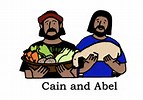
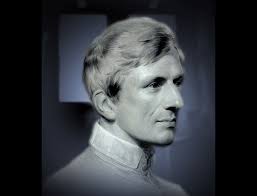



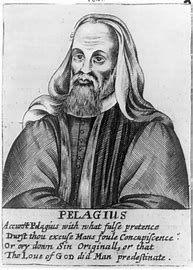
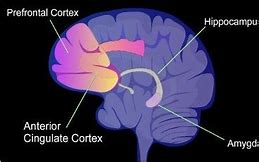

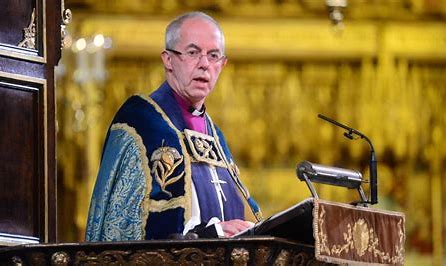






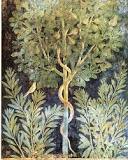



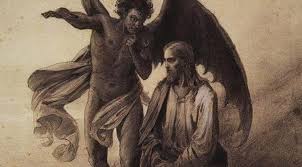


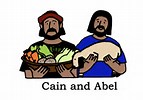



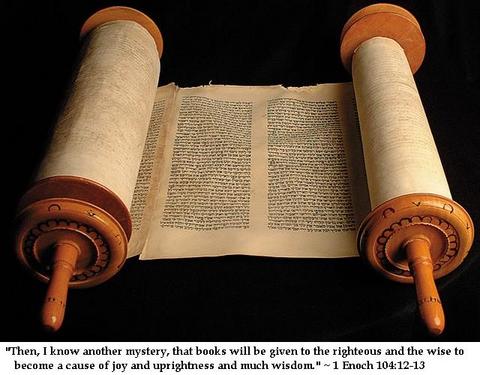


















![What Paul actually wrote in GAL2:16 FAITHFULNESS OF CHRIST [διὰ πίστεως Ἰησοῦ Χριστοῦ]](https://richard-777.blog/wp-content/uploads/2025/01/1f7b7-image.png)











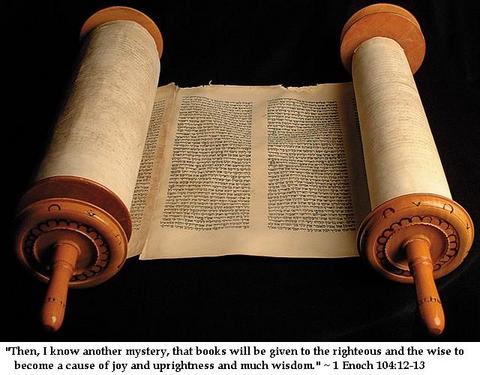


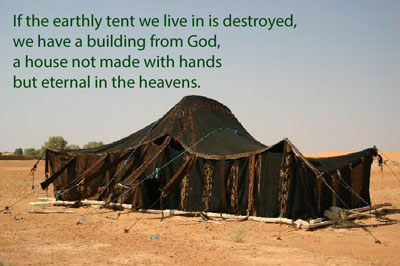







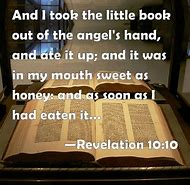


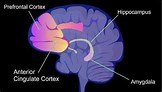


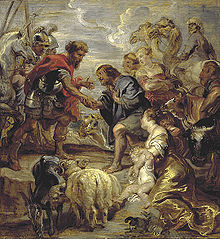




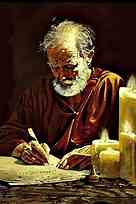



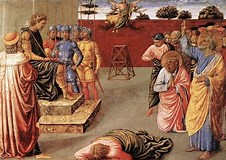


 The Little Book of Providence