We have come with Good News to make you turn from these empty idols to the living God who made sky and the earth and the sea and all that these hold. In the past He allowed all the nations to go their own way; but even then He did not leave you without evidence of Himself in the good things He does for you: He sends rain from Heaven and seasons of fruitfulness; He fills you with food and your hearts with merriment. (Acts14:15-17 New Jerusalem Bible)
After experiencing persecution at Iconium, Paul and Barnabas moved on to Lystra where Paul healed a man crippled in both feet. Those who saw it were so impressed with the miracle that they declared Paul and Barnabas to be two of their gods, renaming them Mercury and Jupiter respectively. Unsurprisingly the two evangelists were greatly distressed by this, prompting Paul to make the speech featured above.. It is of interest because it hints at what might be described as Paul’s natural theology, and that becomes more evident in a few chapters time as we shall see. Here Paul is indicating that unlike God’s chosen people of the Old Testament whose inexcusable idolatry was not tolerated, God had permitted primitive people to “go their own way” in terms of their search for God, hoping that they would recognize the goodness of His nature through the natural provisions made for them. Far from despising humanity, even in its fallen state, God had been pleased to “fill their bellies with food and their hearts with merriment” in order that they might come to discern the goodness of His nature. [This is Paul’s God and mine]. According to the apostle, God expected that primitive man might “grope after God” and find Him to an extent as we shall see in chapter 17 (vv26-28).
Now, thanks to the incarnation, ministry, sacrificial death, resurrection and glorification of the Word of God, such groping would no longer be required. For Christ, even in His earthly ministry (Jn14:9) had been the express image of God, and following His death and resurrection had provided the means and spiritual resources for fallen human beings to come to know and be reunited to God, His Son and Spirit – the phenomenon the Bible refers to as “αἰώνιος ζωὴ”, usually translated from the Greek as “eternal life” (Jn17:3)**. As the Biblehub excerpt I have quoted below affirms the full sense of the meaning (as being a quality relating to an age) tends to be obscured in the translation. This Good News was no longer reserved for Jews and God-fearing Gentiles, it was provided to out and out pagans such as Paul was addressing. And as considered in the last post, “as many as were appointed to eternal life” came to believe.
**Biblehub.com’s analysis ofαἰώνιος (aionios)in the context of “eternal life”
“Cognate: 166aiṓnios (an adjective, derived from 165/aiṓn (“an age, having a particular character and quality“) – properly, “age-like” (“like-an-age“), i.e. an “age-characteristic” (the quality describing a particular age); (figuratively) the unique quality (reality) of God’s life at work in the believer, i.e. as the Lord manifests His self-existent life (as it is in His sinless abode of heaven). “Eternal (166/aiṓnios) life operates simultaneously outside of time, inside of time, and beyond time – i.e. what gives time its everlasting meaning for the believer through faith, yet is also time-independent”
[Excerpt from Biblehub “HELPS: word studies for G166 – my highlighting]
38 Let it be known to you, brethren, that through (Jesus) is preached to you the forgiveness of sins; 39 and by Him everyone who believes is justified from all things from which you could not be justified by the law of Moses. 40 Beware therefore, lest what has been spoken in the prophets come upon you: 41 ‘Behold, you despisers, Marvel and perish! For I work a work in your days, a work which you will by no means believe though one were to declare it to you.’ ” 42 So when the Jews went out of the synagogue, the Gentiles begged that these words might be preached to them the next Sabbath. 43 Now when the congregation had broken up, many of the Jews and devout proselytes followed Paul and Barnabas, who, speaking to them, persuaded them to continue in the grace of God. 44 On the next Sabbath almost the whole city came together to hear the word of God. 45 But when the Jews saw the multitudes, they were filled with envy; and contradicting and blaspheming, they opposed the things spoken by Paul. 46 Then Paul and Barnabas grew bold and said, “It was necessary that the word of God should be spoken to you (Jews) first; but since you reject it, and judge yourselves unworthy of everlasting life, behold, we turn to the Gentiles. 47 For so the Lord has commanded us: ‘I have set you as a light to the Gentiles, that you should be for salvation to the ends of the earth.’ ” 48 Now when the Gentiles heard this, they were glad and glorified the word of the Lord. And as many as had been appointed to eternal life believed. (Acts13:38-48)
I am focusing on the conclusion of Paul’s sermon in the synagogue at Antioch. One reason it is notable is that it is one of the few references to justification in the evangelistic preaching of the New Testament. Those who believe in Jesus, said Paul can be “justified from that from which one could not be justified through the Law of Moses”. As explained in an earlier post, there was provision in the Law of Moses through animal sacrifice for forgiveness of sins committed in ignorance (cf. Num15:26-28), but not for (the many more) sins committed willfully. This message greatly pleased Paul’s Gentile listeners but it should be noted that a good number of Jews and proselytes also followed Paul and Barnabus in response to this preaching (v43). Paul urged them to “continue in the grace of God”. That is as opposed to doing what he later had to chastise some within the Galatian Church for doing. They, he said had “fallen from grace” by attempting to be justified by the Law (Gal5:4). He explains elsewhere in his pastoral epistle that by this he meant they had “turned again to the weak and beggarly elements (of the Torah), desiring again to be in bondage, observing days and months and seasons and years (Gal4:9-10)“. This is the true context of Paul’s often misunderstood law/grace dichotomy and will be examined in more detail when we come to his epistles.
Whist some of his Jewish hearers were positive to Paul’s message others within the synagogue (probably including most of its leaders) were hostile. He warned them as follows: “It was necessary that the word of God should be spoken to you (Jews) first; but since you reject it, and judge yourselves unworthy of everlasting life, behold, we turn to the Gentiles” (v46). As I explain in my book** and as Paul affirms in Romans chapter 11, it was not simply a matter of order or protocol that the Gospel be preached to the Jews first, it was because they were the fore-ordained children of God’s Kingdom (Mt8:12). They were about to be usurped as such in view of their unbelief – much to the benefit and spiritual prosperity of the Gentile world (Rom11:12). Yet as verse 48 indicates it was never God’s intention that all in the current age should come to gospel salvation. Rather, “as many as were appointed to eternal life” were enabled by the Spirit of God to receive Christ (cf. Jn6:44). Once the Church as God’s inaugurated kingdom on earth is understood within the context of broader providence, the doctrine of predestination insisted upon in particular by Paul will not be a problem or detract from the Creator’s loving providential plans for humanity.
6 When (Saul and Barnabus) had gone through the whole island as far as Paphos, they found a magician, a Jewish false prophet whose name was Bar-Jesus, 7 who was with the proconsul, Sergius Paulus, a man of intelligence. This man summoned Barnabas and Saul and sought to hear the word of God. 8 But Elymas the magician (for so his name is translated) was opposing them, seeking to turn the proconsul away from the faith. 9 But Saul, who was also known as Paul, filled with the Holy Spirit, fixed his gaze on him, and said, “You who are full of all deceit and fraud, you son of the devil, you enemy of all righteousness, will you not cease to make crooked the straight ways of the Lord? 11 Now, behold, the hand of the Lord is upon you, and you will be blind and not see the sun for a time.” And immediately a mist and a darkness fell upon him, and he went about seeking those who would lead him by the hand. 12 Then the proconsul believed when he saw what had happened, being amazed at the teaching of the Lord. (Acts13:6-12)
Another encounter with a Gentile would-be convert, this time involving Paul and his associates, Mark and Barnabus. The Gentile in question was Sergius Paulus, pro-consul of Cyprus under Emperor Claudius. He is described in our text as “a man of intelligence” (v7) – wise enough indeed to want hear more of the Word of God, for which reason he summoned Paul and his associates. It is to be observed that many in the Bible who desire to learn of the Gospel are described as wise or God-fearing.
Such was the rich young ruler considered in an earlier post who came to Jesus seeking to “inherit eternal life”. He was undoubtedly God-fearing, law abiding and loved by Christ (Mk10:21) but in his case he was unwilling to become a disciple in view of the wealthy lifestyle he was required to leave behind. That consideration might well have applied to pro-Consul Sergius but in his case he made the better choice (v12). The main point being made in this post is that the gospel is not directed to those who are wicked and depraved but to those who already fear God or come to do so when the Word is preached. As Paul himself declared when delivering his sermon later in this chapter (next post):
Men and brethren, sons of the family of Abraham, and those among you who fear God, to you the word of this salvation has been sent (Acts13:26NKJV)
This is hardly the approach to evangelism I was brought up to believe in or apply as an Evangelical minister but it is the reality of Scripture in terms of Jesus’ encounters with His would-be disciples in the Gospels and that of the apostles in Acts. Likewise, those who wholeheartedly reject the Gospel and its Hero such as certain religious leaders that Jesus encountered and the likes of Elymas in our passage, these were sometimes described by Jesus and here by Paul as children of the devil”. Elymas was desperate to prevent the pro-consul’s conversions and Paul further describes him as one who is “full of all deceit and fraud, an enemy of all righteousness, making crooked the straight ways of the Lord” (v10)
This touches upon one of many mysteries being explored in The Little Book of Providence** (chapter six), namely that the term “children of the devil” is not merely a descriptor for a particularly heinous sinner but is a distinct category of individual of whom the archetype was Adam’s firstborn son Cain. This idea is more explicitly developed in the epistles of John, which God willing we will come to in due course.
The next day, as they went on their journey and drew near the city, Peter went up on the housetop to pray, about the sixth hour. 10 Then he became very hungry and wanted to eat; but while they made ready, he fell into a trance 11 and saw heaven opened and an object like a great sheet bound at the four corners, descending to him and let down to the earth. 12 In it were all kinds of four-footed animals of the earth, wild beasts, creeping things, and birds of the air. 13 And a voice came to him, “Rise, Peter; kill and eat.” 14 But Peter said, “Not so, Lord! For I have never eaten anything common or unclean.” 15 And a voice spoke to him again the second time, “What God has declared to be clean you must not call common.” 16 This was done three times. And the object was taken up into heaven again. (Acts10:9-16)
As most commentators recognize Peter’s vision was not really about food and what could be eaten, but about people and who could now be fitted for glory. The Gentiles were no longer to be regarded as common or unclean because God had declared them to be otherwise. But why should that be since according to the Torah, being the divine decrees for His chosen people, many of the practices of other nations were to be regarded as unclean, being opposed to God’s will for the people with whom He wished closely to associate? Well something radical had happened: Messiah had been sacrificed on the Cross, not just as an offering for sin but “to cancel out the certificate of debt consisting of decrees against us, which was hostile to (the Gentiles); He has taken it out of the way, having nailed it to the cross” (Col2:14)
As a result, the likes of God -fearing Gentiles such as Cornelius and his household were now eligible to be members of the messianic community. This was a mystery, revealed more clearly through Paul (Eph3/Rom11), that before his vision, Peter was not clear about even though he and his immediate associates had been three years at Jesus’ side. Such men were not stupid: if Jesus had made these matters clear to them concerning God’s plans for the Gentile nations, such a vision would not have been needed.
Jesus had merely hinted at such a possibility in certain parables, whilst the Old Testament was yet more adamant that only Jews and the relatively few proselytes who converted to their faith could be “the children of the Kingdom”. Others could potentially be enlightened and forgiven in the name of Jesus if they repented and acknowledged Him as Lord and Saviour. But it was certainly not envisaged that they would be filled with the Holy Spirit or obtain an eternal quality of life in preparation for future glory as Christ’s corporate partner through eternity. The Messiah was foretold to be “ a Light to bring revelation to the Gentiles and the glory of God’s people Israel (Lk2:32). Or as Paul later expressed it, siting and slightly subverting some Old Testament prophecy::
“Jesus Christ has become a Servant to the circumcision for the truth of God, to confirm the promises made to the fathers, 9 and also that the Gentiles might glorify God for His mercy, as it is written:
“For this reason I will confess to You among the Gentiles, And sing to Your name.”
10 And again he says:
“Rejoice, O Gentiles, with His people!”
11 And again:
“Praise the Lord, all you Gentiles! Laud Him, all you peoples!”
12 And again, Isaiah says:
“There shall be a root of Jesse; And He who shall rise to reign over the Gentiles, In Him the Gentiles shall hope.” (Rom15:8-12)
The Gentiles were expected to rejoice with God’s people not become His people (v10). As for Peter, he states more explicitly in the next chapter (11:17) that up to this point he had not grasped that the Gentiles could receive “the same spiritual gift” as the Jews when they came to believe in Christ, or in Paul’s language that they would “obtain an inheritance amongst those who are to be sanctified” (Acts20:32)
After Peter’s vision, the newly enlightened apostle concluded:
“In truth I now perceive that God shows no partiality. But in every nation whoever fears Him and works righteousness is accepted by Him. (Acts10:34-35)
Now there was a man at Caesarea named Cornelius, a centurion of what was called the Italian cohort, 2 a devout man and one who feared God with all his household, and gave many alms to the Jewish people and prayed to God continually. 3 About the ninth hour of the day he clearly saw in a vision an angel of God who had just come in and said to him, “Cornelius!” 4 And fixing his gaze on him and being much alarmed, he said, “What is it, Lord?” And he said to him, “Your prayers and alms have ascended as a memorial before God. 5 Now dispatch some men to Joppa and send for a man named Simon, who is also called Peter; 6 he is staying with a tanner named Simon, whose house is by the sea.” 7 When the angel who was speaking to him had left, he summoned two of his [e]servants and a devout soldier of those who were his personal attendants, 8 and after he had explained everything to them, he sent them to Joppa (Acts10:1-8)
Cornelius is perhaps the prime example in the New Testament of those who are neither Jew nor Christian yet are God-fearing and upright. His charitable works and prayers were noted by God (v4) who, contrary to what I believed for many years delights in and rewards those who seek Him and exercise compassion towards others. That applies whether or not they know Christ as Lord and Saviour, which Cornelius assuredly did not at that stage. Nor is this “prevenient grace”, it is effectual common grace: he and his household were God-fearing and morally upright by nature. What such people are doing, particularly when they exercise compassion is serving Christ, though they don’t currently know as much. In due time they shall be informed that in as much as they showed kindness to the least of their fellow human beings, they did so to Christ as Son of Man (Mt25:40).
Cornelius was unsaved and religiously untaught – he worshipped Peter the moment he met him (vv25,26). For Cornelius to be a true disciple and become “conformed to the image of God’s Son” (Rom8:29) so that He might reign with Him in the ages to come, something more was required. He needed to be baptized and receive the Holy Spirit, which duly occurred. As we shall see in the next post that was somewhat to the Apostle Peter’s surprise.
36 Now in Joppa there was a disciple named Tabitha (which translated in Greek is called Dorcas); this woman was abounding with deeds of kindness and charity which she continually did. 37 And it happened at that time that she fell sick and died; and when they had washed her body, they laid it in an upper room. 38 Since Lydda was near Joppa, the disciples, having heard that Peter was there, sent two men to him, imploring him, “Do not delay in coming to us.” 39 So Peter arose and went with them. When he arrived, they brought him into the upper room; and all the widows stood beside him, weeping and showing all the tunics and garments that Dorcas used to make while she was with them. 40 But Peter sent them all out and knelt down and prayed, and turning to the body, he said, “Tabitha, arise.” And she opened her eyes, and when she saw Peter, she sat up. 41 And he gave her his hand and raised her up; and calling the saints and widows, he presented her alive. 42 It became known all over Joppa, and many believed in the Lord. 43 And Peter stayed many days in Joppa with a tanner named Simon (Acts9:36-43)
In terms of Peter’s ministry in particular, an important aspect was the miraculous healings and as in the case of the saintly Tabitha, occasional resurrections. Actions speak louder than words and it resulted in many “believing in the Lord” (v42). That was in Joppa which since the time of Solomon was the main port of Jerusalem. The question has often been posed as to why such miraculous activity largely subsided after the death of the apostles. As is evident in this passage such events result in many being added to the local church, ensuring that a fledgling community of believers becomes an established witness in the area. However, in the Gospel of John Jesus had indicated that these more extraordinary gifts were not for the apostles alone but for all believers, and by implication, all generations:
Truly, truly, I say to you, he who believes in Me, the works that I do, he will do also; and greater works than these he will do; because I go to the Father (Jn14:12NASB).
As will hopefully become clearer later in Acts in the preaching of Paul, the miraculous activity was a particular witness to the Jews concerning the One they had had crucified. Peter and all the apostles always made it clear that what they were doing was not through their own authority or power but in the name and authority of the Messiah so many of them had rejected. And as I explained in an earlier post it was not the Jews’ role in the crucifixion per se but their rejection of the post-Ascension apostolic witness concerning it that resulted in their being usurped as sole inheritors of the Kingdom (cf. Acts13:46). This more than any other factor explains the temporary nature of such miraculous activity, not to mention the many other mysteries pertaining to the course of the history of the current age and the subversion of some earlier biblical prophecies concerning it (e.g. Is2:3-4; Zech8:23; Mt10:23; cf. Acts1:6-7; Eph3:9)
Now Saul, still breathing threats and murder against the disciples of the Lord, went to the high priest, 2 and asked for letters from him to the synagogues at Damascus, so that if he found any belonging to the Way, both men and women, he might bring them bound to Jerusalem. 3 As he was traveling, it happened that he was approaching Damascus, and suddenly a light from heaven flashed around him; 4 and he fell to the ground and heard a voice saying to him, “Saul, Saul, why are you persecuting Me?” 5 And he said, “Who are You, Lord?” And He said, “I am Jesus whom you are persecuting, 6 but get up and enter the city, and it will be told you what you must do.” (Acts9:1-6)
I am in the process of examining the sermons and conversions of Acts – but this is no ordinary conversion, or indeed sermon, coming as it did from the Lord of Glory. And it was not addressed to a penitent but to a raging tyrant hell-bent on destroying His fledgling Church. Saul of Tarsus was a Jewish zealot who was not in the pursuit of evil per se but believed He was fulfilling the divine will by bringing a dangerous new movement to task. It was a movement referred to as “the Way” that he feared would undermine the Jewish Temple, Torah and Tradition. Yet Saul had recently witnessed and approved of the martyr of Stephen who had spoken historical Truth concerning the patriarchs with which Saul would have been acquainted. Deacon Stephen had been filled with the Holy Spirit such that his face appeared as an angel (6:15). Yet, regrettably, religious bigots are often unable to discern the Truth even when the Holy Spirit is at work in its presentation.
It is no wonder Saul who after his conversion became Paul described himself as the chief of sinners, albeit that was in the context of his persecution of the early church (1Tim1:13-15); it was not an assessment of his life as a Christian as some try to make out for the their own theological ends (cf. 2Cor1:12). But as the aforementioned reference from Timothy affirms, God had had mercy on the young man from Tarsus because he had done what he had done in the ignorance of unbelief.
Paul’s conversion
In terms of Paul’s conversion, the circumstances may have been extraordinary but resulted as ever in prayerful reflection (Acts9:11), baptism (v18), reception of the Holy Spirit (v17) and an affirmation that Jesus Christ was the Son of God (v20). His previous misguided zeal would now be put to good use by Christ “as My chosen vessel to bear My name before the Gentiles, kings as well as the sons of Israel” (v15). The unexpected thirteenth apostle, pivotal to the unfolding of the mystery of God’s munificent providential purposes* had been launched.
*Set out in “The Little Book of Providence” – free PDF HERE
25 So, when they had solemnly testified and spoken the word of the Lord, they started back to Jerusalem, and were preaching the gospel to many villages of the Samaritans.26 But an angel of the Lord spoke to Philip saying, “Get up and go south to the road that descends from Jerusalem to Gaza.” ([h]This is a desert road.) 27 So he got up and went; and there was an Ethiopian eunuch, a court official of Candace, queen of the Ethiopians, who was in charge of all her treasure; and he had come to Jerusalem to worship, 28 and he was returning and sitting in his [i]chariot, and was reading the prophet Isaiah. 29 Then the Spirit said to Philip, “Go up and join this [j]chariot.” 30 Philip ran up and heard him reading Isaiah the prophet, and said, “Do you understand what you are reading?” 31 And he said, “Well, how could I, unless someone guides me?” And he invited Philip to come up and sit with him. 32 Now the passage of Scripture which he was reading was this:
“He was led as a sheep to slaughter; And as a lamb before its shearer is silent, So He does not open His mouth. 33 “In humiliation His judgment was taken away; Who will [k]relate His [l]generation? For His life is removed from the earth.”
34 The eunuch answered Philip and said, “Please tell me, of whom does the prophet say this? Of himself or of someone else?” 35 Then Philip opened his mouth, and beginning from this Scripture he preached Jesus to him. 36 As they went along the road they came to some water; and the eunuch *said, “Look! Water! What prevents me from being baptized?” 37 []And Philip said, “If you believe with all your heart, you may.” And he answered and said, “I believe that Jesus Christ is the Son of God.”] 38 And he ordered the [n]chariot to stop; and they both went down into the water, Philip as well as the eunuch, and he baptized him. 39 When they came up out of the water, the Spirit of the Lord snatched Philip away; and the eunuch no longer saw him, but went on his way rejoicing (Acts8:25-39).
A part of the reason for my going through these sermons and exchanges in Acts is to demonstrate that the apostles’ audience and the first converts to the Christian faith were either Jewish, Samaritan (being effectively a sect of Jews who also worshipped YHWE and observed the Law of Moses) or as in the case of the Ethiopian eunuch, a Jewish proselyte. That is evidenced from the fact that he had been on pilgrimage to the Jewish temple and was reading the Old Testament. It is to affirm a major thesis within the Little Book of Providence (not to mention Paul’s 11th chapter to the Romans) that what we know of as Christian salvation was not envisaged for the Gentile nations in the current age but resulted from the rejection of the Jewish nation as sole inheritors of the Kingdom. My Book considers the associated providential and dispensational (millennial) implications of this phenomenon. These have largely been eluded because such cannot currently be reconciled with some of the narrow, dualistic Augustinian derived theological assumptions the Church has relied upon for so long,
The other reason for this process is to demonstrate what the very earliest (and purest) evangelism looked like in terms of what potential converts to the Faith were required to do or believe. This narrative serves that purpose well in which it is to be observed that the Ethiopian having been instructed by Philip concerning Jesus (in this case using only data available from the Old Testament – so forget the counter-intuitive intricacies of Pauline justification and the like), he came across water and requested to be baptized. The subsequent dialogue provides all we need to know: “If you believe with all your heart, you may.” And he answered and said, “I believe that Jesus Christ is the Son of God.” And he ordered the chariot to stop; and they both went down into the water, Philip as well as the eunuch, and he baptized him”. Truly, the unnamed Ethiopian was now a Christian. If he were still alive in a few decades time he would have the opportunity to further inform and deepen his faith through the teaching of the apostles in their pastoral letters to the churches. But in the meantime he possessed sufficient knowledge to believe in his heart that Jesus Christ was the Son of God and receive baptism for the remission of his sins, the Spirit also being given to those who obey God. That, as Acts should affirm to all readers, pertains to the essentials of what makes and defines the Christian.
I have not quoted Stephen’s speech – it is simply too long. How extraordinary that one of the most protracted individual oral addresses in the New Testament is not from an apostle but a deacon. He was one of seven appointed “to serve at tables” so that the apostles could concentrate on prayer and evangelism (Acts6:2). But then God is no respecter of persons or office and may choose to utilize mere “laypersons” to fulfil His purposes when He so chooses.
Again, it is obvious from the contents of Stephen’s speech that he is addressing Jews. They, he said, were doing just as their fathers did: “Which one of the prophets did your fathers not persecute? They killed those who had previously announced the coming of the Righteous One, whose betrayers and murderers you have now become; 53 you who received the law as ordained by angels, and yet did not keep it” (Acts7:52-53). This thoroughly incensed his audience as a result of which Stephen underwent a glorious death and is rightly revered as a Martyr for Christ. And at the time Stephen’s martyrdom was heartily approved of by a certain Saul of Tarsus (8:1).
The Little Book of Providence – Free PDF available HERE
Review or Purchase paperback or kinder e-book from Amazon.uk HERE or Amazon.com HERE
The high priest questioned (the Apostles), 28 saying, “We gave you strict orders not to continue teaching in this name, and yet, you have filled Jerusalem with your teaching and intend to bring this man’s blood upon us.” 29 But Peter and the apostles answered, “We must obey God rather than men. 30 The God of our fathers raised up Jesus, whom you had put to death by hanging Him on a [p]cross. 31 He is the one whom God exalted to His right hand as a Prince and a Saviour, to give repentance to Israel, and forgiveness of sins. 32 And we are witnesses of these things; and so is the Holy Spirit, whom God has given to those who obey Him.” (Acts5:27-32)
Reading through the early chapter of Acts there can be no doubt that Peter was the lead Apostle to the Jews as Paul in his capacity as Apostle to the Gentiles later affirmed (Gal2:7-8). Soon after being miraculously delivered from prison Peter and his fellow apostles were again apprehended by the High Priest (who was associated with the resurrection-denying Sadducees (5:17)) and summoned before the Senate to be questioned as per our text.
The main point I want to bring out from that brief exchange is that the preaching and correspondingly the thousands of early converts continued to be exclusively Jewish (as is also evidenced by the events of chapter 10 to follow). Peter describes Jesus as the One whom God exalted to His right hand to bring repentance to Israel (v31), Note also from the last verse that the Holy Spirit was given to those who obey God, not (as I once understood) in order that one might be enabled to obey God. Such is the order and sequence to be found in the sermons within Acts as we have already observed (2:38).
“Men of Israel, why are you amazed at this (miracle), or why do you gaze at us, as if by our own power or piety we had made him walk? 13 The God of Abraham, Isaac and Jacob, the God of our fathers, has glorified His servant Jesus, the one whom you delivered and disowned in the presence of Pilate, when he had decided to release Him. 14 But you disowned the Holy and Righteous One and asked for a murderer to be granted to you, 15 but put to death the Prince of life, the one whom God raised from the dead, a fact to which we are witnesses. 16 And on the basis of faith in His name, it is the name of Jesus which has strengthened this man whom you see and know; and the faith which comes through Him has given him this perfect health in the presence of you all. 17 “And now, brethren, I know that you acted in ignorance, just as your rulers did also. 18 But the things which God announced beforehand by the mouth of all the prophets, that His Christ would suffer, He has thus fulfilled. 19 Therefore repent and return, so that your sins may be wiped away, in order that times of refreshing may come from the presence of the Lord; 20 and that He may send Jesus, the Christ appointed for you, 21 whom heaven must receive until the time of the restoration of all things about which God spoke by the mouth of His holy prophets from ancient time. 22 Moses said, ‘The Lord God will raise up for you a prophet like me from your brethren; to Him you shall give heed to everything He says to you. 23 And it will be that every soul that does not heed that prophet shall be utterly destroyed from among the people.’ 24 And likewise, all the prophets who have spoken, from Samuel and his successors onward predicted these days. 25 It is you (Jews) who are the sons of the prophets and of the covenant which God made with your fathers, saying to Abraham, ‘And in your seed all the families of the earth shall be blessed.’ 26 For you primarily, God raised up His Servant and sent Him to bless you by turning every one of you from your wicked ways.” (Acts3:12-26)
Following his sermon on Pentecost, Peter’s second address was in response to peoples’ reactions to the disciples’ healing of the lame man at the temple gate resulting in his exuberant celebration. Again it is clear the apostle is addressing Jews, reminding them that this miracle was not down to them but to the One they had delivered, disowned and had put to death. He had been sent to bless them “by turning them from their wicked ways” (v26), albeit acknowledging that they had done what they did it in ignorance (v17). In terms of what was now required of them, it was to repent so that their “sins should be wiped away”.
Baptism is not explicitly mentioned here but it is in most other sermons, as will have been the expectation that Jesus would come again soon “to restore all things” (v21). Such is how Peter and all the apostles will have regarded “the Second Coming”. He also added that the prophets of old had predicted what was now occurring (in terms of the outpouring of the Spirit) but as we shall see, neither they nor Peter at that point anticipated that these blessings were to come in their fulness upon the Gentiles (cf. Acts11:17-18).
I mentioned in the previous post that one reason Luke’s account of the Acts of the Apostles is of vital interest is that it is effectively the only book in the New Testament which includes apostolic preaching (to the unconverted) as opposed to the pastoral teaching contained in the various epistles. I made the following comments in my first book which I believe still hold true:
Once one reaches the Acts of the Apostles, the crucified and risen Jesus is central to the Good News message. Indeed, Acts is vital in that it indicates how people were called to gospel salvation in terms of what is required of them and once again just as importantly WHAT IS NOT. Examine every sermon in Acts meticulously, including Paul’s and you will note that “justification” for example is mentioned but once (13:38b/39). In the apostolic evangelistic preaching of Acts, people were not brought to salvation by apprehending “justification by faith alone”, or by “renouncing any effort to be righteous and resting in the Saviour’s merits” or “looking to the finished work of Christ and appropriating it to myself” or “believing that Jesus had died for me as an individual” or “praying the prayer of faith, asking Jesus to come into my heart” but simply by acknowledging and believing that Jesus Christ is Lord, turning from their sinful ways and being baptized for cleansing of past sin: nothing more, nothing less (cf. Acts8:36,37 & 17:30).
The teaching on how the Christian goes on to grow in the faith and in holiness and participate fully in the life of the Church is provided by the epistles. Of course, none of the apostles’ writings are specifically evangelistic, being pastoral letters written to the churches, but even allowing for this change of genre (evangelistic preaching to pastoral letter) it cannot be the case that what is ESSENTIAL TO SAVING FAITH could be excluded from ALL the evangelistic sermons in the Bible and can only be deduced from the Pauline epistles! It is a serious point, and one of many that eventually found me out as a Calvinist Evangelical. Of course, the Lord’s ethical teaching in the gospels along with the pastoral epistles must be drawn upon to fill out the picture of what it means to commit one’s life to Christ.
But in terms of what one is required to believe or emotionally experience to become a Christian, and who within the broader Church are to be regarded as such, nothing can supplement the requirements of initiation as preached in Acts. Likewise, if the gospel as one currently perceives it does not match the heralding angel’s description of “Good News of great joy that shall be to all people” (Lk2:10), be assured one has not yet fully grasped the implications of the birth, life, death, resurrection, ascension and coming again of the Lord Jesus Christ. Angelic messages of Good News and great universal joy lead to joyous outcomes for humanity, albeit not necessarily for each individual. Any eschatological depiction that does not reflect that Good News requires revisiting, however revered its formulator may have been. [Excerpt from “Fellowship of the Secret” chapter one]
In subsequent posts I will be commenting on each of the sermons contained within Acts but perhaps the most important point about aspects of the gospel proclamation which many believers regard as vital to conversion yet are nowhere to be found within the sermons is best verified by the reader carefully going through Luke’s account of the Acts of the Apostles themselves.
The LITTLE BOOK OF PROVIDENCE: a seven-part synopsis of the bible: Download a free PDF of e-book suitable for desktop computers HERE[updated September 2023] or a Large-print version for mobiles HERE [565 pages]
Now there were Jews living in Jerusalem, devout men from every nation under heaven. 6 And when this sound occurred, the crowd came together, and were bewildered because each one of them was hearing them speak in his own language (Acts2:5-6NASB).
The context of this passage is the Day of Pentecost and the coming of the Holy Spirit which is undoubtedly the key theme of Acts chapter two. But as has sometimes been the case in this process I find myself drawn to some seemingly inconsequential comments or statements which actually are theologically significant. This is one such passage where Luke comments on the fact that many of the Jews living in Jerusalem were “devout” [Greek=εὐλαβής], which literally means those who lay hold on what is good, or in the religious context are God fearing. It should be noted incidentally that the crowd that gathered to whom Peter preached at Pentecost, many of whom were added to the Church were described by Luke predominantly if not exclusively as Jewish. If you have been following and understanding my posts that should no longer surprise you.
In terms of hermeneutics, if one chooses not to take a passage of Scripture literally there needs to be a valid reason. I mention this in the context of Romans chapter eleven, vital to my central thesis, where Paul’s comments in verses 11,12,15 and 30 regarding biblical salvation/Kingdom inheritance being made available to the rest of the world as a result of Jewish unbelief have simply not been given serious credence. Yet there are a few cases in Paul’s writing where a literal interpretation is not intended.
Crucially, in the context of this post, such an example is Romans 3:9-18 where Paul infers that “not one (Jew) is upright, no not one (v10); not one of them does right (v12); their feet are swift to shed blood (v15) and there is no fear of God before their eyes (v18). This, if it were true would certainly contradict our verse from Acts and frankly much else that the Bible portrays concerning the variability of the human condition. Irrespective of their religion the reality is that some people pursue a path of integrity whilst others follow a path of lawlessness. This is reflected in Old Testament wisdom literature with which Paul would be well acquainted. For example Proverbs2:13 speaks of those who leave the paths of uprightness to walk in the ways of darkness, and in Paul’s own writing where he refers to those (Gentiles) outside the Law who in response to their consciences do by nature the things contained within it, so becoming a law to themselves. (Rom2:14)
So why is a literal reading not valid in Romans 3, a passage which the Protestant Reformers utilize as a proof narrative to support their doctrine of total depravity? Well, apart from it being an observational absurdity to say that no Jew on the planet ever feared God, with a little investigation and knowledge of Scripture it becomes evident what Paul is doing here.
He is linking together passages from the Old Testament in which God’s own people were being chastised. It is a typically Jewish literary method of critique, and Paul is using it to adduce universal sinfulness, i.e. that all, whether Jew or Gentile are under the reign of sin and death. He is not intimating that it is in everyone’s nature to act in the depraved manner described in these concatenated prophecies, as a careful reading of the rest of Paul’s writings affirms.
So, in accordance with Luke’s account in Acts2, a good number of the Jews will have been devout and God fearing even though they were initially perplexed by the work of the Spirit they were witnessing. Nevertheless, Peter affirmed that they had been responsible for the Messiah’s death and needed to “Repent and be baptized in the name of Jesus Christ for the forgiveness of sins and to receive the gift of the Holy Spirit, and so that they might be “delivered from this perverse generation” (v38-40) .
The preaching of Acts is of particular interest being the only apostolic evangelistic preaching (as opposed to pastoral teaching) in the New Testament, so will be examined in subsequent posts.
The LITTLE BOOK OF PROVIDENCE: a seven-part synopsis of the bible: Download a free PDF of e-book suitable for desktop computers HERE[updated September 2023] or a Large-print version for mobiles HERE [565 pages]
20 “For it is written in the book of Psalms, ‘Let (Judas’) homestead be made desolate, And let no one dwell in it’; and ‘Let another man take his office.’ 21 Therefore it is necessary that of the men who have accompanied us all the time that the Lord Jesus went in and out among us— 22 beginning with the baptism of John until the day that He was taken up from us—one of these must become a witness with us of His resurrection.” 23 So they put forward two men, Joseph called Barsabbas (who was also called Justus), and Matthias. 24 And they prayed and said, “You, Lord, who know the hearts of all men, show which one of these two You have chosen 25 to occupy this ministry and apostleship from which Judas turned aside to go to his own place.” 26 And they drew lots for them, and the lot fell to Matthias; and he was added to the eleven apostles. (Acts1:20-26NASB]
Jesus had called twelve men to the apostolate, partly for symbolic reasons:
And Jesus said to (His disciples), “Truly I say to you who have followed Me, in the Regeneration when the Son of Man will sit down on His glorious throne, you also shall sit upon twelve thrones judging the twelve tribes of Israel (Mt19:28)
The symbolism pertained to the reconstitution of God’s chosen people: the twelve tribes, only two of which had survived at this point. But as our feature passage from Acts affirms, Judas was replaced by Matthias who was added to the eleven faithful apostles to witness to Jesus’ life, death and resurrection. Saul of Tarsus on the other hand was appointed out of due time (1Cor15:8) having been commissioned by the risen and ascended Christ as the thirteenth faithful apostle now that gospel salvation was to be made available to the Gentile nations. As will be considered in later posts It will become evident that in spite of the Great Commission to baptize and make disciples of all nations, it is not until events recorded in the eleventh chapter of Acts that any of the original twelve fully grasped that anyone who was not a Jew, Samaritan or proselyte could be granted the same gift of salvation as that intended for the Jews.
Paul’s appointment as 13th apostle to the Gentiles is yet another pointer to the fact that God’s salvific Plan for the world as decreed by the Old Testament and initially pursued even by Jesus Himself was that the “Kingdom of God” and gospel salvation as we understand it was destined for the Jews alone in the current age. The original twelve were appointed as apostles to the Jews and were sent to preach to them exclusively (Mt10:5,6 and especially Mt15:24 – note Jesus is telling His disciples that He had been sent by the Father to minister only to the Jews – He was not addressing the Canaanite woman “to test her faith” as some try to interpret it)
As for #13 being regarded as “unlucky” I will quote from my first book to close:
– O blessed number, for it signified that Gentiles, against all prophetic predictions were to be granted “eternal life” and have equal status with elect Jews as joint-heirs with Christ in His Kingdom. Paul had indeed been appointed “as a priest in the Good News of God that the offering up of the Gentiles might become acceptable, sanctified by the Holy Spirit” (Rom15:16 Young’s Literal). – Quote from Fellowship of the Secret chapter one
A theologian with a better grasp than many concerning God’s secret plan for the epoch
So, when (the disciples) had come together, they were asking (Jesus), saying, “Lord, is it at this time You are restoring the kingdom to Israel?” 7 He said to them, “IT IS NOT FOR YOU TO KNOW TIMES OR EPOCHS which the Father has fixed by His own authority(Acts1:6-7NASB)
The previous post examined the disciples’ question to the risen Lord concerning the restoration of the Kingdom to Israel; this post examines Jesus’ answer (v7).
Firstly, one should note how Jesus did not reply. I suspect many Christians including myself in the past would have expected an answer along the lines: “Of what do you speak? What has ‘restoring the Kingdom to Israel’ to do with the Gospel?” Of course, Jesus said nothing of the sort – what the disciples had asked was a valid enough question as I explained in the previous post. Yet it was “not for them to know the times or epochs” pertaining to such matters.
Jesus well knew He was addressing the immediate leaders of the Household of God – a Church to be “built upon the foundation of the apostles and prophets, Jesus Christ Himself being the chief cornerstone” (Eph2:20). If it were not the apostles’ business to understand these matters, then neither can it be the Church’s prerogative to decree upon the subject. And according to this disclosure the Church (Catholic or otherwise) has barely understood the intrinsic nature and purpose of the current epoch within salvation history. This may appear an outrageous statement to make, but then such has been God’s extraordinary modus operandi (Rev10:7; cf. Rom11:32-33)
The Apostle Paul of course was not amongst the disciples Jesus was addressing in Acts 1, and it was to him that the risen Lord provided new insights concerning this matter which the late-appointed apostle (and I) refer to as “the fellowship (or dispensation1) pertaining to the secret plan hidden in God” (Eph3:9; cf. Col1:26-27 & Rom11:11,12,15,30). As I have to keep repeating, very few if any theologians have grasped what Paul is talking about here, namely that the dispensation of grace to the Gentiles (resulting in eternal life and a glorious inheritance) was unknown to the Old Testament prophets as well as the celestial principalities and powers before it was revealed through St Paul. [Some Christians may have grasped that much but not the wondrous providential and dispensational implications of the fact that fulness of salvation resulting in eternal life was not “Plan A” for non-Jews in the current epoch].
One who at least took a step towards grasping the matter was St John Chrysostom (AD349-407). Chrysostom utilized the Alexandrian NU-textual variant “dispensation” for the key verse rather than “fellowship”, and the former equally makes sense in the context. This mysterious or secret dispensation Chrysostom recognized had not simply “come to pass” but had now been manifested through the establishment of the Church2. He goes on to write in his commentary:
“For this is the gospel: ‘It is He that shall save His people’ – but (note) not a word about the Gentiles. That which concerns the Gentiles the Spirit reveals; that they were called indeed the angels knew, but that it was the same privileges as Israel, yea, even to sit upon the throne of God, who would ever have expected this? Who would ever have believed it? – (for it had) been hidden in God”3
And by “hidden in God”, Chrysostom was referring to the Father, as does Paul. The apostle’s references to God always and only refer to the Father (cf. 1Cor11:3)– which brings me to the third point.
The monarchical status of God the Father
“It is not for you to know times or epochs which the Father has fixed by His own authority (Acts1:7NASB)
I mentioned Paul’s insistence on the Father’s monarchical status, but of course Christ Himself insists upon it in this verse, Jn14:28 and especially in our context Mk13:32). Likewise, none of the apostolic writers deny the fact that there is but one God, the Father, of Whom are all things, and one Lord Jesus Christ, by Whom are all things (1Cor8:6). Many of the ante-Nicene Fathers were later judged to have “tended to subordinationism”; rather I suggest they were being faithful to Scripture and reflecting the Tradition that the churches had more recently received in person from the apostles and their immediate appointees. I have made a point of utilizing only the language of Scripture when referring to God, His Son and Spirit. Hopefully, my recent post on John chapter 1 made it abundantly clear that I acknowledge Jesus Christ, unlike any other man, to be utterly divine, the One through Whom all things were created.
Nevertheless, to grasp concepts relating to the “secret plan hidden in God from the previous age” (and indeed FROM all pre-Pauline prophets e.g. Mt10:23) it is essential to acknowledge the monarchical status of the Father, and especially His Son’s insistence that His Father alone orders the timing and duration of the epochs.
Notes
1. Textual variant in original manuscripts οἰκονομία=administration or dispensation rather than κοινωνία=fellowship. For example, NKJV translates as “fellowship”, NASB as administration
So, when (the disciples) had come together, they were asking (Jesus), saying, “Lord, is it at this time You are restoring the kingdom to Israel?” 7 He said to them, “It is not for you to know times or epochs which the Father has fixed by His own authority(Acts1:6-7)
And so to Acts, and here is another short, relatively obscure piece of biblical narrative that is packed with theological implication – all of it vital to understanding God’s Plan of Loving Goodness set out in the Little Book of Providence (free PDF HERE)
There are three significant points, the two from verse 7 I will leave till the next post. In verse 6, Jesus’ closest disciples rightly understood that a part of God’s plan was to “restore the Kingdom to Israel”. This alludes to a key aspect of what I have been endeavouring to communicate, namely that the Kingdom of God (or in Matthew’s language “the Kingdom of Heaven”) that Christian disciples enter upon has nothing to do with who is going to heaven when they die but is the establishment of a new order on Earth run on heavenly principles. That Kingdom is being inaugurated in the present age but will not be fully established until Christ returns in glory. In terms of the disciples’ query Paul would later disclose that it had been determined that many Jewish hearts would be hardened to the gospel until the full complement of Gentiles elected to the Kingdom had been recruited (Rom11:25-26).
The disciples had also rightly understood that Old Testament prophecy indicated that God’s chosen race of Israel who had been tutored by the Law and perfected by a Messiah sent specifically to minister to them (Mt15:24; cf. Mt10:5-7) were the ones being prepared for royal service within God’s Kingdom. The Old Testament prophets had foretold that it would be the Jews who would lead the rest of the world into a knowledge of the Truth so that they might become citizens of the new, divinely ordered society: “ Many Gentiles “would come to Israel’s light and their kings to the brightness of her rising (Is60:3). At such a time “ten men from different nations will grasp the garment of a Jew, saying, ‘Let us go with you, for we have heard that God is with you (Zech8:23). Such was the expectation but as Jesus had warned “the kingdom of God will be taken from you (Jews) and given to a “nation” bearing the fruits of it (Mt21:33-43NKJV). That “nation” would be the universal Church. As Paul would affirm, that was entirely new revelation “hidden in God” from the previous age (Col1:26-27). A universal church rather than the Jewish nation was to become the “royal priesthood of God” (1Pet2:9 cf. Ex19:6).
Once such a context for the Christian elect and the Jews as God’s chosen nation before them has been grasped it will be appreciated that such are not an exclusive remnant to be delivered from Hell as so many have believed, but God’s human agents of healing for the world. As for the age to come, Jesus’ faithful disciples shall as a corporate entity be married to the Lord of Glory. But as is typical of the human ceremony that prefigures it, a vast many more guests shall also be invited to the Wedding. Then, having praised God for His benevolence and His Son’s saving work on their behalf, those guests will rejoice to be citizens of the Kingdom prepared for all who have shown they are capable of loving God and their fellow man. That will have been evinced by the love and compassion they unwittingly had shown in their earthly life to Jesus as Son of Man, representing as He did, the neediest of their brethren (Mt25:37-40).
And this is eternal life, that they might know You the only true God and Jesus Christ whom You have sent (John17:3)
As considered in earlier posts, refences to “death” in the New Testament particularly by Paul rarely if ever refers to “damnation” or even physical mortality, but to an absence of what is being considered in this post: αἰώνιος ζωὴ. That is usually translated as “eternal life”, which likewise is NOT referring to going to Heaven when you die as has traditionally been understood. The Bible Gateway provides the following helpful comments regarding what first century Greek writers (such as the apostles) would mean by αἰώνιος:
“aiṓnios does NOT focus on the future per se, but rather on the quality of the age it relates to. Thus, believers live in “eternal life” right now, experiencing this quality of God’s lifenow as a present possession. (Note the Greek present tense of having eternal life in Jn 3:36, 5:24, 6:47; cf. Ro 6:23.)]”
[Bible Gateway HELPS word studies – my highlighting]
In other words, references to eternal life or “life” in the New Testament relate to a present experience of Life with a capital “L” as a result of being in a living relationship with God through a personal knowledge of Jesus Christ, as should be clear from our featured verse (Jn17:3). Note also the following references:
“Whoever eats My flesh and drinks My blood has (present tense) eternal life, and (also) I will raise him up at the last day” (Jn6:54)
And: “No murderer has eternal life abiding in him” (1Jn3:15)
These also confirm that eternal life (literally age-life) is something to be experienced now. It should be noted that even the sinless Saviour asserted that He “lived by the Father” (Jn6:57) in the same way “those who eat Me shall liveby Me (same verse). That should make clear that “eternal life” as Jesus, Paul and others speak of it cannot refer to avoiding perdition or going to Heaven for these were hardly issues for Jesus Himself, yet even He “lived by the Father”. It relates to a present empowering relationship with the divine; “death” being the deprivation of such. Similarly when Jesus says of those who hear His voice and follow Him: “I give to them αἰώνιος ζωὴ and they shall never perish”, He is not being tautological (unnecessarily repetitive): Life pertaining to the age, which the Christian possess but others do not, is one thing; “never perishing” i.e. living forever is another, albeit the one results in the other. Such an understanding will be important when we get to Acts and Paul’s revelation concerning the Gentiles’ unexpected inheritance and the fact that they also were to receive “eternal life”, which was something of a surprise even to the Apostle Peter:
I (Peter) realized then that God was giving (the Gentiles) the identical gift He gave to us when we believed in the Lord Jesus Christ; and who was I to stand in God’s way? This account satisfied them, and they gave glory to God, saying “God has clearly granted to the Gentiles also the repentance that leads to life (Acts11:17-10)
It pertains to the fellowship of the secret (plan) hidden in God (cf. Eph3:9), being the subject of my first book, some recent blogs with more to follow shortly. More information on my latest book HERE
“Show us the Father and it will suffice us”, pleaded Philip. “Have I been with you so long and yet you have not known Me, Philip? He who has seen Me has seen the Father” (John14:9).
This is yet another statement of Jesus recorded by John that knocks some traditional theological assumptions on their head – namely the notion epitomized by the likes of Augustine and Calvin that God’s nature is incomprehensible to human reason. Such gentlemen needed to assert as much to support their version of the Good News, namely that to pay for Adam’s disobedience, God determined that the majority of human souls should be destined for eternal misery, apart from the proportionally few who would be enabled to apprehend God’s mercy as it is to be found in Christ. Apart from making “εὐαγγέλιον” (Good News) something of a misnomer, such a narrow and fatalistic narrative needed to be squared with the biblical assertion that the Creator is Love personified (1Jn4:8), a God who describes Himself as tender and compassionate (Ex34:6).
To reconcile such, God’s qualities of love, justice and compassion would need to be radically different in nature from our own, or indeed how such qualities are defined in Scripture (e.g. 1Cor13:4). To say that God is love personified but that in the context of the Godhead, “love” means something quite different is surely perverse, but it is the only way such theology can be made to work.
For the psalmist proclaims, “Alltheearth shall worship You and shall sing unto You; they shall sing to Your glorious name” (Ps66:4). The likes of Augustine, Calvin and Luther have ensured that such could never happen. They assert instead that human beings are unable to worship the God of the Bible as they perceive Him because of the depth of their innate depravity and the sheer unknowability of the divine nature. Truly, this distorts both the munificence of the Creator and the underlying goodness of those made in His image. Such long-held misconceptions will turn bitter in the stomach once the sweetness of God’s true providential intentions has been sampled by the many (cf. Rev10:10).
So, briefly, how does this statement of Jesus support the points made above? Paraphrasing the dialogue a little: “Lord, we have got to know You and we love You with all our hearts – but we need to see and understand the Father so that we may love Him with all our strength as the first commandment requires us to do”. “Oh Philip, Philip –Have I not been with you these past three years – truly I tell you: if you have seen Me you have seen the Father”. The key point is that in responding to Philip Jesus is referring to His person and nature as revealed during His earthly ministry.
He is indicating that the incarnated Jesus and His Father have the same nature. For Jesus had never been the “compassionate face of God”, He was the very image (eikon) of God: the incarnate Word. The Son did not die to save us from His Father, as effectively these medieval theologies infer.
As considered in the previous post Jesus died as a sacrifice for sin and to save us from Satan’s control as well as from the malign influence of the intellectual vessel that the soul inhabits whilst in mortal flesh (Rom7:24-25; 1Thes4:4), albeit the latter (spiritually empowering/sanctifying benefits) apply only to those who partake in the sacraments of the Church.
Of course, the Father dwells in a “light that no man can approach, whom no man has seen nor can see” (1Tim6:16). Yet man can know communion with the Godhead even now through the Son and the Spirit who are equally holy yet communicable. Apart from which man’s destiny is not to be “lost in God” but to resume his existence as a physical entity in union with the Man who is God’s true Son. “For in Him dwells the fullness of the Godhead bodily and (man) is complete in Him – the Head of all principality and power” (Col2:9-10).
The reason Christ Himself gives for His death is not what we might have expected
27 “Now My soul has become troubled; and what shall I say, ‘Father, save Me from this hour’? But for this purpose I came to this hour. 28 Father, glorify Your name.” Then a voice came out of heaven: “I have both glorified it, and will glorify it again.” 29 So the crowd of people who stood by and heard it were saying that it had thundered; others were saying, “An angel has spoken to Him.” 30 Jesus answered and said, “This voice has not come for My sake, but for your sakes. 31 Now justice is to brought upon the world order; now shall the ruler of this world be expelled [John12:27-31]
It is perhaps remarkable that according to the accounts we have in the Gospels Jesus spoke little about the purpose of His death. The aspect with which Christians tend to be most familiar, the forgiveness of sins is (interestingly in view of my recent post) exclusively referred to by Jesus in the context of the Eucharist: “This is My body; this is My blood pertaining to the New Covenant, shed for the remission of sins (Mt26:28). He has given His body for the life of the world and so that individuals who sacramentally eat His flesh and drink His blood have Life of an eternal quality and will obtain the first resurrection (Jn6:54).
However, the Lord’s most direct reference to the purpose of His death is referred to in our featured passage (v31) – to bring justice to the world by giving its satanic prince the order of the boot. Many Bible versions translate κρίσις as judgement rather than justice which is not wrong in itself, but it needs to be distinguished from what the same writer (John) wrote in 3:17, namely that God did not send His Son into the world to judge (in the sense of condemn) the world but that the world as a whole might be saved.
But did Christ’s Passion achieve the specified end, or is the ruler of the world order as much in charge of affairs as he ever was? The answer to the latter is surely that he is – both from observing world events and the testimony of the New Testament writers. Paul refers to him somewhat cryptically as the “ruler of the authority of the air” (Eph2:2) whilst Peter affirms that same spirit to be prowling around like a roaring lion seeking whom he may devour (1Pet5:8). So Satan has not yet been excluded but thanks to the Passion his eventual banishment is assured.
The Old Testament writers expected the age to follow their age would see Satan’s demise when the Messiah ruled with the Jewish people, understood and referred to even by Jesus as the children of the Kingdom (Mt8:12). The reason that didn’t happen is hinted at in that verse from Matthew but made clearer (for some) by the Apostle Paul in his reference to:
“The mystery which has been hidden from the earlier age but has now been revealed to His saints, to whom God willed to make known the riches of the glory of this mystery among the Gentiles, which is Christ in you, the hope of glory” (Col1:26-27)
He expands on this in his letter to the Ephesian churches:
I, Paul, the prisoner of Christ Jesus for the sake of you Gentiles— if indeed you have heard of the stewardship of God’s grace which was given to me for you; that by revelation there was made known to me the mystery, as I wrote before in brief. By referring to this, when you read you can understand my insight into the mystery of Christ, which in other generations was not made known to the sons of men, as it has now been revealed to His holy apostles and prophets in the Spirit; to be specific, that the Gentiles are fellow heirs and fellow members of the body, and fellow partakers of the promises in Christ Jesus through the gospel, of which I was made a minister, according to the gift of God’s grace which was given to me according to the working of His power. To me, the very least of all saints, this grace was given, to preach to the Gentiles the unfathomable riches of Christ, and to bring to light the fellowship pertaining to the secret (plan) which for ages has been hidden in God who created all things. (Eph3:1-10)
This was the mystery hidden in God the Father (cf. Acts1:7) that was the subject of my first book “The Fellowship of the Secret” (taken from verse 10). It is the reason why the current age has not panned out as prophesied in the Old Testament (Romans 11 vv11,12,15 &30 sets it out more simply if Paul were only taken at his word). Apart from the wondrous providential implications that I outline in that book, this dispensational realignment is why the prince of this world still has the influence that he does, even though Christ’s Passion has assured his eventual defeat, which I hope and believe will be very soon.
And Jesus said, “For judgment I came into this world, so that those who do not see may see, and that those who see may become blind.” Those of the Pharisees who were with Him heard these things and said to Him, “We are not blind too, are we?” Jesus said to them, “If you were blind, you would have no sin; but now you say, ‘We see,’ your sin remains. (Jn9:39-41)
What I believe I have been shown by the Spirit and set out in The Little Book of Providence** turns a good deal of my previous understanding on its head. I believe it to be the truth because, as I demonstrated in my recent posts regarding a positive role for natural law and the sacrificial nature of the Eucharist, my interpretations generally accord with that of the earliest Church Fathers. They had received the Faith directly from the apostles or their close successors so were not entirely reliant on biblical exegesis. That was where the problems started even before the full Canon of Scripture had been compiled, especially when interpreting Paul’s letters, just as his fellow apostle Peter had warned (2Peter3:15-16).
My other reason for confidence is the fact that the new interpretations enable Scripture to cohere as a whole in a way that it did not before. And whilst the Bible has been a catalyst for error, especially when isolated from the full deposit of Faith that was both written and oral in nature (2Thes2:15), it is undoubtedly the final arbiter for truth and should not be directly contradicted by any doctrine of the Church. So, should a biblical synopsis be provided that is truly coherent, I suggest it is worthy of serious examination, regardless of the apparent inconsequence of its intermediary.
The final verse of our featured passage concerning Jesus’ dialogue with the Pharisees is a seemingly simple statement, yet it has profound theological implications which shouldn’t be taken in isolation but compared with the rest of Scripture. Firstly, when Jesus says “If you were blind you would have no sin”, it suggests the principle that God does not condemn the ignorant, or in Paul’s language, “Where there is no law, sin is not imputed” (Rom4:15 & 5:13). Paul’s statement can be a problem for the many who reject natural law, for it implies for example that wicked Gentiles in the Old Testament should not be judged or punished, being ignorant of Torah. On the contrary, they may have been ignorant of the Law but not the law written in their hearts referenced by the conscience (Rom2:15). At the same time those genuinely ignorant of the true gospel (the vast majority who have ever lived) will not be condemned at final judgement for that ignorance. Yet neither can they have been “saved” or sanctified in preparation for marriage to the Lamb. That is why the Church rightly endeavours to preach the gospel to all, but as to who responds, that is a matter of elective grace (Jn6:44; Rom8:29).
The other principle which is linked to the fact that all who are of God (1Jn4:7-8) are to have a part in God’s eternal kingdom pertains to the nature of original sin. In Romans 5 Paul states that “death reigned from Adam to Moses even upon those who did not sin in the manner of our first parents” (v14). But as explained previously Paul’s “death” does not relate to damnation but the carnal body disrupting our fellowship with God whilst we inhabit it (except we encounter the Son who can make us free indeed to serve the living God). Adam’s degenerative body and brain we inherit, his guilt we do not. Sin is imputed to the degree that the law known to the transgressor has been transgressed. Hence, “if you (Pharisees) were blind you would have no sin”. So, what about Adam’s sin? – it is not so much as mentioned – if they had been ignorant of the truth they would have not been condemned.
The nature of original sin misrepresented in the West
The imputation of Adam’s guilt to all his descendants is an Augustinian derived heresy which has the foulest of implications for infants who die unbaptized and humanity as whole. Yet what is most serious and (dare I say it) indicative of its true origins is what it implies about God Himself. Unlike His methodology which is indeed inscrutable (Rom11:33), the Bible along with the testimony of the earliest Church Fathers affirm God’s character and nature to be both comprehensible and adorable from an enlightened human perspective. For the Christian already has the mind of Christ – he should not just fear but love and adore the Father for Who He is and the munificence of His providence. And so he might, once the sweetness of His providential purposes has been perceived and the bitter pangs of what had earlier been assimilated subside (cf. Rev10:10KJV).
The Eastern Church has long rejected the forensic (guilt-imputing) dimension to original sin, as does The Little Book of Providence. The latter also clarifies the fact that man’s sin is a terminal moral sickness that does not originate from the God-given soul but from the procreated “body of this death” – the intellectual tent/vessel man inhabits whilst in mortal flesh which the Christian alone is given the spiritual resources to master (1Thes4:4).
For just as the Father raises the dead and gives them life, even so the Son also gives life to whom He wishes. 22 For not even the Father judges anyone, but He has given all judgment to the Son, 23 so that all will honour the Son even as they honour the Father. He who does not honour the Son does not honour the Father who sent Him. (John5:21-23)
Continuing in John, it is Jesus Christ as Son of Man who is to be the Judge of humanity. God the Father judges nobody but has committed the matter to His Son (v22). This is confirmed in the Bible’s definitive passage on final judgement – Mt25:31-46. The sheep and goats are defined by whether or not they have exercised compassion to those in need, i.e. whether or not they have responded positively to the natural precepts instilled in their consciences, the Light of Logos provided to all people considered in my recent posts. It is why religious faith is not so much as mentioned in the sheep/goat passage, or indeed in Romans2:6-15 being Paul’s definitive passage on final judgement (as opposed to covenantal justification which is a matter of elective grace).
The apostle’s reference to obeying the truth (Rom2v8) being the conscience’s deference to that same Light by which he goes on to say that many Gentiles ignorant of God’s Law nevertheless do by nature the things that according to Paul are effectively its fulfilment (vv14-15): “For the entire law is fulfilled in keeping this one command “Love your neighbour as yourself” (Gal5:14).
Such a perspective will be anathema to many Christians today, but it would not have been so to 2nd/3rd century Church Fathers such as Clement, Justyn Martyr, Irenaeus and Eusebius. The earliest of these will have received the Faith from the apostles’ close successors, yet all affirmed a positive role for natural law. In the anthropological context that pertained to an underlying “common faith”[1] by which an individual “pays heed to the natural precepts of the law by which a man can be justified”[2] What is more, Eusebius and Irenaeus as respectively historian and surveyor of the worldwide churches indicated that THIS WAS THE CONSENSUS UNDERSTANDING OF THEIR DAY [3].
The Little Book of Providence not only reaffirms these ancient truths but integrates them within a coherent biblical synopsis. That is something that the aforementioned early Christian writers could not accomplish in their day for an agreed canon of Scripture had yet to be compiled. By the time it was (4th/5th century), later theologians, Augustine in particular, had turned such a notion of multi-faceted grace on its head, largely as a result of the latter’s interpretation of Paul’s letters, an interpretation which I have been demonstrating was deeply flawed.
Returning to the subject in hand, it follows that the kind of people who were accepted, sometimes rebuked but clearly loved by Jesus during His earthly ministry will be accepted by Him at that judgement and rewarded according to their works (Rom2:6). The difference will be that when He appears in His unveiled glory, those in whom Jesus was profoundly offended will be “consumed with the breath of His mouth and destroyed with the brightness of His coming”. These are the aforementioned “goats” aka the children of the devil, concerning whom John will have more to say in his epistles.
44 Now Philip was from Bethsaida, of the city of Andrew and Peter. 45 Philip *found Nathanael and *said to him, “We have found Him of whom Moses in the Law and also the Prophets wrote—Jesus of Nazareth, the son of Joseph.” 46 Nathanael said to him, “Can any good thing come out of Nazareth?” Philip *said to him, “Come and see.” 47 Jesus saw Nathanael coming to Him, and *said of him, “Behold, an Israelite indeed, a man without guile!” 48 Nathanael *said to Him, “How do You know me?” Jesus answered and said to him, “Before Philip called you, when you were under the fig tree, I saw you.” 49 Nathanael answered Him, “Rabbi, You are the Son of God; You are the King of Israel.” 50 Jesus answered and said to him, “Because I said to you that I saw you under the fig tree, do you believe? You will see greater things than these.” (John1:44-50)
After the spiritual experience that led to the writing of my first book five or so years ago, I would read through the Bible, notice things I had failed to pick up on before and interpret many narrative in quite new ways. That may well happen to other Christians in their personal devotions but not usually to the extent that one’s earlier theological perspectives are virtually turned on their head. Yet that was my experience which I spell out in a little more detail in “The Fellowship of the Secret”. Its successor “The Little Book of Providence” is a depersonalized and more systematized theological synopsis. These posts usually focus on passages that I now understand in quite a new way, and more importantly, to my satisfaction at least, enable the various doctrines of Scripture to cohere with each other. They also make better sense of secular and Church history as it has panned out, especially in terms of the religious and cultural formation that has occurred through history and its implications to overall providence.
My observation concerning this passage may seem relatively trivial, but nevertheless has a place in the overall package, summarized recently in the 95 theses post. Reading through the Gospels one is struck by Jesus’ starkly contrasting attitudes towards the people he encountered during His earthly ministry, all of whom were to one degree or another sinful. I am sure it will be surprising to many that in calling his disciples there is little if any reference to their sinfulness. These were, after all, ordinary working men: Simon Peter was conscious of his own unworthiness when he became aware of his Lord’s divinity (Lk5:8), but Jesus’ only recorded comment concerning the moral state of His new recruits was a positive one regarding Nathanael: “Behold, an Israelite indeed in whom there is no guile”.
“Nathanael a man without guile” – but you will note from verse 46 that Nathaniel was something of a cynic – referring to Jesus being a Nazarene he enquired of Philip, “Can anything good really come out of Nazareth?” So Nathaniel wasn’t perfect but those who are perfect such as the incarnate Word look for the good in people and love them for it. That even applies to those who fail to rise to the challenge of discipleship, such as the young ruler who endeavored faithfully to keep the law of Moses but was rather too attached to his material possessions – Jesus looked at him and simply loved him (Mk10:21).
Unlike the firebrand evangelism I encountered as a teenager Jesus never asked His would-be disciples to “acknowledge their lost estate” or to “cease from their own efforts to be righteous and apprehend God’s mercy in Christ” or, frankly, anything like it. Jesus simply called His would-be disciples to “Follow Me” which is actually far more of a challenge. Such requires careful evaluation before proceeding, like a person about to build a tower or a king about to enter battle (Lk14:25-33). As I pointed out before, that would hardly be the case if the gospel invitation pertained to “how to get to heaven when you die”. It concerns a still greater prize that was a challenge even for Paul:
“Brethren, I do not regard myself as having achieved it as yet; but one thing I do: forgetting what lies behind and reaching forward to what lies ahead, I press on toward the goal for the prize of the high calling of God in Christ Jesus” (Phil3:13-14).
All is worked out in detail in my book: the paperback, e-book or free PDF available at link below
The LITTLE BOOK OF PROVIDENCE: a seven-part synopsis of the bible: Download a free PDF of e-book suitable for desktop computers HERE[updated September 2023] or a Large-print version for mobiles HERE [565 pages]
10 (The Word) was in the world, and the world was made through Him, and the world did not know Him. 11 He came to His own, and those who were His own did not receive Him. 12 But as many as received Him, to them He gave the right to become the children of God, even to those who believe in His name, 13 who were regenerated, not of blood nor of the will of the flesh nor of the will of man, but of God.
John continues His resumé concerning the Word who became flesh coming into a world that was made through Him and yet did not know Him. Jesus was sent to a people who were described as being His own, given to Him by the Father – the intended children of the Kingdom, i.e. the Jews (Mt8:12). Paul later discloses what Jesus had hinted at in parables- that God’s chosen race were to be supplanted (or rather augmented) by people chosen from every nation. The latter were to be grafted in against their nature to the good olive tree intended for Israel (Rom11:24). If you have been following my writing, Paul’s language in this context should begin to make more sense.
Predestination affirmed
John reaffirms in this passage what Jesus and Paul in particular make clear – that those who are to form the messianic community, being the children of promise (Gal4:28) are chosen by the will of God. Only they are spiritually reborn, saved from the controlling influence of Paul’s “body of this death” (Rom7:24) and so enabled to serve God in spirit and in truth, even whilst in mortal flesh. In John’s language: such are those “who were regenerated, not of blood nor of the will of the flesh nor of the will of man, but of God” (v13).
Predestination is a doctrine that those faithful to the Bible should not attempt to water down. It is not simply referring to foresight on God’s part concerning who would respond to the gospel. Jesus and Paul in particular make that clear (future posts), as should our featured passage. Truly, this doctrine cannot be squared with what the Bible describes as God’s equitable and loving nature or His desire for all persons ultimately to be saved and come to a knowledge of the truth, that is, not within a binary soteriological framework. The matter can be resolved once the providential implications of Paul’s disclosure concerning the unforetold Gentile kingdom inheritance referred to in the opening paragraph are perceived. The elect of God are not to be defined as those the Creator has willed to be saved from Hell. Rather, “Whom He did foreknow, He predestined to become conformed to the image of His Son” (Rom8:29). This little flock are to be Christ’s corporate bride and partner through eternity. All is seen to function seamlessly within the multi-faceted economy of grace outlined in The Little Book of Providence, a free PDF of which is available HERE
1 In the beginning was the Word, and the Word was with God, and the Word was God. 2 He was in the beginning with God. 3 All things came into being through Him, and apart from Him nothing came into being that has come into being. 4 In Him was Life, and the Life was the light of men. 5 The light shines in the darkness, and the darkness did not overcome it (John1:1-5)
Moving to the gospel of John and as usual I will focus on the points of particular relevance to the writing of “The Little Book of Providence”. In the process of explaining the mystery revealed by Paul concerning God’s secret plan for the Gentile nations (Eph3:9-11), it has been necessary to affirm what both Jesus and Paul themselves insisted upon, namely the Father’s monarchical status within the Godhead. This has application to His unique authority concerning the timing and ordering of dispensations (e.g. Acts1:7). In case there should be any doubt about the matter or my perspective on it, the opening passage of John affirms beyond any doubt the thoroughly divine origin of the Lord Jesus Christ. For what mere mortal would dare assert that everything that existed was created through them? (v3).
The opening of John is of course referring to the second Person of the Trinity in His pre-incarnate state as LOGOS, being the Word of God, the principle of divine reason and creative order, who by definition must always have existed. “In (LOGOS) was Life and that Life was the light of men” (v4), which later in the passage (v9) we are told enlightens every person coming into the world. Regrettably, the true implication of these statements has been obscured by translation in some more modern English language versions [note 1]. For the passage has relevance to the subject of natural law (which as I suggest in the quote below is something of a misnomer). It nevertheless needs to be appreciated if the broader benign providence I have been outlining is to be perceived. Here is a brief extract from my book in the context of John 1:
Natural law is associated with Christ Himself since it pertains to an underlying faith in Logos by which little children can do no other than “believe” in the Saviour (Mt18:6). This should not be so surprising given that “natural law” is really Christ’s law, for all things, nature herself and the precious human soul were created by the pre-incarnate Christ as Logos – through Him and for Him (Col1:16) . Amongst the earliest Church Fathers such as Justin Martyr and Clement of Alexandria, the principle was articulated in terms of this divine Logos (Word) whom they recognized had provided every age, race and each individual with seeds of divine truth – the “Logos spermatikos”, leading everyone to some knowledge of God and His law, however fragmentary. Origen specifically regarded the seed of reason provided to all men equipping them with a measure of wisdom and justice as the essence of Christ Himself, as did Justin Martyr. From such a perspective Christianity does not supersede natural law but rather builds on it. [The Little Book of Providence chapter five]
Given the testimonies of second century Irenaeus [note 2] and third/fourth century Church historian Eusebius [note 3], such will have been the consensus of the ante-Nicene churches. That is until the so-called Doctor of Grace came along and rejected any positive role for natural law. He affirmed instead that man by nature could do “absolutely no good thing, whether in thought or will, affection or in action” except they “had fled to the grace of Christ” [note 4]. That was a sentiment with which I concurred for the first 25 years of my Christian life but now know it to be unbiblical, an observational falsehood, an affront to God’s gracious magnanimity and the dignity of the human person.
As the aforementioned observations from Church historians suggest (to which can be added the testimonies of Justyn Martyr, Clement and Origen), Augustine’s perspectives on natural law, free will and one-dimensional grace deform the living tradition of the early Catholic Church. In view of his extraordinary influence (for he was a prolific writer and apologist affirming much that was entirely orthodox and seemingly supremely spiritual), Augustine’s teaching shaped the future development of medieval Catholic theology as well as that of the Protestant Reformers who regarded him as “St Paul’s most trustworthy interpreter” [5]. Thus has the munificence and breadth of divine providence been obscured for much of the Christian era, and so shall the secret of God be brought to pass in accordance with the Good News He has brought to His servants the prophets (Rev10:7).
NOTES
[1] In terms of the translation of Jn1:9, it is hardly likely that John writing in the late first century would be informing his readers that the Light (Christ) “is coming into the world” (some versions).
[2] God in His providence is present with all “who attend to moral discipline, paying heed to the natural precepts of the law by which man can be justified“ [“Irenaeus against heresies” Book IV chap 13 para 1]
[3] “ “The Creator of all things has impressed a natural law upon the soul of every man as an assistant and ally in his conduct, pointing out to him the right way by this law; but, by the free liberty with which he is endowed, making the choice of what is best worthy of praise and acceptance, because he has acted rightly, not by force, but from his own free-will, when he had it in his power to act otherwise”
Given that both Eusebius and Irenaeus testified to the remarkable unity of the churches of their time, they would hardly have made such statements on natural law if it opposed the teaching of the churches they were surveying.
[5] Quote from Introductory statement of “THE HEIDELBURG DISPUTATION” – presented by Martin Luther and Leonhard Beyer to a meeting of the Augustinian order at Heidelberg on 26th April 1518
39 See My hands and My feet, that it is I Myself; touch Me and see, for a spirit does not have flesh and bones as you see that I have.” 40 And when He had said this, He showed them His hands and His feet. 41 While they still could not believe it because of their joy and amazement, He said to them, “Have you anything here to eat?” 42 They gave Him a piece of a broiled fish; 43 and He took it and ate it before them (Luke24:39-43)
Just a brief follow-up to the previous post on resurrection (Luke 20) where a few chapters later Jesus appears to His disciples shortly after His resurrection. They believed Him to be a ghost which is probably the main reason Jesus asked for food – to show them he was not a spirit but “flesh and bones” (v39) capable of eating. Drinking too, for in Mt26:29 Jesus had declared He would no longer partake of the fruit of the vine that He drank at the last supper “until I drink it anew with you in my Father’s kingdom” which He well knew would be after His resurrection and theirs. As for the resurrected bodies of ordinary mortals: “(Jesus) shall transform our humble bodies into conformity with His own glorious body by the exertion of the power that He has to subject all things to Himself” (Phil3:21).
If you have been following these posts or read my book*, you’ll know I understand Paul to be teaching that it is not the soul per se but the body and brain that is the source of man’s problem – that which has been ultimately procreated from our fallen first parents. The body with its ingenious but morally disordered control centre returns to the ground after a few decades, unlike the spiritual component of man. For it must be remembered that what leaves the body after death is a memory-retaining intellectual entity in its own right (cf. Lk16:25). The precious soul is both spiritual and eternal. It is not derived from human sperm but was planted in the embryo by the Spirit of God. And so “the dust shall return to the earth as it was and the spirit will return to God who gave it (Eccles12:7).
So it should come as no surprise that both Paul and Peter refer to the physical body as our vessel or tent. But “who can deliver me from the body of this death?” – I thank God it is Jesus Christ”, writes Paul (Rom7:24-25). For the Christian can bedelivered to an extent from the corrupting influence of the human brain as it processes the bodily senses that are at odds with the conscience-directed spirit or inner man (Rom7:23). Aided by celestial grace the believer can come to “possess his own vessel with sanctity and honour” (1Thes4:4). Yet even then, “if Christ be in you the body is dead because of sin but the spirit is alive because of righteousness” (Rom8:10). The matter is therefore not fully resolved for anyone until resurrection. Is it any wonder that Paul concludes:
“The whole creation groans and suffers the pains of childbirth together until now. And not only they, but also we ourselves who have the first fruits of the Spirit, even we groan within ourselves, waiting eagerly for our adoption as sons – being the redemption of our body! (Rom8:22-23).
Now there were seven brothers. And the first took a wife and died without children. 30 And the second took her as wife, and he died childless. 31 Then the third took her, and in like manner the seven also; and they left no children and died. 32 Last of all the woman died also. 33 Therefore, in the resurrection, whose wife does she become? For all seven had her as wife.” 34 Jesus answered and said to them, “The sons of this age marry and are given in marriage. 35 But those who are counted worthy to attain that age, and the resurrection from the dead, neither marry nor are given in marriage; 36 nor can they die anymore, for they are equal to the angels and are sons of God, being sons of the resurrection. Lk20:29-36NASB
This passage concerns Jesus’ response to a group of Sadducees, a Jewish sect who denied the resurrection of the dead. They try to trick the Lord by presenting him with the scenario of a woman who marries seven brothers in turn. Ok then Teacher, if there is such a thing as resurrection whose wife would she become now? Jesus’ reply raises some interesting issues that I will briefly comment on in this post. Firstly, in the age to come, the resurrected shall not marry and more importantly will never die. Most Christians will agree about that. But note Jesus’ reference to “those who arecounted worthy to attain that age, and the resurrection from the dead”.
This cannot be referring to the general resurrection for all are eventually be raised, worthy or otherwise (cf. Jn5:28-29). It is referring to the first resurrection spoken of in Revelation reserved for “those found worthy of that age” (not “world” as some translations incorrectly portray it). Such is also indicated by Jesus teaching that those who partake of His body and blood shall be “raised up on the last day” That implies of course that others will not be so raised (Jn6:54). Refer also to Rom8:19-23 which speaks of the whole creation being restored when the sons of God are revealed. The latter, Paul describes as awaiting “the redemption of their bodies” (v23).
The millennial age
Such passages lend support to the pre-millennialist viewpoint held by the majority of the ante-Nicene Christian writers. The first of these openly to challenge this perspective was Marcion. He was later denounced as a heretic for rejecting the use of the Old Testament and any epistles not written by Paul. Moving forward it was once again Augustine of Hippo who most greatly influenced medieval theology. As a result the Catholic Church has long rejected pre-millenarianism as an approved doctrine. For more details on the background to these developments see this page of Wikipedia.
Regardless of the various millennial perspectives it should be evident to any diligent, open minded researcher of Scripture that the emphasis of the New Testament is not “our spirits going to heaven when we die” but to share with Paul the aspiration to “attain to the resurrection of the dead” (Phil3:11). For the latter is not obtainable via any natural precepts but requires special revelation and faithful discipleship to Jesus Christ.
8 Zacchaeus stopped and said to the Lord, “Behold, Lord, half of my possessions I will give to the poor, and if I have defrauded anyone of anything, I will give back four times as much.” 9 And Jesus said to him, “Today salvation has come to this house, because he, too, is a son of Abraham. 10 For the Son of Man has come to seek and to save that which was lost.” [Luke 19:8-10]
Luke’s account of Jesus’ encounter with this vertically-challenged, wealthy but dishonest tax collector is instructive on several fronts. At the more trivial level, a couple of posts ago I reported Jesus as saying (when translated into English) that unless you give up ALL your possessions you cannot be His disciple. As I commented at the time the Greek relayed the idea of keeping a loose hold on one’s possessions, and this account bears that out. For Zacchaeus vowed to give HALF of what he owned to the poor, no doubt leaving himself sufficient resources to meet his own material needs. More importantly he vowed “to go straight”, in the process paying back fourfold those he had defrauded when going about his business.
More importantly still, Jesus affirmed that Zacchaeus’ response was what was required for his personal salvation. I suspect the emphasis in this account may surprise many as it did me in the past, along, frankly, with quite a lot else Jesus’ taught regarding discipleship, salvation and final judgement. That was because of how I as for many years a “Reformed” Evangelical had understood Paul’s teaching regarding the human condition, grace, law, free will and justification. The new interpretations set out in my book** supported by these blogs accord more with that of the earliest (pre-Augustinian) Church Fathers. They bring the teaching of Jesus, the Apostles and Old Testament wisdom literature more into harmony. Apart, that is, from the radical new concept that Paul introduced at the risen Saviour’s command: the reconstitution of the elect people of God – the rejection of the Jews as sole inheritors of the Kingdom and the provision of fulness of salvation for people from every nation as considered in the previous post, an understanding of which opens up a vastly broader vista of benign providence.
41 When He approached Jerusalem, He saw the city and wept over it, 42 saying, “If you had known in this day, even you, the things which make for peace! But now they have been hidden from your eyes. 43 For the days will come upon you when your enemies will throw up a barricade against you, and surround you and hem you in on every side, 44 and they will level you to the ground and your children within you, and they will not leave in you one stone upon another, because you did not recognize the time of your visitation.” [Luke19:41-44NASB]
I make the point in my book that Old Testament prophecy has been subverted, i.e. the establishment of God’s Kingdom on Earth is not to be fulfilled in the current age under the inspiration and leadership of the Jewish people (cf. Zech8:22-23; Mt8:11-12). But what in particular has not been understood is that this is a result of a two-stage rejection by the Jews of their Messiah, the first during His lifetime to which the above passage is referring, the second pertaining to the Jewish leaders’ response to the apostles’ teaching after Jesus had been resurrected and had ascended to heaven.
Whilst many ordinary Jews welcomed Jesus to their city with palm leaves their leaders were indignant and already plotting His downfall. This was the first rejection culminating in the crucifixion and as Jesus stated it put paid to the hope that the coming of the Messiah would bring an end to Israel’s political and military problems. The promise of peace and security for Jerusalem, evident in much prophecy including the recent angelic annunciations concerning the birth of John and Jesus, would not be secured by Jesus in His earthly lifetime, indeed worse was to come for Israel in about a generation’s time as Jesus had warned in His Olivet sermon. However, this is not what resulted in the rejection of the Jewish nation as sole inheritors of the Kingdom that Paul refers to in Romans 11 and Ephesians 3. Such is affirmed in Acts where the apostle indicates that even after Pentecost it was still the Jewish people’s “day of visitation” and they were still not appreciating it. Paul had warned certain Jews at Antioch:
Be careful! – or what the prophets say will happen to you: “Cast your eyes around you mockers; be amazed and perish! For I am doing something in your own days that you would never believe if you were told of it” {Acts13:40-41]
The warning was about what will or might happen to the Jewish nation, not what already had happened. Their day of visitation did not end when they crucified Christ. That event that Jesus referred to as His other baptism had been both divinely planned and prophesied; what was shortly to occur was undoubtedly planned or foreknown by God and also hinted at in some of Jesus’ parables but it had not been foretold within the Old Testament. It concerned the establishment of an international messianic community, a plan hidden in God the Father even from earlier prophets. For the Jewish leaders had refused to acknowledge that the resurrection and the miraculous signs were the vindication of Jesus’ earlier claims. They still rejected His Messiahship even now that He had been raised to the highest heavens and empowered His disciples to work miracles in His name. The featured passage from Luke 19 affirms that the Jews had already forfeited the prospect of political peace and security through their rejection of Jesus in His lifetime, but something even more radical was at stake: Kingdom inheritance. For as Paul goes on to warn:
We had to proclaim the word of God to you (Jews) first, but since you have rejected it since you do not think yourselves worthy of eternal life, here and now we turn to the Gentiles [Acts13:46-47].
As I go on to explain in my book this was not matter of sequence or protocol – that commonly held view subverts Paul’s teaching in Rom 11 where he writes –
“Look, what I am saying is this: Was this stumbling to lead to the Jews’ final downfall? Out of the question! On the contrary, their failure has brought salvation for the Gentiles, in order to stir them to envy. And if their downfall brings great riches to the world, and their loss has brought great riches to the Gentiles – how much more will their restoration bring!” (Rom11:11-12)
And later in the same chapter:
“For you (Gentiles) were once disobedient towards God but you have now obtained mercy as a result of (the Jew’s) disobedience” (v30)
When Jesus and Paul are taken at their word in this context, the providential implications are wondrous and profound – explored in depth in The Little Book of Providence (free PDF HERE)
“Now there was a rich man, and he habitually dressed in purple and fine linen, joyously living in splendor every day. 20 And a poor man named Lazarus was laid at his gate, covered with sores, 21 and longing to be fed with the crumbs which were falling from the rich man’s table; besides, even the dogs were coming and licking his sores. 22 Now the poor man died and was carried away by the angels to Abraham’s bosom; and the rich man also died and was buried. 23 In Hades he lifted up his eyes, being in torment, and *saw Abraham far away and Lazarus in his bosom. 24 And he cried out and said, ‘Father Abraham, have mercy on me, and send Lazarus so that he may dip the tip of his finger in water and cool off my tongue, for I am in agony in this flame.’ 25 But Abraham said, ‘Child, remember that during your life you received your good things, and likewise Lazarus bad things; but now he is being comforted here, and you are in agony. 26 And [a]besides all this, between us and you there is a great chasm fixed, so that those who wish to come over from here to you will not be able, and that none may cross over from there to us.’ 27 And he said, ‘Then I beg you, father, that you send him to my father’s house— 28 for I have five brothers—in order that he may warn them, so that they will not also come to this place of torment.’ 29 But Abraham *said, ‘They have Moses and the Prophets; let them hear them.’ 30 But he said, ‘No, father Abraham, but if someone goes to them from the dead, they will repent!’ 31 But he said to him, ‘If they do not listen to Moses and the Prophets, they will not be persuaded even if someone rises from the dead.’” [Lk16:19-31NASB}
The preoccupation of the Christian Church has historically focussed on what happens to the soul/spirit after death. So it may surprise many that there is effectively only one relatively miniscule passage of Scripture in the New Testament that directly refers to an individual’s experience of the afterlife: the story of the rich man and Lazarus. And that is in a pre-Christian context, hence the reference to compartments in Hades rather than heaven and hell as some translations wrongly translate ᾅδῃ . Yet what will be more perplexing to many is the actual content of the story or illustration Jesus provides.
The one stated criterion distinguishing the two men in question was that one had enjoyed a life of ease and comfort whilst the other had been poor and wretched. It can be deduced from verses 27-31 that the rich man was suffering partly because of the way he had utilized his wealth; failing to show care and compassion to the likes of Lazarus. Yet no reason is provided as to why Lazarus should be comforted after his death other than that he had experienced a life of poverty and sickness. What is more, Abraham intimates in the final verse that “Moses and the Prophets”, i.e. our Old Testament provides all the information required for the rich man’s brothers to avoid a similar fate.
Within the confines of a single post I will have to leave some of these imponderables hanging in the air. The matter pertains in part to redistributive justice (earlier post) and the necessity of suffering (or salting) that Lazarus had experienced in life whilst the rich man had not. The latter may shock the reader but it is line with other teaching of Jesus particularly as recorded by Luke, the Apostle James (“weep and howl you rich people”… ch5v1) and Paul, particularly in terms of the need for those who are to reign with Christ to have suffered with Him in the meantime (2Tim2:12). And why should they suffer? – because even their Captain was perfected through suffering (Heb2:10). All is spelt out and presented in a cohesive package in “The Little Book of Providence”, a free PDF of which is available HERE
Now]large crowds were going along with Him; and He turned and said to them, 26 “If anyone comes to Me, and does not hate his own father and mother and wife and children and brothers and sisters, yes, and even his own life, he cannot be My disciple. 27 Who ever does not carry his own cross and come after Me cannot be My disciple. 28 For which one of you, when he wants to build a tower, does not first sit down and calculate the cost to see if he has enough to complete it? 29 Otherwise, when he has laid a foundation and is not able to finish, all who observe it begin to ridicule him, 30 saying, ‘This man began to build and was not able to finish.’ 31 Or what king, when he sets out to meet another king in battle, will not first sit down and consider whether he is strong enough with ten thousand men to encounter the one coming against him with twenty thousand? 32 Or else, while the other is still far away, he sends [c]a delegation and asks for terms of peace. 33 So then, none of you can be My disciple who does not give up all his own possessions. (Luke14:25-33NASB]
In introducing the previous post (95 theses) I mentioned the importance of paying attention to the original Greek text (in the case of the New Testament) to be sure of understanding a particular verse or passage. The above teaching of Jesus is such an example which for illustrative purposes I have quoted from the New American Standard Bible. For Jesus assuredly did NOT say or mean that His disciples should HATE their parents, spouse or children, or anything like it. [We’re not even to hate our enemies, let alone our loved ones]
Of course, Jesus will have spoken in Aramaic but Luke’s account, like the rest of the New Testament is in Greek and He reported the Master as saying that His would-be disciple should μισέω their relatives. Μισέωcan mean “hate” but it is also used in the comparative sense of elevating one person or item above another, and that is surely the case here. The disciple’s devotion and obedience to Christ must indeed be greater than that which they apply to their family commitments or personal life plans – but that is very different from hating those things. [An interlinear translation per se will not necessarily identify these distinctions – further study is needed such as provided by Bible Hub HERE]
The final verse (33) may also perturb many when Jesus says (in most English translations) that we cannot regard ourselves as His disciples unless we give up all our possessions. Actually, that is not so far from what the Greek relays – ἀποτάσσω literally means to bid farewell to or at the least to keep a loose hold on. This was the rich young ruler’s problem that I commented on in an earlier post (re: the camel and the needle). It is simply not possible to be a disciple of Jesus Christ and a materialist, at which point many may well utter with Jesus’ original twelve “Who then can be saved?” Jesus’ response was that such an undertaking was impossible apart from God’s enabling grace, and such is the case.
But the main point I want to make from this passage is the major theme of my theses and book – that very few people globally and historically have been enabled to serve Christ in such a way or have even been informed or understood that such was required of them. For Christian discipleship is not what determines where the soul goes when it leaves the body or whether a resurrected body will play any part in God’s eternal kingdom. That is determined by what is innately known and thoroughly achievable (Mt25:31-46).
And thanks to the Passion of God’s Son it is not a matter of an accumulation of works or a perfectly lived life but the evincing of an underlying faith or faithfulness towards the innate light of Christ (cf. Jn1:9NKJV) through the exercise of a compassionate humanity.
However, the kind of self-sacrificing discipleship Christ is calling for in the above passage is the requirement for those who are to share His inheritance and be His corporate Bride through eternity. And as Jesus says, such a commitment needs to be carefully weighed up like a King about to go to battle or someone wishing to build a tower – which would hardly be the case if it pertained to our immortal souls avoiding Hell or gaining Heaven. Exactly how this fits in with everything else the Bible teaches is explained in my book – free PDF available HERE.
This is a reworking of a post I first put out on Halloween 2017, 500 years to the day that Martin Luther allegedly placed his 95 theses on the door of the Castle Church in Wittenberg. It was a somewhat tongue in cheek gesture on my part, but this more rigorous version hopefully provides a useful summary of the theological fundamentals and biblical interpretations set out in the two books that this website is promoting.
I am the first to acknowledge that biblical proof-texting can be utilized to prove almost anything – what is really needed is a comprehensive biblical synopsis that is intrinsically coherent and accords with the realities of secular, religious and church history as each has panned out. And unlike some earlier Institutes of Religion to which I once adhered, the cosmic outcomes derived from its theology should do justice to the sovereign yet equitable and loving nature of God as He is revealed in Scripture. Those earnestly seeking after Truth rather than simply wishing to defend a particular ecclesiological persuasion should not only pay careful attention to the original Greek and Hebrew text of the Bible but also examine the writings of the second and third century churches. The earliest of these assemblies will have been founded by the apostles themselves or their immediate appointees so they cannot have uniformly been in error regarding the essentials of the faith. Yet none of the available writings of the earliest Church Fathers bear much resemblance to my former (Calvinist Evangelical) theology or polity – it is more akin to my new understanding, especially in the area of (so-called) natural law, an appreciation of which is essential if the true nature of God’s broader providence is to be perceived.
With the Spirit’s help I believe a unified biblical synopsis has now been provided in “The Little Book of Providence”, so-called as I understand its subject matter pertains to that of “The Little Book” referred to in Revelation chapter ten. It is a disclosure concerning our Creator’s extraordinary providential strategy and His magnanimous intentions towards the human family, both of which have been historically obscured, more especially through the influence of Augustine’s writing and teaching in the fourth/fifth century. For sharing or serious critiquing, a PDF version with full biblical verse renderings is available HERE
95 THESES RELATING TO THE PERSONAL PROPHETIC INSIGHT THAT LED TO THE PUBLICATION OF “THE LITTLE BOOK OF PROVIDENCE” by Richard L. Barker
Humans were made in the image of God and even after the fall are to be regarded as such [Gen9:6]
Cain and Abel as the first humans to be born of woman were representatives within a de facto covenant that has been eluded by theologians [Gen4:7 Masoretic, e.g. KJV]
Abel was not “saved” by anticipating Calvary when he sacrificed an animal, he remained justified within a de facto covenant for fallen humanity by exercising faith/faithfulness, offering the best of his produce with a good conscience
Such an inclusive covenant is indicated by the fact that Cain was neither entirely alienated from God nor cursed by Him until after his fratricide [Gen4:13-16]
Cain rather than Adam is the type of the damned or reprobate, later described in the New Testament as derived from the Evil One (Greek: ek tou ponerou) [1Jn3:12]
Adam is mankind’s federal head and the type of those Paul describes as “dead” due to the malign influence of the procreated vessel inhabited by the soul whose moral instincts oppose that of the God-given spirit. Cain is effectively the type of the twice dead [Jude12] in whom both flesh and spirit have died to God and become united in evil
Those who go in the way of Cain [Jude11] are described in the New Testament as children of the devil [e.g. Jn8:44]
Children of the devil are distinguishable by their lack of conscience and their inability to emphasize or show compassion to others [Mt25:41-46]. They also have a total disregard for the truth [Jn8:44]
Children of the devil are alluded to by Paul as vessels of wrath created and prepared by God for destruction [Rom9:22]. They were not planted by the Father [Mt15:13], neither retain His seed [1Jn3:9], so no longer bear a reflection of His moral image. In that sense they cease to be fully human but exist to fulfil God’s purposes set out in theses 92 and 93
When Paul speaks of non-Christians being “dead” he is not referring to damnation but to the disruption of the incarnate soul’s communion with the Source of its spiritual life
Original sin is a reality and the “death” described above is its result
Our first parents “died” immediately they ate the forbidden fruit [Gen2:17]
Spiritual death arises as soon as the conscience is defiled for that faculty has a spiritual dimension [cf. Heb9:14]
Death results from sin but Paul indicates sin is itself a result of death [1Cor15:56] arising from the corrupted intellectual vessel in which the human soul is planted
Infants do not experience spiritual death until in Paul’s language “the law comes” [Rom7:9] being a clear sense of right and wrong; for where there is no law sin is not imputed and the conscience is not defiled [Rom5:13]
Adam and Eve’s offspring do not inherit their parents’ guilt [Jn15:22] but through procreation inherit an intellectual vessel that has been “shaped in iniquity” [Ps51:5] acting as a malign influence on the soul
The soul/spirit of man, being that which returns to God is not derived from human sperm but directly created by God [Eccles12:7]
The God-given soul/spirit of man is innocent but pliable (liable to corruption)
Apart from gospel grace or infantile death the soul is bound to experience corruption
The soul/spirit of man is not intrinsically corrupt having come from God, unlike the procreated vessel into which it is planted at birth
The intellectual vessel that the soul/spirit inhabits is innately corrupt, governed by a triple concupiscence [1Jn2:16]
Paul refers to the intellectual vessel that the soul/spirit inhabits whilst on Earth as “the body of THIS death” [Rom7:24], referring to its current spiritual status
Paul’s “law within his members” or “flesh” pertain to the governing principles adopted by the human brain as it processes the senses of the body [Rom7:23]
Since the soul and spirit are immortal the human psyche cannot be confined to the physical brain
For the soul/spirit that leaves the human body when the brain dies is itself an intellectual entity with a memory of its bodily existence [Lk16:25]
Man is composed of body, soul and spirit [1Thes5:23]
The human’s spirit is also referred to in Scripture as the heart or inner man [Rom7:22]
The human’s spirit (not to be confused with the human spirit) is often mistaken for the Holy Spirit when interpreting the Pauline epistles [e.g. in Rom8:6]
The fruits of the spirit pertain to man’s spirit, for those currently devoid of the Holy Spirit also produce good fruit [Gal5:22-23]
The inner conflict described by Paul in Romans 7 arises from conflicting motivations derived from the processing of the brain on the one hand and the conscience-directed spirit of the “inner man” on the other [Rom7:23]
Such an inner conflict is not restricted to the Christian, but to everyone with a functioning conscience
The guiding principle or engrained law within the human’s spirit or “heart” is the conscience [Rom2:15]
The conscience is the light of the incarnate Word/Logos that is diffused within every soul that comes into the world [Jn1:9NKJV]
In taking heed to conscience one is effectively responding to something or Someone superior to oneself
Conscience is therefore a sufficient object of faith, being man’s positive response to the divine revelation he has received
Those who defer to the dictates of their conscience are exercising a form of godly fear
Regardless of race or creed everyone who fears God and seeks to do what is right is accepted by Him [Acts10:35]
“Justification” or acceptance before God within the inclusive Universal Covenant is on the basis of evincing a God-given quality (faith/faithfulness), manifested by the exercise of compassionate love [Gal5:6]
Justification within the exclusive covenant sealed with Christ’s blood is by faith in Christ as Lord and Saviour
Paul’s teaching regarding Law and grace in his epistles to the Galatian and Roman churches is in the context of Jewish infiltrators who insisted that Christian believers complied with works and rituals pertaining to the Torah such as circumcision, observing festivals and the like [Gal4:9-10 ]. On the contrary, said Paul, justification within the new covenant required faithfulness towards Christ, not compliance with “deeds of the Law”.
Natural law in its anthropological context pertains to the functioning of conscience and is normative for humane living and acceptance with God
Biblical salvation is provided to a specially chosen people in order for them to relate to God whilst in mortal flesh and function within His royal priesthood. For such they require spiritual renewal and ongoing sanctification through a mystical participation with Christ
Acceptance as a subject of God’s kingdom at death and final judgement does not require adherence to a religious creed, simply the exercise of compassion arising from the promptings of conscience [Mt25:40]
In showing deference to the dictates of their conscience, even avowed agnostics and atheists unknowingly exercise faith in Christ [as Logos]. They may have cause to mourn for their sin and disbelief but will readily submit to Him when He is made known to them [Rev1:7]
Calvin’s description of little children as by nature “odious” and “an abomination to God” opposes the teaching of Christ [Calvin Institutes of the Christian Religion 2nd Book Chapter 1 para 8]
In describing infants presented to Him as “little ones who believe in Me” [Mt18:6] Jesus was alluding to an internal witness of the light of Christ, reflected in their God-given spirits/consciences, guaranteed in their case not (yet) to have been obscured or distorted by the lusts of the flesh or impurities of the mind
Those who show compassion to the destitute are judged as serving Christ and rewarded accordingly [Mt25:40]
Pelagius was right in believing that man possessed the innate spiritual faculties to perform good works such as exercising compassion towards his fellow man
Pelagius was wrong if he believed that man possessed the innate spiritual faculties to live a sinless life or merit co-heirship with Christ [Much of Pelagius’ writing was destroyed so it is not known precisely what he believed]
Pelagius was wrong if he believed that any man could be saved in the gospel sense apart from being in a living cognisant relationship with Jesus Christ
Augustine’s assertion that Adam’s disobedience resulted in God degrading human nature to the extent that man could do “absolutely no good thing, whether in thought or will, affection or in action” is unbiblical, an observable falsehood, an affront to God’s gracious magnanimity and the dignity of the human person [Quote is fromAugustine’s “On Rebuke and Grace” chap. 3]
On the contrary, acts of compassion, kindness and courage delight God’s heart and will be rewarded by Christ
The mature Christian has a sense of what pleases God for he already possesses the mind of Christ whom even whilst incarnate had the mind of His Father [Jn14:9]]
God is Love [1Jn4:8], and any theology that demands for its intrinsic coherence the notion that divine love is different in nature and outworking to that quality as it is defined in Scripture should be rejected, however revered its formulator may have been
God’s qualities such as love, holiness, compassion and kindness are superior in degree but the same in nature to those of man’s, for every good quality man possesses originates from Him
For much of their history the churches especially in the West have been under the misapprehension that their institution and the practice of the Christian faith primarily exists to enable people to go to heaven when they die
Many more liberal churches are in error in believing that anyone other than a Christian can be saved in the gospel sense
All people of good will shall go to heaven when they die regardless of their religious beliefs
The notion implicit in some Roman Catholic teaching that people of good will are “saved” in the same sense as a Christian undermines the role of the gospel, Church and sacraments
For the incarnated soul cannot be healed (saved) unless Christ had first been admitted to the vessel and united with the spirit [1Cor6:17]
Biblical salvation is the restoration of divine communion whilst still incarnate through spiritual regeneration and devotion to Christ and His teaching. This is what is meant by “eternal life”. It is for fallen man to become re-acquainted with God, His Son and Spirit [Jn17:3] before he dies (or Christ returns) so that the called chosen and faithful may be fitted for future glory as the corporate Bride of Christ [Rev19:7]
An essential means for communicating spiritual renewal and progression is through the sacraments of the Church
An essential component of the Christian life is participation in the Divine Eucharist
The Lord has ensured throughout the Church’s history that faithful assemblies in East and West are gathered to Himself, so that from the rising of the sun until its setting a pure sacrifice may be offered to His name.
In some meaningful albeit mystical sense Christ’s body must be eaten and His blood drunk by the Christian for “whoever eats Me will draw life from me” [Jn6:57] and “Whoever eats my flesh and drinks my blood lives in me and I live in that person” [Jn6:56]
Luther’s revolt was triggered by deformed practice and doctrine within the Roman Catholic Church but the Eastern Orthodox Church was relatively unaffected by the sixteenth century upheavals and continues to affirm the historically understood sacerdotal and sacrificial nature of the Holy Eucharist, describing it as “the awesome sacrifice entrusted to the Church to be re-enacted and given to the faithful for the nourishment of their faith and forgiveness of their sins” [Greek Orthodox Arch-Diocese of America –http://goarch.org/ourfaith]
Participating in the Eucharistic feast is at best ineffectual if unaccompanied by the obedience of faith [1Cor11:27]
What Christians are being saved from is the malign influence of the mortal intellectual vessel which the soul/spirit currently inhabits [Rom7:23-24]
By attending to the means of grace and persevering in the faith the Christian is enabled to “possess his vessel in sanctification and honour” [1Thes4:4]. Such is the central and immediate purpose of Christian salvation as well as to preserve the soul for future glory as the corporate Bride of Christ
The Abrahamic covenant superseded by the Covenant of Christ’s blood are exclusive covenants
Ishmael was blessed by God and his father Abraham [Gen17:20-21] but not elected to the exclusive covenant designated for Isaac and his seed
Abraham is the father of faith but the Church, like Isaac, are the children of promise [Gal4:28]
Like Isaac, those within the Covenants of Promise are elected through unmerited grace
Christ as personal Saviour may only be apprehended by those the Father chooses for Him [Jn6:44]
Covenantal admission is by grace alone; faithfulness is required to continue benefitting from its privileges
Everyone is to be judged and rewarded according to their life and legacy [55]; not for the gifts they were privileged to receive but how they have been utilized
Hell is as much a reality as Heaven and may involve sensual pain for its inhabitants [Lk16:24]
As in life, post-mortem punishment can be for the purpose of healing as well as destruction [Is4:4]
God has intimated that every soul that can be healed and restored shall ultimately be so, for He takes no pleasure in the death of the wicked
The Bible may hint [1Tim4:10] but does not positively affirm the idea of absolute universalism. Given that the wicked shall undoubtedly receive post-mortem punishment, the matter should have no impact on one’s conduct or life choices
The Christian’s ultimate destiny is bodily resurrection as Joint-Consort to the King of Kings, not “Requiem Eternam”
There is to be a new Heaven AND a new earth where righteousness dwells [2Pet3:13]
The precise role and destiny of God’s elect people has yet to be disclosed but it in view of their undeservedly exalted status it must align with that of their Spouse, whose universal governance and reign of peace shall continue for ever [Is9:6-7]
The Elect are not the totality of God’s children but their firstborn [Heb12:23], the first-fruits of humanity [Jam1:18]
The current age is not the fulfilment of Old Testament prophecies in a spiritualized form but in terms of salvation history is a dispensation established to recruit Gentiles to the Messianic community
The Gentile’s unexpected, and according to Paul “unnatural” incorporation into the messianic community [Rom11:24] was to create “the fellowship pertaining to the secret (plan) hidden in God” [Eph3:9-12]. Although fore-ordained by the Father, this augmentation resulted from the refusal of God’s first-choice nation to acknowledge their Messiah even after His resurrection and ascension to glory [Acts18:6]
Through Israel’s failure, fullness of salvation, “an inheritance with the sanctified” and the “gift of eternal life” initially understood to be exclusively for the Jews [Acts11:17-18 &26:18] has been extended to people chosen from every nation and succeeding generation
Such a mystery was known by God (i.e. the Father) but not communicated to any other being until revealed by the apostle Paul who described the mystery pertaining to the Gentiles’ unexpected inheritance as “to euaggelion mou” – my gospel [Rom16:25]
When Ephesians 3:9-12 and especially Romans11:11-15 are taken as read and integrated within a cohesive biblical synopsis it will be appreciated that God’s benign providence extends well beyond those elected to the exclusive covenants of promise. For if Paul is taken at his word, biblical salvation as we know it would not have been offered to the Gentile nations in the current age [Rom11:11,12,15], yet the Old Testament is clear enough that people from every nation would ultimately be reconciled to God, for all the world is His and He loved it enough to send his Son to save it [Jn3:16]
God’s strategy has always been to redeem and heal the world through a Spirit-led messianic community, not exclusively forthem
In choosing to retain Adam and Eve as the procreative fountainhead of humanity after their rebellion, it must have been God’s intention to permit evil and suffering to enter the world [Rom8:20-21]
The ultimate purpose of human suffering is indicated in Heb2:10. Even the sinless Saviour was perfected for His priestly office and future glory by suffering. How much more the need for such salting and grist to be provided for the mere mortals who will come to share His glorious inheritance. Hence, the perennial existence of evil in the world until Christ comes to restore all things [Acts3:21]
Certain important (but non-essential) mysteries have been hidden from the Church during much of its earthly pilgrimage [e.g. Acts1:7]
If the assertions in this document are broadly correct, the final mystery John was told not to write about (concerning the little book – Rev10:4) is likely to pertain in nature to the broader providence here outlined
Fear not little flock for it is your Father’s pleasure to give you the Kingdom (Luke 12 v32)
The really good news that has been reserved until these last days (cf. Rev10) is that the Church is not the totality of people to be delivered from a “lost eternity” as I would once have expressed the matter, rather faithful Christians are in Jesus’ words the “little flock who are to be given the Kingdom”. Also defined as the Bride of Christ they will surely relate to that Kingdom in the same way as their Spouse – as joint-heirs and fellow-princes. Yet Christ did not die for them alone:
Having made peace through the blood of His cross, God wishes to reconcile ALL THINGS to Himself by Christ, whether they be things on earth or things in heaven (Col1:20)
And Paul makes it clear enough elsewhere that it was never God’s intention to bring all people to a personal knowledge of the Saviour during their earthly lifetime. For example:
“Whom He did foreknow, He did predestine to become conformed to the image of His Son that He might be the Firstborn among many brethren” (Rom8:29)
The highlighted phrase should affirm that it is indeed a little flock (proportionately speaking) who in any sense become conformed to the image of Christ – apart from which no one humanly speaking is capable of coming to a personal knowledge of Christ except the Father draw them (Jn6:44). Even if that were not the case, historical cultural and religious formation not to mention profound disagreement amongst Christians themselves concerning the nature of saving faith have ensured that the bulk of humanity die without hearing a sound rendering of the Gospel or anything like it. Be assured this would not be the case if religious faith and practice determined “who goes to heaven when they die” (cf. Mt25:31-46). However, religion does determine who can be “saved” whilst in mortal flesh (Rom7:24) and fitted to partner the Lord of Glory through eternity. As Paul affirms, the composition of the latter grouping is a matter of elective grace, or as Jesus put it: “It is the Father’s pleasure to give you the Kingdom”. Yet even in predestination God’s equitable justice is not compromised, for whilst others may live as they see fit those chosen to be sanctified walk the narrow way, suffering with Christ in the hope of being glorified with Him in the ages to come (2Tim2:12).
God’s munificent providence can only be perceived (and the course of history seen to make sense) once three rather than two soteriological categories are acknowledged. It can then be understood that those who are called to be Christ’s little flock are those whom He sanctifies, disciples and spiritually empowers to play a priestly role within a vastly broader (albeit not universal*) healing and reconciling process:
It is all God’s work; He reconciled (Christians) to Himself through Christ, and he gave us the ministry of reconciliation. I mean God was in Christ reconciling the world to Himself, not holding anyone’s faults against them, and entrusting to us the message of reconciliation (2Cor5:18-19)
God’s reconciliatory strategy for the world has been to work from within; firstly, reconciling a particular grouping to Himself (the seed of Isaac) to act as a bridgehead to the rest, who in turn would come to admire their wisdom and their laws (Deut4:5-6). Through Israel’s failure that preparatory stage has itself been sub-divided and therefore extended by a realignment of personnel. Consequently, we are still in the process of assembling the priestly enlighteners that are replacing the race of Israel, not in the process of fulfilling Old Testament prophesies in a “spiritualized form”. So shall the secret of God be brought to pass in accordance with the Good News He has brought to His servants the prophets.
Peter drops a further clue to the mystery when he refers to the Church both as a peculiar people and as a “nation” (Greek: ethnos). He is drawing on an Old Testament prophecy to summarize the nature and purpose of the Church; a purpose the prophets had expected to be fulfilled by others who were a nation in the more usual sense of the word:
But you (the Church) are a chosen generation, a royal priesthood, a holy nation, His OWN SPECIAL PEOPLE that you may proclaim the praises of Him who called you out of darkness into His marvellous light (1Pet2:9 cf. Ex19:6)
A providential arrangement such as this, to me at least, is like honey in the mouth. I hope and pray it will become so to others. Yet it will be tinged with bitterness as one contemplates the misrepresentation of God’s providential care towards those made in His image that has passed for “the Good News” for so long (cf. Rev10:9).
* Not all are reconcilable – see earlier post regarding children of the devil HERE
(Jesus) said to His disciples, “Let these words sink into your ears; for the Son of Man is going to be delivered into the hands of men.” But (the disciples) did not understand this statement, and it was concealed from them so that they would not perceive it; and they were afraid to ask Him about this statement (Luke 9:44-45NASB).
Progressing to Luke 9, a key to unravelling the mystery of God’s providential intentions towards His earthly creation (cf. Rev10) and the historical errors concerning it is to recognize that even Jesus’ closest disciples were not aware that their Messiah was destined to die (see also Lk18:33-34 & Mt16:22; 17:22-23). It re-affirms the point made in my earlier post concerning the “gospel of the kingdom” and the fact that that particular mission statement cannot have incorporated any soteriology pertaining to the Cross. Of course the apostolic writers and the churches founded by them have rightly focused on the latter, but such could not have been contained within “THIS gospel of the Kingdom” that Jesus was referring to in the Olivet discourse (Mt24:14 Greek), for that same “gospel” had been preached by His disciples (Mt10:7-8) whom Matthew and Luke affirm were at the time clueless concerning the Passion or its purpose.
This simple and easily demonstrated observation has radical implications: it nullifies the fearsome Augustine’s proposal that people in Old Testament times were condemned to Hell except they had “believed in the incarnation, passion and resurrection of Christ as a future event” [a]. Nor, referring back to Genesis could righteous Abel have been “anticipating the Passion” when he sacrificed an animal whilst his brother offered the dregs of his fruit harvest. Cain happened to be a fruit farmer, Abel tended livestock (Gen4:2); but comparing scripture with scripture the key point is that Abel’s offering had been accepted because his works were righteous; Cain AND his offering were rejected because his works were evil (1Jn3:11,12). The one was a child of God, the other was described by the apostle John as wicked and satanic (Greek: ek tou ponerou), derived from the Evil One (1Jn3:12). Cain as the first man to be born of woman was the archetype of what Jesus, John and Paul refer to as children of the devil, whom, to put it mildly, are to be ignominiously dealt with at Christ’s coming (cf. Rom9:21,22; 2Thes1:8; Mt13:49; Mt15:13; ref: Enoch1:1). Similarly, Abel will not have “got saved” by anticipating Calvary, for I say again, even Christ’s disciples were ignorant of His future Passion or its purpose. Rather, Abel was justified within the eluded universal covenant of life (explained in chapter two of my book**). The Cain and Abel story is concerned with the reprobation of the elder brother, who showed himself to be a God-hating homicidal maniac. He became “cursed from the earth” (Gen4:11 – note the “NOW”) and alienated from God’s loving care (Gen4:14 – note “THIS DAY”), i.e. his reprobation was affirmed AFTER killing his brother.
Cain’s damnable prospect is NOT the fate of man by nature (a la post-Augustinian Western theology). Man is “in Adam”, not Cain. Natural man’s fate is for his God-given soul/spirit (that which returns to God at death) to inherit “the body of THIS death” (somatos tou thanatou toutou Rom7:24) from his parents, ultimately from Adam. Paul’s “this” (toutou) is important as it refers to the “death” Paul is describing in the passage (Rom7:14-24), i.e. what the person he was depicting was currently experiencing; not the fact that he was mortal or was ” to go to hell when he dies”. As a result of such anthropological dualism (which Augustine dismissed, partly as a result of his wariness concerning the heretical cosmic dualism expounded by Manes), natural man aspires to do good and genuinely admires noble qualities such as compassion, generosity, bravery and integrity in others. Indeed in view of his conscience (which fails to function in the likes of Cain), fallen man exhibits by nature some of the qualities prescribed in God’s Law becoming a law for himself (Rom2:14,15 strictly Greek). At the same, there is within man another law or guiding principle “within his members” (i.e. his physical senses as processed through the brain) “warring against the law in his mind (the conscience Rom2:15), bringing him into captivity to the law of sin (concupiscence) which is in his members (cf. Rom7:22-24).
Such is the nature of “original sin” or Pauline “death”, and unless remedied, it radically damages the relationship with God for which man was created. It may indeed be remedied in the present (for a minority) for those who respond to the gospel and experience sacramental participation with Christ (Jn6:55-57). By such special grace allied with corporal discipline (1Cor9:27), those who are called, chosen and faithful are “saved” from the corrupting influences of their disordered senses, becoming “free indeed to serve the living God” even whilst in Paul’s body of death. Their souls are progressively healed (saved) so as to be fitted to share an immediate inheritance with the Son of God when He comes to establish His eternal Kingdom (cf. Rom8:17-23). As Paul jubilantly referred to this mystery, it is “Christ in you, the hope of glory!” (Col1:26,27NKJV)
So it is essential to recognize that references to “the gospel”, “Good News” and especially “gospel of the kingdom” in the synoptic gospels cannot have contained any reference to Jesus’ death and work of atonement for sin, for ALL His disciples were clueless about the matter. Jesus had sent the disciples in pairs to preach the gospel but that will have focussed on God’s Kingdom and how it was to be established on earth. So whilst the apostles and churches formed by them HAVE through the centuries rightly emphasized Christ’s saving work at Calvary, many have focussed a good deal less on those (kingdom) aspects that will have been central to Jesus and the disciples’ preaching during the time of His earthly ministry. And yet according to the Saviour: “THIS GOSPEL OF THE KINGDOM shall be preached as a witness to the world and THEN THE END SHALL COME (Mt24:14). Watch this space!
יִצְחָ֔ק
[a] Augustine: “Against two letters of the Pelagians” Book III Chap. 11
BROADER CONTEXT
[These posts pertain to an expansive revelation concerning divine providence. It was the result of a prophetic insight received by the author, who believes the process he is involved with is itself a fulfilment of scriptural prophecy, both canonical and extra-canonical - more particularly Revelation chapter ten and two related passages from the Book of Enoch (ch93:8-10 and ch104:11-13 Charles edition numbering). The full picture is set out in “The Little Book of Providence” and summarized in 95 theses HERE ]
** i.e. The Little Book of Providence – free PDF HERE
Continuing the review of passages that particularly came to my attention during the writing of The Little Book of Providence** we come to Luke 7:
“Then fear came upon all, and THEY GLORIFIED GOD, saying, “A great prophet has risen up among us”; and, “God has visited His people.” And this report about Him went throughout all Judea and all the surrounding region [vv16-17].
When all the people and the tax collectors heard this (Jesus’ acclamation of His herald), THEY ACKNOWLEDGED GOD’S JUSTICE, having been baptized with the baptism of John. But the Pharisees and the lawyers REJECTED GOD’S PURPOSE FOR THEMSELVES, not having been baptized by John” [vv29-30]
The Man Christ Jesus was foretold to be “despised and rejected by men” (Is53:3); and so He was ultimately, for as the Lord had observed, His people (i.e. the Jews) were like sheep without a shepherd (Mt9:36). For many of their spiritual leaders were ravenous wolves who succeeded in persuading and cajoling the people who a few days earlier had acclaimed their Messiah’s prophetic entrance into Jerusalem to demand His crucifixion.
As the account in Mark made clearer, the chief priests had handed Jesus over to the Roman authorities out of envy and succeeded in stirring up the crowd to call for Barabbas’ release in His place (Mk15:10-11). But as the verses from Luke 7 quoted above indicate, the Jewish people were not instinctively hateful or derisory towards either Jesus or His herald John. They had “glorified God” after Jesus resurrected the widow’s son at Nain (v16) and “acknowledged God’s justice” at Jesus’ affirmation of John’s greatness as a prophet (v29).
The Jewish leaders on the other hand being the Pharisees, priests and interpreters of the Law “rejected God’s purpose for themselves“, refusing the baptism of repentance offered to them (v30). That “purpose” would have been to take forward the work of the Kingdom, supporting their Messiah as leaders and teachers of the people, but that same Messiah deemed them unfit for purpose and selected His dozen from amongst artisans, fishermen and tax collectors. Yet Jesus went on to insist that those same leaders were still to be obeyed by the people since “they occupied the seat of Moses”, albeit “Do what they say, not what they do” (Mt23:1-3).
This affirmed that Jesus did NOT regard Himself at this point as instigating a new religion or else why would He require the people to whom He was ministering to continue to obey their appointed leaders? (The answer pertains to the subject of my earlier book “the Fellowship of the Secret”, i.e. what Paul was alluding to in Eph3:9-11). And it suggests that even the leaders and people of the true Church must take care that they are not to be snubbed by their Master at His return, observing the sentiments behind the herald’s warning recorded in Matthew3:8-9:
So bear fruits worthy of repentance, and do not begin to say to yourselves, ‘We have Abraham as our father.’ For I (John) say to you that God is able to raise up children to Abraham from these very stones!
Jesus’ teaching of final judgement is dealt with more definitively in Matthew’s account (chapter 25 – considered a few posts ago). Luke, a companion of Paul [note 1] recorded Jesus as teaching that an individual’s status and suffering during their lifetime is taken into account at Judgement, both in his rendering of the Beatitudes and particularly in what is effectively the only account we have of an individuals’ experience in Hell [2]: the account of the rich man and Lazarus, the text of which requires careful attention (Lk16:19-31).
The only stated criterion distinguishing these two men was that one had had a life of ease and comfort whilst the other had been poor and wretched (Lk16:25). It may be deduced (from vv27-31) that the rich man was suffering because of the way he had utilised his wealth; living wantonly whilst failing to show care and compassion for miserable beggars like Lazarus (with whom Jesus personally identifies – Mt25:45), yet no reason is given at all why Lazarus should be comforted after his death other than that he had experienced a life of poverty and sickness (Lk16:25); thus had he been salted (cf. Mk9:49).
The redistributive or compensatory aspects of judgement at death are also emphasised in the letter of James who exhorts the oppressive rich to weep and howl for the miseries that are to come upon them (Ja5:1KJV). It is clear from subsequent verses that he is referring to the MATERIALLY wealthy who obtained their wealth by defrauding and exploiting of the poor. James (as ever) is reflecting the teaching of Christ, who also had a word of warning for the well-to-do:
Alas for you who are rich: you are having your consolation now. Alas for you who have plenty to eat now: you shall go hungry. Alas for you who are laughing now: you shall mourn and weep (Luke chapter6 vv24,25).
I now understand this to be partly a question of redistributive justice but that it also relates to the role and necessity of human suffering (salting) explained in the theodicy (chapter seven of my book –[3]). For sure, Luke’s interpretation of Jesus’ teaching needs to be taken alongside Matthew’s emphasis on more spiritual and moral qualities (Mt5): poverty of spirit, hunger for righteousness, kindness, compassion and purity. For a lousy crook may be poor but is hardly fitted for God’s Kingdom. So life experience, moral and spiritual integrity, and especially how one has treated the poor with whom Christ personally identifies (Mt25) will determine how one fares after death, and also when Christ’s kingdom is consummated, resulting in a change of fortunes for many (cf. Mk10:31).
Notes:
[1] Some biblical scholars question whether the author of Luke-Acts could possibly be the Luke referred to as Paul’s companion in three of his letters; partly in view of seeming differences in the account of Paul’s conversion and subsequent events (Acts9:1-31 cf. Gal1:17-24); more particularly in view of their understanding that Luke’s theology was different to Paul’s, whereas I am in the business of demonstrating that Paul’s theology (once properly understood) does not contradict that of any other contributors to Scripture.
[2] strictly “Hades” being the place of the dead, an intermediate state between death and resurrection in which, according to Luke’s interpretation of Jesus’ teaching, disembodied spirits are nevertheless conscious and aware of either pain or comfort.
[3] A free PDF of The Little Book of Providence can be obtained HERE
“Why do you call Me ‘Lord, Lord,’ and not do the things which I say? Whoever comes to Me, and hears My sayings and does them, I will show you whom he is like: He is like a man building a house, who dug deep and laid the foundation on the rock. And when the flood arose, the stream beat vehemently against that house, and could not shake it, for it was founded on the rock. But he who heard and did nothing is like a man who built a house on the earth without a foundation, against which the stream beat vehemently; and immediately it fell. And the ruin of that house was great.” (Luke 6:46-49)
A children’s chorus comes to mind as I read this passage: “the wise man built his house on the rock”. But what is the rock? “So build your house on the Lord Jesus Christ” concludes the chorus, but Jesus is NOT here referring to Himself as the rock but His teaching. In this instance He is referring to what WE ARE TO DO not what He has done on our behalf. Hence, “Why do you call me Lord, Lord and not do what I say? HE WHO HEARS THE LORD’S SAYINGS AND DOES THEM IS THE ONE WHO BUILDS ON THE ROCK (v47).
Such is the obedience of faith and our participation in it. Not (as I once tended to express the matter) “resting in the Saviour’s merits” or “looking to the finished work of Christ and applying it to myself, believing that He died for me” or suchlike. That per se is not what makes a man or woman a Christian. And in terms of our participation –
“Not everyone who says to Me, ‘Lord, Lord,’ shall enter the kingdom of heaven, but he who does the will of My Father in heaven. Many will say to Me in that day, ‘Lord, Lord, have we not prophesied in Your name, cast out demons in Your name, and done many wonders in Your name?’ And then I will declare to them, ‘I never knew you; depart from Me, YOU WHO PRACTICE LAWLESSNESS!’ (Matt7:21-23)
Such people will have imagined they had built their life on the LJC – His name was ever on their lips and He was at the heart of what they perceived to have been their ministry, yet THEIR hearts were far from Him. That is because they disregarded His teaching – unaware they were expected to fulfil what James refers to as “the royal law” – to love one’s neighbour as oneself (Jam2:8). This may appear to some to contradict the teaching of Paul as they understand it, but as I endeavour to show in my book* such is not the case. Once Paul has been rightly understood both he, James, Peter and the rest will be seen to affirm the teaching of the Master, the spiritual Rock that is indeed the Christ (1Cor10:4).
Zacharias initially refused to believe the angel’s message
There was in the days of Herod, the king of Judea, a certain priest named Zacharias, of the division of Abijah. His wife was of the daughters of Aaron, and her name was Elizabeth. And they were both righteous before God, walking in all the commandments and ordinances of the Lord blameless (Luke 1:5,6 NKJV)
Continuing into Luke, I am highlighting verses and passages of the New Testament that particularly came to my attention during the preparation of “The Little Book of Providence” (often because I used to believe quite the opposite of what I now understand them to be indicating!) Here we have an example of an individual or in this case a couple regarded as “righteous” in God’s sight. On what basis were they righteous? – According to Luke it was simply that they had faithfully observed the commandments and ordinances they had received as practicing Jews. But perfect they were not – a few verses later Zacharias was rebuked and punished by Arch-Angel Gabriel for his reluctance to believe the good news concerning his wife’s pregnancy.
But how does Luke’s description concur with what Paul writes in the opening chapters of Romans, especially 3:10 “As it is written there is none righteous, no not one“, etc? One should observe that he then he goes on to write in reference to the Jews: “there is no fear of God before their eyes” (3:18). Would anyone believe that Paul considered that no Jewish individual had ever feared God? Acts13:16,26 confirms the contrary; likewise, Luke’s account of righteous Cornelius before his conversion to Christianity, confirming that his prayers and alms giving had been noted by God (Acts10:2,4,22).
The apostle in his letter to the Roman churches had been utilising a typically Jewish literary technique, linking together OT scriptural references, in this case to adduce universal sinfulness, i.e. that both Jew and Gentile were under the reign of sin and fall short of God’s glorious holiness (Rom3:23). He was not intimating that it is in the nature of all people to be godless and hateful so as to act in the depraved manner described in those concatenated excerpts, which themselves need to be examined in context. Rather it refers back to Rom1:18 and his assertion that individuals (not all humanity as some translators’ insertion of a comma intimates) who wilfully suppress the truth God has revealed to them in creed or conscience will come under condemnation.
This is not to deny that Paul is indeed in the business of affirming that to keep the law of God perfectly is quite impossible for fallen man – rather he is to submit to “the righteousness of God”, provided through the faithfulness of Christ [pisteos Iesou Christou – often inappropriately translated as “faith in Christ” –Rom3:22] for the benefit of all (including Cornelius) who even before he knew Christ “believed”, i.e. feared God and did what he knew to be right (cf. Acts10:35).
Such “believers” are justified, not on the basis of their law-keeping or accrual of good works but freely through God’s kindly favour (grace) and the faithfulness of Christ, i.e. by the merits of His atoning death which avails for all the scattered children of God. Such people (but signifacently not all people) effectively exercise godly fear when they pay heed to the light of Christ provided through the faculty of conscience, being as Paul himself affirms, the law of God written in the heart (Rom2:15; cf. Jn1:9 Greek). These principles are worked out in a more comprehensive manner in chapter three of the book, a free PDF of which is available HERE.
And the scribes who came down from Jerusalem said, “He has Beelzebub,” and, “By the ruler of the demons He casts out demons.”So (Jesus) called them to Himself and said to them in parables: “How can Satan cast out Satan? If a kingdom is divided against itself, that kingdom cannot stand. And if a house is divided against itself, that house cannot stand. And if Satan has risen up against himself, and is divided, he cannot stand, but has an end. No one can enter a strong man’s house and plunder his goods, unless he first binds the strong man. And then he will plunder his house.“Assuredly, I say to you, all sins will be forgiven the sons of men, and whatever blasphemies they may utter; but he who blasphemes against the Holy Spirit never has forgiveness, but is subject to eternal condemnation” because they said, “He has an unclean spirit”. (Mark chapter 3 vv23-30)
According to One who should know, the only sin that will not be forgiven either in this age or the next (cf. Matthew’s account 12:22-32) is blasphemy against the Holy Spirit. The above passage (last phrase) indicates that that relates to knowing or sensing in one’s heart that something is of God working through the Spirit but asserting it to be wicked or satanic, precisely as these scribes did with regard to Jesus’ miracle which they wished to discredit in order to preserve their own status and traditions. One may well have challenged the working of the Spirit in ignorance, but what is done in ignorance cannot be the unforgivable sin, which is why even blasphemy against Christ can be forgiven but not what is said against the direct working of the Spirit where that is perceived within the conscience. In such cases the Spirit Himself convicts the person of their error yet they are determined to persist with their accusation.
In the field of activity that I’m concerned with, writing and blogging and of necessity challenging some established Christian teaching (and esteemed teachers) as a result of what I believe the Spirit has shown me, I have to be very careful to pay heed to the dictates of conscience before asserting my ideas or challenging others. But so also does anyone determined to defend a particular theological position or tradition against what they sense might in fact be divine light. If they do sense as much, it is because the Spirit affirms it in their mind and conscience, yet they rebel against it. For the unforgivable sin is a form of intransigence being an unwillingness to be persuaded of the truth by any means. Heretics and false prophets can be sincere but simply mistaken or deluded for which they will no doubt be punished for their presumption, but those who directly revile or obstruct the workings of the Spirit are in still greater danger. Such were these scribes and Pharisees who will have known in their hearts that the Saviour’s acts of compassion and miraculous healing were never the devil’s work, but were determined to malign them for their own ends, wilfully speaking evil of the work of the Spirit.
Now a leper came to Him, imploring Him, kneeling down to Him and saying to Him, “If You are willing, You can make me clean.” Then Jesus, MOVED WITH COMPASSION, stretched out His hand and touched him, and said to him, “I am willing; be cleansed.” As soon as He had spoken, immediately the leprosy left him, and he was cleansed. And He strictly warned him and sent him away at once, and said to him, “See that you say nothing to anyone; but go your way, show yourself to the priest, and offer for your cleansing those things which Moses commanded, as a testimony to them.” (Mark chapter 1 vv41-44NKJV)
The fearsome Augustine had once insisted that charity should be exercised “in serenity” rather than an emotional empathy. Those who were moved by compassion to help others he believed lacked wisdom. He concluded on the matter: “There is no harm in the word ‘compassionate’ providing there is no passion in the case” [A].
Such stoicism is surely misplaced: it is noble enough for an individual to endure misery without complaint but any who remain unmoved by another’s pain or distress show themselves to be inhumane and spiritually dead. Jesus Christ provided the pattern for genuine stoicism: silent resilience in the face of personal suffering and abuse; yet filled with heartfelt (literally bowel-felt) compassion (Greek: splagchnistheis) towards others who were in need, as with the leper in the quoted passage.
Neither is Jesus merely reflecting “the human face of God”: YHWE’s character even as it is revealed in the Old Testament exhibits both passion and compassion; the Father’s nature that we are to emulate (Eph5:1) is thoroughly animated in the face of human wickedness, cruelty, injustice, lies and hypocrisy: He does not exhibit a placid, deistic indifference to these matters but is filled with righteous anger, as was often expressed through His prophets (e.g. Jer6:11).
Yet equally He is compassionate towards those who fear Him and who suffer through the wickedness of others, promising to punish the latter firmly and proportionately, recompensing the offended at the expense of the offender (cf. Is59:18KJV). Those who are pained by the suffering of others, far from “lacking wisdom” as Augustine asserted rather show themselves to be truly human by reflecting the definitive quality of the divine, being Agape (1Jn4:7,8).
[These posts pertain to an expansive revelation concerning divine providence. It was the result of a prophetic insight received by the author, who believes the process he is involved with is itself a fulfilment of scriptural prophecy, both canonical and extra-canonical - more particularly Revelation chapter ten and two related passages from the Book of Enoch (ch93:8-10 and ch104:11-13 Charles edition numbering). The full picture is set out in “The Little Book of Providence” and summarized in 95 theses HERE ]
“Go therefore and teach all nations, baptizing them in the name of the Father, Son and Holy Ghost, teaching them to observe everything I have commanded you” hew (Matthew chapter 28 vv19,20)
Such was the great commission: to relay the teaching of Christ to the nations. If any teaching should arise that should appear to contradict His teaching it is to be rejected – it is not the Gospel but heresy. If therefore one imagines the Apostle Paul to be contradicting the moral or juridical teaching of Christ, then that thirteenth apostle’s writings should be rejected; he should be regarded as an infidel. But as my book endeavours to demonstrate, Paul’s teaching does not in any way contradict the moral teaching of the Master; the way many have interpreted him is another matter. But he is indeed the thirteenth apostle (Matthias replacing Judas as #12) and there is an aspect of Christ’s teaching as received by the twelve which Paul DOES subvert at the risen Christ’s command: matters pertaining to the constitution of the people of God.
In terms of Paul himself, Jesus will not have indicated there were to be thirteen apostles: He opted for twelve for a reason (cf. Mt19:28). Likewise, the Lord had not explicitly taught that the Gentiles were to receive the same nature of spiritual blessing as the Jews: it was a shock to everyone; not least Peter (Acts11:17,18). All this relates to the subject of my first book: the fellowship pertaining to the secret (plan) hidden in God (the Father) from the previous age (cf. Eph3:9-12). Paul refers to it as “MY gospel”, being the revelation of a mystery which has been kept secret since the world began” (Rom16:25). Or as he wrote to the Colossian church:
The mystery which has been HIDDEN FROM AGES AND GENERATIONS, but nowhas been revealed to his saints, to whom God willed to make known what are the riches of the glory of this MYSTERY AMONG THE GENTILES, which is Christ in you, the hope of glory (Col1:26,27NKJV)
Once the full implications of this mystery are grasped, God’s broader providence towards all people of good will may be perceived. Such should bring joy to many without detracting at all from the preaching of the Good News of the Kingdom, concerning which (as Paul has just indicated) those who are to be glorified with Christ are exclusively His disciples: those who suffer with Him, dwell in Him and are indwelt by Him – Christ in you, the hope of glory (cf. Jn6:56; 2Tim2:12).
[These posts pertain to an expansive revelation concerning divine providence. It was the result of a prophetic insight received by the author, who believes the process he is involved with is itself a fulfilment of scriptural prophecy, both canonical and extra-canonical - more particularly Revelation chapter ten and two related passages from the Book of Enoch (ch93:8-10 and ch104:11-13 Charles edition numbering). The full picture is set out in “The Little Book of Providence” and summarized in 95 theses HERE ]
“In truth I tell you in so far as you did this (act of kindness) to one of the least of these brothers of mine, you did it to me”. (cf. Matthew 25 vv31-40)
To the consternation of many a theologian, Jesus’ sheep and goats parable has to be regarded as the NT’s definitive passage on final judgement. In the past I also regarded this passage as an almighty fly in the ointment as far as my earlier (Reformed) understanding of gospel salvation was concerned. For a start there is no reference to religious faith or practice whatsoever. What’s more it appears to be teaching justification by works.
Actually it isn’t as such, but it would take much of chapter three of my book** to delineate the matter; also to demonstrate that neither Paul nor any other contributor to Scripture contradict this teaching. It pertains to the context of justification, gospel salvation and the Church within broader benign providence. This is the central theme of “The Little Book of Providence”. So for blogging purposes I’ll just quote a brief passage from the aforementioned chapter three “Faith and Justification” which may give a clue to the solution:
Final judgement (Matthew 25)
Re: passage on final judgement (Matthew 25). “It will appear to some that Jesus is here teaching justification by works. Rather, Matthew25:31-45 is demonstrating justification through faith with reference to works. The passage makes no mention of how consistently or perfectly the “sheep” showed compassion. They just demonstrated they possessed it. The sheep were justified by exercising it regardless of measure. They therefore demonstrated they POSSESSED THE QUALITY called faith whose product is agape, being the essence of true humanity. On the other hand, faith alone if it be merely a passive belief, trust or reliance on someone or something is dead if it does not result in positive action. The “sheep” had not been passive; they showed compassion because they had responded positively to their “heart” motivating them to act in such a way out of sympathy, empathy and to be at peace with themselves”.
Salvation DEPENDENT on grace
Jesus’ sheep and goats parable was thereby affirming that final salvation is not ALL of grace; there must be fruit. Yet it is entirely DEPENDENT on grace since the “sheep” are accepted by exercising the quality called faith; being an innate faculty provided through common grace, rather than having perfectly fulfilled God’s law or lived a sinless life. That would be justification by works. Thus at the universal level justification is granted on the basis of such common faith. It is a positive response to conscience (the light of Christ in the spirit). It is evinced by compassion through the kindly favour (grace) by which pardon for sin has been granted to all producing the fruit of faith through the all-sufficient merits of Christ’s atonement.
[Excerpt from The Little Book of Providence chapter three]
It is easier for a camel to go through the eye of a needle than for a rich man to enter the kingdom of God.” When his disciples heard it, they were greatly astonished, saying, “who then can be saved?" But Jesus looked at them and said to them, “with men this is impossible, but with God all things are possible.” Then Peter answered and said to him, “see, we have left all and followed you - so what shall we have?” Jesus said to them, “assuredly I say to you, that in the regeneration, when the son of man sits on the throne of his glory, you who have followed me will also sit on twelve thrones, judging the twelve tribes of Israel. And everyone who has left houses or brothers or sisters or father or mother or wife or children or lands, for my name’s sake, shall receive a hundredfold, and inherit eternal life. But many who are first will be last, and the last first [Matthew19:24-30]
The camel and needle analogy was in the context of Jesus’ preceding encounter with the rich young ruler, who though claiming to have been obedient to the Law since his youth (an assertion that Jesus does not directly challenge), he was unwilling to part with his wealth and follow the Master. Clearly the pursuit of wealth, power and prestige in this life is not compatible with Christian discipleship, yet the irony is that those who are prepared to forsake all for Christ and His kingdom are rewarded with privileges of a like nature that they have not directly coveted as well as the spiritual blessing that they HAVE rightly craved: to know and enjoy God for ever.
The twelve were told that when the Son of man came again, a time Jesus referred to as the regeneration or renaissance (Greek: paliggenesia), they themselves would be enthroned and called to exercise judgement (as indeed shall others – 1Cor6:1-4). The material blessings of life that the elect of God are required to forsake are compensated for a hundred-fold. Whilst the rich, the mighty and the proud are detracted by the shame of the cross of Christ and the demands of humble cruciform service as his disciples, the humble, the gentle, the poor in spirit and in material possessions who are rich in faith will be the true inheritors of the kingdom and the earth.
[These posts pertain to an expansive revelation concerning divine providence. It was the result of a prophetic insight received by the author, who believes the process he is involved with is itself a fulfilment of scriptural prophecy, both canonical and extra-canonical - more particularly Revelation chapter ten and two related passages from the Book of Enoch (ch93:8-10 and ch104:11-13 Charles edition numbering). The full picture is set out in “The Little Book of Providence” and summarized in 95 theses HERE ]
“Hear another parable: There was a certain landowner who planted a vineyard and set a hedge around it, dug a winepress in it and built a tower. And he leased it to vinedressers and went into a far country. Now when vintage-time drew near, he sent his servants to the vinedressers, that they might receive its fruit. And the vinedressers took his servants, beat one, killed one, and stoned another. Again he sent other servants, more than the first, and they did likewise to them. Then last of all he sent his son to them, saying, ‘They will respect my son.’ But when the vinedressers saw the son, they said among themselves, ‘This is the heir. Come, let us kill him and seize his inheritance.’ So they took him and cast him out of the vineyard and killed him.“Therefore, when the owner of the vineyard comes, what will he do to those vinedressers?”They said to Him, “He will destroy those wicked men miserably, and lease his vineyard to other vinedressers who will render to him the fruits in their seasons.”Jesus said to them, “Have you never read in the Scriptures: ‘The stone which the builders rejected has become the chief cornerstone. This was the Lord’s doing and it is marvellous in our eyes’? “Therefore I say to you, THE KINGDOM OF GOD WILL BE TAKEN FROM YOU AND GIVEN TO A NATION BEARING THE FRUITS OF IT (Matthew 21:33-43NKJV)
A few verses later, Matthew confirms to whom the wicked vinedressers referred – the Jewish religious leaders of Jesus’ day (v45), and in view of their being supplanted by another “nation” (ethnos), by implication Israel as a whole. “The kingdom of God” would be TAKEN FROM them and GIVEN to a “nation” who would bear fruit. Again this is indicative of what Matthew’s references to the Kingdom of God/Heaven actually refer to. It is not “individuals going to Heaven when they die” but the establishment of a divinely ordered people subject to and living in accordance with the heavenly principles Jesus had been outlining. And not exclusively for their own benefit but so as to be a blessing for the whole world. The Old Testament had consistently foretold that privileged role to be Israel’s, described by Isaiah as God’s beloved vineyard (Is5).
Jesus as Prophet was now indicating that that was no longer to be the case. This anticipated Paul’s revelation that my first book focussed on, namely that the nation expected to inherit the privileges of the Messianic community had defaulted and were to be replaced by people derived from every nation (cf. Eph3:9,10; Rom11:11-15). His fellow apostle Peter would go on to describe this elect people as “a chosen generation, a royal priesthood, a holy nation, GOD’S OWN SPECIAL PEOPLE, to proclaim the praises of Him who called them out of darkness into His marvellous light” (1Pet2:9).
Such is the Church, sometimes described as the kingdom of God in mystery; inaugurated but not yet fully realised on Earth. Nor can it be until the King in Person presents Himself “whom heaven must receive UNTIL the time of the RESTORATION OF ALL THINGS, which God has spoken by the mouth of all His holy prophets” (Acts3:21).
[These posts pertain to an expansive revelation concerning divine providence. It was the result of a prophetic insight received by the author, who believes the process he is involved with is itself a fulfilment of scriptural prophecy, both canonical and extra-canonical - more particularly Revelation chapter ten and two related passages from the Book of Enoch (ch93:8-10 and ch104:11-13 Charles edition numbering). The full picture is set out in “The Little Book of Providence” and summarized in 95 theses HERE ]
The kingdom of heaven is like a certain king, who wanted to reconcile accounts with his servants. When he had begun to reconcile, one was brought to him who owed him ten thousand talents. But because he couldn’t pay, his lord commanded him to be sold, with his wife, his children, and all that he had, and payment to be made. The servant therefore fell down and knelt before him, saying, ‘lord, have patience with me, and I will repay you all!’ the lord of that servant, being moved with compassion, released him, and forgave him the debt. “But that servant went out, and found one of his fellow servants, who owed him one hundred denarii, and he grabbed him, and took him by the throat, saying, ‘pay me what you owe!’ “So his fellow servant fell down at his feet and begged him, saying, ‘have patience with me, and I will repay you!’ he would not, but went and cast him into prison, until he should pay back that which was due. So when his fellow servants saw what was done, they were exceedingly sorry, and came and told to their lord all that was done. Then his lord called him in, and said to him, ‘you wicked servant! I forgave you all that debt, because you begged me. Shouldn’t you also have had mercy on your fellow servant, even as I had mercy on you?’ His lord was angry, and delivered him to the tormentors, until he should pay all that was due to him. So my heavenly Father will also do to you, if you don’t each forgive your brother from your hearts for his misdeeds.”— MATTHEW 18:23-35
This parable teaches many truths:
The enormous capacity of God’s forgiveness (cf. the 10,000 talents)
Such forgiveness should be the model for the way that Christians forgive others
An unforgiving spirit is an offence to God
Forgiveness must be “from the heart”
Whilst it would be inadvisable to adduce doctrinal particularities from a parable, Jesus’ last statement is not a part of the story, it is a warning of what “My heavenly Father will do this TO YOU if you don’t forgive your brother” (v35). Those who have been forgiven by Christ and refuse to forgive others will be punished in some way and for some period after death (v34). If that were not the case, such a warning would be a deception on Christ’s part. As in the Lord’s prayer, God’s forgiveness is conditional; dependent on our willingness to forgive others. Likewise with the beatitudes, those who are merciful shall themselves receive mercy. Such is the nature of God’s thoroughly intelligible justice, and as my book* endeavors to establish, Paul once rightly understood writes nothing to countermand this or any of Christ’s moral or judicial teaching.
* Free E-book (PDF) download HERE; kindle and paperback from Amazon
[These posts pertain to an expansive revelation concerning divine providence. It was the result of a prophetic insight received by the author, who believes the process he is involved with is itself a fulfilment of scriptural prophecy, both canonical and extra-canonical - more particularly Revelation chapter ten and two related passages from the Book of Enoch (ch93:8-10 and ch104:11-13 Charles edition numbering). The full picture is set out in “The Little Book of Providence” and summarized in 95 theses HERE ]
‘Christ Blessing Little Children’, mid 19th century. Whosoever shall not receive the kingdom of God as a little child, he shall not enter therein. From the Bible (Mark 10). (Photo by Ann Ronan Pictures/Print Collector/Getty Images)
Jesus called a little chid and set him in the midst of his disciples and said to them “Truly except you be converted and become as little children you shall not enter the kingdom of heaven (Matthew 18:2-3)
According to my one-time hero John Calvin, infants by nature are “odious” and “an abomination to God, their very natures being a seed-bed of sin“ (Institutes of the Christian Religion: Second Book Chapter 1 para 8). That supported the so-called “Doctor of Grace” Augustine’s assertion that mankind’s will is united in evil intent from his birth, having been turned to the will of Satan [cf. Confessions – F J Sheed Book7/ XXI]. Children dying without baptism, he believed, must endure sensual pain for all eternity, albeit of a mild variety (cf. New Advent: Catholic Encyclopedia: “Unbaptised infants” – Para 2 ).
If you check out this observation taken from his autobiographical account (“Confessions”), you will note that Augustine derived his assertion concerning fallen man’s nature being united in evil (i.e. both in action and intention) in the context of Romans7:15-23, which I now understand to be teaching quite the contrary, namely a form of anthropological dualism arising from the disparate immediate origins of body and soul/spirit. This in turn relates to the nature of “original sin”, which is certainly a reality according to Scripture (Rom5:14) – the contention being whether Adam’s guilt is imputed to the new-born such that they are created in a state of condemnation (as the Western Church has largely taught) or, as I now understand Paul to be indicating, whether the spirit/soul is derived from God, pure but violable and planted within a procreated intellectual vessel contaminated (indeed governed) by sin, resulting in an inner conflict between the light of Christ influencing the conscience pertaining to the spirit or inner man (cf. Rom7:22, Jn1:9) and the concupiscent impulses of the human senses processed through the brain pertaining to the “flesh” or “body of this death” as Paul refers to the temporary vessel / tent discarded at death (2Cor5:1; 1Thes4:4 cf. 2Pet1:13,14 )
In terms of Jesus’ regard for little children (whom in the context of Mt18:1-6 cannot be referring to adult believers), He would appear to have a quite different perspective from the aforementioned spiritual masters: “Except you turn and become as little children you shall not enter into the rule of the heavens” (v3 Greek). So what would be the distinctive features of a young child which the Lord would have His disciples emulate? It is surely a humble acknowledgement of one’s need for guidance, provision and discipline from Father God and Mother Church; a sweet and intuitive simplicity, credulity, a sense of wonder and a keenness to please. What a young child certainly does not possess is a sense of self-loathing or conviction of moral impotency.
And nor should he, for looking intently into the eyes of an infant one is observing the windows of a soul newly supplied by God and enlightened by Christ; not one who is odious and an abomination to God or one whose will is in accordance with the will of Satan. Nevertheless, that child, except he goes on to receive the grace of Christ through the gospel will soon have to acknowledge that though he instinctively admires in others what is good (compassion, kindness, sacrificial love, courage etc.) and desires to do what is right himself, “I see another law in my members warring against the law of my mind and bringing me into captivity to the law of sin which is in my members”.
Of course, a child is unlikely to express the matter in such Pauline terms but that will be the reality: an admiration for what is good and a desire to do some good but failure consistently to practice it. Such is not “total depravity” but neither is it the Life that God intends for those beings made in His image: “For THIS is eternal life, that they might know You the only true God and Jesus Christ whom You have sent” (Jn17:3 NKJV). That is to be made free indeed by the Son to serve the living God. Such are the exclusive privileges of those baptised into Christ and faithful to their calling. Yet all children are precious in God’s sight, their angels forever beholding the face of my Father which is in Heaven (v10).
Much of the above is almost diametrically opposed to what I was brought up to believe and will appear heretical to many, but it is what I believe I have been shown by the Spirit. Most tellingly, it coheres with the rest of my interpretations set out in “The Little Book of Providence”
Jesus said to (his disciples), ‘the son of man shall be betrayed into the hands of men and they shall kill him, and on the third day he shall be raise again’ and his disciples were exceedingly sorrowful (Mt17:22,23)
They really didn’t get it, did they? It is vital in the context of the mystery I’m outlining to recognize that even Jesus’ closest disciples had no idea whatsoever that an essential element of their Messiah’s earthly ministry was to die to pay the price for human sin. They were depressed even having been assured He would be resurrected three days later! It re-affirms the Lukan narratives identified in earlier post concerning the gospel of the kingdom (cf. Lk9:44-46; Lk18:33-34) and the fact that that Good News message cannot have incorporated soteriology pertaining to the Cross.
Of course, the apostolic writers and the churches founded by them have rightly focussed upon the Cross, but that cannot be “this gospel of the Kingdom” that Jesus referred to in the context of His second coming (Mt24:14). It also challenges the mighty Augustine’s proposal that people in Old Testament times were “saved by believing in the incarnation, passion and resurrection of Christ as a future event” [a]. To the chagrin of many it has been necessary in my book[b] and within these posts to subvert virtually every distinctive teaching of that 4th/5th century colossus if God’s munificent providence is to be perceived. That especially applies to the Bishop of Hippo’s rejection of his predecessors’ consensus regarding natural law, free will, anthropology and the economy of grace that will be considered in more detail once we consider the writings of Paul.
[a] Augustine: “Against two letters of the Pelagians” Book III Chap. 11
[These posts pertain to an expansive revelation concerning divine providence. It was the result of a prophetic insight received by the author, who believes the process he is involved with is itself a fulfilment of scriptural prophecy, both canonical and extra-canonical - more particularly Revelation chapter ten and two related passages from the Book of Enoch (ch93:8-10 and ch104:11-13 Charles edition numbering). The full picture is set out in “The Little Book of Providence” and summarized in 95 theses HERE ]
Jesus initially refuses to help this woman because she wasn’t Jewish
“And suddenly out came a Canaanite woman from the district and started shouting, “Lord, son of David take pity on me. My daughter is tormented by a devil”. But he said not a word in answer to her. And his disciples went and pleaded with him, saying “give her what she wants, because she keeps shouting after us. He said in reply. “I WAS SENT ONLY TO THE LOST SHEEP OF ISRAEL.” But the woman had come up and was bowing low before him. “Lord”, she said, “help me.” He replied, “it is not fair to TAKE THE CHILDREN’S FOOD and throw it to little dogs” (Matthew chapter 15 vv22-26).
There is a happy outcome for the Gentile woman as you will probably know. But Jesus makes it quite clear – He had been sent TO THE JEWS (the lost sheep of Israel) so that they might be restored and fitted for the Kingdom role promised to them in Scripture; that is why He initially refused to heal this Gentile woman’s daughter. Jesus did not “test the woman’s faith” by lying as I was once taught; He affirmed with His own disciples (v24) that He had been sent by the Father to minister to His own people (the Jews). What He had spoken He had spoken: “I was sent only to the lost sheep of Israel”. Does this shock you? – it did me until I grasped Paul’s revelation concerning “the fellowship pertaining to the secret (plan) hidden in the Father from the previous age” (cf. Eph3:9-11 cf. Greek).
Sharing His Father’s compassionate nature (Jn14:9) Jesus was willing to aid such Gentile folk who came to Him for help. But it is evident if one reads carefully through the gospel narratives that John the Baptist, Jesus and initially His disciples ministered and preached almost exclusively to the Jews (cf. especially Mt10:5-6). Through the avoidable failure of what Jesus described as “this evil generation”, the privileges they were to inherit have passed to (or rather are to be shared with) elect individuals drawn from every nation through elective grace, who by nature and birth are just as unworthy to be a nation of priests and kings to our God (Rev5:10) as those who happened to be the seed of Isaac. As Paul later commented:
“Have (the Jews) stumbled in order that they should fall? God forbid, but rather AS A RESULT OF THEIR OFFENCE ‘salvation’ has been brought to the Gentiles in order to provoke them to jealousy? (Rom11:11)
What Jesus had spoken He had spoken, and what Paul has written he has written. Take them at their word and one might begin to grasp the context of Israel and the Church within much broader benign providence as outlined in my book*. It was never the case that God only intended to rescue and reconcile Israel to Himself, but it was the expectation that only the Jews would be the princes of His Kingdom, the royal priesthood of God (Ex19:5, 6 cf. 1Pet2:9). Joining the messianic community required soul-healing through cleansing and restored divine communion whilst still in mortal flesh. This is what Paul and the New Testament as a whole means by “salvation” – it is not referring to “who does or doesn’t go to heaven when they die” which is not determined by religious faith or practice (cf. Mt25:37-40).
The religious dimension determines who will be spiritually empowered whilst in human flesh to serve the living God and so be fitted for corporate partnership with His Son throughout eternity. Paul’s Good News concerning God’s secret plan was that the inestimable privileges of the elect were to be provided, not just to Jews but people drawn from every nation through the establishment of a world-wide Church. Once that is grasped Romans chapter 11 vv11,12&15 and Romans 8:19-23 in particular make a great deal more sense and bring joy to every good heart.
Another important parable that Jesus Himself interprets. It is surely instructive to examine every parable of Jesus recorded in Scripture and ask oneself in all honestly, does this fit with my current understanding of the gospel and what my particular church teaches concerning it? My heart, mind and conscience affirms that the Lord’s teaching, not just in the two parables highlighted in these posts but taken as a package cannot be made to fit the concept of gospel salvation that I first embraced as a Christian nearly 50 years ago. For example, my understanding at the time was “once saved always saved”, contradicted absolutely by the parable of the sower. Those who receive the seed on the stony ground receive the gospel with joy (and so will be perceived by themselves and others to have acted upon it) but it does not last for they have no root in themselves. Likewise, those whose seed was sown amongst thorns and are distracted by the cares of the world and the deceitfulness of riches.
This is an observable reality; it is not “all of grace” or else the seed would either be in good ground or snatched away altogether. Paul might appear to be contradicting this (and himself elsewhere) in Phil1:6, but he is referring to the Church of Philippi as a whole that he was confident God would continue the work He had begun in them, not necessarily every individual. Of course, God will never forsake the individual, but the latter may depart from God as all the apostles elsewhere testify. It also needs to be pointed out that the parable concerns those who hear “the word of the Kingdom”, and a faithful rendition of it at that. In view of historical cultural and religious formation that will be the minority of people who have occupied the planet.
In terms of the gospel itself, as a young Evangelical I had understood it primarily to be a matter of “fiducial disposition” – in particular a conviction of moral impotence; an awareness and acknowledgement of my inability to do by nature anything pleasing to God, resulting in the saving act of “apprehending gospel mercy” or “closing with Christ’s offers of mercy” as my old Reformed text books would refer to the matter. To the chagrin of many it is necessary to demonstrate this to be erroneous if God’s broader providence is to be affirmed. God’s plan of loving goodness for His creation can only be perceived and underpinned from Scripture by acknowledging the reality of natural law (cf. Jn1:9; Rom2:14,15 Greek) and distinguishing between the forensic (pardoning) and participatory (spiritually empowering) benefits of the Atonement. The latter could only function within a synergistic and sacramental economy that Christians of my former ilk reject. Hence the unavoidable need for a root and branch deconstruction of the theology** I had embraced for the first 28 years of my Christian life but also the acknowledgement that the distinctive teachings of a first millennium Catholic Doctor (Augustine) and the way he interpreted Paul lay behind many of these misconceptions.
I sense from responses I have received that many would long for the kind of providence I have been outlining. Regrettably unless we are content to become scriptural liberals or mere wishful thinkers that cannot be achieved without acknowledging that all of us within our particular traditions may have got certain matters (Paul’s writings especially) substantially wrong in the past. From such an honest predisposition might the Body of Christ be healed and united so that a unified rendering of the Good News of the Kingdom can be proclaimed to the nations, whilst those who are to be its princes can be suitably tutored and equipped to provide an offering of righteousness to their Lord and Saviour at His coming.
**A theology set out in detail in “the Little Book of Providence” – free PDF available HERE
Another parable He put forth to them, saying: “The kingdom of heaven is like a man who sowed good seed in his field; but while men slept, his enemy came and sowed tares among the wheat and went his way. But when the grain had sprouted and produced a crop, then the tares also appeared. So the servants of the owner came and said to him, ‘Sir, did you not sow good seed in your field? How then does it have tares?’ He said to them, ‘an enemy has done this.’ the servants said to him, ‘do you want us then to go and gather them up?’ but he said, ‘no, lest while you gather up the tares you also uproot the wheat with them. Let both grow together until the harvest, and at the time of harvest I will say to the reapers, “first gather together the tares and bind them in bundles to burn them, but gather the wheat into my barn (Matthew chapter 13 vv24-30)
As with the Old Testament, I am drawing out passages that came to my attention or have particular relevance to the subject of my book, being divine providence. Of course it is “only a parable” but fortunately we have Jesus Himself to interpret it for us. Firstly, regarding the story being told it is to be noted that the seed sown by the sower (the Son of Man v37) is good; intrinsically good. That is referring to the children of the Kingdom who may be equated to the sheep in the Matthew 25 parable who demonstrated by their compassion that they were “of God” and would be accepted as subjects of God’s eternal Kingdom. The enemy (the devil v39) planted the tares.
These represent those who are elsewhere described as children of the devil or “derived from the Evil One” (Greek “ek tou ponerou” 1Jn3:12, referring to Cain). Still more significantly in terms of challenging traditional perspectives is that the seeds (good and bad) were planted in a field that represents the world, NOT the Church (v38) as many commentators would wish to make out. Not all the good seed is in the Church, and (regrettably) not all the wicked seed outside of it. Quoting briefly from my first book with regard to this parable:
The wicked are to be “taken out from the midst of the righteous” (Mt13:49), not the righteous “taken up to Heaven from the midst of the wicked” albeit that the living elect are temporarily “raptured”, that is gathered to Christ so as to be shielded from the aforementioned judicial mayhem and climax of tribulation which the rest of the world must patiently endure (cf. Lk17:34-36). The “darnel” or tares are to be removed because they are poisoning the wheat; the wicked are to be destroyed because they are polluting God’s Earth and perverting its people, not because “their righteousness would not avail before a Holy God”. They had rebelled against the light of God with which they had been innately provided, with dire consequences for themselves and humanity. At Judgement such will be perceived to be abhorrent by all true humanity (Is66:24). So shall creation be purged so that the tabernacle of God can be with men, for He will dwell with them and they shall be His people (cf. Rev21:3NKJV) [Fellowship of the Secret ch.2]
Jesus’ coming would not necessarily result in family unity
“For I (Jesus) have come to ‘set a man against his father, a daughter against her mother, and a daughter-in-law against her mother-in-law’; and ‘a man’s enemies will be those of his own household” (Matthew chapter 10 vv35-36)
I mention this in the context of Jesus’ herald, John the Baptist (aka Elijah). It was said of him by angels:
And (John) will bring back many of the ‘Israelites’ to the Lord their God. With the spirit and power of Elijah he will go before (Christ) TO RECONCILE FATHERS TO THEIR CHILDREN and the disobedient to the good sense of the upright, preparing for the lord a people fit for him (lk1:16-17)
And in the Old Testament, the closing verses stated:
Behold, I will send you Elijah the prophet before the coming of the great and dreadful day of the lord. And he will TURN THE HEARTS OF THE FATHERS TO THE CHILDREN AND THE HEARTS OF THE CHILDREN TO THEIR FATHERS lest I come and strike the earth with a curse.” (Mal4:5,6 – Catholic editions= Mal3:23-24)
In the light of Jesus’ statement (featured verse) do we still think Malachi and the Angel Gabriel had “happy families” in mind for the work of the final prophet who was tasked to restore everything (apokatastesai panta –Mt17:11) before the great and dreadful day of the Lord? People have come to that view simply because there is no obvious alternative in terms of racial or ecclesiological groupings who could meaningfully be regarded as fathers and children to be reconciled. But that was in John the Baptist’s day; today is quite another matter. There are Christians and their Jewish fathers of the faith on the one hand; Catholic/Orthodox Christians and the children of the Reformation on the other. Regardless of who was to blame for those divisions there is certainly scope for reconciliation now, and in view of the last phrase in the Old Testament, not to mention the current global crisis, should we not earnestly attend to the matter?
[These posts pertain to an expansive revelation concerning divine providence. It was the result of a prophetic insight received by the author, who believes the process he is involved with is itself a fulfilment of scriptural prophecy, both canonical and extra-canonical - more particularly Revelation chapter ten and two related passages from the Book of Enoch (ch93:8-10 and ch104:11-13 Charles edition numbering). The full picture is set out in “The Little Book of Providence” and summarized in 95 theses HERE ]
I say unto you that many come from the east and from the west and shall sit down with Abraham, Isaac and Jacob in the kingdom of heaven whereas the children of the kingdom shall be cast out into outer darkness: there shall be weeping and gnashing of teeth (Matthew chapter 8 vv11-12)
Jesus had taught His disciples to expect His return to Earth to be quite imminent: they “would not have finished going through the towns of Israel before the Son of Man returned in glory” (Mt10:23). The situation is, we simply do not know what Jesus as Prophet knew and when He knew it – His wisdom we are told evolved and developed (cf. Lk2:52). But we can categorically state that He did not know everything, for He told His disciples as much – especially concerning timings (Mt24:36). That even applied after His resurrection (Acts1:7). However, the verse quoted from Matthew 8 (above) indicates that Jesus as Prophet was aware that Gentiles would one day sit alongside the likes of Abraham, Isaac and Jacob whereas certain “children of the Kingdom” would be excluded; the point being that the “children of the Kingdom” had always been understood to be the Jews, not Orientals or Westerners.
Again it may be necessary to affirm that “the Kingdom of Heaven” is not here referring to the place spirits go to after death but “the Kingdom of God” as other apostles described the same concept, being a kingdom on terra firma derived from heavenly authority and run on heavenly principles, in contrast to the kingdoms of this world as they are currently ordered under the malign influence of “Archon tou kosmou” – you know who (Jn12:31).
Regardless of what the incarnated Word knew or didn’t know concerning “the secret plan hidden in God (the Father) who created all things by Jesus Christ” (Eph3:9), i.e. the fact that the current age would not be the fulfilment of OT prophecy but the age of the Church in which elect Gentiles would augment the ranks of those who were to inherit the “privileges of the sanctified” (Acts26:18) as joint-heirs with Israel and the Lord of Glory (Rom8:17), Jesus had certainly not clarified the matter with His disciples. Peter and his company simply did not grasp it at all (Acts11:17,18). Nor would they have been anticipating a thirteenth apostle being appointed after Christ’s ascension, which is why Matthias was chosen to replace Judas before Pentecost. Neither had I grasped these matters – it is certainly not what I was brought up to believe, but it is what I was shown by the Spirit and has been verified to my own satisfaction by its ability to resolve virtually every known tension in Scripture.
Once perceived, it has radical (and wonderful) implications for divine providence (i.e. God’s intentions towards humanity as a whole). It also however affirms the sacerdotal nature of the Church, being linked to the fact that the benefits of the atonement apply at two levels: the forensic (2Cor5:19) and participatory (Jn6:54-57), all of which is covered in detail in my book (chapter 3) and will no doubt be referred to again in later posts. A free PDF of the “The Little Book of Providence” is available HERE.
[These posts pertain to an expansive revelation concerning divine providence. It was the result of a prophetic insight received by the author, who believes the process he is involved with is itself a fulfilment of scriptural prophecy, both canonical and extra-canonical - more particularly Revelation chapter ten and two related passages from the Book of Enoch (ch93:8-10 and ch104:11-13 Charles edition numbering). The full picture is set out in “The Little Book of Providence” and summarized in 95 theses HERE ]
And Jesus went about Galilee teaching in synagogues and preaching THE GOSPEL OF THE KINGDOM, healing all manner of sickness and disease among the people (Matthew chapter 4 verse 23)
I am drawing out passages, now from the new Testament which particularly came to my attention during the writing of “The Fellowship of the Secret” and it successor “The Little Book of Providence”. In fact, the original title of the first book was “A Busman’s Guide to the Gospel of the Kingdom” for that concept was humanly speaking what triggered my thinking especially in the context of the “Olivet Discourse” Mt24:14: “And THIS gospel of the kingdom shall be preached in all the world for a witness to all nations and then the end shall come”. Typical of how my mind works I was intrigued by Jesus’ reference to THIS gospel [Greek: touto to euaggelion] being preached as a witness to the world. Could Jesus have been referring to the gospel age? – I think not. For a start the gospel of the kingdom that Jesus and certainly his apostles will have been preaching will have borne little resemblance to what the Church has focused on for the last 2000 years.
Christ’s death and resurrection, let alone the soteriological implications of it, will not have been mentioned – His own disciples had no idea their Master was going to die and be resurrected, let alone why (cf. Lk9:44-46: Lk18:33-34: Mt10:1-20). The Church has rightly placed a heavy focus on the death and resurrection of Christ, but that cannot have been “this gospel of the Kingdom” that Jesus and the apostles were preaching. I am clear that Jesus was referring to a one-off evangelistic global mission, not an entire dispensation.
This will be too radical for some readers but it is in line with what I subsequently understood Paul to be saying in Eph3:9-12 and Heb11:11-15 concerning the fellowship pertaining to the secret plan hidden in the Father from earlier ages (and earlier prophets). That was God’s plan to incorporate elect Gentiles into the royal priesthood and holy ‘nation’, the Messianic community that had been anticipated by the OT prophets to be restricted to the physical seed of Isaac.
So what were the disciples preaching and doing when Jesus sent them out as recorded in Mt10? They were announcing that the Kingdom of heaven was at hand, which has nothing to do with going to heaven when you die but what was expected to occur on earth! They were to be calling people to repentance (as does the Church but for many of us that’s where the comparison ends), for they were also to heal the sick, raise the dead and cast out devils (10:8). The Kingdom of heaven (literally “the reign of the heavens”) referred to by other apostles as the “Kingdom of God” was to bring the joyful news that sickness, death and the reign of evil was about to be abolished on earth; the power of Satan was about to be usurped by what the Saviour was shortly to undergo on mankind’s behalf at Calvary.
However, the reality is that substantial elements of what the Son of Man’s Passion accomplished for humanity will not be realized until His coming again in glory – and that is because of what I referred to as “the fellowship of the secret”, i.e. what Paul is alluding to in Ephesians3:9-12 and reaffirming in Heb11:11-15. All is explained in detail in my book, a free PDF of which is available HERE
Satan tempts Jesus with the world’s Kingdoms under his control
Again, the devil took Jesus up on an exceedingly high mountain, and showed him all the kingdoms of the world and their glory. And he said to him, “all these things I will give you if you will fall down and worship me.” Then Jesus said to him, “away with you, Satan! For it is written, ‘you shall worship the lord your God, and him only you shall serve (Matthew 4:8-10)
Actually, Jesus doesn’t positively affirm Satan’s role here, He just doesn’t deny it. Satan’s devolved authority as Head of the World order is affirmed elsewhere (Jn12:31), interestingly in the context of Christ’s impending crucifixion. It is the Saviour’s most direct reference to the purpose of His death: to put an end to Satan’s rule (same verse). But what possible right could Satan have to rule the Earth in the first place? Be assured, none whatsoever: God and Satan are not opposing deities, they are Creator and corrupted creature. The parallel account in Luke makes it clearer; when Satan suggests Jesus should worship him in order to receive such authority, he reminds Jesus that such authority “emoi paradedotai” “has been given up to me” by the only One who had the power to do so: God Himself (cf. Rom8:20). Such an arrangement has an explicit biblical precedent (Job1:6-12). It is all quite extraordinary when you think about it but God’s ways are beyond our natural understanding. Clearly it relates to the event at Eden but it could only be a providential arrangement with (not an obligation to) Satan who could have no inherent rights over God’s property.
Prince of this world
It is an ingenious contrivance on the Creator’s part (for He is sovereign), but one will not discern any positivity to it until one has understood the mystery of evil, considered in the final two chapters of my book**. It will be seen to be an act of outstanding love by the Creator with a view to His purposes for humanity. For God had been perfectly entitled to enjoy unbroken felicity but for mankind’s sake He was prepared to endure the agony of observing His only begotten Son’s humiliation and death. Of course mankind also suffers at Satan’s hand but it is for a glorious purpose which the Eastern Church in particular refers to as “theosis”. God does not merely wish for man to return to his original state of righteousness but for us to be raised to divinity, united to His Son and participate with Him in His glorious reign throughout eternity. God alone knew how best that might be achieved (it is hinted at in an extraordinary verse in Hebrews – ch2v10). Satan for the present is no doubt relishing his power and malign influence within the world but he is also fulfilling a purpose which will make his demise all the more bitter for himself and his party, and all the sweeter for God, His Christ, His elect and all who shall be “delivered from the bondage of corruption into the glorious liberty of the children of God” (Rom8:21).
[These posts pertain to an expansive revelation concerning divine providence. It was the result of a prophetic insight received by the author, who in view of recent personal phenomena has come to understand the process he is involved with is itself a fulfilment of scriptural prophecy, both canonical and extra-canonical, more particularly Revelation chapter ten and two related passages from the Book of Enoch (ch93:8-10 and ch104:11-13 Charles edition numbering). The full picture is set out in “The Little Book of Providence” and summarized in 95 theses HERE ]
And so to the New Testament, continuing to draw out passages that particularly came to my attention during the writing of “The Little Book of Providence” **
“But when (John) saw many of the Pharisees and Sadducees coming to his baptism, he said to them, “Brood of vipers! who warned you to flee from the wrath to come? Therefore, bear fruits worthy of repentance, and do not think to say to yourselves, ‘we have Abraham as our father.’ for I say to you that God is able to raise up children to Abraham from these stones. And even now the axe is laid to the root of the trees. Therefore, every tree which does not bear good fruit is cut down and thrown into the fire. I indeed baptize you with water unto repentance, but he who is coming after me is mightier than I, whose sandals I am not worthy to carry. He will baptize you with the Holy Spirit and fire. His winnowing fan is in his hand, and he will thoroughly clean out his threshing floor, and gather his wheat into the barn; but he will burn up the chaff with unquenchable fire” (Matthew3:7-12NKJV)
But it was not to be; the wrath to come never came. The scariest thing the Pharisees and their kind had to endure in their day was Jesus’s overturning of the market tables outside the temple – disconcerting and inconvenient for sure but it’s hardly Second Thessalonians chapter one: “When the Lord Jesus is revealed from heaven with his mighty angels, in flaming fire taking vengeance on those who do not know God, and on those who do not obey the gospel of our Lord Jesus Christ. These shall be punished with age-enduring destruction from the presence of the Lord and from the glory of his power, when He comes to be glorified in his saints and to be admired among all those who believe on that day, just as our testimony among you was believed” (2Thes1:7-10).
Was it not completed? – then let it be repeated. That is the interpretive principle that needs to be applied to all biblical prophecy delivered before Paul’s revelation of God’s secret Plan for the Gentile nations (cf. Eph3:9-11). So even NOW the axe is laid to the trees. Therefore, every tree which does not bear good fruit is cut down and thrown into the fire… … …
“Behold, I am going to send you Elijah the prophet before the coming of the great and terrible day of the Lord. He will restore the hearts of the fathers to their children and the hearts of the children to their fathers, so that I will not come and smite the land with a curse" (Mal4:5,6NAS; Mal3:23-24 in Catholic editions)
So ends the Old Testament. From one perspective that prophecy was undoubtedly referring to John the Baptist, for such had been his annunciation:
The angel said to him, “do not be afraid, Zacharias, for your petition has been heard, and your wife Elizabeth will bear you a son, and you will give him the name John. You will have joy and gladness, and many will rejoice at his birth. For he will be great in the sight of the Lord; and he will drink no wine or liquor, and he will be filled with the Holy Spirit while yet in his mother’s womb. And he will turn many of the sons of Israel back to the Lord their God. It is he who will go as a forerunner before Him in the spirit and power of Elijah, to TURN THE HEARTS OF THE FATHERS BACK TO THE CHILDREN and the disobedient to the attitude of the righteous, so as to make ready a people prepared for the Lord (lk1:13-17)
But from the dual (temple/church) perspective outlined in my book** much of this is yet to happen for the “great and terrible day of the Lord” has been put on hold in view of the “fellowship pertaining to the secret plan hidden in God from the previous age” (Eph3:9-11), in which Gentiles were unexpectedly included amongst the people destined with faithful Jews to be a “chosen generation, a royal priesthood, an holy ‘nation’, a peculiar people to show forth the praises of Him who called them out of darkness into his marvellous light (1Pet2:9). The task of enlightening, restoring and above all uniting such a people so that a unified witness might be provided before the end of current arrangements on Earth (cf. Mt24:14) would again appear to be needed.
As for the “fathers and children” needing reconciliation quoted in the final verse of the Old Testament and reiterated in the angel’s annunciation concerning John, this can hardly be referring to establishing happy family life as some try to explain it (au contraire: Mt10:35!) It makes little sense in the context of John and Jesus’s time, but all that has changed. For now the reconciliation could pertain to our Jewish fathers of the faith and their Gentile children on the one hand, and Catholic/Orthodox believers with the children of the Reformation on the other.
Illustration: The Prophet Malachi, painting by Duccio di Buoninsegna, c. 1310 (Museo dell’Opera del Duomo) – courtesy Wikipedia
[These posts pertain to an expansive revelation concerning divine providence. It was the result of a prophetic insight received by the author, who in view of recent personal phenomena has come to understand the process he is involved with is itself a fulfilment of scriptural prophecy, both canonical and extra-canonical, more particularly Revelation chapter ten and two related passages from the Book of Enoch (ch93:8-10 and ch104:11-13 Charles edition numbering). The full picture is set out in “The Little Book of Providence”, and summarized in 95 theses HERE ]
Thus says the Lord of hosts, ‘In those days ten men from all the nations will grasp the garment of a Jew, saying, “Let us go with you, for we have heard that God is with you.”’’ (Zech8:23NASB)
Zecharia has quite a lot to say about the “Day” (or age) to follow this which I may comment on in subsequent posts. The above verse reaffirms the fact that Old Testament prophets, John the Baptist and even Jesus Himself in the Olivet discourse spoke of the age to be heralded by Christ’s coming in glory occurring within a generation of His birth, NOT preceded by the age we know as the gospel/Church age in which Gentiles are summoned to play an equal part with Jews within the sanctified community we know of as “Church” (ekklesia – literally the called-out ones). No surprise then that the twelve disciples had little clue about the arrangement, not least Peter, who although clear enough that Gentiles should be evangelised (i.e. called to acknowledge Christ as Lord, repent and be baptised in His name) but not to receive the same gift of salvation as Jews (Acts11:17-18) resulting in eternal life. As I explain elsewhere that is not referring to “going to heaven when you die” but restored communion with God and His Christ (Jn17:3; Col1:27) even whilst still inhabiting what Paul describes as the vessel or tent that is one day to be replaced by a body more attuned to a glorious, sin-free destiny (1Cor15:53). Paul had been enlightened by the risen Christ, called out of time as the thirteenth faithful apostle (after Matthias) and provided with some entirely new revelation I referred to in shorthand as the “fellowship of the secret”:
Unto me (Paul), who is the most inferior of all the saints, was this grace granted that I should preach among the (Gentile) nations, the unsearchable riches of Christ to enlighten all regarding the fellowship] of the secrethidden in God (the Father)through the ages, who created all things through Jesus Christ, that through the Church should NOWbe made known to the sovereignties and authorities in the heavens, the multi-faceted nature of God’s wisdom according to the purpose of the ages made in Christ Jesus our Lord (Eph3:8-11 from Greek)
In other words, it was not until the establishment of the Church, indeed by its establishment, that this mystery concerning the Gentiles’ portion, salvific inheritance AND THE DISPENSATION PERTAINING TO IT was revealed by God even to the principalities and powers of Heaven, having been “hidden in God” from the earlier age. That is why none of the Old Testament prophesies depict the gospel age or Church in the form it has taken, for it was never envisaged (or at least disclosed) that the Gentiles would be included amongst Christ’s consecrated band of enlighteners, rather that they would become enlightened through association with the Jews, God’s elect people as my featured verse makes clear (Zech8:23). But now according to Paul’s good news, the Gentiles could be made holy so as to be incorporated within that consecrated fellowship and inherit all its privileges (Acts26:18).
Once this mystery is grasped, the role of God’s chosen people may be perceived within a VASTLY BROADER PROVIDENTIAL CONTEXT: the Church and Israel before her was never the totality of those God intended to reconcile to Himself, but His royal priesthood for the world (Ex19:5, 6 cf. 1Pet2:9). That should also be evident from Romans 11:11-15 in which Paul states that “salvation” has been brought to the Gentiles as a result of Jewish failure yet God’s declared intention had always been that all people everywhere are given the opportunity to be healed and come to a knowledge of the truth (1Tim2:4) so that the world as a whole may be purged and restored. All this is worked out in detail in my latest book, a free PDF of which is available HERE
[These posts pertain to an expansive revelation concerning divine providence. It was the result of a prophetic insight received by the author, who in view of recent personal phenomena has come to understand the process he is involved with is itself a fulfilment of scriptural prophecy, both canonical and extra-canonical, more particularly Revelation chapter ten and two related passages from the Book of Enoch (ch93:8-10 and ch104:11-13 Charles edition numbering). The full picture is set out in “The Little Book of Providence” and summarized in 95 theses HERE ]
Did Martin Luther really understand Paul’s teaching on justification by faith?
See, the enemy is puffed up; his desires are not upright but the righteous person will live by his faithfulness (Habakkuk 2:4 NIV)
Paul quotes the above in Romans1:17, a verse instrumental in Martin Luther’s reconstitution of the doctrine of justification being by faith alone, an interpretation with which I concurred for the first thirty years or so of my Christian life. However, the Old Testament scripture that Paul is quoting (above) needs to be examined in context. Hebrew scholars are not entirely agreed on the translation, but the above (from the NIV) can be seen to be consistent with the context of the OT passage and remains faithful to the Masoretic (Hebrew) text. Paul utilises the LXX (Greek) form “faith” within his doctrine of justification, albeit that pistis can equally be translated as faithfulness (e.g. Rom3:3 with regard to God’s faithfulness); the two (faith and faithfulness) are not that dissimilar in the way I have come to understand the matter either.
But firstly one has to consider why Paul was quoting from the Old Testament in this context. It surely affirms that he was not introducing an entirely new concept: hence ”AS IT IS WRITTEN, the just/righteous shall live by faith/faithfulness”. That, indicates Paul, had always been the case. Habakkuk likewise affirms that “the just” are not regarded as righteous in God’s eyes because they have perfectly fulfilled a law or are morally perfect but because they are faithful to what they know to be right, which in the Jews’ case meant being faithful to Torah. Such faith or faithfulness is a virtuous quality that furnishes a guiding principle resulting in endeavour. It is not a standard which in the Lawgiver’s case might well be perfection for He is perfect. If justification were dependant on the perfect fulfilment of law, fallen man, including God’s chosen people would be scuppered:
“For as many as are of the works of the law are under the curse; for it is written, “cursed is everyone who does not continue in all things which are written in the book of the law, to do them.” But that no one is justified by the law in the sight of God is evident, for “the just shall live by faith.” (Gal3:10-11) .
Paul summarises the matter both for Christian and everyman in Gal2:16, which more and more theologians (and some more modern bible translations) now recognize should be translated as follows:
Knowing that a man is not justified by the works of the law, but by the faithfulness of Jesus Christ, even we (Christians) have believed in Jesus Christ, that we might be justified by the faithfulness of Christ, and not by the works of the law: for by the works of the law shall no flesh be justified.
The understanding of faith I am presenting will be novel to many, but it is what I have been shown and it works, both in the context of the Christian faith and broader providence. Paul’s polemics in Romans and especially Galatians concerned the fact that Christians are justified, not by the deeds of Torah (works of the Law) as certain Judaisers were insisting but by faith in Christ which of course involves being faithful to His teaching. Likewise, at the universal level, people of good will are accepted (not “saved” but pardoned) because they defer to the light of God’s moral precepts for humane living as revealed through their conscience. That provides a guiding principle to which they endeavour to be faithful for their own peace of mind; it results in their showing compassion towards their fellow man, especially those in need (i.e. “the Son of Man” Mt25:37-40). Such are not morally perfect (some far from it) but they are faithful to that guiding principle which is innate and so is not dependant on “special revelation” or the practice of a religion (Mt25 again – religious faith is not mentioned).
Yet in all of this Paul ensures that to Christ goes the glory for according to Gal2:16 as translated above the ultimate meritorious cause of God’s gracious acceptance of man’s imperfection is “the faithfulness of Christ”, referring especially to His atoning death in which He paid the price for human sin.
Neither does this detract from the urgency of the gospel or the essentiality of the Church, for God has for ever been calling out from the world a people (Greek: ekklesia) to be His own, whom according to Paul must “deny ungodliness and worldly lusts, living soberly, righteously, and godly in the present age, looking for the blessed hope and glorious appearing of our great God and Saviour Jesus Christ who gave Himself for us, that He might redeem us from every lawless deed and purify for Himself His own special people, zealous for good works“ (Titus2:12-14).
Now that does require special revelation and religious practice along with the empowerment of the Holy Spirit and mystical participation with Christ; only possible for those who are baptized Christians and partake of the spectrum of grace provided within the Church (cf. Jn6:53-57), resulting in “Christ in you, the hope of glory“ (Col1:27).
[These posts pertain to an expansive revelation concerning divine providence. That was the result of a prophetic insight received by the author, who in view of recent personal phenomena has come to understand the process he is involved with is itself a fulfilment of scriptural prophecy, both canonical and extra-canonical, more particularly Revelation chapter ten and two related passages from the Book of Enoch (ch93:8-10 and ch104:11-13 Charles edition numbering). The full picture has been set out in “The Little Book of Providence”, freely available as a PDF file, summarized in 95 theses HERE ]
Prophetic passages in the Old Testament that appear to be anticipating the church age need to be examined in their context. Arguably the one that comes closest is Joel chapter 2, and the section utilized to relate to the Church and gospel age is vv28-32, but I have incorporated the preceding verses to place the passage in its intended context which is the restoration of Israel, not the establishment of a universal Church:
You (Israelites) shall know that I am in the midst of Israel; I am the lord your God and there is no other. My people shall never be put to shame. And it shall come to pass that AFTERWARDS I will pour out my spirit on all flesh. Your sons and your daughters shall prophesy, your old men will dream dreams, your young men shall see visions, and also on my menservants and on my maidservants. I shall pour out my Spirit in those days. And I will show wonders in the heavens and in the earth, blood and fire and pillars of smoke. The sun shall turn sun into darkness and the moon into blood before the coming of the great and awesome day of the lord and it shall come to pass that whoever shall call on the name of the lord shall be saved, for in Mt Zion and Jerusalem there shall be deliverance as the lord has said among the remnant whom the lord calls (Joel2:27-32NKJV – listed as 3:1-5 in Catholic versions)
The key point is that Joel’s prophecy is depicting a period of time that immediately follows the restoration of Israel and the vindication of His people in the presence of Yahweh, which is the case in all such prophecy. Order or sequence is a quandary for the Old Testament spiritualising hyper-allegorists; i.e. much of Christendom at present. Whilst there are of course frequent and rich allegorical references to Christ and the gospel throughout the Old Testament, there is also a historical context and narrative to take into account, such as the fact that Torah (the Law) was both practiced and delighted in by the godly (Ps119). Likewise with prophecy, Joel and those who interpreted him understood the promised restoration of Israel in a more literal sense, ending His nation’s humiliation, the oppressing “Northerners” being sent packing (Jl2:20); God’s people and even the animal kingdom liberated (Jl2:22) within a restored religious, political and ecological environment (Jl2:23). This would be FOLLOWED BY an outpouring of the Spirit on all flesh in turn followed by the tribulation (Jl2:30,31) and the Day of Yahweh. The gospel of the kingdom would be preached, echoing Jesus’s words: “Repentance for the forgiveness of sins will be preached in His name to all nations, beginning at Jerusalem (Lk24:47)” Those calling on the name of the Lord and fleeing to the Mountains would “escape” whilst the “remnant” (elect) would be safe in Jerusalem (Jl2:32).
For sure, Peter (no less) set a precedent by drawing upon the above passage from Joel in the context of the Spirit’s outpouring on the Day celebrating the Feast of the first-fruits (Pentecost) (Acts2:17:21). But as with all Old Testament prophecy, the understanding was that firstly Israel would be restored, THEN the Spirit poured out on all flesh and the Good News of the Kingdom preached to all nations. Then come the tribulations and finally the coming of the Messiah in glory. The order has been displaced by an unexpected dispensation in which Gentiles are not only enlightened and offered forgiveness but come to “SHARE AN INHERITANCE WITH GOD’S HOLY PEOPLE” (Acts26:18b).
Even Peter had not previously understood this (Acts11:17) for it was entirely new revelation revealed through Paul – it was the fellowship (and dispensation) pertaining to the secret (plan) hidden in the Father from the previous age (Eph3:9-11 cf. Greek). It was the establishment of a universal Church formed to become, like Israel before her, a royal priesthood and a holy “nation” to be a light to the world – a witness to Jesu’s Lordship and Saviourhood, faithful members of whom having participated in the life of Christ as His disciples would share His glorious inheritance in the ages to come (Rom8:17).
Illustration: Prophet Joel depicted by Michelangelo on Sistine Chapel ceiling – courtesy Wikipedia
[These posts pertain to an expansive revelation concerning divine providence. That was the result of a prophetic insight received by the author, who in view of recent personal phenomena has come to understand the process he is involved with is itself a fulfilment of scriptural prophecy, both canonical and extra-canonical, more particularly Revelation chapter ten and two related passages from the Book of Enoch (ch93:8-10 and ch104:11-13 Charles edition numbering). The full picture has been set out in “The Little Book of Providence”, freely available as a PDF file, summarized in 95 theses HERE ]
“Let justice roll down like waters and righteousness like an ever-flowing stream” (Amos5:24NASB)
There is not a great deal of joy to be gleaned from the writings of this prophet, who was reluctant to describe himself as such having been a shepherd and fig grower to whom God had revealed a message for His people (7:14). God is frequently depicted by Amos as a roaring lion; not of the relatively cuddly ‘Aslan’ variety but a beast who was decidedly angry and much to be feared, even by His own people:
“Alas, you who are longing for the Day of the Lord, for what purpose will the day of the lord be to you? It will be darkness and not light; as when a man flees from a lion and a bear meets him, or goes home, leans his hand against the wall and a snake bites him. Will not the day of the lord be darkness instead of light, even gloom with no brightness in it?”
The “Day of the Lord” is a recurring theme in the Prophets as it is in the New Testament. These Israelites were anticipating it being a day of retribution – punishment for the wicked and vindication for God’s faithful people. By the wicked they will no doubt have had “ignorant Gentiles” in mind whilst their ill-founded confidence rested in the fact that they were God’s chosen people and nation, so they were bound to be alright weren’t they? Au contraire – “You alone have I intimately known of the families of the earth – that is why I shall punish you for all your wrong-doings” (Amos3:2). As for my featured verse which portrays a much happier scenario, I had understood it in the past, along with most Reformed commentators to be referring to GOD’s justice and righteousness that would be flowing like an everlasting stream whereas in the context it can only be His people’s. It refers to social justice and individual uprightness amongst a people who had been chosen and divinely instructed so as to be a light to the nations, i.e. the rest of the world whom God ALSO wished to heal and, in due course bring to a fuller knowledge of His truth (1Tim2:4) by working from within through His chosen people.
Such an interpretation is supported a few verses earlier (5:7) where Amos speaks of that same (human) justice having been turned to bitterness and righteousness flung to the ground by God’s people who had “afflicted the just, taken bribes and oppressed the poor” (v12). Truly, this is why God was so often offended by His people in the Old Testament, not because they were “desperately trying to keep His Law through their own efforts” (as I once had interpreted Paul) but because they had forsaken the practice of His Law (i.e. being faithful to it by serving the one true God and caring for their neighbour and wider society, “for all the Law is fulfilled in ONE WORD, even in this; thou shalt LOVE thy neighbour as thyself” (Gal5:14 cf. Rom13:8). These Israelites on the other hand were trusting in their status as God’s chosen nation, i.e. that they possessed the Law and often heard it read (so what? chides Paul – Rom2:13,14) or the fact that they had been circumcised and observed the outward formalities of their religion (Am5:21-27).
It was Amos’ task to convince them they had got it wrong – their privileged birth-right and knowledge of God’s Law only increased their culpability in the eyes of the One who Paul affirmed had been merciful towards “ignorant Gentiles” (Acts17:30) but was more stringent towards those He has chosen to act as His royal priesthood (Deut14:2, 1Pet2:9). As for the Church, it is one thing to long for “the Day of the Lord”, regrettably another to be ready for it; that would seem to be a lesson from Amos.
“Now at that time Michael [a], the great prince who stands [b] guard over the sons [c] of your people will arise [d]. And there will be a time of distress such as never occurred since there was a nation until that time; and at that time your people, everyone who is found written in the book, will be rescued. Many [e] of those who sleep in the dust of the ground will awake, these to everlasting life, but the others to disgrace and everlasting contempt. Those who have insight will shine brightly like the brightness of the expanse of heaven, and those who lead the many to righteousness [f], like the stars forever and ever. But as for you, Daniel, conceal these words and seal up the book until the end of time [g]; many will go back and forth [h], and knowledge will increase. [i]” Dan12:1-4NASB]
And so to Daniel. As a result of the spiritual encounter I have referred to in earlier posts which resulted in my book**, I have come to understand the Scriptures in such way that for the first time in my 45 years as a Christian it appears to gel. But there are still a number of mysteries in the form of biblical prophesies relating to the last days that I remain unclear about, and the above is one of them, starting with the identity of Michael. So this brief post will pose more questions than it attempts to answer, but as usual I will apply as literal and precise an approach to the Hebrew text and (as has been the case throughout this process) identify particular details that had previously eluded me and I suspect others. I am not a Hebrew scholar but utilize the following link for parsing purposes: <Daniel12 interlinear>
[a] – Who is Michael? – Not Christ Himself I think, for He will hardly “arise” or “make a stand” [H5975] but descend from the heavens and appear in glory. I suspect the reference or comparison is to Arch-Angel Michael who disputed with Satan [Jude9], though it is difficult to see how an angel would “arise” and “make a stand” for God’s people in the end-time context; such beings will be despatched to deal with those who are to be severed from the Kingdom (e.g. Mt13:49)
[b] The NASB has “stand guard” (as might an angel); but “haomed” can also mean to stand or alternatively “make a stand” for [c] below:
[c] Why “the sons of Your people”; why not simply “Your people” as later in verse 1?
[d] “Michael” will arise or stand-up at such a time. What was he doing before he arose and where was he doing it?! [This seemingly simplistic, methodical, inquisitive, child-like approach to the Hebrew or Greek narrative is how I have tended to approach all Scripture throughout this process. It has (with I’m sure the Spirit’s aid) generally resulted in solutions or new insights, but not necessarily in this passage]
[e] [werabbim] occurs 7 times in the bible and usually refers to many within a group, not usually the whole group (i.e. “all”) which has implications to the resurrection referred to? (verse 2)
[f] Note: those who “have insight” and ”lead many to righteousness” will shine as the stars but those whom they lead will also be righteous and “in the mix” but by implication not in the same category, i.e. there is salvation and there is SALVATION as I am seeking to demonstrate throughout
[g] “Seal up the book until the end-times” – implies this refers to a mystery that will not be understood before that end-time, whereas the essentials of the gospel message have not been sealed up but proclaimed to the world. Likewise in Rev10:7-11 certain matters were disclosed to John that he was instructed not to put in writing concerning the Little Book (v4) – they were therefore not intended for the Church throughout her history whereas the rest of Revelation clearly was (Rev1:1), not that we can entirely get our heads around that.
[h] Many will run back and forth or “two and fro”. Sounds a bit like my spiritual journey and I suspect it is alluding to confusion within the churches; the positive news being that –
[i] “knowledge will be increased” – Clearly that will be the case after Christ has come but it is linked within the sentence to the “running to and fro” so I think applies immediately prior to that.
A popular song springs to mind “There are more questions than answers” [singer Johnny Nash – photo]. So it must be for the present with regard to this particular passage. I am clear that certain details concerning the end-times will remain uncertain until that time in view of the role of faith. But (God knows) we do need to be clear and ideally have a unified understanding regarding the gospel and what exactly God requires of those who have been chosen for Christ to be ready for Him. Such a re-unification of His people would seem to be essential if a united rendition of the Good News of the Kingdom is to be preached throughout the world before the end of its current arrangements (Mt24:14) when Christ comes to establish a renewed heaven and earth where righteousness dwells (2Pet3:13).
**The Little Book of Providence – free PDF available HERE
Now you, mortal, say to the house of Israel, thus you have said: “our transgressions and our sins weigh upon us, and we waste away because of them; how then can we live?” Say to them, as I live, says the Lord God, I have no pleasure in the death of the wicked, but that the wicked turn from their ways and live; turn back, turn back from your evil ways; for why will you die, o house of Israel? And you, mortal, say to your people, the righteousness of the righteous shall not save them when they transgress; and as for the wickedness of the wicked, it shall not make them stumble when they turn from their wickedness; and the righteous shall not be able to live by their righteousness when they sin. Though I say to the righteous that they shall surely live, YET IF THEY TRUST IN THEIR RIGHTEOUSNESS AND COMMIT INIQUITY, none of their righteous deeds shall be remembered; but in the iniquity that they have committed they shall die (Ezekiel 33:10-13)
This passage of Ezekiel is effectively a recapitulation of the teaching on repentance of chapter 18 which I commented on previously. That it is has been widely misunderstood is evident from the English translations (especially verse 13 – capitalized) certainly within many Protestant editions. Even the above NRSV Catholic edition is ambiguous in this key verse whereas the New Jerusalem Bible I tend to utilize is somewhat clearer in this instance:
If I say to someone who is upright, “you are to live” and then TRUSTING IN THIS UPRIGHTNESS, he does wrong, none of the uprightness will be remembered, having once taken to sinning (v13nkj cf. Hebrew Interlinear)
The NASB is more typical of the Protestant translations:
When I say to the righteous he will surely live, and HE SO TRUSTS IN HIS RIGHTEOUSNESS THAT HE COMMITS INIQUITY, none of his righteous deeds will be remembered; but in that same iniquity of his which he has committed he will die
In other words, according to the NASB, the righteous person’s sin was to “trust in his own righteousness”. This is absolutely not the case. The point is that the persons in question were declared to have actually been righteous: “When I say to the righteous he shall live”, etc. Their folly was to rely upon that previous declaration of righteousness, believing they were now at liberty to sin having, as it were, accredited righteous deeds that God would remember. For no, He would not remember: “None of (the backsliders’) earlier righteous deeds will be remembered”. The matter can be placed beyond dispute by referring back to the parallel passage in chapter 18, where verse 24 had stated:
But when a righteous man turns away from his righteousness, commits iniquity and does according to all the abominations that a wicked man does, will he live? All his righteous deeds which he has done will not be remembered for his treachery which he has committed and his sin which he has committed; for them he will die (Ez18:24NASB)
It was the same God speaking through the same prophet in chapter 33 as in chapter18; neither has changed their mind on the matter. The other consideration is that God was here addressing His chosen people to whom He had previously given assurances of His favour. Now they had provoked his displeasure and were being punished, so what were they to do? The answer (as in chapter 18) was to repent, not “to cease striving to keep the Law by their own efforts and appeal to God’s mercy and grace” or “believe in the incarnation, passion and resurrection of Christ as a future event” as Augustine and some Reformers would have us believe; rather they were to do what they had the capacity to do for they had done it already before abandoning their upright way of life (18:24). They were not expected to achieve inviolable perfection but to do what they knew to be lawful and right – applying the efforts of a pure heart in seeking to be faithful to God’s Law, which had been provided for their own benefit and to promote social justice.
I suspect some readers who, having the love of God in their hearts, may also yearn for the broader providence I have been outlining in this series of posts, nevertheless might take objection to some of the above, believing it to undermine the foundational teaching of their particular Christian tradition (which is certainly the case for the Reformed Evangelical).
Yet if Augustine and the Reformers were right then there would indeed be no hope for anyone outside Israel or the Church, including many of their own friends, family and work colleagues, not to mention the vast majority of Asian people who have ever lived throughout the Christian era. For what Reformed Evangelicalism understands to be required of man in order to avoid eternal punishment is entirely counter-intuitive to him. It opposes the witness of the human conscience which provides a sense of peace when one acts rightly or humanely and guilt and shame when one does not. Such peace is not “worldly pride” but the interior witness of Christ who has enlightened every person coming into the world (Jn1:9 Greek cf. Mt18:6).
In another misinterpreted and often mistranslated passage Paul affirms the divine nature of the faculty of conscience. Referring to Gentiles of the Old Testament who did not have the Law (Torah), he observed they nevertheless often practiced BY NATURE the things contained within it and so become a law FOR themselves. The conscience, which the apostle affirms is God’s law written in the heart , either accuses or provides a defence for specific actions (Rom2:14,15 from Greek) – which is why for his own peace of mind, man by nature often does the right thing – that which is contained in the Law, which Jesus, Paul and James summarize as love for one’s fellow man (Mt7:12; Gal5:14; Jam2:8). I have been shown that by adhering to this divinely provided faculty, a person is accepted in God’s sight through the merits of Christ’s faithfulness (Greek: ek pisteos christou).
Such benefits are conferred upon those who exercise such faithfulness, which in view of the nature of the of conscience is a form of godly fear, even amongst those who do not outwardly acknowledge God, for it is an adherence to the light of Christ received by everyone coming into the world. This divinely provided faculty acts as the guide and control for true human living, and if observed faithfully, regardless of accompanying weaknesses and failings results in the response of compassion (agape), the determinant of those who are of God (1Jn4:7) and the filter for those who (for the age to come at least) must be excluded from His Kingdom (Mt25:34-40).
Yet as hopefully I have made clear elsewhere, this detracts not a whit from the urgency of the Gospel: not least in the context of these last days. For only those who respond to the Gospel of the Kingdom and remain faithful to it will be sure to escape the perils of the earthly purgation pertaining to the “great and dreadful day of the Lord” (cf. Mal4:5,6). Only such can be suitably fitted (Rom8:29) to be co-heirs with Christ and corporately be in a joyous close communion with Him for ever.
The greatest influence in Western theology did NOT regard God’s justice as intelligible from a human perspective
If a wicked man turns from all his sins which he has committed, keeps all My statutes, and does what is lawful and right, he shall surely live; he shall not die. None of the transgressions which he has committed shall be remembered against him; because of the righteousness which he has done, he shall live. Do I have any pleasure at all that the wicked should die?” says the Lord God, “and not that he should turn from his ways and live? “But when a righteous man turns away from his righteousness and commits iniquity, and does according to all the abominations that the wicked man does, shall he live? All the righteousness which he has done shall not be remembered because of the unfaithfulness of which he is guilty and the sin which he has committed, because of them he shall die. “Yet you say, ‘The way of the Lord is not fair.’ Hear now, O house of Israel, IS IT NOT MY WAY WHICH IS FAIR, AND YOUR WAYS WHICH ARE NOT FAIR? When a righteous man turns away from his righteousness, commits iniquity, and dies in it, it is because of the iniquity which he has done that he dies. Again, when a wicked man turns away from the wickedness which he committed, and does what is lawful and right, he preserves himself alive. Because he considers and turns away from all the transgressions which he committed, he shall surely live; he shall not die. Yet the house of Israel says, ‘The way of the Lord is not fair.’ O house of Israel, is it not My ways which are fair, and your ways which are not fair? (Ezekial18:21-29NKJV)
Proceeding through the major prophets of the Old Testament in this series of posts, I arrive at Ezekiel, a man known for his visions, mimes and poetic allegories. Not so in this passage which is a relatively straightforward description of God’s principles of justice. It is thoroughly intelligible, though not apparently to the Israel that God was addressing, nor indeed to some prophetic theologians of the New Covenant, one in particular, Augustine, who has shaped the understanding of so many Christians for so long. He had a counter-intuitive, almost paradoxical view of God’s justice in terms of what was required to satisfy it. Reading through the above narrative it is clear who was inclined to paradox: it wasn’t God but his chosen people – “Is it not My ways which are fair and your (Israel’s) ways that are unfair?”
Notice the Lord’s appeal to His own fairness, a concept a young child could understand and appeal to as many parents will no doubt have experienced. The aforementioned theologian on the other hand insisted that we should not expect God’s justice and intentions towards humanity to be perceived as fair or loving from any human perspective. Likewise he could never have envisaged a righteous man turning to wickedness (v26) for he understood no one to be righteous in the first place. Nor would he have understood that what was required of the wicked was to stop practicing evil and start doing what he knew to be “lawful and right” in order that his previous sins might be blotted out (v21). Rather (taught he), such sinners should have “fled to God’s grace for aid” [a] and “believed in the incarnation, passion and resurrection of a Saviour as a future event”[b] . Such a notion is contradicted by any sensible (as opposed to hyper-allegorised) reading of the Old Testament, and is affirmed by the fact that even Christ’s own disciples failed to grasp that He must die and rise again, even after the matter had been explained to them!
Unlike His Son with regard to the Kingdom, the God of the Old Testament did not choose to address His people in riddles or parables – He meant exactly what He had said in His Law and through His prophets. By being righteous or upright and “doing what is lawful and right” the Creator was not alluding to man aspiring to match His own triple holiness or being credited with such, rather to personal integrity and above all faithfulness (v24).
Being superior to man in every way, He did not expect perfection from his creatures but that they endeavour to act according to the light provided to them, which in the case of His chosen people was substantially more than man by nature in view of the Law given to them by Moses. Such a positive response to the light and truth as understood through creed or conscience is what I have come to understand Scripture means by exercising faith or being faithful (confusingly, there is no distinction in either the Hebrew or Greek of the Bible).
In terms of God’s grace and mercy so frequently alluded to by Augustine, Paul does indeed write a great deal about it, for through it fallen man may be regarded as just, merely by exercising such faith/faithfulness; pardon for his inevitable failures in performance being obtained through His Son’s atonement, applied to all who exercise such faith or faithfulness. That is the context of Paul’s reference to “the righteousness of God”: it is not God’s justice imputed to the believer but His own saving justice by which man’s exercise of innate faith (being the positive response of conscience) results in his being declared righteous through the faithfulness of Christ (Phil3:9 strictly Greek). In the case of God’s elect, that results in putting their faith in Him (Gal2:16 Greek) and becoming His disciple in order to become conformed to His image, being the purpose of their election (Rom8:29).
As for the apostle’s polemics regarding works and faith (especially in Romans and Galatians), it had been in the context of those Judaisers infiltrating the churches who were insisting on circumcision, dietary restrictions and other such “deeds of the Law” in order to be justified in God’s sight. No, re-iterated the apostle, Christians are justified by faith in Christ, not the works of the Law (Torah). In terms of “the wicked” referred to in the Ezekiel passage, again God was not speaking of those who fell short of His glory and failed to be perfect but those who, like their prototype Cain, wilfully and avoidably rejected the light of the truth they had received, leaving the paths of uprightness to walk in the way of darkness (Prov2:13). Such were those referred to in verse 24.
If you have been following my posts, you should not be so surprised by this unorthodox perspective; it simply reflects what I’ve been shown. All I can claim or affirm is that it “works” – i.e. Scripture as a whole coheres (and a number of providential mysteries are unravelled) when these interpretations are applied as part of what is effectively a reconstituted biblical schema outlined in my book [3]. It is hardly the result of any sustained academic study but what I believe I have been enabled to perceive by the Spirit so as to share with others.
The word of the Lord came to me, saying, “Go and cry in the hearing of Jerusalem, saying, ‘Thus says the Lord: “I remember you, the kindness of your youth, the love of your betrothal, when you went after Me in the wilderness, in a land not sown. Israel was holiness to the Lord, the first-fruits of His increase. All that devour (Israel) will offend; disaster will come upon them,” says the Lord.’” [Jer2:1-3]
“Lord, behold I cannot speak, I am but a child”. So spoke Jeremiah on receiving the news that he was to be a prophet (1:6). Like Moses before him, he was aware of his limited communicative abilities, and he certainly didn’t relish the prospect of bringing bad news to his people – the fact that the Babylonians were on their way. Israel had been unfaithful to the laws of the covenant and had forsaken God by worshiping the Baals.
The people of Israel had even gone as far as building high altars to Baal in order to burn their children in fire as offerings. However before imparting the bad news, Jeremiah was instructed to remind Jerusalem of Yahweh’s faithful love to her in the past and the fact that she had once been faithful to Him. “I remember you, the kindness (or devotion) of your youth; the love of your betrothal, when you went after Me in the wilderness”.
Courtship language again, as with the previous post. The Lord had never considered His chosen people to be morally bankrupt by nature; they were “holiness to the Lord” and “the first-fruits of His increase” (2:3). Their righteousness BECAME as filthy rags when they forsook His ways and prostituted themselves to idols (cf. Is64:6).
The “filthy rags” reference is so frequently taken out of context – God did not require His people to acknowledge their moral ineptitude and trust in His mercy or anticipate a future Saviour fulfilling the Law on their behalf as I once believed. They were simply to continue to do what they had done in the past – be faithful to the requirements of His Law, which as I indicated in an earlier post they were perfectly capable of doing.
Reading diligently through the Old Testament one observes that God’s displeasure was aroused by heinous and thoroughly avoidable acts of unfaithfulness by His people, never by the fact that they “fell short of His glory”. Of course they did, He is God and we are not: God is superior to man in every way. Our loving Father knows it and allows for it; that is the nature of Love, as any loving parent or godly potentate well knows.
But Israel was intended to be “the first-fruit of God’s harvest” (2:3); a light to the nations who would come to discern the wisdom of God’s Law, as Moses had earlier indicated:
Look, as Yahweh my God commanded me (Moses), I have taught you laws and customs for you to observe in the country in which you are to take possession. Keep them and put them into practice and other peoples will admire your wisdom and prudence. Once they know what all these laws are, they will exclaim “No other people is as wise and prudent as this great nation (Israel) (Deut4:5,6).
So much for that now that Israel had prostituted herself to Baal. Bring on the weeping prophet.
Let me sing now for my well-beloved a song of my beloved concerning his vineyard. My well-beloved had a vineyard on a fertile hill. He dug it all around, removed its stones, and planted it with the choicest vine. And he built a tower in the middle of it and also hewed out a wine vat in it; then he expected it to produce good grapes, but it produced only worthless ones. “And now, O inhabitants of Jerusalem and men of Judah, judge between me and my vineyard. “What more was there to do for my vineyard that I have not done in it? Why, when I expected it to produce good grapes did it produce worthless ones? “so now let me tell you what i am going to do to my vineyard: I will remove its hedge and it will be consumed; I will break down its wall and it will become trampled ground. I will lay it waste; it will not be pruned or hoed, but briars and thorns will come up. I will also charge the clouds to rain no rain on it.” (Isaiah5:1-7NASB)
The first thing to observe is God’s reference to Israel as His “beloved”. Courtship language in this context is not uncommon within the Old Testament; Yahweh presenting Himself as Suitor, and Israel the chosen nation whom He wished to make His own. Within human relationships, the suitor normally pursues his beloved because there is something attractive or desirable about her. Not so with God with respect to His chosen people (Israel and the Church). In terms of whom God elects it is a matter of free grace; but as I never tire of asserting, that is not because he does not care for the rest:
Now then (Israel), if you will indeed obey my voice and keep my covenant, then you shall be my own possession among all the peoples, for all the earth is mine (Ex19:5)
All the earth is God’s and He is fair to all its inhabitants. Those predestined to be “His people” are given responsibilities as well as immense privileges, a part of which for the present is to enlighten and act as a template for the rest of creation, towards most of whom His intentions are also benevolent. Any following this series of posts should discern this to be the focal point of what I believe I have been shown by the Spirit and wish to impart to others by underpinning such hopes from Scripture. It is assuredly not from any liberal or merely hopeful perspective. Regrettably that involves exposing some traditional scriptural hermeneutical errors which are nothing short of foundational – relating as they do to the anthropological consequences of the Fall (Gen3 / Rom7:15-24 / 1Thes5:23) and the implications of the reprobation of Cain (Gen4 / 1Jn3:12 / Jud1:11), both of which have been considered in earlier posts and more systematically in my book.
Returning to our texts, Israel was intended to be a light to the Gentiles (cf. Ex19:5), and from God’s perspective they were the vineyard He had planted (Is5:1). In Isaiah’s words the Planter had expected good grapes but it yielded what was worthless (v4). Note also how the Lord pleads with His people: “Judge between Me and My vineyard, what more could I have done for you?” God by no means wishes us to spurn human reasoning in the consideration of His actions and how we are to approach Him – such also was the teaching of Christ (e.g. Lk11:5-13). Note especially the consequences of His peoples’ failure, affirming my earlier comments regarding privileges resulting in responsibility. God’s own vineyard would (for a time at least) be laid to waste (v6). As for those privileged to be incorporated within the racially expanded “Israel of God” of the New Covenant:
“How shall we possibly escape if we neglect so great a salvation? (cf. Heb2:3) “How much worse a punishment will those deserve who have trodden underfoot the Son of God and have counted the blood of the covenant by which he is sanctified as a common thing and so outraged the Spirit of grace?” (Heb10:29)
Just as with our forebears, God to an extent “gave the wink” to ignorant idolaters (Acts17:30KJV) whereas to those privileged to be His elect nation He had said:
“You alone have I intimately known of the families of the earth. That is why I shall punish you for all your wrong-doings” (Amos3:2)
This may not be the emphasis one is used to, still less wishes to read about but it has been laid on my heart, partly I suspect as a caveat but above all to affirm our Lord’s equitable justice in His dealings with all who have been created in His image.
All we like sheep have gone astray; we have turned everyone to his own way; and the Lord hath laid on Him the iniquity of us all (Isaiah53:6)
As with a recent post, Handel’s glorious Messiah echoes through my mind as I contemplate this passage, albeit that the identity of the “suffering servant” in Isaiah is by no means clear-cut. In Is49:3 I take it to be referring to Israel (as more to the point does Paul in Acts13:47) whereas in chapter 53 it would appear valid to associate the reference more definitively with our Lord, both in view of the content of the narrative itself and its utilisation by Philip in his witnessing to the Ethiopian eunuch in Acts8:32-33.
On such a basis and from an individual’s perspective this prophecy is the very heart of the Gospel – the good news that “The Son of God loved me and gave Himself for me” (Gal2:20). Only the Christian will make such an assertion, yet when one pays careful attention to the text of the New Testament one is struck by the fact that Jesus is consistently described as dying as an offering FOR SIN rather than particular individuals. He BECAME SIN for us (2Cor5:21); He gave Himself FOR OUR SIN (Gal1:4); He bore OUR SINS in His own body on the tree (1Pet2:24); He suffered once FOR SINS (1Pet3:18); the iniquity OF US ALL was laid upon Him (our featured text). In other words, Scripture presents the matter in terms of SIN being punished in Jesus; not the sins of specific individuals or groupings – a statement which (have no fear) I shall shortly qualify.
By an eternal decree there can be no forgiveness of sin without the shedding of blood (Heb9:22) and Jesus more than satisfied the penalty owed by human sin. He bled and died for the sins of humanity so as to satisfy God’s own eternal Law of Righteousness. Yet that once-for-all atonement per se neither establishes “eternal life” nor abolishes physical death within any universal exchange because that historical event was never intended to rectify the nature of the vessel transmitted from our first parents that the human soul/spirit is to inhabit – what Paul quite deliberately refers to as “somatos tou thanatou toutou” – the body of this death. It is evident that our sovereign God was quite content that human souls would inhabit such a corrupted vessel or he would have destroyed Adam and Eve at Eden – (they had been warned). Instead He continued to utilise this shamed couple as the procreative fountain-head for humanity (cf. Rom8:20). The fact that the Creator chose this course of action was an astounding act of love on His part (in view of the consequences for the Godhead) but unless you accept what I have been indicating in earlier posts, few reading this will currently see it that way – firstly in view of human history, and secondly in light of their understanding of the eternal fate of those not of the Faith.
It is surely a substantial majority that has not been willing or suitably enlightened to be discipled by Christ – to “lose their life in order to find Life” (Mt16:25), putting service to Christ and others first and second in their life. It is a small minority indeed who as the called, faithful and chosen, suffer with Christ in order to be glorified with Him as co-heirs of God’s Kingdom (Rom8:17 cf. Greek). For whilst all people of good will may be justified by “faith” (evinced through compassion Mt25) by the merits of Christ’s faithfulness [note A] , His elect already participate in the Life of God (Jn6:54-57) through a mystical communion with His Son.
Making such a distinction between the forensic (pardoning) benefits of the Cross applying to the many and the participatory (cleansing and empowering) benefits applying to the proportionate few who dwell in Christ and He in them (Jn6:56) becomes essential if one is to do justice to God’s magnanimous Plan for the human race without at the same time compromising the role of Gospel, Church or Sacrament. For it must be affirmed that all human salvation has been made possible by Christ’s atoning death, which continues to provide life for the world and individual cleansing for sin (Jn6:51; 1Jn1:7).
Note[A] “ek pisteos christou” e.g Rom3:22; Gal2:16; Gal3:22, which more theologians and the more recent bible translators are recognising needs to be distinguished from cognisant faith in Christ (pisteos en Christo e.g. Gal3:26 ) This pivotal distinction is elaborated upon in chapter 3 of my book, a free PDF of which is available HERE
Thus says Yahweh to His anointed one, to Cyrus whom He says I have grasped by his right hand to make the nations bow before him and to disarm kings (Isaiah45:1)
The Neo-Babylonian empire, who under king Nebuchadnezzar had destroyed the first Jewish Temple and brought God’s people into exile as slaves in Babylon was to be defeated by Cyrus the Great – “king of kings”, being one of his grand titles. God used this enlightened Gentile to liberate His people from Babylon and through his sovereign edict, their temple was rebuilt. He was described by the Prophet Isaiah as “God’s anointed one” or messiah. This self-styled “king of the four corners of the world” destroyed the Babylonian hold over God’s people and cleared the path for them to worship Yahweh in the city of the great king. As such, Cyrus was a type of Christ.
This prefigures the end-time destruction of “Babylon” (Rev17-19) representative of the intangible kingdom of satanic evil, currently functioning in the world in diametric opposition to the Church, the Kingdom of God in mystery. The One (for all its flaws) ever seeking to bring light, truth, peace and healing, the other moral degradation, greed, deception and destruction. That is the nature of the struggle; it is not the Church versus everyone outside her as depicted in Augustine’s “City of God”; it is a two-way battle within the World, not against her. The Church and “Babylon” are both seeking to gain people for themselves but for opposing ends, resulting of course in three outcomes: the saints, “children of the devil” (Jn8:44, Acts13:10, 1Jn3:10 cf. Mt13:38, 15:13,16:26, 2Cor11:14,15; 1Tim4:1,2; Jude12b; Rev11:18b)* and the rest of creation whom we noted in the previous post are to be “delivered from the bondage of corruption (nota bene), into the glorious liberty of the children of God” (Rom8:21).
*Not intended to be an exhaustive listing of proof texts – I have set out the scriptural definitions in my book (chapter 6)** – that is not to say children of the devil can always be determined by their fellow man (au contraire 2Cor11:14-15; 1Sam16:7)
“I form the light and create darkness; I make peace and create calamity. I the Lord do all these things” (cf. Is45:7)
Reflecting on the divisions, injustices and suffering in the world, some might be inclined to share comic writer Woody Allen’s view that if there is a god, then he, she or it “is at best an under-achiever”. Such a case could be made if evil and suffering existed to the degree that it does and God had no real use for it, but He does, for I now perceive from Scripture that it is an essential ingredient within His plans for creation. Suffering is not a result of divine impotence or accident as Isaiah makes quite clear (above). As well as being the backdrop to highlight the beauty and loveliness of the good and therefore of God Himself, the existence of evil and the suffering that results from it is a means of preparing humanity for the next phase in her development.
And that has application to “the Fall” and why God permitted it as Paul hints at in Rom8:17-21. Initially the passage is referring to the privileges of the elect but typically for Paul (as well as Old Testament Scripture) the perspective broadens to incorporate God’s plan to restore the Earth: “If we are God’s children then we are heirs, heirs of God and joint-heirs with Christ, providing that we share His sufferings so as also to share His glory. For I consider that the sufferings of this present time are not worthy to be compared to the glory that will be revealed in us. For the earnest expectation of the creation eagerly waits for the revealing of the sons of God. For the creation was subjected to futility; not willingly but because of Him who subjected it in the hope that the creation itself will be delivered from the bondage of corruption into the glorious liberty of the children of God”.
So according to Paul it is necessary that the elect suffer with Christ, and according to the writer to the Hebrews it was fitting even for Christ Himself to be perfected through suffering in the process of bringing His chosen ones to their glorious inheritance (Heb2:10 cf. Heb2:18). So God Himself participates in our suffering as I endeavoured to explain in my book from which I will quote directly in this instance:
Suffering for all parties, for our God is no deistic, impassionate chess master overseeing this wondrous plan. He had been perfectly entitled to enjoy unbroken felicity but for mankind’s sake He was prepared to endure the agony of observing His only begotten Son’s humiliation and death. If Satan had been barred from planet earth or Adam and Eve had been erased for their disobedience and replaced, Christ need not have died. But He permitted His enemy what appeared to be an extraordinary victory for the sake of what He knew would be the ideal preparation for the beings created in His image to be raised from dust to glory. This is the third reason apart from Satan’s treachery and our first parents’ disobedience that things have been as they have been in the world and in the Church. Suffering partnered with essential spiritual healing and progressive enlightenment are the means by which God is drawing man toward his ultimate destiny as exemplified by His Son’s own experience. . [Excerpt from chapter 7- The Little Book of Providence**]
“I form the light and create darkness; I make peace and create calamity. I the Lord do all these things” declares Yahweh through Isaiah. “Oh the depth of the riches both of the wisdom and knowledge of God; how inscrutable is His decision-making and His ways are quite beyond our discovery!” exclaimed Paul (previous post). One suspects the apostle knew more than most (2Cor12:3,4). Likewise, when the fuller picture is revealed to us we shall also be lost in wonder, love and praise.
“Comfort ye, comfort ye my people, saith your God. Speak ye comfortably to Jerusalem, and cry unto her, that her warfare is accomplished, that HER INIQUITY IS PARDONED: for SHE HATH RECEIVED OF THE LORD’S HAND DOUBLE FOR ALL HER SINS. The voice of him that crieth in the wilderness, “Prepare ye the way of the Lord, make straight in the desert a highway for our God”. Every valley shall be exalted, and every mountain and hill shall be made low: and the crooked shall be made straight, and the rough places plain: And the glory of the Lord shall be revealed, and all flesh shall see it together: for the mouth of the Lord hath spoken it” (Is40:1-5KJV)
Georg Friedrich Handel (pictured) was on the whole creditably faithful to the (King James Version) scriptural narrative within his much-loved Christmas musical offering; such subtle changes as he did make would have been for metrical scanning purposes; but not, I suspect, the omission of the phrase I have bolded within the prophecy he was quoting (above). That had asserted that God’s chosen nation’s many iniquities were now pardoned, for she had already received double (punishment) for her sins; a statement which should make it clear enough that “Jerusalem” could not in this context have been an allegory for the future universal Church. “Jerusalem” was Jerusalem, city of the great king (David), the heart of the Jewish nation. That nation had been punished severely but now she was to be forgiven; and that was the context of “the voice of one crying in the wilderness”, the “Elijah” (JB) who was promised to restore everything (Mt17:11) was on his way to “turn the hearts of the fathers to the children and the disobedient to the good sense of the upright, preparing for the Lord a people fit for Him” (Lk1:17NJB). The Arch-Angel Gabriel (no less) had promised as much in John’s annunciation. According to such prophecy all would soon be well for Israel (God’s servant cf. Is49:3, Acts13:47), and the whole world would witness it – “all flesh would see it TOGETHER“.
As with other OT prophecy, it simply has not panned out that way – in terms of timing, sequence and personnel that is. But the mouth of the Lord has spoken it and He will not go back on His promises. As Paul addressed the matter, though many of his fellow Jews were hostile to the gospel of Christ they were still elect for the sake of their fathers: “there is no change of mind on God’s part concerning the GIFTS HE HAS MADE OR OF HIS CHOICE” (Rom11:28-29). No change of Mind, but there has been a change to the published Plan, and Saul of Tarsus was chosen by God’s grace and commissioned by the glorified Christ to proclaim it (Acts26:17-18), along with the other twelve apostles once they had grasped what was going on (Acts11:5-9;17-18). Namely, that many Gentiles were also to gain a glorious inheritance with God’s holy people (26:18b) through the establishment of “the fellowship pertaining to a secret (plan) hidden in God (the Father) who had created all things through Jesus Christ, such that THROUGH the Church should NOW be revealed TO the sovereignties and authorities of Heaven, the multi-faceted nature of God’s wisdom according to (His) purposes for the ages” (cf. Eph3:8-11 from the Greek).
The apostle to the Gentiles would not wish us to be ignorant of this mystery so as to become wise in our own conceits – that blindness in part has happened to Israel until the complement of the Gentiles has come in. Once the Church fully recognises and acknowledges her error regarding “replacement theology”, indeed her understanding of the very nature and purpose of the current epoch within the overall framework of salvation history, then also might her fathers in the faith acknowledge their reprehensible rejection of the Son of Man – once, that is, they grasp along with the Church why the terrestrial promises of the Law and Prophets were not fulfilled through Him and by Him at the expected time. It would seem the Lord has concluded both fathers and children in ignorance in this matter so that he might enlighten and show mercy to both (cf. Rom11:32). No wonder Paul went on in the next verse to exclaim “Oh the depth of the riches both of the wisdom and knowledge of God; how inscrutable is His decision-making and His ways are quite beyond our discovery!” Even two millennia of erudite ecclesiological scholarship has scarcely perceived these matters whereas the Spirit holds no such bounds but works where and with whom He so chooses.
And there shall come forth a Rod from the stem of Jesse and a Branch shall grow out of his roots. The Spirit of the Lord shall rest upon Him, the spirit of wisdom and understanding, the spirit of counsel and might, the spirit of knowledge and the fear of the Lord. His delight is in the fear of the Lord and He shall not judge by the sight of His eyes, nor decide by the hearing of His ears; but with righteousness He shall judge the poor, and decide with equity for the meek of the earth. He shall strike the earth with the rod of His mouth, And with the breath of his lips He shall slay the wicked. Righteousness shall be the belt of His loins, and faithfulness the belt of His waist. The wolf shall also dwell with the lamb, the leopard shall lie down with the young goat, the calf and the young lion and fatling together; and a little child shall lead them. The cow and the bear shall graze; their young ones shall lie down together, and the lion shall eat straw like the ox. The nursing child shall play by the cobra’s hole and the weaned child shall put his hand in the viper’s den. They shall not hurt or destroy in all My holy mountain, for the earth shall be full of the knowledge of the Lord as the waters cover the sea” [Is11:1-9 NKJV)
This wonderful passage evinces Yahweh and the Son of Man’s equitable justice and positive intentions towards a future earth, however radical/wholesale we might imagine its renewal to be. I have bolded the aspects especially relevant to this series of posts. In summary:
1) The Man appointed to judge the human race whilst referred to as “the Lion of the tribe of Judah” in Revelation is at the same time meek and lowly of heart (Mt11:29). He will apply the standards of judgement He indicated during His earthly ministry, which will be understood to be reasonable from a human perspective (cf. Mt7:2);
2) The gospel of the Kingdom is good news both for the poor in spirit (the contrite ones – Mt5:3 reflecting Is66:2) and also those who are materially poor (Lk4:18, Lk6:20 reflecting Is61:1). The account of the respective fates in Hades of the rich man and Lazarus confirms the redistributive aspect of judgement in favour of those who have suffered poverty and hardship in this life (Lk16:25) with whom the Saviour and Judge has always personally identified (Mt25) and towards whom He will be especially merciful;
3) The wicked (children of the devil) will have no positive role in the new order and will be physically removed from earth. “These shall incur punishment of age-enduring wholesale ruin from the face of the Lord and the glory of His strength” (2Thes1:8,9 cf. Greek)
4) The restoration will be as much physical as it is spiritual. Following that “great and dreadful Day of the Lord” referred to in the penultimate verse of the Old Testament , a purged humanity, apart from the faithful elect, will have been thoroughly chastened and reconciled to itself and God; even the animal kingdom is brought to peace with itself and becomes benign towards man as its caring overseer.
Isaiah’s poetic description of a future age under the rule of great David’s greater Son is not untypical of how the Old Testament prophets envisaged life on Earth eventually panning out. They will have expected it to occur within a generation of the coming of the messiah. Paul, with his “fellowship pertaining to the secret (plan) hidden in the Father through the ages” explains the reason for the delay – effectively an inserted dispensation in which the called, chosen and faithful disciples of Christ, not restricted to the physical seed of Isaac but drawn from all nations through each succeeding generation are added to the ranks of the Jewish faithful (cf. Rom11:25) so as to be prepared for espousal to Christ and eventually share in His eternal reign within a renewed Heaven and Earth, where righteousness dwells (2Pet3:13; cf. Rom8:19-23).
All this is set out in detail in my book – a free PDF available HERE
For unto us a child is born, unto us a son is given; and the government will be upon his shoulder. And his name will be called wonderful, counsellor, mighty God, everlasting father, prince of peace. Of the increase of his government and peace there will be no end, upon the throne of David and over his kingdom, to order it and establish it with judgment and justice, from that time forward, even forever. The zeal of the Lord of hosts will perform this.
Isaiah chapter 9 vv5-6
A favourite Christmas reading, for most would agree the child referred to is Jesus the Christ. In that sense it might be considered the archetypal Old Testament prophecy – yet it has been quite subverted. It is not that the promised events will not occur, they surely will, for “the zeal of the Lord of hosts will perform this” – but not in the order or sequence stipulated, nor with the expected supporting cast.
This is the mystery of God, His not-so-little secret (cf. Rev10). This is how Paul explains it, which virtually no one has grasped, including myself for much of my Christian life:
“Unto me (Paul), who is the most inferior of all the saints, was this grace granted that I should preach among the (Gentile) nations, the unsearchable riches of Christ to enlighten all regarding the fellowship/administration of the secret (plan) hidden in God (the Father) through the ages, who created all things through Jesus Christ – that on account of the Church should now be made known to the sovereignties and authorities in the heavens, the multi-faceted nature of God’s wisdom according to the purpose of the ages made in Christ Jesus our Lord”
Eph3:8-11 from Greek
Once Paul’s meaning is grasped everything can fall into place, providing of course one goes on rightly to interpret the rest of the apostle’s teaching regarding the role of the Law, the economy of grace, the context of justification and the psychological dualism between flesh and spirit that results from the disparate immediate origins of the physical and spiritual components of the human species (separated at death) as a result of the Fall (cf. Rom7:17-25).
I know how this is likely to sound to conservative Christians but such a reading resolves many tensions and mysteries within Scripture – the three primary ones being the disparity between OT prophecy and NT reality, the correspondence between God’s compassionate and equitable nature as the Bible presents it and traditionally perceived eschatology. Thirdly it provides an explanation for evil and suffering as grist to prepare mankind for the glorious destiny and future offices God has in store for those created in His own image; more especially and immediately to faithful disciples of His Son. “Having been predestined to be conformed to His image” (Rom8:29), it is fitting that His joint-heirs should be perfected through suffering (Heb2:10; cf. 2Tim2:12). Such people long for Christ’s appearing, when He shall in a truly substantive sense execute His reign – “to order it and establish it with judgment and justice” within a new heaven and a renewed Earth.
All this is worked in detail in “The Little Book of Providence” – free PDF HERE
This series of posts is intended to complement what I have set out in “The Little Book of Providence” and its predecessor “The Fellowship of the Secret”. The original title was drawn from Paul’s reference to “the fellowship pertaining to the secret (plan) or mystery hidden in God through the ages” (cf. Eph3:9). That secret plan was somewhat inscrutably revealed by the apostle Paul, appropriately so for it concerned the reason for his calling as thirteenth apostle (Matthias having replaced Judas as #12 by Peter who had no real understanding of God’s purposes for the Gentiles until he received a personal revelation – Acts11:5-9;17-18). It was a secret or mystery (Greek: musterion) that pertained to the reconstitution of God’s “Holy Nation” by the establishment of a world-wide Church; something that was a revelation even to the authorities of Heaven (Eph3:10 Greek). The enactment of this hidden strategy effectively subverted Old Testament prophecy, impacting also upon the interpretation of Jesus’ prophetic statements within the “Olivet discourse” (cf. Mt24).
This not only explains why the gospel/church age has taken the intricate and protracted course that it has but also why Old Testament prophecy always tends to be interpreted in an allegorised and spiritualised rather than literal sense. Paul’s intimations are more explicitly affirmed in Romans chapter11, verses11, 12, 15 and 30, but these have typically been taken to be another example of “Paul being Paul” rather than the possibility that he might mean exactly what he wrote concerning gospel salvation being made available to the Gentiles as a result of the Jewish rejection of their Christ. He had warned his fellow Jews in Antioch:
We had to proclaim the Word of God to you first, but since you have rejected IT, since you do not think yourselves worthy of eternal life, here and now we turn to the Gentiles (Acts13:46NJB)
The key word I have capitalized being “it” – i.e. Paul was not about to entrust this glorious invitation to the Gentiles because the Jews had crucified Christ but because they were rejecting the apostles’ message concerning it. The crucifixion had been foretold in scriptural prophecy and it led to the Jewish nation forfeiting its promised political peace and security as Jesus had told them (Lk19:42-44). However, their negative response to the message concerning the risen, ascended Christ had not been foretold and resulted in their forfeiting their status as sole inheritors of the Kingdom.
This is just one of a number of areas in which the great apostle has historically been misunderstood by the Church, which I now understand to be in accordance with the path of discovery set for her. It does not directly affect the ability of the true Apostolic Church to have fulfilled her gospel mission throughout her history; it has however impacted negatively upon her understanding (and therefore teaching) concerning broader providence, i.e. how God regards and will ultimately deal with the vast majority of people who are not a part of that “holy nation and royal priesthood” which is Israel and the Church (Ex19:5, 6 cf. 1Pet2:9).
And here is such an example: typical of Old Testament prophecy concerning the restoration of the world through Israel had been set out in Isaiah:
It will happen in the final days that the mountain of Yahweh’s house will rise higher than the mountains and tower above the heights. Then all the nations will stream to it, many peoples will come to it and say, Come let us go up to the mountain of Yahweh, to the house of the God of Jacob that He may teach us his ways so that we might walk in his paths. For the Law will issue from Zion and the word of Yahweh from Jerusalem. THEN He will judge between the nations and arbitrate between many peoples. They will hammer their swords into ploughshares and their spears into sickles. Nation will not lift sword against nation, no longer will they learn how to make war. (Is2:1-4NJB)
Again, note the capitalized key word “THEN”. Order and sequence – the hyper-allegorist’s quandary. For THIS had been God’s project for Israel: to establish a holy nation of kings and priests amongst whom He would personally reside, initially through His spiritual presence in the Ark, later through the physical presence of His Son Emmanuel (God with us). The nations who had oppressed His people were to be judged, but as outlined in Joel, the Spirit would be poured out and the good news of the kingdom proclaimed as a witness to all nations before the final judgement came (Mt24:14). Many Gentiles would come to Israel’s light and kings to the brightness of her rising (Is60:3NKJV). That Israel Project was effectively aborted or more strictly deferred as a result of “the fellowship of the secret”.
In Paul’s language, Gentiles were to be grafted into the good olive tree that is Israel AGAINST THEIR NATURE so as to put the natural branches to shame and make them jealous (Rom11:11). Yet, Paul affirms, this is to be a temporary state of affairs, albeit one lasting a couple of thousand years to date. It will continue a little longer until the full complement of Gentiles fitted for the Kingdom has been recruited (Rom11:15, 25) – the full providential implications of which are set out in “The Little Book of Providence” – pdf HERE
Much is written about broader providence and Israel’s role as a light to the Gentile nations within the Psalms and Wisdom literature. However, at this point I should acknowledge the limitations, indeed the positive dangers of “proof-texting” to highlight particular passages that appear to support a particular emphasis or personal standpoint.
The background to this series of posts is that I have come to a quite new understanding of certain scriptural passages (especially within the writings of St Paul). That followed an extraordinary ten-day encounter with the Holy Spirit late in 2013, the results of which I have set out in a couple of books**. These posts are intended to supplement that work by drawing out sequentially from Scripture the passages to which my attention was directed within that process. That is a form of a “proof-texting” nevertheless but the text pertaining to the subject of each post is I trust considered within the context of each particular narrative.
The reason I am confident in my assertions (apart from the nature of the experience itself) is that the new interpretations resolve all the key scriptural “tensions”, at least to my own satisfaction. And that is in spite of my adopting a quite literal approach to the Hebrew/Greek text throughout.
Such a strategy is in marked contrast to the hyper-allegorical approach especially to the Old Testament practiced by the supremely influential Augustine (Hippo). His particular understanding of Paul acted as the prism through which he believed the remainder of Scripture must be wrested. That might not be so much of a problem if he had understood the great apostle aright in the first place. As a result of what I have been shown I am convinced with all my mind, heart and soul that the Roman-African bishop was profoundly in error. That especially applies to his interpretation of Paul’s teaching on Israel’s relationship to the Law, the economy of grace, the precise problem with human nature and effectual free will.
So who is one to believe – the most influential Christian thinker of the first millennium or this retired London bus-driver? I suggest neither in and of themselves whatever either may claim for himself or is contended on their behalf within the churches. What I shall say is this: we will know we have arrived at the fullness of truth when its final arbiter, Holy Scripture is seen to cohere at last; i.e. a reading is provided in which Paul no longer appears to contradict himself (e.g. Romans 2:6-11 and 7:14-25 versus the rest of Romans and Galatians), each apostle is demonstrated to agree with each other and their Master before them, especially regarding the individual’s role in his salvation and the criteria to be applied at final judgement.
Also, the seeming disparity between OT prophecy and the outworking of the gospel/church age is able to be explained from within Scripture itself. And last but not least, God‘s compassion, the equitable nature of His justice and His depiction as “Love personified” is seen to be consistent with the perceived cosmic outcomes. I believe this has now been achieved and that such is itself a fulfilment of prophecy.
These matters are re-affirmed in my own mind the more I read through Scripture, not least the genre we have reached in these posts being the so-called Wisdom literature. Solomon for example, assumed to be the author, wrote of those who effectively go in the way of Cain by “LEAVING the paths of uprightness to walk in the way of darkness” (Prov2:13 Masoretic) as opposed to those who CONTINUE to “walk in the way of good men and who keep the paths of the righteous” (v20); also that the day shall come when “the upright shall dwell on the earth and those who are perfected will remain (or have pre-eminence) in it whereas the wicked shall be cut off from the earth and the treacherous ones rooted out of it” (vv21,22).
Of course, if the physical and spiritual aspects of the human person were an inseparable union and rotten to the core none would be in a position to “leave the paths of righteousness” for they could never have been on them in the first place. The reason that a certain category (the seed of Satan Mt13:38-39) do leave is because they are no longer directed by what God provides to those who are made in His own image. In a sense these people cease to be fully human, reflecting instead the nature of their adopted father (Jn8:44); yet they have a role within God’s purposes for the current age (cf. Jn6:70; Rom9:22b; 1Jn3:12).
Such people reject or become oblivious to the light of reason a.k.a. Logos, the Word, the seed (1Jn3:9), the light of Christ in the conscience (my preference) or simply “Christ” (e.g. Origen and Justin Martyr). So those heading for perdition are not those failing to apprehend the grace of Christ offered through the gospel. For contrary to the teaching of many, man has no innate ability to respond to the grace of Christ (e.g. Jn6:44; 2Tim1:9, Jn1:13).
The “damned” are rather those who irrevocably reject the Word’s interior witness. In other words not those who have “failed to come” but those who have departed. Unlike agnostics and those of other faiths rejecting the gospel, they are without excuse. For all have such an enlightening deposit in their nature (at least to start with) so those who turn their back on it, evidenced by the misery, despair and often destruction such people cause to their fellows, will be afflicted with appropriately severe punishment after their death. Their judgement will be seen to be right and just to those who do possess sound reason. Just as it was to many of the other pre-Augustinian Fathers who commented on the matter.
**The latter (The Little Book of Providence) being a summarized, de-personalized version of the former (Fellowship of the Secret). A free PDF is HERE
In an earlier Psalm King David had asked Yahweh to “judge me as my righteousness and integrity deserved” (Ps7:8). That could only be referring to his own righteousness: but in Psalm 32, almost certainly penned after his grievous sin against Uriah to gain his wife Bathsheba, he wrote “I confessed my offence to Yahweh and He took away my guilt and forgave my sin” (v5). He continued: “For blessed is the man to whom Yahweh imputes no guilt and in whose spirit is no deceit” (v2). God had forgiven his sin, accepted him as righteous or vindicated him because he confessed it from a pure heart, although he was punished through the death of Bathsheba’s son (2Sam12:14) which caused him considerable grief. That is the only sense in which righteousness can be imputed (cf. Rom4:11+22); it is not an alien righteousness transferred to an individual but God’s declaration that one is vindicated and accepted by Him, or in the formulation of the Psalmist God no longer imputes guilt to them for a specific offence.
This is affirmed by the fact that before that sin was brought to his attention by Nathan the prophet, David was guilty in God’s sight of man slaughter (2Sam12:9) and liable for punishment even as God’s servant. Had David not confessed such a mortal sin, his spirit would have been tainted, his guilt would have remained as would his broken communion with His Lord and the Spirit that he enjoyed as anointed king.
The good news for David and God’s chosen people today is that “if we confess our sins, He is faithful and just to forgive us our sins and to cleanse us from all unrighteousness” (1Jn1:9). Forgiveness whether human or divine is in a sense an imputing of righteousness – treating someone as if they had not committed a particular offence, which God is willing to do providing sins are confessed from a pure heart like David. But as Jesus makes abundantly clear throughout His ministry it will be a person’s own character and legacy that will determine their eternal prospects. Paul affirms as much writing to Christians at Corinth when he warns them that they shall all one day “appear before the judgement seat of Christ and shall be paid back for the things that were done whilst in the bodywhether they were good or bad” (2Cor5:10). And in one of his more straight forward passages of Romans he writes:
God will repay everyone as their deeds deserve. For those who aimed for glory, honour and immortality by persevering in good works, there will be eternal life, but for those who out of jealousy have taken for their guide not truth but injustice, there will be the fury of retribution. Trouble and distress will come to every human being who does evil- Jews first but Greeks as well; glory and honour and peace will come to everyone who does good – Jews first but Greeks as well. There is no favouritism with God (Rom2:6-11)
Here he is definitively referring to final judgement as opposed to other references especially in Romans and Galatians to “justification” in the context of covenantal acceptance or the marking out of God’s chosen people, and the fact that this was now to be through faith in Christ, not Torah observance (circumcision and other such “works of the Law”) that some Judaizers infiltrating the churches were insisting upon. These are areas I cover in detail in my book* that no doubt will feature in future posts.
Job’s undeserved suffering had not been aided by three of his would-be comforters Zophar, Bildad and Eliphaz. Their line was that his suffering must be due to his own sin for God would only permit suffering to those who deserved it. Once Job had convinced them of his integrity they gave up the argument concluding effectively that God must be in the wrong. Elihu on the hand would have none of it. He identifies the fact that God sometime brings suffering to individuals for their own good (33:18), using every means possible to enlighten and show mercy to as many as will receive it (33:29,30). He concludes with a hymn of praise to God – mysterious in His ways yet One whose nature accords with the thoroughly intelligible “divine theology” referred to in my earlier post:
“God is clothed in fearful splendour; El Shaddai is far beyond our reach. Supreme in power, in fairness towards all, excelling in righteousness, yet never the Oppressor – no wonder that people fear Him: every thoughtful person holds Him in awe” (Job37:22-24).
Truly, Elihu’s God is my God. Regrettably, not that many Christians (especially if they happen to be bible theologians) can honestly say they believe God to be “fair towards all” and “never the Oppressor“. I am in the business of demonstrating that Elihu’s assessment is right – by systematically deconstructing the Augustinian-derived theology that infers otherwise.
Elihu’s wise comments paved the way for the assessment that really mattered, the Creator’s Himself. He firstly chides Job for effectively impugning His justice. God’s WAYS are not man’s ways and Job should bow to His infinitely superior wisdom. There then follows a remarkable passage in which God in reminding Job of His greatness exhibits the greatest delight in His own earthly creation, especially the SPLENDOUR OF THE ANIMAL KINGDOM and His providence towards it (Job38:36 to 41:26, an extraordinary passage and one of the longest divine monologue in the bible). For our God who is spirit delights in His majestic, material Earth, and why not indeed?
As for Job’s three would-be comforters, there is a satisfying twist in which having called on Job to repent they are rebuked for misrepresenting God’s character as much as Job’s (42:7) and are required to provide a burnt offering for themselves by which they would be forgiven through Job’s prayerful intercession. Elihu however was not so rebuked and his very name (meaning “He is my God”) further suggests that his words were wise and truly inspired, just as he had claimed (32:8,18,19).
We are given a rare glimpse into the courts of eternity in the opening chapter of Job, and an occurrence that I could scarcely get my head round in the past. Only recently has it begun to make any sense to me. It concerns a meeting chaired (so to speak) by God Himself with Satan amongst the attendees. Note the seemingly genial opening remarks (Job1:7). You can read the minutes of the meeting for yourself (vv7-12).
This extraordinary narrative speaks of a mystery that is essential to grasp if one is to comprehend some of the concepts covered in my book. That is that an arrangement exists between two cosmic enemies. That is in order that its Facilitator may fulfil His extraordinary purposes for His creation, more especially those beings made in His own image.
Of course, it is a one-sided affair. These are no equal opponents. The One is the Creator, the other an immensely powerful but corrupted creature entirely at His mercy. That was affirmed in the Eden incident where Satan in the form of a serpent was placed under the curse of destruction. Nevertheless, in the meantime he fulfils a purpose and is allowed, as it were, to be himself for that very end.
In the case of Job, Satan was given authority to inflict misery upon him but within set boundaries. It was primarily to test Job and prove his faith. Centuries later the devil would be employed to test a far greater Man. Again it was to no avail, but he would be instrumental in bringing about His betrayal and death (cf. Luke22:3). Yet although this evil spirit has no inherent rights whatsoever over God’s property, his impact goes beyond merely testing man. He has been granted authority to sift him, own him and destroy the very seed of his humanity under certain circumstances. In the Apostle Peter’s language Satan is like a roaring lion seeking whom he may devour.
All (apart from One) may have at some time fallen for his wiles. But that is not the same as being devoured, owned and (effectively) employed by the devil. Such was Cain, the prototype of those who of their own free will succumb to the devil’s mastery (Gen4:7KJV; Jud1:11). [As the Little Book of Providence carefully sets out, this is not referring to “the unsaved” but a small sub-category within them – aka “children of the devil” or “vessels fitted for destruction” – Rom9].
Yet even this phenomenon shall work out providentially for the good, as St Paul for one understood (Rom8:20-21; 9:22-23). It is one of the most surprising aspects of what the apostle refers to as “the multi-faceted nature of God’s wisdom”. The other being what in the same passage (Eph3:9-11) he described as “the secret (plan) hidden in God through the ages”. I explain in my book this pertains to the constitution of the people of God and their role within a vastly more benign providence than has been traditionally understood by the churches.
Great David’s greater Son would later become the embodiment of wisdom; his lesser son and heir Solomon at least began well, praying above all else for that divine quality from which all virtues flow. His prayer was granted together with immense wealth and prestige that he had not sought and would later regrettably become a stumbling block to him. His greatest honour was undoubtedly to have overseen the building of God’s Temple. After the Feast of Dedication, Solomon blessed the people, yet his prayer was not restricted to his subjects alone. He recognised that God wished Israel to become a divinely disciplined and holy nation that would act as a salvific bridgehead to the rest of creation. He therefore prayed not just for his own people but the whole world:
Even the foreigner, not belonging to Your people Israel but coming from a distant country attracted by your name – for they too will hear of Your name, of Your mighty hand and outstretched arm – if a foreigner comes and prays in this temple, listen from heaven where You reside, and grant all that the foreigner asks of You, so that all the peoples of the earth may acknowledge Your name and, like your people Israel revere You (1Kings8:41-43NJB)
Note those “foreigners” who would come to revere Yahweh would not become a part of “Your people” (Israel) to do so (v43). It had never been intended under the Old Covenant that the whole world “become Jewish” but neither was it destined for the cosmic waste-paper basket. Many in the world would be enlightened by the Jews and come to revere Yahweh once they had understood Him to be not just the God of Israel but Lord of the Heavens and Earth (see also Deut4:5-6). Similar principles and context apply to the Church, i.e., God’s elect people are intended to be the AGENTS of God’s saving purposes for the world, not the sole beneficiaries.
I have been working through the Old and New Testament, identifying the various interpretative “glosses” that have led to the mystery of God’s munificent providence being sustained for so long. But in view of the epidemic that is sweeping the world causing misery and death for so many, I will briefly comment on this phenomenon. For after all, such a crisis does pertain to our subject matter being divine providence – God’s foreseeing protection and care of His creatures.
I imply in the post’s heading that this medical and (likely) economic catastrophe should not entirely bemuse the Christian – and here’s why. Jesus places such events in the context of the so-called tribulations which He describes as birth-pangs that are to proceed His return. In Luke chapter 21 Jesus speaks of events occurring which will “cause people’s hearts to fail them for fear of what they see coming upon the earth” (v26). But He goes on to say “When you (My disciples) see these things, look up, lift up your heads for your liberation draws near” (v28). Paul in Romans chapter 8 writes concerning the whole creation groaning and travailing in pain pending the revelation of the sons of God (v19), being God’s elect (v14). He indicates in that passage that not only they but the whole creation shall be delivered from corruption into the liberty of God’s children (v21). The writer to the Hebrews speaks of the fact that it was fitting even for the Son of Man to suffer, not only to pay the price for human sin but His own perfection and preparation for glory (Heb2:10-11) – the indication being that suffering is a prerequisite to future glory Of course, should the virus directly impact upon ourselves and those we love our faith may well be tested but hopefully not in the sense of feeling forsaken by God or doubting His providential care. Everything remains under control.
The origins of disease
The biology and outworking of viruses, cancers and the like is ingeniously malevolent. Who or what is behind them? Jesus again provides a clue:
The Lord answered (the ruler of the synagogue) and said, “Hypocrite! Does not each one of you on the Sabbath loose his ox or donkey from the stall, and lead it away to water it? So ought not this woman, being a daughter of Abraham, WHOM SATAN HAS BOUND – think of it—for eighteen years, be loosed from this bond on the Sabbath?” (Luke 13:15-16NKJV)
The Bible-hub study website comments on this passage “The words imply the belief that there was another source than mere bodily disease for the infirmity–in part, at least, the belief that all disease–or very many forms of it–is directly or indirectly traceable to the power of the enemy”. And as the writer to the Hebrews affirms, Satan’s realm and authority extends to death itself (Heb2:14). Extraordinary as it may seem, God’s arch-enemy and ours has been granted substantial authority in the affairs of this world in the current age, which is why Jesus designated him “archon tou kosmou” – prince of the world order, in which sickness and death along with what Paul refers to as spiritual wickedness in high places invariably play a part (Eph6:12). That will be the case until Jesus returns in glory in spite of the fact that He has already done everything necessary (at Calvary) to defeat such evil in principle (Jn12:31). Why our loving God should permit these continuing disasters is also alluded to in Romans8:20-21 and considered in detail in the final chapter of The Little Book of Providence, a free PDF is available HERE
The Lord has sought for Himself a man after His own heart, and the Lord has appointed him ruler over His people, because you (Saul) have not kept what the Lord commanded you.” (1Sam13:14)
What more shall I say concerning faith? There is not time for me to give an account of Gideon, Barak, Samson, Jephthah, or of David, Samuel and the prophets. These were men who through faith conquered kingdoms, did what was righteous and earned the promises (cf. Heb11:32, 33). I will though comment briefly on David, described as a man after God’s own heart. Was that statement in the context of “imputed righteousness” or the preparation of the Spirit? No, it was the boy David by nature as God perceived him.
After his repeated episodes of disobedience, King Saul was informed by Prophet Samuel that his sovereignty was to come to an end and that Yahweh had discovered a man after God’s own heart who would replace him. Note also that it was not until after his anointing as king that David came to possess the Holy Spirit – “the Spirit of Yahweh seized upon David from that day onwards” (1Sam16:13). In the context of earlier posts, the fact that David or any man or woman may be “after God’s own heart” (or indeed “possess the mind of Christ”) must mean they reflect His nature in terms of their own actions and what qualities they find pleasing or distasteful in others.
This affirms once again that comprehending God’s NATURE is not beyond the grasp of human reason for it is reflected in measure within man when he is at his best. The extent and outworking of divine love and holiness may well surpass human imagining, but not its nature or essence. Love is love; Holiness is holiness: it is as Scripture and all true wisdom defines these qualities both FOR GOD AND MAN. I am bound to re-emphasize this as certain theologies that I for one have depended upon in the past contradict such a principle. Of course, having God’s own heart or the mind of Christ is one thing; living a life entirely free from sin is quite another which neither David nor any man but One has achieved.
The LITTLE BOOK OF PROVIDENCE: a seven-part synopsis of the bible: Download a free PDF of e-book suitable for desktop computers HERE[updated September 2023] or a Large-print version for mobiles HERE [565 pages]
Moving on to the conquest of the Promised Land, satanic hybrids in the form of giants are again encountered. King Og, the chap with enormous bed is directly referred to by Rahab (v10 cf. Deut3:11). She was a woman described as a harlot, but also by the writer to the Hebrews as an example of “faith” (v31). Rahab had welcomed the Israelite spies into her home recognizing them to be servants of Yahweh, God of Heaven and earth (v11). She made a pact with them such that she and her family would be well treated once they had conquered her homeland. By this act of FAITH Rahab was justified.
The apostle James declares her to have been justified by works (2:25). he is indicating that her actions were an intrinsic component of her justification. Works are the efflux of faith, the latter never being alone or merely a matter of “trust”.
Faith or works?
Paul, the writer to the Hebrews (and I for that matter) would opt to describe Rahab as being justified by faith, i.e. by the QUALITY of utilizing the light she had received concerning the Creator in a positive way, sometimes referred to in the OT as godly, fear as opposed to by perfectly fulfilling a law or acquiring a required standard which would be justification by works in a more substantive sense than the way James utilizes the term.
Once this distinction is grasped James and Paul are seen to be in perfect agreement. Both accord with the teaching of their Master concerning the criteria for final judgement set out in Matthew25. It is a passage where faith is not so much as mentioned, merely acts of compassion, regardless of their standard or consistency. Such acts of compassion are the efflux of “faith” affirming the divine image has been retained. These principles are explained in more detail in chapter three of my book:
The LITTLE BOOK OF PROVIDENCE: a seven-part synopsis of the bible: Download a free PDF of e-book suitable for desktop computers HERE[updated September 2023] or a Large-print version for mobiles HERE [565 pages]
As far as the Old Testament age was concerned, the race of Israel was intended to have been a light to the Gentile nations, living as a holy nation faithful to Yahweh, whose name and Law would become honoured amongst other nations:
“Look, as Yahweh my God commanded me (Moses), I have taught you laws and customs for you to observe in the country in which you are to take possession. Keep them and put them into practice and other peoples will admire your wisdom and prudence. Once they know what all these laws are, they will exclaim “No other people is as wise and prudent as this great nation (Israel)” (Deut4:5,6).
Some readers will be perplexed by Moses’ statement: the Law (Torah) actually to be practiced so that the world would come to admire Israel and her Law?? Yes indeed, that’s what Moses stated (above) and that was God’s intention. The witness of Israel being faithful to the Law provided through Moses was meant to have been the rest of the world’s “preparation for the Gospel” i.e. their future submission to the Lordship of King Jesus when He eventually came to do exactly what John Baptist expected Him to do: destroy the enemies and oppressors of God’s people and judge the whole world, i.e. put it to rights. Then, supported by the Jewish Nation (whom Jesus described as “the sons of the Kingdom” – Mt8:12), He would establish God’s Kingdom on Earth, reconciling other nations to God and each other by inculcating a way of peace along the lines of Isaiah2:4.
It didn’t pan out that way and St Paul explains why (if only he were understood). It’s not the Old Testament being hyper-allegorical, it’s the outworking of Paul’s revelation that subverted Old Testament prophecy– the previously undisclosed mystery concerning God’s plans for the Gentile nations that I explain in chapter one of The Little Book of Providence.
Contrary to the understanding of many, the covenant established with God’s chosen race was potentially do-able; the Law of Moses fulfillable. Moral perfection was not expected; provision being made for human weakness through the system of animal sacrifices. Such sacrifices were only a figure of the Eucharist to be established under the Covenant of Christ’s Blood, but the blood of bulls and goats DID expiate the day to day inadvertent sin of God’s people (e.g. Lev16:15-22), which is why Yahweh commanded them to perform them:
———————————————————————
“If through inadvertence you fail in any of the orders which Yahweh has given to Moses… this is what must be done: If it is an advertence on the part of the community, the community as a whole will offer a young bull as a burnt offering as a smell pleasing to Yahweh with the prescribed accompanying cereal offering and libation and a he-goat AS A SACRIFICE FOR SIN. The priest will perform the rite of expiation for the entire community of Israelites AND THEY WILL BE FORGIVEN for it is an inadvertence” (Num15:22-25)
———————————————————————
On the other hand those who sinned wilfully would be treated as aliens and “bear the consequences of their guilt” (v31). So moving forward in time to some of Paul’s polemics it was not the case that Jews believed they had perfectly to “keep Torah” in order to be accepted by God; forgiveness for day-to-day sins was provided, making the Law of Moses fulfillable. Neither was it their “human initiative” or “pride” to endeavour to keep the Law (à la Augustine/Luther/Calvin) but a response to divine teaching. Indeed, Yahweh wished they had tried all the harder to honour their side of the Covenant (Ex19:5,6).
“But what about the teaching of Hebrews?” some are bound to ask. The writer to the Hebrews was not contradicting the above. He taught that although bulls’ and goats’ blood could purify the flesh (Heb9:13), it could not sanctify the soul by TAKING AWAY sin (Greek:“aphairein”) and thereby cleanse the conscience (Heb9:13-14). Pardon for sin is one thing; cleansing from sinfulness is quite another; this has been a major area of confusion for many. The shedding of an animals’ blood under the Old Covenant enabled sin to be pardoned as we have just observed from the Pentateuch but it did nothing to progress the partaker towards moral rectitude (Heb10:1). The Old Law made no one perfect (Heb7:19); only the blood of Christ can “save to the uttermost” (Heb7:25) by “purging the conscience of dead works so as to serve the living God” (Heb9:14). And such was not available until the New Testament/Covenant was established: Jesus being “the mediator of the NEW covenant, and to the blood of sprinkling, that speaks better things than that of Abel” (Heb12:24 note#1).
NOTE#1 – The words of Abel referred to in Heb12 relate to his post-mortem spirit’s petition to God for vengeance on Cain and his seed – recorded in the Book of Enoch (ch22 vv5-7).
The LITTLE BOOK OF PROVIDENCE: a seven-part synopsis of the bible: Download a free PDF of e-book suitable for desktop computers HERE[updated September 2023] or a Large-print version for mobiles HERE [565 pages]
Then Moses pleaded with the Lord his God, and said, “Lord, why does Your anger burn against Your people whom You have brought out from the land of Egypt with great power and with a mighty hand? Why should the Egyptians talk, saying, ‘With evil motives He brought them out, to kill them on the mountains and to destroy them from the face of the earth’? Turn from Your burning anger and relent of doing harm to Your people. Remember Abraham, Isaac, and Israel, Your servants to whom You swore by Yourself, and said to them, ‘I will multiply your descendants as the stars of the heavens, and all this land of which I have spoken I will give to your descendants, and they shall inherit it forever.’” So God repented of the harm which He said He would do to His people (Exodus32:11-14)
In this series of posts, I am working sequentially through the Scriptures to complement what I have set out in my book regarding divine providence, identifying passages that I have been shown (by the Spirit I believe) have traditionally been misinterpreted or dismissed as “difficult texts” and their significance consequently eluded. This post may not directly fall into that category, but it reinforces what has been emphasized in the series concerning God’s condescending and compassionate nature towards mankind. More than that, it should encourage those of us who have already been reconciled to God through a personal knowledge of his Son to take the subject of PRAYER very seriously indeed.
The background is the extraordinary sin of the children of Israel who had prostituted themselves to idols in Moses’ absence (Ex32) as a result of which their leader was informed that Yahweh intended to destroy them and fulfil His promises through Moses alone (v10). Yet that great leader interceded for his people; he dared to reason with His God (vv11-13) and HE PREVAILED! God relented, or as the KJV translates verse 14 “God repented”. In this context the word can have nothing to do with sin but indicates a change of mind or heart or the act of being moved to compassion so as to relent; the Hebrew “nacham” (H5162) affirms as much. At least this is how the matter is presented in Scripture: the Spirit as Editor-in-chief clearly intends us to understand that God hears our prayers and is willing to respond positively to our requests providing our motives are right, as Moses’ assuredly were – (see also Gen6:7, Gen18:21,26; 1Sam15:11,35; Mt2:19-22 concerning Gods willingness to review His own actions).
As I am constantly endeavouring to assert, Yahweh is no remote, deistic divinity, concerning whom human reason may not be applied (such notions oppose the ministry and teaching of Christ Himself – cf. Lk11). Yahweh had said to man “Come let us reason together” (Is1:18) and as we see with the example of Moses (and earlier with Abraham regarding Lot in Sodom) He takes our petitions seriously and is prepared to act upon them. He truly does regard His chosen and faithful people as His own friends (Ex33:11) and we are privileged to approach Him as such.
These posts are promoting my latest book. Like its predecessor “Fellowship of the Secret” [2015] it concerns divine providence which I believe to be the subject of THE Little Book referred to in Revelation chapter ten.
“I AM who I am: the God of tenderness and compassion, slow to anger, rich in faithful love and constancy, maintaining my faithful love to thousands, forgiving fault crime and sin, yet letting nothing go unchecked, punishing the parent’s fault in the children and in the grandchildren unto the third and fourth generation” (Exodus34:6-7NJB).
It is possible that the very servants of Satan may be transformed into ministers of righteousness and become greatly revered amongst the righteous (cf. 2Cor11:14,15). But there is a benchmark that can be applied if they happen to be theologians or spiritual teachers in the Church and it is God’s depiction of His own character quoted above. Such is God’s self-declared nature; these are His judgements which are evidently right and just and in accordance with human reason, by which I mean they are exactly how one would expect a loving and just God to behave in judgement. One might call it divine theology, for there surely can be no better theologian than God Himself, so if anyone has presented a markedly different picture or if they declare God’s nature to be quite incomprehensible or inexplicable to man, he is no theologian at all however revered he may be [reliefis at hand – cf. Rev10:7-10). Whilst one may be mystified by God’s ways at times, this is a Being that we as human beings can genuinely love and adore as well as fear; not merely for the grace and mercy we believe He has shown to us but because He is genuinely good from the perspective of those created after His own likeness.
Yahweh is forgiving, tender and compassionate just as a saintly human is uniformly tender and compassionate, only more so. Like a good parent He will have a special affection for His own (or His Son’s) immediate family but will show generosity and kindness to all, for that is God’s self-declared nature. As such He makes full allowance for the human weakness unavoidably inherited at birth; toleration being a vital ingredient of love as any parent will know, yet He will come crashing down on those who wickedly offend those He loves. He will take vengeance on behalf of His people (cf. 2Thes1:6); being all who fear Him and seek to do justice in accordance with the measure of revelation they have received from Him. As the psalmist declared:“We shall praise you with uprightness of heart WHEN we learn your righteous judgements” (Ps119:7).
How God’s self-declared nature and munificent providence are to be reconciled with biblical theology as a whole is set out in The Little Book of Providence:
The LITTLE BOOK OF PROVIDENCE: a seven-part synopsis of the bible: Download a free PDF of e-book suitable for desktop computers HERE[updated September 2023] or a Large-print version for mobiles HERE [565 pages]
“I shall make your
(Isaac)’s descendants as numerous as the stars of heaven and I shall give them
all these countries- and all nations shall bless themselves by your descendants’
(Gen26:4)
Isaac’s father had effectively become the father of covenantal
faith, but it was never faith alone:
“(I
shall do this) as a result of Abraham’s obedience; for he
kept my charge, my commandments, my statutes and my laws” (following
verse).
The Apostle Paul writing to Christians in Galatia said that they, like Isaac, were the children of promise (Gal4:28). But as outlined in an earlier post, Isaac’s half-brother Ishmael was also blessed by God yet excluded from the Abrahamic covenant. That is one of many indicators of the broader benign providence being outlined in “The Little Book of Providence”, a free PDF of which is available HERE
Wherever in scripture punishment for human sin is quantified, it is typically specified at double the offence. This principle is applied quite literally in the Law of Moses for all manner of theft (e.g. Ex22:4,7,9). Likewise in the Prophets, God’s rebellious people are said to pay double for their sins (Is40:2, Jer16:18) as at the universal level do the wicked (Jer17:18, Rev18:6). “Double” need not be taken literally in the latter cases but it is indicating that punishment in God’s eyes is proportional and finite, for nX≠∞ (where n is the multiple and X is the offence). Confusion has arisen in view of how references to post-mortem punishment in the New Testament are usually translated from the Greek (“aeonian” referring to an age or a prolonged period of time, not usually eternity). Even so, thinking back through human history and applying such a principle it is no surprise that Jesus said of a few: “it had been better for them if they had never been born”, especially those who through megalomania or merciless psychopathy have brought untold misery to numerous lives, for they will pay a heavy price.
Such souls will not suffer because of any deficiency or “limit” to Christ’s atonement; nor is final punishment presented in the gospels in terms of offences against God but against humanity (Mt25:41-46). Why? – because God makes full allowance for ignorance – man’s knowledge of the Divine Glory is at the very best incomplete, especially for the majority who have not received a faithful account of the Gospel. But there is less excuse with regard to dealings with our fellow man, for the requirement to be caring and compassionate is intuitive (Mt25 again), being discerned through the faculty of conscience. To the astonishment of some Christians Paul asserts that many without the Law do, however feebly, the one thing required to fulfil its purpose – namely, LOVE:
For the entire law is fulfilled in keeping this one command “Love your neighbour as yourself” (Gal5:14)
Owe no one anything except to love one another, for he who loves another has fulfilled the law (Rom13:8)
Love does no harm to a neighbour therefore love is the fulfilment of the law (Rom13:10)
And one can take it from Jesus Christ that human sin will be punished in accordance with the criteria stipulated by Himself, applying standards that are perfectly intelligible (Mt6:14; 7:2). Thankfully for us there will also be forgiveness a plenty, but retributive post-mortem punishment resulting in exclusion from the blessings of God’s future Kingdom for some is a biblically inescapable reality. It will be seen to be right and just and indeed necessary once a new heaven and earth is established under Christ with His saints, in which righteousness shall dwell (2Pet3:13).
The LITTLE BOOK OF PROVIDENCE: a seven-part synopsis of the bible: Download a free PDF of e-book suitable for desktop computers HERE[updated September 2023] Large-print version for mobiles HERE [565 pages]
And when Rebekah’s days to be delivered were fulfilled, behold, there were twins in her womb. And the first came out red, all over like a hairy garment; and they called his name Esau. And after that came his brother out, and his hand took hold on Esau’s heel; and his name was called Jacob: and Isaac was threescore years old when she bare them. And the boys grew: and Esau was a cunning hunter, a man of the field; and Jacob was a plain man, dwelling in tents. And Isaac loved Esau, because he did eat of his venison: but Rebekah loved Jacob. And Jacob sod pottage: and Esau came from the field, and he was faint: And Esau said to Jacob, Feed me, I pray thee, with that same red pottage; for I am faint: therefore was his name called Edom. (Gen25:24-30)
I am in the process of working through the Old Testament and highlighting the areas where God’s broader providence is indicated but not generally perceived. In doing so I must not fall into the typical proof-texting trap of being selective – drawing on the passages that support the emphasis I am endeavoring to put across whilst ignoring narratives that might appear to contradict the fundamental principles I wish to impart, being that God is Love personified and is impartial and fair to all. In Paul’s language, when it comes to judgement, God is “no respecter of persons” in spite of what he might appear to be writing in Romans 9 with regard to Isaac and Rebecca’s twin boys, in particular that Esau was hated by God.
The apostle’s own proof-texting in verse 13 is somewhat inventive – he is taking Malachi slightly out of context. [If the apostle actually understood himself to be “composing scripture” rather than preparing pastoral letters, no doubt he would have given more consideration to how his words were likely to be interpreted centuries later]. In Romans 9, Paul had quoted from Malachi where God speaking through the prophet declares that although Esau, patriarch of Edom was Isaac (Israel’s) brother. Esau was hated by God because He was indignant at the nation of Edom’s wickedness (1:4). But Paul uses that quote to imply that Esau was hated by God even before the hairy little infant in Rebekah’s womb was born. That indeed may have been the case in view of God’s foreknowledge of his character, but the context of Malachi was actually the wickedness of the nation that would be Esau’s inheritance as the prophet makes clear. The point Paul wished to impart was that God’s choice, i.e. His elective grace was not based on a person’s virtuous standing or otherwise but His own sovereign will. That is absolutely the case, but as I say that was not the aspect that God wished to get across to His people through His prophet in Malachi 1.
Reflecting on Jacob and Esau, the undeniable principle of election by grace alone does not in the least impugn God’s impartiality or equity providing the nature and purpose of such election is properly understood. God’s choice is not referring to who is arbitrarily to be delivered from eternal punishment (which as His Son makes quite clear is determined by faith evinced by works of compassion – Mt25); election or predestination pertains to who in Jacob and Esau’s case should be the chosen seed, nation and royal priesthood for the world, the faithful of whom are destined for corporate betrothal to the Son of God, no less (Rev19:7). Confusion also arises from Paul’s references in this context to God “showing mercy” to whom He so chooses. Again, that is not referring to final judgement (the same general criteria will apply to all albeit allowance is made for ignorance and incapacity); rather the mercy refers to deliverance in the present from “the body of this death” which the Christian alone can experience through the purging of his sin, empowerment to live a holy life and a restored relationship with His Creator that provides joy and hope for the future.
That is mercy indeed and it is quite underserved on the recipient’s part. It also can pertain (as in Paul’s example of the hardening of Pharaoh’s heart in Romans 9) to how God chooses to deal with the profoundly wicked or seriously misguided (Saul of Tarsus had been the latter). He may show mercy as in Paul’s case or harden the heart further as with the Pharaoh. But even here, Paul makes the point that God had shown mercy towards him because he did what he did in ignorance (1Tim1:13).
Reviewing the lives and destinies of Jacob and Esau as individuals, the former was something of a crafty, cheating deceiver whilst the latter had despised his birth-right and gone on to choose Canaanite brides in defiance of his parents’ wishes. Yet these two flawed brothers are finally depicted together (illustration) showing an extraordinary degree of mutual respect and deference to each other and later to their father Isaac (who actually favoured Esau), attending to his burial together as Isaac and Ishmael had done with their father Abraham. These matters are considered in detail in The Little Book of Providence:
The LITTLE BOOK OF PROVIDENCE: a seven-part synopsis of the bible: Download a free PDF of e-book suitable for desktop computers HERE[updated September 2023] Large-print version for mobiles HERE [565 pages]
"The Church having received this preaching and this faith although scattered throughout the whole world. Yet as if occupying one house carefully preserves it. She also believes these points of doctrine just as if she had one soul and one and the same heart. She proclaims and teaches them and hands them down with perfect harmony as if she only possessed one mouth. For the churches in Germany do not believe or hand down anything different. Nor do those in Spain or Gaul. But as the sun, that creature of God is one and the same throughout the whole world; so the preaching of the truth shines everywhere enlightening all men willing to come to a knowledge of the truth"
Who was Irenaeus?
So wrote Irenaeus (AD130-202), the major theologian of the 2nd century Church. He had been instructed by Polycarp a disciple of John the Evangelist. His depiction of universal doctrinal uniformity may be exaggerated but equally it could not have been the case that the essential doctrines concerning the nature of faith and salvation could have uniformly been in error given that each of the churches he refers to could trace its origins just two or three generations back to the apostles.
They cannot ALL have interpreted Paul’s teaching wrongly. Yet their surviving writings bear little resemblance to the Protestant Reformers’ distinctive teachings or indeed the distinctive teachings of Augustine, who, particularly following his disputation with Pelagius came to reject any positive role for natural law in terms of innate spiritual faculties. Yet it is clear from their writing that such principles were understood by Irenaeus himself and fellow second century spiritual masters including Clement of Alexandria and Justin Martyr, later affirmed by the testimony of 3rd century Church historian Eusebius [note 1].
Not reliant on Scripture alone
It is not that all the churches of this period will have come to agreement through a sublimity of biblical exegesis. It is because the great apostle to the Gentiles himself or his direct appointees had founded and superintended a good number of these assemblies. These leaders understood Paul’s writings because they or their leaders hadheard him and talked to him. They did not rely entirely upon his pastoral epistles that even his fellow apostle Peter observed were difficult and misunderstood by many (2Pet3:16).
Progressive revelation
Many of my own doctrinal assertions accord with these earliest Church Fathers, but not all. For as (third century) Origen later observed, the Church would come to explore and resolve certain mysteries over the course of her pilgrimage. But such progressive revelation cannot apply to the means of obtaining eternal life through Jesus Christ. That was clear from the start and has always been adequately set forth within the Apostolic Church. For Scripture makes clear enough that God wishes to heal all redeemable humanity and bring them to a knowledge of the Truth. To that end He has chosen a people to form a messianic community. Formed by divine teaching and empowered by His Spirit they are to bring light, healing and salvation to the world that He loves. In Paul’s words:
"The grace of God has appeared FOR THE SALVATION OF THE HUMAN RACE teaching us to deny ungodliness and worldly lusts to live sensibly, righteously and devoutly in the current age, anticipating the blessed hope and Shekinah of our Great God and the appearing of our Saviour Jesus Christ, who gave Himself for our sake so that we should be delivered from lawlessness and be purified as a SPECIALLY CHOSEN PEOPLE FOR HIMSELF burning with zeal to do good works. This is what you (Titus) are to say, rebuking with authority; let no man despise you" (Paul's letter to Titus ch2:11-15)
God’s reconciliatory purposes
That “specially chosen people” is the Church – but my book [2] systematically demonstrates from Scripture that it is God’s intention to reconcile humanity as a whole to Himself, not just the proportional few who are soul-healed (“saved”) in the present, being the elect of God. Natural law (so-called) plays an essential part in the broader reconciliatory process. The term is misleading for “natural law” in the anthropological context is not antithetical to divine grace. It pertains to God-given innate moral/spiritual faculties. That is evident in the functioning of the conscience, and is a form of common grace.
Such provides fallen humanity with a moral compass, a measure of restraint and crucially the ability to show compassion to others (which according to Jesus’ teaching in Matthew chapter 25 determines where the soul is heading after death). However, these innate spiritual faculties are incapable of saving the soul such that a person can relate to and serve the Creator whilst embodied within what Paul refers to as “the body of this death” inherited from our parents, ultimately from Adam.
The context of Christian salvation
Gospel salvation is to be born again through “the exceedingly abundant grace which is in Christ Jesus”. It is given to those “predestined to be conformed to Christ’s image“. That is so that they might serve as God’s royal priesthood whilst on earth and reign with Christ through eternity. This is worked out in some detail in my book [2] and, crucially, reconciled with the whole of Scripture.
NOTES:
[1] 2nd century Church theologian, Irenaeus recognised that God in His providence is present with all “who attend to moral discipline, paying heed to the natural precepts of the law by which man can be justified“. [“Irenaeus against heresies” Book IV chap 13 para 1].
Justin Martyr spoke of God’s benevolence towards those who walk uprightly and in accordance with right reason. We have “a God who accepts those who imitate His own qualities of temperance, fairness and philanthropy and who exercise their free will in choosing what is pleasing to Him“. [First apology of Justin chaps. 43 & 46].
The witness of Eusebius (AD260-340) affirms such a perspective on free will and the role of natural law. Known as the Father of Church History, Eusebius documented the succession of the apostolic sees in East and West. He commented on the faithfulness (or otherwise) of some of their bishops. It provided an invaluable perspective on the doctrinal understanding of his time. In view of his own perspective on the matter, Eusebius indicates that the early Church subsumed a positive role for natural law within their theological/anthropological perspective when he wrote as follows:
The role of natural law
“The Creator HAS IMPRESSED A NATURAL LAW UPON THE SOUL as an assistant and ally in his conduct. It points out to him the right way by this law; butendowed by a free liberty,man makes the choice of what is best worthy of praise and acceptance; because he has acted rightly from HIS OWN FREE-WILL, when he had it in his power to act otherwise.
“As, again, making him who chooses what is worst, deserving of blame and punishment. By his own motion he had NEGLECTED NATURAL LAW; becoming the origin and fountain of wickedness, and misusing himself. And not from any extraneous necessity, but from free will and judgment. The fault is in him who chooses, not in God. For GOD HAS NOT MADE NATURE OR THE SUBSTANCE OF THE SOUL BAD; for he who is good can make nothing but what is good”.
[Quotation from “The Christian Examiner”, Volume One – my highlighting]
[2] “The Little Book of Providence” – free PDF of e-book HERE
The physical descendants of Abraham and Sarah’s union were intended to be the “holy nation” that God called to be His priesthood for the world. They would learn the ways of Yahweh and thus be equipped to become Israel, the light of nations. His exclusive covenant with Israel had been as follows:
So now, if you are really prepared to obey me and keep my covenant, you (Israelites) out of all peoples shall be my personal possession, for the whole world is mine. For Me you shall be a kingdom of priests, a holy nation. (Ex19:5,6)
So in due course He gave them the Decalogue along with more detailed requirements concerning how they were to conduct themselves, set out in the Torah of Moses or Pentateuch which scripture generally refers to as “the Law”. It was to be their schoolmaster up until Christ. For contrary to the teaching of many, justification by faith in a Saviour was not disclosed even to God’s chosen people before His coming, as a careful reading of Gal3:23-27 (Greek interlinear) affirms.
When Paul asserts in that passage that justification on the basis of the faithfulness of Christ for those who had exercised faith had “not yet been disclosed” (v23 Greek) he was not saying it had not availed for those Jews who had been faithful. Their instruction had always been to “keep Torah”, not to “acknowledge their moral impotence and trust in God’s mercy or the merits of a coming Saviour” or suchlike as Augustine and later the Reformers asserted.
At the same time, Paul was making it clear that no one had ever been justified on the basis of a perfect fulfilment of the Law (v21). It had always been on the basis of Christ’s faithfulness availing for those with “faith”. Yet once that was disclosed, the Torah as schoolmaster would be filled out by the teaching of Christ. And with the enabling that would be provided through an interior participation with Him and the Spirit, the children of God would come to obey what James referred to as the “royal law” of love for God and neighbour (cf. Jam2:8). They would do so “in spirit and in truth” rather than the deadness of the letter.
In the meantime, it is quite clear from the above quote from Exodus that the chosen nation were to be obedient to their covenant with Yahweh if they were to occupy a land that He had promised to Abraham. The occupants to be displaced were the polluted seed pool of Canaan, the accursed son of Ham that we considered earlier. Their supplanters were to become a divinely disciplined and holy nation to act as a salvific bridgehead to the rest of creation (Dt4:5,6NJB); Israel, the light of nations. It had never been intended that the whole world “become Jewish”. But neither was it destined for the cosmic waste-paper basket. Many in the world would be enlightened by the Jews and come to revere Yahweh.
The context of the above within Scripture as a whole is set out in The Little Book of Providence.
The LITTLE BOOK OF PROVIDENCE: a seven-part synopsis of the bible: Download a free PDF of e-book suitable for desktop computers HERE[updated September 2023] Large-print version for mobiles HERE [565 pages]
Moving on to Exodus, Moses and the Law, and once again the broader providential perspective has been eluded by the many, who, following the pattern set by Augustine have adopted a highly allegorised approach to interpreting the Old Testament, endeavouring to read Christ and the “Pauline gospel” (as they have understood it) into too many narratives, failing to pay due care and attention to the ancient text within its own context. As a result, God’s plan for Israel has itself been misconceived by many who understand Isaac’s seed that prefigures the Church to be the sole beneficiaries of God’s benign providential care. In the words of Augustine of Hippo commenting on the cosmic horror story he had set out in Book 21 of his “City of God”: “Many more people are to be left under punishment than are delivered from it, in order that it may thus be shown what was due to all (mankind)”.
It is the purpose of my book** and this series of posts to expose that sentiment for what it is – a travesty of the Good News concerning God’s plan for Israel, the Church and all people created in His image. To be fair, the Creator’s magnanimity and merciful compassion were always prone to be obscured or misunderstood as a result of the extraordinary scheme He has devised for humanity. For He has determined that the re-embodied souls of His earthly children currently contained within morally disordered intellectual vessels (cf. Rom7:24; 1Thes4:4) should attain to a glorious destiny in association with His Son, to Whom He has assigned universal authority (Mt28:18).
All this is not to say that Israel and the Church are not favoured and exclusive groupings, they assuredly are. But they were brought into being to be the first fruits of God’s creation (James1:18) and the means by which the Creator would work from within to restore His fallen world through His own sanctified, divinely tutored people. The true “Israel of God” (of which the Church has become a part) is privileged indeed, and as Scripture makes clear (e.g. Jn6:44; 2Tim1:9, Jn1:13) its participants’ calling and election was not on the basis of merit, either actual or anticipated, but free grace. Yet God is no respecter of persons and has been fair (indeed generous) to all.
Under the Old Covenant, God’s plan for Israel was that they should act as God’s suffering Servant in the world. Those who were unfaithful to that calling would pay a heavier price than the Gentile nations who acted in ignorance. Paul’s sermon to the Athenian pagans: “Truly these times of ignorance God HAS OVERLOOKED but now commands all men everywhere to repent” (Acts17:30 NKJV). Whereas note the Lord’s address to His chosen nation of Israel: “You alone have I intimately known of the families of the earth. That is why I shall punish you for all your wrongdoings” (Amos3:2NJB). In the starkest contrast to Augustine’s fatalistic determinism, God is fair and magnanimous towards all. For, like Israel, God’s elect of the New Covenant have been called to a life of self-discipline and endurance.
In Christ’s own words His followers must lose their own lives in order to find Life. In Paul’s words those who are to reign with Christ in the future must be ready to suffer with Him in the present (2Tim2:12 – note tenses). Whilst those who have been chosen by God’s grace to be intimately associated with His Son are especially dear to the Father, He desires the wellbeing of every soul created in His image for that is His nature. Truly, we shall come to praise God with uprightness of heart once we have understood His righteous judgements” (cf. Ps119:7)
** The LITTLE BOOK OF PROVIDENCE: a seven-part synopsis of the bible: Download a free PDF of e-book suitable for desktop computers HERE[updated September 2023] Large-print version for mobiles HERE [565 pages]
Then God brought Abraham outside and said, “Look now toward heaven, and count the stars if you are able to number them.” And He said to him, “So shall your descendants be.” (Gen15:5)
For now, we are the children of God and it has not been manifested what we shall be, but we know when He is manifested, we shall be like Him” (1Jn3:2)
“I know a man who fourteen years ago (in the body or out of it I’m not sure) who was caught up into the third heaven. He heard words THAT CANNOT AND MAY NOT BE SPOKEN OF BY ANY MAN” (cf.2Cor12:1-4)
“He that overcomes and keeps my works to the end, to him I will give power over the nations. ‘He shall rule them with a rod of iron; they shall be dashed to pieces like the potter’s vessels’ — just as I also have received from My Father; and I will give him the morning star. He who has an ear, LET HIM HEAR WHAT THE SPIRIT IS SAYING TO THE CHURCHES.’ (Rev2:26-29)
What’s this all about? – My book elucidates, but only speculatively concerning this mystery within a mystery:
The LITTLE BOOK OF PROVIDENCE: a seven-part synopsis of the bible: Download a free PDF of e-book suitable for desktop computers HERE[updated September 2023] Large-print version for mobiles HERE [565 pages]
I am not endeavouring to comment on the whole Bible or even all the key events of salvation history of which the call of Abraham is certainly one. Rather my purpose is to highlight aspects which indicate God’s broader providence, i.e. His kindly intentions towards the vast majority of people including many who were neither a part of His covenant with Abraham during the Old Testament period nor incorporated within the Church in the New (cf. Jn6:44). Such would include the major proportion of people from the Asian continent within the last two millennia, symbolized within this particular narrative by Abraham’s firstborn son Ishmael.
He had been circumcised by Abraham and (nota bene) blessed by God (Gen17:20) yet was excluded from the blessings of the Abrahamic Covenant. Nevertheless, God would remain with him (Gen21:20) and he would go on to be the father of a great nation. Showing how such broader benign providence is to be deduced from Scripture as a whole is my mission and that of “The Little Book of Providence”:
The LITTLE BOOK OF PROVIDENCE: a seven-part synopsis of the bible: Download a free PDF of e-book suitable for desktop computers HERE[updated September 2023] or a Large-print version for mobiles HERE [565 pages]
Enoch explains Gen6:1-2 also alluded to in Jude1:6 concerning angelic or rather satanic union with women and the irretrievable corruption it caused, even extending to the animal kingdom through bestiality. It resulted in the “giants” referred to in verse 4 and testified to in later scripture (e.g. Deut2:21, Num13:32-33 Hebrew interlinear). These offspring of unions between satanic beings and humans occupied the Canaanite territories, a notable being Og, the Amorite King of Bashan famous for his oversized bed (Deut3:11). These are no more fairy stories than Noah and the Ark: they are Scriptural and archaeological realities referred to by some of the very earliest Church Fathers. From these giants came the “unclean spirits” that roamed the world and were prevalent in Jesus’ day. This polluted seed pool needed to be eliminated, which explains not only the Flood but the wholesale extermination of men, women and children (e.g. Deut3:6) in seven of the Canaanite nations God’s elect people went on to inherit, although some of these demonic hybrids continued up to the time of David (e.g. 1Chron20:4-8 Hebrew interlinear).
Not only does Enoch explain Gen6:1-2, but also the rationale behind the universal Flood. For these fallen “sons of God” had imparted knowledge to humanity that the Lord had intended mankind gradually to discover over many centuries. As with Adam and Eve and the forbidden fruit from the tree of knowledge, humanity in its infancy was not ready for the knowledge they provided and it would lead to their destruction, yet could never be “unlearnt”, hence the need for a radical universal cleansing by water. Enoch19:1 explains that these rebellious sons of God who left their appointed place (cf. Jud1:6) and were responsible for the global contamination and the thwarting of God’s plans for mankind’s development were able to assume different forms to carry out their illicit unions (re: Mt22:30).
Through God’s mercy, the bulk of humanity who ignored Noah’s warning and perished in the Flood has subsequently had the good news preached to them by Jesus Himself (1Pet3:19,20), as, the apostle indicates, do all the dead have the opportunity to hear the good news so that although having been punished in the flesh “they might live according to God in the spirit” (1Pet4:6). Some struggle with that concept believing it to undermine the relevance of the gospel. It becomes far more intelligible (indeed right and just) once one understands the context of gospel salvation within God’s broader reconciliatory plans. These imprisoned spirits were given the opportunity to repent and acknowledge Christ’s lordship; they did not escape punishment for they had been “imprisoned” for centuries.
Some early Christian writers including Irenaeus understood Adam’s physical death, though partly a punishment, was in effect a concession by which once freed of the body he could be freed from sin so that he could begin again “to live for God”. Such a principle is alluded to in Gen6:3 – the reference to God’s “spirit” not being the Holy Spirit but the human spirit (cf. Rom8:16) that “does not consistently or rightly exercise justice in view of the flesh” as a result of which man’s life span was shortened for the sake of his eternal wellbeing (cf. Gen6:3 Hebrew interlinear). That makes sense in the context of what I in line with the majority of pre-Augustinian Church Fathers regard as the tripartite nature of man: body, soul and spirit. Such an understanding is required to grasp some of Paul’s essential soteriology, in particular his references to the inner conflict of “flesh versus spirit” (not Spirit).
The LITTLE BOOK OF PROVIDENCE: a seven-part synopsis of the bible: Download a free PDF of e-book suitable for desktop computers HERE[updated September 2023] or a Large-print version for mobiles HERE [565 pages]
The previous post made the point that the universal flood was not directly a result, still less a remedy for man’s sinful inclinations; a new start was required for the earth in view of the activity of the fallen watchers (Gen6:1,2). Intended to be a restraining influence on fallen humanity, these angelic beings had rebelled against their Creator and polluted the human seed pool through their unions with women. As the vastly more detailed account in the Book of Enoch explains, they had also imparted knowledge that was not intended for mankind in its infancy.
But in terms of man’s sinfulness, he was back to square 1, or rather square 2 being his post-Fall state of degeneration; hence the need for the confounding of his language to restrain his lofty, self-destructive ambitions– represented by the tower of Babel (v6).
What mankind really needed could not have been remedied by a flood or by the confounding of languages, but by a Saviour, divine instruction and the spiritual resources to restore the broken relationship with his Creator. Such would in due course be brought about, initiated by the calling of Abram, son of Terah.
The LITTLE BOOK OF PROVIDENCE: a seven-part synopsis of the bible: Download a free PDF of e-book suitable for desktop computers HERE[updated September 2023] or a Large-print version for mobiles HERE [565 pages]
The flood – a seemingly inadequate solution to man’s sinfulness
There is one further point to ponder before moving on from the Flood: if God regarded man’s nature to be sinful as a result of our first parents’ disobedience (which was certainly the case), why Oh why did he repopulate the world with more of the same? Why utilize Noah’s family for that purpose? OK, He judged its head (at least) to be righteous but the redeemed family were still under the reign of sin and death. Why did God not fully go through with His threat to “destroy all flesh” (Gen6:17)? What a seemingly missed opportunity to start afresh with a pure gene pool (I speak as a fool).
It was surely for the same reason He stipulated that seven pairs of each “clean” animal species were to be taken into the ark together with one pair of each unclean beast (7:3). It pertained to Rom8:20-21 and what I was saying in earlier posts about God’s purposes for the elevation of many children of dust to a glorious destiny in association with His Son, and how that transformation could best be accomplished. It pertained not just for the need for souls to be healed and communion with the divine to be restored, but also for a life of challenges, divisions and even suffering to be the grist for future glory:
“It was fitting for (Jesus), for whom are all things and by whom are all things, in bringing many sons to glory, to make the captain of their salvation perfect through suffering (Heb2:10NKJV).
Hence a sovereign and all-powerful God will later say through His Son:
“It is indeed necessary that offences come to the world, but woe to the one by whom they come” (Mt18:7).
Such a preparation is not so that we might eternally rest in the peace of Heaven but be resurrected and actively participate with the divine Glory throughout His domain (Dan7:18), the precise details concerning which have not been disclosed, even to the Church.
“For we are the children of God and it has not been manifested what we shall be, but we know when He is made manifest we shall be like Him” (cf. 1Jn3:2).
As to why the flood was needed in the first place, as the Book of Enoch explains (and is hinted at in Gen6:1-2), it has as more to do with the activity of fallen angels than with mankind’s sinfulness (for a later post).
Firstly, it should be noted that all of Noah’s family had been blessed by God (v1), and Noah’s three sons were the post-diluvian patriarchs from whom the whole earth would be repopulated. Yahweh thereby declared His love and kindly intentions towards fallen humanity, affirming a few verses later that he still regarded man as being in His own image (v6). Noah had three sons, one of whose seed became cursed, Canaan, son of Ham who had uncovered his father’s nakedness. Japheth, prefiguring Ishmael, retained his father’s blessing but was not chosen to be the seed from which the children of Israel would stem. That was to be Shem via his firstborn son Arpachshad. The elect, righteous and cursed destinies of the post-diluvian patriarch’s lines is indicative of not two but three soteriological categories of humanity, a theme I work out in detail in my book** to demonstrate God’s munificent providence.
There is a further motif evident here pertaining to the firstborn being the line of special blessing. This can be traced back to Adam’s son Seth; firstborn heir to Adam by default, his two elder brothers Cain and Abel having been respectively banished and murdered. Seth’s firstborn was Enosh, the first to evoke the Lord (Gen4:26). The re-occurring phrase within these genealogies is in the format: “When X was a certain age he fathered Y. X lived for so many years and went on to father (other) sons and daughters”, only the firstborn son ever being named (Gen5). After Enosh came Kenan, then Mahalalel, Jared, Enoch who “walked with God”, Methuselah who outlived his son Lamech, father of Noah, dying within a year of the Flood. There is no reason not to take the patriarch’s ages literally, especially in view of Gen6:3.
A similar motif continues with the Church and her Head. The “Firstborn of all creation” is Jesus Christ (Col1:15); the firstborn of God’s children are the elect, who are also described as “the church of the firstborn” (Heb12:23 Greek: “firstborn [prototokon] is plural – it is not referring to Christ but His chosen people). Under the Old Covenant with Israel, the firstborn son was always “consecrated unto the Lord” (Ex13:2). The “firstborn” are typically designated to sanctity and kingship, and by them are the whole family to be blessed.
The LITTLE BOOK OF PROVIDENCE: a seven-part synopsis of the bible: Download a free PDF of e-book suitable for desktop computers HERE[updated September 2023] or a Large-print version for mobiles HERE [565 pages]
It’s that man again! Coming to an understanding of who (and what) Cain is and the category of people he represents is key to the mystery of evil. That in turn is vital to unravelling the broader (providential) “MYSTERY OF GOD” (Rev10:7).
Both Jesus and Paul referred to certain individuals as children of the devil, Cain being the archetype of those who follow “in his way” (Jude11). John described Adam’s first-born as ek tou ponerou, i.e. derived from the Evil One (1Jn3:12). Ultimately of course like Lucifer himself, he is derived from God. All human souls are created by God (cf. Rom9:21,22) but not all are planted by Him (Mt13:39; 15:13), a mystery that I explore in chapter six of my book. The requirements for acceptance within the Universal Covenant of Life from which Cain as a son of the devil defaulted are intuitive, being derived from the God-given human spirit referenced by the conscience. Such a notion was recognized by the early Church but largely through the influence of the ultra-influential Augustine will be anathema to many Christians today. Yet in the Bible’s definitive chapter on final judgement, the Matthew 25 sheep did not require “special revelation” or a religious creed to recognize that they should show compassion to those in need – it was intuitive to them, since they were “ek tou theou” (from God – 1Jn4:7).
As Jesus made clear, such is the quality that determines a person’s post-mortem fate (Mt25:44-46). It is a passage in which religious faith is not mentioned at all, for such acts of compassion are evidence (indeed the efflux) of an underlying faith or godly fear as I go on to demonstrate from Scripture in chapter three of my book, along with evidence that such natural precepts were understood by the earliest (pre-Augustinian) Church Fathers many of whom who had received the Faith directly from the apostles or their immediate appointees so were not solely reliant on biblical exegesis.
One’s status within the Universal Covenant of Life also determines one’s involvement or otherwise with Satan as an agent (Greek: aggelos) within God’s mysterious providential role for evil. That is why Cain – son of the devil, the type of those rejected from that covenant was brand-marked and protected rather than wiped out there and then. These issues are, as it were, the un-illuminated side of the revelation globe, pertaining (I believe) to the final mystery concerning God’s providence with regard to His earthly creation (cf. Rev10:4-10 – the Little Book).
Failing to perceive these mysteries has resulted in biblical theologians for ever attempting to fit three square pegs (soteriological categories) into two round holes (soteriological outcomes). Reflecting on our planet’s historical religious plurality and cultural developments one should discern that such narrow presentations of the “Good News” not only provide the direst of cosmic outcomes but distort the perceived characteristics of both man and his Creator. It dishonours the magnanimity and loving kindness of the One and nullifies the underlying goodness of the other, especially mankind’s innate ability to practice agape (compassionate love) which ultimately determines what one is and where one is heading (Mt25 again), the religious dimension determining in what capacity, i.e., as the elect of God, sanctified in this life for betrothal to Christ in the next (Rev19:7), or Mt25 “sheep” who although not knowing Christ as Lord and Savior, demonstrated by their humanity that they were the children of God. Children of the devil such as Cain play no positive role in God’s Kingdom as far ahead as Scripture permits us to foresee.
Such foundational errors have also resulted in seemingly intractable tensions within scripture typified by the narrow way leading to Life that few will ever attain on the one hand and frequent intimations (not least by Paul) of God’s broader scale intentions to reconcile all redeemable humanity to Himself on the other. The broader perspective is also consistent with the divine nature as Scripture reveals it and the Son of Man reflected it: compassionate and forgiving, making allowance for human weakness and culturally related ignorance (Acts17:30 cp. Amos3:2), yet One who will by no means excuse the merciless and hateful but will avenge them for the suffering they have caused to those He loves (cf. Ex34:6-7; 2Thes1:5-6; Rev16:5-7).
It is surely no coincidence that Adam had three sons as did our postdiluvian Patriarch Noah, and from these have sprung all humanity: Adam’s son Seth and Noah’s son Shem represent the elect line; Adam’s son Abel and Noah’s son Japheth the “righteous” within the Universal Covenant whilst Adam’s son Cain and Noah’s son Ham were the accursed defaulters albeit that only one of Ham’s sons was cursed (Canaan) as Ham had already received a blessing (Gen9:1).
Once we arrive at the exclusive Abrahamic Covenant, Isaac represents the elect line resulting in Israel, whist Abraham’s other son Ishmael who had been circumcised by his father and (nota bene) blessed by God (Gen17:20), thereafter remaining in His favour and care (Gen21:20) had not been elected to the Covenant of Promise. As for the Church – “You brethren LIKE ISAAC are the children of promise” (Gal4:28NASB):
"And you sisters and brethren, if baptized, are in the elective covenant that replaced Abraham’s and you are there by grace alone. Others are equally loved and precious to God as was Ishmael but are not elected to the exclusive grouping predestined before the foundation of the world to form the community in which the spiritual resources and teaching are provided for faithful adherents to become holy and faultless in love before God through Jesus Christ (cf. Eph1:4,5). That is the Church, priesthood for the world (1Pet2:9), brought forth by God’s will to be the first fruits of His creation (cf. Jam1:18)"
[A quote from “The Little Book of Providence” – chapter 3]
The LITTLE BOOK OF PROVIDENCE: a seven-part synopsis of the bible: Download a free PDF of e-book suitable for desktop computers HERE[updated September 2023] or a Large-print version for mobiles HERE [565 pages]
Following on from my last post, the Church’s theologians cannot rely on a single passage in Genesis but must compare scripture with scripture, and the concept of an inclusive covenant for fallen humanity implicit in the Cain and Abel story (explicit when utilising the Masoretic text) hardly fits in with much else as it has been historically and universally interpreted ever since Christian doctrine was systematised. Moreover, the Greek Septuagint (LXX) renders the key verse about God’s warning to Cain somewhat differently and that is the version to which most of the apostles and the early Church will have referred. The Hebrew (Masoretic Text) is just as dependable as the LXX but it simply was not utilised by the apostolic Church, the Greek language being lingua franca for the Roman Empire and therefore the Greco-Roman Church.
It is therefore no surprise that the apostles do not make direct reference to this verse (Gen4:7) whilst the early Fathers always quote from the LXX, which intriguingly refers to Cain’s incorrect division of his offering and that he should “be at peace and rule over him”; somewhat meaningless and surely a corruption of the Hebrew, presumably the “him” referring to the devil. I understand such obscurity to be an intentional veiling on God’s part regarding an understanding of a Universal Covenant, yet it is not dependant on this verse alone but can be deduced from Cain’s punishment and curse in which he became excluded from the nature of the relationship with God that his brother, his parents and indeed Cain himself experienced before the fratricide, which surely is the point (Gen4:11-14).
However, the main reason for what might in a dual sense be termed “the lost covenant” [it concerns those who are lost and has itself been eluded] relates to the nature of the Bible itself. It was never intended to be a detailed story of God’s creation; for example, we know relatively little about the angelic realm from which evil had sprung and with which we will one day participate; rather scripture’s focus is the salvation history for the world centered on Christ, His cross and His peculiar peoples (the Jewish nation and the Church). Hence Abraham is a vastly more significant figure than Abel; both had “faith” and were justified by it, being representatives within covenants, but Abraham initiated the EXCLUSIVE covenant from which his own son Ishmael who had been blessed by God and circumcised by his father was not admitted (Gen17:20,23: cf. 21:20). Such a covenant was formed to provide the royal priesthood through whom God might enlighten and reconcile the world to Himself (cf. Deut4:5,6; Ex19:5,6; 1Pet2:9).
The lost covenant into which Abel was declared to be righteous and Cain defaulted does not have a direct role in that salvation story, firstly because it pertains to that which is intuitive (so is not dependent on special revelation or a specific creed) and secondly because individuals are not “saved” through it, i.e. they are not purged of their sin and spiritually empowered to experience a living, transformational relationship with Christ whilst still in the body so as to be fitted to be His eternal Consort in the ages to come. That is the nature of gospel “salvation” and it requires “the exceedingly abundant grace which is in Christ Jesus” to accomplish it (1Tim1:14).
The LITTLE BOOK OF PROVIDENCE: a seven-part synopsis of the bible: Download a free PDF of e-book suitable for desktop computers HERE[updated September 2023] or a Large-print version for mobiles HERE [565 pages]
God’s munificent providence has been obscured by a foundational error in traditional western biblical theology. It is a failure to distinguish between disobedient Adam and his psychopathic eldest son. The latter’s relationship with God radically altered AFTER his extraordinary act of defiance and the murder of his brother (vv11-14). Its theological consequences have been eluded, namely a Universal Covenant of Life.
The following verse from Genesis is unquestionably covenantal in form. But most theologians for the last two thousand years have chosen not to regard it as such.
“If thou (Cain) doest well, shalt thou not be accepted? And if thou doest not well, sin lieth at the door. And unto thee shall be his desire, and thou shalt rule over him” (Gen4:7King James Version)
Translation problems
The translation of this verse from the Hebrew is problematical. “Will you not be accepted?” (Heb: seeth) could equally be “will your countenance not be lifted?” which is utilised by some versions of the Bible. The KJV quoted above recognises “sin” to be a person (the Sinful One). That makes sense since it or he is lying or crouching (Hebrew: rabats) at the door and “desires” to control Cain.
Sin per se could hardly be “at the door” in Cain’s case. It’s already in Cain’s heart and about to wreak havoc. Cain is described elsewhere as “of the evil one”. That confirms that the Sinful One was indeed at the door wishing to master and control Cain; thereby to own him (1Jn3:12). From the human perspective, that would not have been so if Cain had responded differently to the challenge Yahweh presented to him in Gen4:7. So the verse effectively reflects a Universal Covenant of Life for fallen humanity; for Abel was fallen but he was accepted.
The purpose of the Cain and Abel story
The purpose of the Cain and Abel story is drawn upon in the New Testament. It is not to show how Abel “got saved” but how Cain became reprobate (rejected). That is indicated by the vital yet typically glossed references to “this day” and “now” regarding the elder brother’s fate. The day he killed his brother he was cursed and entirely alienated from God and not before that day. When God told Cain to “do well”, He was not seeking perfection. He wished for Cain to do what he intuitively knew to be right. That was to offer the best of his crop and certainly not to slaughter his innocent brother in cold blood.
For no one is born devoid of at least one “talent” (the light of conscience). But some choose to bury it in the ground and they will be condemned (cf. Mt25:14-29; Jn1:9). Cain, an agricultural farmer (4:2) was not expected to steal from his livestock farmer brother Abel in order to sacrifice an animal in offering for his sin, as some would dissemble (e.g. the Youngs Literal translators). Cain and his sacrifice were not accepted because his works were evil whilst his brother’s works were righteous (1Jn3:12). That was because the one exercised faith and the other didn’t. For one was a child of God, the other as confirmed in later scripture was or had become satanic (1Jn3:12). One remained justified within the Universal Covenant of Life, the other defaulted.
Why Abel’s sacrifice was accepted
As second century Irenaeus had expressed the matter precisely in this context. “It is the conscience of the offeror that sanctifies the sacrifice when (the conscience) is pure. Thus God is moved to accept the sacrifice as from a friend”. Abel showed by his works and a good conscience that he had “faith”. He was justified by that faith with reference to his works (offering the best of his flock). It was not by achieving a standard of worked merit (justification by works). Why was perfection not required by either of them? – it was in view of the Sacrifice of atonement effectual throughout human history (Rom3:25 Greek).
Through the faithfulness of Christ (Greek: ek pisteos christou), which more theologians and the more recent bible translators are recognising needs to be distinguished from cognisant faith in Christ (pisteos en Christo), expiation has been provided for the faults arising from human weakness for those who themselves seek to be faithful to God, i.e. to the light He provides to them through their conscience. In Paul’s language they become a law for themselves and “do by nature the things contained within the law”. Indeed, they fulfil the heart of it which is to exercise compassion towards their fellow man – cf. Rom2:14; Gal5:14.
Some misconceptions
The understanding that Cain and Abel should anticipate a future Sacrifice for sin by sacrificing an animal is unsustainable. Cultic sacrifices were not clearly established as a religious system until the Law of Moses. Paul, James and the writer to the Hebrews make it quite clear why Abraham had been counted as righteous. It was a belief in the God he had encountered evidenced by obedience. In his case that he would be rewarded with a great family (cf. Gen15:1). Abraham, nor indeed anyone in the Old Testament is declared to be justified by means of offering an animal sacrifice.
Old Testament folk were accepted by God through the merits of the Atonement achieved through Christ’s faith/faithfulness. Its benefits are applied to those who fear God in terms of the divine enlightenment they have received (cf. Jn1:9KJV). That is evidenced by their humane behaviour towards their fellow man in need (a.k.a. Christ Mt25:40). Such don’t necessarily go on to “get saved” (i.e. participate in the Life of Christ); they remain in the Universal Covenant of Life, receiving pardon for sin through the merits of Christ’s faithfulness.
[These posts are intended to complement my book by identifying “glosses” in OT narrative which have impacted upon traditional Christian perspectives on divine providence].
Review or Purchase paperback or kinder e-book from Amazon.uk HERE or Amazon.com HERE
The LITTLE BOOK OF PROVIDENCE: a seven-part synopsis of the bible: Download a free PDF of e-book suitable for desktop computers HERE[updated September 2023] or a Large-print version for mobiles HERE [565 pages]
I pointed out in earlier posts that Adam and Eve were not cursed by God (cf. Gen3:14,17). That divine pronouncement was given to the arch-instigator of mankind’s downfall represented by the serpent (the devil) and later at an individual level to Cain. Thankfully for humanity, Adam is the federal head, not Cain. Adam’s offspring were nevertheless condemned to a life of toil, aging, decay and death, for the SOIL was cursed for man’s sake (Gen3:17-19). Through Satan’s victory, he was granted control of the world order (Greek: archon tou kosmou Jn12:31), yet as will be shown it was all for the greater good.
Amidst the apparent debacle, a ray of hope appears: God tells the snake (representing the Evil One): “I shall put enmity between you and the woman, and between YOUR OFFSPRING and hers; it will bruise your head and you will strike its heel” (Gen3:15). This is the so-called Protoevangelium, a foreshadowing of the gospel – the Good News concerning a coming Messiah (the woman’s offspring).
Our omniscient God had already envisaged His plan of salvation for humankind, the central event of which would be the sending of His Son to be the Savior of the world (1John4:14). Satan would strike Christ’s heal through his apparent victory at Calvary, but the death and resurrection of Jesus would prove to be the bruising of the snake’s head, assuring Satan’s ultimate defeat. But the Protoevangelium reveals that it is not just Satan but HIS OFFSPRING who are to be at enmity with the woman’s offspring; nor is the latter referring exclusively to Jesus but to His Church (Rom16:20).
This reference to “Satan’s seed” is frankly a mystery to most Christians. It pertains both to the outcome of Gen6:1-2 (considered shortly) and also the human seed adopted by Satan, who following their own free choice to usurp the innate light and law of Christ referenced by the conscience is permitted to gain their mastery.
Such a transaction could only be by divine decree. Satan could have no inherent rights over God’s property. Such arrangements on a smaller scale are indicated elsewhere in Scripture (e.g. Job1:6-12; 2Cor12:7). It is an ingenious contrivance on the Creator’s part (for He is sovereign) but one will not discern any positivity to it until one has understood the mystery of evil and the purpose of suffering within God’s wondrous plan for humanity, covered in the final two chapters of my book:
Review or Purchase paperback or kinder e-book from Amazon.uk HERE or Amazon.com HERE
The LITTLE BOOK OF PROVIDENCE: a seven-part synopsis of the bible: Download a free PDF of e-book suitable for desktop computers HERE[updated September 2023] or a Large-print version for mobiles HERE [565 pages]
The death resulting from the Fall referred to in God’s warning to Adam (Gen2:17) was clearly not physical death, he continued for centuries. Nor did God say (as some bible translation inaccurately infer) that Adam was “doomed to die”. The “death” he would experience would occur the very day he ate the forbidden fruit and is the “death” that every man and woman experiences as a consequence of the Fall. That is the disruption of their vital relationship with God – the very purpose for which they were made but cannot experience whilst “in the flesh”.
This is the death Paul is referring to in his writings where at one point he asks “who will deliver me from the body of THIS death? (Greek: somatos tou thanatou toutou – Rom7:24). “This death” resulted from the Fall but is referring to the condition that the unregenerate man he was depicting in that passage was currently experiencing such that he desired to do good but constantly gave in to the desires of the flesh (“the law of sin that is in my members” – previous verse). It is that absence of “Life” that Jesus spoke of when He said, “Except you eat the flesh of the Son of man and drink His blood you have no life in you” (Jn6:53). He means “eternal life” (literally, age life) being the present-day experience of “knowing God” (Jn17:3), which by its nature will also be everlasting (i.e. Jn10:28 is not tautological).
Paul’s reference to death in this context neither refers to a person’s mortality nor that he is “damned” but the loss of the vital communion which our first parents brought about the day they ate the forbidden fruit. But thankfully “As in Adam all die, so in Christ shall all be made alive”. Cain though is another kettle of fish… (to follow). It’s all in the Little Book of Providence:
Review or Purchase paperback or kinder e-book from Amazon.uk HERE or Amazon.com HERE
The LITTLE BOOK OF PROVIDENCE: a seven-part synopsis of the bible: Download a free PDF of e-book suitable for desktop computers HERE[updated September 2023] or a Large-print version for mobiles HERE [565 pages]
Having acknowledged in my previous post that the Genesis account could not be expected to incorporate a scientific account of the creative processes, moving on to chapter 3 – the Fall and its role in divine providence, there will be Christians who are content to take references to trees of knowledge and a garrulous snake literally. Those who regard the whole account as allegorical or symbolic must nevertheless take stock of the events and what they are intended to symbolize, given that all the key players in the saga are frequently referred to in New Testament writing.
Adam and Eve disobeyed God, but that is only a third of the story, and the smallest part at that, once understood from a more enlightened Christian perspective such as that possessed by the apostle Paul (cf. Eph6:12; Rom8:20,21) who discerned a providential role for the Fall. In Ephesians, the apostle refers to evil principalities and powers extraneous to mankind whilst in Romans Paul identifies Whom he regards as ULTIMATELY taking responsibility for the Fall. Mankind is third in the pecking order, which is not to say he is not culpable and deserving of the punishment which he has received. But the consequences outlined for mankind in Genesis are temporal, not eternal in nature, and (believe it or not) the punishment devised is ultimately beneficial for the recipients.
By temporal I do not mean merely physical in nature; the “death” referred to in God’s warning to Adam pertained to his vital relationship with God which would be broken (cf. Jn17:3). Damnation will be a reality for some, but that is not what this “death” (or indeed Pauline “death”) is referring to. Hell has been prepared for the devil and his messengers/agents (Greek: aggelos), many of whom are human (Mt25:41) – we will shortly encounter their archetype in Genesis 4. The chief culprit at Eden was the snake representing Satan, whom it should be noted alone was cursed by God in the post-incidental exchanges (as later was Cain).
Nevertheless, man’s Adversary would appear on the surface to have achieved a mighty victory, gaining a controlling influence on the world order and seemingly ruining God’s plans for the elevation of its human inhabitants so that they may come to share in the divine nature – the cause of Satan & his minions’ rebellion in the first place. But the Adversary had played right into God’s hands and has actually facilitated the process! Such was the Fall’s providential role.
I will say no more about that here, merely offer a textual clue, which taken in the context of the above offers a solution to the mystery of evil. It explains why a SOVEREIGN God described by the apostle John as Love personified (1Jn4:8) permitted events to take the course they did at Eden; also, why this will ultimately be beneficial for mankind, whilst at the same time immensely costly to the Godhead: it is Heb2:10, and it is Love beyond human imagining:
“for it was fitting for (Christ), for whom are all things and by whom are all things, in bringing many sons to glory, to make the captain of their salvation perfect through sufferings” [Heb2:10NKJV]
Review or Purchase paperback or kinder e-book from Amazon.uk HERE or Amazon.com HERE
The LITTLE BOOK OF PROVIDENCE: a seven-part synopsis of the bible: Download a free PDF of e-book suitable for desktop computers HERE[updated September 2023] or a Large-print version for mobiles HERE [565 pages]
“Creation made in an instant” according to the deuterocanonical Old Testament book of Sirach
Few if any Christians these days will regard the opening chapters of Genesis as in the remotest sense a scientific account of creation. Even fifth century Augustine was unsure about the six days of creation, siting the deuterocanonical book of Sirach which referred to creation being made in an instant (Latin: “Creavit omni simul” – Big Bang?!). Apart from which a “day” is of course a measurement derived from the heavens which Genesis said was created on “day” #4.
But what must not be regarded as purely figurative or symbolic in the Genesis account is the fact that man was made in God’s image (Gen1:26,27). Yet as Paul affirms God is invisible (Col1:15; 1Tim1:17), so that “image” must relate at least in part to God’s character or nature. Even fallen man is to be regarded in such a way according to Genesis (9:6). Of course, that image has been besmirched by the Fall but not obliterated.
And for the Christian, potentially he/she may attain the mind of Christ (1Cor2:16). God’s nature then cannot be entirely unfathomable to human reason for faithful Christians already partake of the divine nature (2Pet1:4). It’s God’s WAYS and methods that the Bible indicates are inclined to be incomprehensible, and so they have been according to this disclosure.
Returning to the divine nature, if man has been made in God’s image, and that is being restored in the Christian such that he/she may have the mind of Christ, it follows that such noble qualities that mankind at his best can possess must mirror, in measure, those same qualities possessed by God. Such have been delineated in Scripture, and have also been acted out in the earthly ministry and Passion of Jesus, the incarnated Word. God’s love, compassion and forgiving nature combined with His hatred of injustice, debauchery and cruelty may be different in degree but cannot be different in nature from how man understands such qualities.
That is contrary to the teaching of certain influential theologians of the past (including the aforementioned Augustine) in order to justify their paradoxical conceptions of God’s “love” within their theology and the dire cosmic outcomes that derive from it. When, on the other hand, God’s nature and the providential outcomes are seen to tally such that the teaching of Jesus and the apostles agree with each other, then shall not the mystery of God have been completed? (cf. Rev10:7-8)
PDF of e-book HERE (for mobiles) or HERE (for desktops)
There are aspects concerning broader providence that have eluded Christian theologians ever since a comprehensive biblical framework was first established, especially through the influence of Augustine (Hippo) in the fourth/fifth century. He more than any other individual has impacted upon the subsequent course of theological thought in the West. Consequently, many Christians have understood that the Church and faithful Israelites before her are the exclusive groupings that God intended to reconcile to Himself or could benefit from His saving purposes. l show in my book that whilst Israel and the Church were indeed to be set apart from the world, that was in order that God, as it were working from within, would enlighten and bring healing to His world through His chosen people, not exclusively for them. Like Israel before her, the Church was to be His royal priesthood, but the latter would consist of individuals drawn from every nation elected on the basis of free grace into an exclusive covenant sealed with Christ’s blood. By participating in the sacred mystery (Christ in me, the hope of glory) such could be purged from sin even whilst their souls inhabited “the body of this death”, as Paul aptly described the temporary “vessel” the soul inhabits whilst on Earth.
The Church would serve as Christ’s mystical Body on earth in the present and its faithful adherents were destined to share in their Master’s eternal reign as His corporate Spouse. What Paul refers to as the fellowship pertaining to the mystery hidden in God through the ages (Eph3:9) was that Israel that had been foretold in earlier prophecy to fulfil such a priestly and kingly destiny was to be supplanted (or in effect augmented) by an international assembly we know of as the Church (cf. Rom11:25). Such was Paul’s gospel (cf. Rom16:25) which even fellow apostle Peter had scarcely grasped for it cannot have been clearly explained to him or any other disciples who had accompanied Jesus during His earthly ministry that the Gentile nations were not only to be enlightened by the Good News of the risen and glorified Jesus but receive an “identical spiritual gift” to that of believing Jews (Acts11:17,18) so as to share in the “inheritance reserved for the sanctified” (Acts26:18), a fact which itself has radical implications to overall providence.
That is the overall picture. I intend in subsequent posts, complementing the methodology employed in my book* in which I started with Paul’s revelation regarding the role of the Gentiles and considered its past and future implications, here to go more concisely and sequentially through the Old and New Testament, identifying the various interpretative “glosses” that have led to the mystery of God’s munificent providence being sustained for so long. This will appear subversive to conservative Christians, at least until it is recognised that such has been God’s intended journey for the Church, i.e. that the mystery I am alluding to and its final resolution is itself cryptically inferred in certain scriptural prophecy, including, I believe, “The Little Book” of Revelation chapter ten.
Once a certain mystery of the apostle Paul has been apprehended, the rest of the Bible can fit into place and God’s munificent providence be perceived. That mystery pertains to the fact that a multi-racial fellowship (the Church) has been established to replace a nation (Israel) to act as God’s royal priesthood for the world (Ex19:5&6 cf. 1Pet2:9). Many Christians will be aware of that but less so the fact this was entirely new revelation, a subversion of Old Testament prophecy and most importantly that gospel salvation as we have come to understand it had not been envisaged for the Gentile nations in the current epoch.
Paul actually spells this out in Romans chapter 11 but no one appears to have taken him at his word (especially vv11,12,15&30). The providential implications are immense and the fact that they have been eluded has impacted on how the rest of Scripture has been interpreted since the time of Augustine (4th/5th century). These are the providential mysteries and biblical/doctrinal tensions I will be identifying and resolving, working systematically through the Bible. These posts are intended to complement what has been set out in topical form in my book:
The Little Book of Providence – Free PDF available HERE
Review or Purchase paperback or kinder e-book from Amazon.uk HERE or Amazon.com HERE
9 And Jesus said, “For judgment I came into this world, so that those who do not see may see, and that those who see may become blind.” 40 Those of the Pharisees who were with Him heard these things and said to Him, “We are not blind too, are we?” 41 Jesus said to them, “If you were blind, you would have no sin; but since you say, ‘We see,’ your sin remains. (Jn9:39-41NASB)
Jesus’ reference to the blind seeing and those
who see being made blind is almost certainly a prophetic reference to the
contrasting fortunes of Jews and Gentiles. The former’s fortune was to be
chosen as God’s special people and provided with the light of Torah – God’s Law
for divine worship and humane living. Most Gentiles remained in the dark about
the former (divine worship) but were never entirely in the dark concerning the
latter. That was in view of “natural law” through which they received an innate
sense of right and wrong provided through the spiritual faculty of conscience.
As Paul asserted (when rightly translated) many Gentiles although not having
the Law did by nature the things contained within it, thus
becoming a law for themselves (Rom2:14-15).
But the main point to be drawn from this passage is the fact that the Man Christ Jesus (and He is the only Person that matters in this context -Jn5:22) will never condemn a person for what he is ignorant of – not least the true Gospel: “If you were blind, you would have no sin…” In view of historical cultural and religious formation exacerbated by division amongst the churches and the doctrinal confusion resulting from it , the vast majority of people who have ever lived (including some who believe themselves to be Christians) are blind to the Gospel and, unless spiritually aided, can never apprehend the true Faith.
Yet that vital concession to ignorance does not mean that wickedness will go unpunished. For as was better understood and articulated by the earliest Christian writers such as Justin Martyr, Clement, Irenaeus and Origen ( but later rejected by Augustine and some of his contemporaries), through a principle of natural law, those who wilfully and wholeheartedly reject the innate light of reason they have received (Jn1:9), resulting in a total indifference towards the promptings of their conscience and the needs of their fellow man will be condemned to post-mortem punishment (Mt25:31-46).
That teaching of Jesus recorded by Matthew is the definitive passage in the Bible on final judgement yet it is a narrative in which religious faith is not mentioned. Those who have grasped what I have been saying above will already discern why that should be, whilst those who have followed more of my blogs or read my book* should also discern that this concession in no way detracts from the vital role of the Christian Gospel within divine providence and salvation history. For only those who respond to that true Gospel can be saved from what Paul describes as “the body of this death” so as to know Life of an eternal nature, even at the present time in order to serve and worship the living God in spirit and in truth. And in terms of the soul’s eternal destiny, only the disciples of Christ will be spiritually cleansed, renewed and ready-prepared (Rom8:29) so as to participate in Christ’s glorious reign in the ages to come: “The ones who are to receive royal authority are the saints of the Most High and their kingship will be for ever and ever and ever” (Dan7:18).
37 “I know that you (unbelieving Jews) are Abraham’s descendants, but you seek to kill Me, because My word has no place in you. 38 I speak what I have seen with My Father, and you do what you have seen with YOUR FATHER.”39 They answered and said to Him, “Abraham is our father.” Jesus said to them, “If you were Abraham’s children, you would do the works of Abraham. 40 But now you seek to kill Me, a Man who has told you the truth which I heard from God. Abraham did not do this. 41 You do the deeds of your father.” Then they said to Him, “We were not born of fornication; we have one Father—God.”
42 Jesus said to them, “If God were your Father, you would love Me, for I proceeded forth and came from God; nor have I come of Myself, but He sent Me. 43 Why do you not understand My speech? Because you are not able to listen to My word. 44 You are of your father the devil, and the desires of your father you want to do. He was a murderer from the beginning, and does not stand in the truth, because there is no truth in him. When he speaks a lie, he speaks from his own resources, for he is a liar and the father of it.
45 But because I tell the truth, you do not believe Me. 46 Which of you convicts Me of sin? And if I tell the truth, why do you not believe Me? 47 He who is of God hears God’s words; therefore you do not hear, because you are not of God.”
(Jn8:37-47NKJV)
The three soteriological categories
I indicated in the previous post that there are not two but three soteriological categories resulting in three post-mortem destinies. However, there are two primary or archetypal categories of people, both of which are referred to in the above passage. But they are not (in New Testament terms) Christian and non-Christian, rather they are those who are derived from God and those derived from Satan [Greek:ek tou theou (verse 47 above) andek tou diabolou (1Jn3:10 cf. Gen3:15). Also, it is to be noted that whilst the New King James version I have quoted distinguishes between Christ as “proceeding forth” from God (v42) and other people being “of God” (v47), Jesus’ words (translated into Greek by John) make no such distinction: both are ek tou theou meaning derived from (literally “out of”) God – check for yourself on the Biblehub HERE)
Of course, ultimately there is one Source for everything and everyone – the Creator God from whom all (even the devil) originated. For Satan is not a rival deity but a corrupted creature – one who has been temporarily granted extraordinary powers (cf. Lk4:6; Mt13:25,38) including the ownership and control of certain individuals. Scripture defines His adopted children (or seed) in various ways.
Scriptural definitions for children of the devil
i) Twice dead, plucked up by the roots (Jude12)
ii) God shall remove their names from the Book of Life (e.g. Rev20:15)
iii)
Devoured by Satan (1Pet5:8, cf. Gen4:7)
iv)
Those who have forfeited their soul (Mat16:26)
v) Having gone in the way of Cain (Jude11) (cf. 1Jn3:12) or departed from the path of righteousness (OT Wisdom literature)
vi)
“Goats” – humans devoid of compassion (Mt25)
vii) Not having retained God’s seed or image (1Jn3:9)
viii) Those who destroy the Earth – God shall destroy them at final judgement (Rev11:18)
ix) Those who cause or encourage others to sin: the ensnarers (Mt18:6NKJV)
x) Having had their conscience seared (i.e. it no longer functions) (1Tim4:2)
xi)
Devoid of truth (cf. Jn8:44)
xii) Belonging to Satan – i.e. a child of the devil (Jn8:44)
xiii)
Planted by Satan (Mt13:39; 15:13)
xiv)
Messengers or agents (not “angels”) of Satan (Mt25:41)
xv)
The desolate ones (Dan9:27)
xvi)
The servants of Satan (2Cor11:15)
xvii) Vessels fitted for destruction (Rom9)
Identifying a child of the devil
The point is that there are billions of non-Christians in the world who are none of the above. On the other hand we can define children of the devil by all of the above. And that is in spite of them being far from amorphous from the human perspective. For some like Jesus’ opponents in the above passage appear highly respectable , even devoutly religious (albeit they had murderous intentions v40). Others may be more obviously amoral, in particular psychopathic like their archetype Cain. All such will be wholly indifferent to truth; all will be wholly devoid of genuine compassion or empathy regardless of whether they appear to act charitably which will only be for show, never from the heart.
Not fully human
In a very real sense these people are no longer human. That is because they no longer reflect anything of God’s moral character but that of their father the devil. And these are the people who are to be ignominiously removed from the Earth “when our Lord Jesus Christ shall return to Earthwith all His saints” (1Thes3:13). The latter refers to His faithful disciples living at the time and those resurrected having “died in Christ” (1Thes4:16-18)
Not “of God”
So when Jesus says “He who is of God hears God’s words”, He is referring to those who were “of God” from birth having been planted by the Father (Mt15:13). It is not referring to the “saving grace” that some of God’s seed go on to receive in their lifetime through a personal association with Christ. This is indicated in the parable of the wheat and tares, the key verse being Mt13:38 – the field in which the seed is planted represents the world not the Church as so many commentators try to make out.
None of the tares “get saved” and become wheat – they were tares from their seeding and remain so because they are not “of God” but planted by the enemy. (All this will make little sense to “traducianists” considered in an earlier post who do not regard the human spirit/soul as planted by God into every new human life but (effectively) a spiritual entity contained in human sperm, i.e. transmitted from their parents).
God shall remove them from the earth
“Every plant which My heavenly Father has not planted will be uprooted” (Mt15:13) – this is referring to the tares Jesus had spoken of in His parable recorded by Matthew two chapters earlier. What they will be uprooted from is clearly the Earth where they have resided as indicated above. For such is the immediate fate of those Jesus, Paul and John refer to in general terms as “children of the devil”. However, they may not always be distinguishable to us. But acknowledging their existence is essential if one is to grasp the length, breadth and height of God’s loving providence. For these “vessels fitted for destruction” serve an essential part in God’s amazing plan for humanity.
The prophecy of Enoch
Removing a category of people from the Earth features in the opening verse of the ex-canonical Book of Enoch. He allegedly wrote it for the benefit of “the elect and righteous who will be living in the time of tribulation when all the wicked and godless are to be removed” (Enoch1 ch1 v1). Early Church Fathers such as Clement, Irenaeus, Origen, Augustine and Tertullian regarded this is literature as inspired and a genuine work of the Patriarch.
That is because the New Testament directly quotes from it (Jude14,15). But I am clear that the Church rightly excluded Enoch from the biblical canon. For it was not intended for the churches during their earthly pilgrimage. Rather, as stated in its introduction it was for “the elect and righteous living in the time of tribulation; when the wicked and godless are to be removed”. And it is that “wicked and godless” that are the children of the devil. I examine Enoch in more detail in my book, a free PDF of which is available HERE
No one IS ABLE to come to Me unless the Father who sent Me draws him; and I shall RAISE HIM UP on the last day. (John6:44)
The doctrines of predestination/election and premillennialism are hinted at in this verse although there are far more substantial and explicit texts to support both which we will come across as we progress through the New Testament. Paul refers on a number of occasions to the fact that Christians are predestined or called according to the purpose of God’s will and that their election was a matter of divine choice, not any foreseen or actual merit on their part. But for what purpose was their calling according to that same Apostle? – it was to establish a people who through self-discipline and applying the resources of celestial grace progressively become conformed to the image of Christ (Rom8:29). Such will become His joint-heirs (no less) provided they “suffer with Him in order to be glorified with Him” (Rom8:17 cf. Greek text). It is not, I suggest, as Augustine first proposed and I for many years believed as a Calvinist – that “the elect” were the proportionately small minority arbitrarily chosen by a deistic divinity to be delivered from eternal misery in Hell. For all things were created through Christ and for Christ and what a sovereign God wants He is bound to get, especially if it were the case that human free will is incapable of choosing or even desiring what is good as Augustine and the later Reformers asserted. Their cosmic horror story is anything but “Good News” and is thankfully contradicted by the Bible as a whole as I am in the business of demonstrating.
Free will?
Predestination may appear to be incompatible with any notion of effectual free will in spiritual matters. Not so if one understands that the bulk of humanity were neither predestined for the glories awaiting Christ’s faithful disciples nor in Paul’s words are mere “vessels of wrath fitted for destruction” (Rom9:22) aka the children of the devil considered in earlier posts. In other words the predestination/free will conundrum can only be resolved by acknowledging three rather than two soteriological categories, the biblical foundation for which is a central theme of my book*. For as our featured verse indicates human free will is indeed incapable of apprehending the Gospel of Christ unless divinely enabled but it is by nature capable of responding positively to the light Christ has provided to every person (Jn1:9NKJV) being the principles of sound reason and humane living operating through the spiritual faculty of conscience – God’s law planted in the heart (Rom2:15) by which all people shall be judged (Mt25:41-46).
Such sentiments and interpretations will be alien to many but they would not have been so to 2nd/3rd century Christian theologians such as Justin Martyr, Irenaeus and Origen. Such widely understood principles of natural law, in view of their ubiquity, must have underpinned the gospel message imparted by the apostles and their immediate appointees to the late first and second century churches. These early assemblies’ doctrinal unity was affirmed by Irenaeus (earlier post), and in turn documented by the Church’s first historian Eusebius (AD263-339) who explicitly affirmed a positive role for natural law. Thanks to the resources available in the digital age such vital historical truths can no longer be concealed. Study for yourself (perhaps starting with Eusebius) and you will quickly discern that what I am saying with respect to natural law, judged by so many to be heretical was the prevailing understanding of the churches prior to Augustine’s novel interpretations regarding the consequences of “original sin” based on his particular reading of Paul’s teaching.
So what is original sin?
Original sin is a biblical reality (cf. Rom5:14) but not as Augustine came to understand Paul’s references to “death” as being a damnable state of the soul from birth. Rather it pertains (in Paul’s language) to the “body of this death” referring to the temporary “vessel” or “tent” the soul inhabits as a result of Adam’s demise, the instincts of which war against the nobler instincts of the “inner man”, mind or spirit (Rom7:23). As Paul goes on to affirm the Christian alone is enabled by celestial grace to “possess his own vessel in sanctity and honour” (1Thes4:4). Such I have come to understand is what the Bible actually means by “being saved” or raised to “eternal Life”. As part of God’s redemptive plan for His earthly creation He chose to establish a people to serve and worship the living God in spirit and truth whilst still incarnate: so that His Son’s Church may become like Israel before her “aroyal priesthood, a holy nation, God’s own special people, to proclaim the praises of Him who called them out of darkness into His marvellous light” (1Pet2:9).
The millennial age
As for a further terrestrial age, that is explicitly referred to in Revelation but it is also indicated by Jesus’ statements in Jn6:44&54 that His faithful disciples shall be raised upon the last day. As the Bible makes perfectly clear everyone is to be raised up eventually so what is the Lord’s point? Surely that only Christ’s faithful disciples shall have a part in the first resurrection that will initiate that age (Rev20:6). Such an age is also a corollary to what I now understand Paul to be saying about the nature of the current epoch in which non-Jews from every nation are being added to the “Israel of God”. Many prophecies and divine promises set out in the Old Testament will remain unfilled until Christ returns in glory with His saints.
51 I am the living bread that came down out of heaven; if anyone eats of this bread, he will live forever; and the bread also which I will give for the life of the world is My flesh.” 52 Then the Jews began to argue with one another, saying, “How can this man give us His flesh to eat?” 53 So Jesus said to them, “Truly, truly, I say to you, unless you eat the flesh of the Son of Man and drink His blood, you have no life in yourselves. 54 He who eats My flesh and drinks My blood has eternal life, and I will raise him up on the last day.
55 For My flesh is true food, and My blood is true drink. 56 He who eats My flesh and drinks My blood abides in Me, and I in him. 57 As the living Father sent Me, and I live because of the Father, so he who eats Me, he also will live because of Me. 58 This is the bread which came down out of heaven; not as the fathers ate and died; he who eats this bread will live forever.” (Jn6:52-58 NASB)
Choice of translation
I have chosen the NASB for unlike some versions it is faithful to the Greek text John actually scribed. Some other translations attempt to tone down Jesus’ reference to Himself being food and drink (especially v57: “He who eats Me shall live because of Me”). They prefer we should understand it in a metaphorical or figurative sense of feeding on Christ, as one might feed upon the works of Shakespeare for entertainment or inspiration or feed upon someone’s insecurities: so (they believe) one might figuratively speaking feed on Christ by reading the Bible or through prayerful contemplation.
FACT: Τρώγω utilised in vv56,57 and 58 literally means to gnaw, munch or crunch. As can be confirmed in Bible-hub’s Greek concordance HERE the word is never used metaphorically in the New Testament. That is what so shocked Jesus’ listeners: “How can this man possibly give us His flesh to eat?” (v52). So those who take the bread and wine of the Eucharist to be purely symbolic have a problem. That is especially in view of verses 54 and 56. Feeding on Christ’s flesh and drinking His blood in the sense that Jesus/John intendeddetermines whether or not one is “in Christ” (v56), whether or not one will be raised at the last day (v54b) and as considered in my last post whether or not one possesses Life of an eternal quality (v54a).
The last supper – how literally should Jesus’ words be taken?
So can we be sure what Jesus really meant by eating His flesh and drinking His blood? I have already shown it cannot be purely figurative. But nor can it literally mean “Here I am, take and eat Me like a bunch of cannibals”. There is obviously a mystical element, but in some meaningful sense we must feed on Christ.
Neither does the process have to be explained scientifically anymore than the feeding of the 5000 from a few loaves and fishes can be explained scientifically. It simply cannot – such is the nature of miracles and the work of the Holy Spirit. But I adduce in my book that from these words of Jesus recorded by John and crucially from theevidence we have from the writings of the earliest Christian writers, some of whom were the immediate successors or students of the twelve disciples, the understanding was that the bread and wine they consumed at the Eucharist contained or actually became the flesh and blood of Christ. Quoting from my book:
Historical witness to the real presence
“Moving backwards from the fourth century, Cyril of Jerusalem understood that through theEucharist a Christian becomes “concorporeal and consanguineous with Christ”30; Clement (3rd century) declared:“Those who partake (of the Eucharist) are sanctified in body and soul; by the will of the Father, man is mystically united to the Spirit and to the Word”31. From the 2nd century, Justin Martyr speaks of the bread and wine offered at the altar as “that from which our blood and flesh are nourished through its transformation, which is the flesh and blood of that Jesus who was made flesh”32.
From the end of the first century, Ignatius, tutored by John refers to heretics of his day;“they abstain from the Eucharist and from prayer because they do not admit that the Eucharist is the flesh of our Saviour Jesus Christ who suffered for our sins. Those who speak against this gift of God incur death.”33a The bread of the altar being “the medicine of immortality and the antidote to death33b. In terms of the Eucharist as sacrifice, Augustine, thoroughly orthodox in this area regarded the Mass as the “highest and true sacrifice…, Christ being at the same time Priest and Victim”34.
The Didache
Even in the oldest post-Biblical authentic writing available (the Didache c. xiv approx. AD96) refers to the “breaking of bread” as a sacrifice and related with the prophecy in Malachi (1:11); the pure offering with incense being offered by the Gentiles. The Malachi prophecy was understood by the early Fathers to be foretelling the universal and perpetuated daily sacrifice35 to be provided under the New Dispensation. Moving to the present day, the Eastern Orthodox Church whom we have observed was a relatively stable element in the sixteenth century debacle has historically regarded the Divine Liturgy as “the awesome sacrifice entrusted to the Church to be re-enacted and given to the faithful for the nourishment of their faith and forgiveness of their sins”36.
It was never intended that the Church delineate essential matters such as the real presence from Scripture alone. Rather, they were part of the sacred Tradition passed on from the apostles to their successors within the Church. For she is the sole depository of apostolic doctrine and the pillar and ground of the truth (1Tim3:15).
References:
30. Cyril of Jerusalem: Mystagogical Catechesis IV,3
31. Clement: “The instructor of children” – “Faith of the early Fathers” Vol 1:410 (W Jurgens)
9 Then the woman of Samaria said to (Jesus), “How is it that You, being a Jew, ask a drink from me, a Samaritan woman?” For Jews have no dealings with Samaritans. 10 Jesus answered and said to her, “If you knew the gift of God, and who it is who says to you, ‘Give Me a drink,’ you would have asked Him, and He would have given you living water.” 11 The woman said to Him, “Sir, You have nothing to draw with, and the well is deep. Where then do You get that living water? 12 Are You greater than our father Jacob, who gave us the well, and drank from it himself, as well as his sons and his livestock?” 13 Jesus answered and said to her, “Whoever drinks of this water will thirst again, 14 but whoever drinks of the water that I shall give him will never thirst. But the water that I shall give him will become in him a fountain of water springing up into everlasting life.” . . . 20 Our fathers worshiped on this mountain, and you Jews say that in Jerusalem is the place where one ought to worship.” 21 Jesus said to her, “Woman, believe Me, the hour is coming when you will neither on this mountain, nor in Jerusalem, worship the Father. 22 You worship what you do not know; we know what we worship, for salvation is of the Jews. 23 But the hour is coming, and now is, when the true worshipers will worship the Father in spirit and truth; for the Father is seeking such to worship Him. 24 God is Spirit, and those who worship Him must worship in spirit and truth. (Jn4:9-24NKJV)
The two themes I want out to draw out from this passage have been underlined (vv14+22). The first concerns the nature of “eternal life” and what the Bible means by it. Many understand it to refer to “going to heaven when you die” which is absolutely not the case albeit those who possess it will do just that. But not only they, for as this passage makes clear “eternal life” is a gift of God that was not available until the Word of God became incarnate. It pertains to a state of being not a heavenly destination: “the water that I shall give him will become in him a fountain of water springing up into everlasting life.” For “this is eternal life, that they might know You the only true God and Jesus Christ whom You have sent” (Jn17:3). Eternal life pertains to experiencing a living relationship with Jesus Christ whilst still incarnate – a privilege offered to the Christian alone. That is not to say it does not impact upon one’s eternal destiny for it prepares those who possess it jointly to inherit with Christ “an exceeding and eternal weight of glory”, a concept currently beyond human comprehension (2Cor4:17).
Those who do not possess this divine gift (the vast majority of humanity) are described by Paul as being “dead”, inhabiting as they do “the body of this death” considered in the previous post. Their souls will not be delivered from this condition until their spirit is freed at death: “Then the dust will return to the Earth as it was and the spirit will return to God who gave it” (Eccles12:7). In the meantime, though most (not all) aspire to live worthy lives, like Paul before his conversion “I see in my members another law at war with the law of my mind, making me captive to the law of sin that dwells in my members” (Rom7:23).That is the nature of the spiritual death Paul was referring to – not “damnation” (which pertains to those who are dead in the Pauline sense in body and spirit – Jude1:12) but the concupiscent instincts of the flesh conspiring with the more noble instincts of the “inner man” resulting in an inability to serve and worship God “in spirit and in truth; for the Father is seeking such to worship Him” (v23). For that to happen individuals need to be “saved” from the ravages of their earthly vessel, Paul’s “body of this death”. Those predestined to do so are chosen “not on the basis of any works of righteousness which we have done, but according to his mercy He saved us, by the washing of regeneration, and renewing of the Holy Spirit” (Tit3:5).
Jesus the Jew
“You (Samaritans) worship what you do not know; WE know what WE worship, for salvation is from the Jews” In case anyone should be in doubt the Man Christ Jesus regarded Himself as a Jew: “We (Jews) know what we worship”. Jesus was the Jewish Messiah who came “to save His people from their sins” (Mt1:21) – “His people” being the Jews. Others might be pardoned (i.e. saved from the punishment their sins deserved) but that is not what this particular verse is saying – it is speaking of deliverance from the power of sin. Many may “go to Heaven when they die” but under Plan A only the Jews were to be saved in the gospel sense that I have been describing above. This is to all intents and purposes spelt out by Paul himself in Romans 11 (vv11,12,15 and 30) if only the apostle were believed and taken at his word! He summarises the situation in Eph3:8-11, the “fellowship of the secret (plan)” passage that my book focusses on as well as in the following passage from Colossians: “The secret which has been hidden from ages and from generations, but NOW has been revealed to His saints to whom God willed to make known the riches of the glory of this mystery AMONG THE GENTILES which is Christ in you, the hope of glory (Col1:26-27).
In terms of salvation history this is the age of the universal church offering salvation to Jew and Gentile alike – but that was not the published plan set out in the Old Testament as Paul has just confirmed (“the secret (plan) which has been hidden from ages and from generations). When the full implications of this mystery are grasped it has profound implications to broader providence. It is also able to resolve numerous scriptural and doctrinal tensions as hopefully I demonstrate in my book (freely available as a PDF HERE).
What is striking as one reads carefully through the gospel accounts is Jesus’ contrasting attitude towards the people He encountered, all of whom were to one degree or another sinful. It might astonish many that in calling His disciples there is little if any reference to their sinfulness. He did not ask His disciples to “acknowledge their lost estate”, simply to follow Him (Mt4:19). Yet these were ordinary working men. Yes, Simon Peter was conscious of his own unworthiness when he became aware of his Lord’s divinity (Lk5:8), but Jesus’s only recorded comment concerning the moral state of His new recruits was a positive one and that concerned Nathanael: “Behold, an Israelite indeed in whom there is no guile”. This cynical joker was by no means perfect (Jn1:46) but those who are perfect such as the incarnate Word, look for the good in people and love and praise them for it (Mk10:19-23).
This reinforces what I was writing about in an earlier blog concerning God’s character and His regard for fallen human beings; in particular whether He ever has a positive regard towards their character or behaviour. Jesus acted towards Nathanael like the good-hearted magnanimous Man that He was yet at the same time we can be sure He acts and thinks like God the Father, being “the exact expression of God’s substance” (Heb1:3). But can such a comparison with the Father be made to Jesus during His earthly ministry? Seemingly so: “Have I been with you so long, and yet you have not known Me, Philip? He who has seen Me has seen the Father; so how can you say, ‘Show us the Father’?” (Jn14:9): the key phrase being “have I been with you so long?” – Jesus is not the compassionate face of God, He is the perfect reflection (Greek: eikon) of God ‘s character as a whole even during His earthly ministry, albeit the true effulgence of His glory was only revealed to a few of His disciples at His transfiguration . And it is to be the God-Man Jesus who will judge humanity “for the Father judges no man but has committed all judgment to the Son” (Jn5:22).
As for Christ’s intelligible justice, He assures us He will apply standards we can well understand: “For with what judgment you judge, you will be judged; and withthemeasure you use, it will be measured back to you” (Mt7:2). As Matthew also affirmed Christ is benevolent towards those who are benevolent to others – all shall enter His heavenly Kingdom regardless of their indiscretions for which He paid the price on His cross: “Assuredly, I say to you, inasmuch as you did (this act of kindness) to one of the least of these My brethren, you did it to Me” (Mt25:40).
But then, as that same passage affirms, there are the “goats”, or as they are referred to elsewhere “the children of the devil” – Satan’s seed (see earlier post). Part of my task is to demonstrate from Scripture that such a description and the fate associated with these people is not referring to the vast swathe of humanity not predestined to be those, who through a faith that is given and drawn by the Father come to a personal knowledge of Christ in advance of His Apocalypse (cf. Jn6:44; Eph1:11,12; Rev1:7).
Once again it has been necessary to set out the verse as John wrote it, and for the usual reason: variable translations. The (New) King James Version is again on the money: “And of His fullness we have all received, and grace FOR grace“.
The Greek preposition ἀντὶ can mean a number of things, “upon” not being one of them, yet that is how most modern versions of the Bible render the verse, i.e. as grace upon grace in the sense one would say blessings upon blessings – more of the same. But that is something the preposition ἀντὶ would never portray. ἀντὶ expresses the idea of substitution or replacement – in this case one form (or source) of grace replacing or enriching another, not more and more of the same commodity; that sense would utilize the preposition ἐπί (upon).
Fear not, expertise in biblical Greek is not required, the matter can be ascertained in this page from Biblehub carefully observing the 17 occurrences of ἀντὶ in the Bible and comparing it with the use of ἐπί (HERE). You will observe that only in this verse has the preposition been translated in the sense of more of the same. Arguably the NIV has the clearest rendering: Out of his fullness we have all received grace in place of grace already given. Even that is ambiguous: ἀντὶ is more typically used as in 1Peter3:9 – “Do not render evil FOR evil”, i.e. one person’s evil replacing another – clearly a different meaning from “Do not render evil upon evil” which would entirely miss the point of the teaching.
There are obvious theological motivations for translating the verse as most versions have, namely the post-Augustinian perspective that man by nature is devoid of any grace or God-given enlightenment until and unless he receives the celestial variety via conversion to the Christian faith. My previous post indicates why that is not the case. It requires an understanding that a part of man, even in his fallen state, is received directly from God/Christ. It is the spiritual part which survives the body and brain at death and returns to its Creator: “Then the dust will return to the Earth as it was and the spirit will return to God who gave it” (Eccles12:7).
What God provides is rarely if ever devoid of grace, albeit “the exceedingly abundant grace which is in Christ Jesus” (1Tim1:14) is required for those who are to be saved from the ravages of “the body of this death” whilst still incarnate (previous post) so as to be fitted for the glory that awaits them as joint-heirs of Christ. I am adducing that this is what the Bible and Paul in particular actually mean by “being saved” rather than “going to Heaven when you die” (cf. Mt25:31-46; Lk16:25). I am aware that such proof texting is quite inadequate to make the case – a fuller, more coherent analysis is set out in my book, but note also the witness of the earliest Church Fathers (see NOTE below).
As to what the Bible actually means by grace – more often than not it is referring to God’s favour and kindness towards human beings, but also His enabling power to do what pleases Him. The issue in this context is whether man by naturehas any of that commodity such that he is ever able to please God by his actions. The majority of Christians since the time of the Pelagian controversy (4th/5th century) would answer a resounding “NO” as did I for the first 28 years of my Christian life, but now my response is more nuanced. That is not wishful thinking on my part but, humanly speaking, the result of my biblical and (very) early Church history studies, not to mention 50+ years as an adult observing my fellow human beings. I say “humanly speaking” for the new understanding came during what I believe to be a week-long extraordinary encounter with the Holy Spirit that I testify to in my book.
And applying some simple reasoning: does not a true Christian have the mind of Christ? (1Cor2:16) – what pleases him or her in the behaviour of others pleases Christ and His Father. But surely, some will say, “You or I may well delight in the noble or compassionate exploits or well-spent life of a non-Christian who leaves the world a better place than he or she found it, but God is different – He is infinitely more holy than we are.” How true – but if you think being more holy means being less tolerant of sin and human weakness, less compassionate, less magnanimous indeed less gracious than man at his best, you haven’t begun to understand the nature of holiness or indeed the nature of the God whom Scripture defines as love personified (1John4:8) – and then goes on to define love itself (1Cor13).
We can also learn from the testimony of the Christian writers of the 2nd and 3rd century who were not wholly dependent on biblical exegesis but in some cases had received the Faith from the apostles themselves or their immediate appointees. In particular Irenaeus, Justyn Martyr and the Church historian Eusebius affirm my positive view of natural law and the tripartite nature of man (comprising body soul and spirit) – concepts which Augustine came to reject [see NOTE below]. But most importantly as far as I’m concerned is the testimony of Scripture as a whole as I endeavour to demonstrate in these blogs and have set out more coherently in my book, a free PDF of which is available HERE.
NOTE
[1] The major theologian of the second century Irenaeus recognised that God in His providence is present with all “who attend to moral discipline, paying heed to the natural precepts of the law by which man can be justified” [“Irenaeus against heresies” Book IV chap 13 para 1]. In a previous post I show how Irenaeus gave witness to the unity of essential doctrine within the second century churches. These were clearly not just his own views but the understanding of the churches as a whole. From the same period Justin Martyr spoke of God’s benevolence towards those who walk uprightly and in accordance with right reason ; “a God who accepts those who imitate His own qualities of temperance, fairness and philanthropy and who exercise their free will in choosing what is pleasing to Him” [first apology of Justin chaps. 43 & 46]. Such a perspective on free will and a role for natural law is affirmed by the witness of Eusebius (AD260-340). Known as the Father of Church History, Eusebius documented the succession of the earliest Christian communities in East and West, commenting on the faithfulness (or otherwise) of some of their bishops, providing in the process an invaluable perspective on the doctrinal understanding of his time. In view of his own perspective on the matter, Eusebius indicates that natural law was subsumed within the theological/anthropological perspective of the early Church:
“The Creator of all things has impressed a natural law upon the soul of every man, as an assistant and ally in his conduct, pointing out to him the right way by this law; but, by the free liberty with which he is endowed, making the choice of what is best worthy of praise and acceptance, because he has acted rightly, not by force, but from his own free-will, when he had it in his power to act otherwise, As, again, making him who chooses what is worst, deserving of blame and punishment, as having by his own motion neglected the natural law, and becoming the origin and fountain of wickedness, and misusing himself, not from any extraneous necessity, but from free will and judgment. The fault is in him who chooses, not in God. For God has not made nature or the substance of the soul bad; for he who is good can make nothing but what is good”. [quotation from “The Christian Examiner”, Volume One, published by James Miller, 1824 Edition, p. 66 – my highlighting].
These early Christian viewpoints and no doubt my own own will appear arcane if not positively heretical to many Christians these days. As I trace in my book, I believe one man is primarily responsible for this ancient seismic shift in doctrinal understanding particularly in the West – Augustine, Bishop of Hippo (AD354-430), aka “the Doctor of Grace”, or as I now regard him, the Sustainer of the Providential Mysteries.
This supplements my previous post about Christ as the incarnate Logos …. But why have I quoted the verse in the original Greek? Because that is what John actually wrote and regrettably it is often poorly translated, particularly in more modern versions of the Bible. An example of a valid translation is as follows:
That was the true Light which gives light to every man coming into the world(New King James Version)
Other suitable translations are provided in the King James Version, 1599 Geneva, Vulgate (in unambiguous Latin!), Wycliffe, Douay-Rheims, indeed any translation that links “coming into the world” with “every man” rather than with Christ or the Light. Most modern versions have re-jigged the translation so that it means something quite different. Typical of such is the New American Standard Bible which reads:
There was the true Light which, coming into the world, enlightens every man.
Whilst Biblical Greek can be ambiguous in view of the word ordering and lack of punctuation, in this case we can be quite specific, thanks to the parsing of the word ἐρχόμενον meaning (in this instance) “coming”. More precisely ἐρχόμενον is a present participle in the middle or passive voice but the key point is it is accusative in case; that is it pertains to the object of the sentence not the subject, the subject being “that or “there” as the NASB has it, referring to “the Light” – the object being “every man”. I am not relying on my Greek studies at Bible college 20 years ago for this analysis, that is distinctly rusty, but if you go to the Greek interlinear HERE it does most of the hard work for you – providing you have some understanding of English grammar (verbs, participles, cases, tenses etc.)
Yet no one is denying that the true Light in persona has indeed come into the world, least of all gospel-writer John – he affirms it a couple of chapters later where he writes: “And this is the judgement, that the light hascomeintotheworld, and men loved darkness rather than light, because their deeds were evil. (Jn3:19). This time the verb “to come” is in the perfect tense (i.e. a completed action) indicative mood and active voice. But Jn1:9 refers to the fact that Christ has (to a degree) enlightened the soul/spirit of every human being entering the world. That should be no surprise, at least for those (creationists) who accept that the soul is provided by God, not in some way transmitted from its parents, a doctrine known as traducianism – follow link for the background to the doctrine. For all things were created through Christ and for Christ and there can be no created entity that is more important to God than that which has been created in His own image such as the human soul. So why should not the Cosmic Christ through Whom all things were created not wish innately to enlighten all men (cf. 1Tim2:4), knowing as He does that only a minority would come to know Christ in person or receive a faithful account concerning Himself, His Truth and His Life?
You can judge for yourself (via the above link) but I suggest the concept of traducianism opposes both reason and Scripture – the idea that that which is pure spirit and immortal can be derived from human sperm. And as Thomas Aquinas expressed it – “the human soul has activities beyond the capacity of matter and the existence of these activities shows that the human soul is both immaterial and immortal—but not independent of God’s causality.” The Roman Catholic Church has long taught that “every spiritual soul is created immediately by God – it is not “produced” by the parents, and also it is immortal..” – to which I concur, but the problem for the creationist is how and why would God (through Christ) re-create something that is inherently evil if that is what one believes the human soul to be?
There is a solution and it is provided by the Apostle Paul if only he were better understood. It pertains to what he describes as “the body of this death” (somatos tou thanatou toutou Rom7:24) which the soul inhabits during its earthly existence. Now that fleshly part of man is progenerated from our human parents, ultimately from Adam. It is not directly created by God – Adam (ultimately Satan as tempter) is responsible for it, not God. God creates what is holy – man unavoidably procreates what is unholy and the two are combined resulting in the form of moral dualism that Paul expresses in Rom7:15-25, desiring in his innermost being to do what is lawful and right but constantly opposed by his fleshly senses – unless and until he is aided by the grace of the Gospel.
Paul does indeed affirm that “through one person sinentered the world, and through sin, death, and thus death came to all, inasmuch as all sinned (Rom5:12); and likewise “just as in Adam all die, so too in Christ shall all be brought to life” (1Cor15:22). But these texts are not making the case for traducianism: the source of the problem is not man’s soul, which has been created and enlightened by Christ and is governed by the conscience; it is the procreated intellectual vessel (i.e. body and brain) that it temporally inhabits that causes man to sin. “O wretched man that I am; who can deliver me from the body of this death? I thank God it is through Jesus Christ our Lord” (Rom7:25). And for the Christian that deliverance has already begun, such that in Paul’s words he or she is given the spiritual resources to “possess his own vessel in sanctification and honour” (1Thes4:4).
There is great deal more that could be said on this subject and it has been in “The Little Book of Providence”, a free PDF of which is available HERE
In the beginning was the Word, and the Word was with God, and the Word was God. 2 He was in the beginning with God. 3 All things were made through Him, and without Him nothing was made that was made. 4 In Him was life, and the life was the light of men. 5 And the light shines in the darkness, and the darkness did not [a]comprehend it. 6 There was a man sent from God, whose name was John. 7 This man came for a witness, to bear witness of the Light, that all through him might believe. 8 He was not that Light, but was sent to bear witness of that Light. (Jn1:1-8NKJV)
Profound and
mysterious as the opening of John’s gospel may appear there are some essential
truths that can be drawn from it, perhaps the most important being its
irrefutable witness to the full divinity of our Lord and Saviour Jesus Christ.
The reference to John the Baptist’s witness to the Light (vv6-7) confirms that
the “Word” (Greek: Logos) is that
very Person who “became incarnate of the virgin Mary and was made man”. I emphasize
“full divinity” for whether we realize it or not every true Christian “partakes
of the divine nature” (2Pet1:4), yet none (I hope) would claim to be “in the beginning with God”, of His very
essence and the One through Whom all things were created as John declares “the
Word” to be.
This is important for other Scriptures are less clear concerning Jesu’s divinity. God’s people in the Old Testament did not generally expect their future messiah to be divine, even though arguably such is indicated by the titles the prophet Isaiah ascribed to Him – “God with us” (7:14), “Mighty God” (9:6), etc. As for Jesus Himself, He goes out of His way to emphasize that He is subject to His Father (Jn14:28) and that is the case even after His resurrection and ascension to Glory (Acts1:7). Likewise, the apostle Paul: “For I want you to know that the head of every man is Christ, the head of woman is man, and the head of Christ is God” (1Cor11:3). And concerning Christ’s Kingdom: “Now when all things are made subject to (Christ), then the Son Himself will also be subject to Him who put all things under Him, that Godmaybeallinall” (1Cor15:28).
Such passages emphasize the Monarchical status of God the Father, they are not saying the Son is not equally divine. But there is clearly an order, not to mention a great deal of mystery concerning the economy of the Godhead. An awareness of such is necessary to appreciate aspects of what Paul is teaching concerning “the fellowship of the secret (plan) hidden in God” (Eph3:9) that my book* focusses on. Yet this must be done without ever losing sight of the absolute and uniquely divine heritage possessed by the One who condescends to regard His all-too-human followers as His own kith and kin: “for both He who sanctifies and those who are being sanctified are all of one, for which reason He is not ashamed to call them brethren (Heb2:11). What a mind-blowing privilege it is to be numbered within such a family.
Then (Jesus) said to (His disciples) “These are the words which I spoke to you while I was still with you, that all things must be fulfilled which were written in the Law of Moses and the Prophets and the Psalms concerning Me.” (Luke24:44NKJV)
Jesus’ words were in response to His disciples’ confusion and misgivings concerning their Lord’s suffering, death and resurrection. Yet as He pointed out to them, everything that the Law and Prophets foretold concerning the Messiah must be fulfilled at some point, the only question is when? There is no indication from Jesus Himself that He had any intention of subverting Old Testament prophecy “to fulfil His Own and Israel’s mission in an entirely unexpected way” as at least one renowned theologian has proposed (N T Wright) [note 1] . At His arrest Jesus had challenged Peter who was trying to defend his Master by force of arms, “But how then could Scripture be fulfilled that said it must happen this way? (Mt26:54). Jesus’s arrest and execution mustn’t just happen, it must happen “this way”, as prophesied. So, on the political front, if the prophets Isaiah and Micah had inferred that the coming Messiah would personally arbitrate with people and nations to bring an end to human warfare (Is2:3-4; Mic4:3), then that is what Jesus expected at some point to be doing. Whilst the Church can pray for peace, preach peace and work for peace, there can be no lasting peace on Earth or universal justice until Satan’s seed are removed and his structures of unrighteousness are destroyed from the Earth, which is to be the task of angels (Mt13:41).
In the meantime, we look out of our window and observe the world becoming ever more dangerous and ever more secular as the end of the gospel age approaches. And that in spite of the Church, without whose salt and light things would no doubt be far worse. Yet according to Oxfam, the richest one percent of the world’s population own more than the rest of the world put together: the world is not currently in any executive sense under the government of Christ and His people. Isaiah had foretold that the Son who had been born of Mary would “establish (His government) with judgement and justice” (Is9:7). Neither has Our Lord’s judgement been received nor His justice practiced by the world’s authorities in the current age.
What one currently can perceive is the Church as the mystical Body of Christ, or at least that part of it that understands it has any socio-political mandate, doing all within its power to renew humanity along Kingdom principles. But we are two thousand years into that process and the kosmos (world order) is as much under the Wicked One’s influence as it ever has been (cf. 1Jn5:19). Satan has been granted a continued jurisdiction (cf. Eph2:2) and has a particular hold over “the sons of disobedience” (same verse). That would not be the case in the messianic age, during which time the arch-fiend would be bound and out of harm’s way (Rev20:2), as will those who have become his accursed agents (Mt25:41 cf. Greek).
The full realization of God’s Kingdom on Earth anticipated in the Old Testament has been deferred, in Paul’s language, “until the fulness of the Gentiles has come in” (Rom11:25). That deferment (and indeed the Gentiles’ spiritual inheritance) is something “the Law and the Prophets” never anticipated, pertaining as it does to “the fellowship of the secret (plan) hidden in God from the previous age” (cf. Eph3:9) – the secret or mystery (Greek: musterion) that I endeavour to unravel in my book, a free PDF of which is available HERE
25 “And
there will be signs in the sun, in the moon, and in the stars; and on the earth
distress of nations, with perplexity, the sea and the waves roaring;26 men’s
hearts failing them from fear and the expectation of those things which are
coming on the earth,for the powers of the
heavens will be shaken.27 Then
they will see the Son of Mancoming
in a cloud with power and great glory.28 Now
when these things begin to happen, look up and lift up your heads, becauseyour redemption draws near.” (Luke21:25-28NKJV)
Jesus is referring in this passage to the “tribulations” that proceed the end of the age. Rather than be distressed by these things, the Lord urges His followers “lift up your heads for your redemption draws near”. For what it’s worth, my assessment is that the tribulations are now starting in earnest but that is not the focus of this short post. What intrigues me is Jesus’ reference to “redemption” (Greek: ἀπολύτρωσις) in this context. The word literally means to be freed or delivered from something by means of a payment. Most Christians would understand that they had already been redeemed, and in a sense they have. Paul affirms this when he writes that Christians, being those who have faith in Christ in advance of His coming (Eph1:12 Greek: προηλπικότας) – have already been sealed with the Spirit as a down-payment of their glorious inheritance. He affirms also that this pertains to “the ἀπολύτρωσις (redemption) of the purchased possession” (Eph1:14). We know the price paid – it is the Saviour’s blood, no less. As to whom (if anyone) the payment is made, that is another mystery which may feature in a later post. What I’m concerned with here is what is to be redeemed and when it will have been accomplished.
For like Jesus, Paul also refers to an aspect of the Christian’s redemption that is yet to occur. He is more explicit about the matter in another passage where he writes: “We know that the whole creation has been groaning in labour pains until now; and not only the creation, but we ourselves, who have the first fruits of the Spirit, groan inwardly while we wait for adoption, the “ἀπολύτρωσις” (redemption) of our bodies” (Rom8:22-23 NRSV). And in the same epistle when speaking of the inner struggle we face between the desires of the flesh and the nobler aspirations of the God-given spirit, he writes “I see in my members another law at war with the law of my mind, making me captive to the law of sin that dwells in my members. 24 Wretched man that I am! Who will rescue me from this body of death?” (Rom7:23-24NRSV). I believe Paul to be saying** that it is the procreated intellectual vessel our soul inhabits at birth that is the source of man’s problem with sin – not the soul itself, having been planted by God, hence “who will deliver me from this body…”, the “me” being the soul/spirit that returns to God when the body and brain dies. Yet the soul being pliant is itself liable to corruption, for which reason Peter urges Christians to “abstain from fleshly lusts which war against the soul”. Christians are a people called out from the world, elected through unmerited grace to serve the living God in spirit and truth whilst still within this “body of death”. To do so they need to be spiritually regenerated, cleansed through the Blood and empowered by the Spirit.
Yet, Paul is saying, even this is not the end of the story – what will ultimately be needed is a new body. And for those who are joint-heirs with Christ and are to inherit the kingdom in the age to come (cf. previous post) this will be provided: “those who eagerly wait for the Saviour, the Lord Jesus Christ will transform our lowly body that it may be conformed to His glorious body, according to the working by which He is able even to subdue all things to Himself (Phi3:20-21). Only then will the Christian’s redemption be complete.
** All this is worked out in detail in my book – a free PDF is availableHERE
Those who are considered worthy of a place in that age and in the resurrection from the dead neither marry nor are given in marriage. 36 Indeed they cannot die anymore, because they are like angels and are children of God, being children of the resurrection [Luke20:35-36]
Proceeding chapter by chapter through the New Testament I have come to perceive that one does not need to rely on Revelation alone to make a case for pre-millennialism. The apocalyptic passage (ch20:5-6) is explicit concerning a millennial age whereas Jesus’ statement in Luke 20 which was in response to the Sadducees’ attempt to trick Jesus concerning resurrection of the dead at the very least implies there will be two resurrections (as earlier did Jn6:44+54). For, says He, those who are “found worthy” will be resurrected at the end of the current age whereas the Bible is clear enough that everyone is to be resurrected at some stage, worthy or not. Likewise, the righteous, says Jesus, will be “worthy of a place in that age” (Greek: kataxiothentes tou ainos ekeinou tuchein), again supporting the case. In view of what I have come to understand concerning “the fellowship pertaining to the secret plan hidden in God” (previous post) it is no surprise I am a pre-millennialist, albeit not a dogmatic one with regard to the future age’s duration or the precise nature of its activity. But it would follow that matters relating to the Jewish apocalypse that the Old Testament assured God’s first-choice nation their Messiah would undertake for them yet have not (and cannot) be fulfilled by the mission of the Church would be accomplished in the age to come, together with yet more profound matters such as the eradication of evil and reconciliation of nations. The latter is quite impossible whilst Satan and his seed hold sway on Earth, which as both Paul and Peter affirm is to be the case in the current age (1Pet5:8, Eph6:12).
Premillennialism was the predominant view of the ante-Nicene Church. Fathers including Justin Martyr, Irenaeus, Hippolytus of Rome, Tertullian, Cyprian, Barnabas and Lactantius and by deduction others whom they had instructed or by whom they had been instructed but had not made their position clear in the writings available. Such were supported initially by Augustine of Hippo together with a good number of his contemporaries inside as well as some breakaway groups outside the Church. It was initially Marcion who challenged the consensus in the second century; he was later clearly shown to be a heretic. The other key influences regarding a millennial age being Augustine (who changed his mind) and Origen of Alexandria (who was inclined to a Platonic spiritualism); these colossi of the Western and Eastern Church ensuring that Millenarian views came to be rejected by the fourth century, reinforced one suspects by the conversion of Roman Emperor Constantine which transformed the Church’s perspective with regard to its relationships with the political structures of the world. More background to why the churches came to reject premillennialism can be found HERE but although it is certainly not my top priority I will endeavour to draw out evidence for such a concept as we proceed through the rest of the New Testament.
41 Now as (Jesus) drew near (to Jerusalem), He saw the city and wept over it, 42 saying, “If you had known, even you, especially in this your day, the things that make for your peace! But now they are hidden from your eyes. 43 For days will come upon you when your enemies will build an embankment around you, surround you and close you in on every side, 44 and level you, and your children within you, to the ground; and they will not leave in you one stone upon another, because you did not know the time of your visitation.” (Luke19:41-44NKJV)
The Jews’ two-stage rejection of Jesus and His Kingdom
Confusion has arisen with regard to the implications of the
rejection of Jesus as Messiah by His people in terms of the apparent subversion
of Old Testament prophecy that, to the mystification of many, Paul refers to a
number of times in his epistles. I have utilized one such reference as the title
of my book: that is where the apostle explains that he had been called in order
to “enlighten everyone concerning THE FELLOWSHIP OF THE SECRET (plan)
known only to God who had created all things through Jesus Christ; (this
mystery or secret) having been hidden through the ages from the authorities of Heaven
is brought to light through the Church, so revealing the multi-faceted nature
of God’s wisdom regarding His purpose for the ages which He accomplished in
Christ (Eph3:9-11).
The passage from Luke 19 quoted at the top of this post relates to the first of two rejections by the Jews of their Messiah resulting in turn in two subversions to Old Testament prophecy. Paul refers to it as “the mystery (or secret) that has been hidden through the ages even from the authorities of Heaven (Eph3:9). The first subversion is recognized by Christendom but not Jewry whilst the second has not really been understood by either, being the fellowship of the secret; initial incredulity for Christendom, potential Good News for Jewry and great news for the world. I endeavour to unpack what I mean by that statement in my book and little by little within these posts.
As I pointed out in an earlier post, many ordinary Jewish inhabitants of Jerusalem will have welcomed Jesus to their city but their leaders were indignant and already plotting His downfall. This was the first rejection culminating in the crucifixion, and as Jesus stated (Lk19:42) it put paid to the prophecies indicating that the coming of the Messiah would bring an end to Israel’s political and military problems. The promise of peace and security for Jerusalem, evident in much prophecy including the angelic annunciations concerning the birth of Jesus and John Baptist, would not be secured by Jesus in His earthly lifetime, quite the contrary in fact; worse was to come for Israel in about a generation’s time.
We should not be so surprised that historically the Jews have not perceived the crucified Nazarene prophet to be their Messiah – for truly, He did not in any substantive sense fulfil the geopolitical promises anticipated of Him in the Old Testament. But Jesus has just explained why that should be the case, at least as far as the current age is concerned (note Lk24:44), and Paul clarifies the matter for the churches in his Ephesians reference to God’s secret plan that (humanly speaking) resulted from the Jews’ rejection of their Messiah.
But the Jew’s role in the crucifixion of their intended Messiah is not per se what resulted in the rejection of their nation as sole inheritors of the Kingdom that Paul is actually referring to in Ephesians 3 and also Romans 11 (vv11-15). Such is affirmed in Acts where the apostle indicates that even after Pentecost it was still the Jewish people’s “day of visitation” and they were still not appreciating it. Paul gave this warning to certain Jews at Antioch:
So be careful! – or
what the prophets say will happen to you: “Cast your eyes around you mockers;
be amazed and perish! For I am doing
something in your own days that you would never believe if you were told of it”
(Acts13:40,41 New Jerusalem Bible)
Note the warning is about what will or might happen to the Jewish nation, not what already had happened. Their day of visitation did not end when they crucified Christ: that event that Jesus referred to as His other baptism had been both divinely planned and prophesied (Acts2:23; Is53:5); what was shortly to occur was undoubtedly planned or foreknown (by God) but never prophesied; it concerns the secret fellowship (or community partnership) “hidden in God” even from earlier prophets; it concerned the establishment of a universal Church.
So the second rejection pertained to the fact that so many Jews refused to acknowledge that the resurrection and the miraculous signs associated with the apostles’ teaching were the vindication of Jesus’s earlier claims. They still rejected His Messiah-ship even now that He had been raised to the highest Heavens and empowered His disciples to work miracles in His name.
That, in modern parlance is where they finally blew it. They had already blown the prospect of political peace and security through their rejection of Jesus in His lifetime, now something even more radical was at stake: Kingdom inheritance. The very next Sabbath, these same leaders “filled with jealousy” towards the apostles, just as they had been toward Jesus used blasphemies to contradict everything Paul said (v45), which prompted the apostle to add this:
We had to proclaim the
word of God to you (Jews) first, but since you have rejected it, (i.e. the apostle’s message)
since you do not think yourselves worthy
of eternal life, here and now we turn to the Gentiles. For this is what the
Lord commanded us to do when He said “I have made you (Israel) a light to the
nations, so that my salvation may reach the remotest parts of the world”
(Acts13:46,47).
The prophecy from which Paul quotes (Is49) declares Israel to be God’s servant, through whom He would manifest His glory (v3) and by whom He would bring saving enlightenment to the whole world (v6). They as His chosen people and future heirs of the world (cf. Rom4:13,14) would have come to know “eternal life”, i.e. an intimate relationship with God and life of an eternal quality (Jn17:3) through sanctification in Christ blood (Zech13:1); but as the same prophet foretold this had been prophetically linked with the restoration and liberation of their nation and holy city through the direct intervention of a returning messiah, who as well as residing with his people would act as judge and arbitrator with opposing nations (Is2:4; Mic4:3.) Now, says Paul, as a result of their rejection, the universal enlightenment would go ahead without them by means of a newly formed universal assembly founded by their Messiah and His apostles, none of whom had been drawn from the ranks of the Jewish sacral hierarchy.
Although it is only briefly alluded to in Scripture, the longed-for national liberation and the re-instatement of Israel to “the Kingdom” would now have to wait (Acts1:6). After issuing this warning, Paul and Barnabas symbolically shook the dust from off their feet as they left Antioch (13:51), just as the disciples had done to towns and homes that rejected the “gospel of the Kingdom” preached during Christ’s earthly ministry. Shortly afterwards at Corinth, preaching as usual in the synagogue, certain Jews “turned against (Paul) and started to insult him”. Paul took his cloak and shook it out in front of them, saying:
“Your blood be on your
own heads; from now on I will go to the Gentiles with a clear conscience” (Acts18:6 New Jerusalem Bible).
One is bound to ask why Paul’s conscience would not have been clear (literally: clean) if he had brought this gospel to the Gentiles and the Jews hadn’t rejected his message: wasn’t his message of salvation intended for all? Well, yes and no: “for as a result of the Jews’ rejection, salvation has come to the Gentiles to provoke them to jealousy” (cf. Rom11:11). I had previously understood this to be merely a question of order, but there would no logical reason for such if the privileges of Kingdom service and the eternal life pertaining to it were from the time of Pentecost being offered to the world; apart from which the apostles would have been quite clear in their minds about the matter, which they certainly were not, with the obvious exception of the lately-commissioned Saul of Tarsus. Apart from which, Paul writing to the Romans is adamant: salvation came to the Gentiles as a result of the Jews’ rejection; it was not a question of protocol or order.
For as I am seeking to explain there is salvation and there is SALVATION. The latter was earmarked for the Jews alone in Old Testament prophecy but was to be made available to the nations through Paul’s revelation of what in short-hand I refer to as “the fellowship of the secret”. “Salvation” as foretold for the Gentile nations meant one would be enlightened, pardoned in the name of Jesus if one acknowledged Him as Lord, leading to acceptance as a subject in God’s Kingdom, for all who call on the name of the Lord would be saved (i.e. spared perdition). SALVATION on the other hand was to be born again by water and Spirit, delivered from corruption by means of sanctification in the blood appointed for sprinkling provided through Calvary (Heb12:24 cf. Greek) resulting in interior communion with Christ, eternal life, participation in God’s royal priesthood and a joint-inheritance with the Son of God, no-less.
Once this mystery is grasped it has wondrous implications to broader providence. This is explained more fully in my book*, along with how such a concept can be reconciled with the rest of the Bible’s teaching.
19 “There was a certain rich man who was clothed in purple and fine linen and fared sumptuously every day. 20 But there was a certain beggar named Lazarus, full of sores, who was laid at his gate, 21 desiring to be fed with the crumbs which fell from the rich man’s table. Moreover the dogs came and licked his sores. 22 So it was that the beggar died and was carried by the angels to Abraham’s bosom. The rich man also died and was buried. 23 And being in torments in Hades, he lifted up his eyes and saw Abraham afar off, and Lazarus in his bosom.24 “Then he cried and said, ‘Father Abraham, have mercy on me, and send Lazarus that he may dip the tip of his finger in water and cool my tongue; for I am tormented in this flame.’ 25 But Abraham said, ‘Son, remember that in your lifetime you received your good things, and likewise Lazarus evil things; but now he is comforted and you are tormented. 26 And besides all this, between us and you there is a great gulf fixed, so that those who want to pass from here to you cannot, nor can those from there pass to us.’ 27 “Then he said, ‘I beg you therefore, father, that you would send him to my father’s house, 28 for I have five brothers, that he may testify to them, lest they also come to this place of torment.’ 29 Abraham said to him, ‘They have Moses and the prophets; let them hear them.’ 30 And he said, ‘No, father Abraham; but if one goes to them from the dead, they will repent.’ 31 But he said to him, ‘If they do not hear Moses and the prophets, neither will they be persuaded though one rise from the dead.’ ” (Luke16:19-31NKJV)
Remarkably, this is effectively the only account we have in Scripture of experience in the afterlife: the account of the rich man and Lazarus, the text of which requires careful attention. It is generally taken to be a parable, although it us unusual for a person to be named (i.e. Lazarus) in such, so many, including the medieval Church, believe Jesus to be referring to real individuals. Although often utilized as such, the narrative is referring neither to Heaven nor Hell but to Hades, the place of the dead. That is an intermediate state between death and resurrection in which, according to Luke’s interpretation of Jesus’ teaching, disembodied spirits are nevertheless conscious and aware of either pain or comfort. They also clearly retain a memory of their past life (“Son, remember that in your lifetime” etc.)
Note carefully, the only stated criterion distinguishing these two men was that one had had a life of ease and comfort whilst the other had been poor and wretched (Lk16:25). It may be deduced (from vv27-31) that the rich man was suffering because of the way he had utilized his wealth; living wantonly whilst failing to show care and compassion for miserable beggars like Lazarus (with whom Jesus personally identifies – Mt25:45), yet no reason is given at all why Lazarus should be comforted after his death other than that he had experienced a life of poverty and sickness (Lk16:25).
The redistributive and compensatory aspects of judgement at death are also emphasized in the letter of James who exhorts the oppressive rich to weep and howl for the miseries that are to come upon them (Ja5:1KJV). It is clear from subsequent verses that James is referring to the materially wealthy who obtained their wealth by defrauding and exploiting of the poor. James (as ever) is reflecting the teaching of Christ, who also had words of warning for the well-to-do:
Alas for you who are rich: you are having your consolation now. Alas for you who have plenty to eat now: you shall go hungry. Alas for you who are laughing now: you shall mourn and weep (Lk6:24,25).
I now
understand this to be partly a question of redistributive justice but that it
also relates to the role and necessity of human suffering (salting) explained
in the theodicy (chapter seven of my book).
The Law and
the Prophets
In pleading for Lazarus to be raised from the dead so as to warn his five brothers of their impending doom if they do not change their ways, Abraham chides the rich man that as Jews his brothers should be acquainted with “Moses and the Prophets”, an underlying principle of which being the need to care for the needy – loving one’s neighbour as oneself. Those who do not believe that to be at the Law’s heart should take heed to the apostle Paul: “The entire Law is fulfilled in keeping this one command “Love your neighbour as yourself” (Gal5:14). For the commandments, “You shall not commit adultery,” “You shall not murder,” “You shall not steal,” “You shall not bear false witness,” “You shall not covet,” and if there is any other commandment, they are all summed up in this saying, namely, “You shall love your neighbour as yourself.” (Rom13:9)
But in a sense who needs the Law to determine these matters? – they are intuitive to every human heart. For as hinted at above and suggested within this parable, the wellbeing of the human spirit when the body dies is not determined by one’s religion or lack of it but by one’s dealings with one’s fellows (likewise the final judgement passage in Matthew25 – note religious faith is nowhere mentioned).
However, religious faith and a living relationship with Jesus Christ certainly do play a part in the soul’s eternal destiny, starting with who are to be the co-inheritors with the Lord of Glory at the resurrection of the dead. “The Little Book of Providence” explains all, or at least as much as Scripture has revealed.
Whoever does not bear his cross and come after Me cannot be My disciple. 28 For which of you, intending to build a tower, does not sit down first and count the cost, whether he has enough to finish it— 29 lest, after he has laid the foundation, and is not able to finish, all who see it begin to mock him, 30 saying, ‘This man began to build and was not able to finish’? 31 Or what king, going to make war against another king, does not sit down first and consider whether he is able with ten thousand to meet him who comes against him with twenty thousand? 32 Or else, while the other is still a great way off, he sends a delegation and asks conditions of peace. 33 So likewise, whoever of you does not forsake all that he has cannot be My disciple. (Luke14:27-33NKJV)
It may not be the emphasis that comes across from many pulpits these days but Jesus tells His would-be disciples carefully to evaluate the cost of discipleship, like someone intending to build a tower or a king about to go to war. This implies substantially more than obtaining Church membership, receiving a sacrament, making a profession of faith or reciting a prayer; it is the assessment to be made by those who are to enter pilgrimage as a learner of the Christ. And such who are called, chosen and faithful will be those who are ultimately fitted for Kingdom service in eternal partnership with the One before Whom every knee must bow once He is revealed as Lord of all. That would be the context of the resurrection and imperishable crown for which Paul strove and disciplined his body like an athlete so as not to be disqualified (1Cor9:24-27). It requires God’s grace for sure but also personal self-discipline and effort – “Strive to enter (the Kingdom of God) by the narrow gate, for many I say to you will seek to enter and will not be able” says Jesus.
The irony is that those who weigh up the cost of discipleship and take up the challenge of the gospel and in Paul’s words, “aim for glory and honour and immortality by persevering in good works so as to obtain eternal life” (Rom2:7) will find that as they take the Master’s yoke upon them and learn from Him, He is gentle and lowly of heart, and they will find rest for their souls. Even from an earthly, material perspective, Jesus indicates they will gain “a hundredfold” more than they have sacrificed in service for the Kingdom (Mt19:29). It should also be evident from Jesus’ illustrations and his “narrow gate/broad road” language that this is not to be the destiny of the majority. How that aligns with Scripture’s insistence that God intends to reconcile all redeemable humanity to Himself is set out in my book*.
31 [On that very day some Pharisees came, saying to (Jesus), “Get out and depart from here, for Herod wants to kill You.” 32 And He said to them, “Go tell that fox, ‘Behold, I cast out demons and perform cures today and tomorrow, and the third day I shall be perfected.’ (Luke13:31-32 NKJV)
As referred to in the previous post, many ordinary Jews delighted in Jesus’ words and actions, but their leaders wanted Him dead or at least out of their hair. They tried to persuade the Teacher and Miracle-worker that if He remained in their territory King Herod would have Him killed. Jesus’ response is typically direct yet the analogy He uses in describing Herod as a fox is drawn from biblical sources. As in many agricultural circles, the fox does not receive a great press in the Bible. In Song of Solomon (2:15) the writer refers to the foxes that destroy the vines of tender grapes, referring either to problems that might arise within a loving relationship or as some think, more figuratively to false prophets who deceive God’s chosen people often depicted as God’s vineyard (e.g. Isaiah5). The latter is certainly the case in Ezekiel (13:4), Israel’s false prophets being described as “foxes in the desert”. Whatever else they may be foxes are inclined to be devious and destructive.
Yet Jesus is determined and confident that neither Herod nor the often equally devious Pharisees will thwart His purposes or destiny. He vows to continue to heal and cast out demons until the time comes for God’s purposes and indeed He Himself to be perfected (Greek teleioumai). Unlike the New King James Version quoted above some versions translate the last phrase in verse 32 along the lines that Jesus’ work will have been perfected (e.g. ERV), whereas parsing the Greek text affirms the writer to be indicating that it is Jesus Himself who will be perfected (i.e. made complete for purpose) through His work and by His suffering.
This may present a theological problem to some but seemingly not to the writer to the Hebrews. For He declares that “It was fitting for (Jesus), for whom are all things and by whom are all things, in bringing many sons to glory, to make the captain of their salvation perfect through suffering (Heb2:10NKJV). This speaks of a great mystery which I examine in my book*, pertaining as it does to the purpose of suffering for humanity as a whole within God’s munificent purposes for His creation.
The Fellowship of the Secret – a free PDF available HERE
The Lord then answered (the ruler of the synagogue) and said, e]“Hypocrite! Does not each one of you on the Sabbath loose his ox or donkey from the stall, and lead it away to water it? 16 So ought not this woman, being a daughter of Abraham, whom Satan has bound—think of it—for eighteen years, be loosed from this bond on the Sabbath?” 17 And when He said these things, all His adversaries were put to shame; and all the multitude rejoiced for all the glorious things that were done by Him. (Luke 13:15-17NKJV)
The Bible-hub
study website comments on this passage “The words imply the belief that there was another source than
mere bodily disease for the infirmity–in part, at least, the belief that all
disease–or very many forms of it–is directly or indirectly traceable to the power of the Enemy”.
My sentiments exactly, and as the writer to the Hebrews affirms, Satan’s realm and authority extends to death itself (Heb2:14). The biology and outworking of viruses, cancers and the like is ingeniously malevolent. Who or what is behind it? Ultimately our sovereign God is behind everything but in this case some distance removed. For extraordinary as it seems, His arch-enemy and ours has been granted substantial authority in the affairs of this world in the current age, which is why Jesus designated him “archon tou kosmou” – prince of the world order (Jn12:31), in which sickness and death along with what Paul refers to as spiritual wickedness in high places are a present reality (Eph6:12). Contrary to the wishful thinking of some, that is and will continue to be the case until Jesus returns in glory; that in spite of the fact that He has already done everything necessary (through His Passion) to defeat the realm of evil and death, at least in principle (Jn12:31-32). The reason such a regime continues for the present is one of the themes of “The Fellowship of the Secret” (a free PDF is available HERE).
My other observation on this short passage pertains to the last verse (17). The multitudes, who will predominantly have been Jewish rejoiced in Jesus’ teaching and practice concerning the Sabbath as a day not just for worship and relaxation but for doing good. Their religious leaders on the other hand appeared to understand the latter with regard to the welfare of their own working animals but not their fellow human beings as Jesus so effectively pointed out – to the shame of the leaders and the delight of the masses. It again highlights that it was primarily the religious leaders of the Jews who facilitated Satan’s plot to destroy the Prince of Life and Glory, albeit as ever, even this was according to “the definite plan and foreknowledge of God” (Acts2:23).
And as (Jesus) spoke, a certain Pharisee asked Him to dine with him. So He went in and sat down to eat. 38 When the Pharisee saw it, he marvelled that He had not first washed before dinner. 39 Then the Lord said to him, “Now you Pharisees make the outside of the cup and dish clean, but your inward part is full of greed and wickedness. 40 “Foolish ones! Did not He who made the outside make the inside also? 41 “But rather give alms of such things as you have; then indeed all things are clean to you. 42 “But woe to you Pharisees! For you tithe mint and rue and all manner of herbs, and pass by justice and the love of God. These you ought to have done, without leaving the others undone (Luke 11:37-42NKJV)
More telling words from Jesus as recorded by Luke. As usual I have highlighted the phrases that particularly came to my attention following my renewed perspective on the Bible’s teaching that resulted in writing “The Fellowship of the Secret” *. Previously such passages had confused if not positively contradicted my understanding of the gospel but now they make better sense. In this narrative, the Lord is using the idea of cleaning the inside and outside of dishes to teach that a person’s heart is more important than what appears on the surface–whereas the Pharisees got it the wrong way round, as many people tend to do. Jesus is warning us to be less concerned about “the outside” and give more importance to “the inside” – not least in the practice of religion.
Giving alms to cleanse the soul
Almsgiving in the proper sense means realizing the needs of others and letting them share in one’s own goods. The Greek word for alms (ἐλεημοσύνη) is derived from ἔλεος meaning compassion or mercy, which implies more than a mechanical act of donating or tithing. It may be a theologically alien concept to many (including myself in the past) that almsgiving can cleanse the soul or cover sin, but not to Jesus Christ (v41) or indeed his lead disciple (cf. 1Pet4:8). The Pharisees had meticulously tithed herbs according to the requirements of Torah but had neglected vastly more important issues: social justice and “the love of God” (v42). I have come to understand the latter phrase as a genitive of origin. It refers not so much to God’s love for us (a fact, but not the context here) or even ours for Him (hopefully true but only half the story); it pertains rather to the impartation of the divine quality of love (cf. Jn17:26) engrafted by the Spirit such that we come to love others more as God loves them (cf. 1Jn2:5). That is more clearly indicated where John refers a few verses later in that passage to those who are worldly not having “the love of the Father within them” (1Jn2:15). It is in the context of partaking of the divine nature by which we come to possess more of what God possesses, especially holiness aligned with love; God being love and thrice holy.
The Pharisees, or at least the ones Jesus was addressing, were religious for sure, but they failed to grasp the inner meaning and purpose of the religion JHWE had instituted for the good of their souls and the social wellbeing of the people they led: intended to be a pattern for the society of God’s inaugurated kingdom on Earth.
“Why should I (the Lord) not be concerned for Nineveh, the great city, in which are more than 120,000 people who cannot tell their right hand from their left, to say nothing of all the animals? (the concluding verse of Jonah – 4:11New Jerusalem Bible)
“I knew this would happen”, complained Jonah the prophet after Israel’s enemy had been spared; “I knew You were a tender, compassionate God, slow to anger rich in faithful love, who relents about inflicting disaster. I’m so miserable I just want to die” (cf. Jon4:2,3). Unlike certain revered Christian theologians, Jonah understood the nature of his God very well: compassionate to all, tender hearted, slow to anger, and from Jonah’s perspective disturbingly likely to show mercy towards the ignorant and irreligious Ninevites whom God recognised “could not tell their right hand from their left” – providing of course they repented. Much to the prophet’s chagrin, they did just that. Jonah had feared as much from the start, which is ultimately why he found himself in the belly of a whale. Fanciful as the narrative may sound it received affirmation of the highest order in the gospels by Jesus, no less (Mt12:39-41).
The God Jonah so accurately describes is the One I have come to know in recent years, especially since the encounter with the Spirit that led to the book** that these posts seek to complement by drawing out sequentially from the Old Testament indicators of God’s thoroughly intelligible and loving nature, equitable justice and munificent providence. It is all so different from the God I first encountered 50 years ago as a young and zealously “Reformed” Evangelical – the God of Augustine, Luther and Calvin. Awesome and dreadful though such a God was, He could not from any human perspective (however enlightened) be regarded as tender and loving by nature or fair to all. Rather, (I then understood), He was merciful and exceedingly gracious towards the proportional few; the majority being understood to be destined at birth for eternal misery, in Augustine’s words “to demonstrate what should have been due to all”.
I have been shown that such cosmic horror has nothing whatsoever to do with the Gospel (cf. Lk2:10); nor indeed has the equally unbiblical concept that all will be well for everyone, as I make clear in my book and earlier posts with regard to those (from my life experience the minority) who go in the way of Cain and become devoid of that marker which defines those who retain the image of God, being agape (Mt25:45; 1Jn4:7).
The key point from this particular post is that the true God of Israel has precisely the nature that Jonah depicts, but whilst the prophet for over-zealously patriotic reasons was inclined to be miserable about it, I for one am thankful and delighted. So should all people of good will be, especially those privileged and challenged to be called into the service of His Son, “to whom God has made known the riches of the glory of this mystery among the Gentiles; which is Christ in you, the hope of glory (Col1:27; cf. Jn6:56).
**The Little Book of Providence – free PDF available HERE.
This series of posts is intended to complement what I have set out in my book “The Fellowship of the Secret”, the title being an abbreviated form of “the fellowship pertaining to the secret (plan) or mystery hidden in God through the ages” (cf. Eph3:9). That secret plan was somewhat inscrutably revealed by the apostle Paul, appropriately so for it concerned the reason for his calling as thirteenth apostle (Matthias having replaced Judas as #12 by Peter who it should be noted had no real understanding of God’s purposes for the Gentiles until he received a personal revelation – Acts11:5-9;17-18). It was a secret or mystery (Greek: musterion) that pertained to the reconstitution of God’s “Holy Nation” by the establishment of a world-wide Church; something that was a revelation even to the authorities of Heaven (Eph3:10).
OT prophecy subverted
The enactment of this hidden strategy effectively subverted Old Testament prophecy, impacting also upon the interpretation of Jesus’ prophetic statements within the “Olivet discourse” (cf. Mt24). It not only explains why the gospel/church age has taken the intricate and protracted course that it has but also why Old Testament prophecy has tended to be interpreted in such an allegorized and spiritualized rather than literal sense. Paul’s intimations are more explicitly affirmed in Romans chapter11, verses11, 12, 15 and 30, but these have typically been taken to be another example of “Paul being Paul” rather than the possibility that he might mean exactly what he wrote concerning gospel salvation being made available to the Gentiles as a result of the Jewish rejection of their Christ. He had warned his fellow Jews in Antioch:
We had to proclaim the Word of God to you first, but since you have rejected it, since you do not think yourselves worthy of eternal life, here and now we turn to the Gentiles (Acts13:46NJB)
The key word being “it” – i.e. Paul was not about to entrust this stupendous invitation to the Gentiles because the Jews had crucified Christ but because they were rejecting the apostles’ message concerning the matter. The crucifixion had been foretold in scriptural prophecy and it led to the Jewish nation forfeiting its promised political peace and security as Jesus had told them (Lk19:42-44NKJV). However, their negative response to the message concerning the risen, ascended Christ had not been foretold and resulted in their forfeiting their status as sole inheritors of the Kingdom.
This is just one of a number of areas in which the great apostle has historically been misunderstood by the Church, which I now understand to be in accordance with the path of discovery set for her. It does not directly affect the ability of the true Apostolic Church to have fulfilled her gospel mission throughout her history; it has however impacted negatively upon her understanding (and therefore teaching) concerning broader providence, i.e. how God regards and will ultimately deal with the vast majority of people who are not a part of that “holy nation and royal priesthood” which is Israel and the Church (Ex19:5, 6 cf. 1Pet2:9).
An example from Micah 4
And here is such an example: typical of Old Testament prophecy concerning the restoration of the world through Israel is set out in Micah 4, a contemporary of Isaiah whose prophecy of a future earthly reign of Yahweh shares some of the same imagery (cf. Is2:1-4)
And it will come about in the last days That the mountain of the house of the Lord Will be established [a]as the chief of the mountains. It will be raised above the hills, And the peoples will stream to it. 2 Many nations will come and say, “Come and let us go up to the mountain of the Lord And to the house of the God of Jacob, That He may teach us about His ways And that we may walk in His paths.” For from Zion will go forth the law, Even the word of the Lord from Jerusalem. 3 And He will judge between many peoples And render decisions for mighty, [b]distant nations. Then they will hammer their swords into plowshares And their spears into pruning hooks; Nation will not lift up sword against nation, And never again will they [c]train for war. 4 Each of them will sit under his vine And under his fig tree, With no one to make them afraid, For the mouth of the Lord of hosts has spoken –Micah 4 vv1-4
God’s Israel project
Such was God’s Israel Project: to establish a holy nation of kings and priests amongst whom He would personally reside, initially through His spiritual Presence in the Ark, later through the physical presence of His Son Emmanuel (God with us). The nations who had oppressed His people were to be judged, but as outlined in Joel, the Spirit would be poured out and the good news of the kingdom proclaimed as a witness to all nations before the final judgement came (Mt24:14). Many Gentiles would come to Israel’s light and kings to the brightness of her rising (Is60:3NKJV). That Israel Project was effectively aborted or more strictly deferred as a result of “the fellowship of the secret”. In Paul’s language, Gentiles were to be grafted into the good olive tree that is Israel AGAINST THEIR NATURE so as to put the natural branches to shame and make them jealous (Rom11:11). Yet, Paul affirms, this is to be a temporary state of affairs, albeit one having lasted a couple of thousand years to date. It must continue a little longer until the full complement of Gentiles chosen for the Kingdom has been recruited (Rom11:15, 25).
[This post is a fragment of an expansive revelation concerning divine providence. That was the result of a prophetic insight received by the author, who in view of recent personal phenomena has come to understand the process he is involved with is itself a fulfilment of scriptural prophecy, both canonical and extra-canonical. That more particularly (but not exclusively) applies to Revelation chapter ten and two related passages from the Book of Enoch (ch93:8-10 and ch104:11-13 Charles edition numbering). The full picture has been set out in “The Little Book of Providence”, freely available as a PDF file, summarized in 95 theses HERE
All we like sheep have gone astray; we have turned everyone to
his own way; and the Lord hath laid on Him the iniquity of us all
(Is53:6)
Once again Handel’s glorious Messiah echoes through my mind as I contemplate this passage, albeit that the identity of the suffering servant in Isaiah is by no means clear-cut. In Is49:3 I take it to be referring to Israel (as does Paul in Acts13:47) whereas in chapter 53 it would appear valid to associate the reference more definitively with our Lord, both in view of the content of the narrative itself and its utilization by Philip in his witnessing to the Ethiopian eunuch in Acts8:32-33. On that basis this prophecy from an individual’s perspective is the very heart of the Gospel; the good news that “The Son of God loved me and gave Himself for me” (Gal2:20).
Only the Christian will make such an assertion, yet when one pays careful attention to the text of the New Testament one is struck by the fact that Jesus is consistently described as dying as an offering for sin rather than particular individuals. He became sin for us (2Cor5:21); He gave Himself for our sin (Gal1:4); He bore our sinsin His own body on the tree (1Pet2:24); He suffered once for sins (1Pet3:18); the iniquity of us all was laid upon Him (Is53:6). In other words, Scripture presents the matter in terms of sin being punished in Jesus; not the sins of specific individuals or groupings – a statement which I shall shortly qualify.
The need for Christ’s Atonement
By an eternal decree there can be no forgiveness of sin without the shedding of blood (Heb9:22) and Jesus as God’s Suffering Servant more than satisfied the penalty owed by human sin. He bled and died for the sins of humanity so as to satisfy God’s own eternal Law of Righteousness. Yet that once-for-all atonement per se neither establishes “eternal life” nor abolishes physical death within any universal exchange because that historical event was never intended to rectify the nature of the vessel transmitted from our first parents that the human soul/spirit is to inhabit – what Paul quite deliberately refers to as “somatos tou thanatou toutou” – the body of this death.
It is evident that our sovereign God was quite content that human souls would inhabit such a corrupted vessel or he would have destroyed Adam and Eve at Eden – (they had been warned). Instead He continued to utilize this shamed couple as the procreative fountain-head for humanity (cf. Rom8:20). The fact that the Creator chose this course of action was an astounding act of love on His part (in view of the consequences for the Godhead) but unless you accept what I have been indicating in earlier posts, few reading this will currently see it that way – firstly in view of the resulting deeply troubled human history, and secondly in light of their understanding of the eternal fate of those not of the Christian Faith.
For it is surely a substantial majority that has not been willing or suitably enlightened to be discipled by Christ – to “lose their life in order to find Life” (Mt16:25), putting service to Christ and others first and second in their life. It is a small minority indeed who as the called, faithful and chosen, suffer with Christ in order to be glorified with Him as co-heirs of God’s Kingdom (Rom8:17 cf. Greek). For whilst all people of good will may be justified by an underlying “faith” (evinced by compassion Mt25) through the merits of Christ’s faithfulness [note a] , only the Christian can currently participate in the Life of God (Jn6:54-57) through a mystical communion with His Son.
The two-fold benefits of the Atonement
Making such a distinction between the forensic (pardoning) benefits of the Cross applying to the many and the participatory (cleansing and empowering) benefits applying to the proportionate few who dwell in Christ and He in them (Jn6:56) becomes essential if one is to do justice to God’s magnanimous Plan for the human race without compromising the role of Gospel, Church or Sacrament. For it can still be affirmed that all human salvation has been made possible by Christ’s atoning death, which continues to provide life for the world and individual cleansing for sin (Jn6:51; 1Jn1:7).
Note
a] (Greek: “ek pisteos christou” e.g Rom3:22; Gal2:16; Gal3:22), which more theologians and the more recent bible translators are recognising needs to be distinguished from cognisant faith in Christ (pisteos en Christo e.g. Gal3:26 ) This pivotal distinction is elaborated upon in chapter 3 of my book = a free PDF of which is available HERE
For unto us a child is born, unto us a son is given; and the government will be upon his shoulder. And his name will be called wonderful, counsellor, mighty God, everlasting father, prince of peace. Of the increase of his government and peace there will be no end, upon the throne of David and over his kingdom, to order it and establish it with judgment and justice, from that time forward, even forever. The zeal of the Lord of hosts will perform this. [Isaiah9:5-6NKJV]
A favourite Christmas reading for sure, for most would agree the child referred to is Jesus the Christ. In that sense it might be considered the archetypal Old Testament prophecy – yet it has been quite subverted. It is not that the promised events (Christ’s earthly reign and the defeat of evil) will not occur, they surely will, for “the zeal of the Lord of hosts will perform this” – but not in the order or sequence stipulated, nor with the expected supporting cast.
This is the mystery of God, His not-so-little
secret (cf. Rev10). This is how Paul explains it, which virtually no one has grasped,
including myself for the first 40 years of my Christian life:
“Unto me (Paul), who is the most inferior of all the saints, was this grace granted that I should preach among the (Gentile) nations, the unsearchable riches of Christ to enlighten all regarding the fellowship of the secret* (plan) hidden in God (the Father) through the ages, who created all things through Jesus Christ – that on account of the Church should now be made known to the sovereignties and authorities in the heavens, the multi-faceted nature of God’s wisdom according to the purpose of the ages made in Christ Jesus our Lord” (Eph3:8-11 from Greek).
Once Paul’s meaning is grasped everything can fall into place, providing one goes on rightly to interpret the rest of the apostle’s teaching regarding the role of the Law, the economy of grace, the context of justification and the psychological dualism between flesh and spirit that results from the disparate immediate origins of the physical and spiritual components of the human species (separated at death) as a result of the Fall (cf. Rom7:17-25).
I know how some of this is likely to sound to conservative Christians (I was a staunch Calvinist for 25 years), but such a reading resolves many tensions and mysteries within Scripture, the three primary ones being the disparity between OT prophecy and NT reality, and the correspondence between God’s compassionate and equitable nature as the Bible presents it and traditionally perceived eschatology. Thirdly it offers an explanation for evil and suffering as grist to prepare mankind for the glorious destiny and future offices God has in store for those created in His own image, more especially and immediately to faithful disciples of His Son. Having been predestined to be conformed to His image (Rom8:29), it is fitting that His joint-heirs should be perfected through suffering (Heb2:10; cf. 2Tim2:12). Such people long for Christ’s appearing, when He shall in a more substantive sense execute His reign – “to order it and establish it with judgment and justice” within a new heaven and a renewed Earth.
*The phrase from which the title of my book is taken: a free PDF is available HERE
As far as the Old Testament age was concerned, the race of Israel was intended to have been a light to the Gentile nations, living as a holy nation faithful to Yahweh, whose name and Law would become honoured amongst other nations:
“Look, as Yahweh my God commanded me (Moses), I have taught you laws and customs for you to observe in the country in which you are to take possession. Keep them and put them into practice and other peoples will admire your wisdom and prudence. Once they know what all these laws are, they will exclaim “No other people is as wise and prudent as this great nation (Israel)” (Deut4:5,6).
Some readers will be aghast at Moses’ statement: the Law (Torah) actually to be practiced so that the world would come to admire Israel and her Law??. Yes indeed, that was the intention. The witness of Israel being faithful to the Law provided through Moses was meant to have been a light for the gentiles: the rest of the world’s “preparation for the Gospel” i.e. their future submission to the Lordship of King Jesus when He eventually came to do exactly what John Baptist expected Him to do: destroy the enemies and oppressors of God’s people and judge the whole world, i.e. put it to rights. Then, supported by the Jewish Nation (the sons of the Kingdom – Mt8:12), He would establish God’s Kingdom on Earth, reconciling other nations to God and each other by inculcating a way of peace along the lines of Isaiah2:4.
It didn’t pan out that way and St Paul explains why (if only he were understood). It’s not the Old Testament being hyper-allegorical, it’s the outworking of Paul’s revelation – the mystery concerning God’s plans for the Gentile nations that I set out in chapter one of The Little Book of Providence – available at the links below:
Review or Purchase paperback or kinder e-book from Amazon.uk HERE or Amazon.com HERE
Wherever in scripture punishment for human sin is quantified, it is typically specified at double the offence; a principle applied quite literally in the Law of Moses for all manner of theft (e.g. Ex22:4,7,9). Likewise in the Prophets, God’s rebellious people are said to pay double for their sins (Is40:2, Jer16:18) as at the universal level do the wicked (Jer17:18, Rev18:6). “Double” need not be taken literally in the latter cases but it is indicative of proportional punishment, which by definition must be finite, for nX≠∞ (where n is the multiple and X is the offence). Even so, thinking back through human history and applying such a principle it is no surprise that Jesus said of a few: “it had been better for them if they had never been born”, especially those who through megalomania or merciless psychopathy have brought untold misery to numerous lives, for they will pay a heavy price.
They will not suffer because of any deficiency or “limit” to Christ’s atonement; nor, it should be noted, is final punishment presented in the gospels in terms of offences against God but against humanity (Mt25:41-46). Why? – because God makes full allowance for ignorance; man’s knowledge of the Divine Glory is at the very best incomplete, especially for the majority who have not received a faithful account of the Gospel. But there is less excuse with regard to dealings with our fellow man, for the requirement to be caring and compassionate is intuitive (Mt25 again), being discerned through the faculty of conscience, by which (to the astonishment of many) Paul asserts that many without the Law do, however feebly, the one thing required to fulfil its purpose (Rom2:14,15; Rom13:8; Gal5:14).
One can take it from Christ Himself that punishment will be proportional. Human sin will be dealt with in accordance with the criteria stipulated by the Judge who is Himself a Man (Jn5:22), applying standards that could hardly be fairer (Mt6:14; 7:2). Of course, with our God there is forgiveness a plenty, but retributive post-mortem proportional punishment and exclusion from the blessings of God’s future Kingdom for some is a biblically inescapable reality [note 1]. It will be seen to be right and just and indeed necessary, once a new heaven and earth is established under Christ with His saints, in which righteousness shall dwell (2Pet3:13).
Note 1: References in the New Testament to punishment being “eternal” are derived from English and Latin translations of the Greek word “aionos” (Strong’s G166) which means age-enduring. For example, according to Revelation the Beast and False Prophet shall be punished for longer “aionas ton aionon (literally “ages of ages” or multiple ages -Rev20:10). All this is considered in more detail in my book, The Little Book of Providence:
Review or Purchase paperback or kinder e-book from Amazon.uk HERE or Amazon.com HERE
I am in the process of working through the Old Testament and highlighting the areas where God’s broader providence is indicated but not generally perceived. In doing so I must not fall into the typical proof-texting trap of being selective – drawing on the passages that support the emphasis I am endeavouring to put across whilst ignoring narratives that might appear to contradict the fundamental principles I wish to impart, being that God is Love personified and is impartial and fair to all. In Paul’s language, when it comes to judgement, God is “no respecter of persons” in spite of what he might appear to be writing in Romans 9 with regard to Isaac and Rebecca’s twin boys. Frankly, the apostle’s own proof-texting in verse 13, dare I say it, is somewhat inventive – he is taking Malachi out of context. [If the apostle actually understood himself to be “composing scripture” rather than preparing pastoral letters, I’m sure he would have given more consideration to how his words were likely to be interpreted centuries later – likewise verse 16, so beloved by Augustinians and Calvinists]. Here Paul is quoting from Malachi where God speaking through the prophet declares that although Esau, patriarch of Edom was Isaac (Israel’s) brother he hated Esau (i.e. Edom) BECAUSE HE WAS INDIGNANT AT THAT NATION’S WICKEDNESS (1:4). But Paul uses that quote to imply that God hated the hairy little infant in Rebecca’s womb even before it was born. That indeed may have been the case in view of God’s foreknowledge of his character though the context of Malachi was the wickedness of the nation that would be Esau’s inheritance as the prophet makes clear.
The point Paul wished to impart was that God’s choice, i.e. His elective grace was not based on a person’s virtue but His sovereign will. That is absolutely the case, but as I say that was not the aspect that God wished to get across to His people through His prophet in Malachi 1. Yet this principle of election by grace alone does not in the least impugn God’s impartiality or equity providing the nature and purpose of such election is properly understood. God’s choice is not referring to whom is arbitrarily to be delivered from eternal punishment (which as His Son makes quite clear is determined by faith evinced by works of compassion – Mt25); election or predestination pertains to who are to be His chosen nation and royal priesthood, the faithful of whom are destined for betrothal to His own Son.
Confusion also arises from Paul’s references in this context to God “showing mercy” to whom He so chooses. Again that is not referring to final judgement (the same general criteria will apply to all albeit allowance is made for ignorance and incapacity); rather the mercy refers to deliverance IN THE PRESENT from “the body of this death” which the Christian alone can experience through the purging of his sin, empowerment to live a holy life and a restored relationship with His Creator providing joy and hope for the future. That is mercy indeed and it is quite underserved on the recipient’s part.
It also can pertain (as in Paul’s example of the hardening of Pharaoh’s heart in Romans 9) to how God chooses to deal with the profoundly wicked or seriously misguided (Saul of Tarsus had been the latter). He may show mercy as in Paul’s case or harden the heart further as with the Pharaoh. But even here, Paul makes the point that God had shown mercy towards him because he did what he did in ignorance (1Tim1:13).
Reviewing the lives and destinies of Jacob and Esau as individuals, the former was something of a crafty, cheating deceiver whilst the latter had despised his birth-right and gone on to choose Canaanite brides in defiance of his parents’ wishes. Yet these two flawed brothers are finally depicted together (illustration) showing an extraordinary degree of mutual respect and deference to each other (chapter 33) and later to their father Isaac (who actually favoured Esau), attending to his burial together as Isaac and Ishmael had done with their father Abraham.
Rise of evil; sprouting of deceit The “first end” (Great Flood) A man (Noah) rescued Increase of iniquity Law given for sinners
Evil Judgment Deliverance Evil Expedient law
THREE (93:5)
A man (Abraham) chosen as plant of righteousness
Election and righteousness
FOUR (93:6)
Visions of holy and righteous ones Law given for every generation (Torah) Enclosure made for them (tabernacle)
Permanent law
FIVE (93:7)
House of glory and royalty/ kingdom built (pass. div.) for eternity (Temple)
Permanent temple A
SIX (93:8) The blind fall away from wisdom Evil
A man (Elijah) ascends Deliverance
House of royalty/kingdom burned Evil
The chosen root scattered Evil
SEVEN A (93:9–10)
(PAST-PRESENT) Rise of wicked generation Election of the chosen righteous from eternal plant of righteousness Sevenfold instruction on the entire creation
Evil Election and righteousness
SEVEN B (91:11) Uprooting of oppression Judgment
Destruction of sinners
EIGHT (91:12–13)
Judgment on oppressors and sinners by the righteous Righteous obtain wealth/ possessions Temple of the Great King built in glory forever
Judgment Reward Permanent temple B
NINE (91:14) Revelation of righteous judgment Judgment to the whole world
Works of the wicked recorded for destruction
All people look to the way of Righteousness
TEN (91:15–16)
Eternal judgment (7th part) Judgment against watchers and among angels Disappearance of the first heaven Creation of a new heaven Every heavenly power shines sevenfold forever
Permanent judgment Permanent destruction New cosmos
WEEKS WITHOUT Goodness and righteousness Permanent cosmic order
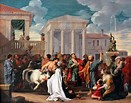
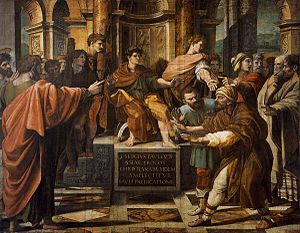

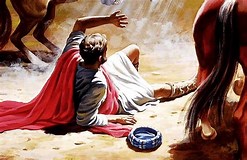
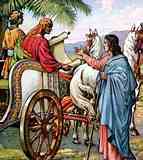
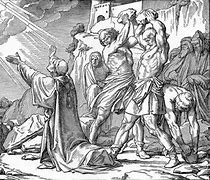
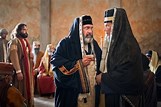
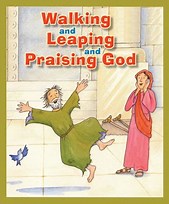
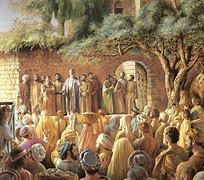




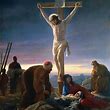

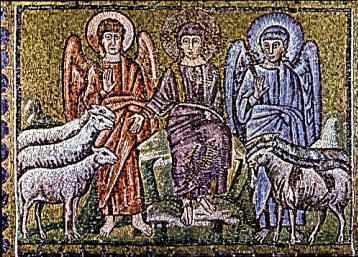
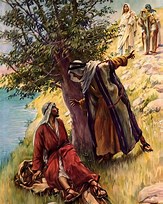

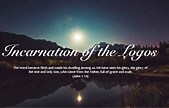
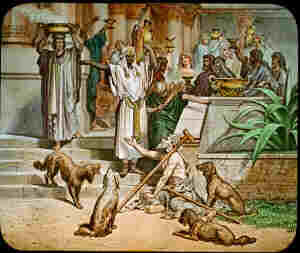



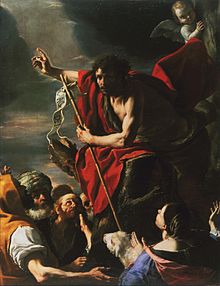
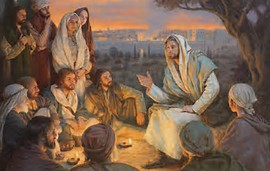

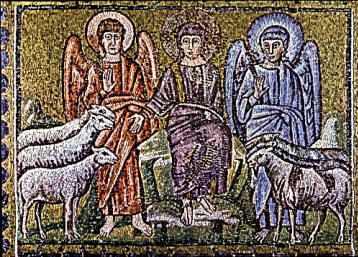






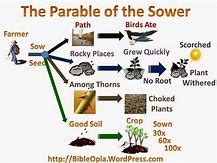
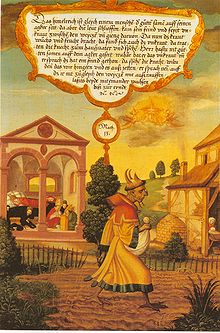













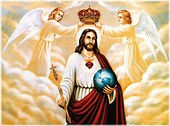
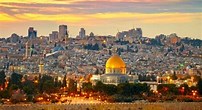

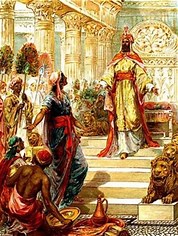

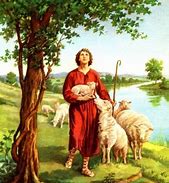






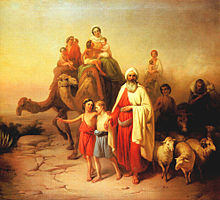

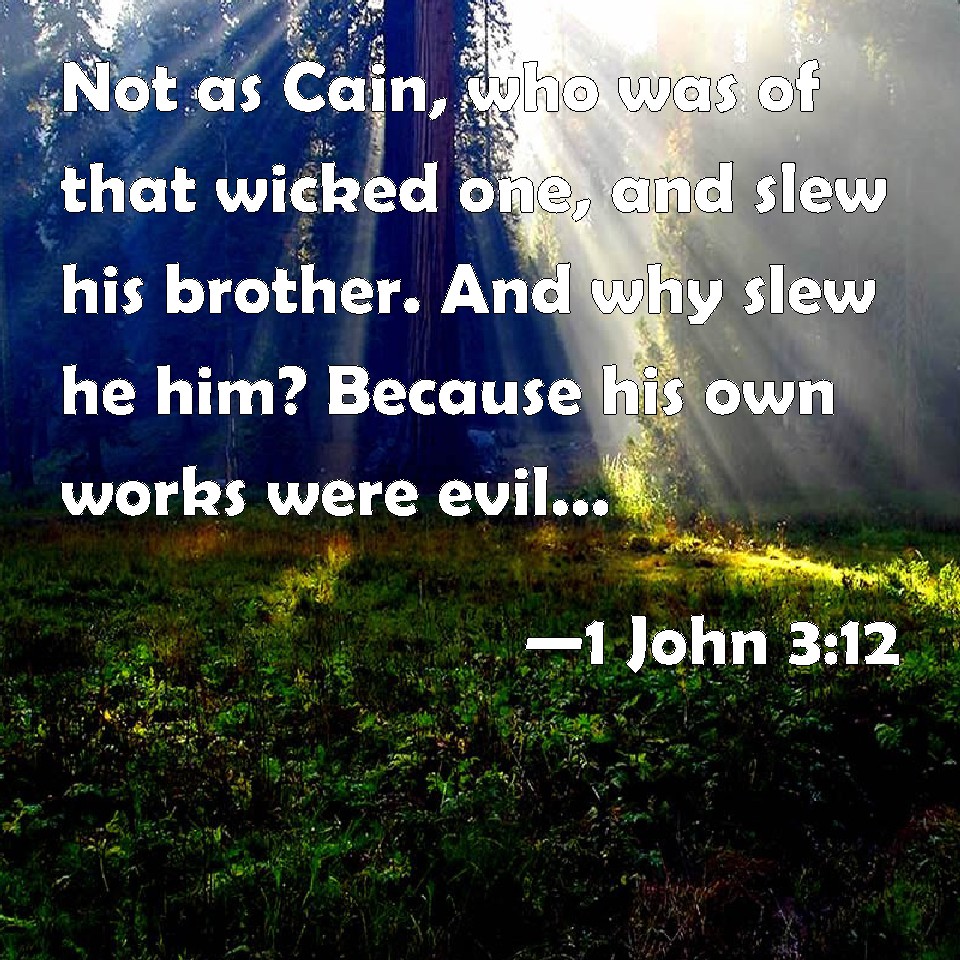
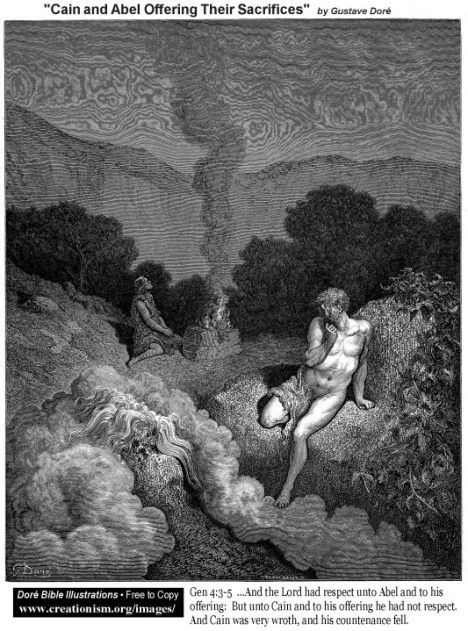







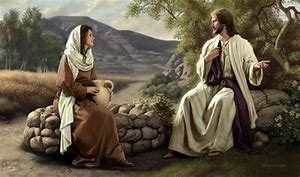

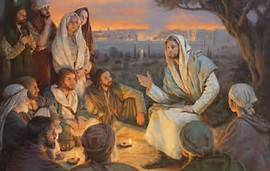
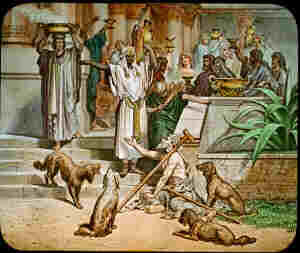




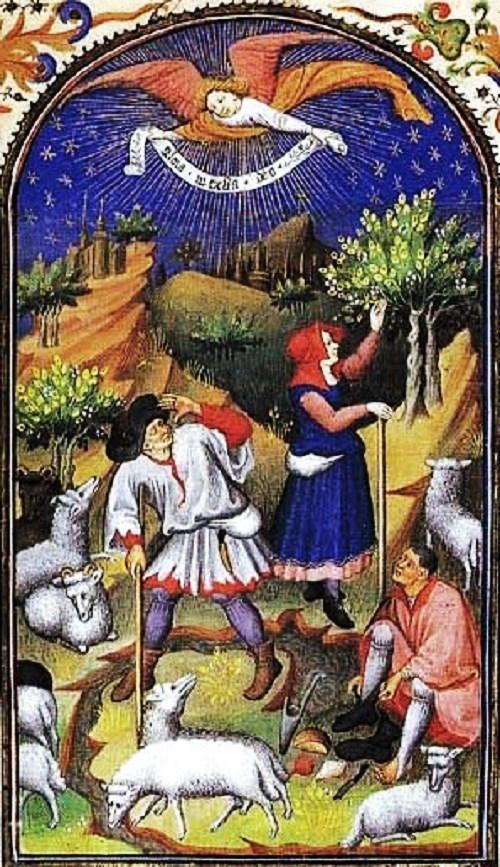

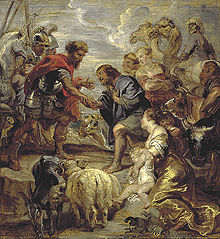
 The Little Book of Providence