Tag Archives: christianity

POSSESSING YOUR VESSEL


Finally then, brothers, we request and urge you in the Lord Jesus, that as you received instruction from us as to how you ought to walk and please God (just as you actually do walk), that you excel even more. For you know what instructions we gave you by the authority of the Lord Jesus. For this is the will of God, your sanctificationthat is, that you abstain from sexual immorality; that each of you know how to possess his own vessel in sanctification and honournot in lustful passion, like the Gentiles who do not know God; and that no one violate the rights and take advantage of his brother (or sister) in the matter, because the Lord is the avenger in all these things, just as we also told you previously and solemnly warned you. For God has not called us for corruption, but in sanctification. Therefore, the one who rejects this is not rejecting man, but the God who gives His Holy Spirit to you. (1Thes4:1-8]

Progressing through 1Thess I have omitted chapter three for there is little to comment on in the context of this project. Briefly, it concerned Timothy’s visit to the churches in Thessalonica and the encouragement Paul received from his co-worker’s report on his return to Athens where Paul was residing. The Church was doing well in terms of what really mattered to Paul – their “walk”, i.e. manner of life, that was in accordance with what they had been taught by Paul.

That is affirmed in the opening verse of chapter four. As the Apostle reiterated in verse 3, God’s will for them (and all Christians) was their sanctification, especially (but by no means exclusively) in the area of sexual morality. As the latter part of the passage indicates (highlighted text), this is not an optional extra but “a solemn warning” concerning a God who will avenge wrongdoers in this area, keeping in mind that Paul here is addressing believers (v6).

Just prior to that Paul uses an expression that I mainly want to focus on in this post: “that each of you know how to possess his own vessel in sanctification and honour” (v4). This touches upon one of the foundational theorems with respect to what I have to impart regarding God’s broader benign providence – the misunderstood distinction between the spiritual (eternal) and physical (mortal) components of humanity, especially in the context of “original sin” and its consequences. I will briefly quote from my book on the subject:

***************************************************************

“A creationist understanding of the soul’s origin maintains that each person’s soul/spirit, i.e. that which is separated from the body at death, is created immediately by God and planted into the embryo procreated by the parents. Such has been the prevalent view within Eastern Orthodoxy and is also the official teaching of the Roman Church albeit Augustine had wavered from it. Through original sin, the divinely created spirit finds itself within a morally sickly environment, or expressed another way is required to operate through an impure medium – the procreated body of death. Physiologically the physical and spiritual entities (body and soul/spirit) are in union, yet they have opposing moral impulses.

Augustine, considered to be the first Christian anthropologist had started well, aptly applying the analogy “your body is your wife”: the couple were once in perfect harmony but following the Fall are in combat with one another. Paul however goes further: these two entities are influenced by separate and distinct laws or engrained principles; the body, being the corrupted medium through which the soul/spirit (Paul’s “inner man”) functions, has impulses of its own:

For I am gratified by the law of God in my inner man, but I perceive a different law in my bodily members warring with the law in my mind and bringing me into captivity to the sinful law that is in my bodily members (Rom7:22-23).

The “law in one’s members” refers to the senses perceived through the members of the body processed by the brain, an organ that, it must be remembered, is part of the procreated vessel through which the divinely planted soul/spirit must operate. Like the rest of the body it ultimately derives from fallen Adam’s loins and is heading for the grave. The human psyche, emotions and motivations cannot be contained within that vital organ or entirely derived from it, for when the soul leaves the body it is conscious and memory-retaining as Scripture affirms; the rich man wondering why he must experience suffering in Hades was told by Abraham to “remember that in your lifetime you received good things and likewise Lazarus evil things, so now he is comforted and you are tormented”.

Paul’s reference in this context to the “law of God” is referring to a moral sense of right and wrong, in particular the need to exercise love and consideration for others, which the apostle confirms was always the law’s (and the Torah’s) heart and purpose (Rom13:9-10). It is intuitive, being the outworking of the human conscience (Rom2:15) which is clear or “clean” when one obeys that principle, guilty when one does not.

[Extract from “The Little Book of Providence” chapter two].

***************************************************************

It is interesting that Augustine used the analogy “your body (vessel) is your wife”, for as bible hub affirms σκεῦοςG4632 is sometimes used to refer to a wife, e.g. in 1Pet3:7 regarding the wife being the weaker vessel. Augustine’s analogy is sound, for it indicates that the vessel, and the spirit that inhabits it, are two distinct entities. As Scripture affirms, but traducianists unwittingly contest, the one (the body incorporating the brain) shall return to the dust, whilst the other (spirit/soul/Paul’s “inner man”) “returns to God who gave it” (Eccles12:8). And as I have previously affirmed, this is key to understanding what salvation is from (cf. Rom7:24-25) and what whilst we are in mortal flesh it is for (our verse here 1Thes4:4) – having been raised to newness of Life in Christ and knowing Father God “who gives His Holy Spirit to you” (v8).

Still more importantly, retaining Augustine’s analogy (though he would dispute the inference), the “husband” (spirit/inner-self) is the true self (Rom7:20) and is innately morally sound whereas the “wife” (the “flesh”/bodily members/brain) that conflicts with it is the actual source of sin arising from the Fall (cf. Rom7:22-23). The Good News being, the “wife” is temporal and replaceable (via resurrection), the “husband” (our true spiritual self) is eternal. Unlike the body, the latter is not replaceable, still less (as I once believed) can it be “clothed in righteousness divine”. It is our true self that shall relate to God through eternity.

The soteriological and providential implications are staggering, but I am aware that for some, my analysis is likely to appear gobbledygook, in which case this earlier post may help🥴. A read through my book* is probably needed fully to grasp what I’m on about, as well as to see how such an interpretation fits in with Scripture as a  whole.

*The LITTLE BOOK OF PROVIDENCE: a seven-part synopsis of the bible: – available as a paperback from Amazon or FREELY as a PDF file HERE.

Author’s Facebook page HERE

THE GOSPEL OF GOD

9For you recall, brothers and sisters, our labor and hardship: it was by working night and day so as not to be a burden to any of you, that we proclaimed to you the gospel of God. 10 You are witnesses, and so is God, of how devoutly and rightly and blamelessly we behaved toward you believers11 just as you know how we were exhorting and encouraging and imploring each one of you as a father would his own children, 12 so that you would walk in a manner worthy of the God who calls you into His own kingdom and glory. (1Thes2:9-12)

Just a reminder that these posts are not intended to be comprehensive commentaries, rather I am selecting passages from each chapter of the New Testament that have a bearing on the broader benign providence I am presenting – either because the text clearly supports it or alternatively because the way it is normally interpreted appears to suggest the narrower binary position usually taken. Unusually, in the second chapter of 1Thessaloneans there is not a great deal in that context to comment on. I have just selected and highlighted (above) a few verses from the chapter which perhaps provide a new slant on some points I have previously made.

 Firstly, Paul’s description of the Gospel being (literally) “the Good News of God” (v9), a term he also used twice in Romans (1:1 & 15:6). This has a certain irony from my perspective, remembering my time as a Calvinist.  For sure, Jesus was “good news” both in terms of His gracious character and especially what He had done for me and others by dying on the cross. But I effectively understood that Sacrifice to be primarily to “save me from His Father” – the awesome Creator who required people to keep laws that as a result of the Fall they were incapable of keeping, even to punish human beings because they failed  to match His own glory! (Rom3:23).

Of course, I never presented God in such a way in my witnessing or during my brief time as a Baptist Pastor. Rather, our God was “ineffable” – incomprehensible to human reason. But it was OK because Jesus had pacified His Father’s impossible demands by dying on the Cross. Now I see it so differently: God the Father is Good News, both in terms of His character and how He deals with humanity. Interpreting the bible as I do now portrays the Creator God to be Love personified – just as the Apostle John affirmed Him to be (1Jn4:8).

As recent posts have been demonstrating (regarding election/predestination) He is just and fair to all. Not in the sense that we all get exactly what is due to us, rather that all shall receive vastly better than we deserve – in view of His wondrous grace and magnanimity. In terms of Father God’s character, it can now be shown to be intelligibly good in every respect – a mirror image of our Lord Jesus Christ’s, or rather, vice versa. The Father’s ways and methods are less intelligible, but that is what I’m seeking to throw light on as far as I have been enabled.

Secondly, a brief reference to how Paul regards himself and his fellow workers: “how devoutly and rightly and blamelessly we behaved toward you believers” (v10). Paul, the chief of sinners? I think not. That statement had been written in the context of Paul’s pre-conversion life. Two verses prior to that he wrote “I, who was before a blasphemer, and a persecutor, and injurious: but I obtained mercy, because I did it ignorantly in unbelief” (1Tim1:13). He was “chief of sinners” because as Saul of Tarsus he had been the chief persecutor of the infant Church. But as a Christian and Apostle he wrote “our exalting is in the testimony of our conscience that in godly sincerity and purity, not in fleshly wisdom but in the grace of God we have conducted ourselves in the world” (2Cor1:12). That is the Paul to be imitated, just as he imitated his Lord and Saviour (1Cor11:1).

That in turn is how to live a life “worthy of the God who calls you into His own kingdom and glory” (v12). The Christian has been summoned to a destiny beyond anything this world can offer or even imagine: “an heir of God and fellow heir WITH Christ, if indeed we suffer with Him so that we may also be glorified with Him” (Rom8:17). That, as I am endeavouring to explicate, is the true context of gospel salvation.

The LITTLE BOOK OF PROVIDENCE: a seven-part synopsis of the bible: – available as a paperback from Amazon or FREELY as a PDF file HERE.

Author’s Facebook page HERE
PAUL’S FIRST LETTER TO THESSALONICA

1 Paul, Silvanus, and Timothy, to the church of the Thessalonians in God the Father and the Lord Jesus Christ: Grace to you and peace. We always give thanks to God for all of you, making mention of you in our prayers; constantly keeping in mind your work of faith and labor of love and steadfast hope of our Lord Jesus Christ in the presence of our God and Fatherknowing, brothers and sisters, beloved by God, His choice of youfor our gospel did not come to you in word only, but also in power and in the Holy Spirit and with full conviction; just as you know what kind of men we proved to be among you for your sakes. You also became imitators of us and of the Lord, having received the word during great affliction with the joy of the Holy Spirit, so that you became an example to all the believers in Macedonia and Achaia. For the word of the Lord has sounded forth from you, not only in Macedonia and Achaia, but in every place the news of your faith toward God has gone out, so that we have no need to say anything. For they themselves report about us [c]as to the kind of reception we had with you, and how you turned to God from idols to serve a living and true God, 10 and to wait for His Son from the heavens, whom He raised from the dead, that is, Jesus who rescues us from the wrath to come. (1Thes1:1-10)

And so to Thessalonians, and as ever I have highlighted the aspects to be commented on that are key to the broader benign providence being presented. Firstly and briefly (for it was covered in the previous post) the distinction Paul invariably makes between “God” the Father and His only begotten Son who is “Lord” (vv1&3). This distinction is crucial to making sense of the “the fellowship/administration of the secret/mystery hidden in God who created all things by Jesus Christ” (Eph3:9*), the outworking of which is key to my thesis.

Secondly, yet again Paul refers to the fact that the believers he was addressing became believers because they had been chosen by God (v4). This truth concerning election is inescapable, though many might wish it to be otherwise, as the providential implications in the context of traditional dualistic (saved/damned) theology are at best inscrutable, at worst barbaric. Not so once the three soteriological categories I am delineating are accepted – God is seen to be both gracious and fair to all. [As any good parent will know, it is impossible to be loving towards one’s children yet unfair; likewise God the Father towards those created in His image].

Thirdly, note how (typically) Paul exhorts the Thessalonian believers not so much to “look forward to going to heaven when they die” but to await the second coming (v10). As to why that has been so delayed, there will be aspects concerning timings and epochs that even Paul may not have been enlightened about (cf. Acts1:7) which I have elucidated upon in an earlier post.

Finally, though it touches on the second point, Paul refers to the “wrath to come” (v10) and the fact that faithful believers will be delivered from it. Notwithstanding the broader benign providence I am outlining, the bible indicates that in terms of those alive when Christ returns, only the elect will entirely escape God’s awesome Day of Judgement. For they will have been raptured and will come with the Lord and His angels to judge the earth (1Thes3:13 and especially 1Thes4:14).

But note very carefully what the gospels say about the matter – it again infers the three categories to which I have referred. For the wicked shall be separated from the midst of the righteous (Mt13:49 cf. Greek), the elect having been raptured. Likewise in the M25 passage, “sheep” and “goats” are separated whereas in the previous chapter, Jesus teaches that the elect will have been raptured (Mt 24:40-41).  Paul alludes to this rapture in 1Thes4:17 (cf. v14) – for a later post. Admittedly, these issues are infrequently referred to in Scripture and even then, somewhat veiled. But that is the nature of “mysteries”, especially those that were intended to be sustained until the very last days  (cf. Rev10).

NOTE

*”by Jesus Christ” missing from some manuscripts in Eph3:9 and therefore some bible versions

The LITTLE BOOK OF PROVIDENCE: a seven-part synopsis of the bible: – available as a paperback from Amazon or FREELY as a PDF file HERE. Author’s Facebook page HERE
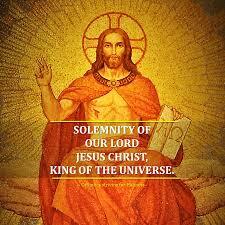
THE MYSTERY OF CHRIST

Masters, grant your slaves justice and fairness, knowing that you also have a Master in heaven. Devote yourselves to prayer, keeping alert in it with an attitude of thanksgiving; praying at the same time for us as well, that God will open up to us a door for the word, so that we may proclaim the mystery of Christ, for which I have also been imprisoned; that I may make it clear in the way that I ought to proclaim it. Conduct yourselves with wisdom toward outsiders, redeeming the time. Your speech should be gracious, as though seasoned with salt, so that you will know how you should respond to each person (Col4:1-6).

Most of Colossians chapter four consists of final greetings, so I have just included the opening verses which contain some further instruction regarding how the Colossian believers should deal with those outside the church and especially that they should remember to support Paul in his ministry. He describes that here as “to proclaim the mystery of Christ” (v3), and that expression is what I will briefly focus on this post. I say “briefly” for volumes could be written on the subject, so I will just outline a few pointers, largely focussing on how the Apostle Paul depicted the Lord Jesus Christ.

For Paul, though he regarded himself as the least of all the apostles, was in a unique position vis-à-vis the twelve who had accompanied Jesus. Whilst never having known Jesus in the flesh he conversed with the resurrected Lord in a vision at his conversion. Therefore, what he learnt of Christ, he learnt from Christ as a deity who will have been fully enlightened concerning His Father’s purposes for Himself and the world. So, summarizing what Scripture informs us Jesus said about Himself, together with how He was described by Paul, the picture is as follows:

  1. Jesus is the Son of God (Rom1:9). [Angels and elect humans are also described as sons of God, but in Rom1:9 Paul refers to “the gospel of (God’s) Son”, indicating that LJC was the Son of His Father in a fuller, more literal sense].
  2. Paul, however,  never refers to Jesus as “God”. Indeed, he affirms there is ONE GOD, and that is the Father, especially in 1Cor8:5-7: “There is only one God – the Father, from whom are all things, and we exist for Him; and one Lord, Jesus Christ, by whom are all things, and we exist through Him”
  3. Jesus is subordinate to the Father. The clue is in the name, or rather the title, “Christ”, meaning the Anointed One. [God the Father could not be anointed, He anoints]. Jesus, even having been glorified sits at the right hand of the Father. As a result of His role within human salvation, Logos (the Word) has literally become God’s right-hand Man.
  4. According to Paul, just as man is the head of woman, God is the Head of Christ (1Cor11:3). [Note:  man and woman are equally human and consubstantial; likewise, God and His Son are equally divine and consubstantial, but One is the Head of the Other. More extraordinarily, Christ is the head of man, yet the Former regards the human elect as His own kith and kin: “For both He that sanctifies and they who are sanctified ARE ALL OF ONE: for which cause he is not ashamed to call them brethren (Heb2:11).
  5. Jesus is not omniscient, nor are all matters under His control – e.g. epoch staging and timing (Acts1:7); ordering of the elect with the Kingdom (Mk10:40); knowing when He shall return to earth (Mk13:32).
  6. Jesus is always described by Paul as Lord – i.e. master (cf. v1), boss, the appointed Head of all that has been created, representative and leader of such (aka “Firstborn of all creation” – Col1:15)
  7. Jesus (as Logos) was begotten of God – a profound mystery that we know occurred before anything was created. Hence, “before Abraham was, I AM”. No creature dare say that, nor that all things that have been created were made THROUGH Him and TO Him. Yet even having made the “I AM” statement, Jesus affirmed that My Father is greater than I”.
  8. Jesus also always referred to Himself as the Son of Man. This is at the heart of the “mystery of Christ” – what I have referred to as the cosmic Christ, through Whom ALL things were created; the “alpha and omega”; representative of all humanity, especially the poor and needy (Mt25:40); above all, the enlightener of every person entering the world (Jn1:9 strictly KJV**) through the faculty of conscience, by which (in J H Newman’s words) it provides “universal moral revelation” and becomes a “sufficient object of faith” by which all shall be judged. And guess by Whom? (Jn5:22).

Though I have meticulously stuck to Scripture, many will perceive the above as “subordinationist”. Such was how the post-Nicene Church regarded many of the earlier Fathers, even though they had received the gospel directly from the apostles or their immediate appointees. I make these points because a recognition of such ordering with the Godhead is necessary  to grasp a central plank of my thesis. That concerns what Paul referred to as “the fellowship (or administration*) of the secret (plan) hidden in God (Eph3:9) which he reiterated in plainer language in Rom11 (vv11.12,15,30). It concerned the Gentile’s unforetold spiritual inheritance: “to whom God willed to make known what the wealth of the glory of this MYSTERY AMONG THE GENTILES is, the MYSTERY THAT IS CHRIST IN YOU, the hope of glory” (Col1:27). [It is surely no wonder Paul summarized the gospel in our passage as “the mystery of Christ”].

The mystery I’m disclosing (even though Paul has already done so but no one appears to have worked through its implications) is that “salvation” as we understand it was not envisaged (i.e. prophesied in OT Scripture) for Gentiles in the current age. It was a “secret hidden in God” that ostensibly came to pass due to the Jews’ failure to fulfil their intended mission as enlighteners and witnesses of the one true God to the Gentile nations (cf. Deut4:6-8; Rom11:30). The providential and dispensational (millennial) implications of the Eph3/Rom11 mystery being pieces of the jigsaw that unlock the related grander mystery of God’s broader benign providence that I am presenting, and I believe is being referred to in Revelation chapter ten.

*a textual variant in Eph3:9, likely due to the similarity of κοινωνία (fellowship) and οἰκονομία (administration);  μυστήριον  can be translated as mystery or secret
** The word order is more supportive of the KJV translation of Jn1:9, apart from which it is hardly likely that writing in the late first century John would be saying that Jesus as the light “is coming into the world” (some translations).

The LITTLE BOOK OF PROVIDENCE: a seven-part synopsis of the bible: – available as a paperback from Amazon or FREELY as a PDF file HERE.

Author’s Facebook page HERE

CHOSEN OF GOD

12 So, as the chosen (ones) of God, holy and beloved, put on a heart of compassion, kindness, humility, gentleness, and patience; 13 bearing with one another, and forgiving each other, whoever has a complaint against anyone; just as the Lord forgave you, so must you do also. 14 In addition to all these things put on love, which is the perfect bond of unity. 15 Let the peace of Christ, to which you were indeed called in one body, rule in your hearts; and be thankful.  (Col3:12-15).

Context

Continuing through Col3, I will focus mainly on the opening verse (12), for the usual reasons that they most impact upon the key points within this project. Verses 13-15 contain typically great advice from the Apostle Paul on Christian living, and they largely speak for themselves, although note the bolded phrase in verse 15 which reinforces the point to made in verse 12.

That point relates to calling, election, predestination – whatever you wish to call it. Actually, these are not all synonyms, for in Mt20:16 and 22:14 we read that “many are called but few are chosen”, that I’ll return to in another post. Predestination is a subject constantly referred to by Paul (and as pointed out in the last post, reaffirmed by Jesus, Peter, John and Luke). It’s frankly a troublesome subject for many Christians – pastorally, providentially and especially theologically (in the purest sense of “what is God actually like?”). From the human perspective it can appear fatalistic whilst from the divine perspective, frankly barbaric when applied within the usual binary (saved/damned) context. Also within that context it is incongruous – challenging God’s description of His own character, and that portrayed by His loving, compassionate Son. Truly, everything is resolved once the three soteriological categories I have been verifying from Scripture come to be accepted, That process can be facilitated by examining the Greek words employed in describing this particular doctrine.

The clue’s in the descriptors

Paul in addressing Colossian believers refers to them as the ἐκλεκτός of God (v12). Bible Hub aptly describes ἐκλεκτόςG1588  as being  “those chosen out by God for the rendering of special service to Him”. Yep, that is what they are – not the totality of those whom God in His sovereign grace has delivered from perdition and to hell with everyone else, as I effectively once believed. They are those like Saul of Tarsus who has been chosen to  “receive an inheritance amongst those which are sanctified” (Acts 20:32) or in that same apostle’s language “those whom God foreknew and predestined to become conformed to the image of His Son” (Rom8:29). Or in Peter’s language “a chosen people, a royal priesthood, a holy nation, a people for God’s own possession (1Pet2:9). Or in James’s language “to be a kind of first fruits within God’s creation” (James1:18). Or in the language of Revelation “to be the Wife of Christ and to share His throne” (Rev3:21; 21:9).

Come on now, is it not obvious from these descriptors that this cannot be referring to the totality of those who are to be spared perdition? Yet I for the first 28 years of my Christian life believed as much as do many Evangelicals today, as prior to Vatican II (1960s), doctrinally at least, did the Catholic Church. But I must restrain myself, having become convinced from canonical Scripture and especially the Book of Enochref#1 that such a misrepresentation of God’s intelligible goodness and munificent providence was intended to be obscured until these very last days.

The nature of holiness

Another reason I should restrain my exasperation is Paul’s exhortation in our passage: “Put on a heart of compassion, kindness, humility, gentleness, and patience”! Having described the Colossian recipients of his letter as “chosen of God, holy and beloved”, that is how he intended they should behave. For such is the outworking of holiness, whether it be divine or human. Paul’s other description of the elect that I quoted from Romans was that they had been chosen to become “conformed to the image of God’s Son”. For Jesus Christ is all those things: compassionate, kind, gentle and patient. As, it follows, is God Himself, given that Jesus is “His exact representation” (Heb1:3). Indeed, Paul also exhorts the Christian to “be imitators of God” (Eph5:1). Again, that surely reinforces the point being made concerning God’s intelligible goodness and munificent providence.

For how can one imitate One who is incomprehensible and beyond human reason, such as the God that Luther, Calvin and Augustine portrayed? As for His providence and the cosmic outcomes that derive from it, they must surely reflect God’s own nature and character. Also they must be in accordance with the sovereign Creator’s self-confessed intentions – that all true humanity ultimately be saved and come to a knowledge of the truth (1Tim2:4). For He is a God that does not wish that any of the wicked should die, rather that they come to repentance and live (Ezek18:23). [Not all shall repent, but that will have been their own choice].

There is no way that such edicts of a sovereign God can be squared with predestination in the context of traditional binary soteriology. But they absolutely can be  within the tripartite classifications I have been adducing from Scripture. Neither does the latter detract from the glory due to God, His Son and Spirit, rather it greatly magnifies it. I trust that in due time, we all “being rooted and established in love, become able fully to comprehend, together with all the Lord’s holy people,  how wide and long and high and deep is the love of Christ” (Eph3:18).

Reference

  1. Especially two related passages from the Book of Enoch (ch93:8-10 and ch104:11-13 Charles edition numbering).

Author’s Facebook page HERE

The Little Book of Providence – Free PDF available HERE.

SONS OF DISOBEDIENCE

Therefore, if you have been raised with Christ, keep seeking the things that are above, where Christ is seated at the right hand of God. Set your minds on the things that are above, not on the things that are on earth. For you have died, and your life is hidden with Christ in God. When Christ, who is our life, is revealed, then you also will be revealed with Him in glory. Therefore, treat the parts of your earthly body as dead to sexual immorality, impurity, passion, evil desire, and greed, which is idolatry. For it is because of these things that the wrath of God is coming upon the sons of disobedience among whom you also once walked, when you were living  among these (people). But now you also, rid yourselves of all of them: anger, wrath, malice, slander, and obscene speech from your mouth. Do not lie to one another, since you stripped off the old self with its practices, 10 and have put on the new self, which is being renovated to a true knowledge according to the image of the One who created it— 11 in which there is no distinction between Greek and Jew, circumcised and uncircumcised, barbarian, Scythian, slave, and free, but Christ is all, and in all (Col3:1-11).

Context

I have headed this post “Sons of Disobedience”, not because it is the central theme of this passage, but because it most impinges upon the broader benign providence I have been presenting. Paul’s primary teaching here is the need for the Christian to show consideration for other believers in the exercise of his freedom, and this will come into play in the argument being presented. That pertains to who exactly are the “sons of disobedience” to whom Paul refers in the context of God’s impending wrath (v6)?

Who are they?

Google the phrase and you are likely to be told that the “sons of disobedience” refers to everyone who is not a Christian. Think through the implications, a prime example being that less than 10% of people within Asian countries and territories are Christian[1] – and that figure pertains to nominal Christians. The reality is, a relatively small proportion of those who regard themselves as Christian are likely to be “the elect of God”. As Jesus indicated in Revelation, relatively few within the churches will be found worthy to inherit the promises of Christ (cf. Rev3:4) – being those who “overcome”.

As to what is to be overcome, it is referred to in our passage – that which Paul refers to as the “old self” (v9). As he also indicates, the true disciple of Christ has died to the world (v3), no longer lives for the things of the world, but for the rewards stored in the heavens (v2). To attain to what Paul elsewhere refers to as “the prize of the high calling of God” disciples of Christ, aided by grace, must master their bodies such that they ride above the sinful passions that living in the current world incites (v10).

Unintended aspersions on God’s nature

 In terms of who makes such a broad-scale classification concerning “sons of disobedience”, it is most likely to be Evangelicals. For most (like myself in the past) earnestly believe that the souls of all who are not Christian believers are condemned to hell. The providential implications, with its aspersions concerning the incomprehensibly harsh nature of God’s character, the limited scope of His Son’s saving work and the depth of human depravity are surely as Satan, man’s Adversary would wish rather than “the Good News of God”, i.e. the gospel. Thanks be to God, the Evangelicals’ unavoidable insinuations are far from the truth, especially with respect to God’s providential intentions towards those He has made in His own image.

Sons of disobedience inhabited by Satan

 A clearer reference to what Paul means by “sons of disobedience” is to be found in Ephesians:  “And being dead by reason of  your offenses and sins, in which you previously walked in accordance with the age pertaining to this world , according to the prince of the power of the air, of the spirit that is now working in the sons of disobedience”. (Eph2:1-2). Note, the “sons of disobedience” are inhabited by Satan. This is assuredly not the case for all non-Christians, but it is the case for some – the theologically eluded category threes, the “ἐκ τοῦ πονηροῦ” (1Jn3:12) of whom Cain, rather than Adam was the archetype. An earlier post refers.

Whom or what is being disobeyed?

Consider also the description: sons of disobedience. One can only be obedient or disobedient to what is known and understood. That is assuredly not a faithful rendition of the gospel of Jesus Christ on planet Earth in 2025 – not for the vast majority, even in countries such as mine (England) that are ostensibly Christian. That in turn is due to Church divisions/apostacy, but above all historical cultural formation and religious proliferation, that (be assured) will have been in accordance with God’s sovereign will and plan for humanity.

Conscience – the ultimate criterion of judgement

 In that context, consider the issue of conscience. What, for example, is a faithful Muslim supposed to do other than serve the one true God in accordance with the tradition he/she has grown up with? To do otherwise is an offence to conscience – now that IS something that is possessed and known by all, and although not infallible must be obeyed. Paul makes this clear (although seemingly few have thought through the implications) in his teaching on whether or not the Christian should eat food offered to idols (1Cor8).

In that passage, the apostle makes clear that it was ok to do so: “Now food will not bring us closer to God; we are neither the worse if we do not eat, nor the better if we do eat” (v8). But this followed his proviso in v7:  “However, not all people have this knowledge; but some, being accustomed to the idol until now, eat food as if it were sacrificed to an idol; and their conscience being weak is defiled”. More shockingly (for some), Paul goes on to say that as a result of that believer’s failure to respond to his conscience on the matter he is brought to utter ruin (v11).

Commentaries I have seen try to tone this down, speaking of a Christian losing a sense of peace or suchlike. Not so, ruin (or alternatively a state of lostness) are  the most apt translations of ἀπόλλυμιG622 . You can examine for yourself how that word is utilized in the rest of the New Testament HERE, particularly noticing that the unsaved are described as being on the broad road that leads to ἀπόλλυμι (Mt7:13). As I have explained elsewhere, that is not referring to damnation but a state of lostness in terms of one’s current relationship with God – the point being that such a person cannot be said to be “saved” in the gospel sense.

Yet what had this believer done wrong in Paul’s example? He had eaten meat that he was permitted to eat, or more likely today, he had drunk alcohol that he was at liberty to drink. Yet he was brought to a state of ruin. Why? – because he had defied his (albeit misinformed) conscience and thereby defiled it. Note, even biblical truth and his trust in Christ were not the criteria of judgement (he was fine on both scores), it was his wounded conscience that led to his downfall. And that pertains to what conscience is and to Whom it relates (cf. Jn 1:9 strictly KJV) – a further post may enlighten.

Conscience – God’s universal revelation to humanity

 The point we might all agree about the human’s conscience is that it is innate and universal. As Paul closes our featured Col3 passage, Christ is all and in all – and that is the light of Christ in the conscience. On the other hand, to have a personal relationship with the Lord Jesus Christ as wholesale Saviour is not ours to obtain. What? Did you not know that no one can come to Christ except the Father draw him (Jn6:44)? Paul says as much in his frequent references to predestination/election/calling; likewise Peter, John and Luke (in Acts). Yet once the true nature of what the New Testament refers to as “salvation” has been grasped, everything will be seen to be right and thoroughly equitable.

Conclusion

So in terms of the “sons of disobedience”, it is those who wilfully and continually defy what they know to be right and true – some to the point that their conscience ceases to function altogether (cf. 1Tim4:2). Their related trait being that they are devoid of compassion (Mt25 “goats”) and truth (Jn8:44). And no wonder, for they, like Cain have become the children of the devil, as Jesus describes certain Pharisees in that verse . The resultant three soteriological categories and the far more benevolent providential outcomes that derive from them are corroborated from scripture as a whole in The Little Book of Providence.

NOTE

[1] Approximated from Wikipedia table: –https://en.wikipedia.org/wiki/Christianity_in_Asia

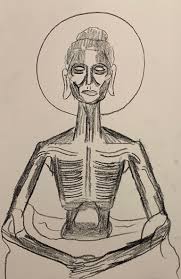
MISGUIDED ASCETICISM

20 “If you have died with Christ to the elementary principles of the world, why, AS IF YOU WERE LIVING  IN THE WORLD, do you submit yourself to decrees, such as21 “Do not handle, do not taste, do not touch!” 22 (which all refer to things destined to perish with use)—in accordance with the commandments and teachings of man? 23 These are matters which do have the appearance of wisdom in self-made religion and humility and severe treatment of the body, but are of NO VALUE AGAINST FLESHLY GRATIFICATION”. [Col2:20-23]

Not for the first time, there are aspects of Paul’s teaching here that might at first appear curious (highlighted in capitals) – less so once certain translational and soteriological aspects are clarified. The first eyebrow raiser is the apostle’s phrase “as if you were living in the world”. Are we not living in the world? NO, not if we are Christians – we are no longer to live  “ἐν κόσμῳ”  – usually translated as “in the world” but as Biblehub rightly affirms κόσμος is referring to an ordered system, aka the world order, with its various governing and moral principles – Paul’s  “elementary principles of the world” (v20).

For sure, Christians presently live on planet Earth and are to delight in it and care for it. They along with the rest of humanity are God’s viceregents and stewards of the planet – a wondrous entity which evinces God’s glory and has been created through Christ.   But whilst (thankfully) some divinely ordered principles are upheld by worldly authorities, not all are, and that is certainly the case in the religious sphere.

The latter is what Paul is referring to here when he writes “These are matters which do have the appearance of wisdom in self-made religion and humility and severe treatment of the body”. Verse 21 indicates he is particularly referring to what is eaten and drunk – for the Christian there are no prohibitions (in terms of substance, excess is another matter – Eph5:18). Such freedoms need to be balanced with what Paul writes elsewhere about disciplining his body (1Cor9:27). But clearly, he cannot be referring in Corinthians to an  extreme form of asceticism, for here he is cautioning against “severe treatment of the body”.

 That brings us on to the other surprising statement, that such bodily discipline has “no value against fleshly gratification” (v23), for  logically, one would expect that it might. But that is to confine what Paul means by “fleshly gratification”. Paul explains what he understands by “the flesh” in Rom7:14-25, which contrary to most commentaries is not referring to Paul as a Christian. Early Church theologians uniformly recognized that fact, but Augustine’s take on original sin and human depravity helped change that interpretation, for the post-Augustinian Church has difficulty believing that man by nature could ever “delight in the law of God in the inner man“. Yet I showed in the previous posts that in no way would Paul the Christian have regarded himself as a slave to sin, incapable of doing what is right, constantly giving in to the desires of the flesh, like the person depicted in Rom7  – that would thoroughly contradict what he goes on to write in the next chapter, not just concerning himself but every true Christian has been empowered to overcome the fleshly nature.

The related point in the context of the current passage is that Paul’s reference to fleshly gratification is not just relating to acts of the body but to those of the mind also. For the “body of this death” referred to in Rom7 pertains not just to the “bodily members”, but the brain through which the senses are processed. One can discipline one’s body and deprive oneself of food and drink to the point of extreme asceticism, yet in one’s mind have a heart that is bitter, hateful and resentful towards other people, even towards God Himself.

As Paul stated in the earlier passage regarding the worship of angels and false humility, people who advocated such practices were “not holding firmly to the Head, from whom the entire body, being supplied and held together by the joints and ligaments, grows with a growth which is from God. It is important to reiterate, Paul is not saying there is no need for self-discipline:  “I strictly discipline my body and make it my slave, so that, after I have preached to others, I myself will not be disqualified” (1Cor9:27). But especially in view of Col2, this cannot be referring to any extreme form of asceticism. It refers not so much to physical deprivation and abstinence, but to resisting the aforementioned sins of the mind, enabled by the spiritual resources at the believer’s disposal providing he or she “holds firmly to the Head”, which is Christ.

Examine the website at THE LITTLE BOOK OF PROVIDENCE HOME PAGE

THE WORSHIP OF ANGELS

18 Take care that no one keeps defrauding you of your prize by delighting in humility and a religious worship of angels, taking his stand on visions he has seen, inflated without cause by his fleshly mind, 19 and not holding firmly to the head, from whom the entire body, being supplied and held together by the joints and ligaments, grows with a growth which is from God. (Col2:18-19)

Progressing through Col2, Paul appears to be dealing with something that must have been a pastoral issue of his day but his hardly prevalent today – the religious worship of angels. Nevertheless, there are a couple of points to make from this passage in the context of what I have been setting out in these posts and more comprehensively in my book. Firstly, he refers to believers being defrauded of their prize. The apostle alludes to that idea more substantively in Phil3:14: “I press on toward the goal for the prize of the highest calling of God in Christ Jesus”. Also,where he wrote:   “Do you not know that those who run in a race all run, but only one wins the prize? Run in such a way that you may win. Everyone who competes in the games exercises self-control in all things. So they do it to obtain a perishable wreath, but we an imperishable” (1Cor9:24-25). “Race”, “competes”, “wins”, “prize”  – it’s hardly the language of “all of grace”, is it? For, as I have been showing, attaining gospel salvation is not all of grace, rather it is dependant upon it – there is a big difference.

Chief of sinners?

Such a misunderstanding is made by those (like myself in the past) who understood Paul to regard himself as “the chief of sinners”. He did make such a statement, but what was the context? (1Tim1:15). It was stated two verses earlier – because he had been a blasphemer of Christ and chief persecutor of His infant Church. It was in the past. In terms of his life as a Christian, he wrote:  “Our proud confidence is this: the testimony of our conscience, that in holiness and godly sincerity, not in fleshly wisdom but in the grace of God, we have conducted ourselves in the world, and especially toward you (believers)” (2Cor1:12NASB).

“Chief of sinners” pertained to Paul’s calling and election – for that is all of grace, but that’s where such a paradigm ends. Thereafter it’s a case of working out one’s own salvation with fear and trembling (Phil2:12). It’s a case of striving, racing and competing for the prize of the high calling of God. As I have also been explaining, this is not directly related to who does or doesn’t “go to heaven when you die”. That pertains to the sheep and goats teaching of Matthew 25, where neither religion nor a personal knowledge of the Lord Jesus Christ is an issue (v40) – merely  the exercise of  compassionate love towards one neighbour (indicated also in Rom13:8-10; 1Jn4:7 inter alia). The prize Paul refers to does require religious practice and a personal knowledge of Jesus Christ. It is not for the proverbial “world and his wife”, but for the Lord and His (Rev21:90) – destined to share His very throne (Rev3:21).

A theology of glory

Truly, Paul’s is a theology of glory, albeit predicated on a theology of the Cross. For Christ’s suffering for the pardon of many and the sanctification of those who worthily partake of His body and blood – together with humanity’s experience with sin and the suffering that resulted from it are essential ingredients by which the sons of earth might be raised to divinity. That starts with God’s elect who already partake of the divine nature. “For both He who sanctifies and those who are sanctified are all from One; for this reason (Christ) is not ashamed to call them brothers (Heb2:11).

Lower than the angels?

This in turn pertains to Paul’s reference to false humility; to the angels and why they should NOT be worshipped by man. Referring back to Hebrews:

For (God) has not put the world to come of which we speak in subjection to angels, but one testified in a certain place saying: “What is man that You are mindful of him or the son of man that You take care of him? You have made him a little lower than the angels; You have crowned him with glory and honour and set (man) over the works of your hands; You have put all things in subjection under (man’s) feet. For in that He put all in subjection under man, He left nothing that is not to be put under (man). But currently we do not see all things put under him. But we see Jesus who was made a little lower than the angels and because He suffered death has been crowned with glory and honour, that He, by the grace of God, might taste death for everyone (Heb2:5-9) 

The mystery of God

The author of Hebrews indicates that whilst we currently do not see all things subjected to human beings, that is the eventual plan. What Christians can see by faith is the Man Christ Jesus already crowned with glory because of His suffering, so as to bring many human sons to glory (Heb2:10). This is something the angels themselves desire to look into (1Pet1:12). The seeming irony is, that as a direct consequence of human sin, initiated by a fallen angel, the Word of God became incarnate AS A MAN, not an angel. The Head of all principalities and powers existentially relates with and is ultimately betrothed to men and women, not angels. This surely pertains to the mystery of God (Rev10:7 ) – the rationale for the Fall (cf. Rom8:20), Christ’s suffering to remedy it, and humanity’s arduous path to theosis.

Examine the website at THE LITTLE BOOK OF PROVIDENCE HOME PAGE