Thesis #38 of 95 – Regardless of race or creed everyone who fears God and seeks to do what is right is accepted by Him
BIBLE REFERENCES
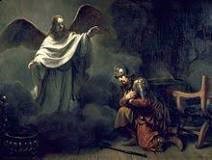
Acts10:4 (pictured) – Cornelius looked at (the angel) intently and he became terrified, and said, “What is it, lord?” And the angel said to him, “Your prayers and charitable gifts have ascended as a memorial offering before God”.
Acts10:34-35 – Peter said, “I most certainly understand that God is not One to show partiality but in every nation whoever fears God and does what is right is acceptable to Him.
Heb9:14 – How much more will the blood of Christ, who through the eternal Spirit offered Himself without blemish to God, cleanse your conscience from dead works in order to serve the living God?
Rom2:15 – (Gentiles) show the work of the Law written in their hearts, their conscience testifying and their thoughts alternately accusing or else defending (their particular actions)
COMMENTS
This thesis is effectively a restatement of Acts10:35 quoted above. The background to Peter’s proclamation was the revelation he had received concerning how God regarded the Gentiles that he recounts in Acts11:5-9. That had led to his meeting with the Roman centurion Cornelius. He and his household were described as devout, God-fearing, generous and prayerful. This Gentile non-Christian’s good works and prayers had been acknowledged by God (Acts10:4). Cornelius was already participating in the cause of God’s chosen people “giving generously to Jewish causes”.
The case of Cornelius (pictured) is perhaps the clearest example in the New Testament of a non-Christian who feared God, acted virtuously and was accepted in God’s sight. It is an account that puts paid to the “Reformed” notion I long held that God is at best uninterested in human good works. On the contrary, God delights in human efforts to please Him, help others and do what is right, exemplified by Jesus’ acceptance of the Mt25 “sheep” who had shown kindness to those in need.
As I showed when commenting on that passage, it is not the works themselves that justify a person before God but the “faith” from which they spring. And as demonstrated in the last few theses/posts, the very act of responding positively to the dictates of conscience is itself an act of faith – in view of that faculty’s spiritual nature (cf. Heb9:14), from Whom it is derived (Jn1:9NKJV) and the Law to which it witnesses (Rom2:15).
~~~~~~~~~~~~~~~~~~~~~~~~~~~~~~~~~~~~~~~~ ~
What’s this?
I am briefly commenting on each of the 95 theses that summarize key outcomes from The Little Book of Providence. These were first published on Halloween 2017*, so I suspect most current visitors to my website’s Homepage (latest posts) will not have seen them… [*being the 500th anniversary of Martin Luther’s version].

